宠物经济

Search documents
美股又炸了!道指破49000点创历史新高 普通人该跟风还是跑路?这3个信号藏着答案
Sou Hu Cai Jing· 2026-01-07 01:50
Core Insights - The U.S. stock market has reached historical highs, with the Dow Jones Industrial Average surpassing 49,000 points, indicating a significant shift in the investment environment that could present both opportunities and risks for investors [1][2]. Market Performance - On January 6, 2025, the Dow Jones increased by 484.90 points (0.99%) to close at 49,462.08, marking a new record [1]. - The S&P 500 rose by 42.77 points (0.62%) to 6,944.82, also achieving a historical closing high [1]. - The Nasdaq Composite gained 151.35 points (0.65%) to reach 23,547.17 [1]. - The Dow Jones had already increased by 1.23% on January 5, leading to a cumulative rise of over 2% in just two days [2]. Economic Drivers - The first driving force behind the stock market surge is the Federal Reserve's monetary policy, which has lowered interest rates to a range of 3.50% to 3.75% by 2025, increasing liquidity in the market [2]. - The second factor is corporate stock buybacks, which have reached near-historical highs, reducing the number of shares and pushing stock prices higher [2]. - The third influence is the AI boom and the self-reinforcing nature of passive investments, where rising large-cap stocks lead to increased index fund purchases, further driving prices up [3]. Valuation Concerns - The Buffett Indicator, which measures the ratio of total stock market capitalization to GDP, has reached 223%, significantly exceeding the 70%-80% range considered reasonable [3]. - Historical data shows that after two consecutive years of over 10% gains in the S&P 500, the following year typically sees a decline [3]. Diverging Opinions - Optimists argue that AI profits have yet to be fully realized, and the U.S. economy has not faced a hard landing, with S&P 500 earnings growing by 13.4% year-over-year in Q3 2025 [4]. - Pessimists highlight the high valuations based on uncertain economic conditions, warning that any negative developments could lead to a market correction [4][5]. Global Investment Trends - Analysts suggest that the trend of global capital moving towards Asia will continue, driven by a weakening dollar, significant valuation differences, and higher economic growth rates in China compared to the U.S. [6]. - The S&P 500's TTM P/E ratio is 29.5, while the CSI 300 is at 14.1, indicating a higher safety margin in the Chinese market [6]. Investment Opportunities - Key sectors to watch include hard technology, high-end manufacturing, and structural opportunities in domestic demand, particularly in aging-related and emotional value consumption sectors [8]. - Companies with core technologies and those benefiting from domestic trends are expected to attract investment [8]. Conclusion - The current market dynamics suggest that investors should focus on structural opportunities in Asia, particularly in undervalued sectors with strong growth potential, rather than chasing high valuations in the U.S. market [10].
旅游消费以40%增长意愿登顶榜首
Jiang Nan Shi Bao· 2026-01-05 23:18
Core Insights - Consumption is a persistent driver of economic growth and reflects the quality of life for residents in Jiangsu, with a significant shift towards high-quality, intelligent, and green consumption patterns expected by 2026 [1] Group 1: Consumer Trends - The survey indicates that by 2026, tourism is expected to see a nearly 40% increase in spending, making it the top area of growth, followed by education and health-related consumption [2] - 46% of respondents plan to increase their investment in quality education, with this figure rising to 51.6% in rural areas, highlighting a collaborative improvement in educational consumption perspectives between urban and rural residents [2] - The younger demographic (ages 18-25) and women are identified as the main consumers, with 51.8% of young individuals planning to increase their travel expenditures in 2026 [2] Group 2: Health and Wellness Consumption - The shift in health consumption from disease treatment to preventive measures is evident, with expected growth in sports and wellness spending ranking third and fourth respectively by 2026 [3] - Different age groups exhibit varying preferences, with younger consumers favoring smart wearables and image management, while older consumers are willing to pay a premium for high-end nutritional products and traditional Chinese medicine [3] - 59.6% of residents prefer home-based elderly care, but 48.2% prioritize community health services, indicating a strong demand for integrated healthcare solutions [3] Group 3: Emerging Consumption Areas - The cultural and entertainment sector shows robust growth, with Jiangsu being the second-largest movie ticket market in China, where 58% of respondents choose to spend on films [4] - The demand for home services is expanding, particularly among the 26-45 age group, which constitutes 66.7% of high-spending consumers, reflecting a trend towards professional and customized services [4] - The "pet economy" is gaining traction, with 64.1% of pet owners being from the post-80s and post-90s generations, indicating a shift from functional to emotional spending on pets [4]
节后A股高开稳了!三大主力悄悄调仓,新主线已藏不住?
Sou Hu Cai Jing· 2026-01-05 00:55
Core Viewpoint - The A-share market is expected to open high after the Spring Festival, supported by favorable policies, strong external markets, and ample liquidity, with significant adjustments made by major funds in anticipation of new investment opportunities [3][4]. Group 1: Factors Supporting High Opening - The high opening of A-shares is backed by three solid supports: policy incentives, external market performance, and sufficient liquidity [3]. - The China Securities Regulatory Commission's reform on public fund fees is expected to benefit investors by 30 billion yuan and save 51 billion yuan in investment costs, encouraging long-term holdings [3]. - The external market has shown positive trends, with the Hang Seng Tech Index rising by 4% and the Nasdaq Golden Dragon Index increasing by nearly 4% before the holiday, boosting confidence in A-shares [3]. - Northbound capital is projected to have a net inflow of 80 to 100 billion yuan in January and February, focusing on core assets in consumption, pharmaceuticals, and technology [3]. Group 2: Major Funds' Adjustments - Northbound funds have aggressively increased their positions in leading stocks in electronics, semiconductors, and energy sectors, aligning with institutional target price adjustments [4]. - The social security fund has shifted its focus from banks and insurance to technology and pet economy sectors, investing in companies with technological barriers [4]. - Public funds have increased their allocations in electronics, banks, and non-white liquor consumption while reducing exposure to high-volatility stocks, with notable adjustments in consumption and technology sectors [4]. Group 3: Emerging Investment Themes - New investment themes are emerging, characterized by a multi-faceted approach rather than a single focus, with sectors like AI, humanoid robots, commercial aerospace, and energy storage gaining traction [5]. - The consumption recovery is shifting towards non-white liquor sectors such as beer, white goods, and the pet economy, which are expected to benefit from the festive consumption peak [5]. - Financial and undervalued blue-chip stocks, particularly brokerage firms and banks, are becoming increasingly attractive due to favorable policies and liquidity conditions [6].


玄武区演绎新时代“城市进化论”
Xin Hua Ri Bao· 2026-01-04 23:30
Core Viewpoint - The article discusses the urban renewal efforts in Xuanwu District, highlighting various projects aimed at enhancing the city's infrastructure, cultural heritage, and overall livability, while fostering economic growth and innovation. Group 1: Urban Development Projects - Xuanwu District is undergoing a "second growth" phase with multiple construction projects, including the Deji Phase III and the Jiangsu Provincial Tumor Hospital's new buildings [1] - The Red Mountain International Community has opened two star-rated hotels, addressing the demand for high-end business accommodation [2] - The renovation of the 35-year-old Jiahui Building into a green building has led to a significant reduction in energy consumption by over 20% annually [2] Group 2: Technological and Industrial Integration - The Siemens Xcelerator Yangtze River Delta Innovation Center will provide digital transformation services, enhancing the local business ecosystem [2] - Xuanwu is focusing on integrating technology and industry through urban renewal, supporting the development of a "1+2+2" urban industrial system [3] - The XuZhuang High-tech Zone has become a key node in the Purple Mountain Science and Technology Belt, fostering future industries [3] Group 3: Cultural Heritage and Tourism - The Longjiang Road area is being developed as a cultural tourism hub, featuring numerous museums and historical sites [4][5] - The "Longjiang Road Cultural Tourism Cluster" aims to blend history with modernity, enhancing the area's appeal as a tourist destination [5] - The new projects along Longjiang Road are designed to create immersive cultural experiences, making it a vibrant part of the city [5] Group 4: Community and Livability Enhancements - The renovation of the Xinjiekou Weixiang area is set to improve living conditions, with plans to increase average apartment sizes by approximately 20% [7] - Xuanwu District is committed to creating a "15-minute living circle" to enhance residents' quality of life [7] - The construction of new healthcare facilities, including a major expansion of the Provincial Tumor Hospital, aims to improve medical services in the area [9] Group 5: Environmental and Sustainable Initiatives - The introduction of low-carbon technologies in building renovations is part of Xuanwu's strategy to promote sustainability [2] - The district is actively working on urban infrastructure improvements, including the construction of pocket parks and the upgrade of public facilities [9] - The focus on green building practices and energy efficiency is evident in various ongoing projects [2][3]
旅游教育是热点、品质化个性化成主流
Xin Hua Ri Bao· 2026-01-04 23:06
Core Viewpoint - The consumption market in Jiangsu is undergoing a profound transformation towards high quality, intelligence, and sustainability, driven by the "Su New Consumption" initiatives and improved livelihood policies, with expectations for 2026 highlighting the release of service consumption potential, urban-rural market synergy, and a shift from material satisfaction to spiritual enjoyment [1][2][3][4][5][6] Group 1: Consumption Trends - The survey indicates that tourism is expected to see a nearly 40% increase, leading the consumption growth, followed by education, health, and wellness, with service consumption becoming the main driver of growth [2][3] - In the education sector, 46% of respondents plan to increase investment in quality education, with rural areas showing a higher intention at 51.6%, reflecting a collaborative improvement in urban and rural education consumption concepts [2] - The health consumption trend is shifting towards "proactive health," with expectations for sports and wellness consumption ranking third and fourth, respectively, and a notable willingness to pay more for traditional health practices [3] Group 2: Demographic Insights - Young consumers show a preference for smart wearables and image management, while middle-aged consumers are willing to pay a premium for high-end nutritional products and traditional Chinese medicine [3] - Female participation in educational spending is significantly higher than male, with a 12.9 percentage point difference in 2025, indicating a growing awareness of self-improvement under gender equality [2] Group 3: Emerging Consumption Areas - The cultural and entertainment consumption sector is vibrant, with Jiangsu being the second-largest movie ticket market in China, and a significant percentage of respondents willing to travel for sports events [4] - The pet economy is evolving from functional care to emotional companionship, with 30.8% of pet owners planning to increase spending, highlighting a shift in consumer priorities [4] Group 4: Rural Consumption Dynamics - The consumption of health, wellness, and domestic services is increasingly penetrating rural areas, supported by policies promoting county-level commercial systems and comprehensive rural e-commerce [5] - The willingness of rural residents to consume is steadily increasing, reflecting a positive trend in the "rural revitalization" strategy [5] Group 5: Future Outlook - The Jiangsu consumption market is expected to evolve towards greater vitality, creativity, and sustainability, fueled by the widespread application of new technologies and continuous policy support [6]
供给创新 激活消费新潜力
Mei Ri Shang Bao· 2026-01-04 22:13
Group 1 - Consumption is a crucial engine for economic growth in China, and unlocking the significant consumption potential is key to promoting stable growth [1] - The rise of new consumption scenarios, which integrate new business formats, models, and products, is essential for meeting the higher quality of life demands of the population and releasing domestic market potential [1] - The current consumption structure in China has shifted to a stage where goods and services consumption are equally important, with Generation Z becoming the main consumer force [1] Group 2 - Hangzhou is actively implementing the "Artificial Intelligence +" initiative, aiming to establish itself as an innovation hub for artificial intelligence, with core industry revenue reaching 317.9 billion yuan, a year-on-year increase of 25.9% [2] - The city has introduced specific plans for general artificial intelligence and humanoid robots, fostering the growth of AI enterprises and industry clustering [2] - The pet economy is thriving in Hangzhou, reshaping the consumption ecosystem by evolving from basic pet care to emotional companionship and multi-faceted services [2] Group 3 - Supply innovation is supported by policy guidance for nurturing new business formats and exploring new models, as outlined in the measures from the National Development and Reform Commission [3] - The government emphasizes the need to create more consumption scenarios to better meet diverse and high-quality consumer demands [3] - The synergy between policy and market creates a virtuous cycle, enhancing supply innovation through both "policy dividends" and "market demand" [3]
竞逐新赛道,都有啥新招?
Xin Lang Cai Jing· 2026-01-04 22:08
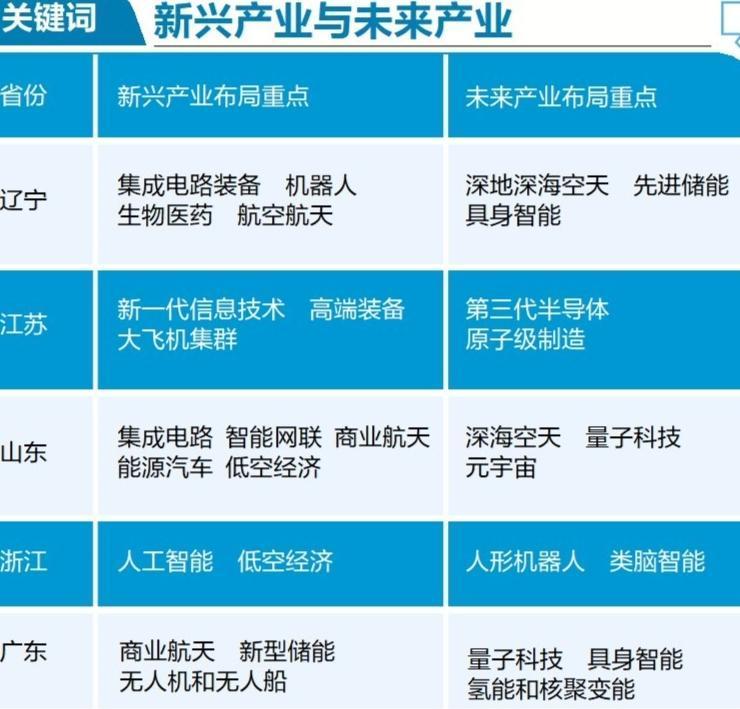
Group 1: Emerging and Future Industries - Various provinces are focusing on emerging and future industries, with specific emphasis on sectors like integrated circuits, robotics, and advanced energy storage [1][6] - Jiangsu aims to deepen integration into the Yangtze River Delta's aircraft manufacturing cluster and emphasizes atomic-level manufacturing [6] - Provinces like Shandong and Guangdong are prioritizing sectors such as quantum technology and hydrogen energy, indicating a trend towards high-tech and sustainable industries [1][7] Group 2: Digital Development - Provinces are actively developing digital infrastructure, with Liaoning focusing on data annotation industries and integrating AI into traditional industries [2][9] - Beijing aims to become a global benchmark city for digital economy, emphasizing core technologies like high-end chips and software [2][9] - Guangdong is enhancing its data trading platforms to foster industrial clusters, showcasing a strong market-driven approach [2][9] Group 3: Marine Economy - Coastal provinces are shifting their focus to marine economies, with Guangdong and Shandong aiming to create comprehensive marine industry ecosystems [8][19] - Liaoning and Jiangsu are leveraging their industrial bases to upgrade traditional marine industries towards high-end and green solutions [8][19] - The emphasis on marine economic development reflects a strategic pivot towards utilizing ocean resources for economic growth [8][19] Group 4: Consumption and Economic Growth - Guangdong is promoting the establishment of international consumption centers, aiming to enhance service industry standards and consumer environments [10][11] - Provinces like Beijing and Jiangsu are emphasizing high-energy consumption innovations, focusing on cultural and tourism integration to stimulate local economies [11][15] - The strategies aim to release local market potential and enhance consumer confidence through improved infrastructure and services [11][15] Group 5: Strategic Technology and Talent Development - Provinces are prioritizing the establishment of national laboratories and major scientific facilities to strengthen strategic technological capabilities [12][14] - There is a focus on integrating education, technology, and talent development to foster innovation and address regional needs [13][14] - Collaborative efforts across provinces aim to enhance the overall effectiveness and resilience of the national innovation system [12][14]
李迅雷:2026资本市场有哪些“预期差”值得重视?
智通财经网· 2026-01-01 14:00
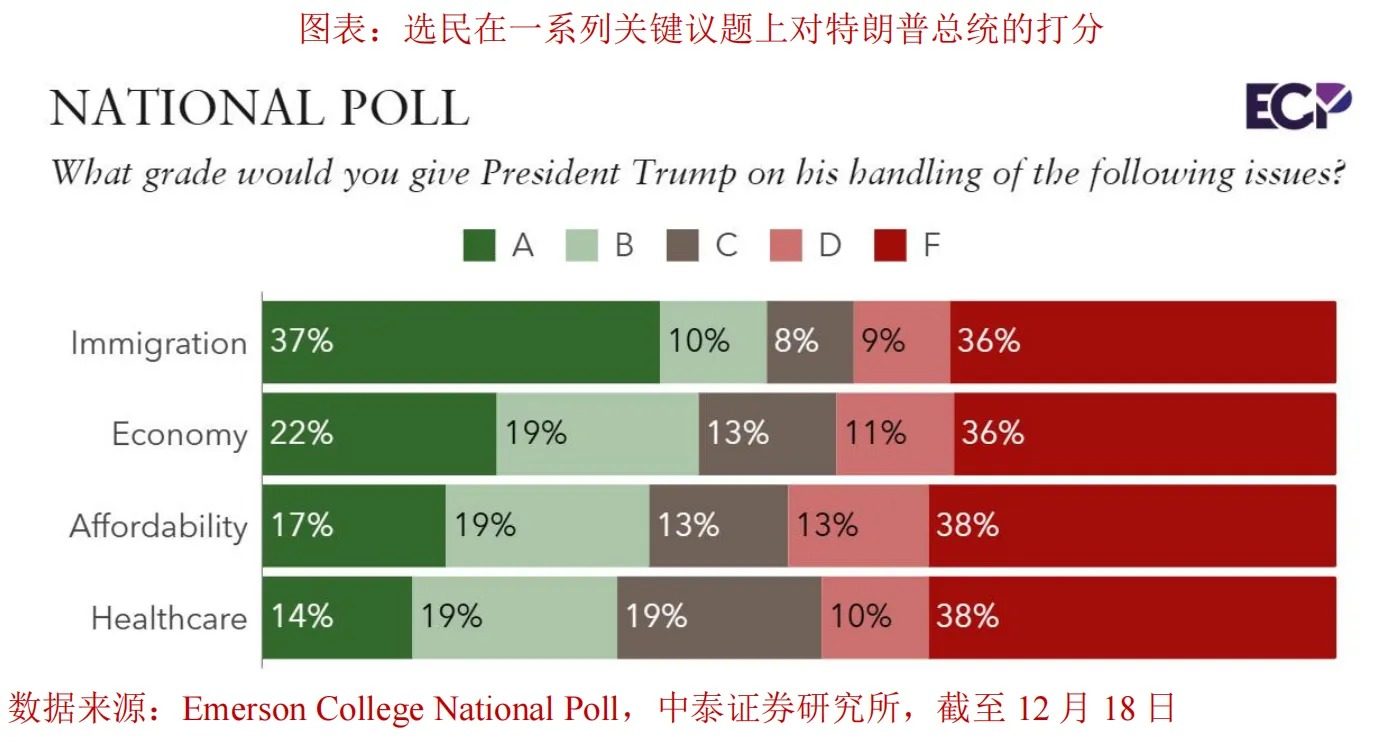
Core Viewpoint - The A-share market is expected to continue its recovery in 2026, driven by changes in risk appetite at the institutional level rather than just profit improvements or liquidity increases [1] Group 1: Market Recovery and Trends - The A-share market experienced a recovery in 2025, with the Shanghai Composite Index rising approximately 18.41%, while the STAR Market and ChiNext recorded gains of 46.30% and 49.57% respectively [1] - The recovery is characterized by a significant change in risk appetite at the institutional level, which is seen as a fundamental driver of valuation reassessment [1] Group 2: U.S.-China Relations - The political dynamics in the U.S., particularly under Trump's administration, may exacerbate the "East rises, West declines" narrative, with potential for two key windows of easing in U.S.-China relations [2][3] - The first window could occur with high-level visits early in the year, while the second may arise as the midterm elections approach, necessitating compromises in trade [6] Group 3: Federal Reserve's Monetary Policy - The nomination of a new Federal Reserve Chair in May 2026 is anticipated to be a pivotal moment for market liquidity and policy direction [7][8] - The first phase of the nomination process may lead to speculation about aggressive rate cuts, impacting risk assets positively [11] Group 4: Fiscal and Monetary Policy - Fiscal policy in 2026 may see a marginal increase in deficit rates, but the focus will shift towards targeted investments rather than broad-based infrastructure spending [12][13] - Monetary policy is expected to face dual constraints, balancing liquidity needs with maintaining a strong RMB to uphold national credit asset pricing [13] Group 5: Capital Market Management - A-shares are likely to benefit from capital market policies aimed at managing expectations, with a focus on long-term funds supporting the market [14][15] - The tightening of IPO approvals and regulations on share reductions will create a "healthy" slow bull market framework [16] Group 6: Global Technology Trends - The global technology sector, particularly AI, is expected to continue its upward trajectory, but with increased volatility and a shift towards application-based investments [20][21] - The Nasdaq 100 index is projected to maintain an upward trend, but with significant fluctuations influenced by U.S. political dynamics [25] Group 7: Domestic Technology Developments - The investment logic in AI is shifting from foundational computing power to application deployment, with a focus on domestic sectors that can match U.S. advancements [26][27] - Key areas of growth include humanoid robots, innovative pharmaceuticals, and upstream materials, driven by domestic supply chain advantages [28] Group 8: Gold and Commodities - Gold prices are expected to rise due to geopolitical risks and declining monetary credibility, with a focus on strategic resources like copper and other metals [34][37] - The demand for commodities will be driven by supply constraints and strategic needs, particularly in the context of global supply chain restructuring [37] Group 9: New Consumption Trends - The demographic shift towards lower birth rates and an increase in single-person households is reshaping consumption patterns, emphasizing emotional value over traditional family-oriented spending [38][39] - New consumption categories, such as pet-related products and AI companions, are anticipated to see significant growth as consumer preferences evolve [39]
过去的一年,消费彻底变了
首席商业评论· 2026-01-01 04:42
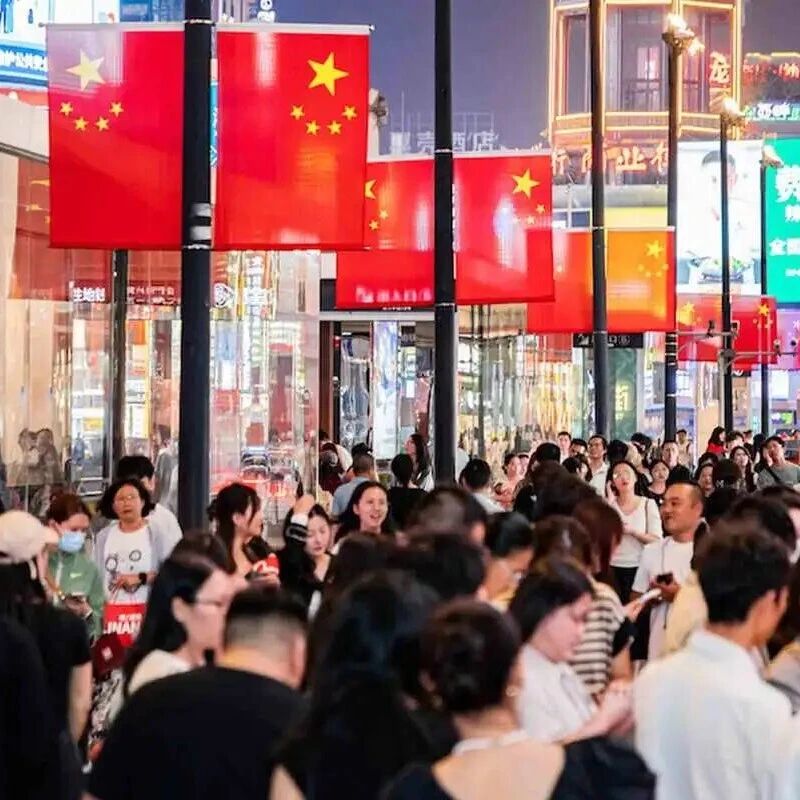
Core Viewpoint - The article discusses the evolving landscape of consumer behavior in China, highlighting the coexistence of emotional and rational consumption trends, and the implications for investment opportunities in the market [5][22]. Group 1: Consumer Trends - Despite perceptions of a cooling consumer market, data shows that final consumption expenditure contributed 53.5% to economic growth in the first three quarters of 2025, an increase of 9 percentage points from 2024 [6]. - Social retail sales grew by 4.0% year-on-year in the first 11 months of this year, surpassing the 3.5% growth expected for the entire year of 2024 [6]. - A McKinsey survey indicates that the expected share of domestic consumption in disposable income for 2025 is stable at 0.0%, a significant improvement from the previous year's expectation of -0.5% [9]. Group 2: Emotional and Rational Consumption - The article identifies two main trends in consumer behavior: emotional consumption, which focuses on personal satisfaction and identity, and rational consumption, which emphasizes quality and cost-effectiveness [13]. - A Nielsen IQ report reveals that 47% of respondents in China purchased only essential items to avoid waste, while 68% were willing to spend more on products that help relieve stress [13]. - The rise of the second-hand economy is noted, with platforms like Xianyu seeing a daily average of 7 million items listed, reflecting a growing acceptance of "recycling consumption" among young consumers [14]. Group 3: Future Consumption Landscape - The emotional economy in China is projected to reach a market size of 2.3 trillion yuan in 2024, with expectations to exceed 4.5 trillion yuan by 2029 [15]. - The article suggests that the health and wellness industry, as well as the pet economy, will benefit from shifting consumer spending towards self-investment and emotional fulfillment [20]. - The emergence of AI-driven emotional technology and virtual consumption is anticipated to create new market opportunities, as consumers increasingly seek personalized emotional experiences [21].
宠物经济板块12月30日跌0.56%,德艺文创领跌,主力资金净流出3.37亿元
Sou Hu Cai Jing· 2025-12-30 09:29
Core Viewpoint - The pet economy sector experienced a decline of 0.56% on December 30, with De Yi Culture leading the drop [1] Market Performance - The Shanghai Composite Index closed at 3965.12, showing no change [1] - The Shenzhen Component Index closed at 13604.07, increasing by 0.49% [1] Capital Flow - The pet economy sector saw a net outflow of 337 million yuan from main funds, while retail investors contributed a net inflow of 339 million yuan [1] - Speculative funds experienced a net outflow of 2.18 million yuan [1]