
新能源汽车制造

Search documents
索赔热议!电池安全聚焦归因
Shen Zhen Shang Bao· 2026-01-15 17:49
Core Viewpoint - The global competitiveness of China's new energy vehicles (NEVs) relies on a healthy and stable supply chain system, highlighting the urgent need for a "Shared Responsibility Agreement" to clarify the boundaries of responsibility across R&D, manufacturing, and application [2][6]. Group 1: Legal Disputes and Quality Issues - A lawsuit has emerged involving XINWANDA Power, which is being sued by Geely's subsidiary, Weirui Electric, for 2.314 billion yuan due to quality issues with battery cells supplied between June 2021 and December 2023 [3][4]. - The lawsuit raises questions about how to scientifically define quality responsibility within the NEV supply chain, emphasizing that battery safety is a complex system that cannot be attributed solely to battery cells [4][6]. Group 2: Industry Implications and Responsibility - The incidents involving XINWANDA and Geely are seen as critical examples for observing quality, responsibility, and risk issues within the NEV supply chain, which directly affect corporate survival and industry ecology [6][7]. - There is a consensus in the industry that a fair responsibility-sharing mechanism is needed, including preemptive technological collaboration, as battery performance is highly dependent on vehicle integration design [6][7]. Group 3: Supply Chain Resilience - The resilience of the supply chain is crucial for the sustainability of the industry, and the global competitiveness of China's NEVs depends on a healthy and stable supply chain system [6][7]. - Establishing a more scientific mechanism for shared responsibility and collaborative innovation is essential not only for resolving current disputes but also for reinforcing the long-term advantages of the domestic industry [7].




欣旺达受困于产业链“质量责任如何科学界定” 索赔热议!电池安全聚焦归因
Shen Zhen Shang Bao· 2026-01-15 17:43
Core Viewpoint - A lawsuit involving the quality of electric vehicle batteries has raised concerns about the long-standing issue of defining quality responsibility within the electric vehicle supply chain [2][3]. Group 1: Lawsuit Details - Xiwanda Power is being sued by Weir Electric, a subsidiary of Geely Automobile Group, for 2.314 billion yuan due to alleged quality issues with battery cells supplied between June 2021 and December 2023 [3]. - The lawsuit highlights the complexity of battery safety, which cannot be solely attributed to battery cells, as it involves multiple components including battery pack design and battery management systems [4]. Group 2: Industry Implications - The incidents are seen as a critical example for observing quality, responsibility, and risk issues within the electric vehicle supply chain, which directly impacts corporate survival and industry ecology [6]. - There is a call for establishing a fair responsibility-sharing mechanism within the electric vehicle industry, emphasizing the need for collaborative innovation and clear delineation of responsibilities across research, manufacturing, and application stages [6][7]. Group 3: Company Responses - Xiwanda Power asserts that the battery cells supplied to other clients have not exhibited quality issues, suggesting that the problem may not lie solely with the battery cells [4]. - The company emphasizes the importance of avoiding one-sided blame and advocates for a more scientific approach to responsibility sharing and collaborative innovation to address current disputes and strengthen the industry's long-term advantages [7].
盘中大消息!不到1分钟,涨停
Zhong Guo Zheng Quan Bao· 2026-01-15 08:23
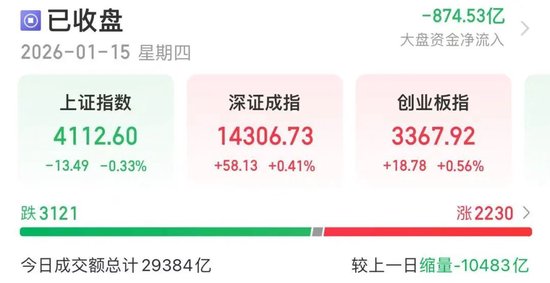
Market Overview - The Shanghai Composite Index fell by 0.33%, while the Shenzhen Component Index rose by 0.41% and the ChiNext Index increased by 0.56% [2] - The total market turnover reached 29,384 billion [2] Semiconductor Industry - TSMC reported its Q4 2025 net profit at $16.307 billion, a 35% year-on-year increase, with revenue of $33.731 billion, up 20.5% year-on-year [10] - The semiconductor supply chain saw a strong rally, with significant gains in storage chips, photolithography machines, and advanced packaging sectors [6] - Blue Arrow Electronics and other companies in the semiconductor sector announced mergers and acquisitions to enhance their market position [11] - The semiconductor industry is experiencing price increases across multiple segments due to rising demand from AI applications, leading to a recovery in industry profitability [12] Precious and Energy Metals - The precious metals and energy metals sectors showed strong performance, with Sichuan Gold hitting the daily limit and Hunan Silver rising over 6% [4] Agricultural Chemicals - Agricultural stocks saw a surge, with Jiangshan Co. hitting the daily limit and other companies like Lier Chemical and Guangxin Co. also experiencing gains [5] Commercial Aerospace and AI Applications - Recent popular sectors such as commercial aerospace and AI applications faced adjustments, with several previously favored stocks experiencing significant declines [5] Energy Storage Sector - The energy storage concept stocks were active, with the battery sector showing strength [13] Lithium Carbonate Prices - Lithium carbonate prices have been rising, reaching a two-year high, while a company announced a planned production halt that could reduce output by 1,500 to 2,000 tons [15] - The Chinese automotive industry is projected to see production and sales exceed 34 million units by 2025, with new energy vehicles expected to account for over 50% of new car sales [15]


2025年度新势力销量分析:零跑强势登顶 头部阵营再重构
Zhong Guo Zhi Liang Xin Wen Wang· 2026-01-15 03:32
Core Insights - The competition in the Chinese new energy vehicle market is intensifying, with a clear shift from "price competition" to "value competition" among new car manufacturers [3] Group 1: Top Performers - Leap Motor achieved a remarkable delivery of 596,555 vehicles in 2025, marking a 103% year-on-year increase and exceeding its annual target of 500,000 vehicles with a completion rate of 119.3% [2][5] - Hongmeng Zhixing delivered 589,107 vehicles, a 32% increase year-on-year, but only reached 58.91% of its ambitious target of 1 million vehicles [5][7] - Xiaopeng Motors delivered 429,445 vehicles, achieving a 126% year-on-year growth and surpassing its target of 350,000 vehicles with a completion rate of 122.69% [9][10] Group 2: Emerging Players and Challenges - Xiaomi Motors entered the market with over 410,000 deliveries, achieving a completion rate of over 114% against its target of 350,000 vehicles, indicating a successful first full sales year [10][12] - Li Auto faced challenges with a total delivery of 406,343 vehicles, down 19% year-on-year, and only achieving 63% of its target of 640,000 vehicles [12][14] - Deep Blue delivered 333,117 vehicles, a 36.6% increase, but faced declining sales in the last two months of the year, highlighting transition pressures [16] Group 3: Diverse Growth Patterns - NIO achieved a record delivery of 326,028 vehicles, a 46.9% increase, with a completion rate of 74.1% against its target [18] - Zeekr delivered 224,000 vehicles, with a slight increase of 0.9%, but fell short of its target of 320,000 vehicles, indicating growth pressures in a competitive market [19][21] - Avita delivered over 120,000 vehicles, but only achieved 60% of its target, reflecting challenges in scaling amidst intense competition [25] Group 4: Market Dynamics and Future Outlook - The market is transitioning from rapid expansion to high-quality development, with brands needing to focus on technological capabilities and precise market positioning to succeed [27] - The implementation of new national subsidy policies in 2026 is expected to accelerate industry reshuffling, intensifying competition in the mainstream price segment [27]


北汽新能源2025“逆天”领跑,做对了啥?
Xi Niu Cai Jing· 2026-01-14 13:01
Core Insights - The article highlights the remarkable growth of BAIC New Energy in the competitive electric vehicle market, achieving over 200,000 units sold in 2025, representing an 84% year-on-year increase, positioning it as a leader in the industry [4][9]. Group 1: Strategic Initiatives - BAIC New Energy's success is attributed to its dual-brand strategy, with the Arcfox brand focusing on mainstream markets and the Jiayuan brand targeting the high-end segment, creating a comprehensive strategic framework [4]. - The Arcfox brand aims to disrupt the A0 market by offering high-value experiences with competitive pricing, while the Jiayuan brand emphasizes "Chinese luxury + Huawei technology" to redefine luxury experiences [6][7]. Group 2: Market Performance - In 2025, the Arcfox brand achieved sales of over 160,000 units, marking a 99% year-on-year growth, while the Jiayuan brand saw explosive growth, with December sales surpassing 10,000 units, making it the top-selling luxury electric sedan [9]. - The combination of mainstream volume and high-end branding has allowed BAIC New Energy to enhance both its scale and brand image [9]. Group 3: Customer-Centric Approach - BAIC New Energy prioritizes user feedback in product development, leading to features like the Arcfox T1's high space utilization rate of 91.7%, significantly above the market average [10]. - The company has introduced innovative service commitments, such as lifetime warranties on key components and free maintenance, addressing common consumer pain points [10][12]. Group 4: Technological Advancements - BAIC New Energy has established a comprehensive value chain covering technology R&D, smart manufacturing, and supply chain collaboration, enabling it to maintain stable growth amid industry challenges [13]. - The company has been proactive in adopting advanced technologies, such as its "Yuanjing Smart" technology system, which supports L2 to L4 autonomous driving capabilities [15]. Group 5: Manufacturing and Supply Chain - The implementation of the "Smart Factory 4.0" initiative has improved production efficiency by 20% and reduced costs by 15%, ensuring high-quality manufacturing [17]. - BAIC New Energy collaborates with leading partners like Huawei and CATL to enhance its technological capabilities and streamline its supply chain processes [17][18]. Group 6: Long-Term Vision - The company focuses on building a robust system that balances agility and strategic depth, allowing it to navigate market fluctuations effectively [18]. - BAIC New Energy's approach combines the agility of a startup with the strategic stability of a state-owned enterprise, positioning it well for future challenges in the electric vehicle market [18].

革新者的征程:北汽新能源从“规模加法”迈向“价值乘法”
Jin Rong Jie· 2026-01-14 10:41
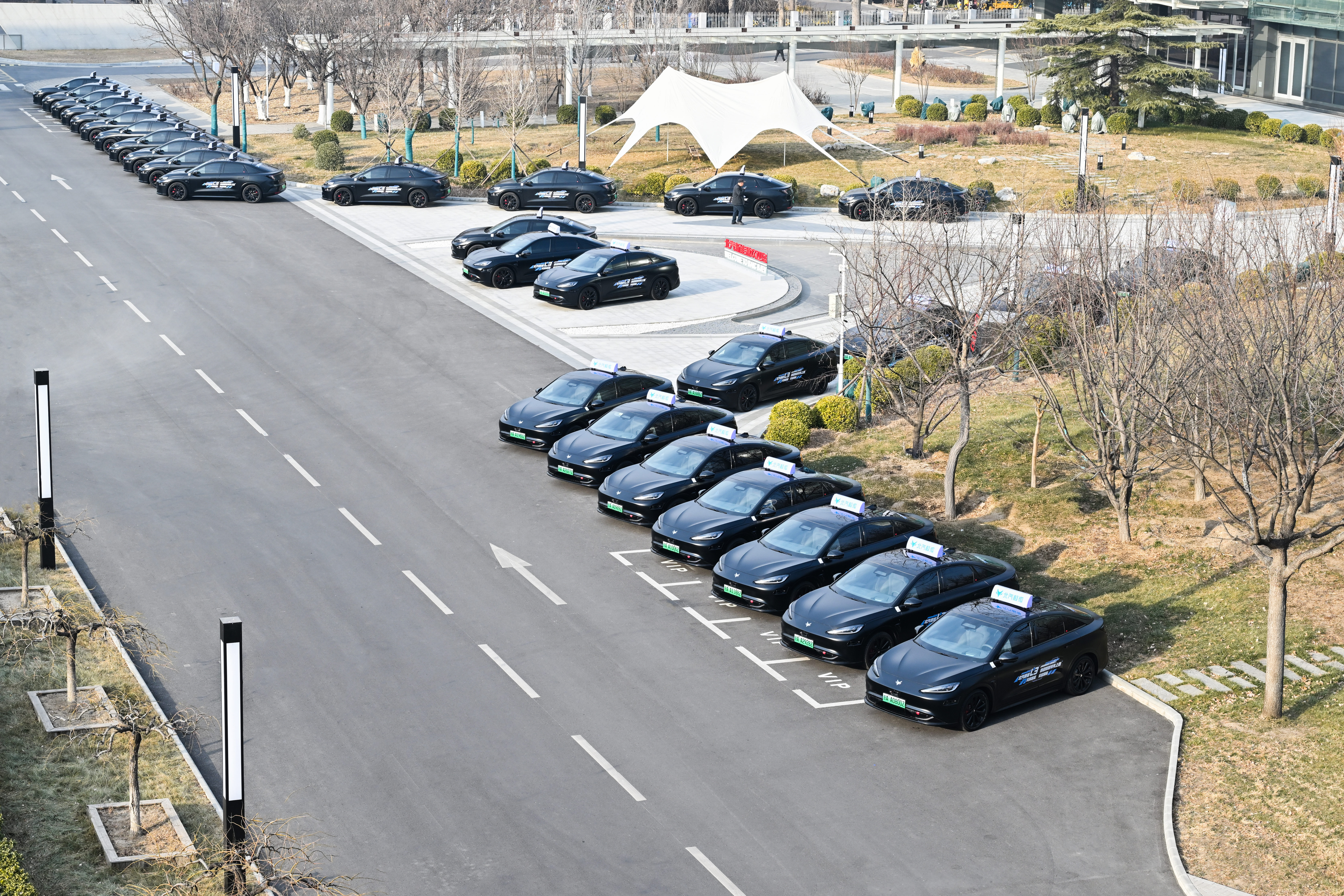
Core Insights - The article highlights the transformation of Beijing Automotive Group's New Energy Vehicle (NEV) division into a competitive player in the market, showcasing strategic determination and market agility [1][12] - In 2025, the company achieved significant sales milestones, with total sales exceeding 200,000 units, representing an 84% year-on-year growth [3][12] - The successful launch of the L3 autonomous driving model, Alpha S, marks a significant technological advancement and commercial viability in the autonomous driving sector [5][7] Sales Performance - In 2025, Beijing Automotive's NEV division sold 209,576 vehicles, surpassing its annual target and demonstrating strong market acceptance [3] - The company achieved a monthly sales record of over 30,000 units for three consecutive months, indicating sustainable growth and market penetration [3] - The Xiangjie brand reached a milestone of over 10,000 units sold in December 2025, ranking among the top three in the luxury sedan segment [3][10] Technological Advancements - The Alpha S L3 model received official approval for L3 autonomous driving, allowing it to operate in designated areas of Beijing [5][6] - The vehicle is equipped with 34 sensors, including three LiDARs, and features a full redundancy safety architecture, emphasizing safety in autonomous driving [6][7] - The company is advancing its technology through partnerships, such as the collaboration with Xiaoma Zhixing for L4 autonomous driving solutions [11] Financial Performance - In Q3 2025, the company achieved a historic gross margin of 1.8%, with revenue reaching 5.867 billion yuan, marking three consecutive quarters of positive growth [7][10] - The improvement in gross margin signals a transition from strategic losses to a sustainable business model, indicating effective growth with profitability [7][10] Market Strategy - The company has established over 500 sales and service outlets across various city tiers, creating a robust market network that supports future growth [4] - The dual focus on scaling operations and enhancing quality is driving a new growth engine for the company, allowing for better resource allocation and market feedback [8][10] - The strategic shift from a traditional state-owned enterprise model to a more agile, technology-driven approach is redefining the company's identity in the automotive industry [12][14]
信心的种子,不怕任何冬寒
Ren Min Ri Bao· 2026-01-13 03:02
Group 1 - As of June 2025, there will be 161 million internet users aged 60 and above in China, indicating a significant growth potential for the silver economy and digital economy [1] - By November 2025, a total of 611 generative AI services will have completed registration, with 306 related applications or functions also registered, showcasing the rapid development of domestic AI models [1] - The new generation of digital technologies, including big data, cloud computing, AI, blockchain, and IoT, is continuously creating new industries, models, and driving forces, expanding the sources of development confidence [1] Group 2 - China's economy is undergoing a profound transformation in its growth dynamics, shifting from reliance on factor input and scale expansion to new productive forces that drive quality, efficiency, and power changes [2] - The potential of China's economy is being continuously released through regional coordinated development, rural revitalization, and the ongoing improvement of human capital quality [2] - The unique ecosystem formed by China's super-large market allows innovations to quickly achieve scale effects once they gain market recognition, as evidenced by the rapid growth of sectors like new energy vehicles and live-streaming commerce [2] Group 3 - Many Chinese entrepreneurs are building technological "moats" and enhancing value through persistent efforts, demonstrating that success comes from hard work and dedication [3] - The successful test flight of domestically produced high-bypass turbofan engines illustrates China's ability to overcome technological challenges and break through external constraints, reflecting a strong sense of confidence [3] - The 2025 Central Economic Work Conference emphasizes the importance of internal strengthening to address external challenges, advocating for strategic determination and a stable industrial system to navigate uncertainties [3]
“全球第一岛”资源是个宝!竟可支持造10亿辆电动汽车?
Zhong Guo Qi Che Bao Wang· 2026-01-09 04:49
Core Insights - Greenland has become a focal point due to its vast natural resources and strategic location, with significant reserves of rare earth elements, oil, natural gas, and minerals essential for electric vehicle production [3][8][9] Resource Potential - Greenland's proven rare earth reserves amount to 28.2 million tons, ranking it among the top globally [3] - The island is estimated to hold up to 90 billion barrels of oil and over 1,600 trillion cubic feet of natural gas, which could significantly impact global energy dynamics [8] - Lithium reserves in Greenland, particularly at Cape Farewell, are estimated at 2.8 million tons, accounting for about 10% of the world's current lithium resources, attracting interest from companies like Tesla [9] Strategic Importance - Greenland's geographical position makes it a key hub for the Arctic shipping routes, which can save 9 to 15 days of transit time compared to traditional routes, enhancing its commercial viability [5][6] - The Arctic shipping routes are viewed as potentially transformative for global trade, akin to the Suez and Panama Canals [6] Environmental and Cultural Considerations - The indigenous Inuit population has a deep connection to the land, and large-scale industrial development could disrupt their traditional lifestyle and cultural heritage [10] - Experts emphasize the need for respecting indigenous rights and ensuring their participation in resource development to achieve sustainable growth [10]

小鹏新年首秀 发布多项AI新技术与新车型
Bei Jing Ri Bao Ke Hu Duan· 2026-01-09 02:53
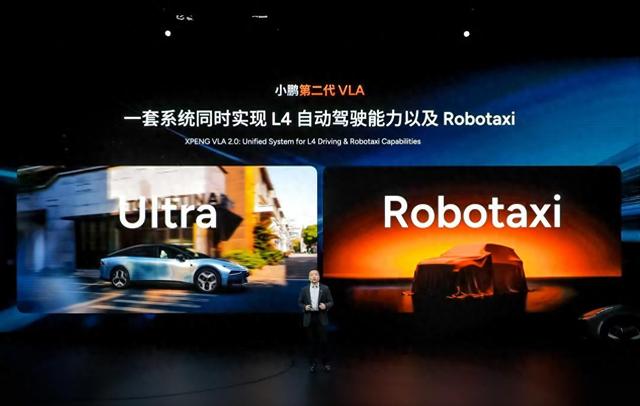
Core Viewpoint - Under the backdrop of policy adjustments, the new energy vehicle industry is accelerating the iteration of AI and autonomous driving technologies, updating models to reshape the competitive landscape [1][3]. Group 1: Policy Changes and Industry Response - Starting January 1, 2026, the purchase tax for new energy vehicles will change from "fully exempt" to "50% reduction," with a maximum tax reduction of 15,000 yuan per vehicle [3]. - In response to policy changes, multiple new energy vehicle companies are actively adapting. For instance, Xiaopeng Motors launched a purchase tax "safety net" or equivalent subsidy plan in October last year to capture part of the market early [3]. Group 2: Technological Innovations - Xiaopeng Motors introduced the second-generation VLA (Visual Language Action) physical world model, which aims to achieve L4 initial capabilities by innovatively omitting the intermediate steps of "visual signal-language translation-action instruction," allowing for direct generation from visual perception to action execution [3][4]. - This architectural innovation significantly enhances system reasoning efficiency, enabling vehicles to perceive and understand the real world more accurately, with the system set to begin initial rollouts in March 2026 [4]. Group 3: Product Launches - Xiaopeng Motors unveiled four new models at its global product launch: the 2026 Xiaopeng P7+, Xiaopeng G7 Super Range Extender, 2026 Xiaopeng G6, and 2026 Xiaopeng G9 [1]. - The 2026 Xiaopeng P7+ features the longest pure electric range among range-extended sedans, with an official starting price of 186,800 yuan. The range-extended version has a CLTC comprehensive range of 1,550 kilometers and a pure electric range of 430 kilometers [4]. - The G7 range-extended version, as Xiaopeng's first range-extended SUV, offers four versions with an official starting price of 195,800 yuan, featuring a CLTC comprehensive range of 1,704 kilometers and a pure electric range of 430 kilometers [5].
优化营商“生态圈”,激活产业“动力源”——聚力推动区域经济发展新高地
Feng Huang Wang Cai Jing· 2026-01-08 16:17
Core Viewpoint - The article highlights the economic development and transformation of Xiaogang Street in Beilun District by focusing on enhancing people's livelihoods and regional development through a strategy termed "Five Battles and Five Grabs" in 2025, showcasing significant progress in various sectors including economic growth, urban renewal, and social governance [1]. Group 1: Economic Development - Xiaogang Street has adopted a dual approach of external attraction and internal revitalization to drive economic growth, successfully attracting high-quality projects such as the French Chava New Energy project and the headquarters of 360 [2]. - As of November 2025, Xiaogang Street has introduced 253 new registered enterprises, including 17 with a registered capital of over 10 million, contributing to industrial development [2]. - The street has implemented a "tenglong huan niao" strategy to optimize land use, resulting in the elimination of 16 low-efficiency enterprises and the revitalization of 253 acres of land for industrial upgrades [2]. Group 2: Service Optimization - Xiaogang Street has established a comprehensive service system for enterprises, providing full-cycle support from project signing to construction, which has enhanced investor confidence [3]. - The street has created specialized service teams for major projects, ensuring smooth progress by addressing issues related to land delivery and policy implementation [3]. - A "one enterprise, one policy" mechanism has been developed to resolve challenges faced by over 40 key enterprises, leading to an increase in wholesale sales by 10 billion [3]. Group 3: Talent and Innovation - Xiaogang Street has built a robust industrial innovation matrix, including 5 champion enterprises, 5 listed companies, and 139 national high-tech enterprises [4]. - The street has initiated a "talent demand information database" and conducted outreach activities to identify and nurture potential talent, achieving a leading entry rate for national talent projects [4]. - The street has organized various skill enhancement programs and competitions, attracting over 100 participants and fostering a comprehensive training system for industrial workers [5]. Group 4: Community and Governance - Xiaogang Street has implemented a dual-core differentiated service model to support new business formats and enhance community services for workers [5]. - Initiatives such as the "Warm New Canteen" vouchers and "Summer Cooling Drink Vouchers" have been introduced to benefit new economy workers, with over 150 individuals receiving support [5]. - The street has facilitated the movement of over 400 workers between enterprises, resulting in an average annual income increase of over 8,000 [5]. Group 5: Future Goals - The street aims to continue enhancing industrial upgrading, innovation capabilities, and service quality, focusing on the development of biomedicine and digital technology clusters to contribute to the modernization of the coastal city [6].
