
纺织

Search documents
江浙小老板的新春大梦想:马上登“科”话投资
Zhong Guo Zheng Quan Bao· 2026-02-12 20:26
Group 1 - The core viewpoint of the articles highlights the increasing interest and investment in technology, particularly AI, among small and medium-sized enterprises in the Jiangsu and Zhejiang regions, as they seek to transform their businesses and embrace new opportunities [1][2][4] - Entrepreneurs like Lao Zhao are focusing on integrating AI technology into traditional industries such as textiles, indicating a shift towards innovation and modernization in production processes [1][3] - There is a notable trend of local businesses actively seeking investment opportunities in technology-driven projects, with many investors expressing a strong desire to support startups and innovations in AI and related fields [2][4] Group 2 - The investment landscape in Jiangsu and Zhejiang is characterized by a vibrant activity in both primary and secondary markets, with many small business owners showing a keen interest in technology stocks and funds [3][4] - Specific sectors such as AI applications, humanoid robots, and smart industrial equipment are attracting significant attention and funding from local investors, reflecting a broader trend of capital flowing into hard technology ventures [2][3] - Entrepreneurs are optimistic about the potential returns from investing in technology, with many reporting successful investments in tech-related stocks and funds, indicating a strong belief in the growth of the tech sector [3][4]
Leggett & Platt(LEG) - 2025 Q4 - Earnings Call Transcript
2026-02-12 14:30
Financial Data and Key Metrics Changes - Fourth quarter sales were $939 million, down 11% compared to Q4 2024, primarily due to sales weakness at a certain customer and retailer merchandising changes in adjustable bed and specialty foam [13] - Full year 2025 sales decreased 7% to $4.05 billion, driven by weak demand in residential end markets and other factors [15] - Fourth quarter EBIT was $32 million, and adjusted EBIT was $48 million, down $8 million versus Q4 2024 [14] - Full year adjusted EBIT decreased $4 million to $263 million, primarily from lower volume [15] - Full year EPS was $1.69, and adjusted EPS was $1.05, flat versus 2024 [15] - Operating cash flow was $338 million, an increase of $33 million versus 2024 [15] - Net debt to Adjusted EBITDA decreased from 3.8x to 2.4x by the end of the year [16] Business Line Data and Key Metrics Changes - Bedding Products sales decreased 11% compared to Q4 2024 [13] - Specialized Products declined 21%, mainly due to the aerospace divestiture [13] - Furniture, Flooring, and Textile Products were down 3% [13] - In the bedding segment, demand is expected to be down low single digits in 2026 due to volume declines in adjustable bed and specialty foam [9] - Specialized product segment sales are expected to be flat to slightly above 2025, excluding aerospace [10] Market Data and Key Metrics Changes - Residential markets remain in a multi-year depression, with demand well below average cycle levels [7] - The U.S. mattress market was down low single digits in 2025, with domestic production down high single digits [8] - Automotive volume in 2026 is expected to reflect a challenging industry backdrop, with inflationary pressures impacting demand [9] Company Strategy and Development Direction - The company aims to strengthen the balance sheet, improve operational efficiency, and position for long-term growth [4] - Focus on diversifying the customer base in specialty foam and integrating foam and innerspring capabilities in bedding [11] - In automotive, the company plans to make strategic investments to return to growth and strengthen relationships with OEM and Tier One customers [11] - The company is committed to driving operational excellence through continuous process improvement and cost reduction [12] Management's Comments on Operating Environment and Future Outlook - Management does not expect a macro market recovery in 2026, indicating a cautious outlook [31] - The company is confident in its ability to execute strategic priorities and create long-term shareholder value despite near-term demand uncertainty [21] - Management highlighted the importance of consumer confidence and housing market recovery as key factors for future growth [32] Other Important Information - The company has substantially completed its restructuring plan, exceeding original expectations [17] - Anticipated currency benefits are expected to offset the effects of lower volume and pricing year-over-year in both automotive and hydraulic cylinders [10] - The company is in discussions with Somnigroup but will not provide further comments on this matter [21] Q&A Session Summary Question: Can you talk about the restructuring and its impact on segment margins? - Management noted that restructuring efforts have provided significant benefits, with $63 million in benefits in 2025 and an expected $5 million in 2026 [28] Question: What is the outlook for the bedding market? - Management indicated that there is no expectation of macro market recovery in 2026, and the bedding market is expected to continue facing challenges [31] Question: Can you elaborate on the impacts of customer supply chain disruptions? - Management explained that various supply chain issues impacted customers, but these issues are now behind them [45] Question: What are the capital allocation priorities moving forward? - The company aims to fund organic growth, pursue small strategic acquisitions, and return excess cash to shareholders while moving closer to a 2x leverage target [46]

美国1月非农超预期,中国1月通胀修复
Dong Zheng Qi Huo· 2026-02-12 00:42
1. Report's Industry Investment Ratings No industry investment ratings are provided in the report. 2. Core Views of the Report - **Macro - Strategy**: 1) In January, inflation data indicated continuous price recovery. The logic of going long on inflation was initially strengthened, and IC was dominant. 2) Gold prices fluctuated and closed higher. The US January non - farm employment report was better than expected, but the sustainability of the employment market's recovery needed to be observed. Market expectations for interest rate cuts were postponed to July. 3) The US January non - farm payrolls exceeded expectations, and short - term interest rate cut expectations were postponed again. US stocks were expected to maintain high - level fluctuations. 4) The rebound of PPI in January exceeded market expectations. The bond market was expected to remain strong in the short term, but the odds of chasing the rise were limited. Consider shorting when the upward momentum weakened [1][2][3][20]. - **Commodities**: 1) Steel prices were expected to continue the oscillating pattern before the Spring Festival. 2) Coking coal and coke prices were expected to maintain an oscillating pattern in the short term. 3) The USDA February report had a neutral - to - bearish impact on cotton. ICE cotton prices were expected to maintain a weak oscillating pattern at a low level. Zheng cotton was expected to oscillate around the Spring Festival. 4) The palm oil market was expected to oscillate in the short term. Consider going long on dips if Malaysia's market remained weak. 5) The fundamentals of lithium carbonate were improving. After the Spring Festival, it was expected to see both supply and demand increase. Consider going long on dips. 6) For lead, consider mid - term long positions. 7) For zinc, adopt a wait - and - see approach before the Spring Festival and use double - buying for unilateral operations. 8) Crude oil prices were expected to remain oscillating and strong in the short term. 9) LPG prices were expected to be strongly oscillating. 10) For asphalt, adopt a cautious wait - and - see approach [23][26][31][34][38][40][45][48][50][51]. 3. Summary by Relevant Catalogs 3.1 Financial News and Comments 3.1.1 Macro - Strategy (Stock Index Futures) - In January, CPI increased by 0.2% year - on - year, and PPI decreased by 1.4% year - on - year. The logic of going long on inflation was initially strengthened, and the CSI 500 index was dominant. It was recommended to continue holding the long - stock - index strategy [10][11]. 3.1.2 Macro - Strategy (Gold) - The Shanghai Futures Exchange adjusted the automatic conversion standard for silver hedging positions. Gold prices fluctuated and closed higher. The US January non - farm employment report was better than expected, and market expectations for interest rate cuts were postponed to July. It was recommended to reduce positions for the Spring Festival [13][14]. 3.1.3 Macro - Strategy (US Stock Index Futures) - The US January non - farm payrolls exceeded expectations, and short - term interest rate cut expectations were postponed again. US stocks were expected to maintain high - level fluctuations [17][18]. 3.1.4 Macro - Strategy (Treasury Bond Futures) - In January, CPI was lower than expected, and PPI was better than expected. The bond market was expected to remain strong in the short term, but the odds of chasing the rise were limited. Consider shorting when the upward momentum weakened [19][20][21]. 3.2 Commodity News and Comments 3.2.1 Black Metals (Rebar/Hot - Rolled Coil) - Mexico launched an anti - dumping sunset review investigation on Chinese seamless steel pipes. Steel prices were expected to continue the oscillating pattern before the Spring Festival. It was recommended to adopt an oscillating mindset and pay attention to risks with light positions before the Spring Festival [22][23][24]. 3.2.2 Black Metals (Coking Coal/Coke) - The import coking coal forward market was stable and slightly strong. The spot market was expected to remain stable before the Spring Festival, and the futures market was expected to oscillate [25][26][27]. 3.2.3 Agricultural Products (Cotton) - The USDA February report had a neutral - to - bearish impact on cotton. ICE cotton prices were expected to maintain a weak oscillating pattern at a low level. Zheng cotton was expected to oscillate around the Spring Festival. It was recommended to hold light positions to avoid risks during the long holiday [28][30][31]. 3.2.4 Agricultural Products (Soybean Oil/Rapeseed Oil/Palm Oil) - The palm oil market was expected to oscillate in the short term. Consider going long on dips if Malaysia's market remained weak. If planning to hold positions for the holiday, it was recommended to use options strategies [33][34][35]. 3.2.5 Non - ferrous Metals (Lithium Carbonate) - The first part of the national standard for vehicle - use solid - state batteries was planned to be released in July 2026. The fundamentals of lithium carbonate were improving. After the Spring Festival, it was expected to see both supply and demand increase. Consider going long on dips [36][37][38]. 3.2.6 Non - ferrous Metals (Lead) - High - grade base metal mineralization was discovered in Queensland. Lead was currently in a situation of weak supply and demand. Consider mid - term long positions [39][40][41]. 3.2.7 Non - ferrous Metals (Zinc) - Some projects of Chihong Zinc & Germanium had progress. Zinc prices were mainly oscillating. Adopt a wait - and - see approach before the Spring Festival and use double - buying for unilateral operations [42][43][45]. 3.2.8 Energy Chemicals (Crude Oil) - OPEC's January production decreased by 440,000 barrels per day. Crude oil prices were expected to remain oscillating and strong in the short term [47][48][49]. 3.2.9 Energy Chemicals (Liquefied Petroleum Gas) - EIA propane weekly data showed certain changes. LPG prices were expected to be strongly oscillating [50]. 3.2.10 Energy Chemicals (Asphalt) - The domestic heavy - traffic asphalt capacity utilization rate decreased. The asphalt market was expected to be light before the Spring Festival. It was recommended to adopt a cautious wait - and - see approach [50][51][52].
降息降准可期,物价乍暖还寒
泽平宏观· 2026-02-11 16:07
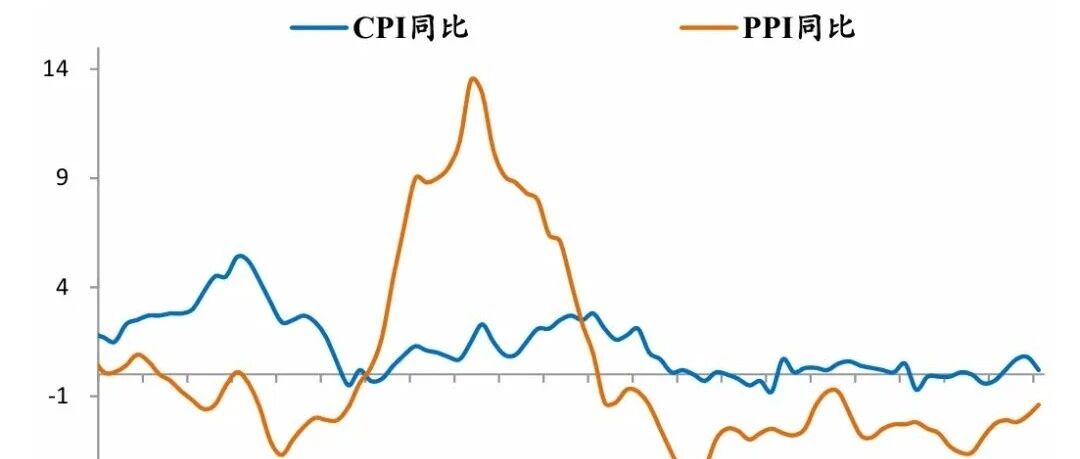
Core Viewpoint - The article discusses the marginal improvement in domestic prices as of January 2025, driven by input factors and anti-involution policies, while still remaining at low levels. It anticipates the potential for expanding domestic demand and monetary easing measures [1][9]. Group 1: CPI Analysis - In January, the CPI increased by 0.2% year-on-year, a decrease of 0.6 percentage points from the previous month, influenced by last year's high base and weak domestic demand [5][10]. - Food prices fell by 0.7% year-on-year, with pork prices down 13.7%, indicating a significant decline in demand [5][10]. - Core CPI rose by 0.8% year-on-year, but this was a decrease of 0.4 percentage points from the previous month, reflecting weak service price growth [12]. Group 2: PPI Analysis - The PPI decreased by 1.4% year-on-year in January, but the decline was less severe than in December, indicating a narrowing of the drop [6][21]. - Input factors have led to price increases in upstream industries, particularly in non-ferrous metals, while downstream sectors remain weak due to insufficient demand [21][24]. - The PPI is expected to recover more significantly, driven by anti-involution policies and geopolitical factors affecting commodity prices [8][21]. Group 3: Future Outlook - The article forecasts a moderate recovery in prices, supported by policies such as the "old-for-new" consumption incentive, adjustments in pig production capacity, and international gold price trends [8][9]. - The central bank's monetary policy is expected to remain accommodative, with potential for interest rate cuts and reserve requirement ratio reductions to stimulate demand [27][30]. - The overall economic environment is characterized by a strong supply but weak demand, necessitating continued efforts to stabilize market expectations and enhance domestic momentum [30][31]. Group 4: Pig Cycle Analysis - The pig price in January showed a year-on-year decline of 13.7%, but the rate of decline has narrowed, indicating a potential bottoming out of the cycle [16][17]. - The current pig cycle is still in a downward trend, with production capacity adjustments beginning but not yet sufficient to drive a significant price recovery [16][17]. - The industry is experiencing increased concentration, which may lead to reduced price volatility in future cycles compared to traditional patterns [18]. Group 5: Monetary Policy Insights - The central bank's Q4 report emphasizes the need for a flexible and effective monetary policy, with a focus on using tools like interest rate cuts to support economic recovery [27][30]. - There is a notable increase in household deposits moving towards wealth management products, indicating a shift in investment preferences that could impact bank liquidity [29][35]. - Loan interest rates continue to decline, with the weighted average rate at 3.15%, reflecting ongoing efforts to lower financing costs for the economy [29][36]. Group 6: Exchange Rate Dynamics - The RMB has strengthened, reaching a midpoint of 6.91 against the USD, creating a favorable environment for capital inflows and policy flexibility [38]. - The anticipated easing of US monetary policy may further enhance China's economic positioning and open up additional policy space [38].

江苏经济为何有“高原”缺“高峰”?
Zhong Guo Fa Zhan Wang· 2026-02-11 06:35
Core Viewpoint - Jiangsu, a major economic province in eastern China, is characterized by a strong industrial foundation, dense manufacturing clusters, and robust foreign trade capabilities. However, it faces challenges in cultivating globally leading enterprises and industry clusters, which limits its high-quality development potential [1]. Group 1: Formation of the "Plateau" - The formation of Jiangsu's industrial economic "plateau" is attributed to multiple advantages, including a deep economic foundation, favorable geographical conditions, a complete industrial system, a dense network of educational and research institutions, and active innovation entities [2]. Group 2: Challenges in Establishing the "Peak" - Despite a solid industrial base, Jiangsu faces deep-rooted challenges in establishing industrial "peaks." Historical path dependence has led to a reliance on a processing and manufacturing model that yields low profits and added value, positioning Jiangsu more as an executor rather than a definitional leader in the global supply chain [3]. - Traditional industries dominate Jiangsu's economy, with leading enterprises primarily in heavy industries such as petrochemicals and textiles, lacking the high-tech and internet attributes that characterize modern innovation [4]. - The innovation ecosystem suffers from a transformation bottleneck, where a focus on academic publications leads to many patents remaining unutilized, and local government funding practices may not align with the needs of agile tech startups [4]. Group 3: Pathways to Breakthrough - To transition from a "plateau" to a "peak," Jiangsu must focus on cultivating "chain leader" enterprises by implementing a "Peak Enterprise" plan during the 14th Five-Year Plan, selecting 10-20 potential leading companies for targeted support in R&D and market expansion [5]. - Strengthening basic research is essential, with increased provincial funding and the establishment of frontier science centers to facilitate early-stage technology transformation [6]. - Attracting talent is crucial, requiring competitive policies that provide a conducive research environment and support for families, transforming Jiangsu into a destination for top talent rather than a transit point [6]. - Global collaboration in technology innovation is necessary, addressing critical technological challenges through an open and structured approach to attract global resources [7]. - Systemic reforms are needed to eliminate barriers to innovation, establishing a modern governance system that fosters trust and motivation, ultimately converting Jiangsu's industrial advantages into technological peaks [7]. Conclusion - Jiangsu's "plateau" serves as a foundation, while the "peak" represents the future direction. The transition from a manufacturing powerhouse to an innovation-driven province requires strategic vision and sustained effort, aiming for a shift from "Jiangsu manufacturing" to "Jiangsu creation" on the global stage [8].
莫迪跪了?5000亿豪赌换美国和解,俄罗斯遭背刺,中国到底慌不慌
Sou Hu Cai Jing· 2026-02-11 05:48
特朗普的声明让人吃惊,2月3日,他宣布美印达成了贸易协议,这场拉锯战了一年多的博弈终于告一段 落。美国大手一挥,将对印度的关税从50%大幅削减至18%。这一消息简直让莫迪乐开了花,特别是在 他刚刚卷入爱泼斯坦案的风波中,顿时仿佛看到了曙光。对莫迪来说,18%的关税水平几乎与日韩的 15%相当,比起印尼19%、越南20%的关税待遇,这真是相当不错的成绩单,堪称莫迪能够获得的最佳 结果。然而,大家都明白,世上哪有不劳而获的好事。为了这一点小小的关税优惠,莫迪付出的代价可 不轻。 首先,印度本土的工业将面临灭顶之灾。协议的核心内容之一,就是要求印度取消对美国的关 税和非关税壁垒。这对于印度来说,无异于拆掉了自己赖以生存的保护屏障。众所周知,印度的工业基 础相当薄弱,曾依赖高关税作为保护伞。然而,一旦关税被撤销,美国的成熟工业产品蜂拥而至,印度 本土的企业难以招架。拿汽车产业来说,印度曾对进口整车征收高达110%的关税,像塔塔和马恒达这 样的车企依靠这一政策才得以生存。如今,关税取消后,通用和福特等美国品牌将低价杀入市场,印度 本土车企的销量可能会暴跌。制药、纺织等曾经的优势产业,也将难以抵挡美国产品的竞争。农业尤为 ...

应急部发布春节前后工贸企业典型事故:督促各地深刻吸取教训
Nan Fang Du Shi Bao· 2026-02-10 14:13
Core Viewpoint - The Ministry of Emergency Management has released a series of typical accident cases in industrial and trade enterprises to guide and urge regions and companies to learn from these lessons, effectively prevent major safety risks, and curb various accidents [1] Group 1: Accident Cases - On February 7, 2023, an explosion at a small illegal workshop in Shanxi Province resulted in 8 deaths and 3 injuries, prompting the State Council's Safety Committee to oversee the investigation and accountability [1] - On February 18, 2022, an explosion at Huaye Foundry in Guangdong caused 3 deaths and 2 serious injuries due to improper installation and operation of an oxygen lance, leading to a primary and secondary explosion [2] - On February 18, 2024, an explosion at Asia-Pacific Light Alloy in Jiangsu resulted in 5 deaths and 13 injuries due to a failure to install safety components, leading to a catastrophic aluminum liquid leak and explosion [3] - On February 5, 2014, a poisoning incident at Embraco in Beijing resulted in 3 deaths when workers improperly used sulfuric acid for cleaning, leading to the release of hydrogen sulfide gas [4] - On February 15, 2025, a dust explosion at Qianbaiwei Food Ingredients in Shandong caused 5 deaths due to metal sparks igniting dust during equipment installation [5] - On January 10, 2023, a poisoning incident at Fuqiang Hongtai Dyeing in Zhejiang resulted in 3 deaths and 3 injuries due to the release of hydrogen sulfide gas from improperly managed acidic wastewater [6] - On December 27, 2023, a carbon monoxide poisoning incident at a hot pot restaurant in Shanxi injured 23 people due to inadequate ventilation and improper combustion of the cooking equipment [7] Group 2: Lessons Learned - Companies must improve risk identification and safety management, especially during the resumption of operations after holidays, to prevent accidents [1][2][3][4][5][6][7] - There is a need for strict adherence to operational protocols and safety measures, including proper installation of safety devices and conducting thorough safety checks [2][3][4][5][6] - The importance of training employees on safety awareness and emergency response to prevent the escalation of accidents is highlighted [4][5][6][7]
光大期货0210热点追踪:纺织企业陆续放假,棉花缘何反弹?
Xin Lang Cai Jing· 2026-02-10 09:32
新浪合作平台光大期货开户 安全快捷有保障 责任编辑:朱赫楠 热点栏目 自选股 数据中心 行情中心 资金流向 模拟交易 客户端 光大期货0210热点追踪:纺织企业陆续放假,棉花缘何反弹? 光大期货0210热点追踪:纺织企业陆续放假,棉花缘何反弹? 新浪合作平台光大期货开户 安全快捷有保障 责任编辑:朱赫楠 热点栏目 自选股 数据中心 行情中心 资金流向 模拟交易 客户端 ...

国元证券晨会纪要-20260210
Guoyuan Securities2· 2026-02-10 02:00
Core Insights - The report indicates that employment data in the U.S. is expected to decline slightly, but this should not cause panic [3] - The U.S. is moving to lower the so-called reciprocal tariffs on Bangladeshi goods and provide new exemptions for textiles [3] - The price of memory chips has surged nearly 90% quarter-on-quarter, setting a historical record [3] - The Ministry of Commerce held a meeting with automotive companies to promote the expansion and quality improvement of automotive consumption [3] - The penetration rate of new energy in light commercial vehicles is expected to continue increasing by 2026 [3] Economic Data Summary - The Baltic Dry Index closed at 1923.00, down 0.67% [4] - The Nasdaq Index closed at 23238.67, up 0.90% [4] - The Dow Jones Industrial Average closed at 50135.87, up 0.04% [4] - The S&P 500 closed at 6964.82, up 0.47% [4] - The Shanghai Composite Index closed at 4123.09, up 1.41% [4] - The Shenzhen Composite Index closed at 2700.22, up 1.91% [4] - The Hang Seng Index closed at 27027.16, up 1.76% [4]
越南推动产业多元化发展
Sou Hu Cai Jing· 2026-02-09 23:00
Group 1 - Vietnam's GDP is projected to grow by 8.02% year-on-year in 2025, demonstrating resilience amid a global economic downturn [1] - The total import and export volume for Vietnam is expected to increase by 18.2% year-on-year in 2025, exceeding $930 billion, maintaining a trade surplus for several consecutive years [1] - The manufacturing sector, particularly in electronics and textiles, is rapidly developing, positioning Vietnam among the top twenty trading nations globally [1] Group 2 - The service sector is projected to grow by 8.62% in 2025, contributing 51.08% to Vietnam's GDP, driven by a significant increase in international tourist arrivals [2] - Vietnam is expected to receive over 21.2 million international tourists in 2025, a 20.4% increase year-on-year, marking a historical high [2] - The government is implementing policies to diversify export markets and reduce reliance on traditional markets in Europe and the US, encouraging industries to explore emerging markets in India, Africa, and Latin America [2]