免税

Search documents
春秋假及雪假政策显著拉动淡季旅游需求,旅游ETF上涨
Ge Long Hui· 2025-12-16 03:02
Core Viewpoint - The tourism and hotel sector is experiencing growth, with notable increases in stock prices for companies like Junting Hotels and Xiyu Tourism, contributing to a 7% rise in the tourism ETF year-to-date [1] Group 1: Tourism Sector Performance - Junting Hotels' stock rose over 6%, while Xiyu Tourism and Three Gorges Tourism saw increases of over 2%, driving the tourism ETF's performance [1] - The tourism ETF, which tracks the CSI Tourism Theme Index, focuses on various segments of the tourism industry, including accommodation, sightseeing, retail, entertainment, and dining [2] - The index's sector allocation shows significant weights in aviation (34.2%), tourism and scenic spots (26.6%), retail (17.6%), and hotel dining (12.2%), with China Duty Free being a core holding at over 17.6% [2] Group 2: Industry Insights - Shenwan Hongyuan Securities notes that policies promoting spring and autumn holidays have significantly boosted off-peak tourism demand, benefiting scenic spots and tourism companies [3] - The combination of government subsidies, financial support, and merchant discounts has effectively stimulated consumer spending, highlighting investment opportunities in cultural tourism and winter sports [3] - China Merchants Bank Securities anticipates that the upcoming long holiday in 2026 and ongoing improvements in vacation policies will further enhance travel enthusiasm [3] Group 3: Hotel and Restaurant Sector Challenges - The hotel sector is facing pressure, with ongoing competition and insufficient release of business travel demand, leading to an average market sentiment [3] - Profit growth for hotel companies is primarily driven by cost control and quality improvements, with expectations for profit recovery tied to an overall industry rebound [3] - In the restaurant sector, market growth has slowed due to various factors, but competition is shifting from price wars to more rational pricing strategies [4] Group 4: Duty-Free Market Outlook - The duty-free industry is showing signs of marginal recovery, with a positive year-on-year growth in sales for offshore duty-free shops [4] - The upcoming closure of Hainan Island is expected to enhance the competitive advantage of duty-free operators, benefiting from free trade port policies [4] - The expansion of visa-free travel and the restoration of international flight capacity are anticipated to boost international customer flow, with leading duty-free companies expected to gain from these trends [4]


珠免集团:公司对外担保余额为68.77亿元
Mei Ri Jing Ji Xin Wen· 2025-12-15 10:37
截至发稿,珠免集团市值为129亿元。 每经头条(nbdtoutiao)——"一针两千,童颜针年销3亿元"背后:多家关联方注册地"查无此人",股民 追问"钱呢"!钱氏姐弟几乎"掏空"江苏吴中,公司即将退市 每经AI快讯,珠免集团(SH 600185,收盘价:6.83元)12月15日晚间发布公告称,截至2025年12月15 日,公司对外担保余额为68.77亿元,占公司最近一期经审计净资产11.65亿元的比例为590%,包括对公 司及其属下控股公司提供的担保;公司为关联方重庆两江新区格力地产有限公司提供反担保余额为7.94 亿元。 2025年1至6月份,珠免集团的营业收入构成为:免税商品销售占比61.4%,房地产占比24.43%,其他占 比12.4%,其他业务占比1.78%。 (记者 曾健辉) ...

批零社服行业2026年投资策略:景气向上,把握修复+成长双主线
GF SECURITIES· 2025-12-15 01:32
Core Insights - The report emphasizes two main investment directions for 2026: recovery sectors focusing on profit inflection points and growth sectors targeting high revenue increases [4][19][20] Recovery Sectors - The duty-free sector is showing signs of recovery with favorable policies enhancing consumption, including expanded product categories and improved shopping convenience [4][19] - The hotel industry is expected to see a gradual improvement in RevPAR, with business and leisure demand stabilizing, indicating a potential operational turning point in Q4 or next year [4][19] - The tourism sector remains resilient despite macroeconomic pressures, with increasing travel volumes and government initiatives aimed at boosting consumption in various travel themes [4][19] Growth Sectors - The beauty industry is experiencing intensified competition, with a focus on channel value reconstruction and brand establishment [4][20] - The gold and jewelry sector is witnessing a recovery, driven by new product launches and an increasing focus on high-end market competition [4][20] - The cross-border e-commerce sector is expected to rebound, supported by stable policies and a decrease in shipping costs, with strong demand from the U.S. market [4][20] Key Company Recommendations - For duty-free, China Duty Free Group is recommended for its long-term growth potential, with attention to Wangfujing and Zhuhai Duty Free Group [4] - In the hotel sector, companies like Jinjiang Hotels, Atour, and Huazhu are highlighted for their growth prospects [4] - In tourism, companies such as Three Gorges Tourism and Changbai Mountain are suggested for monitoring acquisition and new business developments [4] - The beauty sector includes recommendations for brands like Maogeping and Proya, focusing on channel strategies [4] - For gold and jewelry, companies like Chow Tai Fook and Lao Pu Gold are recommended for their market positioning [4] - In retail, companies like Yonghui Supermarket and Xinhua Department Store are noted for their recovery potential [4]




社会服务行业专题报告十一:酒店价格回正,REITs助力文旅资产盘活提速
Shenwan Hongyuan Securities· 2025-12-14 14:36
Investment Rating - The report rates the industry as "Overweight," indicating a positive outlook for the sector compared to the overall market performance [2]. Core Insights - The report highlights a moderate recovery in consumer spending, with tourism-related prices showing strong performance. The national CPI increased by 0.7% year-on-year in November 2025, reflecting a continued recovery in consumer spending [2][7]. - Hotel prices have shown resilience despite seasonal demand fluctuations, with the average hotel room price maintaining positive growth year-on-year. The RevPAR (Revenue Per Available Room) has only slightly declined, indicating a shift from a volume-driven recovery to a price-stabilized and optimized operational approach [2][8]. - The introduction of REITs (Real Estate Investment Trusts) in the service industry is expected to clarify the asset securitization path for various service sectors, including tourism and hospitality. This initiative aims to revitalize existing assets and improve financial structures [2][22][23]. Summary by Sections 1. Hotel Structure Differentiation and Price Resilience - The hotel industry is experiencing a seasonal decline in occupancy rates, but average room prices remain stable, with an ADR (Average Daily Rate) of 388.8 CNY per night in early December, up 4.3% year-on-year [8][10]. - The RevPAR for the week ending December 6, 2025, was 233 CNY per night, showing only a 0.4% decline year-on-year, indicating a recovery phase focused on price stability and operational efficiency [8][10]. 2. REITs Supporting Asset Securitization in the Service Industry - The newly released REITs project industry scope includes cultural tourism infrastructure and commercial facilities, allowing for a clearer path to asset securitization for hotels and tourist attractions [22][23]. - The report emphasizes that the inclusion of high-quality service industry assets in the REITs framework will enhance cash flow stability and operational efficiency, ultimately benefiting the valuation and investment landscape of the sector [22][24]. 3. Valuation of Key Industry Companies - The report provides a detailed valuation of key companies in the tourism and hospitality sectors, including metrics such as market capitalization and PE ratios, indicating a diverse range of investment opportunities [26]. - Notable companies highlighted for investment consideration include tourism sites like Sanxia Tourism and hotels like Shoulu Hotel and Huazhu [26].




十大券商一周策略:当下是布局重要窗口!跨年有望迎来新一波行情
Xin Lang Cai Jing· 2025-12-14 14:34
Group 1 - The central economic work conference emphasizes expanding domestic circulation as a key focus, similar to last year, but with significant differences in expectations and pricing for domestic and foreign demand stocks [1][12] - There is a strong performance expectation for overseas exposure stocks, but the difficulty in further valuation increases is acknowledged; meanwhile, domestic demand stocks have potential for significant valuation elasticity if they exceed expectations [1][12] - The market is currently viewed as an important window for positioning in the spring market, with expectations for large-cap growth driven by industry trends and benefiting from insurance capital allocations [2][13] Group 2 - The market is expected to enter a new wave of trends as the underlying logic of the bull market remains intact, driven by structural trends and capital market reforms [3][14] - A-shares are still in an upward channel, with a transition from policy-driven momentum to profit-driven momentum anticipated, supported by recovering prices and domestic demand [4][15] - The upcoming policies are expected to create a favorable environment for risk assets, with a focus on sectors such as artificial intelligence, new energy, and consumer services [5][16] Group 3 - The cross-year market is likely to see a rotation of sectors, with a focus on technology and advanced manufacturing, while defensive and consumer sectors may also be considered in the short term [7][17] - The economic gears are expected to continue moving forward despite fluctuations in market expectations, with a focus on fundamental changes rather than price volatility [8][18] - The market structure is anticipated to evolve from a tech-dominated landscape to a more balanced bull market across various sectors, driven by policy support for growth and structural transformation [6][19]
商社2026年年度策略报告:周期复苏与AI创新的共振-20251214
CAITONG SECURITIES· 2025-12-14 11:54
Group 1: Retail and Service Industry Insights - The report highlights a recovery in the hotel and duty-free sectors, suggesting that the hotel prices have gradually increased since the second half of this year, with a recommendation to focus on hotel stocks such as Huazhu Group, Jinjiang Hotels, and ShouLai Hotels [6][12][17] - Duty-free sales are showing signs of bottoming out, with new policies implemented to expand the range of duty-free products and eligible consumers, leading to a significant increase in sales figures [12][15][16] - The report emphasizes the importance of service consumption policies, particularly in the context of the ice and snow economy, silver-haired economy, and sports events, recommending investments in companies like Changbai Mountain and Sanchuan Tourism [26][28][29] Group 2: AI Applications in Various Industries - The report discusses the acceleration of AI applications in the education and human resources sectors, with companies like Keri International and Beijing Renli leveraging AI to enhance recruitment efficiency [39][44] - AI's integration into 3D printing and e-commerce is highlighted, with a focus on companies like Huina Technology and Xiaogoods City, which are expected to benefit from cost reductions through full-chain penetration [6][39] - The report notes that AI applications are driving significant changes in operational efficiency and commercial opportunities across various sectors, particularly in human resources [39][44] Group 3: Beauty and Personal Care Sector - The beauty and personal care industry is experiencing a mild recovery, with domestic brands showing strong performance during the Double Eleven shopping festival, indicating a shift in competitive dynamics [6][32] - The report identifies key players in the beauty sector, recommending brands like Mao Ge Ping and Shanghai Jahwa, while also suggesting a focus on high-growth segments within the industry [6][32] - The medical beauty sector is under pressure but is seeing consolidation and innovation, with recommendations for companies like Jinbo Biological and Kedi-B [6][32] Group 4: Jewelry and Precious Metals - The jewelry sector is undergoing a transformation, with a focus on overseas expansion as a second growth curve, recommending companies like Laopu Gold and Chaohongji [6][32] - The report emphasizes the importance of high-value jewelry products and the impact of new tax regulations on the market dynamics [6][32] Group 5: Food and Beverage Industry - The food and beverage sector is witnessing a shift, with a focus on leading brands expanding their store counts and product categories, particularly in the tea and dining segments [32][38] - The report highlights the competitive landscape in the restaurant industry, noting the resilience of Western fast food and the growth of Chinese casual dining brands [32][38]

消费者服务行业周报(20251208-20251212):关注中央经济工作会议“扩内需”相关政策,看好服务消费空间-20251214
Huachuang Securities· 2025-12-14 09:43
Investment Rating - The report maintains a "Recommend" rating for the consumer services industry, highlighting optimism about service consumption potential [1]. Core Viewpoints - The Central Economic Work Conference emphasized the importance of domestic demand and plans to implement measures to boost consumption, including a focus on enhancing the supply of quality goods and services [4]. - The report suggests that service consumption is expected to be a key driver for domestic demand in 2026, with potential growth in holiday policy optimization and consumption voucher issuance [4]. - Key investment targets include hotels, human resources services, duty-free sectors, gaming companies, internet platforms, integrated tea dining, innovative tourism sites, and the sports sector [4]. Industry Basic Data - The consumer services industry comprises 55 listed companies with a total market capitalization of 498.804 billion yuan and a circulating market capitalization of 457.081 billion yuan [1]. Relative Index Performance - The consumer services sector experienced a decline of 0.76% this week, while the overall A-share market rose by 0.27% and the CSI 300 index fell by 0.08% [7]. - The sector's performance over the past month shows a relative underperformance compared to the CSI 300 index [2][7]. Weekly Industry Insights - The report notes that the social services sector's stock performance was mixed, with notable gains in companies like China High-Tech and China Oriental Education, while others like Haidilao and Wanda Hotel Development faced declines [4][19]. - The report also highlights significant announcements from various companies, including share buybacks and management changes [34]. Upcoming Shareholder Meetings - Several companies in the consumer services sector have scheduled shareholder meetings in the coming month, including Long White Mountain and Chongqing Department Store [35].
上机免税店招标结果点评:中免与外资免税商共同中标,租金形式进一步优化
Bank of China Securities· 2025-12-14 05:15
Investment Rating - The industry investment rating is "Outperform the Market," indicating that the industry index is expected to perform better than the benchmark index over the next 6-12 months [14]. Core Insights - The recent bidding results for duty-free shops at Shanghai Airport show that China Duty Free Group and Dufry have won the bids, which is expected to enhance competition and operational vitality in the duty-free sector. The rental agreement has been optimized to a base fee plus a low commission model, which is anticipated to encourage duty-free operators to expand sales in port channels and reduce costs, benefiting both operators and the airport [1][3]. - The upcoming closure of Hainan and the continuous policy support across various channels, along with the optimized rental agreements at key ports, present multiple advantages for the duty-free industry. The report suggests focusing on the leading duty-free operator, China Duty Free Group, and notes that Wangfujing, as a state-owned enterprise in Beijing, is also expected to participate in the bidding and expand its port channel business [3]. Summary by Sections Bidding Results - Shanghai Airport announced the candidates for the duty-free shop bids, with Dufry winning the bid for the T1 and S1 satellite hall at Pudong Airport, and China Duty Free Group winning the T2 and S2 satellite hall and the T1 international section at Hongqiao Airport. The monthly fixed fees for the winning bids are 3,141 RMB/m²/month for Dufry, 3,090 RMB/m²/month for China Duty Free Group at Pudong T2, and 2,827 RMB/m²/month for China Duty Free Group at Hongqiao T1, with commission rates ranging from 8% to 24% [5][8]. Competitive Landscape - The introduction of foreign operators is expected to invigorate the duty-free market at ports, breaking the previous exclusive operating model. Dufry, backed by the world's largest travel retailer, is anticipated to enhance competition and operational efficiency in the duty-free sector [5][8]. Financial Implications - The new contracts feature a fixed fee plus a floating commission model, which is expected to lower the commission rates compared to previous agreements. The annual base fees remain stable, with Pudong T1 at 300 million RMB, Pudong T2 at 330 million RMB, and Hongqiao T1 at 70 million RMB. This new structure is likely to encourage duty-free operators to increase sales volume, effectively diluting fixed costs and promoting brand expansion [5][8].
消费回流初步显现 免税行业焕发新活力
Sou Hu Cai Jing· 2025-12-12 09:05
Core Viewpoint - The recent policy issued by multiple Chinese government departments aims to enhance the duty-free shop framework to stimulate consumption and attract foreign spending, with significant changes set to take effect from November 1, 2025 [1][2]. Policy Implementation and Effects - The policy aims to optimize the management of domestic tax refunds and support the sales of domestic products in duty-free shops, thereby encouraging the inclusion of culturally significant Chinese products [2][3]. - The expansion of duty-free product categories now includes popular items such as mobile phones, mini drones, and sports goods, enhancing shopping options for travelers [2][3]. - The policy is expected to drive significant consumption recovery through tax incentives and management innovations, benefiting both domestic brands and the overall market [2][3]. Market Dynamics - The opening of the first city duty-free shops in Tianjin and Xi'an marks a significant milestone, allowing for greater market autonomy and consumer choice [3][8]. - The new duty-free shops are designed to incorporate local cultural elements, enhancing the shopping experience and attracting more visitors [8][9]. - The Tianjin city duty-free shop is strategically located in popular tourist areas, aiming to become a key hub for international consumer spending in northern China [9][10]. Performance Metrics - The first month of the upgraded Hainan offshore duty-free policy saw sales reach 2.38 billion yuan, a 27.1% increase year-on-year, indicating a positive initial impact on consumer behavior [5]. - The introduction of new product categories, such as portable musical instruments and small household appliances, aligns with evolving consumer preferences for diverse and personalized shopping experiences [6][7]. Regulatory Enhancements - The policy simplifies the approval processes for duty-free shops, enhancing operational efficiency and allowing local governments to tailor shop layouts to regional needs [3][7]. - The implementation of a comprehensive regulatory framework aims to ensure the smooth operation of the duty-free industry while maximizing the benefits of the new policies [7].
日上上海出局 保底高租金不再 上海机场免税格局变天
Di Yi Cai Jing· 2025-12-12 05:47
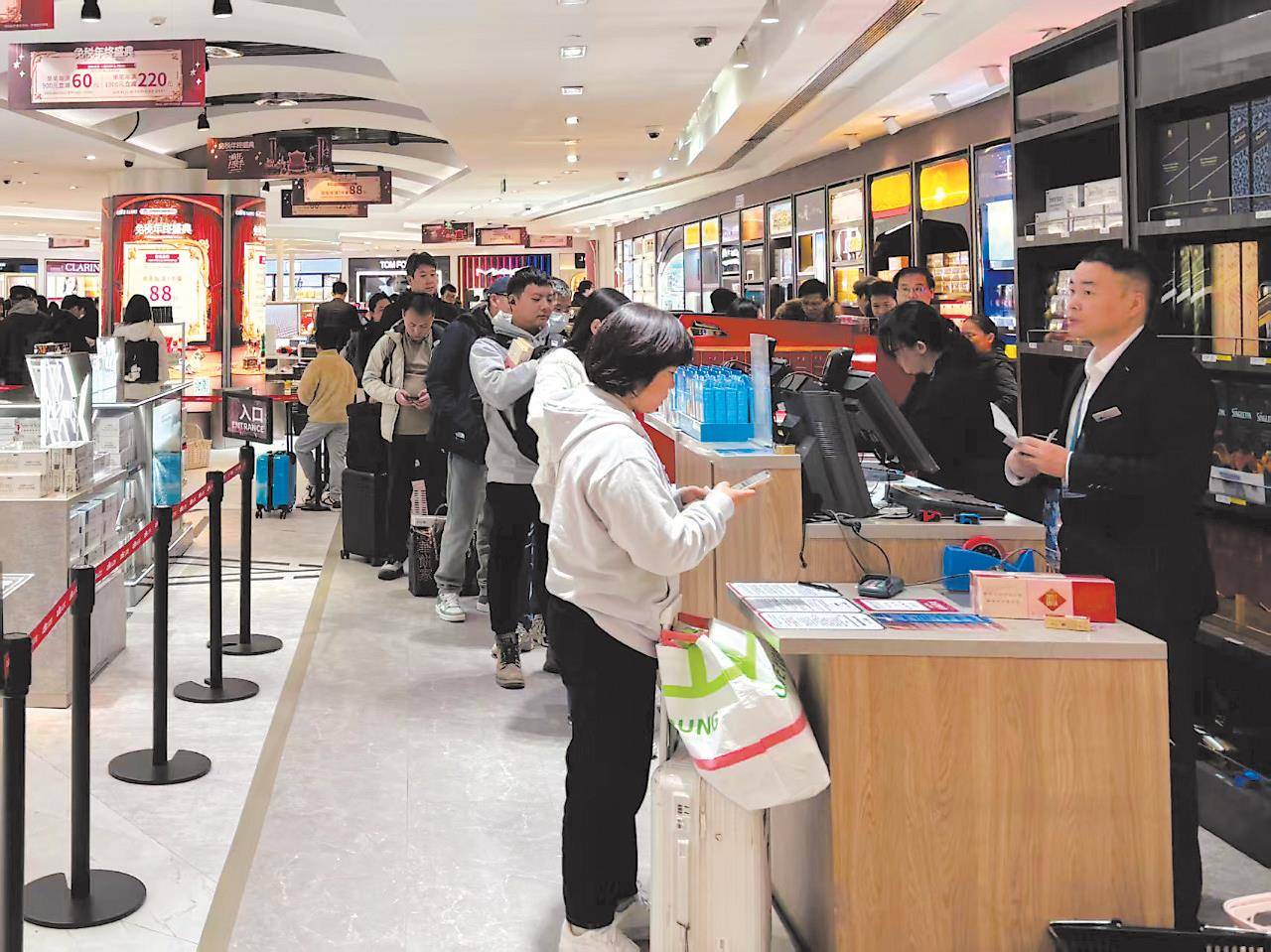
Core Insights - The recent bidding results for the duty-free shop franchise rights at Shanghai Airport have led to the exit of RiShang Duty Free (Shanghai) Co., Ltd., which had operated there for 26 years, with the winning bids going to global duty-free giant Dufry and domestic leader China Duty Free Group (CDFG) [2][3] Group 1: Bidding Results - The Shanghai Airport Group announced a bidding process for duty-free shop rights for the next eight years, covering three terminals at Pudong and Hongqiao airports [3] - CDFG won the rights for the international areas of Pudong Airport's T2 terminal and Hongqiao Airport's T1 terminal, while Dufry secured the rights for Pudong Airport's T1 terminal [3][5] - RiShang Shanghai was unable to renew its contract due to a lack of support from its major shareholder, CDFG, which currently holds approximately 51% of RiShang Shanghai [3][5] Group 2: Changes in Revenue Model - The new bidding process has altered the revenue model for Shanghai Airport, shifting from a high minimum rent model to a combination of fixed monthly fees and commission-based earnings [6] - Dufry's bid for Pudong T1 was set at a fixed fee of 3,141 RMB/m²/month with commission rates ranging from 8% to 24%, while CDFG's bid for Pudong T2 was the same [6] - The previous model allowed for a higher commission rate based on sales, with a minimum of 42.5% of sales as rent, which has now significantly decreased [7] Group 3: Competitive Landscape - The changes in the duty-free shop agreements reflect a more competitive market, with new entrants and cross-border e-commerce platforms driving down prices [8] - The profit margins for duty-free products, particularly perfumes and cosmetics, have decreased from over 50% to around 20%, prompting a need for airports to reconsider their pricing strategies [8] - New competitors entering the duty-free market, such as Wangfujing and Hainan Tourism Investment, are also impacting the sales dynamics at international airports [8]