镍

Search documents
关税政策摇摆,市场波动加大:申万期货早间评论-20250424
申银万国期货研究· 2025-04-24 00:54
首席点评: 原油反弹,黄金回落 特朗普称或将"大幅降低"对华关税,中国外交部:打,奉陪到底;谈,大门敞开。中国外交部发言人郭 嘉昆强调,如果美方真的想通过对话谈判解决问题,就应该停止威胁讹诈,在平等、尊重、互惠的基础 上同中方对话。一边说要同中方达成协议,一边不断搞极限施压,这不是同中方打交道的正确方式,也 是行不通的。美国 4 月 Markit 综合 PMI 超预期下降创 16 个月新低,信心挫、价格涨,制造业 PMI 不 降反升好于预期。数据表明, 4 月美国商业活动增长降至 16 个月低点,对未来一年商业前景的预期也 下降至自疫情以来最低之一;商品和服务的销售价格上涨幅度为一年多来最大,尤其是制造品价格大幅 上涨,与关税有关。就业指数低迷。 重点品种:原油、贵金属、橡胶 原油 : SC 夜盘回落 2.25% 。有消息援引哈萨克新任命的能源部长的话说,在决定石油产量水平时, 哈萨克斯坦将优先考虑国家利益,而非欧佩克及其减产同盟国的利益。他还表示,该国未能减少三大产 油项目的石油产量,因为这些项目为海外巨头控制。路透社援引三位熟悉欧佩克及其减产同盟国会谈的 消息人士的话说,一些成员国将建议该集团在 6 月份 ...


五矿期货文字早评-20250421
Wu Kuang Qi Huo· 2025-04-21 01:45
Report Industry Investment Ratings - Not provided in the content Core Views - Trump's tariff policy has led to significant fluctuations in overseas stock markets, suppressing market risk appetite. However, domestic monetary policy tools have sufficient room for adjustment, and institutions such as Central Huijin have increased their holdings of ETFs to stabilize the market. Policy encourages long - term capital to enter the market. [2][4] - The economic growth in the first quarter was good, but there may be pressure in the second quarter due to tariffs. Interest rates are in a game stage, expected to remain volatile in the short - term. [6] - There are differences between the net long positions of foreign gold management funds and the holdings of gold ETFs, and there is a risk of a short - term pullback in gold prices. [7] - The prices of various metals and energy chemicals are affected by factors such as supply and demand, policies, and tariffs, showing different trends. [10][11][40] Summaries by Categories Macro - financial Stock Index - The previous trading day saw mixed performance of major indexes, with a decline in trading volume. Macro news includes national measures to stabilize the stock market and real estate, and Trump - related tariff and interest - rate remarks. The financing amount decreased, and the overnight Shibor rate increased. [2] - The P/E ratios, P/B ratios, and dividend yields of major indexes are provided, along with the basis ratios of stock index futures. [3] - Affected by Trump's tariff policy, overseas stock market fluctuations suppress risk appetite. It is recommended to go long on IH or IF futures related to the economy and IC or IM futures related to "new - quality productivity" after the tariff impact weakens. The strategy is to buy IM long - positions on dips. [4] Treasury Bonds - On Friday, the main contracts of TL and T rose, while TF and TS fell. Fiscal revenue data shows a decline in tax revenue and an increase in non - tax revenue. Trump called for the Fed to lower interest rates. The central bank conducted reverse repurchase operations, achieving a net injection. [5][6] - Economic growth in the first quarter was good, but there may be pressure in the second quarter. Interest rates are in a game stage, expected to remain volatile in the short - term. Attention should be paid to policy signals from the end - of - April meeting and economic data. [6] Precious Metals - The prices of Shanghai gold and COMEX gold rose, while Shanghai silver and COMEX silver fell. Trump expressed confidence in a tariff agreement, and the VIX index declined. The net long positions of foreign gold management funds decreased, while the holdings of global gold ETFs increased significantly. There is a risk of a short - term pullback in gold prices. [7] - It is expected that the Fed will maintain a hawkish stance in May. It is recommended to hold existing gold long - positions, and the cost - effectiveness of opening new long - positions is low. For silver, it is recommended to wait and see. [8] Non - ferrous Metals Copper - Last week, copper prices fluctuated slightly higher. Exchange inventories decreased, and the spot import was slightly in deficit. The LME market shifted from premium to discount. The scrap copper supply was tight, and the operating rate of recycled copper rod enterprises decreased. Trump's statement and the approaching Politburo meeting may bring positive sentiment. In the short - term, prices may fluctuate. [10] Aluminum - Last week, aluminum prices fluctuated weakly. Domestic and LME inventories decreased, and the spot premium increased. The demand for photovoltaic - related aluminum is strong. The impact of tariffs is limited, and domestic aluminum prices are expected to be supported by the decline in inventory, with the possibility of a wider spread between months. [11] Zinc - Last week, zinc prices continued to decline. Domestic and overseas inventories showed different trends, and the basis and spread changed. The supply is expected to be loose, and downstream procurement is expected to weaken. In the short - term, prices may fluctuate at a low level, and there is a risk of further decline in the medium - term. [12][13] Lead - Last week, lead prices rebounded after a decline. Domestic and overseas inventories decreased, and the basis and spread strengthened slightly. The supply is generally loose, and the demand is stable. In the short - term, prices may fluctuate strongly, and in the medium - term, they are expected to fluctuate in a range. [14] Nickel - Last week, nickel prices recovered due to the alleviation of tariff concerns. The supply is expected to increase, the demand for high - priced nickel is limited, and the cost support may weaken. It is recommended to short on rallies. [15] Tin - Last week, tin prices fluctuated. The supply may decrease in April, and the demand has improved but its sustainability is uncertain. The inventory has decreased. In the short - term, prices are expected to fluctuate at a high level. [16] Lithium Carbonate - The price of lithium carbonate decreased slightly. The impact of tariffs has faded, and the price has entered the bottom - cost area. Production has decreased, and inventory accumulation has slowed. The supply and demand may weaken, and the price is likely to fluctuate weakly. [18] Alumina - The alumina index fell. The spot price remained unchanged, the basis was positive, and the overseas price was stable. The supply is still in surplus, but there are more production cuts recently. It is recommended to wait and see. [19] Stainless Steel - The price of stainless steel decreased. The spot price was stable, and the basis increased. The raw material price was stable, and the inventory decreased. The sales were slow, and the price decline was limited by cost inversion. [20] Black Building Materials Steel - The prices of rebar and hot - rolled coil decreased. The registered warehouse receipts decreased, and the positions increased. The spot price also decreased. The "tariff issue" has a great impact on the overall commodity price, and the demand for steel is affected. The supply and demand of steel have different trends, and the inventory is decreasing. The market shows a pattern of "strong reality, weak expectation". [22][23] Iron Ore - The price of iron ore decreased. The overseas mine shipments were stable, the arrival volume increased, the demand may weaken, and the inventory decreased. In the short - term, it will wait for consolidation, and in the later stage, there is downward pressure on the price. [24] Glass and Soda Ash - The spot price of glass decreased, the sales were weak, and the inventory decline slowed. The spot price of soda ash was stable, the supply was at a high level, and the inventory decreased slightly. The demand for soda ash from photovoltaic glass provides some support, and it is expected to run weakly. [25][26] Manganese Silicon and Ferrosilicon - The price of manganese silicon continued to decline, and the price of ferrosilicon also decreased. The supply is relatively strong, and the demand is weak. The cost of manganese ore may continue to decline, and there is a risk of further price decline. For ferrosilicon, the production is decreasing, but the demand may also weaken. It is recommended to wait and see or follow the short - term trend. [27][28][29] Industrial Silicon - The price of industrial silicon accelerated its decline. The supply is in surplus, and the demand is insufficient. Downstream industries have over - supply, and the production of industrial silicon is still expanding. It is recommended to wait and see or follow the short - term trend. [32][33] Energy and Chemicals Rubber - The global financial market is volatile, and the decline in rubber prices has released most of the risks. The bulls expect price increases due to production - cut expectations, while the bears are bearish due to weak demand. The operating rate of tire enterprises decreased, and the inventory increased. It is expected to fluctuate, and short - term operations are recommended. [36][37][38] Crude Oil - The prices of WTI, Brent, and INE crude oil futures increased. European oil product inventories showed different trends, with an overall increase in refined oil inventories. It is believed that the oil price has bottomed out, and investors are advised to take profits on dips and wait for a turning point. [40][41][42] Methanol - The 09 - contract price of methanol increased, while the spot price decreased. The supply is expected to increase, and the demand may weaken. It is recommended to short on rallies, and pay attention to the 9 - 1 spread and the PP - 3MA spread. [43] Urea - The 09 - contract price of urea increased, while the spot price decreased. The supply will remain high, and the demand will be strong. The inventory is expected to decrease, and it is suitable to go long on dips, with a positive - spread strategy for the 9 - 1 spread. [44] Styrene - The price of the 06 - contract of styrene increased, while the spot price decreased. The cost is affected by the price of crude oil and pure benzene, and the downstream demand is weak. It is recommended to wait for opportunities to short on rallies. [45] PVC - The price of the PVC09 contract decreased slightly. The cost is stable, the supply and demand are weak, and the inventory is decreasing. In the short - term, it is expected to fluctuate weakly, and in the medium - term, the valuation center will continue to decline. [46][47] Ethylene Glycol - The price of the EG09 contract increased, while the spot price decreased. The supply decreased, and the demand increased. The inventory is decreasing, but there is a risk of negative feedback in the industry chain. It is expected to fluctuate weakly in the short - term. [48] PTA - The price of the PTA09 contract increased, and the spot price also increased. The supply is in the maintenance season, and the demand is affected by the downstream. The inventory is decreasing, and the processing fee is under pressure. It is recommended to wait and see. [49] p - Xylene - The price of the PX09 contract increased, and the CFR price also increased. The supply is in the maintenance season, and the demand is affected by the downstream. The inventory is decreasing, and the valuation is low. It is recommended to wait and see. [50][51] Polyethylene (PE) - The price of PE decreased. The supply will increase in the second quarter, the demand is weakening, and the price is expected to decline in the medium - and long - term. [52] Polypropylene (PP) - The price of PP increased slightly. The cost is supported, the supply will increase, and the demand will decline seasonally. It is expected to fluctuate weakly. [53] Agricultural Products Live Pigs - The domestic pig price mainly declined over the weekend. The terminal demand is limited, and the price may decline in the north and remain stable in the south. It is advisable to short on short - term rebounds. [55] Eggs - The domestic egg price was mainly stable over the weekend, with a slight decline in some areas. The supply is mostly sufficient, and the demand is average. The price may rise slightly and then stabilize, with a risk of decline later. It is recommended to wait for short - selling signals. [56] Soybean and Rapeseed Meal - The domestic soybean meal price increased locally over the weekend, with a trend of inventory accumulation in the future. The开机率 is expected to increase. The price of U.S. soybeans is affected by weather and tariffs. The cost of imported soybeans is expected to rise steadily, and domestic soybean meal is expected to fluctuate in a range. [57][58] Oils and Fats - The export of Malaysian palm oil increased in April, and the production also increased. The price of crude oil has an impact on the valuation of oils and fats. The supply of oils and fats is increasing seasonally, and there is a risk of price decline. If the macro - economy stabilizes, there may be support. [59][60] Sugar - The price of Zhengzhou sugar futures rebounded slightly. The domestic supply and demand are in a tight balance, and the price is relatively resistant to decline. In the short - term, the price may fluctuate, and in the long - term, it may decline if the weather improves. [61][62] Cotton - The price of Zhengzhou cotton futures fluctuated narrowly. The spot price increased slightly, and the basis was positive. The operating rate of spinning and weaving mills decreased, and the inventory increased. The domestic supply and demand are in a tight balance, and the price trend depends on downstream consumption. [63][64]
油价走弱,金价续涨:申万期货早间评论-20250421
申银万国期货研究· 2025-04-21 01:10
Core Viewpoint - The article discusses the impact of fluctuating oil prices and rising gold prices, emphasizing the need for measures to stabilize the economy and promote high-quality development in China [1][4]. Group 1: Economic Measures - The Chinese government is focusing on increasing counter-cyclical adjustments to stabilize employment, foreign trade, and consumption, while enhancing domestic demand and improving quality [1][6]. - The government aims to support foreign investment and promote effective investment in various sectors, including services like elderly care and tourism [6]. Group 2: Oil Market - The SC night market saw a 0.33% increase in oil prices, with OPEC announcing further production cuts from several countries to compensate for previous overproduction [2][11]. - The new compensation plan requires seven countries to reduce daily production by 369,000 barrels from now until June 2026, with monthly reductions ranging from 196,000 to 520,000 barrels [2][11]. Group 3: Stock Market - The US stock market was closed, and the previous trading day saw a slight decline in stock indices, with a total trading volume of 0.95 trillion yuan [3][9]. - The financing balance decreased by 3.413 billion yuan to 1.798997 trillion yuan, indicating a cautious market sentiment amid ongoing US-China tariff negotiations [3][9]. Group 4: Precious Metals - Gold prices continue to rise, driven by market speculation and concerns over inflation, with the potential for the Federal Reserve to restart quantitative easing [4][19]. - The article highlights the increasing risks of recession and the challenges posed by US debt, contributing to the strong performance of gold [4][19]. Group 5: International Trade - The World Trade Organization reported that US tariff policies have severely worsened global trade prospects, predicting a 0.2% decline in global goods trade volume by 2025 [5]. - In North America, exports are expected to drop by 12.6% due to the current tariff situation [5]. Group 6: Agricultural Trade - China and Brazil are enhancing agricultural trade interactions in response to US tariffs, focusing on the export of Brazilian soybeans and beef [8].
综合晨报:美国对等关税暂缓90天执行-20250410
Dong Zheng Qi Huo· 2025-04-10 00:43
Report Industry Investment Rating No relevant content provided. Core Viewpoints of the Report - The tariff issue continues to disrupt the market, causing significant fluctuations in risk assets. The suspension of reciprocal tariffs by the US has led to a rapid increase in market risk appetite, but the escalation of China-US tariffs is beneficial for gold. - The US dollar index has weakened due to the suspension of reciprocal tariffs on most countries by Trump, and it is expected to remain volatile in the short term. - The stock index futures market has been boosted by China's tariff countermeasures against the US, but the subsequent macro - level changes will increase market volatility. - The commodity market is generally under pressure. The prices of palm oil, coal, iron ore, and some energy - chemical products are affected by various factors such as market sentiment, supply - demand relationships, and tariff policies. Summary by Directory 1. Financial News and Reviews 1.1 Macro Strategy (Gold) - Event: Trump approved a 90 - day suspension of reciprocal tariffs on over 75 countries, during which the reciprocal tariffs will be reduced to 10%. - Review: Gold prices soared by over 3%, once rising by over $100, setting a record for the largest single - day increase. The suspension of tariffs increased market risk appetite, but the escalation of China - US tariffs is beneficial for gold. Gold is a good tool to hedge against the decline in the US dollar's credit. - Investment advice: Adopt a bullish approach in the short - term volatile market [14]. 1.2 Macro Strategy (Foreign Exchange Futures - US Dollar Index) - Event: Summers warned that the US is far from out of danger and has lost a lot of credibility. The Fed meeting minutes showed that the US economy faces risks. Trump suspended reciprocal tariffs on most countries. - Review: The suspension of tariffs led to a significant rebound in market risk appetite, causing the US dollar index to weaken. The reciprocal tariffs are in a temporary adjustment phase, and the US dollar index is expected to remain volatile. - Investment advice: The US dollar is expected to be volatile in the short term [15][16][17]. 1.3 Macro Strategy (US Stock Index Futures) - Event: China increased tariffs on US imports from 34% to 84%. The Fed meeting minutes showed that inflation is slightly high and economic uncertainty has increased. Trump suspended tariffs on some countries but raised tariffs on China to 125%. - Review: The China - US tariff negotiation is at a deadlock, and policy uncertainty remains high. The financial market is volatile, and the risk of a liquidity shock has not been eliminated. - Investment advice: Adopt a bearish approach and avoid chasing high prices [20][21][22]. 1.4 Macro Strategy (Stock Index Futures) - Event: The Chinese Premier held a symposium on the economic situation. China increased tariffs on US imports from 34% to 84%. - Review: The A - share market rebounded, and market sentiment was boosted. However, subsequent macro - level changes will increase market volatility. - Investment advice: Adopt a risk - averse approach in the short term [23][24][26]. 1.5 Macro Strategy (Treasury Bond Futures) - Event: China released a white paper on China - US economic and trade relations. The central bank conducted a 7 - day reverse repurchase operation, with a net withdrawal of 111 billion yuan. - Review: The main logic of the treasury bond market is clear. The probability of a short - term easing of trade conflicts is low, and the expectation of loose monetary policy is difficult to be falsified. The upward trend of treasury bonds is likely to continue. - Investment advice: Hold positions and wait for the implementation of loose policies, or add positions on dips [27][28][29]. 2. Commodity News and Reviews 2.1 Agricultural Products (Soybean Oil/Rapeseed Oil/Palm Oil) - Event: Indonesian palm oil industry and farmer groups urged the government to reduce export tariffs to 0% to offset the impact of US tariffs. - Review: The global market sentiment is low, and the price of palm oil has fallen. China's counter - tariffs on the US may be beneficial for far - month soybean oil. The possibility of Indonesia reducing palm oil export tariffs is low. - Investment advice: Consider closing previous short positions and pay attention to the MPOB report [30][31]. 2.2 Agricultural Products (Cotton) - Event: As of the end of March, China's commercial cotton inventory decreased, and India's cotton planting area may increase. The CCI has purchased a large amount of cotton, and its sales volume is not high. - Review: The CCI's purchase and sales situation, as well as the trade war, may affect India's cotton production, consumption, and import estimates. The price of Zhengzhou cotton has fallen, but the decline may slow down. - Investment advice: The cotton price is expected to be weakly volatile. Pay attention to macro - policies, planting, weather, and industry conditions in major producing countries [32][35][37]. 2.3 Black Metals (Steam Coal) - Event: China's coal demand is expected to increase slightly in 2025. - Review: The coal price has been relatively stable. The power plant's inventory is at a neutral level, and the price is expected to be supported in May but lacks elasticity. - Investment advice: The power plant may replenish coal inventory in May, but the price increase is limited [38]. 2.4 Black Metals (Iron Ore) - Event: JFE Steel in Japan plans to shut down a blast furnace, reducing its annual crude steel production capacity by about 4 million tons. - Review: The black metal market has continued to decline, but the short - term deterioration of fundamentals is not severe. Pay attention to the risk of liquidity. - Investment advice: Maintain a bearish approach and wait for a better opportunity to short after a rebound [39][40][41]. 2.5 Black Metals (Coking Coal/Coke) - Event: The coking coal market in East China has remained stable. Some coal mines in Shanxi have reduced production, and downstream coke enterprises have started to increase prices. - Review: The coking coal spot market has improved, but the futures market faces pressure. The coke spot market may continue to increase prices, but the medium - long - term supply is expected to be loose. - Investment advice: The spot market has stabilized, but the futures market faces pressure from subsequent demand and warehouse receipts [42][43]. 2.6 Agricultural Products (Corn Starch) - Event: The operating rate of corn starch enterprises has decreased significantly, but inventory has only decreased slightly. - Review: High raw material prices and weak downstream demand have led to a decrease in the operating rate. The futures price difference between corn starch and corn is expected to remain stable. - Investment advice: The CS05 - C05 price difference is expected to remain around the normal processing fee of 380 yuan [44][45][47]. 2.7 Agricultural Products (Corn) - Event: The inventory at northern ports has decreased for two consecutive weeks, and the price of corn in the production area is relatively firm. - Review: The outflow of corn from Northeast China has accelerated, and the weak basis has suppressed the futures price. The 07 contract is considered undervalued. - Investment advice: Maintain the view that the 07 contract is undervalued and pay attention to whether the acceleration of inventory reduction in Northeast China can boost trader sentiment [48]. 2.8 Black Metals (Rebar/Hot - Rolled Coil) - Event: The retail sales of passenger cars in March increased significantly year - on - year. - Review: The steel price has rebounded, and market sentiment has improved. However, the demand for building materials is weak, and the demand for hot - rolled coils is declining slowly. - Investment advice: Adopt a cautious approach in the short term and hedge on the spot market when prices are high [49][50][51]. 2.9 Agricultural Products (Pigs) - Event: The sales volume of three major listed pig enterprises increased in March, and the average selling price slightly increased. - Review: The short - term fluctuation of pig prices has increased, but it will eventually return to the fundamental situation. The spot price may face downward pressure. - Investment advice: Continuously pay attention to short - selling opportunities on rebounds [52][53][54]. 2.10 Non - Ferrous Metals (Industrial Silicon) - Event: Yunnan Nengtou Group's Yongchang Silicon's 100,000 - ton hydropower silicon project was put into operation. Some production capacity in Xinjiang was reduced, and some new production capacity in the southwest is expected to be put into operation. - Review: The supply has decreased, but the demand is weak, and the fundamental situation of industrial silicon is difficult to change. - Investment advice: The futures price may range from 9,000 to 10,500 yuan/ton. Pay attention to short - selling opportunities on rebounds and Si2511 - Si2512 reverse arbitrage opportunities [55][56][57]. 2.11 Non - Ferrous Metals (Lead) - Event: The LME lead spread was at a discount, and the price of refined lead decreased. - Review: The lead price is expected to be volatile in the short term. Although the medium - term outlook is bullish, macro risks have not been eliminated. - Investment advice: Adopt a wait - and - see approach in the short term and look for buying opportunities on dips. Continue to hold the internal - external reverse arbitrage [58][59][60]. 2.12 Non - Ferrous Metals (Copper) - Event: The blockade of Glencore's Antapaccay copper mine in Peru was suspended. Codelco plans to significantly increase copper production this year. Indonesia will increase mining royalties. - Review: The short - term macro factors have a relatively uncertain impact on copper prices. The short - term supply and demand in China are strong, and the inventory is expected to decrease. - Investment advice: The copper price is expected to be volatile in the short term. Adopt a wait - and - see approach and pay attention to positive arbitrage opportunities in Shanghai copper [61][62][64]. 2.13 Non - Ferrous Metals (Zinc) - Event: The LME zinc spread was at a discount, and the Shanghai - Guangdong price difference widened. - Review: The zinc price is mainly affected by macro factors. The market is cautious, and the export of zinc may be suppressed. - Investment advice: Adopt a wait - and - see approach in the short term and look for short - selling opportunities on rebounds in the medium term. Adopt a wait - and - see approach for arbitrage [65][66][67]. 2.14 Non - Ferrous Metals (Lithium Carbonate) - Event: An Australian company produced the first batch of lithium carbonate in Argentina. Argentina plans to increase lithium production by 75% in 2025. - Review: The current fundamentals of lithium carbonate are bearish, and the price may continue to decline in the long term. - Investment advice: Consider partial profit - taking on short positions in the short term and pay attention to short - selling opportunities on rebounds in the long term [68][69][70]. 2.15 Non - Ferrous Metals (Nickel) - Event: Indonesia will increase mining and coal royalties in the second week of April. - Review: The nickel price has slightly decreased, and the cost is expected to increase marginally. The market may digest negative sentiment. - Investment advice: Pay attention to buying opportunities on dips after the release of negative sentiment [71][72]. 2.16 Energy and Chemicals (Liquefied Petroleum Gas) - Event: China increased tariffs on US imports to 84%. The US C3 inventory started to accumulate. - Review: The PG price has decreased, but it may strengthen due to the increase in tariffs and the recovery of crude oil prices. However, policy uncertainty should be noted. - Investment advice: The domestic market may experience a valuation - repair market, but reduce risk exposure and participate cautiously [73][74][75]. 2.17 Energy and Chemicals (Crude Oil) - Event: The US EIA crude oil inventory increased. Trump announced the suspension of reciprocal tariffs. - Review: The oil price has rebounded, but there is still a risk of decline due to the uncertainty of the tariff issue and the OPEC+ production policy. - Investment advice: The oil price is expected to be volatile in the short term and still has a downward risk [76]. 2.18 Energy and Chemicals (PTA) - Event: The tariff war has escalated, and the demand for PTA is uncertain. - Review: The PTA price has decreased, and the demand for polyester is affected by tariffs. The impact on PTA pricing is relatively lagged. - Investment advice: The PTA price will mainly follow the crude oil price in the short term and is expected to be weakly volatile [77][78]. 2.19 Energy and Chemicals (Styrene) - Event: The inventory of styrene in the East China main port decreased. - Review: The styrene price has reached a new low and then rebounded. The downstream inventory may accumulate, and the production profit may not be sustainable. - Investment advice: The eb - bz spread may expand in the short term and contract in the long term [78][79]. 2.20 Energy and Chemicals (Caustic Soda) - Event: The price of high - concentration caustic soda in Shandong decreased, and the supply was stable while the demand was weak. - Review: The caustic soda price is expected to decline, and the market is mainly affected by macro factors in the short term. - Investment advice: Adopt a wait - and - see approach [80][82][83]. 2.21 Energy and Chemicals (Pulp) - Event: The price of imported wood pulp decreased. - Review: The pulp price is mainly affected by macro factors, and the market is bearish. - Investment advice: Adopt a wait - and - see approach [84]. 2.22 Energy and Chemicals (PVC) - Event: The spot price of PVC powder decreased. - Review: The PVC price is mainly affected by macro factors, and the market is bearish. - Investment advice: Adopt a wait - and - see approach [85]. 2.23 Energy and Chemicals (Bottle Chips) - Event: The export price of bottle chips decreased, and a polyester bottle chip device in East China restarted. - Review: The bottle chip price has decreased, and the processing fee has been passively repaired, but it is difficult to break away from the low - level oscillation range. - Investment advice: The bottle chip price will follow the cost side and be weakly volatile in the short term [86][88][89]. 2.24 Energy and Chemicals (Soda Ash) - Event: The price of soda ash in the East China market was adjusted slightly. - Review: The soda ash price is in a low - level oscillation, and the supply is expected to increase while the demand is general. - Investment advice: Adopt a short - selling approach on rebounds in the medium term [90]. 2.25 Energy and Chemicals (Float Glass) - Event: The price of float glass in Hubei remained stable. - Review: The float glass price is mainly affected by demand. Although there may be an improvement in the second - quarter demand, the upward space is limited. - Investment advice: The float glass price will be in a low - level range in the short term. Pay attention to buying opportunities on large dips [91][92][93].
新关税政策将会产生“重要影响”
Dong Zheng Qi Huo· 2025-04-08 00:42
金价延续跌势,海外市场恐慌情绪有所缓解,但贸易战短期并 没有明显的缓和迹象,其他国家预期陆续和美国进行谈判,但 中国推出反制措施后,特朗普再度施压。 宏观策略(外汇期货(美元指数)) 贝森特:预计在 4 月 9 日关税上调之前不会达成任何协议 综 特朗普最新表态没有考虑暂停加征关税,短期市场波动加剧, 市场风险偏好短期回升,流动性冲击暂时结束。 日度报告——综合晨报 新关税政策将会产生"重要影响" [T报ab告le_日R期an:k] 2025-04-08 宏观策略(黄金) 美联储理事库格勒:新关税政策将会产生"重要影响" 巴西大豆收获完成 87% 中美贸易战升级为当前市场主要矛盾,CBOT 大豆下跌,昨日巴 西 CNF 升贴水上涨但涨幅有限,昨日我国进口巴西豆成本甚至 较清明小长假前略降、豆粕期价涨幅有限。 有色金属(氧化铝) 西澳地区为主的海外氧化铝成交价格继续回落 氧化铝企业因担心长单客户损失、对成本下降的预期以及储备 现金流和产业链优势等因素,继续维持生产。 能源化工(原油) 合 宏观策略(股指期货) 晨 商务部召开美资企业圆桌会 报 受关税冲击影响,A 股市场暴跌,主要指数跌幅高达 8%以上。 短期内 ...
国泰君安期货所长早读-2025-04-07
Guo Tai Jun An Qi Huo· 2025-04-07 01:52
所长 早读 国泰君安期货 2025-04-07 期 请务必阅读正文之后的免责条款部分 1 期货研究 期货研究 所 长 首 推 | 板块 | 关注指数 | | --- | --- | | 农产品 | ★★★★ | 农产品:此次美国对全球加征对等关税是历史性的大事件;加征幅度超预期;各国大概率会不同 程度反制,不确定性极高。由于这一次是对全球加征关税,因此不能完全用 2018 年的思路 去看待。农产品方面,美国大豆、玉米和棉花出口占全球出口份额比较高,大豆 27%、玉米 33%、棉花 26%,美国出口下降预期已经推高巴西现货升水,对销区的成本上升的影响较大, 且大概率是持续性的影响。大豆方面,虽然榨利较高,但是下游仍有养殖利润,承接力度较 强,囤库意愿较高。风险:全球高关税带来的经济衰退预期。 请务必阅读正文之后的免责条款部分 2 短线或继续大跌,长线关注超跌反弹机会 观点分享: 外盘油价较上周五累计暴跌近 14%,内盘跌停概率较大。短期市场极度恐慌,其中 Brent 或继续交易衰退考验 55 美元/桶,中长期关注企稳筑底后的多配机会。理由:第一, 短期看,市场交易主要大国、经济体之间关税互征引发的通缩,恐慌情绪 ...
稀土政策加码强化战略定位,人形机器人未来空间广袤
China Securities· 2025-03-07 10:31
证券研究报告·行业动态 稀土政策加码强化战略定位, 人形机器人未来空间广袤 核心观点 稀土:日前稀土总量调控管理办法加码,拟将稀土开采及分离企 业限于"国家推动组建的大型稀土企业集团" 及所属企业,并 拟将进口矿也纳入总量调控范围,民营冶炼分离企业将逐步退 出,分离产能下降超三分之一,实际分离产量或下降约四分之一。 2024 年我国稀土开采指标 27 万吨,两大稀土集团分离指标 25.4 万吨,进口矿的 13.3 万吨并不占用分离指标,新管理办法将对进 口矿进行全方位管控,强化稀土总量控制,并推动稀土供给更加 集中。 锂:据百川盈孚,本周工业级碳酸锂市场均价为 7.45 万元/吨, 较上周上涨 0.7%;电池级粗粒氢氧化锂均价为 7.1 万元/吨,较 上周持平。供给端,本周碳酸锂行业整体开工率延续升势,周度 产量环比增加。盐湖排产维持,前期复产厂家恢复生产节奏,但 现货市场呈现结构性紧张,优质电碳货源流通有限,主要生产企 业以执行长单交付为主。全产业链库存环比上涨,呈现分化特征。 生产端库存上涨,贸易环节库存略有下行,下游企业原料库存恢 复至 1-2 周安全边际。期货仓单量降至 45025 吨。需求端,2-3 ...
深度专题 | “俄乌局势”的宏观传导图谱
赵伟宏观探索· 2025-03-01 00:26
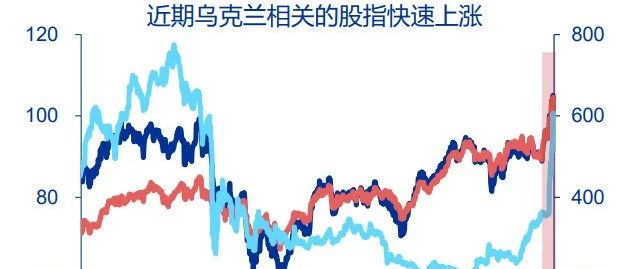
Group 1 - The article discusses the potential macroeconomic impacts on the market if the Russia-Ukraine situation eases, particularly in light of recent diplomatic efforts and rising probabilities of a ceasefire [1][8] - Recent statements from Trump and developments in US-Russia relations have increased the implied probability of a ceasefire by 8% from January 23 to February 18, reaching 73.5% for 2025 [2][9] - Market reactions indicate that both equity and commodity markets are pricing in the easing of the Russia-Ukraine conflict, with the Ukraine ceasefire index and reconstruction index rising by 11.6% and 11.5% respectively since January [2][10] Group 2 - The article outlines three main macro transmission channels from the 2022 Russia-Ukraine conflict: supply chain disruptions, economic fundamentals impact, and changes in investor sentiment [3][16] - Significant price increases were observed in energy, agricultural products, and base metals during the initial conflict period, with European gas prices soaring by 207% and wheat futures increasing by 63.1% [3][16] - The conflict has also affected European market profitability and risk appetite, leading to a shift towards defensive sectors and a flight to safe-haven assets like gold [3][20] Group 3 - The current easing of tensions may not mirror the initial conflict's collective price increases, as supply chain responses may vary across commodities [4][27] - The recovery of natural gas supply is contingent on the repair of the Nord Stream pipeline, while oil supply increases may be limited by OPEC+ constraints [4][28] - The article notes that the rebuilding of Ukraine is estimated to cost around $523.6 billion, but the long-term market impact may be limited due to financing gaps and execution risks [5][52] Group 4 - The article highlights that European defense spending is expected to rise significantly, but much of the funding may flow to US suppliers rather than local European manufacturers [5][58] - The potential for a return of capital to European markets is contingent on the relative strength of economic recovery compared to the US, as European equity markets have seen a slight recovery in fund flows [5][50]