
生猪养殖

Search documents
宏观金融类:文字早评2026/01/05-20260105
Wu Kuang Qi Huo· 2026-01-05 01:42
Report Industry Investment Rating No relevant information provided. Core Viewpoints of the Report - For the stock index, the re - inflow of institutional allocation funds at the beginning of the year and policy support suggest a long - term strategy of buying on dips [4]. - For treasury bonds, the improvement in economic expectations may put pressure on the bond market, but with uncertain economic recovery momentum, the bond market is expected to be weak and volatile in the first quarter [7]. - For precious metals, they may experience a short - term correction, but the long - term upward cycle may not end. It's recommended to stay on the sidelines [9]. - For non - ferrous metals, most metals are expected to be in a high - level or upward - trending state, but some may face short - term adjustments [12][14]. - For black building materials, steel prices are expected to oscillate at the bottom, and iron ore prices are expected to oscillate due to supply and demand factors [30][33]. - For energy and chemicals, different products have different outlooks, such as rubber being neutral, crude oil having an upward potential for heavy oil products, etc. [52][54]. - For agricultural products, the price trends of different products are diverse. For example, pig prices may weaken in the medium - term, while egg prices may rise first and then fall [77][78]. Summary by Relevant Catalogs Stock Index - **Market Information**: Events include the US raid on Venezuela, a nuclear fusion conference, a company's IPO application, and changes in shareholding ratios [2]. - **Strategy**: Long - term strategy of buying on dips due to institutional funds and policy support [4]. Treasury Bonds - **Market Information**: Contract prices of TL, T, TF, and TS decreased. PMI data improved, and there were regulations on fund sales fees. The central bank had a net injection of funds [5][6]. - **Strategy**: The bond market may face pressure due to economic improvement expectations, but with uncertain economic recovery, it's expected to be weak and volatile in Q1 [7]. Precious Metals - **Market Information**: Domestic and foreign prices of gold and silver decreased. The Fed's policy may turn tight, and silver's lease rate is high [8]. - **Strategy**: A short - term correction may occur, but the long - term upward cycle may not end. It's recommended to stay on the sidelines [9]. Non - Ferrous Metals Copper - **Market Information**: Peripheral copper prices fluctuated, LME and domestic inventories changed, and Chile's copper production decreased [11]. - **Strategy**: Copper prices are expected to remain high with a slowdown in the upward trend, supported by supply and geopolitical factors [12]. Aluminum - **Market Information**: LME aluminum prices were strong, and domestic inventories and spot prices changed [13]. - **Strategy**: Aluminum prices are expected to rise due to external factors and supply - side support [14]. Zinc - **Market Information**: Domestic and foreign zinc prices changed, and inventories and basis data were provided [15]. - **Strategy**: Zinc prices may correct in the short - term but will maintain a wide - range oscillation in the medium - term [16]. Lead - **Market Information**: Domestic and foreign lead prices decreased, and inventories and basis data were provided [17]. - **Strategy**: Lead prices are expected to be weak in the short - term [17]. Nickel - **Market Information**: Nickel prices oscillated, and cost and supply - related data were provided [18]. - **Strategy**: The bottom of nickel prices may have appeared, and it's recommended to stay on the sidelines [18]. Tin - **Market Information**: Tin prices decreased, and supply, demand, and inventory data were provided [19]. - **Strategy**: Tin prices are expected to fluctuate with market sentiment, and it's recommended to stay on the sidelines [20]. Carbonate Lithium - **Market Information**: Spot and futures prices of carbonate lithium changed, and import prices of lithium concentrate increased [21]. - **Strategy**: Although the first - quarter demand is weak, the future supply - demand is expected to improve. It's recommended to stay on the sidelines or take a light position [21]. Alumina - **Market Information**: Alumina index prices increased, and basis, inventory, and ore prices were provided [22]. - **Strategy**: It's recommended to stay on the sidelines and wait for opportunities to short if there are no production cuts [23]. Stainless Steel - **Market Information**: Stainless steel futures prices increased, and spot prices and inventory data were provided [24]. - **Strategy**: It's recommended to go long on dips and pay attention to policy implementation [25]. Casting Aluminum Alloy - **Market Information**: Casting aluminum alloy prices increased, and inventory and trading volume data were provided [26]. - **Strategy**: Prices are expected to be strong and oscillate due to cost and supply factors [27]. Black Building Materials Steel - **Market Information**: Futures prices of rebar and hot - rolled coils decreased, and inventory and spot price data were provided [29]. - **Strategy**: Steel prices are expected to oscillate at the bottom, and the winter storage willingness is weak [30]. Iron Ore - **Market Information**: Iron ore futures prices increased slightly, and spot prices and basis data were provided [31]. - **Strategy**: Iron ore prices are expected to oscillate due to supply, demand, and inventory factors [32][33]. Glass and Soda Ash - **Market Information**: Glass futures prices were flat, and soda ash futures prices decreased. Inventory and trading data were provided [34][36]. - **Strategy**: Glass prices may rise in the short - term, and it's recommended to short soda ash at high prices in the 1200 - 1250 yuan/ton range [35][36]. Manganese Silicon and Ferrosilicon - **Market Information**: Futures prices of manganese silicon and ferrosilicon decreased. Spot prices and basis data were provided [37]. - **Strategy**: The market sentiment may continue to be bullish, but attention should be paid to risks. The future market is affected by overall sentiment and cost factors [39][40]. Industrial Silicon and Polysilicon - **Market Information**: Industrial silicon prices decreased, and polysilicon prices increased slightly. Supply, demand, and inventory data were provided [41][44]. - **Strategy**: Industrial silicon prices are expected to oscillate, and polysilicon prices are expected to be weak and oscillate. It's recommended to stay on the sidelines [43][45]. Energy and Chemicals Rubber - **Market Information**: Rubber prices oscillated, and supply, demand, and inventory data were provided [47][50]. - **Strategy**: It's recommended to stay on the sidelines and partially close the hedging position [52]. Crude Oil - **Market Information**: Crude oil and refined oil futures prices decreased, and inventory data were provided [53]. - **Strategy**: The value of heavy oil products is expected to rise, and the crack spread of asphalt or fuel oil may increase [54]. Methanol - **Market Information**: Regional spot prices of methanol changed [55]. - **Strategy**: It's recommended to go long on dips due to low valuation and improved future outlook [56]. Urea - **Market Information**: Regional spot and futures prices of urea changed [57]. - **Strategy**: It's recommended to take profit at high prices due to expected fundamental negatives [58]. Pure Benzene and Styrene - **Market Information**: Prices, basis, and supply - demand data of pure benzene and styrene were provided [59]. - **Strategy**: It's recommended to go long on the non - integrated profit of styrene before Q1 [60]. PVC - **Market Information**: PVC futures prices decreased, and cost, supply - demand, and inventory data were provided [61]. - **Strategy**: It's recommended to short on rallies due to the supply - demand imbalance [62]. Ethylene Glycol - **Market Information**: Ethylene glycol futures prices decreased, and supply - demand, inventory, and cost data were provided [63]. - **Strategy**: The supply - demand situation needs improvement, and it's expected to compress valuation without further production cuts [64]. PTA - **Market Information**: PTA futures prices decreased, and supply - demand, inventory, and cost data were provided [65]. - **Strategy**: PTA may enter a inventory accumulation period after the Spring Festival. It's recommended to pay attention to short - term callback risks and mid - term long - buying opportunities [66][67]. p - Xylene - **Market Information**: p - Xylene futures prices decreased, and supply - demand, inventory, and cost data were provided [68]. - **Strategy**: p - Xylene is expected to accumulate a small amount of inventory before the maintenance season. It's recommended to pay attention to short - term callback risks and mid - term long - buying opportunities [69]. Polyethylene (PE) - **Market Information**: PE futures and spot prices increased, and supply - demand and inventory data were provided [70]. - **Strategy**: It's recommended to go long on the LL5 - 9 spread on dips [71]. Polypropylene (PP) - **Market Information**: PP futures prices increased, and supply - demand and inventory data were provided [72]. - **Strategy**: The PP price may bottom out after the supply - surplus pattern changes in Q1 [74]. Agricultural Products Live Pigs - **Market Information**: Pig prices decreased in most areas, and demand varied in the north and south [76]. - **Strategy**: Short - term pig prices may be strong, but they may weaken in the medium - term. It's recommended to short on rallies and pay attention to far - month contract support [77]. Eggs - **Market Information**: Egg prices were stable in most areas, and the price is expected to rise first and then fall [78]. - **Strategy**: It's recommended to short on rallies due to limited price increase and decrease space [79]. Soybean Meal and Rapeseed Meal - **Market Information**: Futures prices of soybean meal and rapeseed meal decreased, and supply - demand and inventory data were provided [80]. - **Strategy**: Prices are expected to oscillate due to supply - demand factors [81]. Oils - **Market Information**: Futures prices of three major oils were weak and oscillated, and supply - demand and inventory data were provided [82]. - **Strategy**: Oil prices are close to the bottom range due to weak current fundamentals but optimistic expectations [83]. Sugar - **Market Information**: Sugar futures prices oscillated, and production data of India and Thailand were provided [84][85]. - **Strategy**: International sugar prices may rebound after February, and domestic sugar prices may continue to rebound in the short - term [86]. Cotton - **Market Information**: Cotton futures prices increased slightly, and supply - demand, inventory, and export data were provided [87]. - **Strategy**: It's recommended to wait for a correction and then go long on cotton [88].
供需错配支撑12月月末猪价翘尾 1月或仅在月初出现错配情况
Xin Lang Cai Jing· 2026-01-05 01:27
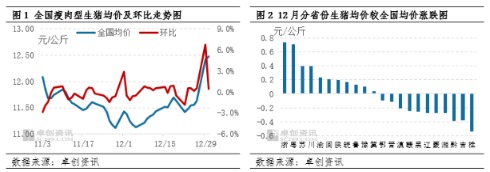
Core Viewpoint - The demand for large pigs is gradually increasing, but the early market release of large pigs has led to a mismatch in supply and demand at the end of the month, significantly supporting pig prices [1][4]. Supply and Demand Analysis - In December, the initial bearish expectations for pig prices were based on the assumption of increased supply from the breeding sector and insufficient demand [1]. - The accelerated release of pigs from the supply side, combined with strong market absorption capacity, initially led to a stalemate in supply and demand [1]. - As the breeding sector's release gradually declined and demand for cured meat increased, the supply gap for large pigs widened, supporting a rapid price increase [1][2]. Price Trends - From December 26 to 30, the national average price of lean pigs rose from 11.63 yuan/kg to 12.47 yuan/kg, an increase of 0.84 yuan/kg, primarily due to the supply-demand mismatch in the large pig market [2]. - As of December 30, the national average price was 11.52 yuan/kg, with a slight decrease of 0.54% month-on-month, indicating that the price drop was less than expected [1]. Regional Price Differences - Provinces with prices significantly above the national average include Zhejiang, Guangdong, Jiangsu, Sichuan, and Chongqing, primarily in consumption areas, while provinces with lower prices include Guangxi, Jilin, Guizhou, and Hunan, primarily in production areas [1]. Supply-Demand Dynamics for January - The theoretical supply of pigs in January is expected to slightly decline, but the actual supply may increase due to the potential for early release of pigs from the breeding sector [4]. - The demand in January is anticipated to be concentrated in northern regions, particularly in central areas like Henan, Shandong, Hebei, Jiangsu, and Anhui, while southern demand is expected to decrease [4][6]. Market Outlook - The market may initially experience a slight supply shortage in January, followed by an improvement in the supply-demand relationship, leading to a potential price increase followed by a slight decrease before a final uptick [6]. - The transfer of market power from southern to central regions is expected as the supply-demand dynamics evolve [6].
京基智农20260104
2026-01-04 15:35
Summary of Key Points from the Conference Call Company and Industry Overview - **Company**: 京基智农 (Jingji Intelligent Agriculture) - **Industry**: Agriculture, specifically pig farming, and robotics with a focus on artificial intelligence Core Business and Financial Performance - 京基智农's main business is in pig farming, primarily located in the Guangdong-Hong Kong-Macao Greater Bay Area - The company achieved a net profit of **¥786 million** in 2024, with a net profit of **¥294 million** in the first three quarters of 2025, indicating a solid foundation for growth [3][4][15] Strategic Investment in Robotics - 京基智农 is strategically investing in 江苏汇博机器人 (Jiangsu Huibo Robot) to enter the robotics and AI sector, aiming to mitigate cyclical fluctuations in the pig farming industry [4][5][15] - The acquisition is expected to provide 京基智农 with control over 汇博机器人 and allow for consolidated financial reporting [5][15] Overview of 江苏汇博机器人 - 江苏汇博机器人, established in 2009, is a high-tech enterprise with **401 patents** and a strong R&D team from prestigious institutions [6][7] - The company focuses on intelligent equipment and solutions across various sectors, including education, energy, and smart manufacturing [6][7] Product Offerings and Applications - Key products include humanoid robots, mobile robots (AGVs), and collaborative robots for education and industrial applications [7][10] - In agriculture, the company has developed inspection robots for environmental monitoring and disease intervention, enhancing livestock safety and quality [10][12] Market Potential and Growth Projections - The agricultural automation market in China is estimated at **¥1.5 trillion**, with labor costs accounting for **10% to 20%** of this market, indicating significant demand for automation solutions [14] - 汇博机器人 aims for a revenue target of **¥30 million to ¥50 million** in the first year post-acquisition, reaching **¥100 million** by the third year, supporting a **30% annual growth rate** [20] Economic Advantages of Smart Operations - The smart operation services provided by 汇博机器人 can achieve a gross margin of **35% to 55%**, significantly higher than traditional labor methods [24][26] - The company plans to leverage its proprietary technology to enhance operational efficiency and reduce costs in the solar energy sector [21][24] Future Development and Strategic Goals - 汇博机器人 plans to release two humanoid robot products by 2026 and expects annual revenue growth of over **30%** for the next three years [5][18] - The company is also expanding its international business, targeting markets in Central Asia and East Asia, which is projected to contribute an additional **¥25 million to ¥30 million** in revenue annually [18] Conclusion - The acquisition of 江苏汇博机器人 represents a strategic move for 京基智农 to diversify its business and tap into the growing robotics market, potentially positioning it as a second core business alongside pig farming [15][28]

国泰海通|农业:周期破晓见曦,成长擎画新篇——展望2026行业报告
国泰海通证券研究· 2026-01-04 13:14
Group 1: Swine and Cattle Farming - In 2026, swine prices are expected to remain low in the first half, leading to continued low profits in the industry [2] - The swine farming sector is undergoing capacity reduction driven by policy and cyclical adjustments, with a focus on companies that can improve costs and show growth potential [2] - The cattle farming cycle is long, and supply-side contraction is expected to drive price increases starting from 2025, as the output volume is projected to decline [4] Group 2: Poultry Farming - The white chicken industry is experiencing deep price declines, and it will take time for supply and demand to return to balance [3] - Yellow chicken prices may see slight recovery, with promotional activities for native breeds potentially boosting consumption [3] Group 3: Post-Farming Cycle - Feed sales are anticipated to grow, with an increase in industry concentration among leading companies [5] - The demand for animal health products may face pressure due to low profits in farming, but there is a focus on new product developments such as vaccines [5] Group 4: Planting Industry - Grain prices are expected to stabilize and trend upwards, emphasizing the importance of food security [6] - There is a focus on seed innovation and opportunities in specialty crops like blueberries and mushrooms [6] - The demand for plant extraction products is projected to grow due to the trend towards natural health [6] Group 5: Pet Industry - The pet market is experiencing robust growth, with pet owners showing a strong willingness to spend [7] - By 2025, the industry may face challenges in scaling revenue due to increased competition and marketing expenditures impacting short-term profit margins [7] - Companies that integrate production, sales, and research are rare and are expected to outperform in competitive scenarios, with attention on the growth of domestic brands and price increases [7]


农林牧渔2026年1月投资策略:好肉奶周期共振反转,奶牛及肉牛相关产业受益
Guoxin Securities· 2026-01-04 09:36
Core Insights - The report maintains an "Outperform" rating for the agriculture, forestry, animal husbandry, and fishery sector, anticipating a rebound in the meat and dairy cycles, benefiting industries related to dairy and beef cattle [1][4] - The monthly recommended stock portfolio includes leading companies in various segments, such as YouRan Agriculture, Modern Farming, and Muyuan Foods, indicating a focus on industry leaders poised for recovery [1][3] Livestock Sector - The livestock sector is expected to experience a significant reversal, with a focus on beef and dairy cattle. The domestic beef production capacity is anticipated to decrease to levels seen during the 2019 pig cycle, with prices expected to rise until 2028 [14] - The report highlights that the domestic raw milk price has been in decline for nearly four years, leading to production capacity pressures. The "meat and milk ratio" has reached historical highs, which may accelerate the culling of dairy cows [14][36] - Recommended companies in the livestock sector include YouRan Agriculture and Modern Farming, which are expected to benefit from improving raw milk prices and the upward trend in beef prices [14][17] Swine Sector - The swine sector is characterized by a gradual recovery in prices, with the average price of live pigs at 12.67 yuan/kg, reflecting a 13% month-on-month increase [20] - The report emphasizes the importance of leading companies in the swine industry, such as Huazhong Holdings and Muyuan Foods, which are expected to see significant cash flow improvements and higher dividend returns due to their low-cost advantages [15][19] - The overall industry is projected to stabilize, with a focus on valuation recovery for leading firms as the market adjusts to supply and demand dynamics [20][21] Poultry Sector - The poultry sector is witnessing a slight increase in supply, with expectations for demand recovery. The price of broiler chickens has shown a month-on-month increase of 9% [22] - The report notes that the structure of parent stock is changing, which may impact actual supply growth. However, demand is expected to benefit from domestic stimulus policies and macroeconomic improvements [22][28] - Key companies in the poultry sector include Lihua Food and Shengnong Development, which are positioned to maintain good profitability amid these changes [18][22] Pet Industry - The pet industry is identified as a promising consumer segment, with domestic brands rapidly gaining market share. The emotional consumption trend is expected to drive long-term growth in this sector [16][18] - Recommended companies include Guibao Pet, which is focusing on product upgrades and direct sales transformation to capture market opportunities [16][18] Feed and Grain Sector - The feed sector is benefiting from deeper industrialization in livestock farming, with leading companies expected to widen their competitive advantages through technology and service [1][3] - The report indicates that corn prices are at a historical low, with strong support expected from cost structures, while soybean meal prices are also at low valuations, awaiting a cyclical rebound [18][21]


农林牧渔 2026年1月投资策略:看好肉奶周期共振反转,奶牛及肉牛相关产业受益
Guoxin Securities· 2026-01-04 08:36
证券研究报告 | 2026年01月04日 农林牧渔 2026 年 1 月投资策略 优于大市 看好肉奶周期共振反转,奶牛及肉牛相关产业受益 月度重点推荐组合:优然牧业(牧业大周期受益龙头)、现代牧业(国内牧 业龙头企业)、牧原股份(生猪养殖龙头)、德康农牧(创新农户合作模式 的生猪养殖标的)、立华股份(低成本黄鸡与生猪养殖标的)。 各细分板块推荐逻辑:1)肉牛及原奶:牧业大周期反转预计在即,看好国 内肉奶景气共振上行,牧业公司业绩有望迎来高弹性修复。2)生猪:头部 企业现金流快速好转,并有望转型为红利标的,在全行业产能收缩的背景下, 龙头的成本优势有望明显提高,强者恒强。3)宠物:宠物作为新消费优质 赛道,长期景气受益人口趋势,且国内自主品牌正快速崛起,头部宠食标的 中期业绩增长确定性仍较强。4)饲料:畜禽养殖工业化加深,产业分工明 确,饲料龙头凭借技术和服务优势,有望进一步拉大竞争优势。5)禽:供 给波动幅度有限,行情有望随需求复苏,龙头企业凭借单位超额收益优势有 望实现更高现金流分红回报。 农产品价格跟踪:1)生猪:12 月末生猪 12.67 元/公斤,月环比上涨 13%, 7kg 仔猪价格约 231.67 ...
2026年1月生猪价格或先涨后跌 南北市场供需差异或推动南猪北调
Xin Hua Cai Jing· 2026-01-04 06:48
Core Viewpoint - The domestic pig prices are expected to experience fluctuations in January 2026, with initial tight supply followed by a potential increase in supply later in the month, leading to a possible rise in prices after a brief decline [1][7]. Supply and Demand Analysis - In December 2025, the average price of lean pigs was 11.52 yuan/kg, with a slight decrease of 0.54% month-on-month, which was less than expected. Notably, from December 26 to December 30, the price increased from 11.63 yuan/kg to 12.47 yuan/kg, a rise of 0.84 yuan/kg [3]. - The supply of pigs in January 2026 is projected to show a slight decline due to a decrease in the number of breeding sows, despite some over-selling in December. The theoretical output for January is expected to be lower compared to December [3][5]. - The pig farming focus is concentrated in the southwestern and southern regions, with expected increases in supply from the south in January, while demand is anticipated to rise more significantly in the northern regions, particularly in central areas like Henan, Shandong, Hebei, Jiangsu, and Anhui [5][7]. Regional Dynamics - The demand in the southern market is expected to decrease after the end of the pickling season, while the northern market will see an increase in demand, leading to a potential oversupply situation in the south and an expansion of price differences between the regions [5][7]. - The supply-demand relationship is expected to shift, with the southern market's influence on pricing potentially transferring to the central regions before the Spring Festival [1][7].
深读 | 生猪市场盘点:“旺季不旺”背后的行业激变
Qi Huo Ri Bao· 2026-01-03 23:26
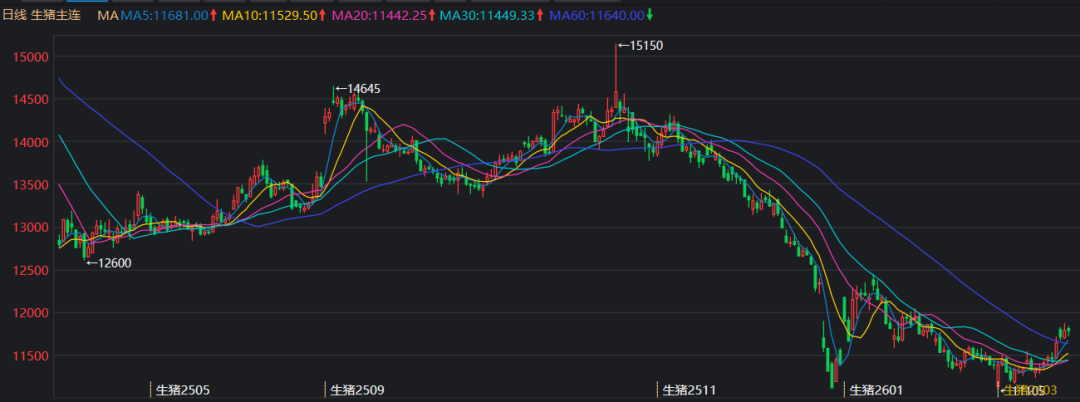
Core Viewpoint - The domestic pig market in 2025 is experiencing significant adjustments due to abundant supply and weak demand, leading to a decline in average prices and creating challenges for producers [1][2]. Supply and Demand Dynamics - The average price of pigs in 2025 is approximately 13.80 yuan/kg, significantly lower than in 2024, with prices fluctuating from around 16 yuan/kg at the beginning of the year to below 11 yuan/kg by late October [2]. - The supply of pigs is robust, driven by a high number of breeding sows and increased production efficiency, resulting in actual pork supply exceeding market expectations [2][5]. - Demand for pork is weak, with traditional consumption peaks failing to stimulate demand, leading to a situation where price increases do not correspond with demand growth [2][6]. Market Trends and Future Outlook - The pig futures market reflects expectations of price declines, with significant fluctuations influenced by supply and demand dynamics [3][7]. - Analysts predict that while supply pressures may persist in the first half of 2026, there could be marginal improvements in the second half due to potential reductions in breeding sow numbers and seasonal demand increases [6][7]. - The average price for pigs in 2026 is expected to range between 12 to 13 yuan/kg, with a potential for a price recovery later in the year [7]. Cost Management and Industry Restructuring - In response to declining prices, pig farming companies are focusing on cost reduction and efficiency improvements, with leading firms achieving significant reductions in production costs [5][8]. - The cost of raising pigs for major companies has decreased, with examples such as Muyuan Foods reducing costs from approximately 13 yuan/kg to 11.3 yuan/kg [5]. - The industry is witnessing a shift towards larger, more efficient operations, with smaller producers facing increasing pressure and potential exit from the market [5][8]. Risk Management Strategies - Producers are encouraged to adopt risk management tools such as futures and derivatives to mitigate price volatility and stabilize operations [9]. - The trading volume of pig futures in 2025 reached 17.99 million contracts, indicating increased market liquidity and the growing importance of futures in risk management for producers [9].
603717,董事长被证监会立案
Zhong Guo Ji Jin Bao· 2026-01-01 03:47
Group 1 - The chairman and actual controller of Tianyu Biological, Luo Weiguo, is under investigation by the China Securities Regulatory Commission (CSRC) for suspected illegal stock reduction [1][3] - Tianyu Biological announced that the investigation is related to Luo Weiguo's personal actions and will not affect the company's operations or subsidiaries [3] - As of the end of Q3 2025, Luo Weiguo holds 37.25 million shares, accounting for 12.84% of Tianyu Biological, making him the largest shareholder [3] Group 2 - Tianyu Biological has provided guarantees totaling 1.039 billion yuan, which is 200.22% of the company's most recent audited net assets [5] - The company signed a guarantee contract with Hubei Zhijiang Rural Commercial Bank to support cooperative breeding operations, with a maximum guarantee amount of 4.9 million yuan [5] - For the year 2026, Tianyu Biological plans to provide guarantees not exceeding 50 million yuan to breeding farmers, aligning with industry practices and supporting the company's strategic development [5] Group 3 - Tianyu Biological's main business focuses on three core sectors: ecological agriculture and animal husbandry, ecological energy, and ecological environment [6] - As of December 31, the stock price of Tianyu Biological was 7.84 yuan per share, with a total market capitalization of 2.3 billion yuan [7]

双节消费亮点前瞻
2025-12-31 16:02
Summary of Key Points from Conference Call Records Industry or Company Involved - **Moutai**: Focus on stable supply and market demand - **Angel Yeast**: Benefiting from cost reductions and market improvements - **Yili**: Anticipating price recovery in dairy products - **Li Ning**: Strategies for inventory and product innovation - **Electric Bicycle Industry**: Focus on leading companies like Yadea and Aima - **Home Appliances**: Impact of subsidy policies - **Pork Farming Industry**: Current market conditions and investment opportunities - **Smart Glasses Market**: Growth expectations and product developments Core Points and Arguments - **Moutai's Strategy**: In 2026, Moutai will maintain stable total supply while reducing high-value product investments and increasing supply of Feitian Moutai to tap into mass market demand, which is expected to stabilize prices in the long term [1][3] - **Angel Yeast's Performance**: Expected to outperform the sector in 2026 due to lower sugar molasses procurement costs and improvements in the domestic restaurant chain [1][4][5] - **Yili's Growth**: Anticipated turning point in milk prices in Q2 and Q3 of 2026, with a focus on product innovation and high-end branding to achieve quality growth [1][5] - **Li Ning's Strategy**: Effective inventory management and product innovation, including new running shoes, are expected to drive revenue recovery, with a projected profit of 2.7 billion yuan in 2026 [1][6][7] - **Electric Bicycle Industry Outlook**: Leading companies like Yadea and Aima are currently undervalued, with a focus on spring sales data to assess market recovery [1][8][9] - **Home Appliance Subsidy Policy**: The renewal of the subsidy policy, totaling 250 billion yuan, is expected to positively impact related sectors, including smart glasses, with projected sales growth of 78% in 2025 [1][11][12] - **Pork Farming Industry**: Continuous reduction in breeding sow capacity presents a window for investment in quality pork stocks, despite recent price recoveries not changing the fundamental supply-demand dynamics [2][31][32] Other Important but Possibly Overlooked Content - **Smart Glasses Market**: Expected domestic shipment of 4.5 million units in 2025, indicating significant growth potential [1][12] - **Investment Recommendations**: Companies like Jimi Technology, TCL Electronics, and Anke Innovation are highlighted for their low valuations and growth potential in the context of new product lines and market recovery [1][14] - **Pork Industry Valuation**: Current valuations in the pork sector are considered severely undervalued, making it a prime area for investment [2][32] - **Poultry Industry Insights**: The yellow feather chicken market shows promising investment opportunities, while the white feather chicken market faces challenges due to seasonal factors [2][33] This summary encapsulates the essential insights and projections from the conference call records, providing a comprehensive overview of the discussed industries and companies.