
农产品

Search documents
美公布与印度临时贸易协议框架
Xin Lang Cai Jing· 2026-02-07 05:46
Core Viewpoint - The U.S. and India have reached a temporary trade agreement framework, which includes tariff reductions on various industrial products and agricultural goods, while further negotiations for a broader bilateral trade agreement are planned [1] Group 1: Trade Agreement Details - India will eliminate or reduce tariffs on U.S. industrial products and various food and agricultural products [1] - The U.S. will lower the "reciprocal tariff" rate on Indian goods from 25% to 18% [1] Group 2: Political Reactions - The Indian National Congress, the main opposition party, claims that the agreement harms the interests of Indian farmers and traders, suggesting it undermines national interests [1]
快评|“贵”客蓉城寻年味:山货如何“麻辣”入川?
Nan Fang Nong Cun Bao· 2026-02-07 04:03
Core Viewpoint - The article discusses the successful promotion of Guizhou agricultural products in Chengdu, highlighting the cultural significance and market potential of these products in the context of regional cooperation and consumer engagement [3][4][44]. Group 1: Event Overview - The promotional event titled "Taste Specialties and Seek New Year Flavor: Guizhou Products Enter Sichuan" was held successfully, serving as both a trade activity and a cultural dialogue [3][4]. - The event aimed to connect rural and urban areas, blending traditional and modern elements through the promotion of Guizhou's agricultural products [5][12]. Group 2: Market Potential - With over 1.4 billion people in China, there is a significant demand for agricultural products, indicating a large market potential [6]. - Chengdu, as a major consumption hub in Southwest China, offers a substantial agricultural market advantage for Guizhou products [7][8]. Group 3: Marketing Strategy - The marketing approach emphasized emotional and cultural resonance rather than just product quality, enhancing the appeal of Guizhou products [21][22]. - The event showcased Guizhou products in the context of traditional Chinese New Year celebrations, transforming them into carriers of cultural stories and emotional connections [12][20]. Group 4: Collaborative Efforts - The promotion was not just about individual brands but presented a unified image of Guizhou products, creating a strong brand aggregation effect [30][32]. - The event facilitated deep discussions with local distributors, restaurants, and e-commerce platforms, embedding Guizhou products into a broader distribution network [37][40]. Group 5: Future Implications - The event's significance extends beyond immediate sales, planting seeds for brand recognition, channel cooperation, and cultural exchange [36][39]. - It represents a model for regional cooperation and development, showcasing how agricultural products can thrive through strategic marketing and collaboration [44][45].


2026年2月私募月度市场研报
私募排排网· 2026-02-07 01:40
Investment Rating - The report indicates a positive investment sentiment towards the A-share market, particularly favoring small-cap and technology sectors, with a focus on structural rotation and high volatility [1][30]. Core Insights - The A-share market experienced a strong start in January 2026, with significant gains in various indices, particularly the ChiNext and small-cap indices, reflecting a robust market environment [1]. - The precious metals sector showed strong performance driven by both safe-haven demand and capital allocation needs, while the banking sector faced a decline, breaking a long-standing trend of outperformance [2][12]. - The overall market saw a high number of stocks achieving positive returns, with 3,631 stocks recording monthly gains, and 16 stocks doubling in price during January [2]. Market Review and Outlook - The A-share market indices recorded substantial monthly gains, with the ChiNext Index rising by 12.29% and the CSI 500 Index by 12.12%, indicating a strong performance in small-cap stocks [1]. - The average daily trading volume reached 30,147.10 billion yuan, reflecting increased trading enthusiasm among retail investors [1]. - The report anticipates continued structural rotation in February, with a focus on precious metals and certain new energy sectors due to supply constraints and capital allocation needs [30]. Futures Market - The commodity futures market showed an overall upward trend in January, with the precious metals sector leading the gains, while agricultural products like live pigs and soybean meal faced declines [11][12]. - The report highlights that the macroeconomic environment is characterized by weak recovery and strong differentiation, impacting demand for cyclical commodities [12]. Private Fund Strategies - In January, the average return for private funds was 5.71%, with equity and commodity long strategies showing significant profitability [22]. - The report notes that January was a month of systematic recovery, with many strategies achieving returns in the 7%-10% range, particularly those focused on equities and high elasticity [24]. - The report emphasizes the importance of diversified strategies and risk management in the current market environment, suggesting that private fund strategies can provide opportunities for excess returns while managing risks effectively [33].
美国强行卖资源给全球南方
日经中文网· 2026-02-07 00:33
Core Viewpoint - The article discusses the significant changes in U.S. agricultural and fossil fuel exports to the Global South, driven by tariff policies and geopolitical dynamics, particularly in the context of U.S.-China relations. Group 1: U.S. Exports to the Global South - By 2025, U.S. exports to the Global South are projected to reach approximately 223 million tons, a 17% increase from the previous year [4] - The U.S. is expected to see a 58% increase in crude oil exports to the Global South, reaching about 36 million tons (approximately 760,000 barrels per day) [6] - The U.S. is also experiencing a 30% increase in grain exports to the Global South, totaling around 35 million tons by 2025 [8] Group 2: Impact of Tariffs and Trade Dynamics - The U.S. agricultural exports to China are expected to decrease by 70% by 2025, dropping to about 32 million tons, primarily due to a halt in soybean transactions [8] - Countries like Pakistan and Vietnam have significantly increased their purchases of U.S. agricultural products, with Pakistan buying about 1.23 million tons of U.S. soybeans, a 21-fold increase from the previous year [9] - The price of U.S. soybeans is higher than that of Brazilian soybeans, which may influence purchasing decisions despite the geopolitical context [9][11] Group 3: Economic Implications - Tariffs are expected to negatively impact economic growth in several countries, including a projected 0.36 percentage point reduction in U.S. economic growth [12] - The geopolitical tensions and tariffs may lead to increased skepticism and caution among Global South countries regarding their relationships with the U.S. [12]
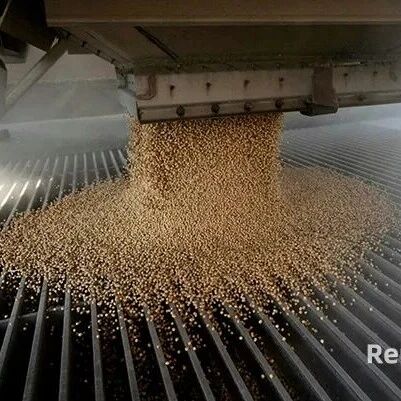
2026江苏两会 | 从田间地头到百姓餐桌,江苏立法打造全链条监管
Xin Lang Cai Jing· 2026-02-07 00:06
Core Viewpoint - Jiangsu Province has passed the Agricultural Product Quality Safety Regulations, which will take effect on May 1, aiming to ensure the safety and quality of agricultural products from production to consumption [1] Group 1: Legislative Focus - The regulations emphasize local characteristics and aim to create a regulatory framework that aligns with Jiangsu's agricultural status and modernization needs [3] - A key innovation is the "Commitment to Compliance Certificate," which serves as a guarantee for producers, buyers, and consumers, ensuring traceability of agricultural products [3][4] - By 2025, Jiangsu plans to implement a combined issuance of the "Commitment to Compliance Certificate" and rapid testing reports for certain products, enhancing transparency in production and inspection [3] Group 2: Regulatory Measures - The regulations detail penalties for issuing false Commitment to Compliance Certificates, including fines for unauthorized issuance and misuse of others' names [4] - Over 1,700 service stations for the Commitment to Compliance Certificate have been established across the province, promoting transparency in consumer purchases [4] Group 3: Comprehensive Supervision - The regulations establish a comprehensive management system covering all aspects from production environment, agricultural inputs, to quality control, packaging, storage, transportation, and consumer behavior [5] - Specific requirements for safe handling and transportation of agricultural products are outlined, including hygiene standards and risk monitoring mechanisms [5] Group 4: Quality Enhancement - The regulations aim to meet consumer demand for high-quality, green, and specialty agricultural products, moving beyond basic safety standards [6] - Strict source management is mandated, prohibiting activities that could harm the environment or product quality in designated geographical areas [6] - The regulations promote brand development for agricultural products and encourage inter-departmental information sharing and regional cooperation for unified quality standards [6]

2026年中央一号文件点评:聚焦粮食稳产提质,重视农业科技
Shenwan Hongyuan Securities· 2026-02-06 13:59
Investment Rating - The report gives an "Overweight" rating for the agricultural industry, indicating that it is expected to outperform the overall market [3][10]. Core Insights - The 2026 Central Document emphasizes food security and agricultural modernization, reiterating the importance of "new agricultural productivity" and the continuous focus on seed industry revitalization, particularly in biological breeding [4]. - In livestock, there is a shift towards "strengthening" comprehensive regulation of pig production capacity, with a focus on stabilizing the beef and dairy industries, and promoting dairy product consumption [4]. - The document highlights the importance of grain security, aiming to stabilize grain production at around 14 trillion jin, and introduces measures to enhance grain circulation efficiency [4]. - The report outlines the implementation of agricultural technology, including the integration of artificial intelligence with agriculture, and identifies key application scenarios such as drones, IoT, and robotics [4]. - The report suggests three main investment focuses: the recovery of the beef and dairy industries, the expected rebound in the pig cycle, and the continued advancement of the seed industry and biological breeding [4]. Summary by Sections Livestock Industry - The report indicates a comprehensive approach to regulating pig production capacity and acknowledges the success of measures taken to support the beef and dairy industries [4]. - It also mentions the introduction of multiple measures to promote dairy product consumption for the first time [4]. Crop Production - The focus remains on food security, with a commitment to stabilize grain production and enhance the efficiency of grain circulation [4]. - The report introduces a new round of initiatives aimed at increasing grain production capacity, particularly for oilseed crops like soybeans [4]. Seed Industry - The report emphasizes the ongoing implementation of seed industry revitalization actions and the acceleration of biological breeding industrialization [4]. - It notes the continuous mention of biological breeding in the Central Document over the past six years, highlighting its growing importance [4]. Agricultural Technology - The report outlines the path for implementing new agricultural productivity, emphasizing the need for technology integration, particularly in AI applications [4]. Agricultural Trade - The report advocates for the coordination of agricultural trade and production, promoting diversification of agricultural imports and supporting the export of competitive agricultural products [4].




2026年02月06日:农产品日报-20260206
Guo Tou Qi Huo· 2026-02-06 11:09
1. Report Industry Investment Ratings - **Bullish**: Soybean Meal, Soybean Oil, Rapeseed Meal, Rapeseed Oil, Corn, Egg [1] - **Bearish**: Live Pig [1] - **Neutral**: Soybean [1] 2. Core Views of the Report - The overall agricultural product market is in a state of shock, with various factors such as policies, international trade, and macro - risks influencing the market trends of different varieties [2][3][4] - Different agricultural product varieties face different supply - demand situations and price trends, and investors should pay attention to short - term risks and market changes [3][4][8] 3. Summary by Related Categories Soybean - CBOT soybeans are strong due to improved export expectations. The domestic policy continues to promote soybean yield and protect planting profits. Policy - side soybean auctions increase marginal supply, with a strong transaction price [2] - Short - term focus should be on policies and market sentiment, as well as the impact of macro - events on the overall commodity market [2] Soybean & Soybean Meal - Reuters predicts that the yields of Brazil and Argentina in the 2025/26 soybean season will change compared to January data, and the US soybean ending stocks will decrease [3] - After the Sino - US leaders' phone call, there are uncertainties in soybean purchase quantity. The short - term Dalian soybean meal may continue to bottom - out and fluctuate [3] - The USDA February supply - demand report will be released on February 11, 2026, at 1:00 am Beijing time [3] Soybean Oil & Palm Oil - Gold and silver volatility increases, domestic soybean oil reduces positions and prices fluctuate downward. Although CBOT soybeans are strong, domestic soybean oil is weaker than the US market [4] - The US biodiesel policy is positive, the fundamentals of US soybean oil are strong, and there is a high probability that CBOT soybeans and US soybean oil will fluctuate strongly [4] - The impact of the 2026 macro - environment cannot be ignored, and risks should be controlled [4] Rapeseed Meal & Rapeseed Oil - The rapeseed market fluctuates. Oilseed import expectations improve, and Sino - US, Sino - Canada, and US - Canada economic and trade relations are important for rapeseed trade [6] - The US biofuel policy ensures the stability of Canadian rapeseed oil exports. The rapeseed oil trading on the CGS Warehouse Network is fully completed, and the incremental supply of Australian seeds eases market concerns [6] - The short - term trend of rapeseed products is mainly fluctuating [6] Corn - The spot price of corn in Northeast China and North Ports is stable with a slight upward trend, and some deep - processing enterprises in Shandong have lowered their purchase prices [7] - After the Spring Festival, the ground - stored grain may be concentrated on the market, and the short - term Dalian corn futures will fluctuate [7] Live Pig - The near - month 03 contract of live pigs continues to fall to a new low, other contracts decline slightly, and funds reduce positions. Spot prices show signs of stabilization [8] - The current industry's出栏 weight is high, and the utilization rate of second - fattening pens still has room to decline. The situation around the 2026 Spring Festival needs further observation [8] - In the medium - to - long term, due to the increasing出栏 pressure, it is expected that the pig price will reach a new low in the first half of next year [8] Egg - The decline of egg futures slows down, funds reduce positions and shift from near - month to far - month contracts. Spot prices in some provinces are stable, while in others they continue to fall [9] - The chicken - chick replenishment volume in January has improved month - on - month but still declined year - on - year, indicating that the low replenishment sentiment has been repaired but is still lower than the high level in the first half of 2025 [9] - There is upward momentum for egg prices in the first half of 2026. After the spot price reaches the low point around the Spring Festival, a long - position strategy for egg futures contracts in the first half of 2026 can be considered [9]
农产品每日仓单合集-20260206
Guo Tai Jun An Qi Huo· 2026-02-06 10:49
农产品组 谢 义 钦 投资咨询号: Z0017082 xieyiqin@gtht.com 资料来源:国泰君安期货研究所 豆粕仓单量 菜粕仓单量 豆油仓单量 仓单数量:豆粕(手) 仓单数量:菜粕 (张) 仓单数量:豆油(手) n i l l - 2019 30000 40000 1 | 1 | 20 | 25000 30000 30000 - 2025 20000 15000 20000 20000 10000 L 10000 10000 5000 06-30 12-31 05-02 12-31 03-02 06-30 12-31 01-03 03-02 05-02 11-02 03-02 06-30 08-28 01-03 08-28 08-28 01-03 11-02 05-02 11-02 资料来源:国泰君安期货,钢联、wind、同花顺 资料来源:国泰君安期货,钢联、wind、同花顺 资料来源:国泰君安期货,钢联、wind、同花顺 农产品每日仓单合集 资料来源:国泰君安期货,钢联、wind、同花顺 棉花仓单 生猪仓单 白糖仓单 仓单数量:生猪 (手) 仓单数量:白糖(张) 仓单数量:一号棉(张) - 20 ...
建信期货农产品周度报告-20260206
Jian Xin Qi Huo· 2026-02-06 10:09
1. Reported Industry and Date - The report focuses on the agricultural product industry, dated February 6, 2026 [1] 2. Core Views 2.1. Soybean Meal - The domestic soybean meal market is weaker than the overseas market this week. The 05 contract is priced by imported Brazilian soybeans, and the pressure of its bumper harvest is approaching. The domestic market has limited bullish factors, and the rebound is weak. It is recommended to gradually reduce positions for the Spring Festival holiday [9] 2.2. Eggs - This week, egg spot prices have reached a peak and fallen. As the Spring Festival approaches, spot prices are in a seasonal decline. Futures prices are also weak. In the long - term, it is still a game about the degree of inventory reduction. It is recommended to roll and go long at low levels for far - month contracts [48] 2.3. Sugar - The raw sugar index fluctuates around the 14 - cent mark. Technically, the 10 - day and 10 - week moving averages suppress price rebounds. In the domestic market, the Zhengzhou sugar index first falls and then rises, with the 60 - day moving average and the weekly Bollinger middle - band suppressing prices. The market is currently treated as oscillating weakly [68][69] 2.4. Cotton - The overseas cotton market maintains a weak pattern, and Zhengzhou cotton oscillates and adjusts. The USDA monthly report is relatively bullish. The domestic market should pay attention to the planting intentions for the 2026/27 season and the actual reduction in Xinjiang cotton planting area after the festival [90] 2.5. Corn - The spot price of corn is narrowly weak. The supply may increase in the first half of February and decrease in the second half due to the holiday. Demand from feed and deep - processing enterprises is expected to pick up after the festival. The overall supply - demand relationship may be tight, and the price is expected to be strong [156] 2.6. Hogs - The spot price of hogs continues to fall this week. In the long - term, the supply of hogs is expected to increase slightly. Before the festival, both supply and demand will increase, and the supply - demand relationship is relatively loose. Futures prices are expected to oscillate weakly [202] 3. Summary of Each Section 3.1. Soybean Meal 3.1.1. Weekly Review and Operation Suggestions - Spot prices of coastal soybean meal are slightly weaker than a week ago. Overseas futures of US soybeans are strong this week, mainly due to the news of potential additional Chinese purchases. The domestic market is weaker, and it is recommended to reduce positions for the festival [7][8][9] 3.1.2. Core Points - **Soybean Planting**: The 2025/26 USDA report shows that US soybean production and end - of - season inventory increase, and the supply - demand relationship turns looser. In South America, Brazil's soybean harvest is accelerating, and Argentina's weather is expected to improve. The report is generally bearish [11] - **US Soybean Exports**: As of January 29, the weekly shipment volume of US soybeans in the 2025/26 season increases year - on - year, but the net sales volume decreases. Future purchases by China need to be monitored [15] - **Domestic Soybean Imports and Pressing**: Pressing profits are mostly negative. The actual pressing volume and operating rate increase slightly this week but are expected to decline in the near future. The import volume of soybeans shows seasonal changes, and the port inventory will gradually decline [27][29] - **Soybean Meal Transactions and Inventory**: The inventory of soybean meal in major domestic oil mills increases this week. Transactions are active in January due to pre - festival stocking and concerns about future supply [36] - **Basis and Inter - month Spreads**: The 05 - contract basis of soybean meal narrows slightly, and the 3 - 5 spread also narrows. Both are expected to oscillate in the short term [40][41] - **Domestic Registered Warehouse Receipts**: As of February 5, 2026, the number of domestic soybean meal registered warehouse receipts is at a relatively high level in the same period of history [43] 3.2. Eggs 3.2.1. Weekly Review and Operation Suggestions - Egg spot prices fall rapidly this week. Futures prices are also weak. In the long - term, it is necessary to pay attention to the degree of inventory reduction, and it is recommended to go long at low levels for far - month contracts [48] 3.2.2. Data Summary - **Inventory and Replenishment**: The inventory of laying hens is at a high level in the same period of history, and the replenishment momentum slows down, which may reduce the medium - term inventory pressure [49] - **Cost, Income, and Breeding Profit**: Egg spot prices fall, feed costs remain stable, and breeding profits decline [56] - **Culled Hens**: The culling volume is stable with a slight decline, the culling age is slightly delayed, and the price is at a relatively low level in the same period of history [58] - **Demand, Inventory, and Hog Prices**: Egg sales are at a relatively high level in the same period of history, inventory is at a moderately high level, and hog prices are at a relatively low level in the same period of history [63] 3.3. Sugar - **Futures Market**: The raw sugar index fluctuates around 14 cents, and the Zhengzhou sugar index first falls and then rises, with technical resistance [68][69] - **Spot Market**: Spot prices in Guangxi, Yunnan, and Shandong change little. The basis narrows, and the 5 - 9 spread strengthens [71][75] - **Brazilian Sugar Production**: In the second half of December 2025, the sugar production in the central - southern region of Brazil decreases year - on - year, and the ethanol production increases [77] - **Import Profit and Exchange Rate**: The import processing profit of raw sugar increases slightly. The Brazilian real and Thai baht depreciate against the US dollar [83][85] 3.4. Cotton 3.4.1. Weekly Review and Operation Suggestions - Overseas cotton markets are weak, and Zhengzhou cotton oscillates. The USDA report is bullish, and domestic policies emphasize the stability of the cotton industry. The market is affected by macro - factors and is expected to oscillate narrowly before the festival [88][90] 3.4.2. Core Points - **Main Cotton - producing Countries**: The USDA January report shows that the global cotton supply - demand relationship improves slightly, with a decrease in ending inventory and a decline in the inventory - to - sales ratio [91] - **US Cotton Exports**: As of January 29, the net signing and shipment of US cotton in the 2025/2026 season show different trends, and the cumulative signing and shipment volumes are different from the same period last year [96] - **Textile Enterprises**: The inventory and load indexes of textile enterprises change slightly, with a general downward trend in load [98] - **Basis and Inter - month Spreads**: The spot basis of cotton increases, and the 5 - 9 spread decreases [110] - **CFTC Positions and Domestic Registered Warehouse Receipts**: Non - commercial net positions of cotton decrease, and the number of domestic registered warehouse receipts increases [113] 3.5. Corn 3.5.1. Market Review - Corn spot prices are narrowly weak. Futures prices decline slightly. Different regions have different price trends [116] 3.5.2. Fundamental Analysis - **Corn Supply**: The grain - selling progress accelerates this week, and the port inventory increases [118][119] - **Domestic Substitutes**: Wheat prices first rise and then stabilize, with a price difference from corn [122] - **Imported Substitute Grains**: The import volume of grains in 2025 shows different changes. The import profit of Brazilian corn is high, and the import volume may increase in the future [124][136] - **Feed Demand**: The total output of industrial feed in 2025 increases. The inventory of feed enterprises increases slightly, and the feed demand is expected to continue to grow slightly [138][141] - **Deep - processing Demand**: The operating rate and output of the starch industry decline, and the processing profit of starch enterprises is mostly negative. The inventory of deep - processing enterprises increases [145][146] - **Supply - Demand Balance Sheet**: The 2025/26 production of Chinese corn is expected to increase, and the consumption is also expected to rise. The supply - demand relationship is relatively balanced [153] 3.5.3. Future Outlook and Strategy - The supply - demand relationship of corn is expected to be tight, with spot prices expected to be strong and futures prices expected to rebound after a decline. It is recommended that spot enterprises replenish inventory on a rolling basis, and futures investors reduce long positions moderately and buy on dips [156][157] 3.6. Hogs 3.6.1. Market Review - Hog spot prices continue to fall, and futures prices oscillate slightly higher. The supply from large - scale farms increases, and the demand from slaughterhouses recovers slightly [159][160] 3.6.2. Fundamental Overview - **Long - term Supply**: The price of binary sows is stable. The inventory of breeding sows shows different trends according to different data sources, and the future supply of hogs is expected to change accordingly [163][164] - **Medium - term Supply**: The price of piglets is stable with a slight decline. The inventory of piglets shows different growth trends in different periods, which affects the future supply of hogs [175][176] - **Short - term Supply**: The inventory of large hogs decreases, and the proportion of large hogs in stock increases due to factors such as pre - festival demand and second - round fattening. The utilization rate of fattening pens decreases [178][179][180] - **Current Supply**: The actual and planned slaughter volumes of hogs in January and February change, and the average slaughter weight decreases [186][188] - **Import Supply**: The import volume of pork in 2025 decreases year - on - year [195] - **Second - round Fattening Demand**: The enthusiasm for second - round fattening weakens at the end of January, and the cost decreases [197] - **Slaughter Demand**: The operating rate of slaughterhouses increases, and the slaughter volume in 2025 increases significantly [201] 3.6.3. Future Outlook - Before the festival, the supply and demand of hogs both increase, and the supply - demand relationship is relatively loose. Spot prices are expected to oscillate weakly, and futures prices are also expected to be weak. It is recommended that futures investors short on rallies, and breeding enterprises increase hedging and reduce short positions with slaughter [202][204]
软商品日报-20260206
Dong Ya Qi Huo· 2026-02-06 10:04
【免责声明 】 本报告基于本公司认为可靠的、已公开的信息编制,但本公司对该等信息的准确性及完整性不作任何保证。本报告所载的意见、结论及预测仅反映报告发布时的观点、结论和 建议。在不同时期,本公司可能会发出与本报告所载意见、评估及预测不一致的研究报告。本公司不保证本报告所含信息保持在最新状态。本公司对本报告所含信息可在不发出通知的情形 下做出修改, 交易者(您)应当自行关注相应的更新或修改。本公司力求报告内容客观、公正,但本报告所载的观点、结论和建议仅供参考,交易者(您)并不能依靠本报告以取代行使 独立判断。对交易者(您)依据或者使用本报告所造成的一切后果,本公司及作者均不承担任何法律责任。本报告版权仅为本公司所有。未经本公司书面许可,任何机构或个人不得以翻 版、复制、发表、引用或再次分发他人等任何形式侵犯本公司版权。如征得本公司同意进行引用、刊发的,需在允许的范围内使用,并注明出处为"东亚期货",且不得对本报告进行任何有 悖原意的引用、删节和修改。本公司保留追究相关责任的权力。所有本报告中使用的商标、服务标记及标记均为本公司的商标、服务标记及标记。 白糖日报 当前国内白糖需求一般,国际原糖价格偏弱运行,预计对 ...