医药生物

Search documents
基金双周报:ETF市场跟踪报告-20260309
Ping An Securities· 2026-03-09 06:08
Report Industry Investment Rating - Not provided in the content Core Viewpoints of the Report - As of March 6, the performance of ETF products in the past two weeks varied. Among domestic major broad-based ETFs, CSI 2000 had the largest increase, and among industry and theme products, cyclical theme ETFs had the largest increase. In the past two weeks, among domestic major broad-based ETFs, CSI 500, CSI 1000, and SSE 300 ETFs had the highest net outflows of funds. [2][9] - In the past two weeks, the inflow of funds into pharmaceutical and military ETFs accelerated, the inflow of funds into financial real estate and technology ETFs slowed down, the funds of cyclical and new energy ETFs turned into net inflows, and the funds of dividend, consumption, and other large manufacturing ETFs turned into net outflows. In terms of bond ETFs, the net inflow of convertible bond and local bond ETFs accelerated, the funds of policy financial bond, short-term financing, and treasury bond ETFs turned into net outflows, and the net outflow of credit bond ETFs slowed down. [2] - As of March 6, two new ETFs were established in the market in the past two weeks, with a total issuance share of 1.37 billion, both being stock ETFs. Compared with the end of 2025, the scales of commodity ETFs, industry + dividend ETFs, and QDII-ETFs increased by 42.38%, 20.42%, and 3.21% respectively, while the scales of bond ETFs and broad-based ETFs decreased by 11.04% and 40.92% respectively. [2][24] Summary by Relevant Catalogs ETF Market Review 1.1 Main Types of ETF Fund Flows Overview - The performance and fund flows of different types of ETFs are detailed, including broad-based, industry, and strategy ETFs. For example, among broad-based ETFs, CSI 2000 had a 0.83% return, while SSE 50 had a -1.37% return. In terms of fund flows, SSE 300 had a net outflow of 11.315 billion yuan in the past two weeks. [8] 1.2 Main Types of ETF Cumulative Fund Flows - For broad-based ETFs, in 2025, the fund trend of major broad-based ETFs changed from outflow to inflow and then to outflow, with a significant inflow at the end of the year. In 2026, the funds of major broad-based ETFs continued to have a net outflow, with the net outflow of SSE 300, SSE 50, and A-series ETFs slowing down, and the net outflow of CSI 500, CSI 1000/CSI 2000 ETFs accelerating. [10] - For industry and theme ETFs, in 2025, the cumulative net inflow of technology theme ETFs was significantly ahead, and all industry theme ETFs except military theme ETFs had a cumulative net inflow. Since this year, technology and cyclical theme ETFs have had a significant net inflow. In the past two weeks, the inflow of funds into pharmaceutical and military ETFs accelerated, the inflow of funds into financial real estate and technology ETFs slowed down, the funds of cyclical and new energy ETFs turned into net inflows, and the funds of dividend, consumption, and other large manufacturing ETFs turned into net outflows. [15] - For bond ETFs, since 2025, the net inflow of credit bond ETFs has been significantly ahead, followed by treasury bond ETFs. In the past two weeks, the net inflow of convertible bond and local bond ETFs accelerated, the funds of policy financial bond, short-term financing, and treasury bond ETFs turned into net outflows, and the net outflow of credit bond ETFs slowed down. [15] 1.3 ETF Product Structure Distribution - Two new stock ETFs were established in the past two weeks, with a total issuance share of 1.37 billion. Compared with the end of 2025, the scales of commodity ETFs, industry + dividend ETFs, and QDII-ETFs increased, while the scales of bond ETFs and broad-based ETFs decreased. [24] 1.4 Manager Scale Distribution - As of March 6, Huaxia Fund had the largest on-exchange ETF scale of 72.9052 billion yuan, and the ETF management scale of Guotai Fund has expanded by more than 4 billion yuan since the beginning of the year. [25] Classification of ETF Tracking 2.1 Tracking of Technology Theme ETFs in the Past Two Weeks - Products tracking the Hang Seng Technology Index had the highest net inflow of funds in the past two weeks, while products tracking the CSI Media Index had a net outflow of funds. [30] 2.2 Tracking of Dividend Theme ETFs in the Past Two Weeks - Products tracking the S&P China A-Share Large Cap Dividend Low Volatility 50 Index had the highest net inflow of funds in the past two weeks, while products tracking the Dividend Index had a net outflow of funds. [32] 2.3 Tracking of Consumption Theme ETFs in the Past Two Weeks - Products tracking the China Education and S&P 500 Consumer Select Index had a relatively high premium rate. ETFs tracking the CSI Liquor Index had the highest net inflow of funds in the past two weeks, while products tracking the CSI Tourism Index had a net outflow of funds. [35] 2.4 Tracking of Pharmaceutical Theme ETFs in the Past Two Weeks - ETFs tracking the CSI Medical Index had the highest net inflow of funds in the past two weeks, while products tracking the Medical Device Index had a net outflow of funds. [37] 2.5 Tracking of Large Manufacturing Theme ETFs in the Past Two Weeks - Products tracking the Power Grid Equipment Theme had the highest net inflow of funds in the past two weeks, while products tracking the Robot Index had a net outflow of funds. [40] 2.6 Tracking of QDII ETFs in the Past Two Weeks - Products tracking the Hang Seng Technology Index had the highest net inflow of funds in the past two weeks, while ETF products tracking the Hang Seng China Enterprises Index had a net outflow of funds. [43] Tracking of Popular Theme ETFs 3.1 Tracking of AI Theme ETFs in the Past Two Weeks - AI theme products performed poorly in the past two weeks, with an average return of -5.68%. The products tracking the CS Artificial Intelligence Index had the smallest decline. The funds have been in a net inflow overall since 2025, with a significant inflow from mid-to-late February to April, a continuous outflow from May to August, a significant inflow since mid-to-late August, and a net inflow of 311 million yuan in the past two weeks. [52] 3.2 Tracking of Robot Theme ETFs in the Past Two Weeks - Robot theme products performed poorly in the past two weeks, with an average return of -6.49%. The products tracking the Robot Index had a relatively small decline. The funds have been in a rapid inflow trend since February 2025, and there was a net outflow of 3.099 billion yuan in the past two weeks. [55] 3.3 Tracking of New Energy Theme ETFs in the Past Two Weeks - New energy theme products had mixed performance in the past two weeks, with an average return of 0.27%. The products tracking the Green Power Index had the largest increase. The funds continued to flow out before August 2025, had a significant inflow from August to October, and a significant outflow since late October. There was a net outflow of 3.611 billion yuan in the past two weeks. [60] 3.4 Tracking of Satellite and Commercial Space Theme ETFs in the Past Two Weeks - Satellite and commercial space theme products performed well in the past two weeks, with an average return of 1.68%. The products tracking the Satellite Industry Index had a relatively large increase. The funds had a small inflow in late August 2025 and a significant inflow since mid-to-late December. There was a net inflow of 2.956 billion yuan in the past two weeks. [65] 3.5 Tracking of Commodity ETFs in the Past Two Weeks - Commodity ETFs performed well in the past two weeks, with an average return of 4.52%. The products tracking the Yisheng Energy Chemical A Index had the largest increase. The funds had a significant inflow in April and mid-to-late October 2025, and a net inflow of 16.894 billion yuan in the past two weeks. Since the beginning of this year, gold ETFs have had a significant net inflow, with a significant net outflow on February 3. [73] 3.6 Tracking of ETFs Held by Central Huijin, Guoxin, and Chengtong in the Past Two Weeks - As of June 30, 2025, the scale of ETFs held by Central Huijin, Guoxin, and Chengtong totaled 39.1336 billion shares. In the past two weeks, there was a net outflow of 52.658 billion yuan. The net outflows of Southern CSI 500 ETF, Southern CSI 1000 ETF, and Huatai-PineBridge SSE 300 ETF were among the highest. [76]
渤海证券研究所晨会纪要(2026.03.09)-20260309
BOHAI SECURITIES· 2026-03-09 04:16
Macro and Strategy Research - The US ISM manufacturing PMI slightly declined in February but remains in the expansion range, with new orders and output indices still robust. However, the price index jumped, indicating inflationary pressures [2][3] - The ADP report shows that private sector job creation in the US reached a new high since the end of last year, supporting the view of a stable labor market despite job growth being limited to a few sectors [2] - In Europe, inflation data in February was driven by rising service prices, with expectations that the European Central Bank will maintain its policy rates unchanged throughout the year [3] Fixed Income Research - In February, the central bank's liquidity net injection exceeded 800 billion yuan, with a significant amount of reverse repos conducted. The money market saw a slight increase in prices before the Spring Festival, but the fluctuations were lower than in previous years [5][6] - The issuance of interest rate bonds in February totaled 2.5 trillion yuan, showing a slight decrease year-on-year, with net financing of approximately 1.3 trillion yuan [6][7] - The bond market is expected to remain in a strong oscillation pattern, with inflation and policy changes being key factors that could influence market dynamics [9] Industry Research - The 2026 government work report highlights the brain-computer interface as a new pillar industry, indicating a strategic focus on emerging sectors such as biomedicine [10][12] - Notable industry developments include the approval of new drugs by companies like China Biologic Products and Innovent Biologics, reflecting ongoing innovation in the pharmaceutical sector [11] - The SW biomedicine sector's valuation remains high, with a TTM P/E ratio of 48.07, indicating significant investor interest despite recent market declines [11][12]
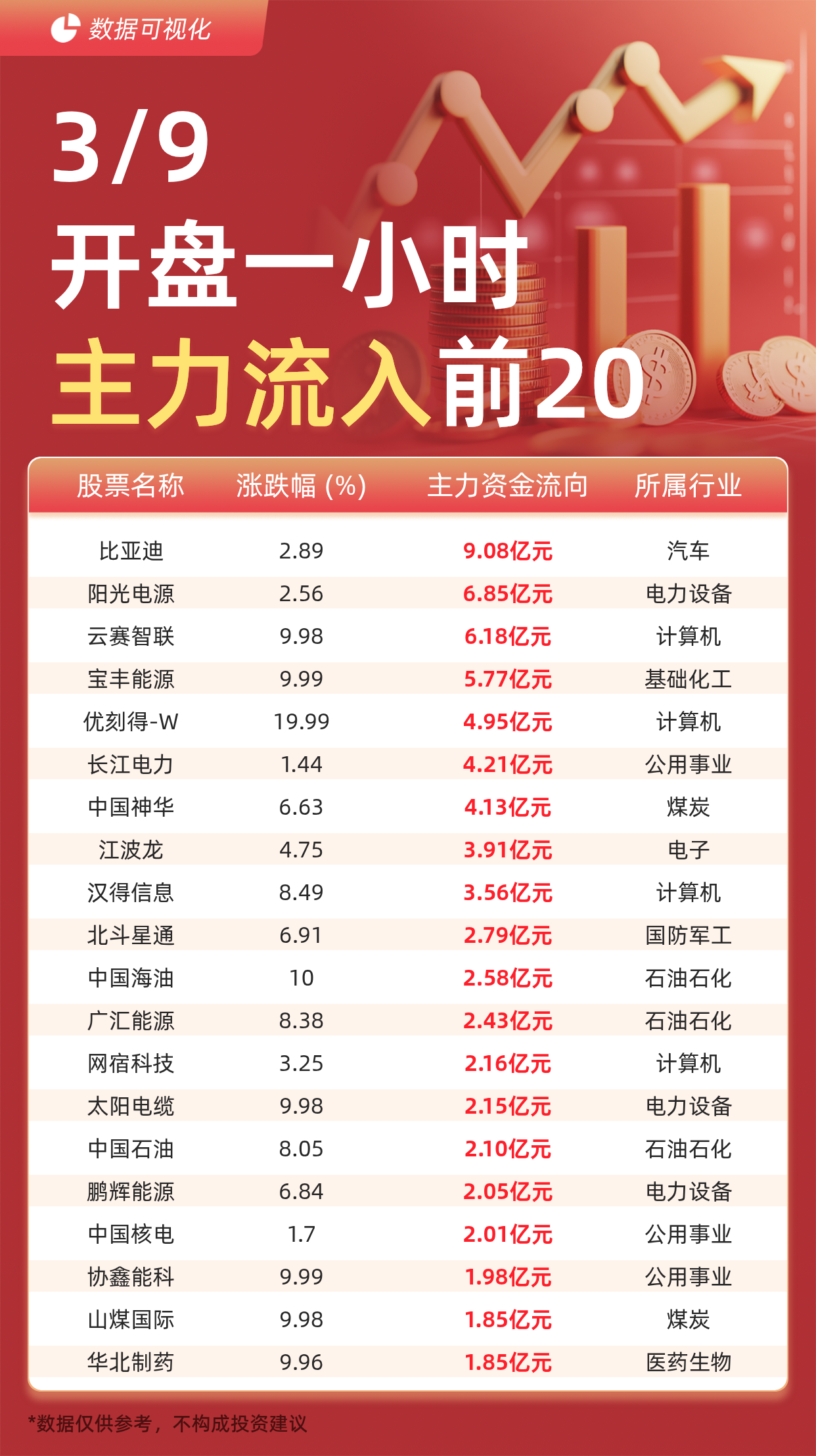
主力资金流入前20:比亚迪流入9.08亿元、阳光电源流入6.85亿元
Jin Rong Jie· 2026-03-09 02:41
Group 1 - The main stocks with significant capital inflow include BYD (9.08 billion), Sungrow Power (6.85 billion), and YunSai ZhiLian (6.18 billion) [1] - The top performing stocks by percentage increase are Baofeng Energy (9.99%), YK Technology-W (19.99%), and YunSai ZhiLian (9.98%) [2][3] - The sectors represented in the top inflow stocks include automotive, power equipment, computer, and coal [2][3] Group 2 - BYD leads with a capital inflow of 9.08 billion and a price increase of 2.89% [2] - Sungrow Power has a capital inflow of 6.85 billion with a price increase of 2.56% [2] - The total capital inflow for the top 20 stocks reflects strong investor interest across various sectors [1]




国泰海通香江策论之专题报告港股IPO、再融资及解禁对港股行情的影响:顺势而为,基本面为王
Haitong Securities International· 2026-03-08 23:30
Group 1: IPO and Fundraising Trends - Hong Kong IPOs and follow-on fundraising are closely aligned with market cycles, with peaks typically coinciding with market highs, such as in 2010 and 2015[1] - In 2025, the Hong Kong IPO market saw a significant rebound, with total IPO proceeds reaching HKD 285.7 billion, a 224% increase year-on-year, while combined IPO and follow-on fundraising totaled HKD 645.9 billion compared to HKD 192.2 billion in 2024[1][7] - The IPO fundraising in 2025 marked the highest level since 2022, indicating a recovery trend supported by favorable policies and returning international capital[2][10] Group 2: Future Projections and Market Structure - In 2026, IPO proceeds are expected to exceed HKD 300 billion, continuing the recovery trend from 2024, driven by strong demand from emerging industries and policy support[2][10] - As of late February 2026, IPO proceeds had already reached over 25% of the previous year's total, with 488 companies in the pipeline, primarily from technology and healthcare sectors[2][10] - The supply structure of IPOs is improving, which may enhance the representation of growth industries in the Hong Kong market[2][10] Group 3: Regulatory Environment and Market Impact - The Hong Kong SFC introduced five new regulatory requirements to prioritize quality over quantity in IPOs, including tighter sponsor workload limits and stricter vetting standards[3][14] - IPO waves typically create structural rather than systemic impacts on the market, with temporary supply pressures absorbed by market liquidity[3][27] - Historical data shows that the Hang Seng Index does not experience systemic declines during unlock events, but rather exhibits increased volatility before unlocks and stabilization afterward[4][28] Group 4: Unlock Supply and Market Dynamics - In 2026, the unlock supply is expected to exceed HKD 450 billion in the first half, peaking at approximately HKD 581.6 billion in September, primarily driven by Zijin Gold International[4][15] - The unlock supply is concentrated in the IT, consumer discretionary, and healthcare sectors, which may lead to sector-level volatility during the unlock period[4][28] - Macro fundamentals and global liquidity conditions remain key determinants of market trends, with unlocks reflecting structural disturbances rather than systemic risks[4][16]
信用债系列专题报告:透过财报识别财务舞弊主体的违约信号
Hua Yuan Zheng Quan· 2026-03-07 08:02
1. Report Industry Investment Rating - The report does not provide a specific industry investment rating [58][60] 2. Core Viewpoints of the Report - Financial fraud is a key factor leading to bond issuer credit risk and default, and it is difficult to pre - identify bond default risks. By summarizing the common characteristics of financial fraud of bond default entities, investors can be helped to discover potential credit risks of issuers [2][5] - The report analyzes the theoretical framework for identifying financial fraud, the situation of bond defaults caused by financial fraud from 2017 - 2025 H1, the main types and identification paths of financial fraud of default entities, and other concerns for identifying financial fraud [6][11][18] 3. Summary by Relevant Directory 3.1 Identification of the Theoretical Framework of Financial Fraud - Financial fraud crimes mainly involve fraudulently issuing securities, illegally disclosing or failing to disclose important information, providing false certification documents, and issuing certification documents with major inaccuracies. From the perspective of certified public accountants, fraud is mainly divided into preparing false financial reports and embezzling assets [6] - When financial fraud occurs, it is usually accompanied by three situations: motivation or pressure, opportunity, and the ability to find excuses. The report lists corresponding financial or operational indicators for each situation [7] 3.2 2017 - 2025 H1 Financial Fraud - Caused Bond Default Situation - From 2017 - 2025 H1, among 135 domestic bond default entities, real estate and comprehensive industries had the most default entities, with 15 each. In terms of enterprise nature, 94 were private enterprises, indicating that private enterprises are the high - incidence areas of bond defaults [11] - Among the 135 entities, 41 were involved in financial fraud. In terms of industry distribution, public utilities and non - ferrous metals had more entities, with 5 and 4 respectively. In terms of enterprise nature, 32 were private enterprises, 5 were state - owned enterprises, and 2 were Sino - foreign joint - ventures, and no central enterprises defaulted due to financial fraud [14] 3.3 Main Types and Identification Paths of Financial Fraud of Default Entities 3.3.1 Fictitious Transactions, Inflated Revenues or Profits - Examples include Huaxun Ark, which fabricated self - networking and radar businesses from 2015 - 2020 to inflate revenues and profits, and Tongjitang, which inflated revenues and profits through its subsidiaries' fictitious transactions [18][22] - Identification paths include paying attention to asset account fluctuations, profit statement abnormalities, the reconciliation between the profit statement and the cash flow statement, and cross - verification of upstream and downstream information disclosure data [23][24][25] 3.3.2 Inflated Assets - **"High Deposits and High Loans", Inflated Monetary Funds**: Examples are Kangmei Pharmaceutical, which forged and altered large - scale time deposits, and Luowa Technology, which had non - standard accounting and an unexplained "high deposits and high loans" situation. Identification paths include focusing on the scale, authenticity, debt structure, cost and return of monetary funds, and the restriction of monetary fund rights [26][30][34] - **Overestimated Fair Value of Investment Real Estate**: For example, Taihe Group overestimated the fair value of its investment real estate. The identification path is to pay attention to the ratio of annual rental income to the book value of investment real estate and the ratio of the book value of investment real estate to land area [35][37] - **Huge Goodwill Leading to Impairment Risk**: For example, Zhonghong Co., Ltd. had huge goodwill after an acquisition, and its bonds defaulted. Identification paths include paying attention to performance commitments or gambling agreements, and the proportion of goodwill and the performance trend of the target [38][41][42] 3.3.3 Major Shareholders or Actual Controllers Embezzling Issuer Funds - For example, Tongjitang provided non - operating funds to its controlling shareholder and related parties without due procedures. Identification paths include paying attention to the ratios of prepayments, accounts receivable, and other receivables to net assets, checking the actual controllers of counterparties, and the cost of related - party capital lending [43][44] 3.3.4 Other Concerns for Identifying Financial Fraud - The type of audit opinion is an intuitive evidence of financial information quality. Reasons for non - standard audit opinions, key audit matters, and frequent changes of accounting firms need special attention [45][46] - Continuous credit rating downgrades can intuitively reflect the marginal changes in the issuer's operating environment. Before the bonds of default entities with financial fraud defaulted, there were continuous downgrades of China Bond Credit Ratings [47] - The reliability of quarterly and semi - annual reports is relatively weak because their audits are not mandatory, and the authenticity and reliability of financial information in mid - year reports without the guarantee of audit institutions may be questionable [48] 3.4 Main Concerns for Identifying Financial Fraud through Accounting Items - **Balance Sheet**: Different items such as monetary funds, accounts receivable, prepaid accounts, inventory, other receivables, other current assets, long - term equity investments, investment real estate, goodwill, and deferred income tax assets have their own characteristics and identification paths [50] - **Income Statement**: Items such as operating revenues and costs, R & D expenses, financial expenses, fair value changes in gains and losses, and non - operating revenues and expenses also have corresponding characteristics and identification paths [51]

【6日资金路线图】两市主力资金净流出超46亿元 基础化工等行业实现净流入
证券时报· 2026-03-06 12:59
Market Overview - On March 6, the A-share market saw an overall increase, with the Shanghai Composite Index closing at 4124.19 points, up 0.38%, the Shenzhen Component Index at 14172.63 points, up 0.59%, and the ChiNext Index at 3229.3 points, up 0.38% [1] - The total trading volume for both markets was 22001.49 billion, a decrease of 1898.89 billion compared to the previous trading day [1] Capital Flow - The net outflow of main funds from the Shanghai and Shenzhen markets exceeded 46 billion, with an opening net outflow of 112.88 billion and a closing net inflow of 12.02 billion [2] - The net outflow for the CSI 300 was 6.54 billion, while the ChiNext experienced a net outflow of 38.8 billion [4] Sector Performance - The basic chemical industry saw a net inflow of 103.76 billion, with a growth of 2.80%, while the biopharmaceutical sector had a net inflow of 96.28 billion, increasing by 2.56% [7] - Other sectors with significant net inflows included electrical equipment (61.69 billion, up 1.45%) and non-bank financials (57.42 billion, up 1.58%) [7] - Conversely, the non-ferrous metals sector experienced a net outflow of 60.70 billion, down 0.86%, and the telecommunications sector saw a net outflow of 45.41 billion, up 0.54% [7] Institutional Activity - The top stocks with net inflows from institutions included Fenghuo Communication (26,380.95 million), Lian Te Technology (13,446.31 million), and Jicheng Electronics (8,438.09 million) [11] - Notable stocks with significant institutional interest included Zhongmu Co. (target price 10, current price 8.01, potential upside 24.84%) and Hailianxun (target price 27, current price 24.93, potential upside 8.30%) [13]

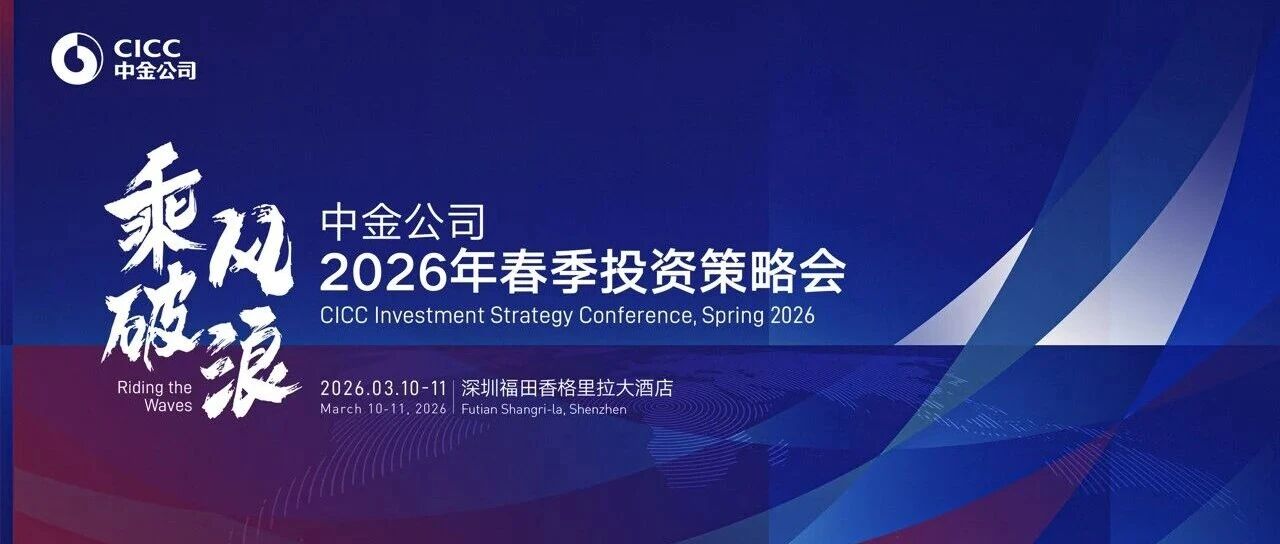
乘风破浪 | 中金公司2026年春季投资策略会
中金点睛· 2026-03-06 11:03
Core Insights - The article discusses the upcoming CICC Investment Strategy Conference scheduled for March 10-11, 2026, in Shenzhen, focusing on macroeconomic outlooks and investment opportunities across various sectors [2][3]. Group 1: Keynote Speakers and Topics - Notable speakers include Wei Lun Professor of Economics at The Chinese University of Hong Kong, the Chief Economist of CICC, and the Senior Managing Director & Chief Strategist of CICC [5][8][11]. - The conference will feature a keynote speech on the macroeconomic outlook for China and the United States, highlighting the global economic landscape [16]. Group 2: Market Outlook Sessions - Sessions will cover A-share market outlook, Hong Kong and overseas market perspectives, and major asset class forecasts [18]. - Specific discussions will address the real estate market trends, fixed income market developments, and the growth of multinational enterprises in a globalized context [19]. Group 3: Sector-Specific Discussions - The conference will include breakout sessions focusing on various sectors such as AI, telecommunications, consumer goods, and renewable energy [20][21][22]. - Topics will explore investment opportunities in the automotive industry, logistics, and the impact of AI on different sectors [21][22][31]. Group 4: Participating Companies - A range of companies from different sectors will participate, including banks, non-bank financial institutions, and technology firms [23][24][26]. - Notable participants include major banks like CITIC Bank and Minsheng Bank, as well as companies in the energy and materials sectors [23][24].
行业比较研究系列之七:交易面新思考:均线有效性视角下的三类行业
EBSCN· 2026-03-06 08:48
Group 1 - The report emphasizes that moving averages (MAs) are effective tools for investment decisions, with daily MAs being more effective than weekly and monthly MAs [1][15][20] - Historical data indicates that shorter MAs yield better investment performance, with daily MAs outperforming weekly and monthly MAs in terms of Sharpe ratios [1][20][21] - The effectiveness of MAs is influenced by the duration of market trends and the volatility of stock prices, with longer-lasting and more volatile trends enhancing the reliability of MAs [2][27][30] Group 2 - Industries can be categorized based on their suitability for different types of MAs: 1. Industries suitable for long-term MAs typically exhibit high volatility and sustained trends, primarily found in growth sectors such as electronics, computing, and pharmaceuticals [3][41][56] 2. Industries suitable for short-term MAs have moderate volatility and trend duration, including cyclical sectors like light industry and retail [3][42][97] 3. Industries unsuitable for MAs are characterized by low volatility and short trend durations, often found in value and high-dividend sectors like utilities and transportation [4][43][63] Group 3 - The report identifies specific industries that benefit from long-term MAs, including electronics, computing, media, and power equipment, which tend to have significant price fluctuations and prolonged market trends [3][41][56] - Short-term MAs are recommended for industries with moderate price volatility and trend duration, such as light manufacturing and automotive sectors, which can capture gains more effectively [3][42][97] - Industries with low price volatility and short trend durations, such as utilities and household appliances, are advised against using MAs due to the potential for misleading signals [4][43][63]
【光大研究每日速递】20260306
光大证券研究· 2026-03-05 23:07
Group 1: Economic Indicators and Policies - The traditional method of evaluating PMI is based on whether it exceeds 50%, indicating economic expansion or contraction compared to the previous month. Investors may also focus on the change from the previous period for sensitivity to new data [5] - Since Q4 2025, positive factors have accumulated to drive price recovery, with December CPI showing a year-on-year increase of 0.8%, up 1.2 percentage points from August. The expectation of a 2% increase in consumer prices is deemed achievable through coordinated policy measures [5] Group 2: Government Work Report Insights - The 2026 Government Work Report emphasizes the cultivation of emerging industries and the development of a green low-carbon economy, with a target to reduce carbon emissions per unit of GDP by approximately 3.8% in 2026 [5] - The automotive industry policies continue to focus on consumption stimulation and industrial upgrading, with expectations that the "trade-in" policy will persist and high-level intelligent driving may reach a commercialization turning point [7] - In the food and beverage sector, the report suggests investment opportunities in the liquor sector due to improved wealth effects from stable real estate prices and a focus on frozen food products under inflationary conditions [7] - The healthcare sector is highlighted for its focus on emerging industries such as biomedicine and brain-computer interfaces, with initiatives to enhance healthcare services and insurance coverage for long-term care [7] Group 3: Company-Specific Developments - Haidilao's operational data during the 2026 Spring Festival exceeded expectations, demonstrating its resilience and market leadership. The management changes have led to efficiency improvements and growth potential from new product categories, reinforcing both short-term performance and long-term strategies [8]

娄勤俭:香港国际金融中心地位更加稳固
IPO日报· 2026-03-04 13:46
Core Viewpoint - The article highlights the significant progress made by Hong Kong in enhancing its status as an international financial center, with notable achievements in IPO activities and economic rankings [2][3][4]. Group 1: Economic Developments - Hong Kong's position as an international financial center has been solidified, ranking third in the Global Financial Centers Index [2]. - The IPO scale in Hong Kong has doubled year-on-year, making it the top global market for IPOs [2]. - The business environment in Hong Kong is characterized by high efficiency and openness, with the highest economic freedom ranking globally [2]. Group 2: IPO Market Insights - In 2025, eight large IPOs are expected in Hong Kong, with four of them entering the global top ten for fundraising: CATL, Zijin Mining International, Sany Heavy Industry, and Seres [3]. - Each of these eight large IPOs is projected to raise over 10 billion HKD, contributing to approximately 50% of the total fundraising [4]. - A total of 19 A-share listed companies, including Naxin Microelectronics, are set to list in Hong Kong, raising around 140 billion HKD, which accounts for nearly half of the total IPO fundraising in the market [4].