计算机等

Search documents
2025苏州紧缺人才目录发布 15个专业人才需求旺盛
Su Zhou Ri Bao· 2025-09-05 00:24
Core Insights - Suzhou has released the "2025 Key Industry Talent Demand Directory," highlighting a strong demand for professionals in electronic information, machinery, and computer fields, particularly in new generation information technology, high-end equipment, and new materials [1][2] Group 1: Talent Demand and Salary Insights - The directory identifies 868 critical professional categories and 3,373 job postings, expanding coverage to include quantum computing and smart agriculture in advanced manufacturing, and data services and wellness services in the service industry [1] - High-paying positions in advanced manufacturing include roles such as intelligent research experts and AI algorithm engineers, with annual salaries exceeding 1 million yuan, while service industry roles like big data algorithm experts earn over 600,000 yuan [1][2] Group 2: Recruitment Trends - A survey indicates that 82% of companies prefer hiring candidates with over two years of work experience, with the highest demand in the new energy vehicle and information technology sectors [2] - 77.25% of companies plan to recruit R&D technical talent in the next year, while 21.57% aim to hire sales and customer service roles [2] Group 3: Impact on Companies - The directory serves as a precise recruitment guide, helping companies like ASUS Technology (Suzhou) to clarify their hiring strategies, with previous years seeing 17 recognized talents in critical fields [3] - The Suzhou Human Resources Department has launched a talent demand directory information-sharing feature, aiding job seekers and companies in talent acquisition and development [3]
粤开市场日报-20250902
Yuekai Securities· 2025-09-02 07:55
Market Overview - The A-share market saw most indices decline today, with the Shanghai Composite Index falling by 0.45% to close at 3858.13 points, and the Shenzhen Component Index dropping by 2.14% to 12553.84 points [1] - The total trading volume in the Shanghai and Shenzhen markets reached 28,750 billion yuan, an increase of 1,250.31 billion yuan compared to the previous trading day [1] Industry Performance - Among the primary industries, banking, public utilities, home appliances, automotive, oil and petrochemicals, and comprehensive sectors led the gains, while telecommunications, computers, electronics, national defense and military industry, construction materials, and basic chemicals experienced declines [1] Sector Highlights - The top-performing concept sectors today included central enterprise banks, reducers, gold and jewelry, selected banks, industrial mother machines, new industrialization, PEEK materials, selected electric power stocks, power batteries, Yushu robots, integrated die-casting, thermal power, cultivated diamonds, central enterprises, and selected automotive parts [2]
8月26日电子、电力设备、银行等行业融资净买入额居前
Zheng Quan Shi Bao Wang· 2025-08-27 02:48
Summary of Key Points Core Viewpoint - As of August 26, the total market financing balance reached 2,192.16 billion yuan, reflecting an increase of 19.19 billion yuan from the previous trading day, with 26 out of 31 primary industries showing an increase in financing balance [1][2]. Industry Financing Balance Changes - The electronics industry saw the largest increase in financing balance, rising by 6.455 billion yuan to a total of 288.65 billion yuan [1]. - Other notable increases were observed in the power equipment (1.56978 trillion yuan, +1.54 billion yuan), banking (699.09 billion yuan, +1.528 billion yuan), and computer sectors (1.75471 trillion yuan, +1.474 billion yuan) [1]. - Conversely, five industries experienced a decrease in financing balance, with the non-ferrous metals sector declining the most by 750 million yuan, bringing its total to 961.90 billion yuan [1][2]. Percentage Changes in Financing Balance - The beauty and personal care industry recorded the highest percentage increase in financing balance at 3.97%, totaling 66.55 billion yuan [1]. - Other industries with significant percentage increases included comprehensive (2.37%), electronics (2.29%), and banking (2.23%) [1]. - The non-ferrous metals, textile and apparel, and basic chemicals industries had the largest percentage declines, with decreases of 0.77%, 0.31%, and 0.14%, respectively [1][2].
0820港股日评:三大股指低开高走,港股通轻工制造领涨-20250821
Changjiang Securities· 2025-08-20 23:30
Core Insights - The Hong Kong stock market opened lower but closed higher, with a total trading volume of HKD 285.29 billion and a net outflow of southbound funds amounting to HKD 14.682 billion [2][9] - Major new consumer stocks reported strong interim results, and positive guidance from company leaders boosted the new consumption sector [2][9] - The light industry manufacturing sector led the gains in the Hong Kong Stock Connect, benefiting from positive earnings announcements from leading companies [2][9] Market Performance - The Hang Seng Index rose by 0.17% to 25,165.94, while the Hang Seng Technology Index slightly declined by 0.01% to 5,541.27 [6] - The Hang Seng China Enterprises Index increased by 0.08% to 9,013.27, and the Hang Seng High Dividend Index fell by 0.06% [6] - In the A-share market, the Shanghai Composite Index rose by 1.04%, and the CSI 300 Index increased by 1.14% [6] Sector Analysis - Among the primary sectors in the Hong Kong Stock Connect, light industry manufacturing (+5.82%), electronics (+1.09%), and agriculture, forestry, animal husbandry, and fishery (+0.95%) led the gains [6][9] - Conversely, the pharmaceutical sector (-2.88%), comprehensive sector (-2.53%), and computer sector (-2.34%) experienced declines [6][9] - Concept indices such as the paper industry (+9.17%), baby and child products (+8.63%), and electronic cigarettes (+6.37%) saw significant increases, while the Foxconn index (-6.93%) and unprofitable biotech index (-5.02%) faced declines [6][9] Future Outlook - The report anticipates that the Hong Kong market could reach new highs driven by three core directions: AI technology and new consumption sectors, continued inflow of southbound funds, and improved global liquidity conditions due to potential U.S. interest rate cuts [9] - The report emphasizes the importance of the upcoming Jackson Hole global central bank meeting and its implications for future monetary policy [9]
机构齐声高喊4000点!过去牛市关键点位冲刺期,需要多少天
天天基金网· 2025-08-18 11:00
Core Viewpoint - The article discusses the potential for the Shanghai Composite Index to reach 4000 points by the end of the year, drawing parallels with previous bull markets and their driving factors [1][7]. Historical Context - The 2005 stock reform initiated a bull market, propelling the A-share market from 998 points in June 2005 to 6124 points in October 2007, a rise of over 6 times, before a decline to 1665 points due to the global financial crisis [2]. - In 2015, the Shanghai Composite Index surged from 2000 points to 5178 points, influenced by global liquidity easing and domestic reforms, but later fell to 2638 points following regulatory crackdowns on margin trading [4]. Sector Performance - For the range of 3000 to 3600 points, leading sectors included: - Beauty Care: 57.22% - Construction Decoration: 48.83% - Steel: 46.58% [3] - For the range of 3600 to 4000 points, leading sectors included: - Media: 65.30% - Computer: 52.93% - Non-banking Financials: 44.87% [3]. Future Predictions - Institutions generally expect the Shanghai Composite Index to stabilize around 3700 points, with optimistic scenarios suggesting a challenge to the 4000-4500 point range by the end of 2025 to mid-2026 [9]. - If macroeconomic conditions improve and policy support increases, the index could gradually approach 5000 points or higher by 2026-2027, with a focus on new productivity sectors like AI and semiconductors [9].


中银量化大类资产跟踪:A股成交量大幅上升,核心股指触及前期高点
Bank of China Securities· 2025-08-18 03:00
The provided content does not contain any specific quantitative models or factors, nor does it include detailed construction processes, formulas, or backtesting results for such models or factors. The report primarily focuses on market trends, style performance, valuation metrics, and other financial indicators. Therefore, no summary of quantitative models or factors can be generated from this content.
3683点,选好指数很重要!
Xin Lang Ji Jin· 2025-08-14 02:37
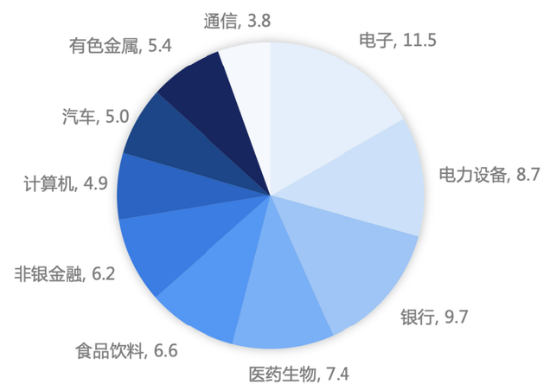
Market Overview - Recent market sentiment is positive, with major indices reaching new highs, particularly the Shanghai Composite Index surpassing 3674.40, a peak not seen since December 2021 [1] - The rise in indices is primarily driven by ample liquidity, a systemic decline in domestic risk-free interest rates, and an influx of overseas dollar liquidity, alongside policies promoting "de-involution" and large-scale infrastructure projects [1][2] - Despite the overall index performance, there is significant divergence at the individual stock level, with 2733 stocks rising and 2458 falling on August 13, indicating a mixed market experience for investors [1] Structural Market Dynamics - A structured market environment has emerged, characterized by rapid rotation and the need for investors to identify sustainable sectors for long-term gains [2] - The current bull market presents challenges for ordinary investors, as rapid sector rotations make it difficult to capitalize on opportunities [3] Investment Strategy - To achieve favorable returns in the current A-share market, establishing a clear investment direction is crucial [3] - The China Securities A500 Index is suggested as a viable option for investors seeking a balance between the stability of large-cap indices and the growth potential of mid- and small-cap stocks [3] Index Characteristics - The China Securities A500 Index is designed to ensure industry balance, covering all secondary and most tertiary industries, making it inclusive of both traditional and emerging sectors [4] - The index focuses on new productive forces, incorporating leading companies in emerging fields such as electric equipment, pharmaceuticals, electronics, and computing [6] - Compared to the CSI 300, the A500 Index has reduced weight in non-bank financials and food & beverage sectors, redistributing approximately 12.51% of its weight to emerging industries, enhancing its representativeness [7] Performance Metrics - The A500 Index includes leading companies across various industries, covering 91% of the industry leaders in the CSI tertiary sectors, compared to 65% for the CSI 300 [8] - Historical data indicates that the A500 Index has outperformed the CSI 300 in growth stock environments, with an average excess return of 4.94% from 2020 to 2021 [8] - Long-term holding of the A500 Index has shown superior returns, with a cumulative increase of 363.05% since its inception, compared to 293.61% for the CSI 300 and 326.30% for the CSI 800 [10] Conclusion - Given the complexities of the current bull market, it may be more beneficial for investors to track a well-performing index like the China Securities A500 ETF rather than attempting to select individual stocks [12]
金鹰基金田啸周评:均衡配置应对潜在波动和快速轮动
Xin Lang Ji Jin· 2025-08-11 06:21
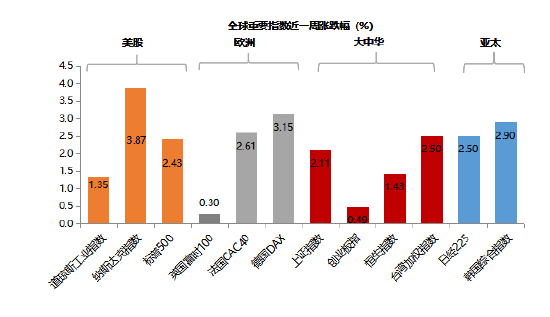
Market Overview - The Shanghai Composite Index reached a new high for the year, surpassing the key level of 3600, with margin trading balances rising to the highest level since July 2015 [1][3][26] - Economic data released this week showed that July export figures exceeded expectations, although the "export rush effect" is diminishing [1][3][13] - The market is expected to form a new consensus based on domestic policy directions and mid-term performance reports [1][26] Industry Insights - In the technology sector, AI and innovative pharmaceuticals have become crowded trades, prompting new capital to seek lower-priced alternatives [2][27] - The military industry is gaining attention ahead of the 93rd anniversary of the victory in the War of Resistance Against Japan, particularly in the context of geopolitical tensions [2][27] - The value sector is expected to benefit from policies enhancing dividends and low interest rates, with a focus on high-yield assets during the economic recovery phase [2][27] Economic Indicators - A-shares saw a moderate increase in trading volume, with the average daily turnover dropping to 1.78 trillion yuan [3][23] - The average daily trading volume for the A-share market decreased, indicating a slight decline in trading activity [23] - The July Consumer Price Index (CPI) showed a month-on-month increase of 0.4%, while the Producer Price Index (PPI) decreased by 0.2% [12][13] Global Market Trends - Global indices saw a comprehensive rise, with the Nasdaq, S&P 500, and Dow Jones increasing by 3.9%, 2.4%, and 1.3% respectively [5][6] - The European market experienced mixed results, with the DAX and CAC 40 rising by 3.1% and 2.6%, while the FTSE 100 lagged behind with a 0.3% increase [6] - In the Asia-Pacific region, the South Korean Composite Index and Nikkei 225 rose by 2.9% and 2.5% respectively [6] Policy Developments - The State Council issued opinions on gradually promoting free preschool education, aiming for quality development by 2025 [8] - The People's Bank of China and other departments released guidelines to support new industrialization, targeting a mature financial system by 2027 [8][9] - The Ministry of Transport and other departments announced a plan to enhance rural road networks by 2027, aiming for improved transportation services [8] Trade and Export Data - In July, China's exports grew by 7.2% year-on-year, while imports increased by 4.1%, resulting in a trade surplus of $98.24 billion [13] - The export growth was driven by strong performance in integrated circuits, steel, aluminum, and rare earths, despite a decline in exports to the U.S. [13] - The outlook for August exports is expected to maintain resilience, with a projected year-on-year growth of around 5% [13]
这一指标再到2万亿,见顶还是新起点?| 周度量化观察
申万宏源证券上海北京西路营业部· 2025-08-11 01:54
Market Overview - A-shares and Hong Kong stocks rose together this week, with A-shares slightly outperforming, reaching a financing balance of nearly 2 trillion, a new high for this round [2] - The average daily trading volume in the A-share market fell to 111.2 billion, indicating a significant decline in trading activity [2] - The market showed a divergence in performance, with sectors like defense, non-ferrous metals, and machinery leading gains, while pharmaceuticals, computers, and retail sectors lagged [2][22] Bond Market - The bond market experienced a balanced and slightly loose funding environment, with both government and credit bonds strengthening [2][28] - The expectation for pure bond fund returns is positive, supported by a favorable monetary policy environment due to the anticipated interest rate cuts by the Federal Reserve [2][28] - The bond market is expected to remain volatile in the short term, with a focus on coupon strategies [7] Commodity Market - Gold prices rose significantly this week, with COMEX gold briefly breaking previous highs, supported by dovish comments from the Federal Reserve and a weaker dollar [2][8] - The long-term bullish logic for gold remains intact, with recommendations to accumulate on dips, although short-term risks of price weakness exist if highs are not sustained [8][33] Overseas Market - U.S. stocks showed a recovery after a decline, with the latest non-farm payroll data falling short of expectations, increasing the likelihood of a rate cut by the Federal Reserve [3][9] - The European stock market rose overall, influenced by geopolitical discussions between U.S. and Russian leaders [3] - The current environment suggests a focus on diversified asset allocation in overseas markets, balancing equity investments across regions and styles [9] Stock Market Performance - The stock market saw significant weekly gains, with the CSI 1000 index and other broad indices showing notable increases [11] - The trading volume in the two markets decreased compared to the previous week, with the CSI 1000 component stocks seeing an increase in trading volume share [14][15] - The volatility of major indices like the CSI 300 and CSI 500 increased, although they remain below their historical averages [19][20] Sector Performance - In the sector performance, defense, non-ferrous metals, and machinery sectors showed strong weekly gains of +5.93%, +5.78%, and +5.37% respectively [22][24] - Conversely, the pharmaceutical and computer sectors experienced declines, indicating a mixed performance across different industries [22][24]

【策略】内外利好因素累积,国内市场或将延续强势表现——策略周专题(2025年8月第1期)(张宇生/郭磊)
光大证券研究· 2025-08-10 23:07
Core Viewpoint - The domestic market is expected to maintain a strong performance due to the accumulation of favorable internal and external factors, with potential benefits from the anticipated interest rate cuts by the Federal Reserve [5][6]. Market Performance - A-shares have shown positive performance this week, with major indices such as the Shanghai Composite Index and the Wind All A Index recording significant gains, while the ChiNext and Sci-Tech 50 indices lagged behind [4]. - The market style indicates that small-cap growth and value stocks outperformed, while large-cap and mid-cap growth stocks underperformed [4]. External Factors - The weak U.S. labor market, highlighted by July's non-farm payrolls increasing by only 73,000 and an unemployment rate rising to 4.2%, has raised concerns about the U.S. economy, leading to heightened expectations for a rate cut by the Federal Reserve in September [5][6]. - If the Federal Reserve proceeds with the rate cut, it could positively impact Chinese assets, as overseas funds may be reallocated towards domestic markets, which still offer attractive valuations [6]. Internal Factors - Domestic policies remain proactive, with several measures being implemented to support the economy. The basic economic indicators show resilience, such as a 7.2% year-on-year increase in exports in July [6]. - Consumer market recovery is indicated by a turnaround in the Consumer Price Index (CPI), which rose by 0.4% month-on-month in July, following a 0.1% decline in the previous month [6]. Market Outlook - The market is anticipated to reach new highs in the second half of the year, driven by short-term expectations and fundamental improvements. The current market dynamics are shifting from policy-driven to fundamentals and liquidity-driven [7]. - Key sectors to watch include machinery and electrical equipment for short-term gains, and long-term focuses on consumption, technological independence, and dividend-paying stocks [7].