半导体

Search documents
云厂商破天荒涨价,未来一年算力供给会改善吗?| Jinqiu Select
锦秋集· 2026-03-20 15:00
Core Insights - The global cloud computing industry is experiencing a significant price increase for cloud services, breaking a long-standing trend of declining prices due to explosive demand for AI and rising hardware costs [1][2][3] - The current situation is characterized by a structural shortage of computing power, transitioning from a cost item to a strategic resource that impacts business models and company survival [2][4][5][6] Group 1: Price Increases in Cloud Services - In January 2026, AWS raised prices for GPU training instances by approximately 15%, followed by Google Cloud increasing data transfer service prices by up to 100% [1] - Domestic cloud providers in China, such as Tencent Cloud, Alibaba Cloud, and Baidu Intelligent Cloud, have also announced price hikes, with Tencent Cloud's increase reaching as high as 463% for self-developed large model pricing [1][2] Group 2: Supply and Demand Dynamics - The demand for computing power is rapidly increasing, driven by advancements in AI models and workflows, leading to a scarcity of available resources despite significant investments in infrastructure [16][17] - Major cloud service providers are expected to double their capital expenditures for data centers in 2026 compared to the previous year, yet the market still perceives this as insufficient [2][17] Group 3: Strategic Importance of Computing Power - As computing power becomes a strategic resource, companies that can secure sufficient resources in a timely manner will gain a competitive edge [4][5] - A lack of awareness regarding supply-side bottlenecks may lead to critical growth challenges, where companies face high demand but insufficient resources [6] Group 4: Investment Strategies - Jinqiu Capital has proactively established strategic partnerships with major cloud providers like Google Cloud, Microsoft Azure, and AWS since 2025, enabling its portfolio companies to access significant cloud resources [7][8] - The value of these resources is expected to increase as AI startups face rising computing costs amid the ongoing price hikes [9] Group 5: Semiconductor Supply Chain Challenges - A report by SemiAnalysis highlights multiple supply chain bottlenecks affecting computing power, including TSMC's N3 wafer capacity constraints and tight supply of HBM memory [12][19] - The demand for N3 wafers is projected to surge, with AI applications expected to account for nearly 60% of total N3 chip production by 2026, further straining supply [45][51] Group 6: Memory Supply Constraints - The global memory shortage is anticipated to persist, with DRAM supply being increasingly absorbed by HBM, exacerbating the overall supply constraints [61][74] - The transition of memory from consumer applications to server and HBM uses is expected to intensify, as companies seek to optimize their supply chains amid rising prices [76][78]






深夜,集体跳水!美国新计划曝光,事关霍尔木兹海峡!
券商中国· 2026-03-20 14:48
Group 1: Market Reactions - The Dow Jones, Nasdaq, and S&P 500 indices fell by 0.61%, 1.26%, and 0.93% respectively, with significant declines in technology stocks such as Oracle and Micron Technology, which dropped over 3% [1] - Brent crude oil prices remained above $100 per barrel, raising concerns about inflation, as Federal Reserve Governor Waller indicated that a closure of the Strait of Hormuz could exacerbate inflationary pressures [1] - European stock indices also experienced declines, with Germany's DAX30 down 1.10% and France's CAC40 down 0.92% [1] Group 2: U.S. Military Plans - The Trump administration is considering occupying or blockading Iran's Hark Island to pressure Iran into reopening the Strait of Hormuz, with plans still under evaluation [2] - Approximately 2,200 U.S. Marines are being deployed to the Middle East, potentially to seize key Iranian oil export hubs [2] - Former U.S. Central Command Chief McKenzie stated that the U.S. could destroy Hark Island's oil infrastructure, causing irreparable damage to Iran and the global economy [2] Group 3: Oil Price Impact - Since military actions against Iran began on February 28, international oil prices have surged by about 50%, with predictions that prices could rise to between $150 and $180 per barrel if conflicts continue [3] - The International Energy Agency warned that restoring oil and gas supplies in the Gulf region could take up to six months [4] Group 4: Iran's Position - Iran's ambassador to the UK stated that the Strait of Hormuz is open to all ships except those belonging to enemies, emphasizing Iran's right to self-defense [6] - Iran has expressed willingness to facilitate shipping through the Strait, provided its sovereignty and security are respected [7] Group 5: Helium Price Surge - The disruption of shipping in the Strait of Hormuz has led to a significant increase in helium prices, with estimates of up to a 40% rise [8] - Qatar, a major supplier of helium, has faced production interruptions, raising concerns about the supply chain for critical industries such as semiconductors [8]

营收暴增近三倍、利润狂涨近八倍!美光狂赚950亿,AI引爆存储芯片狂潮
是说芯语· 2026-03-20 14:42
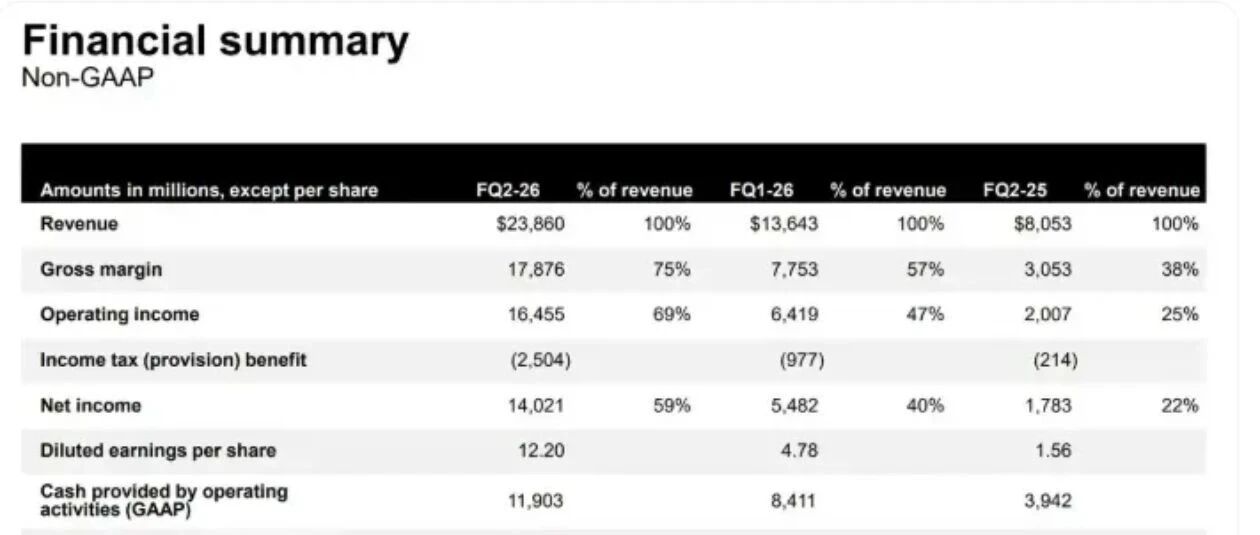
Core Viewpoint - The global storage chip market is experiencing unprecedented growth, with Micron Technology reporting a record-breaking second-quarter financial performance driven by massive memory demand from artificial intelligence (AI) applications [1][2]. Financial Performance - Micron's second-quarter revenue reached $23.86 billion, a nearly 300% increase from $8.05 billion in the same period last year, significantly exceeding market expectations of $20 billion [1][2]. - Net income surged from $1.58 billion to $14.02 billion year-over-year, representing an approximate 800% increase, with diluted earnings per share rising from $1.41 to $12.20 [1][2]. Business Segments - Micron's core segments saw substantial growth, particularly in cloud memory, which grew over 160% year-over-year to $7.75 billion, and mobile devices and personal computing, which doubled from $2.24 billion to $7.71 billion [3]. - The company forecasts revenue for the upcoming quarter to reach approximately $33.5 billion, more than double the $9.3 billion from the same quarter last year, indicating sustained high demand for storage chips [3]. Market Dynamics - The explosive growth in Micron's performance is primarily attributed to the rapid expansion of the AI industry, which has led to increased demand for DRAM and NAND chips, causing supply constraints and rising prices [2][3]. - Micron is benefiting from long-term supply contracts with semiconductor companies to ensure stable production capacity, which has improved its product mix and profitability, with gross margins increasing from 36.8% to 74.4% over the past year [4]. Strategic Positioning - Micron is actively pursuing opportunities in the high-bandwidth memory (HBM) market, having begun mass production of HBM4 products and planning to expand shipments of HBM4e products by 2027, aligning with NVIDIA's future GPU releases [4]. - The storage chip market is currently dominated by Micron, Samsung, and SK Hynix, with expectations of strong demand persisting for several years due to structural supply constraints [6]. Challenges Ahead - Micron plans to significantly increase capital expenditures from $20 billion to $25 billion for fiscal year 2026, raising concerns about short-term cash flow and profit margins not keeping pace with revenue growth [5]. - The company's performance is heavily reliant on NVIDIA's procurement decisions, which could pose risks if NVIDIA shifts its storage needs to competitors like Samsung or SK Hynix [5][7].
小小内存条,压弯了手机厂的腰
经济观察报· 2026-03-20 12:29
Core Viewpoint - The global DRAM memory market is experiencing significant price increases, leading major manufacturers like Samsung, SK Hynix, and Micron to stop quoting prices to downstream manufacturers, resulting in a volatile pricing environment where prices can change hourly [1][3]. Group 1: Price Increases and Market Reactions - Major smartphone brands such as OPPO, vivo, and iQOO have announced price hikes due to rising storage chip costs, with the cost of a 12GB+256GB memory combination increasing from around $30 to $120-130 [2][5]. - The price of Samsung's LPDDR4X memory surged from $6 to $25 per unit within six months, and by early 2026, prices had increased nearly 400% from a baseline of $28.5 [2][3]. - The demand for high-bandwidth memory (HBM) and DDR5 has skyrocketed due to the AI industry's growth, leading manufacturers to allocate most of their production capacity to high-priced products, impacting the availability of consumer-grade memory [2][3]. Group 2: Strategic Decisions by Manufacturers - Smartphone manufacturers face a dilemma between absorbing losses to maintain market share or raising prices and potentially losing sales [3][4]. - Brands like Honor have opted to raise prices on higher memory versions while keeping base models stable to retain customer loyalty [6][7]. - Huawei has not yet raised prices but has canceled sales incentives for its channels, indicating a cautious approach amid rising costs [7]. Group 3: Impact on Low-End Market - The rising costs of storage components have significantly affected low-end smartphone manufacturers, with the cost of storage in budget phones increasing from a few dollars to over $20, making it difficult for consumers to accept higher prices [9][11]. - Transsion, a major player in emerging markets, has been particularly impacted, experiencing a significant drop in net profit and market share due to rising storage costs [9][10]. - The price hikes have forced some brands to cancel product launches, as seen with Meizu's cancellation of the Meizu 22 Air due to increased design costs and storage prices [10][11]. Group 4: Long-Term Market Outlook - The current storage price surge is expected to last for two to three years, with high points anticipated around mid-2026 [14][15]. - The shift in production focus from DDR4 to DDR5 by major manufacturers is creating a supply gap that will affect the market for an extended period [16][17]. - The overall smartphone market is facing a prolonged period of cost pressures, with all manufacturers, regardless of size, needing to adapt to the new pricing landscape [17].



美光科技(MU):FY2026Q2业绩点评及业绩说明会纪要:收入同比增长近两倍,加大资本开支以扩张产能
Huachuang Securities· 2026-03-20 12:23
Investment Rating - The report does not explicitly state an investment rating for Micron Technology (MU) Core Insights - Micron Technology reported a record revenue of $23.86 billion for FY26 Q2, representing a year-over-year increase of 196% and a quarter-over-quarter increase of 75% [2][11] - The Non-GAAP gross margin reached a record 75%, exceeding guidance due to higher pricing and favorable product mix [2][11] - The company anticipates a continued strong demand for DRAM and NAND driven by artificial intelligence and traditional server markets, with server sales expected to grow by 10-15% in 2026 [3][27] - Micron's capital expenditures for FY2026 are projected to exceed $25 billion, primarily driven by cleanroom facility investments [5][34] Summary by Sections FY2026 Q2 Performance - Micron achieved a record revenue of $23.86 billion, with a gross margin of 75% and net income of $13.79 billion [2][11] - The company noted significant growth in DRAM and NAND segments, with DRAM revenue reaching $18.8 billion, accounting for 79% of total revenue [18] Revenue Breakdown - DRAM revenue for FY26 Q2 was $18.8 billion, up 207% year-over-year, while NAND revenue was $5 billion, up 169% year-over-year [18][19] - The cloud memory business unit generated $7.7 billion in revenue, representing 32% of total revenue [19] Company Guidance - For FY26 Q3, Micron expects revenue of $33.5 billion, with a gross margin of approximately 81% [5][34] - The company anticipates a significant increase in capital expenditures for FY2027, driven by investments in HBM and DRAM [34] Market Expectations - The demand for DRAM and NAND is expected to remain constrained due to supply limitations, with industry DRAM bit shipments projected to grow by about 20% in 2026 [14] - Micron's data center SSD market share is expected to grow for the fourth consecutive year, driven by strong demand for high-performance storage solutions [30] End Market Analysis - In the PC market, supply constraints may lead to a decline in shipments, but AI applications are expected to drive long-term memory capacity growth [4][27] - The automotive and industrial sectors are seeing increased demand for advanced driver-assistance systems (ADAS), with revenue from these segments exceeding $2 billion [4][29]
柏诚股份(601133):深耕半导体洁净室产业链,有望受益国内存储CAPEX提速
GF SECURITIES· 2026-03-20 11:44
Investment Rating - The investment rating for the company is "Buy" with a current price of 17.26 CNY and a fair value of 23.45 CNY [3]. Core Insights - The company is expected to benefit from the acceleration of domestic storage capital expenditure (CAPEX) as it is deeply involved in the semiconductor cleanroom industry chain [1]. - The company has established long-term stable partnerships with major players in the semiconductor industry, positioning it to gain from the ongoing expansion cycle in the domestic storage market [7]. - The company is expanding its overseas operations, which is expected to enhance its profit margins due to higher gross margins in international projects compared to domestic ones [7]. - The company is developing modular solutions for cleanroom applications, targeting the overseas small cleanroom market, which is characterized by lower costs and shorter construction periods [7]. Revenue and Earnings Forecast - The company's revenue is projected to grow from 3,980 million CNY in 2023 to 8,771 million CNY in 2027, with a compound annual growth rate (CAGR) of 28.1% from 2020 to 2024 [2][13]. - The net profit attributable to the parent company is expected to increase from 214 million CNY in 2023 to 604 million CNY in 2027, reflecting a significant growth trajectory [2][43]. - The earnings per share (EPS) is forecasted to rise from 0.41 CNY in 2023 to 1.14 CNY in 2027 [2]. Business Drivers - The company is positioned to benefit from the domestic storage expansion cycle, with significant capital expenditures expected from partners like Changjiang Storage and Longxin Technology [28][29]. - The overseas business has shown rapid growth, with a revenue increase of 635% year-on-year in the first half of 2025, contributing to 11% of total revenue [7][33]. - The modular cleanroom business is being developed to meet the growing demand in the biopharmaceutical sector, with plans for significant international expansion [7][36]. Financial Metrics - The company’s gross margin is expected to improve from 10.55% in 2025 to 13.08% in 2027, driven by the growth of high-margin overseas business [44]. - The company’s debt-to-asset ratio remains healthy at 45.52% as of the first three quarters of 2025, indicating a stable financial position [18][22]. - The operating cash flow is projected to improve, with net cash flow from operating activities expected to reach 560 million CNY by 2027 [51].
黄仁勋即中本聪
创业邦· 2026-03-20 11:23
Core Insights - The article discusses the evolution of tokens in the context of AI and cryptocurrency, highlighting the shift from crypto tokens to AI tokens, which are now seen as essential for productivity rather than speculative assets [6][42]. - It emphasizes that while crypto tokens are driven by speculation, AI tokens are driven by their utility in enhancing productivity and decision-making processes in various industries [42][43]. Group 1: Token Evolution - In 2009, an anonymous individual created the concept of "token" through computational power, leading to the birth of the cryptocurrency economy [6]. - By March 2025, a new type of token was defined, where computational power is used to generate tokens that are immediately consumed in AI inference processes, marking the acceleration of the AI economy [6][12]. - The article draws parallels between the original token concept and the new AI token economy, stating that both involve inputting computational power to produce valuable outputs [7][21]. Group 2: Economic Models - Huang Renxun's presentation at NVIDIA GTC 2026 focused on the economic model of token production, pricing, and consumption, rather than specific hardware specifications [11][12]. - He proposed a structured approach to data center power allocation, dividing resources into tiers based on performance and pricing, which reflects a comprehensive understanding of the token economy [12][24]. - The relationship between inference efficiency and token consumption was illustrated, showing different pricing tiers for various AI models, ranging from free to $150 per million tokens [16][24]. Group 3: Scarcity and Competition - The article discusses the concept of artificial scarcity created by Nakamoto through Bitcoin's capped supply of 21 million coins, which serves as a value anchor for the cryptocurrency economy [26]. - In contrast, Huang Renxun's approach to scarcity is based on physical laws, emphasizing the substantial investment required to build data centers and the inherent limitations of resources like land and electricity [27][28]. - The competition in the AI hardware market is likened to the historical evolution of mining hardware, with NVIDIA positioning itself as a leader in the AI token economy by defining market standards and usage scenarios [33][39]. Group 4: Market Dynamics - The article highlights that the demand for crypto tokens is largely speculative, while AI tokens are essential for operational efficiency, as companies like Nestlé utilize them to enhance supply chain decision-making [42][43]. - The distinction between the two types of tokens is critical: crypto tokens are held for value appreciation, whereas AI tokens are consumed for immediate utility, leading to a more stable economic model for AI tokens [43][44]. - The article concludes that the AI token economy is less prone to bubbles compared to the crypto token economy, as its value is derived from actual usage rather than speculation [44][45].


全球“芯荒”,专家:电脑、手机或涨20%以上
财联社· 2026-03-20 11:15
Group 1 - The global shortage of memory chips is impacting the prices of consumer electronics, with significant price increases expected to continue for an extended period [1][2] - Major tech companies, including Google, Microsoft, and Meta, are heavily purchasing memory chips to support their AI data centers, exacerbating the supply-demand imbalance [2] - Experts predict that prices for many consumer electronics, such as laptops and smartphones, could rise by 20% or more in the next 12 to 24 months due to the memory shortage [3] Group 2 - The entry-level laptops and desktops priced around $600 are nearly disappearing, with current prices for basic models ranging from $800 to $900, and some models reaching $1,200 to $1,300 [4] - The gaming industry is particularly affected, with companies like GamerTech Toronto reporting that their memory costs have quadrupled, leading to increased final prices for assembled computers [4] - The memory market is dominated by three major companies—Samsung, SK Hynix, and Micron—controlling over 90% of the global market share, and the current shortage may persist until 2027 [4]

瀚天天成(02726):IPO申购指南
Guoyuan Securities2· 2026-03-20 11:12
Investment Rating - The report suggests a cautious subscription for the company’s IPO [3]. Core Insights - The company is a global leader in the silicon carbide (SiC) epitaxy industry, primarily engaged in the R&D, mass production, and sales of SiC epitaxial chips and components used in manufacturing SiC semiconductor devices [2]. - The company’s SiC epitaxial chips are utilized in power devices, which have widespread applications in electric vehicles, charging infrastructure, renewable energy, and energy storage systems [2]. - According to a report by ZhiShi Consulting, the company is the largest supplier of SiC epitaxy by sales volume globally since 2023, with a market share exceeding 30% in 2024 [2]. - The global market for SiC power semiconductor devices is projected to grow significantly from USD 600 million in 2020 to USD 2.6 billion in 2024, representing a compound annual growth rate (CAGR) of 45.4% [2]. - By 2029, the sales of SiC power semiconductor devices are expected to reach USD 13.6 billion, with a CAGR of 39.9% from 2024 to 2029 [2]. - The penetration rate of SiC power semiconductor devices in the global power semiconductor market is anticipated to increase from 1.3% in 2020 to 4.9% in 2024, and further to 17.1% by 2029 [2]. Financial Performance - The company's revenue for the years 2022, 2023, and 2024, as well as for the nine months ending September 30, 2024, are projected to be RMB 440.7 million, RMB 1,142.5 million, RMB 974.3 million, RMB 808.3 million, and RMB 535.1 million respectively [3]. - The net profit for the same periods is expected to be RMB 127.5 million, RMB 107.5 million, RMB 165.1 million, RMB 118.4 million, and RMB 21.1 million respectively [3]. - Starting in 2024, the company's financial performance may be adversely affected by competitive pressure leading to price declines and weakened demand due to a sluggish downstream market [3]. - The company's Hong Kong stock issuance price is set at HKD 76.26 per share, corresponding to a price-to-sales (PS) ratio of 29.3 times for 2024, which is in the mid-range of the industry [3].
纳贡
债券笔记· 2026-03-20 10:49
Group 1 - The Federal Reserve's decision not to cut interest rates and the possibility of future rate hikes have led to a significant drop in gold and silver prices, with the A-share market falling below 4000 points, raising concerns about a liquidity crisis [2] - European natural gas futures surged by 27% due to damage at Qatar's liquefied natural gas facilities [4] - Iran's parliament is pushing a bill that would require countries using the Strait of Hormuz for shipping, energy, and food transport to pay tolls and taxes to Iran [7] Group 2 - The UAE is maintaining its $1.4 trillion investment commitment to the US despite the ongoing conflict, indicating a strategic stance against Iran, which remains a key target for Iranian retaliation [8] - Japan is responding to US demands by committing 10 trillion yen (approximately $640 billion) for investment in the US, covering sectors like energy, minerals, and infrastructure, to secure concessions on tariffs and trade rules [9] - Japan's investment in the US is seen as a way to bypass Chinese control and establish a US-Japan-led supply chain for strategic industries such as semiconductors and renewable energy [11][12]