
石化

Search documents
年底彩蛋!上市公司回购增持踊跃,年内金额约达 2275亿元
Sou Hu Cai Jing· 2025-11-25 09:01
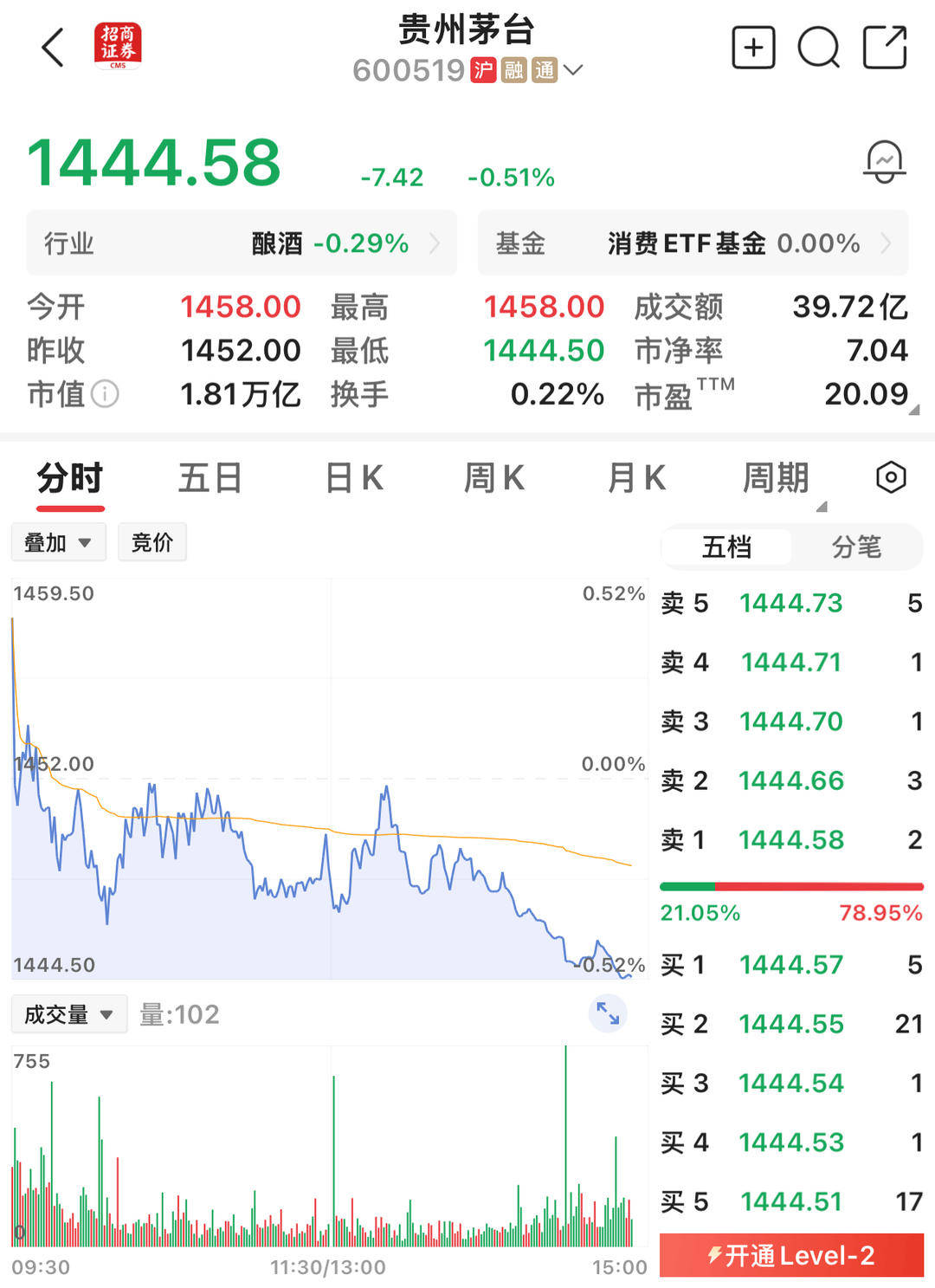
Group 1 - A total of 1859 share repurchase plans have been implemented this year, involving 1365 companies, with 365 companies completing repurchases exceeding 100 million yuan [1] - The total repurchase amount for the year is approximately 227.5 billion yuan, signaling a positive market sentiment from listed companies [1] - In November, 35 listed companies announced repurchase plans, including Kweichow Moutai planning to repurchase shares worth 1.5 to 3 billion yuan [3] Group 2 - Midea Group has updated its repurchase progress, with 1.51 billion yuan completed out of a planned 1.5 to 3 billion yuan repurchase, and 8.065 billion yuan out of a 5 to 10 billion yuan plan [8] - Other companies like GoerTek and BOE Technology have also made significant progress in their repurchase plans, with GoerTek completing 9.4 billion yuan and BOE 704 million yuan [8] - The trend of share repurchases and increases by shareholders is seen as crucial for the long-term healthy development of the capital market, improving investor sentiment and stabilizing market expectations [8]

恒力石化:持续巩固成本护城河优势,加快内生式增长
Zheng Quan Shi Bao Wang· 2025-11-25 06:23
Core Viewpoint - Hengli Petrochemical is focusing on optimizing operations, reducing debt, and enhancing dividends, aiming to establish itself as a high-profit, high-dividend, low-debt growth and return-oriented listed company [3] Group 1: Company Overview - Hengli Petrochemical is one of the earliest private refining enterprises in China, with a comprehensive capacity including a 20 million tons/year integrated refining project, a 5 million tons/year modern coal chemical facility, a 1.5 million tons/year ethylene project, and a 16.6 million tons/year PTA facility [1] - The company has built a modern industrial system integrating "world-class chemical refining + modern coal chemical facilities," supporting a "big chemical" strategy that deeply integrates oil and coal [1] - Hengli Petrochemical has a well-established capacity layout in downstream chemical new materials, including differentiated fibers, functional films, engineering plastics, and biodegradable new materials [1] Group 2: Financial Performance - In the first three quarters of this year, Hengli Petrochemical achieved an operating income of 157.384 billion yuan and a net profit attributable to shareholders of 5.023 billion yuan, with an operating cash flow of 20.134 billion yuan [2] - The company reported a single-quarter profit of 1.972 billion yuan in the third quarter, representing a year-on-year increase of 81.47% and a significant improvement compared to the second quarter [2] - The overall price trend this year has stabilized, leading to a steady improvement in gross profit margins compared to the same period last year [2] Group 3: Strategic Focus - Hengli Petrochemical plans to conclude its current round of project construction and capital expenditure this year, shifting its operational focus towards refined cost control [3] - The company aims to enhance its cost moat and implement continuous cost improvements based on internal efficiency gains, while accelerating high value-added technological upgrades and boutique project construction [2][3] - Hengli Petrochemical has implemented a stable and sustainable cash dividend policy, having distributed a total of 26.1 billion yuan in cash dividends since its listing, which accounts for 40.43% of the cumulative net profit attributable to shareholders during the dividend period [3]

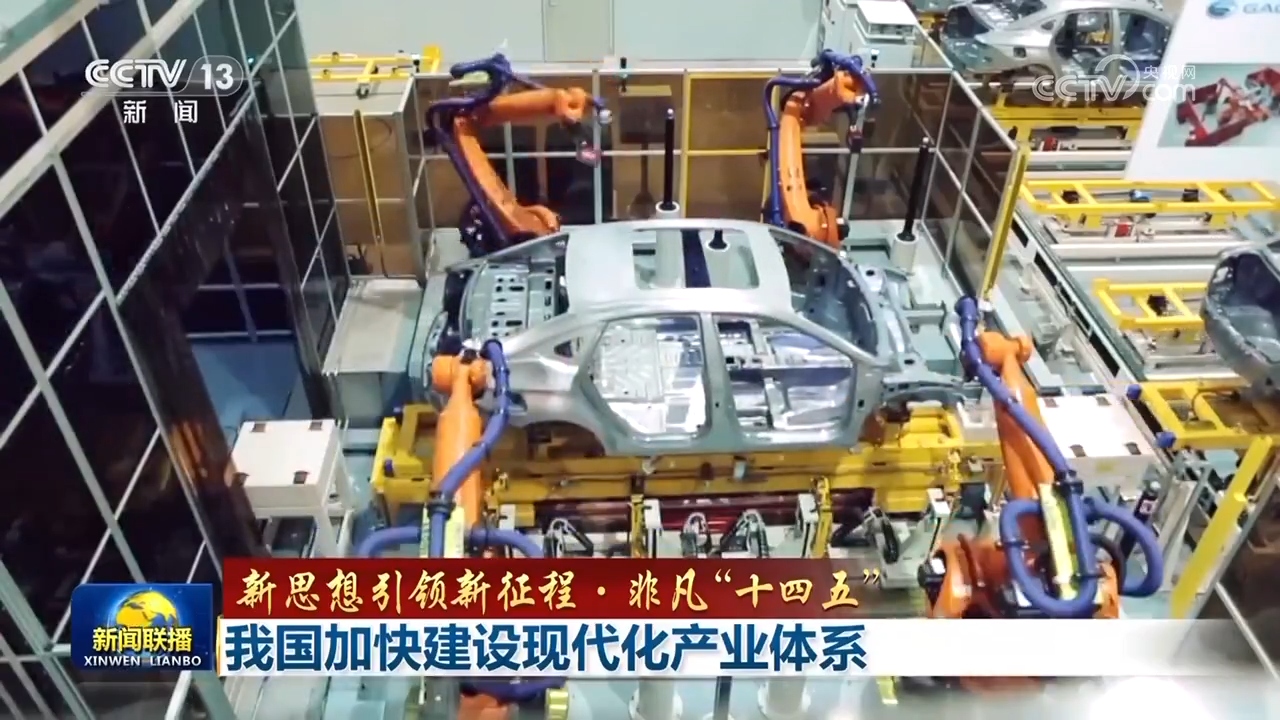
【新思想引领新征程·非凡“十四五”】我国加快建设现代化产业体系 央视网 2025年11月24日 20:04
Yang Shi Xin Wen Ke Hu Duan· 2025-11-25 02:55
Group 1 - The core viewpoint emphasizes the importance of a modern industrial system as the material and technological foundation for a modernized nation, with a focus on developing the real economy to support the second centenary goal [2] - During the "14th Five-Year Plan" period, China aims to accelerate the construction of a modern industrial system led by technological innovation and rooted in the real economy, injecting strong momentum into Chinese-style modernization [2][4] - The construction of the modern industrial system is advancing rapidly, with significant achievements in traditional industries' transformation towards high-end and intelligent manufacturing, including over 80% of steel enterprises establishing intelligent control centers [6] Group 2 - The first batch of leading intelligent factories has been announced, covering multiple sectors such as steel, petrochemicals, consumer goods, and equipment manufacturing, which will explore new manufacturing models like global agile customization [6] - In the first three quarters of this year, the added value of high-tech manufacturing above designated size increased by 9.6% year-on-year, with industrial robot production growing nearly 30% and drone manufacturing sales revenue increasing by nearly 70% [6] - Local governments are actively planning for the "15th Five-Year Plan" with significant financial support for small and medium-sized enterprises, focusing on key industrial chains such as steel and petrochemicals [8]
股市跌速放缓,债市集体收涨
Zhong Xin Qi Huo· 2025-11-25 02:16
1. Report Industry Investment Ratings - The outlook for stock index futures is "oscillating with a slight upward bias" [8][9][10] - The outlook for stock index options is "oscillating" [9] - The outlook for treasury bond futures is "oscillating with a slight upward bias" [10][11] 2. Core Views of the Report - The decline of the Shanghai Composite Index has slowed down, and the hedging force has taken profit. The market is waiting for further catalysts to rise. It is necessary to observe policy signals and the sustainability of the main line [3][9] - The sentiment in the stock index options market has improved with reduced volatility. Attention should be paid to the lower support level. For those with stock positions, continue the covered call strategy, and for those without positions, consider selling put options after confirming the support [4][9] - Treasury bond futures closed higher. The central bank's operations have maintained the balance of the short - term capital market. Although the bond market direction is unclear, it is expected to remain oscillating with a slight upward bias in the future [5][10][11] 3. Summaries According to Relevant Catalogs 3.1 Market Views Stock Index Futures - The current month's basis of IF, IH, IC, and IM closed at - 12.85, - 6.16, - 41.37, and - 61.21 points respectively, with changes of - 40.44, - 20.91, - 98.36, and - 123.71 points compared to the previous trading day [8] - The inter - month spreads (current month - next month) of IF, IH, IC, and IM were 15.8, 2.8, 50, and 65.4 points respectively, with环比 changes of - 37, - 21.4, - 54.4, and - 46.6 points [8] - The positions of IF, IH, IC, and IM changed by - 7338, - 5627, - 12741, and - 21593 lots respectively [8] - The Shanghai Composite Index opened higher and oscillated on Monday, and the market stopped falling. The hedging sentiment eased. The decline of US technology stocks slowed down, reducing the domestic liquidity pressure. High - beta sectors led the rebound, and the short - selling profit - taking in the futures market promoted the convergence of the basis discount [3][9] - The secondary upward movement of the market still awaits event or main - line signals. Tactically, continue the dumbbell configuration in the short - term and observe the window for layout switching. The operation suggestion is to combine the dividend ETF with long positions in IM [3][9] Stock Index Options - The underlying market continued the defensive sentiment at the opening but stabilized in the afternoon. The CSI 1000 rose 1.26%. The trading volume in the options market was 8344 million yuan, a 46.10% decrease from the previous day. The implied volatility index decreased by an average of 1.53%. The short - term defensive behavior in the market weakened, and there was a new trend of selling options entering the market. Multiple varieties' position PCRs hit the bottom [4][9] - For those with stock positions, continue the covered call strategy to increase returns. For those without positions, considering the high skewness level of each variety, sell put options after confirming the lower support [4][9] Treasury Bond Futures - The trading volume of T, TF, TS, and TL in the current quarter was 79246, 46495, 23207, and 64907 lots respectively, with 1 - day changes of - 23755, - 17953, - 6065, and - 32915 lots. The positions were 68863, 42749, 11765, and 47308 lots respectively, with 1 - day changes of - 31002, - 12913, - 10325, and - 12009 lots [10] - The current - quarter to next - quarter spreads of T, TF, TS, and TL were 0.170, - 0.105, 0.042, and 0.180 yuan respectively, with 1 - day changes of - 0.020, - 0.055, - 0.008, and - 0.020 yuan [10] - The cross - variety spreads of TF*2 - T, TS*2 - TF, TS*4 - T, and T*3 - TL in the current quarter were 103.275, 99.030, 301.335, and 209.755 yuan respectively, with 1 - day changes of - 0.005, - 0.035, - 0.075, and 0.035 yuan [10] - The current - quarter basis of T, TF, TS, and TL was 0.023, - 0.022, - 0.009, and 0.115 yuan respectively, with 1 - day changes of - 0.064, - 0.050, 0.000, and - 0.049 yuan [10] - The central bank's 7 - day reverse repurchase operation had a net investment of 5.57 billion yuan, and the MLF operation had a net investment of 10 billion yuan. The capital market remained balanced. The stock - bond seesaw effect was evident, but the bond market direction is unclear due to differences in expectations for loose monetary policy and the undetermined fund fee regulations. It is expected that the bond market will remain oscillating with a slight upward bias [5][10][11] - For trend strategies, expect the market to oscillate with a slight upward bias. For hedging strategies, pay attention to long - position substitution at high basis levels. For basis strategies, focus on positive arbitrage opportunities and basis widening. For curve strategies, appropriately pay attention to curve steepening [11] 3.2 Economic Calendar - The economic data to be released this week includes US PPI, retail sales, GDP, PCE price index, China's industrial enterprise profits, and the EU's economic sentiment index [12] 3.3 Important Information and News Tracking - As of the end of October, the cumulative installed power generation capacity in China was 3.75 billion kilowatts, a year - on - year increase of 17.3%. The installed capacity of solar power and wind power increased significantly. The average utilization hours of power generation equipment decreased compared to the previous year [13] - Affected by the decline in international oil prices, domestic gasoline and diesel prices were lowered on November 24 [13] - On November 25, the central bank carried out a 1 - year MLF operation of 1 trillion yuan with a net investment of 10 billion yuan [13]
稳增长方案出炉,顺周期持续收益
2025-11-25 01:19
Summary of Key Points from Conference Call Records Industry Overview Automotive Industry - The automotive industry is projected to achieve sales of 32 million units in 2025, representing a year-on-year growth of approximately 3% [1] - New energy vehicle (NEV) sales are expected to reach 15.5 million units, with a penetration rate of 50% [1][3] - Concerns include the sustainability of sales post-subsidy reduction and China's global competitiveness in NEVs [1][4] Steel Industry - The steel industry will focus on supply-demand balance, industrial structure optimization, green low-carbon initiatives, and digital transformation [1][5] - Despite a long-term downturn in the real estate sector, steel companies are transitioning towards low-carbon metallurgy and new materials [5] - Demand for steel used in NEVs, stainless steel, special steel, and oriented silicon steel for the power industry is increasing [5] - The commencement of iron ore shipments from Guinea is expected to improve profitability in the steel sector due to falling iron ore prices [5] Building Materials and Light Industry - The building materials sector aims to develop green building materials, targeting revenues exceeding 300 billion yuan, focusing on steel structures and integrated forming [1][6] - The light industry is concentrating on smart home products, elderly and infant goods, fashion items, and sports products, driving consumer upgrades [1][6] Power Equipment Industry - The power equipment sector is a key focus for the upcoming year, with a growth target of around 6% and a goal to increase the localization rate to 7% [1][7] - Leading companies are expected to achieve annual revenues of 10% [7] - The sector is poised for growth due to increased market entry of new energy, heightened demand for grid safety, and rising overseas computing power needs [7] Electronic Information Industry - Investment opportunities in the electronic information sector for 2026 include large-scale AI application deployments and significant investments in national supercomputing centers [3][9] - The focus will shift from AI computing power to specific applications in media and gaming, indicating robust growth potential [9] Nonferrous Metals Industry - The nonferrous metals sector is expected to see significant development, with prices rebounding and potential capacity shortages anticipated in 2026 and beyond, which may drive prices higher [10] - The Federal Reserve's interest rate cuts are favorable for gold prices, making the gold sector worth monitoring [10] Machinery and Petrochemical Industries - The machinery sector is expected to experience growth opportunities, particularly in automation investments [11] - The petrochemical industry is shifting towards new materials, including basic chemicals, as part of the new growth strategy [11] Capital Market Insights - The capital market in 2025 has experienced a notable correction, primarily due to skepticism regarding Nvidia's performance, leading to a significant downturn in the global computing industry [12] - A decline in risk appetite has made consumer goods stocks attractive due to their defensive characteristics [12] - It is suggested that now is an opportune time for investors to position themselves for 2026, particularly in cyclical sectors, as price increases are expected to continue [12]
“韩美中日竞争力”调查触动韩国
Huan Qiu Shi Bao· 2025-11-24 22:44
Core Insights - The South Korean government is set to unveil its "2026 Economic Growth Strategy" aimed at achieving a real growth rate of 2% amidst declining potential economic growth [1][2] - A recent survey indicates that South Korea's competitiveness in its top ten export industries is lagging behind China, with predictions that all these industries will fall behind in five years [2] Group 1: Economic Strategy - The "2026 Economic Growth Strategy" will focus on four key areas to reverse the ongoing low growth trend in South Korea [1] - The strategy aims to enhance the competitiveness of strategic industries such as semiconductors, defense, culture (including gaming, beauty, and food), and petrochemicals [3] Group 2: Competitiveness Analysis - A survey revealed that 62.5% of responding companies view China as their biggest competitor, followed by the US (22.5%) and Japan (9.5%) [2] - China has surpassed South Korea in competitiveness across several key industries, including steel (112.7), machinery (108.5), and electric batteries (108.4) [2] Group 3: Government Initiatives - The South Korean government plans to leverage recent outcomes from US-Korea tariff negotiations to strengthen its position in global value chains, particularly in shipbuilding [3] - The government will also promote projects related to "AI transformation" and "super innovative economy" to build future growth momentum [3]
进一步全面深化改革 巩固壮大实体经济根基
Xin Hua Ri Bao· 2025-11-24 21:58
Group 1: Core Economic Development Strategies - The "15th Five-Year Plan" emphasizes the importance of focusing on the real economy, aiming to build a modern industrial system and strengthen the foundation of the real economy [1] - The plan outlines goals for a high-level modern industrial system, advocating for intelligent, green, and integrated development, with a focus on advanced manufacturing as a backbone [1] - Jiangsu province has made significant progress in advanced manufacturing during the "14th Five-Year Plan," focusing on 16 advanced manufacturing clusters and 50 industrial chains [1] Group 2: Importance of Enterprises - The development of industries is fundamentally linked to the quality of enterprises, which are driven by entrepreneurs, technical personnel, and management [2] - The "15th Five-Year Plan" calls for the acceleration of building more world-class enterprises, highlighting the need for improved enterprise development environments and quality [2] Group 3: State-Owned and Private Enterprises - Both state-owned and private enterprises are crucial to the foundation of the real economy in China, with recent reforms providing momentum for their rapid development [3] - The "15th Five-Year Plan" emphasizes the need for comprehensive reforms in both types of enterprises to achieve high-quality development [3] Group 4: State-Owned Enterprises in Jiangsu - Jiangsu's state-owned enterprises focus on key sectors such as energy, transportation, and environmental protection, playing a significant role in providing public goods [4] - The establishment of a 50 billion yuan fund aims to support strategic emerging industries, although it is relatively small compared to the province's total state-owned capital of 37 trillion yuan [4] Group 5: Private Enterprises in Jiangsu - Jiangsu is a major hub for private enterprises, with the added value of the private economy increasing from 5.1 trillion yuan in 2018 to 7.98 trillion yuan in 2024, accounting for 58.2% of the province's GDP [6] - Over 65% of the top 200 private enterprises in Jiangsu are engaged in advanced manufacturing, contributing significantly to innovation and technology [6] Group 6: Challenges and Opportunities for Private Enterprises - Despite a solid manufacturing base, Jiangsu's private economy faces challenges, including a low proportion of emerging industries and a reliance on traditional sectors [7] - The implementation of the "Private Economy Promotion Law" is seen as a significant benefit for private enterprises, providing better protection and fostering an environment conducive to innovation [7][8] Group 7: Policy Environment and Support - The sensitivity of private enterprises to policy changes necessitates a supportive government approach that goes beyond superficial assistance [8] - There is a need for deeper market-oriented reforms to release more resources to private enterprises, particularly in collaboration with educational and financial institutions [8]
投资策略专题:科技周期再平衡,反内卷下化工机会凸显
KAIYUAN SECURITIES· 2025-11-24 13:12
Group 1 - The report emphasizes a dual-driven strategy where technology and cyclical sectors are rebalanced, highlighting opportunities in the chemical industry under the "anti-involution" trend [4][14][15] - The report notes that from Q3 2025, both technology and cyclical sectors have shown synchronized growth, indicating a shift in market dynamics [15][18] - The chemical industry is expected to benefit from a recovery in supply-demand dynamics, with capital expenditure nearing its end and a significant decrease in ongoing projects [4][5][25] Group 2 - The chemical sector is positioned to enter a new cycle of prosperity, driven by the "anti-involution" policy, which is expected to enhance both performance and valuation [5][31][65] - The report identifies that the chemical industry has advantages over traditional cyclical sectors like steel and coal, particularly in capacity optimization and high-end transformation paths [25][30] - The report highlights that the chemical industry is experiencing a significant reduction in capital expenditure, with a 10% year-on-year decrease in ongoing projects as of H1 2025 [25][33] Group 3 - The report suggests that the domestic demand is stabilizing, supported by government policies aimed at boosting consumption, which is expected to benefit the chemical sector [35][42] - The chemical industry has shown resilience in exports despite trade tensions, with a notable increase in export volumes to ASEAN, EU, and India [42][47] - The report indicates that the chemical industry is likely to see a dual uplift in performance and valuation, particularly when compared to the refrigerant sector, which is currently experiencing high demand [66][68]



聚焦“十五五”规划建议 | 瞄准“双碳”目标,全国碳市场建设稳步推进
Xin Hua She· 2025-11-24 12:58
Group 1 - The core viewpoint of the articles is the expansion of the national carbon emissions trading market to include more industries, specifically steel, cement, and aluminum smelting, which is aimed at promoting green and low-carbon transformation in these sectors [1][2] - The Ministry of Ecology and Environment has issued a plan for the total amount and allocation of carbon emission allowances for the steel, cement, and aluminum smelting industries for the years 2024 and 2025, marking an important step in the expansion of the carbon trading market [1] - Key emission units are required to complete the first allowance surrender for 2024 within the year, and the pre-allocated allowances for 2025 will be distributed in the first half of next year, with a deadline for surrender by the end of next year [1] Group 2 - The expansion of the carbon emissions trading market is expected to drive more companies to reduce carbon emissions through technological innovation, energy-saving upgrades, and improved management efficiency, thereby fostering the development and investment in low-carbon, zero-carbon, and negative-carbon technologies [2] - The Ministry of Ecology and Environment has initiated preparatory work for expanding the trading market to include industries such as chemicals, petrochemicals, civil aviation, and papermaking, focusing on historical data governance and technical documentation [2] - The Ministry will adopt a principle of "mature one, include one" to gradually expand the coverage of the trading market to additional industries and greenhouse gas types, aiming for comprehensive coverage of major industrial emission sectors by 2027 [2]
聚焦“十五五”规划建议|瞄准“双碳”目标,全国碳市场建设稳步推进
Xin Hua Wang· 2025-11-24 11:07
Group 1 - The core viewpoint of the articles is the expansion of the national carbon emissions trading market to include more industries, specifically steel, cement, and aluminum smelting, which is aimed at promoting green and low-carbon transformation in these sectors [1][2] - The Ministry of Ecology and Environment has issued a plan for the total amount and allocation of carbon emission allowances for the steel, cement, and aluminum smelting industries for the years 2024 and 2025, marking an important step in the expansion of the carbon trading market [1] - Key emission units are required to complete the first allowance clearing by the end of this year, with the 2025 pre-allocated allowances to be issued in the first half of next year, and the 2025 allowance clearing to be completed by the end of next year [1] Group 2 - The expansion of the carbon emissions trading market is expected to drive more companies to reduce carbon emissions through technological innovation, energy-saving upgrades, and improved management efficiency, thereby fostering the development and investment in low-carbon, zero-carbon, and negative-carbon technologies [2] - The Ministry of Ecology and Environment has initiated preparatory work for expanding the trading market to include industries such as chemicals, petrochemicals, civil aviation, and papermaking, focusing on historical data governance and technical documentation [2] - The Ministry will adopt a principle of "mature one, include one" to gradually expand the coverage of the trading market to additional industries and greenhouse gas types, aiming for comprehensive coverage of major industrial emission sectors by 2027 [2]