
房地产

Search documents
从房价到股市,2026年投资逻辑彻底变了!这篇讲透
Sou Hu Cai Jing· 2026-02-22 07:46
Group 1 - The core issue for 2026 remains whether housing prices have bottomed out or will continue to decline, with a nationwide downward adjustment in housing prices being a high probability event [1] - The aging population is leading to a decrease in the number of potential homebuyers, impacting demand for new homes, while first-tier cities may experience short-term stability [1] - In January 2026, the transaction volume of second-hand homes in 13 key cities increased by 16% month-on-month and 33% year-on-year, but new home sales in 50 key cities plummeted by 32% month-on-month and 20% year-on-year, indicating a disparity in market performance [1] Group 2 - Domestic consumption faces challenges, with durable goods under pressure due to the withdrawal of subsidies and a declining population, while essential goods are also struggling as income expectations remain low [2] - Infrastructure investment is seen as the only viable option to stabilize the economy, with a focus on new infrastructure projects such as data centers and logistics, as traditional infrastructure faces financial constraints [2] - The macroeconomic outlook for 2026 indicates significant pressure, necessitating stronger policies to stabilize the real estate market, support consumer spending, and promote infrastructure investment [3] Group 3 - The stock market is expected to be influenced by policy changes in 2026, with structural opportunities in sectors like artificial intelligence, semiconductors, and high-end consumer goods [3] - The focus on new infrastructure and the acceleration of monetary policy easing, including potential interest rate cuts, are critical for economic recovery [3]
港府拟收购宏福苑七座受灾楼宇 总成本约68亿港元
Xin Lang Cai Jing· 2026-02-22 02:32
据香港政府官员,港府提出以高于预估的价格收购去年受火灾影响的宏福苑业主业权,总收购成本约68 亿港元。 财政司副司长黄伟纶2月21日在简报会上表示,政府将向已补价单位业主提出每平方呎10,500港元的收 购价,未补价单位为每平方呎8,000港元。他还表示,受影响业主的另一选项是"楼换楼"。 何永贤指出,将这七座楼宇恢复至符合现行建筑标准并不具成本效益,因此需要拆卸。 房屋局局长何永贤表示,政府在单位置换计划中拿出约3,900个单位,数量是表示有兴趣业主的三倍以 上。 ...
有人预测:2026年若房价下跌,输得不是炒房客,而是这3类人
Sou Hu Cai Jing· 2026-02-21 23:22
Core Viewpoint - The article discusses the potential negative impact of declining housing prices on three types of ordinary families, rather than just professional property investors [1]. Group 1: First Type - First-time Homebuyers - The first group consists of first-time homebuyers who purchased properties at high prices between 2016 and 2021, often depleting their savings [3]. - These families typically have high debt-to-asset ratios, with mortgage payments consuming a significant portion of their income, making them vulnerable to financial strain if housing prices drop [5]. - In some third and fourth-tier cities, housing prices have already decreased by 30-40%, leading many families to find that selling their homes does not cover their bank loans, forcing them to endure a lower quality of life [8]. Group 2: Second Type - Middle-Class Families - The second group includes middle-class families whose assets are heavily concentrated in real estate, with housing accounting for nearly 70% of their total assets [12][14]. - A significant portion of their wealth is tied up in property, meaning that a 10% drop in housing prices could result in a loss of 20,000 yuan for a family with total assets of 300,000 yuan [16]. - These families experience a sense of helplessness as their financial decisions are constrained by their property holdings, affecting their ability to relocate, invest in education, or support their parents [18]. Group 3: Third Type - Middle-Aged Homeowners with Multiple Properties - The third group consists of middle-aged families who own multiple properties but are burdened with substantial loans, with 41.5% of urban families owning two or more homes [20]. - These families face significant pressure from various life responsibilities, and their properties, which were once seen as assets, have become financial burdens [22]. - As housing prices continue to decline, they encounter compounded challenges, including reduced asset value while their loan amounts remain unchanged, making it difficult to sell or rent their properties profitably [24][26].

“AI颠覆一切”重创市场之际 “聪明钱”如何斩获阿尔法? 答案是短线战术操作
Zhi Tong Cai Jing· 2026-02-21 07:44
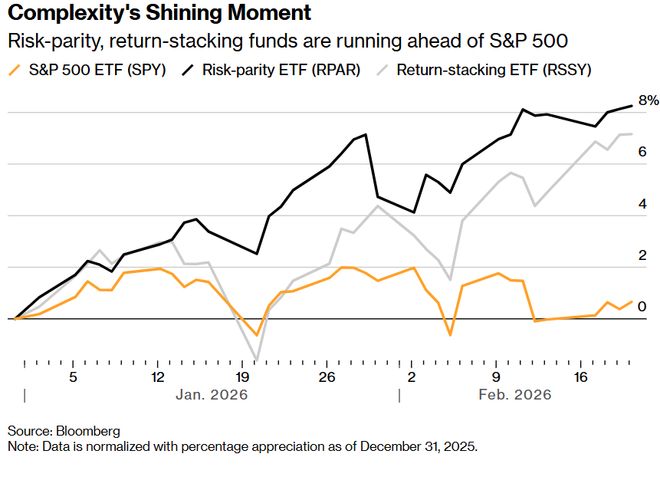
Core Insights - The article highlights that hedge funds and active stock pickers have outperformed benchmark indices due to market volatility driven by tariff fluctuations, AI disruption fears, and geopolitical tensions in the Middle East [1][7][10]. Group 1: Market Conditions - The current market is characterized by high instability and multiple factors causing disruption, including tariff uncertainties, AI-related concerns impacting software and growth sectors, and escalating geopolitical tensions in the Middle East [5][6][9]. - The S&P 500 software and services index has dropped approximately 15% since late January, erasing nearly $1 trillion in market value due to fears surrounding AI's disruptive potential [6][9]. Group 2: Investment Strategies - Hedge funds employing short-term tactical strategies and active stock selection have achieved significant "alpha" returns, outperforming the S&P 500 index by nearly double in recent months [7][12]. - The Bloomberg All Hedge Index reported a nearly 3% increase in hedge fund performance, marking the best relative performance against the S&P 500 in over two years [12][16]. - Complex strategies such as risk parity and return stacking have shown superior performance compared to traditional buy-and-hold strategies, which have become less effective in the current volatile environment [5][6][11]. Group 3: Economic Indicators - Bond yields, credit spreads, and the S&P 500 index have remained relatively stagnant, contrasting with the dynamic nature of short-term tactical trading favored by institutional investors [2][17]. - The market is currently not a passive investment paradise but rather a phase where tactical opportunities exist amidst liquidity and directional challenges [8][18].
春节见闻⑨ | 南通与成都,双城镜像,共绘复苏新图景
申万宏源研究· 2026-02-21 06:26
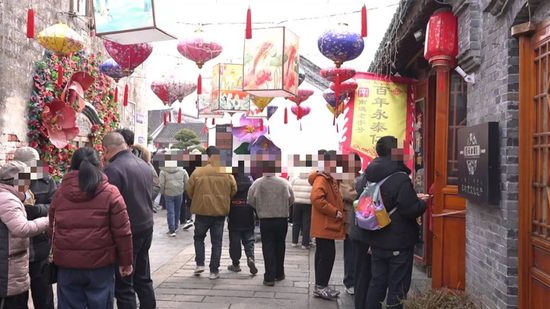
Core Viewpoint - The article highlights the distinct development paths of Nantong and Chengdu during the 2026 Spring Festival, showcasing their unique urban characteristics and the interplay between housing needs and commercial vitality, reflecting new consumer demands and economic recovery in China [3][18]. Group 1: Nantong's Housing and Consumer Dynamics - Nantong's real estate market during the Spring Festival focused on "policy precision and service convenience," launching a "New Year Home Purchase" initiative with 74 projects participating in community benefit activities, catering to diverse needs such as first-time homebuyers and retirees [4]. - The commercial streets in Nantong, particularly Tangzha Ancient Town, experienced a surge in visitors, with over 66,000 tourists during the first two days of the New Year, marking a more than 50% increase compared to the previous year, driving significant commercial activity [5]. - The local market saw a 189% increase in revenue for existing and new vendors during the festive period, indicating a robust revival in consumer spending and a vibrant atmosphere in the town [5]. Group 2: Chengdu's Quality Living and Commercial Growth - Chengdu's approach to real estate during the Spring Festival emphasized "livability quality," with the Luhua community serving as a model for ecological living, featuring a large artificial lake and various cultural and recreational facilities [8]. - The city's commercial real estate sector thrived by leveraging "scene innovation" and the "first-store economy," attracting significant consumer interest with over 90 brands launching limited-time offers and enhancing customer engagement through experiential marketing [14]. - Chengdu's cultural and commercial events, such as the large-scale temple fair and innovative installations, showcased a blend of tradition and modernity, contributing to a dynamic consumer environment and highlighting the city's role as a benchmark for consumption upgrades in China [14][18].

美国需求有所降温——2025年四季度美国GDP数据点评【陈兴团队·华福宏观】
陈兴宏观研究· 2026-02-21 06:00
Economic Growth - The fourth quarter GDP annualized growth rate significantly dropped to 1.4%, well below the expected 2.8% and down from the previous 4.4% [2] - Year-on-year GDP growth rate (constant prices) decreased to 2.2%, down from 2.3%, indicating a return to a downward trend [2] - Key contributors to the decline included private consumption, net exports, and government spending, while investment showed a notable rebound [2] Investment and Consumption - Private domestic final purchases (PDFP) annualized growth rate fell to 2.66%, down from 2.73%, indicating a continued cooling of domestic demand, although at a slower pace [2] - Investment rebounded, countering the decline in consumption, with non-residential investment benefiting from a recovery in manufacturing and strong demand for AI investments [2][10] - Residential investment remained weak due to high interest rates suppressing home-buying intentions [10] Consumer Behavior - Consumer spending in the fourth quarter recorded an annualized growth rate of 2.4%, down 1.1 percentage points from the previous quarter [5] - The year-on-year growth rate for consumer spending fell to 2.2%, down from 2.6%, with goods consumption being the primary drag on overall spending [5] Labor Market - The unemployment rate in January fell to 4.3%, down from 4.4%, with labor force participation rising to 62.5% [16] - Non-farm payrolls added 130,000 jobs in January, exceeding market expectations, indicating a stabilization in the labor market [16] Real Estate Market - Existing home sales in January totaled 3.91 million units, down 4.4% year-on-year, indicating a continued low level in the housing market [13] - Mortgage rates remain high, limiting the stimulus to sales despite a recent decline in 30-year mortgage rates to 6.01% [13] Trade and Exports - In the fourth quarter, exports recorded an annualized growth rate of -0.9%, while imports narrowed to -1.3%, reflecting weak domestic demand [15] - The contribution of net exports to GDP growth fell to nearly zero, down from 1.62% in the previous quarter, due to synchronized declines in both exports and imports [15]

【申万宏源研究春节见闻】南通与成都:双城镜像,共绘复苏新图景
Xin Lang Cai Jing· 2026-02-21 04:16
Core Insights - The article highlights the distinct development paths of Nantong and Chengdu during the 2026 Spring Festival, reflecting new demands in housing and the vitality of commercial consumption in China [1][11]. Group 1: Nantong's Housing and Consumption - Nantong's real estate market focuses on "policy precision and service convenience," launching a "New Spring Home Purchase" initiative with 74 projects participating in community benefit activities [2][13]. - The city aims to meet diverse needs such as returning home buyers, talent housing, and senior living through various housing options, from small units to larger apartments [2][13]. - The commercial area of Tangzha Ancient Town saw significant visitor engagement, with over 66,000 tourists during the first two days of the new year, a 50% increase from the previous year [3][14]. - The bustling atmosphere led to a 189% increase in sales for local merchants and market stalls, showcasing strong consumer activity and traditional festive spirit [3][14]. Group 2: Chengdu's Urban Quality and Commercial Real Estate - Chengdu emphasizes "livable quality" in its housing market, with the Luhua community as a model, featuring 8,300 acres of land and a 2,100-acre artificial lake [7][18]. - The city’s commercial real estate sector is thriving, leveraging "scene innovation" and "first-store economy" to attract consumers, becoming a top destination for national consumption [9][20]. - Chengdu's Spring Festival activities included over 90 brands launching limited-time offers, enhancing customer engagement through upgraded flagship stores and unique experiential events [9][20]. - The integration of cultural and commercial elements, such as the large-scale lantern displays and tech-driven experiences, reflects the city's dynamic approach to urban development and consumer engagement [9][20]. Group 3: Economic Implications - Both cities represent contrasting yet complementary aspects of China's economic recovery, with Nantong focusing on stability and foundational growth, while Chengdu showcases vibrant consumer culture and innovation [11][22]. - The developments in Nantong and Chengdu illustrate a broader narrative of China's economic stabilization and the strengthening of internal demand, highlighting the importance of housing and consumption in urban growth [11][22].

有人预测:今明两年,如果不出意外,社会有可能发生4大变化
Sou Hu Cai Jing· 2026-02-20 23:53
Group 1: Real Estate Market Changes - The real estate market has shifted from a "buy and hold" mentality to a focus on the intrinsic value of properties, emphasizing that only "good properties in good locations" retain value [3][5] - In 2025, national real estate development investment is projected to be 8.28 trillion yuan, a decrease of 17.2% from the previous year, with residential investment down by 16.3% [5] - There is a significant market differentiation, with core areas in first and second-tier cities maintaining stable prices due to quality schools and hospitals, while third-tier cities face oversupply issues, leading to 7.66 billion square meters of unsold properties by the end of 2025 [7] Group 2: Employment Market Dynamics - The employment market is undergoing a transformation, with a record number of college graduates in 2025 and traditional sectors contracting, leading to increased pressure on job availability [9] - The rise of AI and digitalization is replacing some repetitive jobs but also creating new roles in data labeling and smart operations, while the aging population is driving demand for jobs in rehabilitation and community care [11] - Flexible employment has surged, exceeding 230 million in 2025, with roles such as delivery personnel and online consultants becoming more common [12] Group 3: Consumer Behavior Shifts - Consumers are becoming more discerning, with overall consumption growth slowing, but service consumption is increasing at a faster rate, indicating a shift towards experiences that provide emotional satisfaction [15] - Policies are adapting to these changes, with expanded subsidies for upgrading to AI appliances and age-friendly products, and encouragement for service consumption and offline experiences [17] - The market is responding with revitalized shopping environments that combine shopping, entertainment, and social interaction, reflecting a transformation in consumer habits [19] Group 4: Demographic and Social Changes - The demographic landscape is changing, with a decline in birth rates to 7.92 million in 2025 and an increase in the elderly population, which is projected to reach 15.9% [19][21] - The demand for socialized elderly care services is rising, driven by an increase in single-person households and a growing need for small housing units and personalized services [21] - These demographic shifts are interconnected, influencing housing preferences, consumption patterns, and employment market dynamics, ultimately reflecting a transition towards high-quality economic development [23]

每日钉一下(房产的租金收益率,该如何测算呢?)
银行螺丝钉· 2026-02-20 13:48
Group 1 - The article emphasizes the importance of diversifying investments across both RMB and foreign currency assets, as well as between stocks and bonds, highlighting the role of US dollar bond funds in this strategy [2] - It suggests that investors can access a free course that systematically introduces knowledge about investing in US dollar bond funds, along with supplementary materials like course notes and mind maps for efficient learning [2] Group 2 - The article discusses how to calculate rental yield for real estate, comparing it to dividend yields of stocks and interest yields of bonds, indicating that rental yield can vary significantly even within the same city [5] - It provides specific data on rental yields in Beijing, noting that some neighborhoods have yields around 2%, while most range between 1.5% and 2%, and emphasizes the importance of considering vacancy rates in the calculation [5][6]

私募投资风向:从“估值修复”奔向“盈利驱动”,捕捉“核心资产2.0”
Zhong Guo Zheng Quan Bao· 2026-02-20 13:43
Core Viewpoint - The A-share market is entering a new phase with optimistic expectations and cautious layouts from leading private equity institutions for 2026 [1] Market Dynamics - The market is shifting from a broad recovery to a focus on performance, with private equity firms indicating that the true test for 2026 will be the differentiation of industry and company performance [2] - Dushuquan Investment anticipates a transition from valuation recovery to profit support, emphasizing the need for detailed analysis of industry conditions and growth quality [2] - The first half of 2026, particularly before the end of April, is seen as a critical window for investment, with the release of annual and quarterly reports providing insights into industry performance [2] - The market is expected to stabilize and clarify as it aligns with profit growth, moving away from a generalized recovery phase [2] Structural Opportunities - The investment landscape is expected to feature diverse opportunities across growth, cyclical, and high-dividend assets, with a focus on the alignment of "prosperity + valuation + fundamentals" [2] - Core assets are anticipated to undergo systematic re-evaluation, driven by performance, with key investment areas including AI, innovative pharmaceuticals, machinery, and military industries [4] - The second half of 2026 will require a cautious approach, with an emphasis on low-valuation stocks and the potential for systematic repricing [4] Emerging Trends - The narrative around "Core Assets 2.0" is evolving, focusing on technology innovation and globalization of Chinese enterprises, contrasting with the previous phase driven by urbanization and domestic demand [5] - AI investments are expected to shift from total investment logic to structural logic, highlighting opportunities in supply-constrained areas, particularly in domestic computing infrastructure [5] - Key sectors of interest include manufacturing overseas, resource assets with supply constraints, consumer recovery opportunities, and technology innovation represented by AI [5]