智能驾驶

Search documents
上海证券:政策、出口、智能化协同共振 机器人重塑行业增长逻辑
Zhi Tong Cai Jing· 2025-12-05 07:45
该行表示,汽车出口短期波动不改长期出海大势。2025年1-10月累计出口增速放缓,主要系出口基数增 大、贸易壁垒增加、其他市场汽车产业转型速度放缓、全球局势动荡等多重因素影响。自主车企通过不 同方式技术"出海",从而实现避免/降低各种壁垒对"出海"的影响。 报告中称,2025年1-10月新能源汽车累计销量1291.10万辆,同比+32.42%,新能源渗透率达到46.70%。 2025年1-10月新能源出口增速达到+87.57%,高于内需增速+25.71%。乘用车中,自主品牌占比稳步提 升,2022年占比仅为38.43%,2025年1-10月累计占比提升至69.48%。 上海证券发布研报称,智能驾驶市场潜力巨大,预计2025年我国自动驾驶市场规模将逼近4500亿元。 2025年以来,智能辅助驾驶方案的上车价格持续下探。国产替代带来新机遇。2025年中国汽零国产替代 迎来全面加速。随着综合竞争力的提升,国内零部件配套体系逐步与世界接轨,国产零部件产业仍将保 持良好的展趋势。机器人将成为下一个10万亿规模产业,智能网联新能源汽车与人形机器人同具产业链 协同优势。 ...

大客户“包养”、股份高质押,千里科技闯关港股找钱
凤凰网财经· 2025-12-04 06:08
来源:凤凰网财经《公司研究院》 从濒临破产的摩托车企,重整变身为 AI智驾新贵,千里科技 打算去港股找钱 。 在外界耳中,千里 科技 的名字还算不上耳熟能详 , 公司背后的 资本图景却引人瞩目。 第一大股东吉利控股集团,贡献了其近三成营业收入 ; 奔 驰斥资 13.38亿元入股3%,带来关键技术验证 资源 。管理层 阵容豪华, 旷视科技创始人印奇执掌,前华为智能汽车解决方案事业部总裁王军 领衔 。 产业资本、国际背书、技术精英傍身,却难保公司冲刺港股前途畅通。一面是上半年扣非归母净利亏损 1.3亿元,下降幅度超过900%。一面是重度 依赖吉利,外部拓客能力受到质疑。 更关键的是, 由于转型时间过短,公司尚未从智能驾驶、智能座舱和 Robotaxi等技术解决方案 业务中获得收入 。 千里科技闯关港股,会顺利吗? 01 不讲情怀,只看账本 起步于 1992年,千里科技的前身力帆科技以摩托车发动机生产起家,旗下力帆摩托曾家喻户晓。但因产业结构转型、市场竞争加剧以及内部管理问 题,逐步陷入经营困境。 最终,这家曾经的行业标杆企业于五年前走向破产重整。吉利汽车实控人李书福旗下的吉利系及旷视科技创始人印奇双双出手。 图片 ...


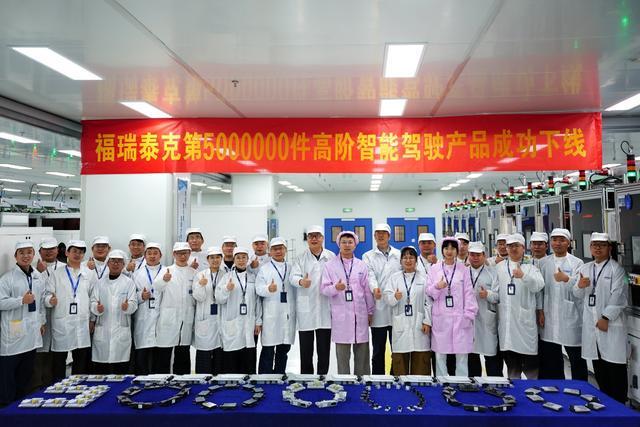
福瑞泰克500万件ADAS量产落地 张林拆解“中算力技术+软硬一体”突围密码
Huan Qiu Wang Zi Xun· 2025-12-04 02:57
来源:环球网 【环球网科技报道 记者 心月】当中国智能驾驶产业告别"依赖进口"的初期阶段,向国产化、规模化时 代加速迈进时,一则来自乌镇的消息标注了行业新坐标:11月28日,福瑞泰克第500万件高阶智能驾驶 产品正式下线。这不是一组简单的量产数字——从2022年乌镇智能制造基地启动量产,到2023年突破百 万件大关,再到如今迈入"500万+"阵营,这家中国智能驾驶企业的成长速度,不仅改写了自主供应商的 量产纪录,更成为国产智驾解决方案打破国际Tier 1垄断、实现商业化落地的生动注脚。日前,福瑞泰 克董事长张林博士接受环球网记者的采访,从技术路线选择到量产能力构建,从国产替代布局到全球化 视野,深度解读这一里程碑背后的产业思考与企业战略。 技术破局:中算力平台撑起城市NOA普及 针对雨雪天气等恶劣环境的技术痛点,福瑞泰克采用了视觉与毫米波雷达的双重感知方案。"毫米波雷 达是全气候传感器,对昼夜、雨雪天候都有强性能保证,再加上海量量产数据的迭代,所有长尾场景都 能被覆盖。"张林补充道,这种技术组合既保证了安全性,也为智驾功能的普及奠定了基础。 量产密码:软硬一体+平台化思维提效增速 从百万件到五百万件,福瑞泰克 ...
晨会纪要-20251204
Guoxin Securities· 2025-12-04 02:27
Macro and Strategy - The report discusses the ongoing expansion and diversification of public REITs in China, highlighting the inclusion of various asset types and industries, with a projected market size increase of 2.3 to 3.8 trillion yuan, indicating a potential 10-16 times expansion compared to the current scale [7][8][10] - The average dividend yield of public REITs from 2022 to 2025 is 5.73%, which is higher than the average yield of the CSI Dividend Index at 5.52%, showcasing their attractiveness as a stable income asset [8][9] - Public REITs are characterized by a dual return structure comprising dividend income and asset appreciation, with a significant portion of returns coming from dividends over longer investment horizons [9][10] Industry and Company - The Chinese duty-free industry is entering a new cycle, with Hainan's duty-free sales experiencing a compound annual growth rate (CAGR) of 39% from 2011 to 2019, but facing a decline of 37% from peak sales due to various market pressures [17][18] - Recent data indicates a recovery in Hainan's duty-free sales, with year-on-year growth of 3%, 13%, and 27% from September to November 2025, suggesting a positive trend in high-end consumption [18][19] - The report emphasizes the importance of policy support and market dynamics in shaping the future of the duty-free sector, with expectations for continued growth driven by improved consumer confidence and strategic policy enhancements [19][20][21] Automotive Industry - The report highlights the rapid advancements in smart driving technology, with companies like Tesla and Huawei leading the way in achieving Level 4 automation through innovative algorithms and architectures [24][25] - The penetration rate of smart driving technologies is expected to see significant growth, with projections indicating an increase from 11.3% to 26.3% for highway navigation assistance (NOA) by 2025 [25] - The global market for robotaxi services is projected to reach nearly 10 trillion yuan, with companies like Waymo and Apollo at the forefront of commercialization efforts [25][26] Non-Banking Sector - The report outlines the importance of the second pillar of the pension system in China, focusing on the development of enterprise and occupational pensions to address the challenges of an aging population [26][27] - The occupational pension system has achieved full coverage, while enterprise pensions are expanding from state-owned to private enterprises, indicating a shift towards a more diversified pension landscape [27][28] - The investment strategy for pension funds is evolving towards a "barbell" approach, balancing stable income-generating assets with growth-oriented investments in technology and manufacturing sectors [28]
国信证券晨会纪要-20251204
Guoxin Securities· 2025-12-04 01:18
Macro and Strategy - The report discusses the ongoing expansion and diversification of public REITs in China, highlighting the inclusion of various asset types and industries, with a projected market size of 2.3 to 3.8 trillion yuan, indicating a potential 10-16 times expansion from current levels [7][8][10] - The average dividend yield of public REITs from 2022 to 2025 is 5.73%, surpassing the average yield of the CSI Dividend Index at 5.52%, showcasing their attractiveness as a stable income asset [8][9] - Public REITs are characterized by a dual return structure comprising dividend income and asset appreciation, with a notable annualized return of 23.66% over the past year [9][10] Industry and Company - The Chinese duty-free industry is entering a new cycle, with Hainan's duty-free sales showing signs of recovery, driven by policy support and improving consumer confidence, with sales growth of 3%, 13%, and 27% from September to November 2025 [17][18] - The report emphasizes the importance of policy optimization in the duty-free sector, with recent expansions in both offshore and onshore duty-free policies, enhancing consumer access and convenience [18][19] - The report identifies key players in the duty-free market, such as China Duty Free Group, which holds a 78% market share, and highlights the strategic importance of airport channels for future growth [20][21] Automotive Industry - The report outlines the advancements in smart driving technology, with companies like Tesla and Huawei leading the way in achieving Level 4 automation through end-to-end algorithms [24][25] - The penetration rate of smart driving is expected to see significant growth, with projections indicating an increase from 11.3% to 26.3% for highway NOA and from 6.1% to 10.9% for urban NOA by 2025 [25] - The global market for Robotaxi is projected to reach nearly 10 trillion yuan, with companies like Waymo and Apollo at the forefront of commercialization efforts [25][26] Non-Banking Industry - The report highlights the importance of the second pillar of the pension system in China, focusing on enterprise and occupational pensions, which are expected to grow at an annualized rate of 8%, outpacing nominal GDP growth [26][27] - The investment behavior of pension funds is shifting towards a "barbell" strategy, balancing stable cash flow assets with high-growth sectors, indicating a significant increase in equity allocations [27][28]
德企的选择,是中欧合作共赢生动写照
Ren Min Ri Bao Hai Wai Ban· 2025-12-04 01:00
Group 1 - Volkswagen Group has launched a full-process R&D testing center in Hefei, Anhui, marking the first full-chain development of a new vehicle platform outside its German headquarters, reducing the vehicle development cycle by approximately 30% [1] - This move reflects the recognition of China's technological advantages and industrial ecosystem, as well as the growing trend of German companies investing in China [1] - Siemens Healthineers, Bosch Group, and BASF are among the German companies making significant investments in China, indicating a shift towards China as a global innovation platform [1] Group 2 - German companies are not only seeking market share in China but are also synchronizing with the new wave of productivity in China, accelerating the integration of R&D, manufacturing, and market [2] - Collaborations in the field of intelligent driving, such as partnerships between Mercedes-Benz and ByteDance, and BMW with Alibaba, highlight the deepening cooperation between German automakers and Chinese innovation [2] - The bilateral trade between China and Germany reached €185.9 billion in the first nine months of 2025, showing a year-on-year growth of 0.6%, with China remaining Germany's largest trading partner [2] Group 3 - Chinese enterprises are also steadily investing in Germany, with 199 greenfield projects initiated in 2024, making China the third-largest source of foreign investment in Germany [3] - Leading Chinese companies in the new energy sector, such as CATL and NIO, are establishing production or R&D bases in Germany, enhancing cooperation in green transformation and technological innovation [3] - The bilateral cooperation between China and Germany is characterized by mutual dependence and is based on industrial complementarity, market needs, and joint innovation [3]
汽车智能化系列专题之决策篇(7):各厂商技术持续突破,robotaxi商业化进展迎拐点
Guoxin Securities· 2025-12-03 11:58
Investment Rating - The report maintains an "Outperform" rating for the industry [1] Core Insights - The development of intelligent driving is an inevitable trend supported by national strategies and policies, leading to multi-dimensional improvements in society and industry [2] - Tesla and Huawei are leading the breakthrough in L4 autonomous driving with their end-to-end algorithms, significantly enhancing performance and capabilities [2] - The Robotaxi global market is projected to reach nearly 10 trillion, with ongoing commercialization efforts [2] Summary by Sections 01 Intelligent Driving Regulations: Gradual Policy Implementation - Domestic and international policies are progressively supporting the automation of driving applications, with various local governments exploring intelligent driving scenarios [6][7] 02 High-End Intelligent Driving: Tesla and Huawei's End-to-End Technology - Tesla's FSD V12 and Huawei's ADS 3.0 are leading advancements in L4 capabilities, with significant improvements in algorithm performance and urban coverage [2][20] 03 Intelligent Driving Equality: 2025 Penetration Rate Inflection Point - The penetration rates for highway NOA are expected to grow from 11.3% in 2024 to 39.0% in 2025, while urban NOA is projected to increase from 6.1% to 9.6% [41] - The high-end intelligent driving market is anticipated to reach 23,866 billion by 2025, doubling from 2024 due to increased penetration and market expansion [41] 04 Industry Chain and Component Manufacturer Analysis - BYD's "Tian Shen Zhi Yan" system is set to penetrate the mid-range market, with plans to offer intelligent driving features in vehicles priced below 100,000 [25][29] 05 Robotaxi: The Best Commercialization Scenario for Intelligent Driving - Companies like Waymo and Apollo are leading in the Robotaxi sector, with PONY AI achieving operational cost balance and WeRide aiming for a fleet of 100,000 by 2030 [2]



3年半累亏12亿元 天瞳威视冲刺港交所IPO
Xi Niu Cai Jing· 2025-12-03 07:14
招股书显示,天瞳威视是中国领先的以软件为核心的智能驾驶解决方案提供商,业务覆盖从L2-L2+级到L4级的全系列智能驾驶解决方案。 近日,苏州天瞳威视电子科技股份有限公司(以下简称"天瞳威视")向港交所递交上市申请书,由中银国际、汇丰、华泰金融控股(香港)联席保荐。 天瞳威视的股东背景堪称豪华,吸引了采埃孚、上汽集团、北汽集团、英伟达、中国联通等产业巨头和知名机构投资。其中,全球汽车零部件巨头采埃孚作 为战略股东、客户及供应商,其入股过程尤为引人注目。招股书披露,采埃孚2021年以远低于同期增资的价格受让了部分老股,目前其持股价值已浮盈近4 亿元。此外,IPO前,包括北汽产投、联通旗下基金在内的多家老股东进行了股权转让,转让价格普遍低于后续D轮融资的入股成本。 财务数据显示,天瞳威视营收增长迅速,从2022年的1.72亿元增至2024年的4.83亿元,复合年增长率达67.7%。2025年上半年营收同比大增182.1%至1.57亿 元。然而,天瞳威视目前仍处于亏损状态,2022年至2025年上半年累计净亏损超过12亿元。 创始人兼CEO王曦作为天瞳威视的核心人物,通过直接和间接方式合计控制41.61%的股份。招股 ...

对话卓驭沈劭劼:从大疆到百亿智驾公司 CEO 的十年之路
晚点Auto· 2025-12-03 03:52
Core Viewpoint - The article discusses the transformation of Zhuo Yu, a smart driving supplier, from being a part of DJI to an independent entity, highlighting the challenges and strategies involved in this transition [5][6][7]. Group 1: Company Background and Transition - Zhuo Yu was initially a project within DJI, known as BR1609, focusing on autonomous driving technology [9][11]. - The company officially separated from DJI on September 27, 2024, marking a significant shift from a resource-rich environment to a competitive market [5][12]. - The transition involved a governance change, with Zhuo Yu becoming a "no actual controller" company, co-managed by FAW, DJI, and the management team [7][15]. Group 2: Challenges Faced - Zhuo Yu faced significant challenges post-separation, including financial constraints, with only about 5 billion RMB available at the time of the split [12]. - The company had to shift from a product-centric approach to a customer-centric model, which was a stark contrast to its previous operations under DJI [6][45]. - The initial expectation of profitability was unrealistic, leading to a reassessment of business strategies [11][12]. Group 3: Technological Development - Zhuo Yu has made significant progress in developing advanced models for autonomous driving, achieving breakthroughs in training dynamics and data-driven approaches [20][21]. - The company has focused on solving complex industry challenges, such as causal reasoning and low-frequency data generation, through innovative modeling techniques [10][20]. - Zhuo Yu's models have shown promising results, with clients noting their capabilities in scenarios where competitors struggle [20][21]. Group 4: Market Position and Future Plans - Zhuo Yu aims to position itself among the top three players in the Chinese smart driving market, competing closely with companies like Momenta and Horizon [28]. - The company plans to go public in the near future, leveraging its recent funding round of over 36 billion RMB to support further development [15]. - Zhuo Yu's strategy includes maintaining a balance between cost-effectiveness and high performance, aiming to meet regulatory standards while pushing for advanced capabilities [34][30].

对话卓驭沈劭劼:从大疆到百亿智驾公司 CEO 的十年之路
晚点LatePost· 2025-12-03 03:38
Core Viewpoint - The article discusses how Zhuoyu, a smart driving supplier, transitioned from being a part of DJI to an independent entity, facing challenges and opportunities in the competitive landscape of the autonomous driving industry [3][4][5]. Group 1: Transition from DJI to Independence - Zhuoyu's journey began with its separation from DJI, marking a shift from a resource-rich environment to a competitive market with limited resources [3][4]. - The company underwent a significant transformation, moving from being wholly controlled by DJI to a governance structure involving multiple stakeholders, including FAW and management, with a valuation of 12 billion yuan after a financing round exceeding 3.6 billion yuan [5][13]. - The departure from DJI's headquarters symbolized a new beginning, with the company facing immediate financial pressures, having only about 5 billion yuan available at the time of separation [10][11]. Group 2: Strategic Shifts and Challenges - Zhuoyu experienced three critical strategic shifts, including a focus on data-driven approaches and a move away from traditional rule-based systems to a more flexible, data-centric model [8][19]. - The company faced challenges in profitability, initially underestimating the difficulty of monetizing its business, leading to a realization that it could not achieve DJI's profit margins [9][11]. - The decision to delete existing code and start anew was driven by the need for a clean break from previous methodologies, emphasizing a commitment to data-driven development [19][20]. Group 3: Technological Developments and Innovations - Zhuoyu has made significant progress in developing advanced models for autonomous driving, achieving breakthroughs in training dynamics and model performance [18][19]. - The company aims to solve critical industry challenges, such as causal reasoning and low-frequency data generation, through innovative approaches like the Action World Model (AWM) [23][24]. - Zhuoyu's engineering capabilities are highlighted as a core strength, enabling the company to tackle complex problems effectively and maintain a competitive edge in the market [47]. Group 4: Market Position and Future Outlook - Zhuoyu positions itself among the top three players in the Chinese autonomous driving sector, competing closely with companies like Momenta and Horizon [26][27]. - The company is focused on achieving compliance with new national standards for intelligent connected vehicles, which will shape the future landscape of the industry [32]. - Zhuoyu's strategy includes offering products that meet minimum cost requirements while also striving for high performance, reflecting a balance between affordability and quality [28][29].