
合成橡胶

Search documents
合成橡胶产业日报-20251223
Rui Da Qi Huo· 2025-12-23 09:13
1. Report Industry Investment Rating - No relevant information provided 2. Core Viewpoints of the Report - The supply pressure of the synthetic rubber industry remains at a high level due to the high load of domestic production devices and the large amount of circulating resources on the spot end. The demand side is weak as tire companies are in the seasonal off - season, with weak production capacity utilization, slow overall shipment rhythm, rising finished product inventory, and some companies having production suspension and limitation phenomena. The br2602 contract is expected to fluctuate in the range of 10,700 - 11,400 in the short term [2] 3. Summary According to Relevant Catalogs 3.1 Futures Market - The closing price of the main contract of synthetic rubber is 11,175 yuan/ton, a decrease of 55 yuan/ton; the main contract position is 103,099, a decrease of 630. The synthetic rubber 2 - 3 spread is - 15 yuan/ton with no change, and the total warehouse receipt quantity of butadiene rubber is 4,560 tons with no change [2] 3.2 Spot Market - The mainstream price of BR9000 from Qilu Petrochemical in Shandong is 11,000 yuan/ton, an increase of 150 yuan/ton; the mainstream price of BR9000 from Daqing Petrochemical in Shandong is 10,950 yuan/ton, an increase of 150 yuan/ton; in Shanghai, it is 10,950 yuan/ton, an increase of 100 yuan/ton; the mainstream price of BR9000 from Maoming Petrochemical in Guangdong is 11,100 yuan/ton, an increase of 100 yuan/ton. The basis of synthetic rubber is - 175 yuan/ton, a decrease of 80 yuan/ton. Brent crude oil is 62.07 US dollars/barrel, an increase of 1.6 US dollars/barrel; WTI crude oil is 58.01 US dollars/barrel, an increase of 1.49 US dollars/barrel; the price of naphtha CFR Japan is 745 US dollars/ton with no change; the intermediate price of butadiene CFR China is 930 US dollars/ton, an increase of 9.5 US dollars/ton; the mainstream market price of butadiene in Shandong is 7,825 yuan/ton with no change [2] 3.3 Upstream Situation - The weekly production capacity of butadiene is 162,200 tons, an increase of 2,800 tons; the capacity utilization rate is 70.55%, a decrease of 0.62 percentage points. The port inventory of butadiene is 36,000 tons, an increase of 100 tons; the operating rate of Shandong local refineries' atmospheric and vacuum distillation units is 55.9% with no change. The monthly production of butadiene rubber is 130,100 tons, a decrease of 7,500 tons; the weekly capacity utilization rate is 76.26%, an increase of 5.57 percentage points. The weekly production profit of butadiene rubber is 289 yuan/ton, a decrease of 60 yuan/ton. The social inventory of butadiene rubber is 34,000 tons, an increase of 2,000 tons; the manufacturer's inventory is 27,600 tons, an increase of 1,100 tons; the trader's inventory is 6,410 tons, an increase of 960 tons [2] 3.4 Downstream Situation - The operating rate of domestic semi - steel tires is 71.44%, a decrease of 0.13 percentage points; the operating rate of domestic all - steel tires is 63.13%, a decrease of 0.94 percentage points. The monthly production of all - steel tires is 1.301 million pieces, an increase of 59,000 pieces; the monthly production of semi - steel tires is 5.831 million pieces, an increase of 663,000 pieces. The inventory days of all - steel tires in Shandong are 41.91 days, an increase of 0.97 days; the inventory days of semi - steel tires in Shandong are 46.48 days [2] 3.5 Industry News - As of December 18, the capacity utilization rate of Chinese semi - steel tire sample enterprises was 70.01%, a decrease of 0.13 percentage points month - on - month and 8.67 percentage points year - on - year; the capacity utilization rate of Chinese all - steel tire sample enterprises was 63.61%, a decrease of 0.94 percentage points month - on - month and an increase of 3.72 percentage points year - on - year. Enterprises arrange production flexibly, and some enterprises control production, with the capacity utilization rate of sample enterprises running weakly. In November, the domestic production of butadiene rubber was 130,100 tons, a decrease of 7,500 tons month - on - month (a decrease of 5.44%) and an increase of 8.43% year - on - year. The capacity utilization rate was 68.13%, a decrease of 3.27 percentage points from last month and an increase of 0.53 percentage points from the same period last year. As of December 17, the inventory of production enterprises increased, and the monthly plan on the spot end was gradually implemented, but the market transaction follow - up was general, and the inventory of trading enterprises also increased [2]
湖南石化:技术创新迭代升级 做强做优领航前行
Zhong Guo Hua Gong Bao· 2025-12-23 03:41
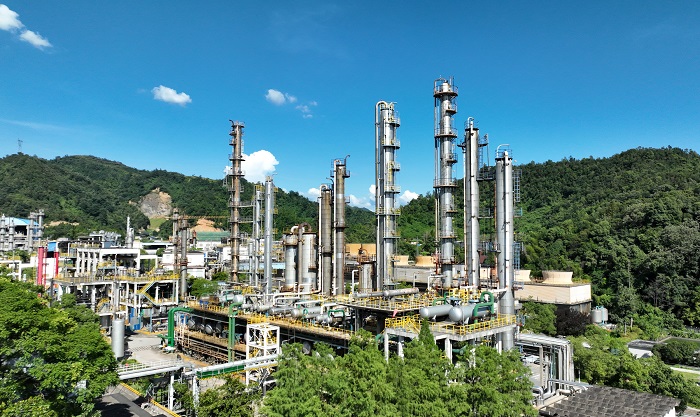
Core Viewpoint - The successful launch of the Shanghai Jinshan Baling New Materials Company's 250,000-ton SBC project marks a significant breakthrough in high-end new materials supply capabilities for Sinopec [1][4]. Group 1: Company Overview - Hunan Petrochemical is one of the earliest companies in China to achieve industrial production of SBC elastomers, establishing a leading SBS production facility in the 1980s and SEBS in 2006, breaking foreign technology monopolies [4]. - The company has a total SBC elastomer production capacity of 800,000 tons, with 380,000 tons from its headquarters, 170,000 tons from Hainan Baling New Materials Company, and 250,000 tons from Shanghai Jinshan Baling New Materials Company [1][4]. Group 2: Production and Capacity - The Shanghai Jinshan Baling New Materials Company, which began production in November, has a capacity of 140,000 tons for SBS, 50,000 tons for SEBS, and 60,000 tons for SIS [5]. - Hunan Petrochemical's rubber department achieved a cumulative SBC elastomer production of over 300,000 tons in the first eleven months of the year, with a 19% year-on-year increase in sales of new specialty products [8]. Group 3: Technological Advancements - The projects in collaboration with Hainan Refining and Shanghai Petrochemical utilize Sinopec's proprietary technology, significantly improving environmental protection, energy consumption control, and production efficiency compared to traditional methods [4]. - The company’s self-developed SBS and SEBS technologies have won national science and technology awards, enhancing China's core competitiveness in high-end synthetic rubber [4]. Group 4: Market Applications - SBC elastomers are versatile materials combining the processing ease of plastics with the high elasticity of rubber, suitable for high-value applications such as infant products, medical devices, 5G cables, and eco-friendly synthetic leather [8].

合成橡胶产业日报-20251222
Rui Da Qi Huo· 2025-12-22 09:27
奏偏慢,成品库存攀升,产销压力下,部分企业存停限产现象。br2602合约短线预计在10700-11400区间 研究员: 林静宜 期货从业资格号F03139610 期货投资咨询从业证书号Z0021558 波动。 免责声明 合成橡胶产业日报 2025-12-22 | 项目类别 | 数据指标 环比 数据指标 | 最新 | | 最新 | 环比 | | --- | --- | --- | --- | --- | --- | | 期货市场 | 主力合约收盘价:合成橡胶(日,元/吨) | 11230 | 210 主力合约持仓量:合成橡胶(日,元/吨) | 103729 | 1734 | | | 合成橡胶2-3价差(日,元/吨) | -15 | 10 仓单数量:丁二烯橡胶:仓库:总计(日,吨) | 4560 | 0 | | 现货市场 | 主流价:顺丁橡胶(BR9000,齐鲁石化):山 东(日,元/吨) | 10850 | 主流价:顺丁橡胶(BR9000,大庆石化):山 0 | 10800 | 0 | | | 主流价:顺丁橡胶(BR9000,大庆石化):上 | 10850 | 东(日,元/吨) 主流价:顺丁橡胶(BR9000, ...
2026年合成橡胶期货年度行情展望:二季度基本面偏强,下半年或有压力
Guo Tai Jun An Qi Huo· 2025-12-18 13:39
1. Report Industry Investment Rating No relevant content provided. 2. Core Viewpoints of the Report - In 2026, the synthetic rubber industry chain is expected to see a pattern of increasing supply and demand. The butadiene rubber futures will experience a volatile pattern throughout the year, with a focus on trading opportunities in different phases. In Q1, it is expected to be mainly volatile; in Q2 and Q3, the price center may move up; in Q4, it is expected to face pressure. From Q2 to early Q3, the average NR - BR spread may shrink, and from late Q3 to Q4, it may widen [3]. - The pricing of butadiene rubber in 2026 will still be mainly based on cost (butadiene) and supplemented by supply - demand factors. The butadiene market is expected to be in a pattern of increasing supply and demand with wide - range fluctuations. In the first half of the year, there is no new capacity expansion, and in Q2, supply may tighten due to seasonal maintenance of ethylene plants, which will support the price. In the second half of the year, with the return of ethylene plant maintenance and new capacity expansion, supply may increase, putting pressure on the price [4]. 3. Summaries According to Related Catalogs 3.1 2026 H2 Synthetic Rubber Trend Review 3.1.1 Q3: Macro - rhythm as the trading mainline under a neutral fundamental pattern - For butadiene, it showed a pattern of increasing supply and demand in Q3. Domestic production remained high due to the return of ethylene plant maintenance, and imports increased from August to September. Downstream factories maintained rigid demand, so the price did not fluctuate significantly [9]. - For butadiene rubber, it also maintained a pattern of increasing supply and demand in Q3. Due to the increased substitution demand for natural rubber, the spot price showed strong resilience. The macro - rhythm was the main factor affecting the futures price. In July, it rose with the macro - sentiment; in August, it回调 as the market became more rational; in September, it rose as the market traded the Fed's interest - rate cut expectation, with the main contract price reaching over 12,200 yuan/ton [9][10]. 3.1.2 Q4: Increasing fundamental contradictions in the synthetic rubber industry chain and a downward price center - For butadiene, supply growth exceeded demand growth in Q4. With high - level operation of global ethylene plants and continuous arrival of ocean - going cargoes, domestic supply increased significantly. Downstream industries were under pressure, and the price dropped by more than 20% [17]. - For butadiene rubber, although it maintained a pattern of increasing supply and demand, the lack of further increase in substitution demand for natural rubber led to only valuation support for its price. With high - level inventory of production enterprises, the price decreased in line with butadiene, with a decline of about 20% [18]. 3.2 2026 Butadiene Rubber Pricing Logic Expectation - In 2026, butadiene rubber is expected to continue the pricing logic of being mainly based on cost and supplemented by supply - demand factors, similar to 2025. Before 2024 Q3, it was mainly priced by butadiene cost. From 2024 Q4 to 2025 Q4, due to the weakening of butadiene fundamentals and the relatively stronger Thai glue, the substitution demand for natural rubber supported the price of butadiene rubber, and the trading logic became more diversified [19]. 3.3 Cost End: Butadiene in 2026 3.3.1 Supply Side - In 2026, butadiene production capacity is expected to expand from 757.7 million tons in 2025 to 819.7 million tons, with an expansion rate of about 8.2%. There is no new capacity in the first half of the year, and new capacity is mainly concentrated in Q4 [29]. - In 2025, the butadiene operating rate was high in Q1, decreased in Q2 due to maintenance, and rebounded in H2. In 2026, it is expected that the operating rate will be low in the first half of the year due to maintenance and increase in the second half. As a result, domestic production may decrease slightly in the first half and increase in the second half [31][34]. - In 2025, butadiene imports increased significantly compared with 2024, mainly concentrated in Q1 and Q3. In 2026, due to domestic capacity expansion and potential supply contraction in Europe and Asia, annual imports may decline slightly, and exports may increase slightly. From February to June 2026, imports may decline month - on - month, increase in Q3, and decline again in Q4 [45][46]. 3.3.2 Demand Side - The demand for butadiene from butadiene rubber and styrene - butadiene rubber is expected to increase in 2026. The design capacity of butadiene rubber is expected to increase from 212.2 million tons in 2025 to 231.2 million tons in 2026, with a growth rate of about 8.95%. The design capacity of styrene - butadiene rubber is expected to increase from 171.5 million tons in 2025 to 193.5 million tons in 2026, with a growth rate of 12.82% [50]. - The demand for butadiene from ABS and SBS also increased in 2025. In 2026, the ABS design capacity is expected to increase from 1020 million tons to 1150 million tons, with a growth rate of about 12.74%. The SBS capacity expansion was mainly in Q4 2025. In 2026, the demand for butadiene from these two sectors is still expected to have an increase [64][65]. 3.4 Fundamental Analysis: Butadiene Rubber in 2026 3.4.1 Supply Side - The butadiene rubber industry has high supply elasticity. In 2025, the operating rate and production showed significant fluctuations according to profit. In 2026, it is expected to maintain high - level production and supply elasticity. The production is expected to increase compared with 2025, but the growth rate will decline. Inventory is expected to continue to rise slowly [74][76][77]. 3.4.2 Demand Side - In 2025, the demand for butadiene rubber increased. In 2026, the demand is still expected to increase, but the growth rate will decline. For tire demand, domestic demand is expected to increase but at a slower pace due to policy adjustments. Export demand is expected to grow but the growth rate will decline due to EU's anti - dumping and anti - subsidy investigations. The substitution demand for natural rubber is expected to increase but at a significantly slower rate [85][86][87].
合成橡胶产业日报-20251218
Rui Da Qi Huo· 2025-12-18 09:21
1. Report Industry Investment Rating - No relevant information provided 2. Core Viewpoints of the Report - The BR2602 contract is expected to fluctuate in the range of 10,650 - 11,400 in the short term. The supply pressure of the synthetic rubber industry remains high due to high levels of circulating resources and production device loads. On the demand side, tire companies are operating with weak capacity utilization, entering the seasonal off - season, with slow overall shipment rhythms and rising finished product inventories. Some companies have production suspension or limitation due to production and sales pressure [2] 3. Summary by Related Catalogs 3.1 Futures Market - The closing price of the main contract of synthetic rubber was 11,040 yuan/ton, a decrease of 120 yuan; the main contract position was 101,376, a decrease of 4,040. The 2 - 3 spread of synthetic rubber was - 10 yuan/ton, unchanged. The total number of warehouse receipts for butadiene rubber in warehouses was 4,560 tons, unchanged [2] 3.2 Spot Market - The mainstream prices of BR9000 from different manufacturers (Qilu Petrochemical, Daqing Petrochemical, etc.) increased by 200 yuan/ton. The basis of synthetic rubber was - 130 yuan/ton, a decrease of 35 yuan. Brent crude oil was 59.68 dollars/barrel, an increase of 0.76 dollars; Naphtha CFR Japan was 532.88 dollars/ton, a decrease of 2.75 dollars; Northeast Asian ethylene price was 745 dollars/ton, unchanged; the intermediate price of butadiene CFR China was 870 dollars/ton, unchanged; WTI crude oil was 55.94 dollars/barrel, an increase of 0.67 dollars; the mainstream price of butadiene in Shandong market was 8,090 yuan/ton, an increase of 240 yuan [2] 3.3 Upstream Situation - The weekly capacity of butadiene was 15.93 million tons/week, unchanged; the capacity utilization rate was 71.17%, an increase of 0.77 percentage points. The port inventory of butadiene was 35,900 tons, a decrease of 5,200 tons; the operating rate of Shandong local refinery atmospheric and vacuum distillation was 55.9%, a decrease of 0.21 percentage points. The monthly output of cis - butadiene rubber in November was 13.01 million tons, a decrease of 0.75 million tons compared with the previous month, a month - on - month decrease of 5.44% and a year - on - year increase of 8.43%. The capacity utilization rate of cis - butadiene rubber was 70.69%, a decrease of 2.84 percentage points. The production profit of cis - butadiene rubber was 349 yuan/ton, a decrease of 135 yuan. The social inventory of cis - butadiene rubber was 32,000 tons, a decrease of 300 tons; the manufacturer's inventory was 26,500 tons, a decrease of 600 tons; the trader's inventory was 5,450 tons, an increase of 220 tons [2] 3.4 Downstream Situation - The operating rate of domestic semi - steel tires was 71.57%, an increase of 0.65 percentage points; the operating rate of domestic all - steel tires was 64.07%, an increase of 0.57 percentage points. The monthly output of all - steel tires was 13.01 million pieces, an increase of 590,000 pieces; the monthly output of semi - steel tires was 58.31 million pieces, an increase of 6.63 million pieces. The inventory days of all - steel tires in Shandong were 40.58 days, an increase of 0.56 days; the inventory days of semi - steel tires in Shandong were 45.51 days, an increase of 0.56 days [2] 3.5 Industry News - As of December 18, the capacity utilization rate of Chinese semi - steel tire sample enterprises was 70.01%, a month - on - month decrease of 0.13 percentage points and a year - on - year decrease of 8.67 percentage points; the capacity utilization rate of Chinese all - steel tire sample enterprises was 63.61%, a month - on - month decrease of 0.94 percentage points and a year - on - year increase of 3.72 percentage points. In November, the domestic cis - butadiene rubber production was 13.01 million tons, a month - on - month decrease of 5.44% and a year - on - year increase of 8.43%. The capacity utilization rate was 68.13%, a decrease of 3.27 percentage points compared with the previous month and an increase of 0.53 percentage points compared with the same period last year. As of December 17, the domestic cis - butadiene rubber inventory was 34,000 tons, an increase of 2,100 tons compared with the previous period, a month - on - month increase of 6.45% [2]
合成橡胶产业日报-20251216
Rui Da Qi Huo· 2025-12-16 12:01
Report Summary 1. Report Industry Investment Rating - No investment rating information is provided in the report. 2. Core Viewpoints - Supply is sufficient and production profit is high, but downstream price - pressing is firm, resulting in high pressure on the spot market. It is expected that the inventories of both production and trading enterprises will increase slightly in the short term. - The resumption of production by previously - overhauled enterprises has driven the capacity utilization rate of domestic tire enterprises to increase month - on - month. However, entering the seasonal off - season, the overall shipment rhythm of enterprises is slow, and most enterprises are in a state of flexible production control, which limits the increase in the overall capacity utilization rate. With the continuous increase in finished product inventory, there may be individual enterprises for overhaul or production reduction in the future. - The br2602 contract is expected to fluctuate in the range of 10,600 - 11,000 yuan/ton in the short term. [2] 3. Summary by Directory 3.1. Futures Market - The closing price of the main contract of synthetic rubber is 85 yuan/ton, and the position of the main contract is 109,301 lots. - The 2 - 3 spread of synthetic rubber is 5 yuan/ton, and the total warehouse receipt quantity of butadiene rubber is 4,560 tons. [2] 3.2. Spot Market - The mainstream prices of BR9000 from different petrochemical companies in different regions range from 10,700 to 10,950 yuan/ton, with price changes of 50 - 100 yuan/ton. - The basis of synthetic rubber is - 130 yuan/ton, with a month - on - month decrease of 35 yuan/ton. [2] 3.3. Upstream Situation - The prices of Brent crude oil, WTI crude oil, naphtha, Northeast Asian ethylene, and butadiene have different degrees of change. - The weekly production capacity of butadiene is 15.93 million tons, and the capacity utilization rate is 71.17%. The port inventory of butadiene has decreased by 5,200 tons. - The daily operating rate of Shandong local refineries' atmospheric and vacuum distillation units is 55.9%, with a decrease of 0.21 percentage points. [2] 3.4. Downstream Situation - The monthly production of full - steel tires is 590,000 pieces, and that of semi - steel tires is 13.01 million pieces. - The inventory days of full - steel tires in Shandong are 40.58 days, and those of semi - steel tires are 45.51 days. - As of December 11, the capacity utilization rate of Chinese semi - steel tire sample enterprises is 70.14%, a month - on - month increase of 1.81 percentage points and a year - on - year decrease of 8.49 percentage points; the capacity utilization rate of full - steel tire sample enterprises is 64.55%, a month - on - month increase of 0.55 percentage points and a year - on - year increase of 6.07 percentage points. [2] 3.5. Industry News - The resumption of production by previously - overhauled enterprises has driven the capacity utilization rate. - In November, the domestic production of cis - butadiene rubber was 13.01 million tons, a month - on - month decrease of 0.75 million tons (- 5.44%) and a year - on - year increase of 8.43%. The capacity utilization rate was 68.13%, a month - on - month decrease of 3.27 percentage points and a year - on - year increase of 0.53 percentage points. - As of December 11, the domestic inventory of cis - butadiene rubber was 32,000 tons, a month - on - month decrease of 0.03 million tons (- 1.18%). [2]
生物基丁二烯技术获重大突破
Zhong Guo Hua Gong Bao· 2025-12-16 03:16
Core Insights - The BioButterfly project, a collaboration between Michelin, IFPEN, and Axens, has made significant progress in developing bio-based butadiene from bioethanol, with commercialization expected by 2026 [1] Group 1: Project Development - The technology has entered a critical pre-commercialization phase, with industrial demonstration unit operations starting in July 2023 [1] - The technology can stably utilize both first and second-generation bioethanol to produce bio-based butadiene, showing excellent carbon footprint performance [1] - The project results have been rigorously validated, and the produced bio-based butadiene has been successfully used in the synthesis of styrene-butadiene rubber and polybutadiene rubber, meeting high-end industrial application standards [1] Group 2: Industry Impact - The BioButterfly project represents the most advanced technology for producing bio-based butadiene from bioethanol, with the research and development phase nearing completion [1] - The project is supported by the French Ecological Transition Agency, the New Aquitaine region, and the Bordeaux metropolitan area, marking a significant breakthrough in the application of renewable resources in the synthetic rubber industry [1] - The initiative is expected to accelerate the global elastomer industry’s transition towards sustainability [1]
合成橡胶产业日报-20251215
Rui Da Qi Huo· 2025-12-15 08:58
1. Report Industry Investment Rating - No relevant information provided 2. Core View of the Report - The supply of synthetic rubber is sufficient and the production profit is high, but the downstream is firm in pressing prices, resulting in high pressure on the spot market. It is expected that the inventories of production enterprises and trading enterprises will both increase slightly in the short term. The resumption of production scheduling of previously overhauled enterprises has driven the capacity utilization rate of domestic tire enterprises to increase month - on - month, but it is in the seasonal off - season, with a slow overall shipment rhythm and limited capacity utilization rate increase. As the finished product inventory continues to rise, some enterprises may overhaul or reduce production in the future. The short - term price of the br2602 contract is expected to fluctuate between 10,300 and 11,000 [2] 3. Summary by Relevant Catalogs 3.1 Futures Market - The closing price of the main contract of synthetic rubber is 10,845 yuan/ton, with a month - on - month increase of 125 yuan/ton; the main contract position is 98,043, with a month - on - month increase of 8,209. The 1 - 2 spread of synthetic rubber is - 40 yuan/ton, with a month - on - month decrease of 10 yuan/ton [2] 3.2 Spot Market - The mainstream price of BR9000 from Qilu Petrochemical in Shandong is 10,650 yuan/ton; that from Daqing Petrochemical in Shandong is 10,600 yuan/ton; that from Daqing Petrochemical in Shanghai is 10,700 yuan/ton; and that from Maoming Petrochemical in Guangdong is 10,900 yuan/ton, all with no month - on - month change. The basis of synthetic rubber is - 95 yuan/ton, with a month - on - month decrease of 25 yuan/ton [2] 3.3 Upstream Situation - The price of Brent crude oil is 61.12 US dollars/barrel, with a month - on - month decrease of 0.16 US dollars/barrel; the price of WTI crude oil is 57.44 US dollars/barrel, with a month - on - month decrease of 0.16 US dollars/barrel. The price of naphtha CFR Japan is 548.75 US dollars/ton, with a month - on - month decrease of 5.5 US dollars/ton; the price of Northeast Asian ethylene is 745 US dollars/ton, with no month - on - month change; the intermediate price of butadiene CFR China is 870 US dollars/ton, with a month - on - month increase of 10 US dollars/ton; the market price of butadiene in Shandong is 7,500 yuan/ton, with a month - on - month decrease of 25 yuan/ton. The weekly production capacity of butadiene is 159,300 tons, with no month - on - month change; the weekly capacity utilization rate is 71.17%, with a month - on - month increase of 0.77 percentage points. The port inventory of butadiene is 35,900 tons, with a month - on - month decrease of 5,200 tons; the daily operating rate of Shandong local refineries' atmospheric and vacuum distillation units is 55.9%, with a month - on - month decrease of 0.21 percentage points [2] 3.4 Downstream Situation - The monthly output of butadiene rubber is 130,100 tons, with a month - on - month decrease of 7,500 tons, a month - on - month decrease of 5.44%, and a year - on - year increase of 8.43%. The weekly capacity utilization rate of butadiene rubber is 70.69%, with a month - on - month decrease of 2.84 percentage points. The weekly production profit of butadiene rubber is 349 yuan/ton, with a month - on - month decrease of 135 yuan/ton. The weekly social inventory of butadiene rubber is 32,000 tons, with a month - on - month decrease of 300 tons; the weekly manufacturer inventory is 26,500 tons, with a month - on - month decrease of 600 tons; the weekly trader inventory is 5,450 tons, with a month - on - month increase of 220 tons. The weekly operating rate of domestic semi - steel tires is 71.57%, with a month - on - month increase of 0.65 percentage points; the weekly operating rate of domestic all - steel tires is 64.07%, with a month - on - month increase of 0.57 percentage points. The monthly output of all - steel tires is 1.301 million pieces, with a month - on - month increase of 59,000 pieces; the monthly output of semi - steel tires is 5.831 million pieces, with a month - on - month increase of 663,000 pieces. The inventory days of all - steel tires in Shandong are 40.58 days, with a month - on - month increase of 1.07 days; the inventory days of semi - steel tires in Shandong are 45.51 days, with a month - on - month increase of 0.56 days [2] 3.5 Industry News - As of December 11, the capacity utilization rate of Chinese semi - steel tire sample enterprises was 70.14%, with a month - on - month increase of 1.81 percentage points and a year - on - year decrease of 8.49 percentage points; the capacity utilization rate of Chinese all - steel tire sample enterprises was 64.55%, with a month - on - month increase of 0.55 percentage points and a year - on - year increase of 6.07 percentage points. The resumption of production scheduling of previously overhauled enterprises has driven the capacity utilization rate. In November, the domestic butadiene rubber output was 130,100 tons, with a month - on - month decrease of 7,500 tons, a month - on - month decrease of 5.44%, and a year - on - year increase of 8.43%. The capacity utilization rate of butadiene rubber in November was 68.13%, with a month - on - month decrease of 3.27 percentage points and a year - on - year increase of 0.53 percentage points. As of December 11, the domestic butadiene rubber inventory was 32,000 tons, with a month - on - month decrease of 300 tons, a month - on - month decrease of 1.18% [2]
国泰君安期货·能源化工:合成橡胶周度报告-20251214
Guo Tai Jun An Qi Huo· 2025-12-14 11:14
1. Report Industry Investment Rating - Not provided in the content 2. Core Viewpoints - The weekly synthesis rubber report suggests that the oscillation center has shifted upwards, with the supply of high - cis butadiene rubber decreasing this week and the demand maintaining a year - on - year high growth rate. The inventory has slightly decreased, and the valuation logic has changed. The short - term trading logic is diversified, and the price center has shifted upwards [2][4]. - The weekly butadiene report indicates that butadiene has rebounded in the short term. The supply is expected to remain stable, the demand from synthetic rubber is high, and the inventory is in a destocking state [5]. 3. Summary by Relevant Catalogs 3.1 Butadiene Fundamentals - Pricing stage: Butadiene is currently in the supply - demand pricing stage, with a low correlation to the raw material end [8]. - Capacity expansion: To match the expansion of downstream industries, butadiene capacity is continuously expanding, with the speed and amplitude slightly faster than that of downstream industries in some stages. In 2024, the new capacity was 380,000 tons; in 2025, 940,000 tons; and it is expected to be 620,000 tons in 2026 [10][12]. - Supply - side: - Production: This cycle (20251205 - 1211), the estimated weekly output of Chinese butadiene sample enterprises was 113,400 tons, a week - on - week increase of 1.08%. Next week, it is expected to be around 113,400 tons, with limited fluctuations [5]. - Operating rate: The operating rate has fluctuated, and some enterprises have carried out maintenance [14][15]. - Net imports: The data shows the monthly import and net import volume trends of butadiene in China [16]. - Demand - side: - Cis - butadiene rubber: The capacity increased by 200,000 tons in 2025 and is expected to increase by 190,000 tons in 2026 [18]. - Styrene - butadiene rubber: The capacity increased by 60,000 tons in 2025 and is expected to increase by 220,000 tons in 2026. The operating rate and maintenance situation of some enterprises are provided [20][21][27]. - ABS: The capacity is expected to increase by 1.635 million tons in 2025 and 1.3 million tons in 2026 [28][30]. - SBS: The capacity increased by 360,000 tons in 2025 and is expected to increase by 55,000 tons in 2026 [32][33]. - ABS and SBS fundamentals: The operating rate, profit, and inventory data of ABS and SBS are presented [35][36]. - Inventory - side: The weekly enterprise, port, and total inventory data of butadiene show the inventory trends over the years [37][38][39]. 3.2 Synthetic Rubber Fundamentals - Cis - butadiene rubber: - Supply: - Production: This week, the output of high - cis butadiene rubber was 28,400 tons, a decrease of 0.11 tons compared to the previous cycle, with a week - on - week decrease of 3.87%. The capacity utilization rate was 70.69%, a week - on - week decrease of 2.84 percentage points [4]. - Cost and profit: The daily theoretical production cost, profit, and gross profit margin data over the years are provided [45][46][47]. - Import and export: The monthly import and export volume data of cis - butadiene rubber are presented [48][49]. - Inventory: The weekly enterprise, trader, and futures inventory data of cis - butadiene rubber show the inventory trends [52][53]. - Demand: The inventory and operating rate data of Shandong Province's all - steel and semi - steel tires are provided, reflecting the demand situation of cis - butadiene rubber in the tire industry [56][57].
2025年1-10月中国合成橡胶产量为738.7万吨 累计增长10.9%
Chan Ye Xin Xi Wang· 2025-12-14 02:16
Core Viewpoint - The report highlights the growth trends in China's synthetic rubber industry, indicating a significant increase in production and a positive outlook for the market from 2026 to 2032 [1] Industry Summary - As of October 2025, China's synthetic rubber production reached 782,000 tons, marking a year-on-year growth of 12.5% [1] - Cumulatively, from January to October 2025, the total production of synthetic rubber in China was 7,387,000 tons, reflecting a growth of 10.9% compared to the previous year [1] - The report is based on data from the National Bureau of Statistics and is compiled by Zhiyan Consulting, a leading industry research institution in China [1] Company Summary - Listed companies in the synthetic rubber sector include Boshi Co., Ltd. (002698), Yaxing Chemical (600319), Yanggu Huatai (300121), Shuangjian Co., Ltd. (002381), Qixiang Tengda (002408), Haida Co., Ltd. (300320), Ruankong Co., Ltd. (002073), Sinochem International (600500), Sanlisi (002224), and Tongcheng New Materials (603650) [1]
