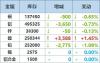
金属交易

Search documents
伦敦对人民币下狠手,封杀非美货币,一天之内,3大突破狠狠反击
Sou Hu Cai Jing· 2025-11-13 08:47
Core Viewpoint - The London Metal Exchange (LME) has announced a complete ban on all non-USD denominated metal options trading, effectively sidelining currencies like the RMB and Euro, which has caused immediate turmoil in the international commodity market. This move is seen as a defensive reaction to the rapid rise of the RMB in the industrial metal sector [2][4]. Group 1: RMB's Rise and Market Dynamics - Over the past three years, the RMB's trading volume in the global metal options market has surged from 30,000 contracts to 270,000 contracts, a ninefold increase, indicating its growing influence [4]. - The share of RMB-denominated orders for key metals like copper, nickel, and cobalt is expected to exceed 30% by the second half of 2024 [4]. - The Shanghai Futures Exchange has seen its copper futures holdings become the largest globally, with aluminum contract holdings surpassing LME's by 18% for the first time [6]. Group 2: Market Reactions to LME's Ban - In response to LME's exclusionary policy, Alfanar, a prominent copper wire manufacturer in the Middle East, announced that it would settle long-term orders in RMB starting from Q4 2025, directly referencing Shanghai Futures Exchange prices [9]. - The Dubai Commodity Exchange plans to launch RMB-denominated copper futures contracts in 2026, indicating a shift towards embracing the RMB in the Middle East [11]. - The Hong Kong Monetary Authority has increased the RMB liquidity pool to 110 billion HKD to support cross-border metal trade settlements in RMB [11]. Group 3: Implications for Global Currency Dynamics - The LME's ban is viewed as a short-sighted move that undermines its international credibility and limits its cooperation with resource-rich countries [6][8]. - The weakening of the USD's dominance in global resource allocation is prompting countries to seek alternative currencies, with the RMB emerging as a viable option due to its growing acceptance and the stability it offers [8][13]. - The RMB's rise is not about replacing the USD or Euro but about creating a more balanced and stable multi-currency system, especially in light of the risks associated with over-reliance on a single currency [17][19]. Group 4: Future Outlook for RMB Internationalization - The RMB's internationalization is expected to continue as countries look for more stable and convenient alternatives to the USD, particularly in resource-rich nations [19]. - The LME's attempt to counter market forces with administrative measures is unlikely to succeed, as market demand and industrial needs cannot be easily manipulated [21]. - The ongoing evolution of the global currency system will be a long-term process, with the RMB's role becoming increasingly significant as China solidifies its industrial advantages and enhances financial services [21].

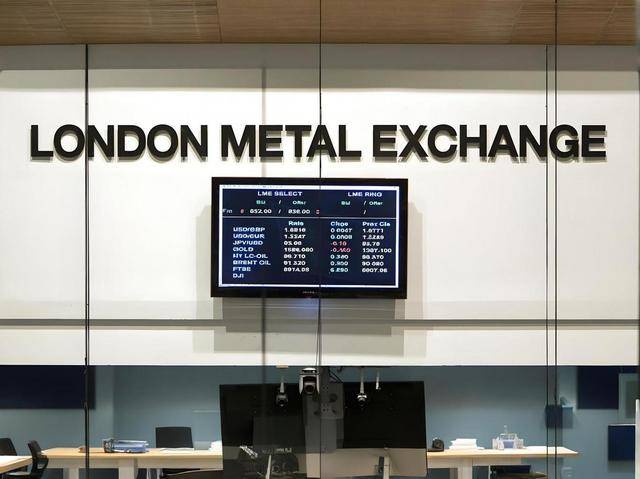
终于对人民币动手了,英国踢掉全部货币,死保美元
Sou Hu Cai Jing· 2025-11-13 02:37
Core Viewpoint - The London Metal Exchange (LME) has abruptly suspended all non-U.S. dollar-denominated metal options trading, forcing global traders to transact in U.S. dollars only, which is seen as a desperate reaction to the rising challenge of the Chinese yuan in the metal trading market [1][3]. Group 1: Impact on Dollar Dominance - The LME's decision is interpreted as a significant blow to the dollar's dominance in global commodity pricing, particularly as the exchange has historically been a key pillar of U.S. dollar hegemony [1][3]. - The dollar's dominance relies on three pillars: settlement, reserve, and pricing, with the LME being central to the pricing pillar [3]. - The LME's operations have allowed U.S. capital to benefit from fluctuations in interest rates, leading to significant profits for Wall Street firms during periods of low interest rates [3][4]. Group 2: Changes in Global Metal Trading - The rise of Chinese manufacturing has shifted the landscape, with China controlling over 70% of rare earth oxide production and significant shares of other metals, establishing itself as the largest metal consumer globally [7]. - Since 2022, the trading volume of metal options denominated in yuan has surged, with a 900% increase in market share, indicating a growing acceptance of the yuan in international metal transactions [7]. - The Shanghai Futures Exchange has reported that yuan-denominated copper futures have the largest open interest globally, surpassing that of the LME [7][8]. Group 3: Market Reactions - Following the LME's announcement, the Shanghai Futures Exchange saw a significant increase in trading volume, while the LME experienced unusual trading halts, highlighting a shift in market dynamics [8][10]. - The Dubai Commodity Exchange plans to launch yuan-denominated copper futures in 2026, further solidifying the yuan's role in the market [8]. - Market participants are increasingly viewing U.S. dollar-denominated metals as less favorable compared to those priced in yuan, indicating a potential shift in trading preferences [10].

美国刚叫停对造华船加税,一场新的较量就开始,人民币被剔出局?
Sou Hu Cai Jing· 2025-11-12 23:51
Core Viewpoint - The recent decision by the London Metal Exchange (LME) to remove the Chinese yuan from its settlement system signals a strategic move by the U.S. to tighten control over the global metal pricing system, despite claims of low usage of non-dollar settlements being seen as misleading [1][3]. Group 1: Market Dynamics - The LME's action is part of a broader strategy by the U.S. and G7 to confine the entire metal supply chain within the dollar system, aiming to control pricing and settlement processes [1][3]. - Despite the LME's decision, China remains the largest consumer of metals globally, with significant purchases of copper, aluminum, zinc, rare earths, nickel, and cobalt, indicating its strong market presence [3][5]. - The trading volume of yuan-denominated contracts on the Shanghai exchange has surged, with aluminum contract trading volume increasing by 18% year-on-year and gold futures trading volume skyrocketing by 25 times compared to the previous year [3][5]. Group 2: Emerging Pricing Systems - The rise of "Shanghai pricing" reflects not only an increase in trading volume but also the establishment of a dual pricing network with both onshore and offshore markets, allowing China to create alternative trading platforms [5][8]. - The potential for a dual pricing system in the global metal market is emerging, with "London pricing" and "Shanghai pricing" coexisting, each catering to different customer bases and settlement systems [7][8]. - The ability of the yuan to establish an independent pricing logic, unaffected by U.S. monetary policy, is crucial for its future role in the global market [8][10]. Group 3: Financial Trust and Market Sentiment - The issuance of Chinese sovereign dollar bonds in Hong Kong, which saw subscriptions exceeding $100 billion for a $4 billion offering, reflects strong market confidence in China's economic stability [5][10]. - The LME's decision may inadvertently accelerate the yuan's movement away from Western platforms, as China's market demand and creditworthiness continue to grow [10][12]. - The evolving financial landscape indicates a shift from a unipolar to a multipolar system, where both the dollar and yuan will compete for influence in global markets [12].
英美没想到!联手踢人民币出局,只为巩固美元,交易市场却变天了
Sou Hu Cai Jing· 2025-11-12 13:14
Core Viewpoint - The sudden decision by the London Metal Exchange (LME) to halt all non-U.S. dollar-denominated metal options trading is perceived as a strategic move against the rising influence of the Chinese yuan, signaling a potential shift in the global financial order [3][12][30] Group 1: LME's Role and Impact - The LME has historically functioned as a key component of the U.S. dollar's dominance in global finance, acting as a "wealth amplifier" to maintain U.S. hegemony [5][12] - The LME's pricing system dictates the value of industrial metals globally, reinforcing the dollar's role in commodity pricing [5][14] - The LME's operations have facilitated a wealth transfer mechanism that benefits U.S. financial markets at the expense of manufacturing nations [7][9] Group 2: China's Rising Influence - China is positioned as a formidable challenger to the LME, leveraging its industrial strength and trade volume to reshape the pricing dynamics of metals [12][14] - The trading volume of yuan-denominated metal options has surged by 900% from 30,000 contracts to 270,000 contracts over the past three years, indicating a significant shift towards yuan-based transactions [14][20] - Major resource-exporting countries are increasingly adopting yuan for trade, with over 30% of mineral exports to China now settled in yuan [16][20] Group 3: LME's Reaction and Consequences - The LME's abrupt rule change to exclude yuan-denominated trading is seen as a desperate attempt to maintain its influence, reflecting a lack of confidence in its traditional market dominance [18][22] - This move has inadvertently accelerated the market's shift towards the yuan, as evidenced by a dramatic increase in trading volumes on the Shanghai Futures Exchange following the LME's announcement [25][27] - The widening price gap between LME and Shanghai copper contracts highlights the growing divide between speculative financial practices and real industrial demand [25][29] Group 4: Future Outlook - The LME's actions may signify the beginning of a transition to a "post-LME era," where the center of gravity in metal trading shifts from London to Shanghai [29][30] - The historical parallels drawn with the decline of the British pound post-Suez Crisis suggest that the dollar's dominance in metal markets may also be waning [27][30]
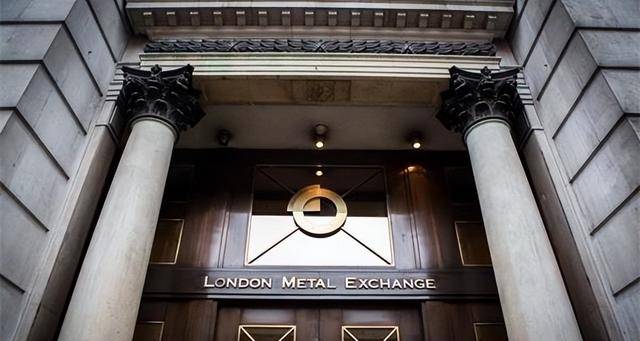
11月4日LME金属库存及注销仓单数据
Wen Hua Cai Jing· 2025-11-05 09:44
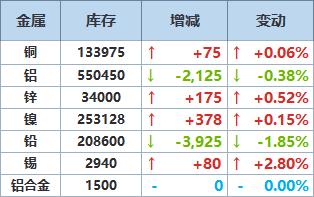
Group 1 - The article provides an overview of the changes in LME (London Metal Exchange) warehouse inventories for various metals, highlighting fluctuations in stock levels and the registration and cancellation of warehouse receipts [1][3][5][7][9][11][13] - Copper inventory increased by 75 tons to 133,975 tons, with a registration warehouse receipt of 10650 tons, representing a cancellation ratio of 7.95% [1][3] - Aluminum inventory decreased by 2,125 tons to 550,450 tons, with a registration warehouse receipt of 43,500 tons, leading to a cancellation ratio of 7.90% [1][5] - Zinc inventory rose by 175 tons to 34,000 tons, with a registration warehouse receipt of 4,300 tons, resulting in a cancellation ratio of 12.65% [1][9] - Nickel inventory increased by 378 tons to 253,128 tons, with a registration warehouse receipt of 6,540 tons, showing a cancellation ratio of 2.58% [1][13] Group 2 - The article details specific warehouse inventory changes across various locations, including Rotterdam, Singapore, and Hamburg, indicating the dynamics of metal stock levels [3][5][9][11][13] - In Rotterdam, copper inventory decreased by 125 tons to 13,925 tons, while aluminum remained stable at 3,575 tons [3][5] - Singapore's zinc inventory decreased by 25 tons to 30,175 tons, while nickel inventory increased by 402 tons to 71,460 tons [9][13] - The cancellation ratios for various metals indicate the proportion of warehouse receipts that have been canceled, reflecting market conditions and demand [1][3][5][9][11][13]
严防“市场逼仓”!LME放大招:永久限制近月大额持仓
Jin Shi Shu Ju· 2025-10-30 12:49
Core Viewpoint - The London Metal Exchange (LME) plans to establish permanent rules to limit large positions in near-month contracts when inventories are low, aiming to maintain market order and prevent manipulation [1][2]. Group 1: Inventory and Market Conditions - LME copper inventory dropped from 248,000 tons in February to 99,200 tons in June, a decline of 60%, leading to a significant increase in copper premiums [1]. - Zinc inventory has decreased by approximately 85% this year, with current available stock at only 24,425 tons, insufficient to meet one day's global consumption [2]. - The premium for near-month zinc contracts surged to a historical high of $339 per ton, reflecting the impact of low inventory on market dynamics [2]. Group 2: Temporary and Permanent Measures - The temporary measures introduced in June required holders of long positions exceeding total inventory levels to lend metal back to the market at zero premium, successfully reducing large aluminum positions held by entities like Mercuria [1]. - The proposed permanent rules will extend the temporary measures, mandating that any participant holding long positions above total inventory must lend metal at zero premium and will broaden the restrictions on "tom-next" positions [2]. Group 3: Regulatory Transition and Industry Impact - The public consultation period for the permanent rules will last until November 21, with the changes seen as a preparation for LME's authority over market position limits starting July 2026 [3]. - The implementation of permanent rules is expected to limit speculative capital's ability to manipulate the market due to low inventories, although it may affect hedging operations for some entities [3].
10月24日金市晚评:美国9月CPI数据倒计时 黄金回撤还未结束
Jin Tou Wang· 2025-10-24 11:08
Core Insights - The dollar index is stabilizing above the 99 mark, while gold prices are trading at $4066.70 per ounce, reflecting a decline of 1.45% [1] - The market is focused on the upcoming U.S. September CPI data, with expectations for the core inflation rate to remain at 3.1% [1][4] - Investors are anticipating a 25 basis point rate cut from the Federal Reserve next week, with potential implications for gold prices depending on the inflation data [1] Market Analysis - Gold prices have increased approximately 57% this year, driven by geopolitical tensions, economic uncertainty, rate cut expectations, and ongoing central bank purchases [4] - Recent geopolitical risks have spurred safe-haven demand for gold, leading to a rebound after two days of decline [3] - The focus is on the U.S. CPI report, which is expected to provide clear inflation signals ahead of the Federal Reserve's policy meeting [4] Technical Analysis - The daily K-line for gold shows a small bullish star, indicating a pause after two consecutive bearish days, suggesting a potential for further adjustments [5] - Key resistance levels for gold are identified at $4120 and $4150, with the possibility of a bullish trend if prices remain near $4150 [5] - The MACD indicator suggests further correction is needed, indicating a cautious outlook for the short term [5]
Brace for Volatility "Backwardation," Gold Volume Nears 2025 High
Youtube· 2025-10-17 14:38
Market Overview - The market is experiencing a bounce back after a significant selloff in regional banks, with the KRE index up approximately 1.4% [3][5] - There are ongoing concerns regarding the auto lending market, particularly related to bad loans and potential fraud claims affecting certain banks [3][4] - Analysts suggest that the recent market reaction may be an overreaction, presenting a potential buying opportunity for investors [2][5] Banking Sector Insights - Despite the recent selloff, many banks reported resilient balance sheets and healthy net interest income levels [5] - The market has been operating at frothy levels, with relaxed lending standards over recent months contributing to the current situation [4][6] - The exposure to risks from the regional banking sector appears to be limited for now, although there are flashbacks to previous bank runs [7][6] Volatility and Options Market - Options expiration is expected to lead to increased trading volume, with a focus on how the market resolves its current technical structure [8][9] - The current volatility environment shows slight backwardation, indicating that near-term volatility is priced higher than longer-term volatility [10][11] - Recent trading sessions have shown attempts to recover losses, but selling pressure has emerged around midday [12][13] Commodity Market Dynamics - Gold has reached record levels before a slight pullback, with significant trading volume indicating a potential consolidation range [14][16] - The gold market is experiencing high trading activity, with expectations that today's volume could rank among the highest for the year [16][19] - Other metals like platinum and palladium are facing bearish trends, with platinum down about 7% early in the trading session [20][22] Broader Commodity Trends - The performance of metals has been strong this year, but sustainability remains a concern, particularly for underloved metals like silver [21][22] - The recent dynamics suggest a risk-on mentality in the metals market, with questions about the longevity of current trends [21][22] - The correlation between gold and equity markets has weakened, indicating a potential loss of gold's status as a safe haven asset [23]

金属涨跌互现,美元走软构成支撑【10月16日LME收盘】
Wen Hua Cai Jing· 2025-10-17 00:38
Core Insights - LME copper prices experienced a slight increase, supported by a weaker dollar, but market sentiment was dampened by trade tensions and ongoing U.S. government shutdown uncertainties [1][4] - Concerns over supply tightness due to mining disruptions pushed copper prices to a 16-month high of $11,000 per ton last week [1] Price Movements - LME three-month copper rose by $6, or 0.06%, closing at $10,647 per ton [2] - Other base metals also saw price changes, with three-month aluminum increasing by $42.5 (1.55%) to $2,788.5 per ton, and three-month zinc rising by $25 (0.85%) to $2,973 per ton [2] Economic Impact - The ongoing U.S. federal government shutdown could lead to economic losses of up to $15 billion per week, putting pressure on the dollar [4] - Concerns regarding manufacturing growth and demand have led some companies betting on rising copper prices to reduce their positions [4] Market Outlook - Analysts from Goldman Sachs expect the market to remain in a temporary surplus, with current high copper prices reflecting investor optimism for 2026, driven by anticipated Fed rate cuts, a weaker dollar, and capital expenditures related to artificial intelligence [4] - Significant increases in copper demand are anticipated in data centers and power infrastructure investments over the coming years [4] Aluminum Market - Concerns about tightness in the LME aluminum market have led to spot contracts trading at a premium over three-month aluminum, with premiums rising to over $21 per ton, the highest since February [4]
10月15日LME金属库存及注销仓单数据
Wen Hua Cai Jing· 2025-10-16 08:43
Group 1 - The core point of the news is the recent changes in LME (London Metal Exchange) inventory levels for various metals, indicating fluctuations in supply and demand dynamics in the market [1][2][4]. Group 2 - Copper inventory decreased by 900 tons, resulting in a total of 137,450 tons, with a registered warehouse stock of 129,900 tons and a cancellation ratio of 5.49% [1][4]. - Aluminum inventory fell by 3,650 tons to 495,325 tons, with a registered stock of 405,650 tons and a cancellation ratio of 18.10% [1][5]. - Zinc inventory saw a slight decrease of 50 tons, bringing the total to 38,300 tons, with a registered stock of 24,400 tons and a cancellation ratio of 36.29% [1][9]. - Nickel inventory increased by 3,588 tons, reaching 250,344 tons, with a registered stock of 244,122 tons and a cancellation ratio of 2.49% [1][13]. - Tin inventory remained stable at 2,575 tons, with a registered stock of 2,340 tons and a cancellation ratio of 9.13% [1][11].