电子

Search documents
超颖电子:拟新增约4.28亿元资本性支出以扩产
Xin Lang Cai Jing· 2026-02-13 07:38
Core Viewpoint - The company has fully utilized its capital expenditure plan of 300 million yuan for the period from November 10, 2025, to December 31, 2026, and has incurred an additional expenditure of 30.5729 million yuan [1] Group 1 - To enhance production capacity and process capabilities, the company and its subsidiary, Dingying Electronics (Kunshan) Co., Ltd., plan to increase capital expenditures by 350 million yuan and 78 million yuan respectively for the procurement and improvement of fixed assets and intangible assets [1] - The additional expenditures align with the operational plan and are not expected to have significant adverse effects, although the outcomes remain uncertain [1]
春节日历效应下的海内外市场表现研究
Tai Ping Yang Zheng Quan· 2026-02-13 07:25
Investment Rating - The report does not explicitly provide an investment rating for the industry analyzed Core Insights - The report examines the Chinese New Year calendar effect on domestic and international markets, highlighting a pre-holiday rally followed by post-holiday structural differentiation in the A-share market [11][14] - A-share market shows a median increase of 2.59% in the five trading days before the holiday, with a probability of 68.75% for positive returns, while post-holiday, smaller market caps exhibit stronger performance [14][15] - The Hong Kong market shows a milder New Year effect, with the Hang Seng Index recording average gains of 0.12%, 0.39%, and 0.55% in the pre-holiday, holiday, and post-holiday periods respectively [29][31] - International markets, including the S&P 500 and DAX, show a tendency for moderate positive returns post-holiday, with median increases ranging from 0.9% to 1.9% [2][32] Summary by Sections 1. Chinese New Year Calendar Effect Research - The calendar effect is a significant market anomaly where asset returns correlate with specific calendar periods, particularly around the Chinese New Year [11] - The report aims to quantify the characteristics and patterns of the New Year effect through analysis of major indices, sectors, and styles [12] 2. Domestic and International Index Analysis - A-share indices show a pre-holiday rally with an average increase of 1.43% in the five trading days before the holiday, and a continued upward trend post-holiday [15][16] - The Hang Seng Index shows a more subdued performance compared to A-shares, with lower average gains and probabilities of positive returns [29][31] - International indices generally exhibit stable performance during the holiday period, with a tendency for positive returns post-holiday [32][34] 3. Sector Performance and Rotation Patterns - The report identifies a clear post-holiday rotation and sector differentiation in the A-share market, with technology sectors like electronics and communications showing significant gains [39][40] - Consumer sectors display mixed performance, with some segments like consumer services performing well, while others like food and beverage lag behind [39][40] - Financial and real estate sectors show weaker performance overall, with banks and non-bank financials recording minimal gains post-holiday [40]
中原证券河南资本市场月报-20260213
Zhongyuan Securities· 2026-02-13 06:54
Economic Performance and Comparison - In 2025, China's GDP reached 1401879 billion yuan, growing by 5.0%, successfully meeting the economic growth target [6][11] - Henan Province's GDP reached 66632.79 billion yuan, with a year-on-year growth of 5.6%, exceeding the initial target of 5.5% and ranking third in national growth [19][26] - The industrial added value in Henan grew by 8.4%, outperforming the national average by 2.5 percentage points, ranking first among ten major industrial provinces [20][28] Consumption and Investment - In 2025, Henan's total retail sales of consumer goods reached 29090.50 billion yuan, growing by 5.6%, which is 1.9 percentage points higher than the national average [21][26] - Fixed asset investment in Henan increased by 4.0%, leading among the six central provinces, with industrial investment showing strong growth [22][28] - The real estate development investment in Henan decreased by 8.6%, indicating a slight worsening compared to the previous year [22][28] Foreign Trade - Henan's total foreign trade value reached 9356.7 billion yuan in 2025, a year-on-year increase of 14.1%, significantly higher than the national average [23][24] - The province's exports of high-tech products grew by 27.5 percentage points compared to the previous year, indicating a shift towards more advanced manufacturing [24][26] Policy Tracking - In January 2026, financial regulatory authorities introduced policies to support the real economy and expand domestic demand, focusing on fostering new productive forces [33][34] - The Henan provincial government implemented several policies aimed at improving economic performance and enhancing living standards in early 2026 [37][40] Securities Market Overview - In January 2026, the credit bond financing scale in Henan decreased to a near two-year low, with a total of 176.13 billion yuan issued [42][45] - There was no equity financing reported for Henan's listed companies in January 2026, contrasting with a national trend of significant equity financing [48][53]
开源量化评论(121):港股CCASS优选20组合的年度回顾及最新持仓
KAIYUAN SECURITIES· 2026-02-13 06:43
- The "Hong Kong CCASS Preferred 20 Portfolio" was constructed using a two-step screening method: "select brokers first, then select stocks"[3][4] - The first step involves selecting top-performing brokers by standardizing and equally weighting their excess Sharpe ratio and monthly win rate, then selecting the top 10 brokers[4][16] - The second step involves equally distributing funds to the 10 selected brokers, aggregating their latest holdings, and retaining the top 20 stocks by weight for equal allocation[5][17] - The portfolio has shown significant outperformance over the Hang Seng Index, with an annualized excess return rate of 19.3% and an excess Sharpe ratio of 2.45 over the period from 2020 to 2025[3][12][15] - The portfolio demonstrated defensive characteristics during market adjustments, achieving a positive return of 2.05% from October 8, 2025, to December 31, 2025, while the Hang Seng Index fell by 4.47% and the Hang Seng Technology Index dropped by 15.32%[3][12] - The latest holdings of the portfolio as of February 2026 include a low valuation and high dividend yield configuration, with the banking and non-bank financial sectors accounting for about 45%, the energy sector about 10%, and the technology and internet sectors about 20%[6][19][22] Portfolio Performance Metrics - Annualized return: 19.3%[15] - Annualized volatility: 7.9%[15] - Sharpe ratio: 2.45[15] - Maximum drawdown: -7.6%[15] - Monthly win rate: 75.3%[15]
鸿日达股价创历史新高,半导体散热片业务预期突破
Jing Ji Guan Cha Wang· 2026-02-13 06:13
Core Viewpoint - Hongrida (301285) has recently reached a historical high in stock price, driven by the domestic substitution prospects of semiconductor packaging metal heat sinks, which are crucial for high-performance chip cooling [1] Group 1: Company Performance - The company is one of the few A-share enterprises in China that has achieved sample verification for semiconductor-grade metal heat sinks, indicating a high technical barrier [1] - Despite an expected loss in 2025, institutions predict that the company's net profit attributable to shareholders will gradually improve [4] - If the semiconductor heat sink business can achieve mass production, it will open up long-term growth opportunities for the company [4] Group 2: Market Dynamics - There has been a continuous inflow of main funds, with the stock price recently breaking through historical resistance levels, indicating active capital and strong technical support [2] - The electronics sector has shown strong performance, with significant increases in sub-industries such as semiconductor packaging and materials [3] - The company's main business in connectors benefits from the recovery in consumer electronics, while its new ventures in semiconductor cooling and optical communication align with trends in AI and new energy vehicles [3] Group 3: Industry Policy - The market expectations are further strengthened by policies supporting supply chain autonomy and controllability, which benefit the semiconductor packaging and materials sectors [3]

国新证券每日晨报-20260213
Guoxin Securities Co., Ltd· 2026-02-13 05:59
Domestic Market Overview - The domestic market experienced a slight increase with the Shanghai Composite Index closing at 4134.02 points, up 0.05%, and the Shenzhen Component Index at 14283 points, up 0.86% [1][4] - The total trading volume of the entire A-share market reached 21,608 billion, showing an increase compared to the previous day [1][4] - Among the 30 sectors, 14 sectors saw gains, with electronics, power equipment and new energy, and computers leading the increase, while consumer services, agriculture, forestry, animal husbandry, and comprehensive finance experienced significant declines [1][4] Overseas Market Overview - The three major U.S. stock indices all closed lower, with the Dow Jones down 1.34%, the S&P 500 down 1.57%, and the Nasdaq down 2.03% [2][4] - Notable declines included Cisco dropping over 12% and Disney falling more than 5%, leading the Dow [2][4] - The Nasdaq China Golden Dragon Index fell by 3%, with Tencent Music dropping over 10% [2][4] News Highlights - U.S. President Trump is expected to visit China in April, with both leaders maintaining communication regarding trade relations [3][11] - The National Film Administration and the Ministry of Commerce are launching a "Film+" consumption pilot program to boost the film industry's contribution to economic growth [12][13] - The Ministry of Commerce announced that starting February 13, 2026, it will impose countervailing duties on imported dairy products from the EU [14] - A research team from Peking University has developed the world's first large-scale quantum communication chip network, achieving significant advancements in quantum key distribution [15][16]
天山电子股价震荡上行,涉及存储芯片等热点主题
Jing Ji Guan Cha Wang· 2026-02-13 05:42
Core Viewpoint - Tianshan Electronics (301379) has shown a fluctuating upward trend in stock price over the past week, closing at 27.77 yuan on February 12, 2026, with a daily increase of 1.76% and a trading volume of 1.27 billion yuan [1] Stock Performance - The stock has experienced a cumulative increase of 3.62% over the past five days, with a price fluctuation range of 6.18% [1] - On February 12, the net inflow of main funds was 2.8857 million yuan, contrasting with a net outflow of 2.8564 million yuan on February 10, indicating significant short-term capital volatility [1] Business Focus - The company is involved in several trending sectors, including storage chips, PCB concepts, MiniLED, automotive electronics, and drones [1] - It has invested in new storage technology and Tianlian Chip through industrial funds, supporting the development of PCM storage module manufacturing for enterprise-level SSDs [1] Technical Analysis - The current stock price is situated between the Bollinger Band resistance level of 30.47 yuan and the support level of 26.23 yuan [1] - The MACD indicator shows weakness, while the KDJ indicates short-term rebound momentum [1]
ST东尼高管变动及股价表现弱于行业
Jing Ji Guan Cha Wang· 2026-02-13 05:17
Group 1 - The company ST Dongni (603595) appointed Ms. Yin Qin as the Vice General Manager and Secretary of the Board, complying with regulatory requirements and having no related party relationships [1] - The company is facing shareholder claims due to information disclosure issues, with the claim period for investors who bought and held shares from June 20, 2023, to January 5, 2024 [1] Group 2 - As of February 12, 2026, ST Dongni's stock price closed at 16.67 yuan, down 0.60% for the day and a cumulative decline of 0.54% over the past five days, underperforming the electronic sector which rose by 1.73% [2] - On February 12, 2026, the net inflow of main funds was 64,100 yuan, while retail investors accounted for 38% of the inflow, indicating market participation differentiation [2] - The stock is currently in a consolidation range, with a resistance level at 17.53 yuan and a support level at 16.41 yuan, and the MACD indicator shows a negative value, suggesting a weak short-term trend [2]

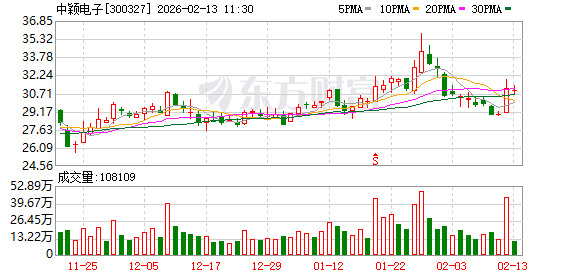
中颖电子:大股东将主要主导推进公司的战略投资及同业合作的整合
Mei Ri Jing Ji Xin Wen· 2026-02-13 04:45
Core Viewpoint - The change in major shareholders is expected to lead to strategic investments and industry cooperation integration for the company [2] Group 1 - The company responded to an investor's inquiry regarding the lack of business progress after the change in ownership [2] - The major shareholder will primarily drive the company's strategic investments [2] - The focus will also be on integrating industry cooperation [2]


中国反制加强,日本财政恶化,700万亿还不上,前首相要求高市早苗下台
Sou Hu Cai Jing· 2026-02-13 04:09
Group 1 - Japan's government net debt is approaching 700 trillion yen (approximately 31.6 trillion RMB), with liabilities reaching 1,483.3 trillion yen against assets of 783.4 trillion yen, marking a historical record of insolvency [3] - The fiscal crisis is directly linked to Prime Minister Kishi's hardline stance towards China, particularly regarding Taiwan, which he has tied to Japan's national survival [3] - China's countermeasures against Japan include travel warnings and trade restrictions, leading to a 47% cancellation rate of flights from China to Japan and significant declines in tourism revenue [6] Group 2 - The export controls imposed by China on over 900 dual-use items, including critical resources like rare earths and semiconductor materials, have severely impacted Japan's high-end manufacturing sector, causing production halts at companies like Toyota [8] - The economic downturn is translating into political pressure, with former Japanese Prime Ministers criticizing Kishi's actions as reckless and potentially harmful to national interests [8] - Japan's economy is already vulnerable due to long-term issues such as aging population and weak domestic consumption, with government debt reaching 260% of GDP, far exceeding international warning levels [10] Group 3 - Kishi's economic stimulus measures, including a supplementary budget of 21.7 trillion yen, have led to soaring bond yields and increased interest payments, consuming nearly 40% of fiscal tax revenue [10] - Japan's high dependency on China for trade, at 40%, means that China's countermeasures are particularly damaging to key industries such as automotive, electronics, and pharmaceuticals [10] - The ongoing diplomatic isolation and economic contraction could lead Japan into a vicious cycle, with the looming threat of national credit bankruptcy as the debt crisis deepens [12]