
消费

Search documents
[10月10日]指数估值数据(成长风格回调,价值风格上涨;港股医药回低估了吗;港股指数估值表更新;抽奖福利)
银行螺丝钉· 2025-10-10 13:55
Market Overview - The overall market has seen a decline, with the closing rating at 4.1 stars [1] - All market caps, including large, medium, and small caps, experienced a downturn [2] - Growth style stocks faced significant declines, while value style stocks remained relatively stable [3][7] Index Performance - The ChiNext index dropped over 4% after reaching overvalued levels [4] - The Sci-Tech 50 index fell by 4.7% [5] - The Hong Kong stock market also experienced declines, particularly in technology and growth sectors [11][12] Investment Style Dynamics - There is a notable rotation in market styles, with growth stocks showing high volatility and value stocks exhibiting lower volatility during corrections [14] - Indices focused on dividends, value, and free cash flow generally saw increases, with free cash flow indices rising for five consecutive trading days [8][9] Hong Kong Market Insights - The Hong Kong medical index has shown significant volatility, with a 4.9% drop recently [16] - The Hong Kong medical index has increased by 60-80% from the beginning of the year to the end of September, despite some recent corrections [30] - The Hong Kong medical index is categorized differently than its A-share counterparts, with a focus on healthcare and innovative drugs [21][25] Valuation and Future Outlook - The Hong Kong medical index reached overvalued levels in early September but has since seen a valuation correction [31][32] - The overall valuation of the Hong Kong market is currently between 3.5 and 3.6 stars, with fewer undervalued stocks compared to the previous year [33] - The market is expected to continue adjusting, with some stocks being sold to increase bond holdings in response to rising stock asset values [43]

9月投资手记:估值驱动是上涨主导力量,后续关注盈利变化 重点五条主线
Sou Hu Cai Jing· 2025-10-10 10:58
Market Overview - The market experienced high-level fluctuations in September, with significant gains in the Sci-Tech Innovation Board, reaching new highs in the current market cycle, while other major indices mainly oscillated [1] - Technology growth sectors such as electric equipment, electronics, and media performed well due to industrial catalysts and benefits from the Federal Reserve's interest rate cuts, whereas military, finance, and consumer sectors showed relatively weaker performance [1] Economic Indicators - Economic data for August showed a continued slowdown, with investment, consumption, and production all underperforming market expectations, indicating increasing economic pressure [1] - Fixed asset investment growth turned negative for two consecutive months, primarily due to declines in real estate, manufacturing, and infrastructure investments [1] - Retail sales growth slowed, and the effectiveness of the "trade-in" policy weakened, while industrial value-added and service production indices maintained over 5% growth, albeit with a deceleration [1] Policy Impact - The recent article by Xi Jinping emphasized the need to address low-price disorder in competition, reinforcing anti-involution policies [1] - The rapid decline in manufacturing investment growth since Q3 reflects the phase of anti-involution, aiming to regulate local government behavior and raise industry thresholds, which may suppress inefficient investments and reduce some demand [1] - While short-term effects may lead to economic contraction, the foundation for price recovery is expected to strengthen, potentially reversing the supply-demand imbalance in the medium to long term [1] Valuation and Market Dynamics - Valuation-driven growth has been the primary force behind the stock market's rise over the past year, with A-share market valuations recovering to high levels [2] - The overall performance growth of A-shares remains low, with valuation increases contributing significantly to market gains, while the divergence between valuation and fundamental expectations poses long-term risks [2] - Future focus should be on improvements in corporate earnings, as the ongoing deepening of anti-involution policies is expected to enhance fundamental market drivers [2] Investment Strategy - The market still has upward potential relative to historical levels, supported by indicators such as stock-bond yield ratios and total market capitalization to GDP [3] - The diversification of household excess savings is gradually unfolding, and the onset of the Federal Reserve's interest rate cuts is likely to rebalance global capital flows, benefiting the domestic market [3] - Five key investment themes are highlighted: service consumption with supply advantages, breakthroughs in pharmaceuticals, early-stage growth in artificial intelligence, cyclical leaders benefiting from Fed rate cuts, and consumer goods with strong earnings elasticity [3]
GP/LP的十字路口
FOFWEEKLY· 2025-10-10 10:08
Core Viewpoint - The article discusses the current investment landscape in future industries, highlighting the tension between pursuing new technological opportunities and reassessing the value of traditional industries. It emphasizes the need for investors to navigate these challenges and make informed decisions in a rapidly evolving market [2][22]. Investment Challenges and Opportunities - Key challenges in future industry investments include the professional judgment of technology, long return cycles, and the cross-disciplinary capabilities of talent teams [3][6]. - The resolution lies in state-owned capital providing "patient capital + industrial ecology" to build a solid foundation, while market-oriented institutions focus on early-stage sectors to uncover technological potential [3][6]. Role of State-Owned Capital - State-owned enterprises play a crucial role in supporting early-stage investments, with a tolerance for longer investment cycles, often spanning 7 to 10 years [7][8]. - They aim to foster strategic emerging industries, balancing financial returns with the creation of industrial ecosystems [8][19]. Traditional vs. Future Industries - Traditional industries are characterized by stable demand but face intense competition and slow growth, while future industries are in their infancy with high uncertainty but significant growth potential [15][16]. - The integration of traditional and future industries through mergers and technological upgrades is seen as a new growth avenue [15][20]. Investment Strategies - Investment strategies should not strictly separate traditional and future industries; projects with innovative and growth attributes in traditional sectors are also prioritized [17][18]. - The focus is on creating a comprehensive investment ecosystem that supports both technological advancements and traditional industry upgrades [17][19]. Importance of Talent and Expertise - The investment landscape requires professionals with strong technical judgment and the ability to adapt to various industry cycles, particularly in complex fields like AI, semiconductors, and renewable energy [9][12][13]. - Continuous learning and upgrading of investment teams are essential to navigate the uncertainties of future industry investments [12][13]. Conclusion - The future of industry investment is not merely about technological breakthroughs but involves a systemic ecological competition. The collaboration between state-owned capital, market-oriented VC/PE, and industrial capital is crucial for driving commercialization and linking traditional industries with technological innovation [22][23].

中泰证券10月策略:趋势仍在 政策为王
Xin Lang Cai Jing· 2025-10-10 08:09
Core Viewpoint - The report from Zhongtai Securities indicates that in October, the index is expected to remain in a strong oscillation within a range, with a focus on structural market trends and the upcoming Fourth Plenary Session of the 20th Central Committee, suggesting investment strategies based on new policy expectations [1] Group 1: Investment Focus Areas - Emphasis on technology innovation and military security sectors, which play a crucial role in national strategic planning, have high funding consensus, and possess solid industrial narrative logic [1] - Attention to non-ferrous metals and new energy sectors benefiting from "anti-involution" policy guidance and enhanced industry demand expectations [1] Group 2: Market Dynamics - The overall strategy remains focused on technology, while also monitoring technical characteristics to identify potential cyclical shifts, such as sudden negative news in the tech sector, policy changes, or underperforming earnings [1] - In extreme scenarios where the index breaks downwards, the banking sector is highlighted as having value for allocation [1]

德国政府预计2025年本国经济小幅回升
Xin Hua She· 2025-10-09 14:13
Group 1 - The German government forecasts a modest economic growth of 0.2% in 2025, with a potential acceleration starting in 2026, despite external uncertainties such as U.S. trade policies [1][2] - The current economic recovery in Germany is driven by domestic demand rather than foreign trade, particularly through consumption and public investment [1] - High government spending, including infrastructure and defense investments, will be crucial for economic growth, contingent upon the implementation of structural reforms [1] Group 2 - After two consecutive years of economic contraction in 2023 and 2024, Germany experienced a quarter-on-quarter growth of 0.3% in the first quarter of this year [2] - The imposition of tariffs by the U.S. on imported goods, effective from April, led to a quarter-on-quarter decline of 0.3% in the second quarter, with expectations of continued weak performance in the third quarter [2] - A joint forecast by five major German economic research institutions indicates that U.S. tariffs will severely impact the global economy, suppressing Germany's export growth and contributing to the projected 0.2% growth in 2025 [2]
【环球财经】德国政府预计2025年本国经济小幅回升
Xin Hua She· 2025-10-09 13:29
Core Viewpoint - The German government forecasts a modest economic growth of 0.2% in 2025, with potential acceleration starting in 2026, but faces external uncertainties, particularly from U.S. trade policies [1][2]. Economic Growth Projections - The German economy is expected to recover gradually, with growth driven by domestic demand rather than foreign trade, particularly through consumption and public investment [1]. - Economic growth is projected to strengthen from the end of this year into early next year, with a potential growth rate of 1.3% in 2026 [1]. Government Spending and Structural Reforms - Future economic growth will heavily rely on high government spending, including infrastructure and defense investments, contingent upon the implementation of structural reforms [1]. Impact of U.S. Trade Policies - The imposition of tariffs by the U.S. on imports, particularly on automobiles, has negatively impacted the German economy, leading to a contraction in the second quarter of this year [2]. - The joint forecast from five major German economic research institutions indicates that external demand weakness will suppress export growth, contributing to the anticipated 0.2% growth in 2025 [2].
暗盘大涨460%
Zhong Guo Ji Jin Bao· 2025-10-09 10:40
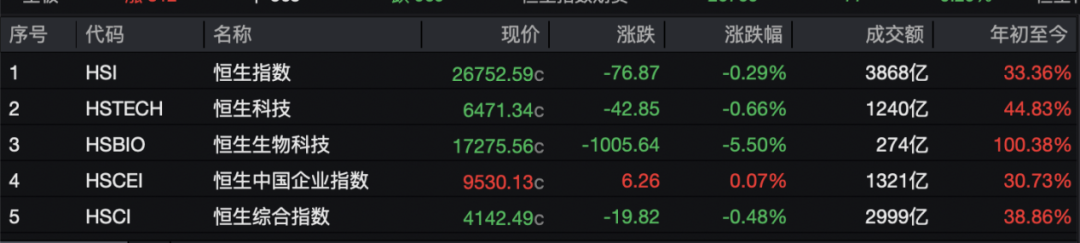
Market Overview - On October 9, the Hong Kong stock market showed mixed performance with the Hang Seng Index down by 0.29% and the Hang Seng Technology Index down by 0.66% [1][2] - The total market turnover was HKD 386.8 billion, with a net inflow of HKD 3.043 billion from southbound funds [1] Consumer Sector Performance - Consumer stocks saw significant gains, with Pop Mart rising by 2.98%, Mixue Group increasing by 6.99%, and Gu Ming up by 3.67% [3] Gold and Precious Metals - Gold stocks collectively rose, with China Gold International increasing by 9.30%, Zijin Mining up by 5.43%, and Zhaojin Mining rising by 1.11% [6] - The international gold price continued to strengthen, reaching USD 4,040 per ounce [8] Copper Market Insights - Freeport-McMoRan lowered its copper production forecast, raising market concerns about supply [9] - Goldman Sachs analysts highlighted the importance of copper in the "grid-AI-defense" triangle, emphasizing its critical role in connecting these sectors [9] Semiconductor Sector - Semiconductor stocks experienced a downturn, with SMIC dropping by 6.70% and a trading volume of HKD 26.499 billion [12] - Despite the short-term price adjustment, some institutions remain optimistic about the semiconductor sector, with Goldman Sachs raising target prices for SMIC and Huahong Semiconductor [12] Banking Sector Developments - HSBC announced plans to privatize Hang Seng Bank at a 30% premium, reflecting confidence in Hong Kong's future [15] - The CEO of HSBC emphasized that the privatization decision is based on commercial considerations and is not related to bad debts or management changes [15] New IPO: Golden Leaf International Group - Golden Leaf International Group is set to list on the Hong Kong Stock Exchange on October 10, with its dark market price surging by 460% after an initial spike of over 800% [16][17] - The company, a veteran contractor in electromechanical engineering, reported a 26% year-on-year revenue increase to HKD 154 million for the fiscal year ending March 2025, with a profit increase of 36% to HKD 14.07 million [18]
暗盘大涨460%
中国基金报· 2025-10-09 10:37
【导读】金叶国际集团明日上市,暗盘大涨 460% 10 月 9 日,港股三大指数涨跌不一。恒生指数收跌 0.29% ,恒生科技指数收跌 0.66% ,恒生国企指数涨 0.07% 。 全日大市成交额为 3868 亿港元,南向资金净流入 30.43 亿港元。 | 序号 | 代码 | 名称 | 现价 | 涨跌 | 涨跌幅 | 成交额 | 年初至今 | | --- | --- | --- | --- | --- | --- | --- | --- | | 1 | HSI | 恒生指数 | 26752.59c | -76.87 | -0.29% | 3868亿 | 33.36% | | 2 | HSTECH | 恒生科技 | 6471.34c | -42.85 | -0.66% | 1240亿 | 44.83% | | 3 | HSBIO | 恒生生物科技 | 17275.56c | -1005.64 | -5.50% | 274亿 | 100.38% | | 4 | HSCEI | 恒生中国企业指数 | 9530.13c | 6.26 | 0.07% | 1321亿 | 30.73% | | 5 | HSCI | 恒 ...

中信证券:港股上行动能延续,把握四大中长期方向
Xin Lang Cai Jing· 2025-10-09 01:02
Core Viewpoint - The report from CITIC Securities indicates that abundant liquidity and ongoing investments in AI are the two main drivers behind the sustained rise of Hong Kong stocks since early September [1] Group 1: Market Dynamics - The "wealth effect" in Hong Kong stocks is expected to continue attracting southbound capital inflows [1] - The potential election of a new Japanese Prime Minister, if successful, could lead to arbitrage trading by Japanese investors benefiting Hong Kong stocks [1] - The ongoing capital expenditure by domestic and international companies in the AI sector, along with continuous iterations and innovations in large models and applications, may lead to performance realization in Hong Kong's complete AI and technology industry chain [1] Group 2: Valuation and Future Outlook - After six months of valuation expansion, the current absolute valuation of Hong Kong stocks is considered not cheap [1] - However, with fundamentals expected to bottom out and a significant increase in earnings projected for 2026, Hong Kong stocks still hold considerable attractiveness on a global scale [1] - The report predicts that the long bull market for Hong Kong stocks since early 2024 will continue, driven by liquidity spillover effects and sustained AI narratives [1] Group 3: Investment Recommendations - Investors are advised to focus on four key long-term directions: 1) Technology sector, including AI-related sub-sectors and consumer electronics [1] 2) Healthcare sector, particularly biotechnology [1] 3) Non-ferrous metals benefiting from rising overseas inflation expectations and de-dollarization [1] 4) Consumer sector, which is expected to see valuation recovery amid further domestic economic recovery [1]

中信证券:港股上行动能延续 把握四大中长期方向
Zheng Quan Shi Bao Wang· 2025-10-09 00:28
Core Viewpoint - The continuous rise of Hong Kong stocks since early September is driven by ample liquidity and ongoing investments and innovations in AI [1] Group 1: Market Dynamics - Southbound capital is expected to continue flowing into Hong Kong stocks due to the "wealth effect" [1] - The anticipated election of high-profile candidates, such as the potential new Japanese Prime Minister, could lead to arbitrage trading by Japanese investors benefiting Hong Kong stocks [1] Group 2: AI and Technology Sector - Increased capital expenditure by domestic and international companies in the AI sector, along with continuous iterations and innovations in large models and applications, may lead to performance realization in Hong Kong's complete AI and technology industry chain [1] - Despite a six-month valuation expansion, the current absolute valuation of Hong Kong stocks is not cheap [1] Group 3: Future Outlook - The fundamentals are expected to rebound, and with projected high growth in earnings by 2026, Hong Kong stocks remain significantly attractive on a global scale [1] - The report predicts that the long bull market for Hong Kong stocks since early 2024 will continue, driven by liquidity spillover effects and sustained AI narratives [1] Group 4: Investment Recommendations - Investors are advised to focus on four long-term directions: 1. Technology sector, including AI-related sub-sectors and consumer electronics [1] 2. Healthcare sector, particularly biotechnology [1] 3. Non-ferrous metals benefiting from rising overseas inflation expectations and de-dollarization [1] 4. Consumer sector, which may see valuation recovery amid further domestic economic recovery [1]