
非银金融

Search documents
【10日资金路线图】汽车板块净流入逾15亿元居首 龙虎榜机构抢筹多股
证券时报· 2025-12-10 10:57
3.汽车行业净流入15.45亿元居首 申万一级行业中,9个行业实现资金净流入,其中汽车行业净流入15.45亿元居首。 盘后数据出炉。 12月10日,A股市场整体涨跌互现。截至收盘,上证指数报3900.5点,下跌0.23%;深证成指报13316.42点,上 涨0.29%;创业板指报3209点,下跌0.02%;北证50指数下跌0.85%。A股市场合计成交17917.81亿元,较上一 交易日减少1260.88亿元。 1.A股市场主力资金净流出199.82亿元 今日A股市场主力资金开盘净流出158.52亿元,尾盘净流入25.51亿元,A股市场全天主力资金净流出199.82亿 元。 | | | 沪深两市近五日主力资金流向情况(亿元) | | | | --- | --- | --- | --- | --- | | 日期 | | 净流入金额 开盘净流入 | | 尾盘净流入 超大单净买入 | | 2025-12-10 | -199.82 | -158. 52 | 25. 51 | -58. 52 | | 2025-12-9 | -359.69 | -111.87 | -14.73 | -156. 68 | | 2025-12 ...



姚洋、邱晓华、梁红、李迅雷眼中的2026年投资机会
和讯· 2025-12-10 09:47
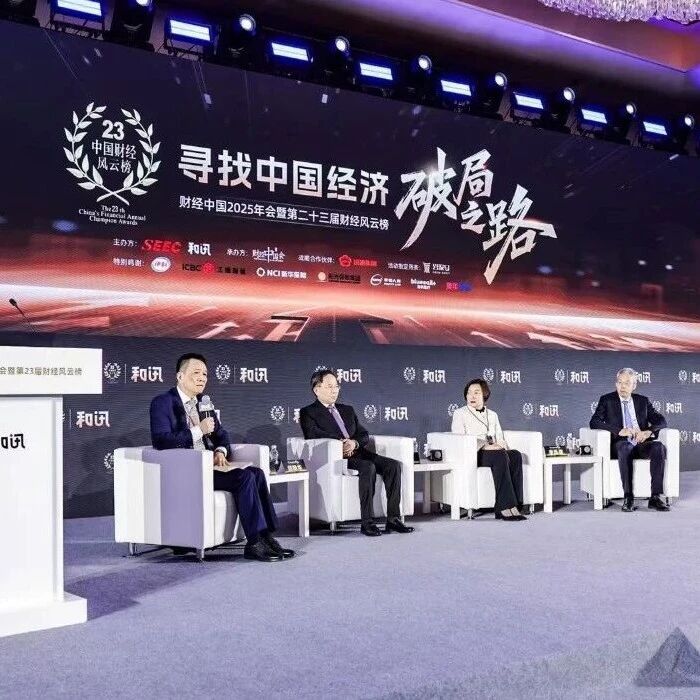
Group 1 - The core strategy of the "14th Five-Year Plan" emphasizes building a modern industrial system, achieving high-level technological self-reliance, and expanding domestic demand as the three main strategic tasks for China's economic breakthrough [3][4]. - Manufacturing upgrades and technological innovation are identified as the driving forces of development, determining what can be supplied, while domestic demand serves as the strategic foundation, influencing whether there is a broad market for these supplies [3][4]. - The current economic environment shows a need for a balance between manufacturing upgrades and boosting domestic demand, with a focus on strengthening the real economy and addressing external uncertainties through domestic circulation [4][10]. Group 2 - In 2025, China's economy demonstrated resilience and structural changes despite a complex domestic and international environment, with innovation and resilience being key themes [5][7]. - The GDP growth rate for 2025 is projected to be around 5%, supported by proactive fiscal policies and moderate monetary policies aimed at stabilizing investment and consumption [7][10]. - Significant changes in the market include breakthroughs in technology, particularly in artificial intelligence and high-end manufacturing, which reflect China's innovative capabilities [8][10]. Group 3 - Looking ahead to 2026, investment opportunities are expected to arise from the ongoing technological revolution, with sectors like artificial intelligence, new energy, and biomedicine poised for significant growth [11][12]. - The external environment is anticipated to become more favorable, with expected easing policies from the U.S. and Europe, which could support China's economic growth [11][12]. - The market structure is shifting, with a historical transition in asset allocation from real estate to financial assets, indicating a change in investment strategies among Chinese residents [13][14].
指数基金产品研究系列报告之二百六十一:中银沪深300指数增强:超额收益稳定,较高年度月度胜率指增产品-20251210
Shenwan Hongyuan Securities· 2025-12-10 09:08
1. Report Industry Investment Rating No relevant content provided. 2. Core Views of the Report - Against the backdrop of policies promoting long - term capital entry into the market, the allocation value of CSI 300 is continuously increasing. It combines the representativeness of leading companies with dispersion and stability [2]. - The aggregation of large - scale leading companies and the balanced industry distribution jointly enhance the stability of the index. It presents a configuration pattern of "dual support from valuation and performance" [2]. - CSI 300 index enhancement products are highly mature and have strong adaptability to the market environment. They can achieve continuous and stable excess returns in different market environments [2]. - BOC CSI 300 Index Enhancement focuses on growth and profitability. It has a moderately diversified portfolio, and its factor exposure is centered around growth and profitability, with mild adjustments to other factors [2]. - The industry allocation deviation of the enhancement product continues to converge, and the product shows more stable performance and more resilient relative return ability in different market environments [2]. - The product demonstrates continuous and stable enhancement ability at both annual and monthly levels, with a high winning rate since 2020 [2]. 3. Summary by Directory 3.1 CSI 300 Index Allocation Value Analysis 3.1.1 Long - term Capital and High - quality Assets Resonance - In September 2024, the CSRC proposed to optimize the long - term fund allocation mechanism, guiding medium - and long - term funds to increase their allocation of equity assets. The "dual functions of investment and financing" in the capital market are deepened, which is expected to enhance market resilience and the long - term investment value of high - quality enterprises [7]. - The CSI 300 index represents the core assets of the Chinese economy, covering 62.69% of the total market value of A - shares. It has a wide industry coverage and is highly recognized by institutional investors. As of Q3 2025, the total scale of related ETF products is close to 8 billion [9]. - The index has a large - cap bias, with a high concentration of weight in large - market - cap enterprises. The top ten component stocks have a weight concentration of 22.51%, which combines leading - company dominance with weight balance [13][16]. 3.1.2 Valuation and Profitability - As of November 28, 2025, the PE (TTM) of the CSI 300 index is 13.94, at the 77.55% quantile since 2015. It has a larger valuation increase space compared to other broad - based indexes [19]. - According to Wind's consensus forecast, the overall net profit attributable to the parent company of CSI 300 is expected to maintain a stable growth rate of over 9% from 2025 - 2026, and the operating income is expected to grow by about 4.12% and 6.73% respectively in the next two years [22]. 3.2 CSI 300 Index Enhancement Fund Investment Value and Strategy Analysis 3.2.1 Product Development - The CSI 300 index enhancement products have a long history and rich practical experience. The first CSI 300 index enhancement fund was established in 2009 [27]. - Currently, CSI 300 index enhancement products are the largest in scale among index enhancement products. In the past 12 months, 46 new products were established, and the total scale of 43 products announced in Q3 2025 reached 621.6 million yuan. As of Q3 2025, the total scale of CSI 300 index enhancement products was 7.9506 billion yuan, ranking first among broad - based enhancement product systems [28]. 3.2.2 Historical Performance - Since 2016, the equal - weighted portfolio of CSI 300 index enhancement products has been able to achieve continuous excess returns. It has strong adaptability in different market environments [31]. 3.3 BOC CSI 300 Index Enhancement Product Feature Analysis 3.3.1 Positioning Features - The individual stock positions of BOC CSI 300 Index Enhancement are relatively diversified, with the top ten holdings accounting for mostly between 20% and 30%, and the top thirty holdings accounting for less than 50% in most periods [38]. - The current turnover rate of the product is moderate, with a relatively stable change. The turnover rate in 2024 was relatively low, and it rose to 314.47% in the first half of 2025 [40]. - The product's market - value structure is consistent with that of CSI 300, mainly focusing on medium - and large - market - cap companies. It makes mild weight adjustments to pursue excess returns [41]. - The factor exposure of the product is centered around growth and profitability, with mild adjustments to volatility, momentum, and reversal factors according to market conditions [44][46]. 3.3.2 Industry Exposure - The industry allocation of the product shows a trend of stable convergence, with a low - volatility and orderly structure. The overall deviation has been continuously narrowing in the past two years, and the over - and under - allocation of different industries changes moderately [49]. - The number of stocks held by the product has increased steadily, from 197 at the end of 2022 to 256 in the middle of 2025. It is lower than the industry average, which helps control portfolio concentration [54]. 3.3.3 Performance - Since its establishment, BOC CSI 300 Index Enhancement has contributed positive excess returns relative to the CSI 300 index, and the excess returns have become more stable over time [56]. - In 2025, the product's return rate reached 17.53%, continuously outperforming the CSI 300 index. The Calmar ratio reached 1.99, indicating good balance between enhancement effect and risk control [61]. 3.3.4 Stable Enhancement Returns - The product has a high winning rate at both annual and monthly levels. The annual winning rate is 85.71%. It can amplify advantages in the upward phase and remain stable in the shock or downward phase [66]. 3.3.5 Product Feature Summary - The product has a stable and diversified portfolio, with a moderate turnover rate. - The core factor exposure is clear, centered around growth and profitability, with adjustments to other factors according to the market. - The industry allocation is stable and orderly, with a gradually converging deviation. - The performance is stable and sustainable, with a high probability of outperforming the index annually. - The overall style is clear and controllable, maintaining a neutral level for market - value, dividend, and valuation factors, and achieving stable enhancement and sustainable excess returns [68].
华金资本涨停!参股公司活力集团三度冲刺港交所,非银金融板块活跃
Jin Rong Jie· 2025-12-10 07:10
消息面上,活力集团控股有限公司于11月30日向港交所递交IPO申请,华金资本为该公司股东。近期非 银金融行业整体表现活跃。 作者:智投君 交易所数据显示,华金资本(000532.SZ)2025年12月10日14时45分当前价格15.72元,涨幅10.01%,开 盘14.30元,最高15.72元,最低14.14元,成交量8.40万手,成交额1.25亿元,振幅11.06%,换手率 2.44%。 声明:本内容由AI生成,数据资料来自于交易所及第三方公开信息,仅供参考,不构成投资建议。 市场炒作点主要围绕华金资本作为活力集团股东,活力集团再次冲刺港交所IPO引发关注,以及非银金 融行业近期的活跃表现。 本文源自:市场资讯 华金资本于11月12日发布董事会决议,聘任邓华进为公司总裁,任期至2027年6月27日。邓华进拥有中 山大学企业管理学士学位及西悉尼大学商业金融硕士学位,具备基金从业资格证与董事会秘书资格证, 曾在多家金融及投资机构担任重要职务。 ...

两市主力资金净流出529.92亿元,有色金属行业净流出居首
Zheng Quan Shi Bao Wang· 2025-12-09 11:24
Market Overview - On December 9, the Shanghai Composite Index fell by 0.37%, the Shenzhen Component Index decreased by 0.39%, while the ChiNext Index rose by 0.61%. The CSI 300 Index declined by 0.51% [1] - Among the tradable A-shares, 1,308 stocks increased, accounting for 24.04%, while 4,058 stocks decreased [1] Capital Flow - The main capital saw a net outflow of 52.992 billion yuan throughout the day. The ChiNext experienced a net outflow of 11.930 billion yuan, the Sci-Tech Innovation Board had a net outflow of 4.597 billion yuan, and the CSI 300 constituents faced a net outflow of 17.200 billion yuan [1] - Only three sectors saw net inflows of capital: the retail sector increased by 0.36% with a net inflow of 1.143 billion yuan, the comprehensive sector rose by 3.45% with a net inflow of 0.432 billion yuan, and the banking sector decreased by 0.06% with a net inflow of 7.0587 million yuan [1] Sector Performance - Among the 28 sectors, the non-ferrous metals sector had the largest net outflow of capital, declining by 3.03% with a net outflow of 7.937 billion yuan. The computer sector fell by 0.97% with a net outflow of 5.616 billion yuan. Other sectors with significant outflows included machinery, non-bank financials, and electric equipment [1] - The top-performing sectors included comprehensive and communication, with increases of 3.45% and 2.23%, respectively [1] Individual Stock Performance - A total of 1,681 stocks experienced net inflows, with 518 stocks having inflows exceeding 10 million yuan. Notably, 85 stocks had inflows over 100 million yuan, with Shenghong Technology leading at a 10.81% increase and a net inflow of 1.306 billion yuan. Other notable inflows were from Industrial Fulian and Leike Defense [2] - Conversely, 181 stocks saw net outflows exceeding 100 million yuan, with Aerospace Development, Kweichow Moutai, and Industrial Securities leading in outflows of 1.270 billion yuan, 1.062 billion yuan, and 1.044 billion yuan, respectively [2]
政策利好提振信心,股指放量上涨
Hua Tai Qi Huo· 2025-12-09 03:17
FICC日报 | 2025-12-09 政策利好提振信心,股指放量上涨 市场分析 重要会议释放积极信号。宏观方面,中共中央政治局召开会议,分析研究2026年经济工作。会议强调,明年经济 工作要坚持稳中求进、提质增效,继续实施更加积极的财政政策和适度宽松的货币政策,发挥存量政策和增量政 策集成效应,加大逆周期和跨周期调节力度,切实提升宏观经济治理效能。海外方面,美联储定于12月9日和10日 举行议息会议,市场普遍认为,美联储很可能再次降息25个基点。市场将高度关注鲍威尔新闻发布会问答环节, 以及本年度最后一份"点阵图"。 股指上涨。现货市场,A股三大指数高开高走,沪指涨0.54%收于3924.08点,创业板指涨2.6%。行业方面,板块指 数涨多跌少,通信、电子、非银金融、计算机行业领涨,煤炭、石油石化、食品饮料行业跌幅居前。当日沪深两 市成交额突破2万亿元。海外方面,美国三大股指小幅收跌,道指跌0.45%报47739.32点。 IF基差修复。期货市场,基差方面,IH、IF的贴水修复。成交持仓方面,四大期指的成交量和持仓量同步下降。 策略 海外方面,市场在联储货币政策会议结果揭晓前保持谨慎,美股三大指数小幅收跌。 ...
早盘直击|今日行情关注
申万宏源证券上海北京西路营业部· 2025-12-09 02:12
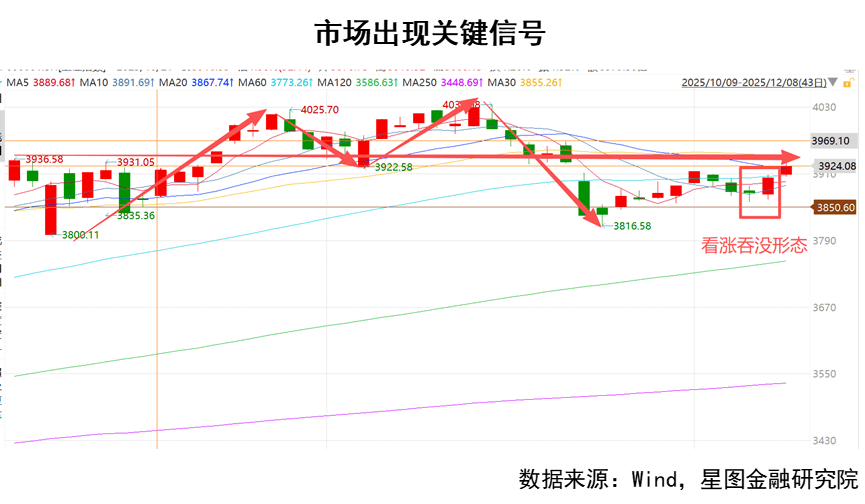
Group 1 - The non-bank financial sector has received favorable policies, contributing to a significant market rebound. The Hong Kong Monetary Authority announced a reduction in risk factors for insurance companies, indicating a strategic focus on encouraging insurance capital to enter the market. Additionally, the chairman of the China Securities Association emphasized the importance of differentiated regulation and support for high-quality institutions, which has raised expectations for improved profitability among leading securities firms [1] - On Monday, the stock markets experienced a volatile rebound with a noticeable increase in trading volume. The Shanghai Composite Index opened higher and continued to rebound, filling the gap left on November 21, while the Shenzhen Component Index showed stronger performance, closing above all moving averages. The total trading volume for both markets was around 2 trillion yuan, significantly higher than the previous Friday. The main market focus was on the TMT and military industries, with technology stocks and small-cap stocks performing particularly well [1] Group 2 - The Shanghai Composite Index is currently in a process of rebound after a rapid adjustment. Following a quick decline in late November, the index found support above the low point from early October and has gradually stabilized and rebounded. As of Monday, the downward gap from November 21 has been successfully filled, and future attention should be paid to changes in fundamental expectations [2]

中央重磅定调,A股放量暴涨,释放了一个重要信号!
Sou Hu Cai Jing· 2025-12-09 02:02
今日,上证指数涨0.54%,深证成指涨1.39%,创业板指涨2.6%,北证50涨1.27%。全市场成交额2.05万亿元,较上日成交 额放量3126亿元,时隔16个交易日再度站上2万亿元大关。 板块题材上,市场结构性分化显著,科技一枝独秀,AI硬件概念王者归来,光模块、光电路交换、光芯片、光通信、玻璃 纤维、高速铜连接、两岸融合等板块涨幅靠前,市场人气明显聚集,而随着市场风险偏好持续回升,资金从避险板块中流 出,此前表现较强的央企煤炭、煤炭开采、磷化工、汽车整车、化学原料及电力等板块跌幅居前。申万一级行业上,通 信、综合、电子、非银金融、计算机等行业领涨,主要聚焦于科技(TMT)板块;而煤炭、石油石化、食品饮料、公用事 业、钢铁等行业表现疲软,主要集中在消费与周期板块。 板块层面,关注AI硬件等科技方向,近期迎来产业利好催化,调整后性价比显著。自9月以来,AI硬件等科技方向持续震 荡调整,主要是因为AI泡沫论等声音放大,英伟达走势疲弱对A股形成不利映射。不过,虽然英伟达尚未复现当初的强 势,但谷歌作为AI一体化龙头重新接棒,展现出AI行情更多是切换而非是结束。与此同时,被称为"中国版英伟达"的摩尔 线程于上周五 ...
年内139家公司实施定增,合计募资8536.87亿元
Zheng Quan Shi Bao Wang· 2025-12-09 01:35
Core Insights - A total of 139 companies have implemented private placements this year, raising a total of 853.69 billion yuan [1] - The companies involved span across 24 industries, with significant participation from the electronics, power equipment, and basic chemicals sectors [1] Fundraising Overview - The total number of shares issued through private placements is 1,075.81 million [1] - The distribution of fundraising amounts by market includes: - Shenzhen Main Board: 29 companies raised 49.77 billion yuan - Shanghai Main Board: 56 companies raised 712.55 billion yuan - ChiNext: 26 companies raised 36.72 billion yuan - Sci-Tech Innovation Board: 28 companies raised 54.64 billion yuan [1] Industry Participation - The industries with the highest number of companies conducting private placements include: - Electronics: 22 companies - Power Equipment: 16 companies - Basic Chemicals: 15 companies [1] - The industries with the highest fundraising amounts are: - Banking: 520 billion yuan - Non-bank Financials: 56.68 billion yuan - Electronics: 55.87 billion yuan [1] Fundraising Amount Distribution - Companies that raised over 10 billion yuan include 10 companies, while 13 companies raised between 5 billion and 10 billion yuan [1] - A total of 69 companies raised less than 1 billion yuan, with 44 companies raising less than 500 million yuan [1] Top Fundraising Companies - The top three companies by fundraising amount are: - Bank of China: 165 billion yuan - Postal Savings Bank: 130 billion yuan - Bank of Communications: 120 billion yuan [2] - Other notable companies include: - China Construction Bank: 105 billion yuan - Guolian Minsheng: 31.49 billion yuan [2] Premium and Discount Analysis - There are 137 records where the latest closing price exceeds the placement price, with the highest premiums recorded by: - AVIC Fei: 842.52% - *ST Songfa: 670.67% - Dongshan Precision: 574.66% [2][3] - Conversely, 15 records show discounts, with the largest discounts from: - Shen High Speed: -27.74% - Aibo Medical: -22.35% - AVIC Heavy Machinery: -18.95% [4]




资金面“三箭齐发”,市场冲高整固
Sou Hu Cai Jing· 2025-12-08 23:33
Market Overview - The market experienced a rebound on Monday, with the Shanghai Composite Index closing at 3924 points, up 0.54%, and the ChiNext Index rising by 2.6% [1] - The total market turnover was approximately 2.05 trillion, showing an increase compared to the previous period [1] Key Focus Areas - The market's rise was primarily driven by gains in non-bank financials and technology stocks, supported by insurance funds adjusting risk factors to release more investable capital [2] - The Politburo meeting emphasized the continuation of a more proactive fiscal policy and moderately loose monetary policy, indicating a favorable policy environment [2] - Despite the A-share market's increase, the Hang Seng Index fell by 1.2%, suggesting weak foreign capital inflow and limited signs of savings migration [2] Technical Analysis - The Shanghai Composite Index filled the gap from November 21 and closed slightly above the 20-day moving average, indicating that the technical rebound target has been achieved [2] - Future movements may require consolidation rather than a sustained upward trend, with attention on the potential for a "hawkish rate cut" from the Federal Reserve [2] External Market Conditions - Overnight, U.S. stock markets saw slight declines, with the Dow Jones Industrial Average down 0.45% and the Nasdaq down 0.14% [3] - The 10-year U.S. Treasury yield rose to approximately 4.16%, indicating a shift in bond market sentiment [3] - The A50 index and Hang Seng futures showed minor declines, reflecting a stable external environment [3] Investment Strategy - The strategy leans towards a rotational approach, focusing on sectors such as industrial machinery, satellite internet, and semiconductor equipment materials, which are seen as key areas for investment [3] - Continuous monitoring of external policy changes, including potential rate cuts by the Federal Reserve and interest rate hikes by the Bank of Japan, is essential for guiding investment decisions [3]