高端制造

Search documents
镇域招商“里水样本”:五大模式撬动增资扩产
2 1 Shi Ji Jing Ji Bao Dao· 2025-07-18 14:06
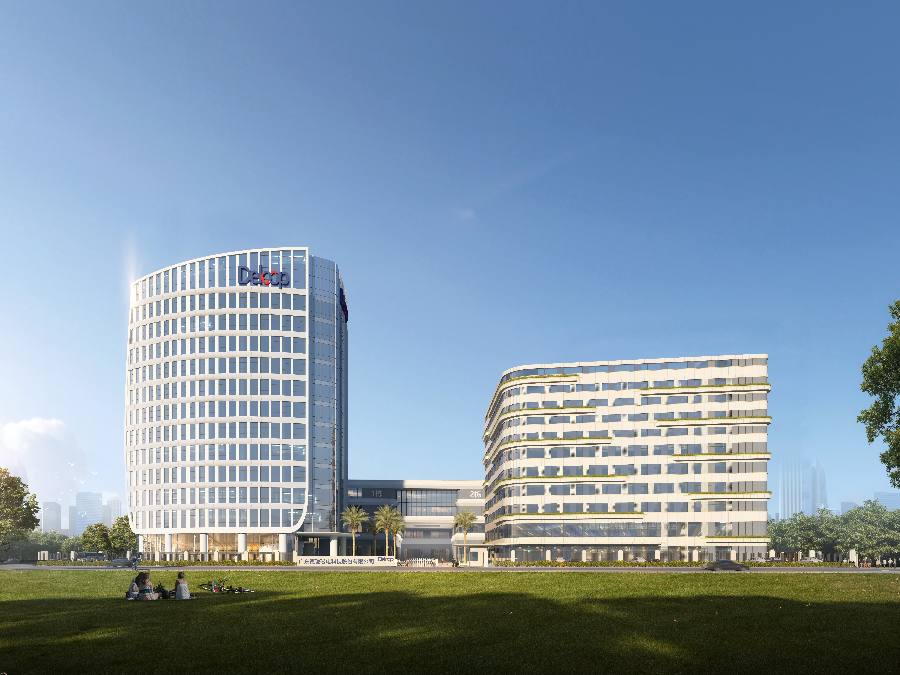
Core Viewpoint - The article highlights the rapid development of local enterprises in Lishui Town, Foshan, through capital expansion and project investments, showcasing a model for high-quality economic growth in town-level economies [2][3][4]. Group 1: Investment Projects - The new headquarters project of Paiya Doors and Windows, covering 150,000 square meters, marks a significant step in the company's "second entrepreneurship" in Lishui [2]. - Delong Magnetic Electric's listing headquarters and high-end manufacturing base, with a total investment of approximately 1 billion yuan, is a key part of the company's strategic upgrade [2]. - Over the past three years, Lishui has seen 30 industrial projects with a total investment of 33.1 billion yuan, with over 67% allocated to strategic emerging industries [4][7]. Group 2: Economic Development Models - Lishui has developed five new investment attraction models: "Headquarters Economy," "South Business Return," "Innovation Incubation," "Leading Enterprises Investment," and "Thematic Investment," which collectively enhance the local industrial ecosystem [4][6]. - The "Headquarters Economy" model aims to attract companies to establish their headquarters in Lishui, enhancing resource integration and competitiveness [4]. - The "South Business Return" model encourages local entrepreneurs who have moved away to return and invest in Lishui, as exemplified by the return of the chairman of Haokang New Materials [6]. Group 3: Industrial Structure and Future Path - Lishui's industrial output value has exceeded 100 billion yuan for eight consecutive years, indicating a robust industrial foundation [4]. - The town is focusing on upgrading its industrial structure towards high-end, intelligent, and green development, with a particular emphasis on strategic emerging industries such as new materials and high-end equipment manufacturing [11]. - Future plans include the supply of 716 acres of quality land in 2024 to support local enterprises' capital expansion, with an expected investment increase of 139% year-on-year [9][10].

广东上半年进口创新高,领先全国增速12.2个百分点
2 1 Shi Ji Jing Ji Bao Dao· 2025-07-18 08:34
Core Insights - Guangdong's import and export trade reached 4.55 trillion yuan in the first half of 2023, marking a 4% year-on-year increase, which is 1.1 percentage points higher than the national average [1] - Imports totaled 1.66 trillion yuan, with a significant year-on-year growth of 9.5%, setting a historical high for the same period [1] Group 1: Import Growth Drivers - The increase in imports is attributed to rising demand and China's ongoing efforts to expand openness, providing more development opportunities globally [2] - Guangdong's industrial production has shown stable growth, leading to a 19.3% increase in the import of electromechanical products, which accounted for over 70% of total imports [2] - Key components such as central processing units, aircraft parts, and integrated circuits saw import growth rates of 322.5%, 27.5%, and 14.3% respectively [2] Group 2: High-End Manufacturing Demand - The steady advancement of industrial upgrades has led to a noticeable increase in demand for high-end manufacturing equipment [2] - Imports of aerospace equipment and marine engineering equipment grew by 63.8% and 31.5% respectively, while semiconductor manufacturing equipment, machine tools, and light industrial machinery saw increases of 47%, 14.6%, and 12.7% [2] Group 3: Consumer Goods Import Surge - Domestic demand has been further released, accelerating the import of consumer goods, which rose by 3.3% to 134.92 billion yuan [3] - Notable increases in imports include passenger cars (48.1%), edible oil (39.5%), aquatic products (33.4%), dairy products (20.9%), and beauty products (8.9%) [3] Group 4: Trade Partnerships and Initiatives - Guangdong's imports from Taiwan, ASEAN, South Korea, Japan, and the EU increased by 27.4%, 6.3%, 14.1%, 12.4%, and 13.1% respectively [3] - Imports from Belt and Road Initiative countries reached 643.78 billion yuan, growing by 5.7% and accounting for 38.8% of total imports [3] - The implementation of zero-tariff treatment for all products from least developed countries has led to a 16.1% increase in imports from these nations [3] Group 5: Policy Measures to Enhance Imports - Guangdong customs have implemented various measures to promote import development, including support for the food processing industry and expanding inspection ranges for bulk commodities [4] - The application of cross-border fast customs clearance reforms aims to facilitate the import of key intermediate goods and enhance the cross-border e-commerce supply chain [4] - The ongoing construction of a unified national market is expected to further enhance the flow of goods and resources, indicating significant growth potential for imports in Guangdong [4]
参加《问政山东》直播后,济宁市市长连夜召开整改会议
Guan Cha Zhe Wang· 2025-07-18 07:39
Group 1: Industry Challenges - Jining's high-end manufacturing enterprises face development bottlenecks due to a weak local industrial chain, relying heavily on external collaboration for core components, leading to high costs and long cycles [3][4] - The local government acknowledges that if the local industrial chain's support reaches over 60%, companies could save over 2 million yuan annually [3] - The Jining Industrial and Information Technology Bureau plans to address gaps in the industrial chain to enhance local manufacturing capabilities [3] Group 2: Agricultural Sector Issues - Jining, a major producer of毛木耳 (hairy wood ear mushrooms), lacks deep processing enterprises, resulting in low added value and limited farmer income [4] - The local agricultural bureau recognizes the need for better planning and support for deep processing but admits that current efforts have not yielded significant results [4][5] Group 3: Transportation and Compliance - The Jining Transportation Bureau is addressing ongoing issues with illegal driving schools that do not comply with national standards, including the use of unlicensed instructors [4] - The bureau plans to enhance offline inspections, online monitoring, and the identification of illegal activities to ensure compliance [4] Group 4: Public Services and Community Feedback - Concerns have been raised about the early closing times of children's parks, which has led to public dissatisfaction [7] - The Jining City Investment Holding Group is working on a plan to extend the opening hours of children's parks during summer to better meet community needs [7]

天津市滨海新区聚集海外人才超1.9万名
Zhong Guo Xin Wen Wang· 2025-07-17 16:06
Group 1 - The core focus of the news is on Tianjin Binhai New Area's strategy to drive high-quality development through talent innovation, highlighting the importance of talent as a core engine for growth [1][2] - Binhai New Area has attracted a total of 1,604 leading talents and over 19,000 overseas talents, with the total talent pool exceeding 931,000 [1] - The "Zhihui Binhai" talent festival has been upgraded to include a comprehensive talent introduction model, covering over 30 countries and nearly 100 cities, attracting more than 13,000 domestic and international talents to participate [1] Group 2 - The area has pioneered the "enterprise self-evaluation of talent" model, delegating talent recognition rights to over 4,000 innovative entities, allowing companies like Feiteng and Kirin to identify key talents based on market contributions rather than traditional academic metrics [2] - Binhai New Area is collaborating with local universities to promote the transformation of patent results in high-end manufacturing and biomedicine, creating a virtuous cycle of innovation and application [2] - Future plans include replicating policies from Beijing's Zhongguancun to establish a regional center for the industrialization of scientific and technological achievements, enhancing talent cooperation with Beijing and building a collaborative talent ecosystem [2]
北京经济“半年报”出炉,四个特点需要关注
Xin Jing Bao· 2025-07-17 12:59
Economic Overview - Beijing's GDP reached 25,029.2 billion yuan in the first half of the year, with a year-on-year growth of 5.5%, outpacing the national average by 0.2 percentage points, indicating a stable and improving economic trend [1] Key Growth Sectors - Nearly 90% of Beijing's economic growth in the first half came from the information services, financial, and industrial sectors [2] - The industrial sector saw a significant increase, with the added value of large-scale industries growing by 7% year-on-year, an improvement of 0.2 percentage points from the first quarter [2] - Notable contributions in the industrial sector came from electronics and automotive industries, with high-end manufacturing showing strong performance, particularly in lithium-ion batteries, new energy vehicles, medical instruments, and integrated circuits [2] Investment Trends - Fixed asset investment in Beijing grew by 14.1% year-on-year, maintaining a double-digit growth rate, while manufacturing investment increased by 8.9% [2] - Real estate development investment, however, declined by 7.5% [2] Consumer Behavior - Social retail sales in Beijing totaled 6,734.2 billion yuan, reflecting a decrease of 3.8% [3] - Service consumption remained robust, accounting for nearly 60% of household spending, with new consumption trends emerging in wellness and self-care [3] Emerging Industries - Strategic emerging industries and high-tech manufacturing in Beijing saw added value growth of 16.8% and 9.9%, respectively, with artificial intelligence, new energy vehicles, and robotics being standout sectors [4] - New energy vehicle manufacturing value increased by 1.1 times, contributing nearly 50% to the growth of large-scale industries, with production exceeding 260,000 units, a 1.5 times increase [4] Employment and Income - The urban unemployment rate in Beijing averaged 4.1%, with a stable employment situation overall [5] - Per capita disposable income for residents grew by 4.8% year-on-year, with wage income increasing by 5.3%, contributing 71.3% to the overall income growth [5] Price Trends - Consumer prices in Beijing saw a slight decline of 0.3% year-on-year, influenced by previous price changes [6] - Service prices experienced a minor increase of 0.1%, with specific services like maternal care and elder care seeing price rises due to increased labor costs [6] Future Economic Outlook - The economic performance in the first half sets a solid foundation for the second half of the year, with expectations for continued stable growth supported by macroeconomic policies and the resilience of Beijing's economy [7] - Challenges such as insufficient domestic demand and pressures on certain industries are being addressed through targeted policy measures to stimulate consumption and support innovation [7]
高盛西湖智谷园区生产性服务业出门就有客户 制造业上下游就在上下楼
Sou Hu Cai Jing· 2025-07-17 11:35
Group 1 - The "zero rent" park officially launched to foster enterprise development, focusing on industries such as electronic information, high-end manufacturing, new materials, and new energy [4][9] - The park offers a zero-rent policy targeting emerging industries like software information, artificial intelligence, and digital economy, providing extended rent-free periods for qualifying companies [4][6] - As of mid-2025, the park has signed 83 companies, with 51 in operation, including 10 specialized and innovative enterprises and 19 national high-tech enterprises [9][11] Group 2 - The West Lake Zhigu project integrates high-end manufacturing, headquarters office, pilot research and development, and industrial support services, providing flexible space for different stages of enterprise growth [7] - The park aims to create a collaborative development zone for productive services and manufacturing, enhancing the value and ecological benefits of the real economy [12][14] - Strategic partnerships with research institutes aim to support technological innovation and resource connectivity for manufacturing development [16] Group 3 - The park facilitates direct communication and technology sharing between productive service and manufacturing enterprises through industry matchmaking events [17][19] - The productive service sector in Huizhou is projected to grow significantly, with 918 enterprises expected to generate revenue of 926.6 billion yuan in 2024, marking a 41.6% share of the city's total [21]
总量仍稳定,结构需平衡
Haitong Securities International· 2025-07-16 11:14
Economic Overview - In Q2 2025, China's GDP grew by 5.3% year-on-year, exceeding the annual target of 5%[6] - The GDP growth rate for Q2 was 5.2%, with a seasonally adjusted annualized rate of 4.5%, showing slight stability despite external pressures[6] Production Insights - The industrial added value for the first half of the year increased by 6.4%, with June's growth at 6.8%, up from 5.8% in May[13] - The capacity utilization rate for the industrial sector was 74.0%, slightly down from 74.1% in Q1, indicating ongoing structural issues in certain industries[8] Consumption Trends - Retail sales of consumer goods rose by 5.0% year-on-year in the first half, but June saw a decline to 4.8%, marking a drop of 1.6 percentage points from May[25] - Service consumption maintained a high growth rate, with a 6.0% increase in June, although it showed signs of marginal weakening compared to May[20] Investment Dynamics - Fixed asset investment growth slowed to 2.8% year-on-year in Q2, with June's growth at just 0.4%, the first negative month-on-month change of the year[34] - Real estate investment faced significant challenges, with sales area and sales revenue down by 5.5% and 10.8% year-on-year in June, respectively[39] Risks and Challenges - The overall economic environment remains unbalanced, with low inflation and structural issues persisting, necessitating policy support to boost demand[10] - Trade uncertainties and potential domestic demand declines pose significant risks to economic stability[45]
国泰海通|宏观:总量仍稳定,结构需平衡——2025年二季度经济数据点评
国泰海通证券研究· 2025-07-15 14:10
Group 1 - The core viewpoint of the article indicates that China's economy remains stable in the second quarter, with manufacturing showing significant resilience and competitiveness, although structural issues such as supply-demand relationships and price-volume dynamics need to be balanced [1] - Despite external disturbances, China's economy has shown resilience in the second quarter, with growth rates exceeding annual targets; however, the demand side requires policy support [1] - The production side maintains a high growth rate, with strong performance in high-end manufacturing and export chains, while the real estate chain is relatively weak [1] Group 2 - On the demand side, there has been a slight decline in consumption and investment growth, with significant drops in June for restaurant consumption, infrastructure investment, and real estate sales [1] - Overall, issues such as supply-demand imbalance and low inflation persist, and it is expected that proactive policies will be implemented [1] - Future measures should focus on optimizing real estate policies, increasing infrastructure investment, and boosting consumer spending to expand domestic demand and promote a virtuous cycle of supply and demand [1] Group 3 - Additionally, there is a need to address overcapacity in the production sector through "anti-involution" strategies, reducing ineffective supply, and optimizing the economic structure [1]

国泰海通|策略:决策层调研与政策风向标——政策与地缘研究7月第1期
国泰海通证券研究· 2025-07-15 14:10
Group 1: Core Insights - The article emphasizes the focus of China's decision-making on technology, consumption, employment, foreign trade, and platform economy since the April Politburo meeting, aiming for a multi-dimensional collaboration to strengthen economic recovery [1] - Key areas of investigation include high-end manufacturing technologies, consumer policies, employment stability for specific groups, foreign trade orders, and digital consumption regulation [1] Group 2: Domestic Economic and Industrial Policies - The Central Financial Committee's meeting on July 1 highlighted the importance of building a unified national market and regulating low-price competition among enterprises [2] - Measures to support the high-quality development of innovative drugs were announced by the National Healthcare Security Administration and the National Health Commission [2] - The National Energy Administration held a mid-term meeting on wind and solar energy resource surveys on July 2 [2] - The State Council issued a notice on July 9 to further enhance employment support policies [2] Group 3: Capital Market Policies - The implementation of the new information disclosure management measures for listed companies began on July 1, clarifying industry disclosure requirements [3] - The China Securities Regulatory Commission approved the first batch of 10 technology innovation bond ETFs to guide funds into the technology sector [3] - The People's Bank of China released a draft for public consultation regarding the rules for the cross-border payment system on July 4 [3] Group 4: Global Geopolitical and Economic Tracking - The U.S. Congress passed the "Big and Beautiful" Act on July 3, indicating significant legislative changes [4] - OPEC+ agreed to increase production by 548,000 barrels per day starting in August [4] - The U.S. unemployment rate decreased to 4.1% with 147,000 new jobs added in June, reflecting a slight improvement in the labor market [4]

中国经济半年报释放了什么信号
和讯· 2025-07-15 10:16
Economic Growth and Indicators - China's GDP growth rate for the first half of 2025 is reported at 5.3%, with industrial added value increasing by 6.4% and fixed asset investment rising by 2.8% [1] - Social retail sales grew by 5.0% year-on-year, with a notable increase in June [1] - The total social financing scale reached 22.83 trillion yuan, an increase of 4.74 trillion yuan compared to the previous year [1] Urbanization and Structural Changes - The Central Urban Work Conference emphasized the need for integrated planning in population, industry, and urban development, transitioning from rapid growth to stable development [2] - The focus is on improving public services and developing a new model for real estate, particularly in urban villages and dilapidated housing [2] Consumption and Investment Dynamics - In the first half of the year, final consumption expenditure contributed 52% to economic growth, indicating that domestic demand, especially consumption, is the main driver of GDP growth [3] - Investment growth has been volatile, with fixed asset investment growth slowing to 2.8%, largely due to a significant decline in real estate investment [5][6] - Private investment decreased by 0.6%, but other sectors excluding real estate saw a 5.1% increase [6] Price Trends and Inflation - The Consumer Price Index (CPI) showed a slight increase of 0.1% in June, ending a four-month decline, while the Producer Price Index (PPI) fell by 3.6% [7][8] - The CPI's marginal recovery is attributed to stable industrial consumer goods prices and a relatively stable service price environment [9] Industry Challenges and Opportunities - Traditional industries are facing downward pressure on prices due to overcapacity and low-price competition, particularly in sectors like cement and steel [10][11] - The "anti-involution" strategy aims to address structural issues in supply and demand, promoting orderly exit of outdated capacities [11] - New growth drivers are emerging, but their impact is currently limited, necessitating a transition period for traditional industries [12]