证券业

Search documents
财政部在香港成功发行美元主权债券 认购倍数创新高
Zheng Quan Ri Bao· 2025-11-07 16:04
Core Viewpoint - The issuance of $4 billion sovereign bonds by the Ministry of Finance of the People's Republic of China in Hong Kong was met with strong market demand, reflecting high international investor confidence in China's sovereign credit and long-term economic stability [1][2]. Group 1: Bond Issuance Details - The issuance included $2 billion in 3-year bonds at an interest rate of 3.646% and $2 billion in 5-year bonds at an interest rate of 3.787% [1]. - The total subscription amount reached $118.2 billion, which is 30 times the issuance amount, marking the highest subscription level in previous dollar sovereign bond issuances [1]. - The 5-year bonds had an impressive subscription multiple of 33 times [1]. Group 2: Market Impact and Investor Confidence - The diverse range of investors included 53% from Asia, 25% from Europe, 16% from the Middle East, and 6% from the United States, indicating broad geographical interest [2]. - The types of investors were varied, with sovereign entities, banks and insurance companies, fund management, and dealers making up 42%, 24%, 32%, and 2% respectively [2]. - The high subscription rates demonstrate China's strong appeal in the international financial market, transcending regional boundaries [2]. Group 3: Strategic Importance - The issuance of these bonds helps to optimize China's debt structure and enhances the diversity of its foreign debt currency, making it more rational [3]. - Continuous issuance of dollar sovereign bonds and positive market responses increase China's influence in international financial markets and provide it with greater voice in financial rule-making [3]. - Since 2009, the Ministry of Finance has regularly issued sovereign bonds abroad, including RMB, dollar, and euro-denominated bonds, improving the issuance mechanism [2].

每日机构分析:11月7日
Sou Hu Cai Jing· 2025-11-07 12:12
Group 1: US Treasury and Labor Market - The US Treasury's financing strategy is expected to become more flexible and proactive, considering market structure factors, which may not lead to a significant rise in yields from refinancing announcements [1] - The US labor market showed weakness with over 150,000 layoffs in October, the largest since 2003, leading to market overreactions regarding labor market signals [2] - Analysts suggest that if expectations for significant Fed rate cuts persist, the 10-year US Treasury yield could drop to 3.8%-3.9% in the next three to six months [2] Group 2: UK and Eurozone Monetary Policy - Nomura Securities has adjusted its forecast for the Bank of England's rate cuts, now expecting the current cycle to end in April next year, with a potential cut in December [2] - Societe Generale's analysts believe that for German 10-year bond yields to exceed 3%, the European Central Bank would need to raise rates further and accumulate term premiums [3] Group 3: Economic Forecasts - Barclays raised its GDP growth forecast for South Korea in 2026 from 1.7% to 2.1%, attributing this to a recovery in the semiconductor industry and increased foreign investment [3] - The current account surplus forecast for South Korea was also increased from $8.4 billion to $11 billion for 2026 [3]
央行发布《中国普惠金融指标分析报告(2024-2025年)》
智通财经网· 2025-11-07 11:28
Core Insights - The People's Bank of China released the "Analysis Report on China's Inclusive Finance Indicators (2024-2025)", highlighting the ongoing positive development of inclusive finance in 2024, with new characteristics emerging [1][4] Group 1: Financial Support and Development - Financial support for rural revitalization is becoming more robust, with financial resources accelerating towards agricultural sectors, and the balance of operating and consumption loans for farmers continuing to grow [4] - Credit support for private and small micro enterprises is increasing, with the scale of loans to the private economy continuing to rise, and inclusive small micro loans maintaining growth in volume, reduction in price, and improvement in quality [4] - The balance of loans for technology-based small and medium enterprises is growing rapidly, with an increasing loan approval rate [4] Group 2: Financial Services and Digital Currency - The number of bank settlement accounts continues to increase, and the efficiency of account services is improving [4] - The pilot application of digital RMB has expanded to 26 regions across 17 provinces and cities, with a steady increase in the scale of digital payments [4] Group 3: Financial Mechanisms and Market Development - The financing support mechanism is being continuously improved, with the launch of a national credit information sharing platform for small and micro enterprises, and an increasing coverage rate of the financial credit information database [4] - The inclusiveness and accessibility of multi-level capital markets are enhancing, with ongoing pilot programs for inclusive finance on the Beijing Stock Exchange and New Third Board [4] Group 4: Insurance and Risk Management - The supply system for inclusive insurance products is further improving, with ongoing optimization of insurance policies for key grain crops, and increases in both insurance density and depth [4]
央行:中国普惠金融指标分析报告(2024-2025年)
Xin Lang Cai Jing· 2025-11-07 11:18
Core Insights - In 2024, inclusive finance in China continues to show strong development momentum while presenting new characteristics [1] Group 1: Financial Support for Rural Revitalization - Financial resources are increasingly directed towards rural revitalization, with growth in agricultural operating loans and consumer loans, and a steady expansion in loan coverage for impoverished populations [1] Group 2: Support for Private and Small Enterprises - Continuous increase in credit support for private and small enterprises, with a growing scale of loans to the private economy and a favorable trend in inclusive small and micro loans, characterized by volume growth, price reduction, and quality improvement [1] - Rapid growth in loans to technology-based small and medium-sized enterprises, with an increasing loan approval rate [1] Group 3: Optimized Loan Policies for Key Groups - Further optimization of entrepreneurship guarantee loans and student loan policies for key groups, with improved accessibility of banking services for the elderly and disabled [1] - A richer product system to meet the financial service needs in the livelihood sector [1] Group 4: Increase in Bank Account Services - Continuous increase in the number of bank settlement accounts and improved service efficiency [1] - Expansion of digital RMB application trials to 26 regions across 17 provinces (municipalities), with a steady increase in digital payment scale [1] Group 5: Enhanced Financing Mechanisms - Continuous improvement of financing support mechanisms, including the launch of a national credit information sharing platform for small and micro enterprises [1] - Increasing coverage of financial credit information databases for enterprises and organizations, with rapid growth in local credit platform services [1] - Expansion of government financing guarantee business scale [1] Group 6: Inclusive Capital Markets - Enhanced inclusiveness and accessibility of multi-level capital markets, with in-depth promotion of inclusive finance pilots on the Beijing Stock Exchange and New Third Board [1] - Increasing variety of agricultural product futures and options, with a sustained increase in "insurance + futures" projects to manage agricultural risks [1] - Stable issuance and existence scale of rural revitalization bonds and asset-backed securities [1] Group 7: Improvement in Inclusive Insurance Products - Further improvement in the supply system of inclusive insurance products, with ongoing optimization of key grain crop insurance policies [1] - Increase in both insurance density and depth, along with growth in the scale of agricultural insurance risk coverage and claims payments [1]
资讯早班车-2025-11-07-20251107
Bao Cheng Qi Huo· 2025-11-07 03:03
1. Macroeconomic Data Overview - GDP growth rate in Q3 2025 was 4.8% year - on - year, down from 5.2% in the previous quarter but up from 4.6% in the same period last year [1] - Manufacturing PMI in October 2025 was 49%, down from 49.8% in the previous month and 50.1% in the same period last year [1] - Non - manufacturing PMI in October 2025 was 50.1%, up from 50% in the previous month but down from 50.2% in the same period last year [1] - In September 2025, the year - on - year growth rates of M0, M1, and M2 were 11.5%, 7.2%, and 8.4% respectively [1] - In September 2025, CPI was - 0.3% year - on - year, and PPI was - 2.3% year - on - year [1] - In September 2025, exports and imports increased by 8.3% and 7.4% year - on - year respectively [1] 2. Commodity Investment Reference 2.1 Comprehensive - China conducts license reviews on rare earths and related items in accordance with laws and regulations, aiming to ensure the security and stability of the global industrial and supply chains [2] - After the gold tax policy adjustment on November 1st, the Shenzhen Shuibei gold market has experienced "pricing chaos", with the gap between purchase and recycling prices widening significantly [2] - On November 6th, 32 domestic commodity varieties had positive basis, and 36 had negative basis [3] 2.2 Metals - On November 6th, international precious metal futures generally closed lower due to the Fed's stance on inflation and monetary policy [4] - Many institutions believe that a new cycle of resource commodities may have begun [5] - On November 6th, LME nickel cancelled warehouse receipts decreased by 7,218 tons, the largest decline since May [6] 2.3 Coal, Coke, Steel, and Minerals - Multiple provinces and cities have issued air pollution prevention and control action plans for the autumn and winter of 2025 - 2026, with some steel enterprises facing production restrictions [7] - The US has included copper in its 2025 list of critical minerals [7] - Indonesia has stopped approving applications for nickel ore processing plants producing certain intermediate products [7] 2.4 Energy and Chemicals - On November 6th, the main contract of US crude oil closed lower due to concerns about supply surplus and weak demand [8] - A new safety standard for chemical enterprises' flammable liquid atmospheric storage tank areas will be implemented on April 30, 2026 [8] - Saudi Aramco has lowered its crude oil selling prices to Asia for December [8] 2.5 Agricultural Products - Market regulatory authorities are soliciting public opinions on the "List of First - Time Non - Penalty for Administrative Violations in Market Supervision (II)" and the "List of Non - Penalty for Minor Administrative Violations in Market Supervision (II)" [10] - Malaysian enterprises will ensure the supply of raw materials for local sustainable aviation fuel plants [10] - Germany's grain corn production in 2025 is expected to decrease by 3.5% year - on - year [11] 3. Financial News Compilation 3.1 Open Market - On November 6th, the central bank conducted 928 billion yuan of 7 - day reverse repurchase operations, with a net withdrawal of 249.8 billion yuan [12] 3.2 Important News - China aims to achieve the goals of Hainan Free Trade Port construction, expanding institutional opening - up and promoting the cross - border flow of production factors [13] - The Dutch government is responsible for the escalation of the global supply chain crisis regarding the Anshi Semiconductor issue [13] - Most multinational enterprises are confident in the Chinese market, with an increasing proportion optimistic about China's economic growth in the next 3 - 5 years [14] - A polysilicon industry consolidation may be on the way, with a planned fund of about 70 billion yuan [15] - The "15th Five - Year Plan" proposes to improve the central bank system and the "dual - pillar" regulatory framework of monetary and macro - prudential policies [16] - The US employment situation is severe, increasing the expectation of a Fed rate cut in December [20] - The UK central bank maintained its interest rate at 4%, with increased internal divergence [20] 3.3 Bond Market Summary - A - share strength put pressure on the bond market, with bond yields generally rising and some bond prices falling [22] - Convertible bond indices showed mixed performance, with some bonds rising and others falling [23] - US and European bond yields generally declined [26] 3.4 Foreign Exchange Market - The on - shore RMB against the US dollar rose on November 6th, and the US dollar index fell [27] 3.5 Research Report Highlights - Huatai Securities warns of potential risks in overseas AI development, especially during the transition period [28] - CITIC Securities expects the real estate market to stabilize in 2026, and some enterprises may see the bottom of the profit cycle [28] - Shenwan Fixed Income believes that floating - rate bonds have advantages and the market may expand [29] - UBS Group analyzes the potential impact of a possible US Supreme Court ruling on Trump's tariff policy [29] 4. Stock Market News - A - shares rose unilaterally, with the Shanghai Composite Index returning to 4000 points, and the computing power hardware industry chain booming [32] - The Hong Kong Hang Seng Index and related indices rose, with some new stocks breaking their issue prices [32] - MSCI China Index added 26 stocks and removed 20 stocks in its November adjustment [32] - China Securities Index Company will release new indices on November 7th [33]
年均复合增速13.1% 天津绿色金融发展指数发布
Zhong Guo Xin Wen Wang· 2025-11-06 16:54
Core Insights - The Tianjin Green Finance Development Index has shown significant growth from 100.00 in 2020 to 163.60 in 2024, with a compound annual growth rate of 13.1%, indicating rapid development and potential in green finance in Tianjin [1][2] Group 1: Green Finance Development - The release of the green finance index marks a new phase of standardization and precision in Tianjin's green finance development [1] - Tianjin has established a green finance ecosystem characterized by "policy empowerment + standard guidance + product innovation" to support the "dual carbon" strategy and promote industrial upgrading [1][2] Group 2: Financial Standards and Innovations - Tianjin has introduced the first targeted financial standards for the chemical industry in the country and has been approved as a pilot city for steel industry transformation financial standards [2] - The city has launched the first information platform for standardized green leasing and has introduced various group standards for green financing and commercial factoring [2] Group 3: Financial Metrics - As of September this year, the balance of green loans in Tianjin reached 847.8 billion yuan, reflecting a 19% increase since the beginning of the year, significantly surpassing the average growth rate of other loans [2] - The local financial management bureau aims to enhance the quality and efficiency of green finance development by focusing on innovation, standard support, and collaborative efforts [2]
理财三季报解读:规模新高,委外续增
China Post Securities· 2025-11-06 11:16
Report Overview - The report is a fixed - income research report released on November 6, 2025, analyzing the Q3 2025 China Banking Wealth Management Market Quarterly Report [1] Report Industry Investment Rating - No industry investment rating is provided in the report Core Viewpoints - The total scale of wealth management products has reached a new high, with wealth management subsidiaries accounting for over 90% for the first time. The investment in asset management products has increased, while the investment in credit bonds has decreased [3] Summary by Directory 1. Overall Situation: Continued Record - High in Outstanding Scale, Wealth Management Subsidiaries Account for Over 90% for the First Time - Since June 2023, the outstanding scale of bank wealth management products has been on a continuous upward trend. It exceeded the historical high in June 2022 at the end of 2024, surpassed 30 trillion in June 2025, and reached a new high in September 2025. As of September 2025, the outstanding scale of wealth management subsidiary products reached 29.28 trillion yuan, accounting for 91.13% of all wealth management products [3][12][13] - By operation mode, open - ended products are still the main type, with a total scale of 25.89 trillion yuan, accounting for 80.58% of the total scale of wealth management products [16] 2. Wealth Management Asset Allocation: Increased Outsourcing Investment, Decreased Credit Bond Investment 2.1. Large - Scale Asset Allocation: Continued Increase in Dependence on Outsourcing Investment, Continued Decrease in Direct Investment in Fixed - Income Assets - Before penetration, the dependence on outsourcing investment in bank wealth management continued to increase, and the allocation of bank deposits, settlement reserves, and repurchase of financial assets in the proprietary portfolio decreased. As of Q2 2025, fixed - income assets and asset management products were still the main allocation directions of wealth management funds, with a combined proportion of about 83%. The investment in fixed - income assets decreased by about 50 billion yuan compared to the end of 2024, and the proportion decreased by about 2 percentage points. The scale of investment in asset management products increased by about 80 billion yuan compared to the end of 2024, and the proportion increased by 2.66 percentage points [17][18] - After penetration, the total amount and proportion of bond investment continued to decline, while the total amount and proportion of cash and bank deposits continued to rise. As of September 2025, the bond allocation proportion dropped to 40% for the first time, and the cash and bank deposit allocation proportion was close to 30% [4] 2.2. Bond Types in Wealth Management Investment: Continued Decrease in Credit Bond Holdings, Slight Increase in Interest - Rate Bonds - As of Q2 2025, in the top ten holdings of wealth management, the total amount of credit bonds was 1.5 trillion yuan, an increase of 44.6 billion yuan compared to the end of 2024, but the proportion decreased by 1.41 percentage points. The scale of interest - rate bonds was 348.1 billion yuan, an increase of 94.8 billion yuan compared to the end of 2024, and the proportion increased by 2.93 percentage points. The scale of inter - bank certificates of deposit was about 800 billion yuan, a slight decrease of 16.7 billion yuan compared to the end of 2024, and the proportion decreased by 2.3 percentage points [23] - In recent years, wealth management has reduced its holdings of commercial bank bonds, private placement bonds, and corporate bonds. Among them, commercial bank bonds are the largest holding in credit bonds, and private placement bonds are the second - largest holding [27] 2.3. Holding - Period Situation: A Significant Decrease in the Proportion of Short - Term Bonds, Private Placement Bonds, Medium - Term Notes, and Commercial Bank Bonds are the Main Long - Term Investment Targets - The proportion of wealth management products with a term of less than 6 months continued to increase. The proportion of products with a term of less than 6 months increased from 67% to 74%, while the proportion of products with a term of more than 6 months decreased from 32% at the end of 2022 to 26% at the end of Q2 2025 [4][5][28] - The proportion of short - term bonds decreased significantly, while the proportion of long - term bonds continued to increase. Private placement bonds, medium - term notes, and commercial bank bonds are the preferred long - term investment targets for wealth management, and long - term varieties are mainly commercial bank bonds [29][30]
对话“泡沫先生”朱宁:拥抱非线性时代的正确姿势
经济观察报· 2025-11-06 09:21
Core Insights - The article emphasizes the shift from being a "critic" to a "practical manager," focusing on balancing multiple objectives in a complex economic environment [4][2] - Zhu Ning highlights the importance of conveying correct expectations as a crucial public good in the current economic landscape [4] Economic Paradigm Shift - Zhu Ning, known for predicting the Chinese real estate bubble, has developed a new understanding of bubbles and debt in the context of significant economic changes [3] - The establishment of the "Debt Management Department" by the Ministry of Finance aligns with Zhu Ning's advocacy for breaking rigid repayment structures and allowing market risk pricing [3] Global Financial Risks - Zhu Ning identifies three overlapping risks in the global financial system: debt leverage traps, the rigidity of asset bubbles, and non-linear shocks from technological finance [4][10] - He warns that the AI era may lead to a degradation of human judgment and create regulatory blind spots, potentially causing traditional risk management systems to fail [4] U.S. Economic Uncertainty - The current tight funding situation in the U.S. is attributed to a combination of policy expectations, fiscal constraints, and asset valuations, which increases volatility in global risk assets [6] - Zhu Ning points out that the unpredictability of U.S. policies, inflation paths, and the fragility of U.S. stock valuations are significant sources of uncertainty for global economic growth [7][8][9] China's Economic Outlook - Zhu Ning expresses a relatively optimistic view of China's economy, noting improvements in market expectations despite ongoing concerns about deflation [13] - He emphasizes the need for structural responses rather than cyclical judgments, highlighting the importance of resource allocation towards "new productive forces" [13] Policy Recommendations - Zhu Ning suggests a balanced approach to managing bubbles, advocating for controlling their growth, avoiding proactive destruction, and ensuring rapid assistance if they burst [25] - He emphasizes the need for fiscal policies that directly stimulate consumption and rebuild public confidence [25] Non-linear Dynamics in Finance - Zhu Ning discusses the challenges of understanding the current non-linear economic landscape, where traditional predictive models may no longer apply [27] - He warns of the dangers of over-reliance on AI, which can lead to a degradation of independent judgment and the spread of misleading information [29] Investment Strategies - Zhu Ning advises extreme diversification in investment portfolios and a thorough understanding of risk, cautioning against traditional investment behaviors [32] - He highlights the potential for significant volatility in U.S. stocks, particularly due to high valuations and structural weaknesses exacerbated by AI-related bubbles [33]


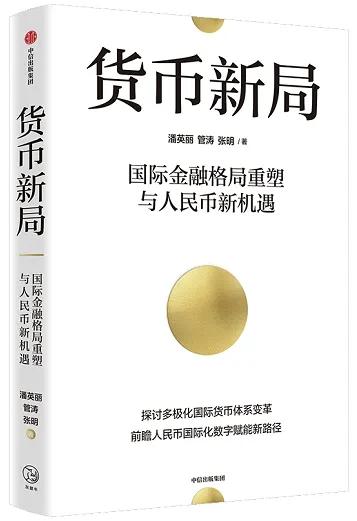
管涛:美元的困境与人民币的机遇
Cai Jing Wang· 2025-11-06 09:16
Group 1: Federal Reserve Rate Cut - The Federal Reserve's recent rate cut of 25 basis points is seen as a "risk management" move rather than a direct response to external pressures, with the Fed emphasizing its dual mandate of price stability and maximum employment [2][3] - The internal unity of the Federal Reserve is highlighted by the fact that only one member voted against the rate cut, indicating a commitment to established policy paths despite external pressures from political figures [3] - Long-term challenges to the dollar's credibility are identified, including potential conflicts between inflation control and employment maximization, as well as threats to the Fed's independence due to political interference [4][5] Group 2: Global Monetary Order Transformation - The current global monetary order is undergoing significant changes, with the U.S. dollar's status as a reserve currency being questioned due to aggressive trade policies and interventions by the Trump administration [6][7] - The rise in gold prices and increased gold purchases by emerging markets signal a shift towards diversifying reserves away from the dollar, reflecting a broader trend of "de-dollarization" [6][12] - The potential for a collective loss of confidence in the dollar by U.S. allies could mark a critical point in the transformation of the global monetary system [7] Group 3: Investment Opportunities in China - The recent rebound in the A-share market is driven by institutional investors, suggesting a shift in asset allocation from real estate to equities, influenced by policies aimed at improving the capital market environment [20][21] - The phenomenon of "deposit migration" is noted, where lower deposit rates encourage individuals to seek higher returns in the stock market, although this trend is still developing [22][21] - Long-term, equity assets are expected to become a significant component of wealth diversification for Chinese residents, especially as the real estate market adjusts [21][23] Group 4: Gold and Asset Allocation - The increasing interest in gold as a safe-haven asset is noted, with significant price increases observed, although short-term volatility may present challenges [24] - The potential for gold to serve as a hedge against inflation and currency depreciation is emphasized, alongside the need for individuals to balance their asset allocations between equities and gold based on risk tolerance [24][25] - The ongoing transformation of the global economic landscape presents opportunities for foreign investment in Chinese assets, particularly in the context of the country's economic transition and reforms [25]
资本市场信心,出现明显复苏
Sou Hu Cai Jing· 2025-11-06 04:48
10月下旬,上证综指一度突破4000点,虽然之后未能守住,但在4000点上下徘徊。上证综指在3000点上 下运行十年之后,终于到达4000点区间,市场理所当然地予以高度关注。这一现象意味着什么呢? 这一现象给人最直观的感受是市场信心在很大程度上有了恢复,而信心恢复背后的主要推手是中国经济 基本面的韧劲和资本市场政策的积极作用。在股指达到此区间后,未来还会怎么走,这就有必要认真考 量一系列与股市密切相关的因素在未来一个时期的表现。 图/图虫创意 货币政策是影响股市最基本的政策因素。一年多来,全球主要经济体的货币政策方向发生了转变。美联 储在去年进行了一轮较为集中的降息后曾短暂停顿,近期又两次合计下调联邦基金目标利率0.5个百分 点。从趋势上看,美联储的货币政策在未来三到五年内大概率仍将保持宽松。 我国货币政策基调已由稳健调整为适度宽松,这是近十四年来首次改弦更张。为保持经济在合理水平上 增长,同时又因为物价水平处在较低区间,"十五五"时期,我国收紧货币政策的条件并不存在,适度宽 松仍会成为货币政策的主基调。世界范围内的流动性宽松局面将持续影响国内市场资金供给,未来若干 年资本市场的外部流动性将得到持续保障。 尽 ...