
医药

Search documents
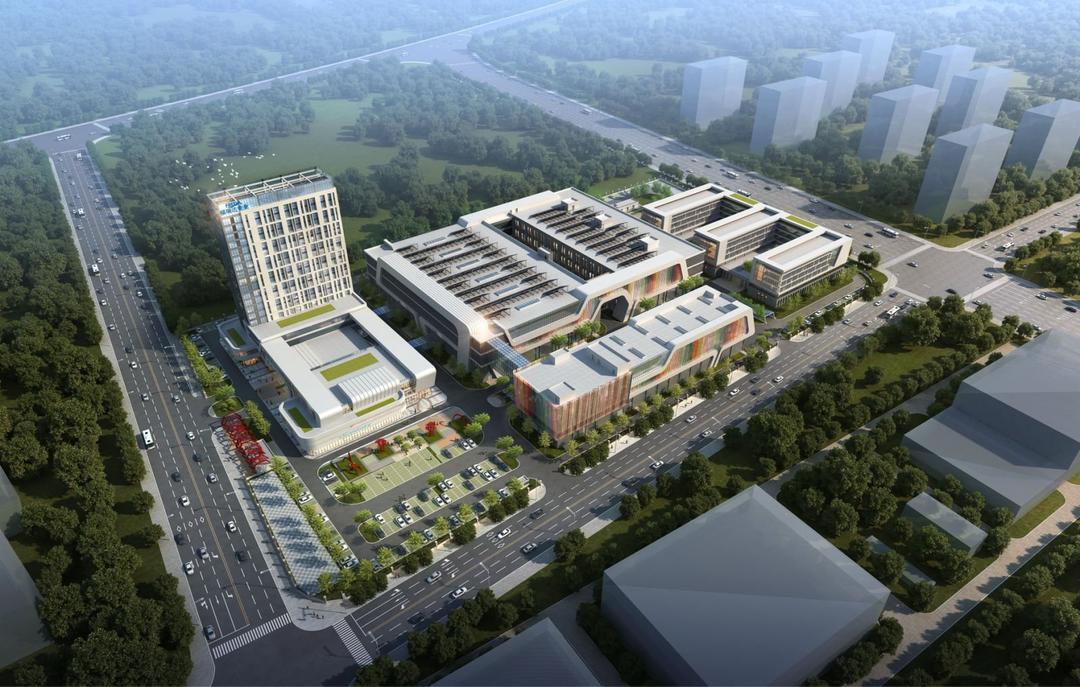
鲁商福瑞达:合成生物领航医药美妆 “四链”融合锻造健康生态
Da Zhong Ri Bao· 2026-01-04 03:08
Core Viewpoint - Furuida, a state-controlled listed company under Lushang Group, is recognized for its innovation-driven industrial upgrades in the pharmaceutical and cosmetics sectors, having formed a collaborative innovation consortium and achieved significant technological breakthroughs [1][3]. Group 1: Innovation and Collaboration - Furuida has been a leader in the hyaluronic acid industry for over 30 years, addressing challenges such as limited core technologies and low competitiveness of high-value products through open collaboration [3]. - The company has established the "Shandong Synthetic Biology and Green Manufacturing Innovation Consortium," integrating top universities and research institutions to tackle common technological challenges in cutting-edge fields like cell factories and green catalysis [3]. - Furuida's research team has developed a nanocrystal/bioadhesive transmembrane delivery technology that resolves critical issues in drug absorption and targeting, resulting in 29 national invention patents and the launch of 33 new drug products, generating an annual output value exceeding 1 billion yuan [4]. Group 2: Ecosystem and Market Position - Furuida promotes a "four-chain" integration model to bridge gaps between talent, education, innovation, and industry, enhancing the flow of innovation elements [6]. - The company has implemented a collaborative investment and shared outcome model, creating a full chain from raw material research to end products, and has initiated the "Hyaluronic Acid+" industry ecosystem plan, successfully incubating 19 new brands [6]. - Since the 14th Five-Year Plan, Furuida has solidified its leading position in the hyaluronic acid sector, establishing a research cluster with 4 national and 17 provincial platforms, and has undertaken over 30 major scientific projects, accumulating nearly 400 authorized patents [6].


港股IPO放量的影响与高效打新策略
Sou Hu Cai Jing· 2026-01-04 02:06
Group 1 - The Hong Kong IPO market has significantly rebounded in 2025, with 99 companies listed as of December 12, raising over 250 billion HKD, accounting for 67% of the total fundraising for Chinese companies this year, marking a 10-year high [1][17][21] - The IPO success rate has increased to 73% with an apparent return rate of 34%, both significantly higher than previous years, although the average winning rate has dropped to 20%, the lowest in a decade [1][21] - The characteristics of the Hong Kong IPO market include a registration system with a low listing success rate of 37% since 2016, no market capitalization requirements for participation, and a higher first-day failure rate compared to A-shares, averaging 45% since 2016 [1][6][50] Group 2 - There is a weak positive correlation between the primary market financing and the secondary market performance, driven by common macroeconomic factors such as a weak US dollar and low Hibor rates [2][7][62] - Large IPOs do not significantly impact the overall secondary market but can boost specific sectors like consumer goods and technology [2][8] - A selection model for IPOs can enhance returns by evaluating market sentiment, company fundamentals, and issuance characteristics, with a scoring system that can increase returns by approximately 15 percentage points for selected stocks [2][9] Group 3 - The outlook for 2026 suggests continued activity in the Hong Kong IPO market, with 314 companies currently in the listing application process, estimating a central fundraising scale of around 330 billion HKD [3][24][28] - The historical data indicates that the performance of the secondary market in the previous year influences the IPO application decisions of companies [3][25] - The average fundraising scale in 2026 is expected to be over 20% higher than in 2025, reflecting a robust pipeline of IPOs [3][28]

定期报告:节后春季行情进行中聚焦成长
Huajin Securities· 2026-01-04 02:01
1. Report Industry Investment Rating No relevant content provided. 2. Core Viewpoints of the Report - This year after the New Year's Day, the A - share spring market is underway and may be volatile and bullish, affected by factors such as policy implementation, liquidity, and the performance of the Hong Kong stock market [1][4][7]. - After the holiday, technology growth and some cyclical industries may be relatively dominant, with continuous upward industrial trends and policy support [1][26]. - After the holiday, it is recommended to continue to allocate industries such as technology, some cyclical and consumer sectors on dips [1][38][46]. 3. Summary by Relevant Catalogs 3.1 Post - holiday Spring Market is Underway 3.1.1 Factors Affecting Post - holiday A - share Movement - Since 2010, in 11 out of 16 years, the Shanghai Composite Index showed the same upward or downward trend in the 10 trading days before and after the holiday. The post - holiday short - term market performance is affected by policies, external events, liquidity, and the performance of the Hong Kong stock market [1][4]. - Positive policies and external events may lead to a short - term rise in the post - holiday A - shares, while tight policies or negative external events may result in weak performance. Liquidity also plays a key role, and the performance of the Hong Kong stock market during the holiday has a certain impact on the post - holiday A - shares [4]. 3.1.2 This Year's A - share Spring Market is Underway and May be Volatile and Bullish - Positive policies may continue to be implemented after the holiday, and external risks may be limited. The "two new" policies are accelerating implementation, local two - sessions may be held intensively, and consumption - stimulating policies may be introduced. Externally, the Fed may cut interest rates in January, Sino - US relations may remain stable, and geopolitical conflicts may ease [7][8]. - Post - holiday short - term liquidity may be further relaxed. Overseas, the Fed is likely to cut interest rates, and the RMB exchange rate may be strong. Domestically, the central bank may cut interest rates and reserve requirements. Also, stock market funds may accelerate inflow [9]. - The Hong Kong stock market performed strongly during the New Year's Day holiday, which may boost the post - holiday A - shares. The correlation coefficient between the Hong Kong stock market's rise and fall during the New Year's Day holiday and the Shanghai Composite Index's rise and fall in the 10 trading days after the holiday is about 0.5 [18][19]. - The post - holiday economy and corporate profits are still in weak recovery. The economy is in a weak recovery state, and corporate profits may continue to recover, although the industrial enterprise profits in November continued to decline [21]. 3.2 Industry Allocation: Focus on Growth after the Holiday 3.2.1 Technology Growth and Some Cyclical Industries May be Relatively Dominant after New Year's Day - Historically, policy and industrial trends drive pre - holiday strong industries to maintain their strength after the holiday. Pre - holiday leading industries may switch due to high sentiment or market adjustments. Industries with continuous strength around the New Year's Day usually have a relatively low historical quantile of trading volume [26]. - This year, the industrial trends of technology growth and some cyclical industries may continue to rise after the holiday. The pre - holiday leading cyclical industries have neutral - low sentiment, while the technology growth industries have high sentiment [26]. 3.2.2 Currently, the PEG of Electric Power, Media, and Automobile is Low - Among the primary growth industries, the predicted PEG of electric power equipment, media, and automobile is relatively low, at 0.64, 0.86, and 1.13 respectively. The historical quantiles of trading volume of medicine, computer, media, and automobile are low [40]. - Among the secondary growth industries, the sentiment of traditional Chinese medicine, biological products, automobile services, and chemical pharmaceuticals is low. The predicted PEG of nautical equipment, games, commercial vehicles, and wind power equipment is relatively low [44]. 3.2.3 After the Holiday, it is Recommended to Continue to Allocate Industries such as Technology, Some Cyclical and Consumer Sectors on Dips - It is recommended to allocate industries with upward policy and industrial trends, such as machinery (robotics), military (commercial aerospace), electric power (nuclear fusion, energy storage), media (AI applications, games), computer (AI applications, satellite Internet), electronics (semiconductors, AI hardware), communication (AI hardware), and medicine (innovative drugs) on dips [46]. - In the short term, it is recommended to allocate sectors that may make up for lost ground and have potentially improved fundamentals, such as securities and consumer sectors (food, retail, social services) on dips [56].
方正证券:港股市场将迎风险偏好修复 建议关注高景气新兴产业补涨机会
Zhi Tong Cai Jing· 2026-01-03 12:58
A-share Market Insights - The market is expected to transition from "consolidation" to "spring rally" as the year-end approaches, with high-quality A-share assets offering attractive value globally [1][2] - Key investment directions include: 1) long-term opportunities in technology growth assets, 2) cyclical sectors with strong pricing power driven by supply-demand imbalances, and 3) blue-chip assets favored by long-term institutional investors [2] Hong Kong Market Insights - The influx of southbound capital is accelerating, providing solid financial support for the Hong Kong market [2] - The easing of US-China trade tensions is likely to boost market risk appetite, while the anticipated December interest rate cut and balance sheet expansion by the Federal Reserve will enhance global liquidity, benefiting Hong Kong stocks [2] US Market Insights - Despite stable earnings projections for US stocks in 2025, valuation and market concentration have returned to historical highs, indicating potential for increased volatility [2] - Earnings growth in 2026 is expected to continue, driven by sustained AI demand, reduced tariff risks, and accommodative monetary and fiscal policies [2] - Investment strategies may focus on two main themes: 1) ongoing narratives in technology stocks, particularly in AI, and 2) recovery opportunities in cyclical sectors, especially in midstream manufacturing and essential consumer goods [2] Domestic Bond Market Insights - The domestic bond market is entering a phase characterized by "weak economic recovery, stable yet easing policies, and central bank caution against excessive moves" [3] - The central bank's commitment to maintaining stable interest rates will limit the downward movement of long-term rates, leading to a range-bound market [3] - Investors are advised to shift focus from capital gains to coupon income and liquidity management, while closely monitoring potential signals from the central bank regarding long-term yield guidance [3] Commodity Market Insights - The ongoing anti-involution policies warrant attention to the actual implementation of capacity reduction measures [4] - Oil prices are under short-term pressure due to geopolitical tensions easing and OPEC+ shifting towards supply expansion [4] - Industrial metals are expected to see demand recovery driven by improved global economic growth forecasts, with supply-side disruptions likely to reshape the supply-demand landscape [4] - Gold's monetary attributes may continue to be favorable amid ongoing government leverage, particularly in the US, where long-term deficit rates are challenging to reduce [4]

新版基本医保药品目录正式实施 各地推动创新药尽快落地满足患者用药需求
Yang Guang Wang· 2026-01-03 02:07
Core Points - The new version of the National Basic Medical Insurance, Maternity Insurance, and Work Injury Insurance Drug Directory has been officially implemented, adding 114 new drugs to the reimbursement list [1] - The new drug directory includes innovative drugs in key areas such as oncology, chronic diseases, pediatrics, and rare diseases, with some drugs being included within a year of their market launch [1] - Local medical insurance departments are actively promoting the implementation of the new drug directory, ensuring that designated medical institutions reasonably allocate and use the listed drugs [1] Group 1 - The new drug directory significantly reduces the financial burden on patients, as exemplified by a patient with triple-negative breast cancer who benefits from the inclusion of the drug Lukanosumab [1] - The new directory features innovative drugs like the world's first dual-target receptor agonist, Teriparatide injection, which has been included shortly after its market introduction [1] - Medical institutions, such as Hebei Medical University First Hospital, have adjusted drug prices in accordance with the new directory, leading to substantial price reductions for certain cancer and innovative mechanism drugs [1] Group 2 - Over 100,000 designated retail pharmacies across the country serve as a "double insurance" for patients, allowing them to purchase certain rare disease and innovative drugs with insurance reimbursement [2] - A commercial health insurance innovative drug directory has also been implemented, with ongoing collaboration among financial regulation, health, and other departments to support the expansion of commercial insurance coverage for innovative drug products [2] - The Beijing Medical Insurance Bureau is working to provide similar support policies for eligible commercial insurance products, facilitating their integration into the healthcare system [2]
2025年医疗保障领域10大热词,点击查看——
Sou Hu Cai Jing· 2026-01-02 12:40
Core Insights - The year 2025 marks significant advancements in China's healthcare security system, showcasing resilience and a focus on people's health amidst modernization efforts [1] Group 1: Multi-layered Medical Security System - The "1+3+N" framework emphasizes a multi-layered medical security system, including a unified medical insurance information platform, basic medical insurance, major illness insurance, and support for commercial health insurance [2] - Reimbursement rates for inpatient expenses under employee and resident medical insurance have reached approximately 80% and 70%, respectively, with improvements in outpatient services [2] Group 2: Dual Drug Catalogs - The introduction of the "dual catalog" system for basic medical insurance and commercial health insurance marks a significant step in defining the boundaries of coverage, facilitating access to innovative drugs [3] - In 2025, the basic medical insurance catalog added 114 new drugs, with 50 being innovative drugs, achieving a negotiation success rate of 88% [3] Group 3: Provincial Coordination - The push for provincial coordination in basic medical insurance aims to enhance fairness and sustainability, with 20 provinces already advancing this initiative [5] - The focus is on optimizing fund management and ensuring uniform policy implementation across regions [5] Group 4: Anti-Competition Measures - The "anti-involution" strategy aims to stabilize drug pricing and maintain quality by preventing irrational price competition in the pharmaceutical industry [6][7] - Mechanisms have been introduced to ensure fair pricing and enhance clinical selection in drug procurement [7] Group 5: Real-World Research - Real-world research (RWS) has been established as a key tool for evaluating the comprehensive value of drugs and medical technologies, aiming to support sustainable fund management [8] - The National Medical Insurance Administration is developing a nationwide evaluation system to integrate real-world data into decision-making processes [8] Group 6: Long-term Care Professionals - The introduction of long-term care professionals aims to strengthen the workforce for long-term care services, with over 3,500 candidates participating in certification exams across multiple provinces [10] - The long-term care insurance system has expanded to cover nearly 300 million people, benefiting over 3.3 million individuals with disabilities [10] Group 7: Maternity Insurance System - The maternity insurance system aims for "no out-of-pocket" expenses for childbirth within policy coverage, with 2.55 billion people enrolled in the program [11] - Efforts are underway to include more demographics, such as flexible workers and migrant workers, into the maternity insurance coverage [11] Group 8: Drug Traceability Codes - The implementation of drug traceability codes has led to the collection of 39.885 billion codes, enhancing consumer protection and combating counterfeit drugs [13] - By July 2025, all medical institutions will be required to implement full traceability for drug sales [13] Group 9: Three-Settlement Reform - The "three-settlement" reform aims to streamline payment processes in the healthcare sector, significantly reducing the payment cycle for pharmaceutical companies [14] - The initiative includes immediate, direct, and synchronized settlements to enhance service efficiency for patients [14] Group 10: Medical Service Pricing Guidelines - The establishment of national medical service pricing guidelines aims to standardize pricing across provinces, addressing discrepancies and improving service quality [16] - The National Medical Insurance Administration has issued 36 batches of guidelines, with plans to complete 40 by 2026 [16]

2026年投资展望,科技板块“众望所归”
Zhong Guo Zheng Quan Bao· 2026-01-02 05:06
Group 1 - The market outlook for 2026 is optimistic, with a shift from valuation-driven growth to a dual driver of "earnings + valuation," leading to improved overall performance of listed companies and increased structural highlights [1][2] - The investment environment is expected to strengthen due to improved global liquidity and the acceleration of AI trends, providing a solid foundation for the market [2] - A-shares are projected to see significant earnings growth in 2026, with EPS for major indices expected to increase substantially, although the pace of valuation improvement may slow down [2] Group 2 - The technology sector is frequently highlighted as a key investment theme, with AI applications anticipated to be a major focus in 2026 [3][4] - The investment logic is shifting from infrastructure to application, as AI's commercial viability in various sectors becomes clearer, creating new investment opportunities [3] - The market is expected to exhibit a "leader concentration" and "fundamental-driven" structural characteristics, with a focus on companies that demonstrate real and sustainable performance [4]
展望:促进医疗、医保、医药协同发展和综合治理
Xin Lang Cai Jing· 2026-01-01 14:38
Core Viewpoint - The "14th Five-Year Plan" period has seen continuous development in China's healthcare and medical insurance sectors, with a focus on reducing the medical burden on citizens and enhancing the synergy among healthcare, medical insurance, and pharmaceuticals [3][4]. Group 1: Development and Reform - The "15th Five-Year Plan" period is identified as a critical time for building a comprehensive health security system, necessitating further reforms to optimize healthcare, medical insurance, and pharmaceutical systems [3][4]. - The newly released "Medical Security Blue Book (2025)" emphasizes the coordinated development and comprehensive governance of healthcare, medical insurance, and pharmaceuticals, proposing a theoretical framework for their collaboration [4]. Group 2: Recommendations for High-Quality Development - Five key areas are suggested to promote high-quality development of the medical insurance system during the "15th Five-Year Plan": 1. Integration of systems to reduce disparities between employee and resident medical insurance [5]. 2. Improvement of the funding mechanism for resident medical insurance to alleviate the financial burden on vulnerable groups [5]. 3. Enhancement of medical insurance coverage by adopting international practices to reduce out-of-pocket expenses for individuals [5]. 4. Establishment of a multi-tiered medical security system, focusing on the "bottom line" function of medical assistance [5]. 5. Steady advancement of provincial-level coordination in basic medical insurance based on central policies and local practices [5]. Group 3: Adaptation to New Conditions - The healthcare security system must adapt to new conditions such as accelerated population mobility and diverse employment forms by addressing three dimensions: 1. Breaking down barriers through an inclusive insurance mechanism to achieve fairness and unity in the system [6]. 2. Constructing a cross-regional public service coordination mechanism to facilitate seamless medical service connections [6]. 3. Utilizing health cloud platforms to integrate data across healthcare, medical insurance, and pharmaceuticals, providing comprehensive health security services [6].

中国一年新增70位亿万富豪,98%白手起家,财富密码已变科技与消费!
Sou Hu Cai Jing· 2026-01-01 11:02
Group 1 - The core point of the article highlights that China has seen a significant increase in billionaires, with 70 new individuals surpassing a net worth of $1 billion in just one year, making it the highest growth globally [1] - The total number of billionaires in China has reached 470, second only to the United States, with a combined wealth of 12.7 trillion yuan, reflecting a 22.2% increase year-on-year [1] - The report indicates a shift in wealth creation from real estate to technology and consumption sectors, emphasizing that innovation in areas like AI, chips, and consumer goods is driving this change [1] Group 2 - The technology sector has produced billionaires with a wealth growth rate of 40%, significantly outperforming other industries [2] - Notable examples include Lei Jun, whose wealth surged from 129 billion to 326 billion yuan due to advancements in electric vehicles, and Chen Tian Shi, whose wealth increased by nearly 150 billion yuan through AI chip breakthroughs [4] - The pharmaceutical industry is also contributing to wealth creation, with individuals like Zhong Huijuan of Hansoh Pharmaceutical seeing an 83% increase in net worth, reaching 141 billion yuan [4] Group 3 - The new consumption trend is reshaping the market, with companies like Pop Mart and Mixue Ice Cream achieving remarkable success through innovative products and pricing strategies [5] - Pop Mart's founder saw a wealth increase from over 20 billion to 180 billion yuan, while the Zhang brothers of Mixue Ice Cream expanded their business to over 20,000 stores, doubling their wealth to 60 billion yuan [5] - The rise of new consumption billionaires reflects a significant transformation in China's consumer market, where younger consumers prioritize experience and affordability [5][7] Group 4 - The article suggests that ordinary individuals still have opportunities to participate in wealth creation, but the dynamics have changed, favoring innovation and market insight over traditional resource-based wealth [8] - The disparity in wealth growth, with billionaires' wealth increasing at a rate far exceeding GDP and average income growth, raises concerns about widening wealth gaps [8] - The need for policies that balance innovation encouragement and wealth sharing is emphasized, advocating for measures that support small businesses and equitable wealth distribution [8] Group 5 - The transformation of China's wealth landscape is evident, with technology and consumption emerging as the new drivers of wealth creation, as illustrated by the success stories of individuals like Lei Jun, Chen Tian Shi, and others [10] - The next wave of billionaires may emerge from fields like brain-computer interfaces and the metaverse, highlighting the importance of trend awareness and innovation [10] - The article concludes that each cycle of wealth redistribution opens new opportunities, encouraging individuals to accumulate knowledge and skills to position themselves for future success [10]

超日赶德,印度宣布已成为全球第四大经济体
Xin Lang Cai Jing· 2026-01-01 10:33
Group 1 - India's economy has surpassed Japan, becoming the fourth largest globally, with a GDP of approximately $4.18 trillion, and is projected to reach about $7.3 trillion by 2030 [1] - The International Monetary Fund (IMF) predicts that India will surpass Japan by 2026, with an estimated GDP of $4.51 trillion [1] - The Indian government aims to achieve developed country status by 2047, marking the centenary of its independence [1] Group 2 - The report titled "2025, a Key Year for India's Economic Growth" indicates that India is one of the fastest-growing major economies, with a real GDP growth of 8.2% year-on-year in Q2 of FY 2025-26, up from 7.8% in the previous quarter [2] - The current economic environment is described as a "Goldilocks" period, characterized by high growth and low inflation, supported by strong corporate balance sheets and ongoing structural reforms [2] - Domestic demand, particularly strong private consumption, is the primary driver of India's economic growth, alongside a rapidly developing service sector [2] Group 3 - In response to external challenges, the Indian government has implemented significant tax reforms, including simplifying the Goods and Services Tax (GST) and introducing labor law reforms to enhance investment attractiveness [6] - The GST was streamlined from four tax brackets to two, with reductions in rates for essential goods and services, aimed at stimulating domestic demand [6] - The new labor laws consolidate 29 existing laws into four, marking the largest structural reform since India's economic liberalization in 1991 [6] Group 4 - India's export performance has improved, with merchandise exports reaching $38.13 billion in November 2025, supported by sectors like engineering, electronics, pharmaceuticals, and oil products [7] - The country is diversifying its trade partnerships, strengthening ties with nations such as the UK, Oman, and New Zealand, while also expanding trade with major economies like China and Germany [7] - Despite challenges in negotiations with the US, there is optimism about reaching a trade agreement that could lower tariffs significantly [7] Group 5 - The IMF's report highlights that India's economic growth is expected to remain robust, supported by favorable domestic conditions, with an upward revision of growth forecasts from 6.8% to 7.3% for FY 2025-26 [8] - Factors contributing to this growth include strong domestic demand, tax optimization, and a favorable monetary environment [8] - The overall inflation rate has significantly decreased, aided by stable food prices and resilient financial and corporate sectors [8] Group 6 - Despite recent improvements, challenges remain, including low per capita income and significant disparities in economic development between northern and southern India [10] - The World Bank reports that India's per capita GDP in 2024 is $2,694, significantly lower than that of developed economies like Japan and Germany [10] - The government faces the challenge of creating high-quality jobs for its large youth population, which is crucial for sustainable growth [10] Group 7 - The Indian rupee has depreciated, reaching a historical low against the US dollar, with a cumulative decline of about 5% in 2025 [11] - The stock market has underperformed, with significant foreign portfolio investment outflows, contrasting with previous inflows [11] - The manufacturing sector's contribution to GDP has decreased, falling short of the government's target of 25%, due to bureaucratic hurdles and restrictive policies [11]
