贵金属

Search documents
A股午评:三大指数跌幅均超1%,大消费板块逆势走强,银行及算力租赁板块回暖,贵金属概念股重挫
Jin Rong Jie· 2026-02-05 03:45
Market Overview - On February 5, A-shares experienced a collective decline, with the ChiNext Index dropping by as much as 2%, indicating a slight market sentiment downturn [1] - By midday, the Shanghai Composite Index fell by 42.29 points, a decrease of 1.03%, closing at 4059.91 points, while the Shenzhen Component Index dropped by 255.95 points, down 1.81% to 13900.33 points, and the ChiNext Index decreased by 64.24 points, down 1.94% to 3247.27 points [1] - The total trading volume in the Shanghai and Shenzhen markets was 1.45 trillion, a decrease of 168.2 billion from the previous trading day, with over 3600 stocks declining [1] Sector Performance Strong Performers - The consumer sector saw significant gains, particularly in food and beverage, retail, and film industries, with stocks like Hengdian Film and Television rising for six consecutive days [1] - The banking sector showed resilience, with Xiamen Bank increasing by over 6% [1] Weak Performers - The computing hardware sector, particularly storage chips, faced substantial declines, with companies like Juguang Technology and Changfei Fiber dropping nearly 10% and over 8% respectively [2] - The precious metals sector also experienced a collective downturn, with Hunan Silver hitting the daily limit down [1][4] Investment Insights - Orient Securities noted a cooling in active trading as the Spring Festival approaches, suggesting that the recent significant drop could lead to a stronger market stabilization expectation [5] - Tianfeng Securities highlighted that the upcoming Spring Festival may lead to an earlier release of consumer demand, with expectations for a stable "economic opening red" [6] - CITIC Securities projected that the commercial aerospace industry will transition from "technology validation" to "scale industrialization" around 2026, indicating a potential growth phase for the space computing sector [6]
午评:三大指数跌超1% 消费类板块逆势走强
Zhong Guo Jing Ji Wang· 2026-02-05 03:44
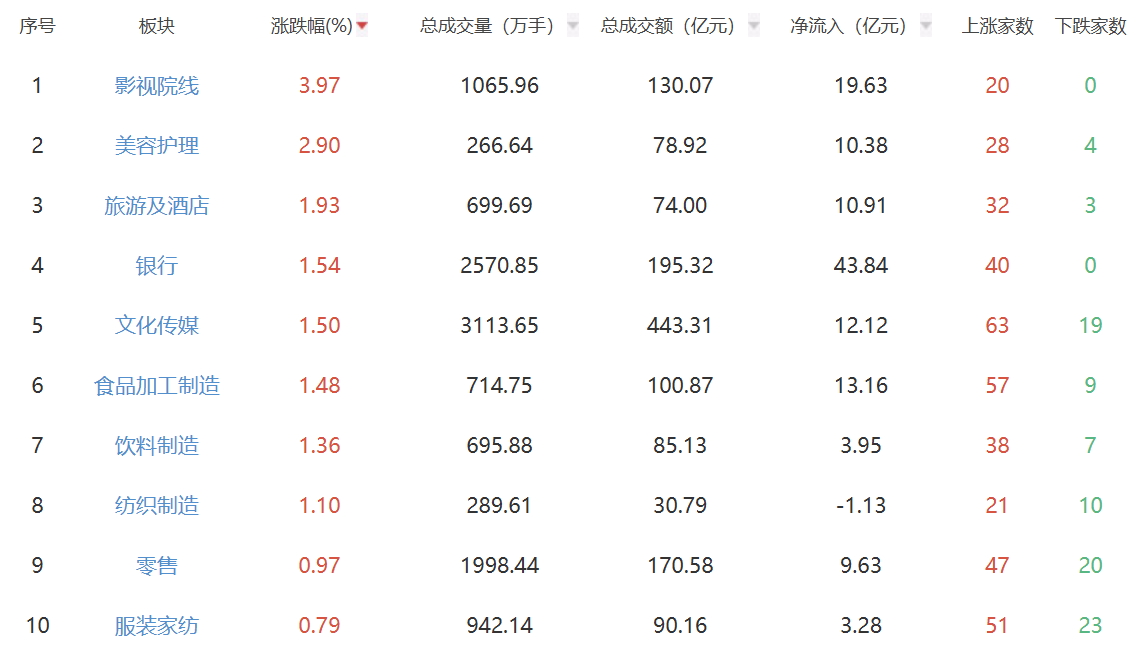
Core Viewpoint - The A-share market experienced a decline, with the three major indices falling, indicating a bearish sentiment among investors [1] Market Performance - The Shanghai Composite Index closed at 4059.91 points, down 1.03% - The Shenzhen Component Index closed at 13900.33 points, down 1.81% - The ChiNext Index closed at 3247.28 points, down 1.94% [1] Sector Performance - The film and cinema, beauty care, and tourism and hotel sectors showed the highest gains, with increases of 3.97%, 2.90%, and 1.93% respectively - Conversely, the precious metals and photovoltaic equipment sectors faced the largest declines, with drops of 6.84% and 5.09% respectively [1] Sector Rankings - Top performing sectors: - Film and Cinema: +3.97%, total trading volume of 1,065.96 million hands, total transaction amount of 130.07 billion, net inflow of 19.63 billion, with 20 stocks rising - Beauty Care: +2.90%, total trading volume of 266.64 million hands, total transaction amount of 78.92 billion, net inflow of 10.38 billion, with 28 stocks rising - Tourism and Hotel: +1.93%, total trading volume of 699.69 million hands, total transaction amount of 74.00 billion, net inflow of 10.91 billion, with 32 stocks rising [1] - Underperforming sectors: - Audio Equipment: -6.84%, total trading volume of 859.78 million hands, total transaction amount of 257.39 billion, net outflow of 11.40 billion, with 0 stocks rising - Photovoltaic Equipment: -5.09%, total trading volume of 4,807.99 million hands, total transaction amount of 798.14 billion, net outflow of 62.95 billion, with 7 stocks rising - Other Electronic: -2.59%, total trading volume of 418.80 million hands, total transaction amount of 106.52 billion, net outflow of 16.21 billion, with 3 stocks rising [1]

沪指半日跌1.03% 大消费板块逆势走强
Sou Hu Cai Jing· 2026-02-05 03:43
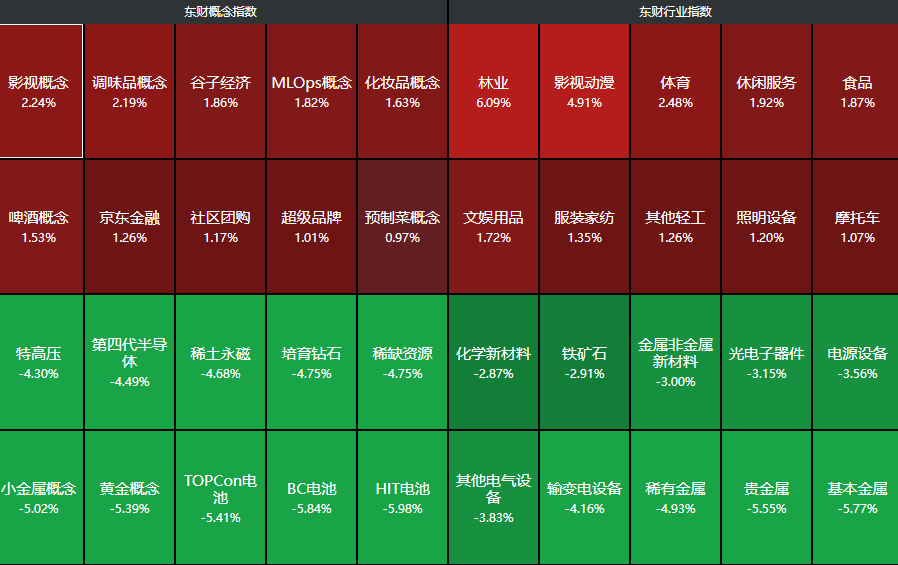
Market Overview - The market experienced a volatile adjustment on February 5, with all three major indices declining over 1%. The Shanghai Composite Index fell by 1.03%, the Shenzhen Component Index dropped by 1.81%, and the ChiNext Index decreased by 1.94% [1] Sector Performance - The consumer sector showed strong performance, particularly in food and beverage, retail, and film industries, with notable gains from companies like Hengdian Film and Television, which achieved five consecutive trading limits, and Hangzhou Jiebai, which had two consecutive trading limits [1] - The banking sector performed well against the market trend, with Xiamen Bank rising over 6% [1] - In contrast, basic metals, precious metals, and iron ore sectors experienced significant declines, leading the downward trend in the market [1] Concept Indices - The film and television concept index increased by 2.24%, while the seasoning concept index rose by 2.19% [2] - Other notable increases included the grain economy at 1.86% and MLOps concept at 1.82% [2] - Conversely, sectors such as rare earth permanent magnets and iron ore saw declines of 4.49% and 2.87%, respectively [2]
午评:三大指数均跌超1% 大消费板块逆势走强
Mei Ri Jing Ji Xin Wen· 2026-02-05 03:37
Market Overview - The market experienced a volatile adjustment on February 5, with all three major indices declining over 1% [1] - The total trading volume in the Shanghai and Shenzhen markets was 1.45 trillion, a decrease of 168.2 billion compared to the previous trading day [1] Sector Performance - The consumer sector saw significant gains, with food and beverage, retail, and film industries leading the rise [1] - Notable stocks included Hengdian Film, which achieved five consecutive trading limits, and Hangzhou Xie Bai, which had two consecutive trading limits [1] - Alibaba-related stocks showed localized activity, with Xinhua Dou hitting the trading limit [1] - The computing power leasing concept showed signs of recovery, with stock 263 hitting the trading limit [1] - The banking sector performed well against the trend, with Xiamen Bank rising over 6% [1] Declines - Precious metals sector experienced a collective decline, with Hunan Silver hitting the trading limit down [1] - The computing hardware concept continued to fall, with stocks like Dekoli and Taicheng Guang dropping over 10% [1] Closing Figures - By the end of the trading day, the Shanghai Composite Index fell by 1.03%, the Shenzhen Component Index dropped by 1.81%, and the ChiNext Index decreased by 1.94% [1]
懵了!金银突发暴跌,急速跳水!
Xin Lang Cai Jing· 2026-02-05 03:27
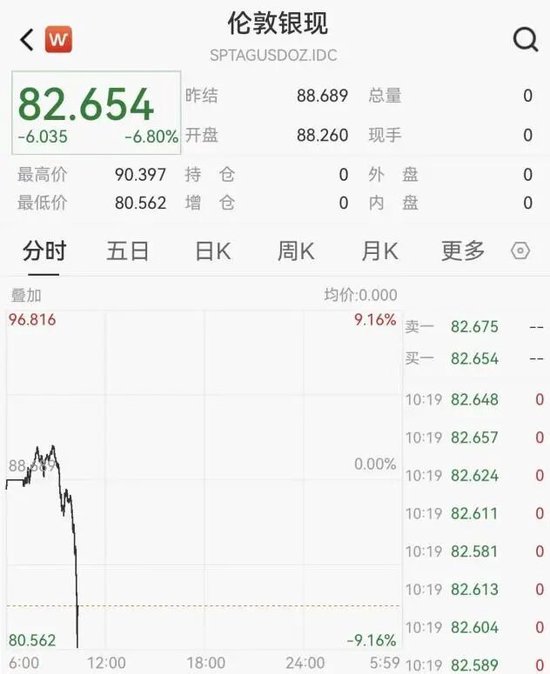
炒股就看金麒麟分析师研报,权威,专业,及时,全面,助您挖掘潜力主题机会! 来源:中国基金报 中国基金报记者 张舟 今天上午10点半左右,现货金银突然再次大跳水,跌幅持续扩大,现货黄金最低一度跌破4900美元/盎 司。 先看2月5日贵金属盘中更新数据: 现货白银跌破81美元/盎司,最低价报80.562美元/盎司,日跌幅超7%。现报82.654美元/盎司。 现货黄金最低报4893.42美元/盎司,一度失守4900美元关口,日跌幅一度超1%。现报4913.026美元/盎 司。 | < W | | | 伦敦金现 | | | Q | | | --- | --- | --- | --- | --- | --- | --- | --- | | | | | SPTAUUSDOZ.IDC | | | | | | 4913.026 | | 昨结 | 4968.306 | 总量 | | 0 | | | -55.280 | -1.11% 开盘 | | 4968.326 | 现手 | | 0 | | | 最高价 | 5023.720 | 持 仓 | 0 | 外 | 물 | 0 | | | 最低价 | 4893.420 | 增 仓 | ...
宏观金融类:文字早评2026/02/05星期四-20260205
Wu Kuang Qi Huo· 2026-02-05 03:22
Report Summary 1. Investment Rating The provided document does not mention the industry investment rating. 2. Core Viewpoints - **Stock Index**: In the short - term, the market rotation is accelerating, hot - plate persistence is poor, and trading volume is falling before the Spring Festival. In the long - term, policy support for the capital market remains unchanged. The strategy is to buy on dips [4]. - **Treasury Bonds**: The economic recovery foundation is not solid, and there is still room for RRR and interest rate cuts. The central bank maintains an attitude of protecting funds, and bond market trading is expected to be stable. However, it is necessary to pay attention to the suppression of the stock market, government bond supply, and inflation expectations, and the market is expected to fluctuate [8]. - **Precious Metals**: The market is in a cautious short - covering and position - rebuilding stage after a technical oversold. It is recommended to wait and see, with the Shanghai gold main contract in the range of 1050 - 1300 yuan/gram and Shanghai silver in the range of 22000 - 25000 yuan/kilogram [11]. - **Non - ferrous Metals**: Most non - ferrous metals are expected to fluctuate, with some having upward or downward trends based on supply - demand, policy, and cost factors [14][16][21]. - **Black Building Materials**: The black - building materials sector is in a bottom - game stage with multiple factors at play. It is expected to fluctuate in the short - term, and it is necessary to track inventory changes, demand recovery, and policy adjustments [34]. - **Energy Chemicals**: Different energy - chemical products have different trends. For example, crude oil is recommended to take profits on rallies, and some products are affected by supply - demand, cost, and geopolitical factors [64][66]. - **Agricultural Products**: Different agricultural products have different trends. For example, the short - term outlook for live pigs is pessimistic, while the long - term outlook for cotton is positive [87][102]. 3. Summary by Category Macro - financial - **Stock Index** - **Market Information**: The President of China had a phone call with the US President; a new satellite testing and launching technology plant was established; the Ministry of Industry and Information Technology aims to break through key technologies; the central bank focuses on credit market work [2]. - **Basis Annualized Ratio**: Different contracts of IF, IC, IM, and IH have corresponding basis annualized ratios [3]. - **Strategy**: Buy on dips in the short - term [4]. - **Treasury Bonds** - **Market Information**: Contract prices changed on Wednesday; the central bank held a credit market meeting; the Reserve Bank of Australia raised interest rates [5]. - **Liquidity**: The central bank conducted 750 billion yuan of 7 - day reverse repurchase operations, with a net withdrawal of 302.5 billion yuan [6][7]. - **Strategy**: The bond market is expected to fluctuate, and it is necessary to pay attention to multiple factors [8]. - **Precious Metals** - **Market Information**: Gold and silver prices rose; the US ADP data indicated a slowdown in the labor market; the US Treasury's refinancing statement affected the bond market [9][10]. - **Strategy**: Wait and see, with reference price ranges for Shanghai gold and silver [11]. Non - ferrous Metals - **Copper** - **Market Information**: Copper prices fluctuated, LME copper inventory increased, and domestic spot was at a discount [13]. - **Strategy**: The price is expected to fluctuate strongly, with reference price ranges for Shanghai and LME copper [14]. - **Aluminum** - **Market Information**: Aluminum prices declined, and inventory and trading conditions changed [15]. - **Strategy**: If concerns about the US AI narrative ease, prices are expected to stabilize and rise, with reference price ranges [16]. - **Zinc** - **Market Information**: Zinc prices fluctuated, and inventory and basis data changed [17][18]. - **Strategy**: The price is following the sector to make up for the macro - attribute. The trading center may return to the industrial logic [18]. - **Lead** - **Market Information**: Lead prices declined, and inventory and basis data changed [19]. - **Strategy**: The industry situation is weak, and the panic sentiment has eased to some extent [19]. - **Nickel** - **Market Information**: Nickel prices rebounded, and cost and supply - demand factors changed [20]. - **Strategy**: It is expected to fluctuate widely in the short - term, with reference price ranges [21]. - **Tin** - **Market Information**: Tin prices fluctuated, and supply, demand, and inventory factors changed [22]. - **Strategy**: It is expected to fluctuate widely in the short - term, and it is recommended to wait and see [23]. - **Lithium Carbonate** - **Market Information**: The spot index rose, and the futures contract price declined [24]. - **Strategy**: It is recommended to wait and see or take a small - position attempt, with a reference price range for the futures contract [25]. - **Alumina** - **Market Information**: The index rose, and inventory and basis data changed [26][27]. - **Strategy**: It is recommended to wait and see, with a reference price range and key factors to watch [28]. - **Stainless Steel** - **Market Information**: The futures price rose, and spot and inventory data changed [29]. - **Strategy**: Maintain a bullish view, with a reference price range [29]. - **Cast Aluminum Alloy** - **Market Information**: The price rebounded, and inventory and trading volume data changed [30]. - **Strategy**: The price is supported in the short - term [31]. Black Building Materials - **Steel** - **Market Information**: Rebar and hot - rolled coil prices rose slightly, and inventory and trading volume data changed [33]. - **Strategy**: It is expected to fluctuate in the short - term, and it is necessary to track multiple factors [34]. - **Iron Ore** - **Market Information**: The futures price rose, and spot and inventory data changed [35]. - **Strategy**: It is expected to fluctuate weakly in the short - term, and it is necessary to pay attention to steel mill restocking and iron - making rhythms [36][37]. - **Coking Coal and Coke** - **Market Information**: Prices rose, and spot and basis data changed [38]. - **Strategy**: It is expected to fluctuate in the short - term, and it is necessary to pay attention to market sentiment and high - volatility risks [40][42]. - **Glass and Soda Ash** - **Glass** - **Market Information**: The futures price rose, and inventory and trading volume data changed [43]. - **Strategy**: It is expected to fluctuate strongly in the short - term, with a reference price range [44]. - **Soda Ash** - **Market Information**: The futures price rose, and inventory and trading volume data changed [45]. - **Strategy**: It is expected to fluctuate weakly and stably in the short - term, with a reference price range [46]. - **Manganese Silicon and Ferrosilicon** - **Market Information**: Prices rose slightly, and spot and basis data changed [47]. - **Strategy**: The market is affected by overall sentiment and cost factors. It is recommended to pay attention to manganese ore and "dual - carbon" policies [49][50]. - **Industrial Silicon and Polysilicon** - **Industrial Silicon** - **Market Information**: The futures price rose, and spot and inventory data changed [51]. - **Strategy**: The price is expected to fluctuate, and it is necessary to pay attention to production cuts and downstream adjustments [54]. - **Polysilicon** - **Market Information**: The futures price rose, and spot and inventory data changed [55]. - **Strategy**: The price is expected to fluctuate, and it is necessary to pay attention to meetings and spot transactions [56]. Energy Chemicals - **Rubber** - **Market Information**: The price is determined by funds, and there are different views on supply and demand [58]. - **Strategy**: Trade short - term on the disk, set stop - losses, and consider a spread trading strategy [62]. - **Crude Oil** - **Market Information**: Futures prices rose [63]. - **Strategy**: Take profits on rallies and focus on medium - term layout [64]. - **Methanol** - **Market Information**: Spot and futures prices changed [65]. - **Strategy**: The price has priced in most geopolitical premiums, and there is pressure on the upside [66]. - **Urea** - **Market Information**: Spot and futures prices changed [68]. - **Strategy**: Short - sell on rallies due to expected negative fundamentals [69]. - **Pure Benzene and Styrene** - **Market Information**: Prices rose, and supply - demand and inventory data changed [70]. - **Strategy**: The non - integrated profit of styrene has been repaired, and it is advisable to take profits gradually [70]. - **PVC** - **Market Information**: The futures price rose, and supply - demand, cost, and inventory data changed [71]. - **Strategy**: The domestic supply is strong and demand is weak. Pay attention to production capacity and start - up changes [72][73]. - **Ethylene Glycol** - **Market Information**: The futures price rose, and supply - demand, cost, and inventory data changed [74]. - **Strategy**: There is an expectation of further profit compression and load reduction in the medium - term, but there is a risk of rebound in the short - term [75]. - **PTA** - **Market Information**: The futures price rose, and supply - demand, cost, and inventory data changed [76]. - **Strategy**: It enters the Spring Festival inventory - accumulation stage. Be cautious of processing - fee corrections in the short - term and look for long - entry opportunities after the Spring Festival [77]. - **Para - xylene** - **Market Information**: The futures price rose, and supply - demand, cost, and inventory data changed [78]. - **Strategy**: It is expected to accumulate inventory before the maintenance season. Look for long - entry opportunities following crude oil in the medium - term [79]. - **Polyethylene (PE)** - **Market Information**: The futures price rose, and supply - demand and inventory data changed [80]. - **Strategy**: The oil price may have bottomed out. The price is supported by reduced inventory, but the demand is in the off - season [81]. - **Polypropylene (PP)** - **Market Information**: The futures price rose, and supply - demand and inventory data changed [82]. - **Strategy**: The supply pressure is relieved, and the price may bottom out in the first quarter of next year. Consider going long on the PP5 - 9 spread on dips [84]. Agricultural Products - **Live Pigs** - **Market Information**: Pig prices fell, and supply - demand factors changed [86]. - **Strategy**: Short on rallies in the short - term, and pay attention to long - term support [87]. - **Eggs** - **Market Information**: Egg prices mostly fell, and supply - demand factors changed [88]. - **Strategy**: Short - sell in the near - term and long - term, with different logics [89]. - **Soybean and Rapeseed Meal** - **Market Information**: Futures prices fell slightly, and supply - demand data changed [90][91]. - **Strategy**: The short - term fundamentals are improving, and the price may be bottoming out [92]. - **Oils and Fats** - **Market Information**: Futures prices fluctuated, and supply - demand data changed [93][94]. - **Strategy**: The price may have bottomed out. Wait for a pull - back to go long [94]. - **Sugar** - **Market Information**: The futures price rebounded slightly, and supply - demand data changed [95][98]. - **Strategy**: Wait for the northern hemisphere to finish the harvest in February. The domestic price may have limited downside, and it is advisable to wait and see [99]. - **Cotton** - **Market Information**: The futures price fluctuated, and supply - demand data changed [100][101]. - **Strategy**: It fluctuates widely in the short - term and may rise in the long - term. Look for low - entry opportunities before the Spring Festival [102].
日度策略参考-20260205
Guo Mao Qi Huo· 2026-02-05 03:11
Report Industry Investment Rating - The report gives a "Bullish" rating to the precious metals and new energy sectors, and "Neutral" or "Wait-and-See" ratings to most other sectors [1] Core Viewpoints - In the context of low interest rates and an "asset shortage", domestic market funds remain abundant, and the stock index is expected to maintain a long-term upward trend despite short-term volatility [1] - The bond market is favored by the "asset shortage" and weak economy, but the central bank has recently warned of interest rate risks [1] - Metal prices, including copper, aluminum, and nickel, are expected to stabilize and rebound after the release of macro risks, although they are subject to various supply and demand factors and policy uncertainties [1] - Agricultural product prices are affected by factors such as supply and demand, weather, and policy. For example, palm oil is expected to be volatile and bullish, while cotton is in a situation of "support but no driver" [1] - Energy and chemical product prices are influenced by factors like crude oil prices, supply and demand fundamentals, and geopolitical situations. For instance, PTA and ethylene glycol prices have shown different trends due to various factors [1] Summary by Industry Macro Finance - Stock index: Expected to consolidate after a volume-reduced rebound, with a long-term upward trend intact due to abundant funds and economic recovery [1] - Bond futures: Favored by the "asset shortage" and weak economy, but short-term interest rate risks are highlighted [1] Non-Ferrous Metals - Copper: After a significant correction, prices are expected to stabilize and rebound as macro risks are released, with industry fundamentals providing support [1] - Aluminum: Prices dropped due to rising macro risk aversion but are expected to recover as the supply narrative continues and risks are released [1] - Alumina: Supply exceeds demand, and prices are under pressure but are expected to fluctuate around the cost line [1] - Zinc: The cost center is stabilizing, and prices are expected to rebound after a correction due to increased risk aversion [1] - Nickel: Short-term prices are expected to stabilize and rebound, but long-term high global inventories may still exert pressure. Attention should be paid to Indonesian policies and macro sentiment [1] - Stainless steel: Futures prices are expected to fluctuate, with support from the raw material end and repeated macro sentiment. Short-term trading is recommended [1] - Tin: Prices rebounded strongly after a mine accident and significant deleveraging, but high short-term volatility requires risk management [1] Precious Metals and New Energy - Gold and silver: Market sentiment is recovering, but strong US PMI data may slow the short-term upward momentum [1] - Platinum and palladium: Short-term support exists due to Trump's plan to establish a key mineral reserve and the EU's consideration of sanctions on Russian platinum exports [1] - Industrial silicon: Northwest production is increasing while southwest production is decreasing, and the production schedules of polysilicon and organic silicon declined in December [1] - Polysilicon: In the off-season for new energy vehicles, but storage demand is strong. Prices have risen significantly and may need to correct [1] - Lithium carbonate: Expectations are strong, but the spot market is weak, and the continuation of price increases lacks momentum [1] Black Metals - Rebar and hot-rolled coil: Unilateral long positions are advised to exit, and cash-and-carry arbitrage positions can be considered due to factors such as high production and inventory [1] - Iron ore: There is obvious upward pressure, and chasing long positions is not recommended [1] - Coke and coking coal: In the off-season, the focus is on capital sentiment, and opportunities to sell at high prices or establish cash-and-carry arbitrage positions are recommended [1] - Glass and soda ash: Weak current supply and demand are intertwined with strong expectations, and prices are under pressure in the medium term [1] Agricultural Products - Palm oil: Expected to be volatile and bullish as the main consuming countries start purchasing and production areas may reduce production and inventory [1] - Cotton: Currently in a situation of "support but no driver", and future attention should be paid to factors such as policy, planting area, and seasonal demand [1] - Sugar: There is a consensus on short positions due to global oversupply and increased domestic production, but the cost provides support at lower prices [1] - Grains: Before the Spring Festival, the market is expected to correct as pre-holiday stocking ends and funds take profits [1] - Soybeans: Unilateral expectations are for a weakening trend due to factors such as expected rainfall in Argentina and sufficient Brazilian supply [1] - Pulp: It is advisable to wait and see due to supply disturbances and weakening demand after restocking [1] - Logs: The spot price is rising, and the futures price is expected to increase due to a decrease in arrivals and an increase in foreign quotes [1] - Hogs: The spot price is stabilizing, and demand is supported, but production capacity still needs to be further released [1] Energy and Chemicals - Crude oil: OPEC+ has suspended production increases until the end of 2026, and geopolitical tensions in the Middle East may ease. Prices are expected to correct in the short term [1] - Fuel oil: Follows the trend of crude oil, and the supply of Ma Rui crude oil is sufficient [1] - Asphalt: Profits are high, and the demand for catch-up construction during the 14th Five-Year Plan may be falsified [1] - Shanghai rubber: The raw material cost provides support, but downstream demand weakens before the festival, and the futures-spot price difference has widened [1] - BR rubber: The cost of butadiene provides support, and there is an expectation of increased exports in the long term. Short-term prices are expected to fluctuate widely, with an upward trend in the long term [1] - PTA: The PX market is strong, driving up the prices of chemical products. Domestic PTA production is increasing, and the negative feedback from polyester factory production cuts is limited [1] - Ethylene glycol: Overseas prices have rebounded, and the reduction in Middle East exports has boosted market confidence. Speculative demand has increased [1] - Styrene: The futures price has rebounded due to improved supply and demand fundamentals and reduced inventory pressure [1] - Methanol: Affected by the situation in Iran, imports are expected to decrease, but downstream negative feedback is significant, resulting in a mixed situation [1] - PE: The price has returned to a reasonable range, and demand is weak during the holiday after pre-holiday stocking [1] - PP: Supply pressure is high, downstream improvement is less than expected, and the price has returned to a reasonable range [1] - PVC: Global production is expected to be low in 2026, but the current fundamentals are poor, and there may be a rush to export [1] - LPG: The CP price is rising, and the demand side is short-term bearish, suppressing the upward movement of the futures price [1] Shipping - Container shipping on the European route: Freight rates have peaked and declined before the festival, and airlines are expected to raise prices after the off-season in March [1]
白银大跌7%,特朗普:利率很快就会下调
21世纪经济报道· 2026-02-05 02:44
Group 1 - The price of silver has dropped significantly, losing over 7% to fall below $83 per ounce, while gold has decreased nearly 1.2%, currently at $4909.67 per ounce, with a daily low of $4893 [1][2] - The recent decline in precious metals is attributed to speculative trading, particularly in silver, which is more susceptible to short-term capital movements, leading to increased volatility [3] - The international oil prices have also decreased, with Brent crude oil down 2% to $67.98 per barrel and WTI crude oil down 2% to $63.81 per barrel [2] Group 2 - The National Investment Silver LOF has hit the limit down for the fourth consecutive day, with the latest premium rate at 37.13% [2] - A significant drop in A-shares has been observed, with Jun Da Co. hitting the limit down, and solar energy stocks experiencing a widespread decline [4] - Major technology stocks in Japan and South Korea have also seen substantial declines, with SoftBank down 4% and SK Hynix nearly 5% [4]

A股指数走弱:创业板指跌超2%、沪指跌逾1%,下跌个股近3500只
Feng Huang Wang Cai Jing· 2026-02-05 02:33
| | | | | 沪深京重要指数 | | | | --- | --- | --- | --- | --- | --- | --- | | 名称 *● | 咸新 | 涨幅% | | | 涨跌 涨跌家数 | 金额 | | 上证指数 | 4060.41 | -1.02 | -41.79 | 802/1471 | 0.01 | 2.61亿 15.8万 4142.34亿 | | 深证成指 | 13901.28 -1.80 -254.99 | | | 966/1882 | -0.02 3.37 7 | 16.4万5668.72亿 | | 北证50 | 1523.35 | -0.99 | -15.22 | 63/222 | 0.04 33万 | 1660 82.66 Z | | 创业板指 | 3243.49 | -2.05 | -68.02 | 433/934 | -0.10 9877 | 5.01万 2595.20亿 | 贵金属板块盘中大面积调整,湖南白银封跌停,晓程科技跌超10%,白银有色触及跌停,四川黄金、湖 南黄金、豫光金铅、招金黄金等跌幅靠前。消息面上,现货白银日内跌超4%,逼近85美元大关,另外 现货黄金价格 ...


早盘直击|今日行情关注
申万宏源证券上海北京西路营业部· 2026-02-05 02:30
Core Viewpoint - The article discusses the recent fluctuations in international precious metals markets and their impact on global capital markets, particularly the A-share market in China, which experienced a significant drop followed by a rebound, indicating a resilient bullish sentiment among investors [1]. Market Performance - The A-share market saw a sharp decline at the beginning of the week due to international precious metals volatility, but rebounded on Tuesday and Wednesday, with the Shanghai Composite Index returning above 4100 points, suggesting a strong bullish outlook [1]. - The market is expected to exhibit a trend of low-volume fluctuations as the Chinese New Year approaches, maintaining a stable yet slightly bullish tone [1]. Sector Highlights - The international precious metals market remains volatile, with significant fluctuations in gold and silver prices, which have influenced related A-share sectors, particularly with precious metals experiencing the largest declines on Wednesday [1]. - The coal sector showed strong performance on Wednesday, driven by recent increases in domestic coal prices, leading to notable gains [1]. - The technology sector, particularly in the U.S. stock market, faced substantial declines, which affected the A-share market's computing hardware sector, with gaming and semiconductor stocks also experiencing significant adjustments [1]. Future Outlook - Despite market fluctuations, the overall market resilience remains strong, with a primary focus on a bullish market trend [1]. - It is anticipated that the market will continue to experience fluctuations before the Chinese New Year, with individual stock hotspots shifting, particularly in the semiconductor chip sector, which shows signs of adjustment, while undervalued blue-chip sectors like coal are expected to strengthen [1].