
农业

Search documents
黄沙终披绿 点绿已成金——解码恩格贝生态示范区获评国家“两山”实践创新基地绿色答卷
Zhong Guo Jin Rong Xin Xi Wang· 2026-01-05 08:53
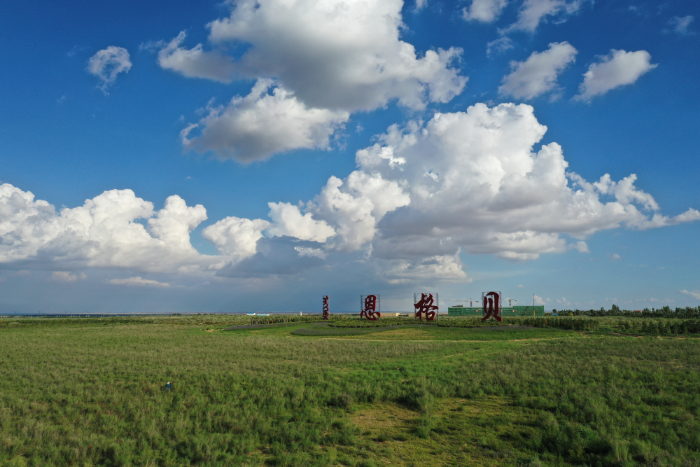
Core Viewpoint - The Engebei Ecological Demonstration Zone in Ordos City, Inner Mongolia, has been awarded the title of "Practice Innovation Base for Green Mountains and Clear Waters are Gold and Silver Mountains" by the Ministry of Ecology and Environment, highlighting its successful transformation from a desert to a lush oasis over the past 40 years and its role in promoting ecological protection and high-quality development in the Yellow River Basin [1][3]. Group 1: Ecological Transformation - Engebei has transformed from a barren land with a vegetation coverage of less than 3% to a thriving ecosystem with a vegetation coverage of 78% and a forest coverage of 41% [4]. - Over 7 million trees have been planted, along with more than 5 million mu of shrubs and 5,000 mu of high-quality forage, significantly enhancing biodiversity from around 20 species to over 600 species [4]. - The area has achieved stable air quality, with PM2.5 annual average concentrations around 20 micrograms per cubic meter and a high level of negative oxygen ions [4]. Group 2: Economic Development - The Engebei Ecological Demonstration Zone has successfully integrated ecological protection with economic development, creating a replicable "Engebei Model" that promotes ecological industrialization and industrial ecology [5]. - The implementation of the "work-for-relief" mechanism has mobilized over 6,000 people for ecological construction, resulting in an average annual income increase of over 20,000 yuan per person [7]. - The area has developed a sand industry system that includes the production of microalgae biological products and the cultivation of specialty crops, contributing to local farmers' income and employment [7]. Group 3: Technological and Policy Support - The establishment of the Engebei Ecological Quality Comprehensive Monitoring Station has provided robust technological support for ecological protection, being recognized as a national monitoring site [4]. - The local government has implemented a coordinated management mechanism to enhance policy support and ensure effective ecological governance [9][10]. - The integration of photovoltaic energy with ecological restoration has led to innovative models that combine clean energy with environmental protection [7]. Group 4: Cultural and Tourism Development - Engebei has developed a four-in-one industry system that includes technology, ecology, research, and health, enhancing its cultural and tourism offerings [8]. - The area has hosted significant events and received over 185,000 visitors, generating tourism revenue of 120 million yuan, showcasing the potential for ecological and cultural tourism integration [8]. Group 5: Future Vision - The local government aims to position Engebei as a global showcase for desertification control and ecological technology innovation, contributing to the ecological security of northern China [12].

俄远东招商免税十年,想撤资?俄方说了算,中企扎堆东北更划算
Sou Hu Cai Jing· 2026-01-05 07:50
Core Viewpoint - The establishment of the International Advanced Development Zone in Russia's Far East, effective from January 1, 2026, offers significant tax incentives and favorable conditions for investment, particularly targeting large companies rather than small and medium enterprises [1][3]. Group 1: Investment Conditions - The policy covers five administrative regions along the China-Russia border, including Primorsky Krai and Khabarovsk Krai, with a minimum investment requirement of 500 million rubles (approximately 44 million RMB) for companies to enter [1]. - The investment zone provides a ten-year tax exemption and guarantees regulatory stability for 15 years, which is designed to attract substantial foreign investment [1][5]. - Companies must produce high-value-added products or engage in projects approved by the Russian government, making it difficult to withdraw investments once established [3][5]. Group 2: Strategic Cooperation - During the 30th regular meeting of the China-Russia Prime Ministers in November 2025, both sides agreed to utilize the favorable policies of the International Advanced Development Zone to promote agricultural cooperation in the Far East [5]. - The cooperation focuses on resource processing, transportation, and logistics, enhancing Russia's export potential of food and beans to China [5][8]. Group 3: Comparative Investment Analysis - The investment environment in Russia's Far East is considered less favorable compared to China's Northeast due to inadequate infrastructure and higher operational costs [6]. - Direct investment in China's Northeast is viewed as more advantageous, as it provides easier access to talent, equipment, and technology without the need for local establishment in Russia [6][8]. - The goal of expanding China-Russia cooperation is to import Russian energy and mineral resources to revitalize China's Northeast industrial base rather than exporting Chinese industrial capabilities to Russia [8][9].
南华期货金融期货早评-20260105
Nan Hua Qi Huo· 2026-01-05 05:02
Report Industry Investment Rating - Not provided in the report Core Views - The US military action in Venezuela is an upgrade of the "Monroe Doctrine 2.0" strategy, which has led to a sharp increase in global risk aversion and a short - term strengthening of the US dollar index. However, in the long - term, it may accelerate the erosion of the US dollar's credit. The RMB is expected to appreciate moderately against the US dollar, but the trend is non - linear [4]. - The domestic PMI in December exceeded expectations, driven by the recovery of supply and demand and price stabilization. The overseas market focuses on the next Fed chair nominee. For silver, it's recommended that holders take profits and non - holders wait for a pullback [2]. - Short - term stock index is expected to be strong but with limited upside due to multiple factors. Treasury bonds are expected to open higher today, and medium - term long positions can be held [5][6]. - Platinum and palladium prices are expected to be volatile in the short - term due to geopolitical risks and index adjustments, but the long - term bullish foundation remains. Gold and silver are in adjustment in the short - term and bullish in the long - term. Copper prices are expected to be affected by volume and price changes. Zinc, tin, lead, and other metals have different market outlooks based on their fundamentals [9][13][15]. - Steel prices are expected to remain volatile. Iron ore prices are expected to be in a neutral pattern and fluctuate. Coking coal and coke prices are affected by inventory and demand. Ferroalloys may correct but are supported by cost [26][27][30]. - Pulp and offset paper prices are in a neutral situation and can be observed first. LPG may be supported in the short - term by geopolitical factors. PTA - PX and MEG - bottle chips are affected by supply and demand and cost. Methanol is likely to start an upward - trending phase. PP and PE are in a supply - demand double - reduction pattern. Asphalt may be strong at the opening. Urea has a price increase expectation for the 05 contract. Glass, soda ash, and caustic soda are expected to fluctuate [32][34][39]. - Hog prices are expected to be supported in the short - term by consumption and supply changes. Oilseeds show a near - strong and far - weak pattern. Oils may strengthen slightly. Cotton prices may correct in the short - term and rise in the long - term. Sugar prices are expected to open slightly lower. Apples may wait for a pullback to go long. Red dates are expected to be in a low - level shock [65][67][68] Summary by Directory Financial Futures - Macro: Pay attention to geopolitical risks such as the US attack on Venezuela and the situation in Iran. The reset of the commodity benchmark index poses a selling risk to gold and silver [1]. - RMB Exchange Rate: The US military action in Venezuela has led to an increase in global risk aversion. The US dollar may show a short - long and long - short pattern, and the RMB is expected to appreciate moderately against the US dollar [4]. - Stock Index: The post - holiday capital environment supports the stock index, but there are many factors restricting its upside, and it is expected to be strong but with limited space in the short - term [5]. - Treasury Bonds: The new regulations on bond fund redemption fees are beneficial to the bond market, and the US military action in Venezuela may also benefit the bond market. Treasury bonds are expected to open higher today [6]. Commodities Non - ferrous Metals - Platinum & Palladium: Prices were volatile last week. In the short - term, they will be affected by the US military action in Venezuela and index adjustments. In the long - term, the bullish foundation remains. It's recommended to be vigilant against callback risks in the short - term [9][13]. - Gold & Silver: They are in adjustment in the short - term. Gold should pay attention to the support levels, and silver has adjustment pressure. They are bullish in the long - term [14][15]. - Copper: The external copper price was stable during the holiday. The US - Venezuela event has limited impact on the domestic opening. It is recommended to hold long positions and conduct high - selling and low - buying operations [16][18]. - Zinc: The upper space is limited, and it is expected to maintain a high - level shock in the short - term [19]. - Tin: The high - price negative feedback has come, and it is expected to maintain a wide - range shock [20]. - Carbonate Lithium: In the short - term, the price is driven by market sentiment, but there is a risk of large fluctuations. In the long - term, it has the opportunity to go long on dips [20][22]. - Industrial Silicon & Polysilicon: Industrial silicon is in a supply - demand double - weak pattern, and it has the value of long - term position building on dips. Polysilicon prices are rising, and attention should be paid to the sustainability of the rise [22][24]. - Lead: It is expected to fluctuate between 16700 - 17600, with strong support at 16500 [24]. Black Metals - Rebar & Hot Rolled Coil: Steel production has slightly increased, and the market is in a weak shock pattern. The price range of rebar 2605 is expected to be between 2900 - 3300, and that of hot - rolled coil 2605 is between 3000 - 3400 [26]. - Iron Ore: The inventory continues to accumulate. The high supply and rigid demand balance each other, and the price is expected to fluctuate [27]. - Coking Coal & Coke: The fourth round of coke price cuts has been fully implemented. The coking coal inventory structure has improved, and the future price depends on the domestic mine resumption. The coke supply - demand structure may improve if the steel mills' production increases [28][29]. - Ferrosilicon & Ferromanganese: They may correct in the short - term, but the cost provides support below [30]. Energy and Chemicals - Pulp - Offset Paper: The pulp market is neutral, and the offset paper price is affected by cost and supply - demand. It is recommended to observe first [32][33]. - LPG: Geopolitical factors may provide short - term support. Attention should be paid to overseas events and domestic PDH maintenance [34][35]. - PTA - PX: They fluctuate with cost. PX is expected to be in short supply in the second quarter, and PTA processing fees are expected to rise with limited space [36][39]. - MEG - Bottle Chips: The demand is weakening, and the inventory is high. The valuation is under pressure before the macro - narrative is realized [40][43]. - Methanol: It is likely to start an upward - trending phase, and attention should be paid to factors such as inventory and MTO profit [44][45]. - PP: The supply and demand are both decreasing. The core concern is the scale of January's device maintenance [46][48]. - PE: Geopolitical conflicts may cause short - term disturbances. The supply pressure is relieved, but the demand is weakening [48][50]. - Asphalt: The short - term cracking may be strong due to supply disturbances caused by the US - Venezuela conflict [51][52]. - Urea: The 05 contract has a price increase expectation, and it is recommended to try to buy the far - month contract [54][55]. - Glass, Soda Ash, and Caustic Soda: Soda ash has an oversupply expectation, glass has high inventory pressure, and caustic soda is expected to fluctuate widely with weak fundamentals [56][57][59]. - Logs: The price has limited fluctuation space, and it is recommended to observe or use a small - interval grid strategy [60][61][62]. - Propylene: The domestic supply is loose, and the price may be affected by cost in the short - term with limited upward space [63]. Agricultural Products - Hogs: The approaching Spring Festival and the decrease in average出栏 weight may support the price in the short - term [65][67]. - Oilseeds: They show a near - strong and far - weak pattern. The supply rhythm of imported soybeans affects the price, and the supply of domestic bean粕 and菜粕 has different situations [68][69][70]. - Oils: They may strengthen slightly after the holiday, and palm oil is relatively strong within the sector [71]. - Cotton: The price may correct in the short - term due to factors such as weak downstream demand, but it has an upward space in the long - term [72][73]. - Sugar: The Zhengzhou sugar price is expected to open slightly lower, suppressed by the decline in the external market [74][75]. - Apples: The consumption slowdown causes short - term pressure, and it is recommended to wait for a pullback to go long [76][77]. - Red Dates: They are in a low - level shock in the short - term, and the price will be under pressure in the long - term due to oversupply [78].
综合晨报-20260105
Guo Tou Qi Huo· 2026-01-05 02:51
gtaxinstitute@essence.com.cn 综合晨报 2026年01月05日 (原油) 假期结束后首日外盘油价震荡。假期期间美委局势引发全球关注,3日美国抓获委内瑞拉总统,特朗 普要求美国石油公司在委内投资以恢复石油基础设施。美国对委内打击目标在于快速实现政权更迭 后接管委内石油资源,目前委内石油产量占全球仅约1%。尽管成员国地缘冲突持续升级,政佩克仍 在4日重申将在第一季度暂停增产。202601全球石油在供过于求主基调下油价中枢下移趋势难以扣 转。 【贵金属】 节日期间金银波动温和,铂肥大幅反弹。美国对委内瑞拉军事行动突显全球局势不确定性,不过事 件影响级别暂时有限,还需关注后续演绎。贵金属处于急涨后的阶段性调整阶段,短期谨慎参与, 波动率下降后维持多头思路。 【铜】 伦铜记录位置震荡,市场将首先消化委内瑞拉局势影响,尤其关注贵金属短线交投情绪。LME0-3月 现货升水38美元。因铜价年底涨势快,LME市场有较大规模已实值看涨期权,1月中上旬关注期权头 寸变动。等待海外机构对铜价预期表现的再修正。延续前期期权组合策略,关注炼厂排产、社库变 动,倘盘面缩量可能倾向价格将继续下调。 【铝】 假日期 ...
12位“科学之星”走上“星光大道”
Zhong Guo Qing Nian Bao· 2026-01-05 02:34
中青报·中青网记者 朱娟娟来源:中国青年报 2026年01月05日 03版 本报武汉1月4日电(中青报·中青网记者 朱娟娟)1月4日,湖北省科技创新大会在武汉举行,湖北省政 府授予312项(人)科学技术奖励。中国科学院院士、武汉大学教授龚健雅和中国工程院院士、华中科 技大学教授丁烈云获科学技术突出贡献奖。 本次授奖项目中,围绕湖北省"51020"先进制造业产业集群,一批创新成果涌现。比如,"复杂行驶环境 下智能汽车感知与决策控制关键技术"在东风汽车、上汽通用五菱等车型实现产业化应用;"月面国旗耐 太空极端环境技术"有力支撑探月任务;"主动脉瘤/夹层治疗技术与产品"累计救治患者超3万人次;"长 粒优质食味籼稻"培育出了5个新品种,推广应用2000万亩。 会议当天,12位"科学之星"代表走上百米红毯铺就的"星光大道"。他们中,既有带领团队突破电子制造 装备关键技术的华中科技大学教授尹周平、用科技筑起防灾减灾"智慧长城"的中国地质大学教授唐辉明 等多位新晋院士,也有培育出世界首例无刺鱼的华中农业大学教授高泽霞等新生代青年科学家。这是湖 北省科技厅第7年举办"科学家走红毯活动"。 ...
2026海南安居房新政炸场!六折+五年可售,引爆四大万亿风口
Sou Hu Cai Jing· 2026-01-05 02:13
Core Insights - The new housing policy in Hainan, effective from January 1, 2026, allows for affordable housing at 60% of the market price, with the ability to sell after five years and full ownership after fifteen years, significantly benefiting homebuyers and attracting capital investment [1][3] Group 1: Policy Highlights - The affordable housing price is set at no more than 60% of the previous year's average market price in the respective city or county, with prices in Sanya as low as 12,800 yuan per square meter, over 50% cheaper than market rates [3] - Homebuyers can apply to sell their property after five years or purchase government equity, providing flexibility and preventing asset lock-in [3] - The policy covers a wide range of applicants, including local residents, introduced talent, and non-residents with two years of residence and social security contributions [3] - The focus is on practical housing types, primarily under 100 square meters, with larger units available for families with multiple children, and increased public housing loan limits [3] - By the end of 2025, Hainan has initiated over 110,000 affordable housing units, with more than 50,000 allocated and an additional 60,000 in inventory or under construction, meeting the demand for first-time buyers [3] Group 2: Infrastructure Development - The policy mandates that infrastructure development must accompany affordable housing projects, with plans to build 250,000 units during the 14th Five-Year Plan, ensuring that transportation and public services are developed in tandem [4] - Transportation upgrades include enhancing rural roads and urban networks, with 100 kilometers of new village roads and improvements to irrigation facilities [4] - Each affordable housing area will include essential services such as schools, clinics, and community centers, aiming for a 90% compliance rate for township health clinics [4] - Urban renewal efforts will also be implemented, improving old neighborhoods and revitalizing existing land, as seen in Haikou's integration of affordable housing with urban renewal [4] Group 3: Consumer Market Expansion - The affordable housing initiative is expected to stimulate a significant increase in consumer spending, with estimates suggesting that furnishing a 100 square meter home could cost between 100,000 to 150,000 yuan, contributing to a multi-trillion yuan market [4] - Major consumer goods such as home renovations, appliances, and furniture are anticipated to see increased demand, with Hainan's public housing loans reaching 8.688 billion yuan in 2025, driving home improvement projects [4] - The influx of residents in affordable housing areas will create demand for community businesses, including supermarkets and restaurants, accelerating the development of local commercial ecosystems [4] - Service sectors such as education, healthcare, and tourism are expected to experience growth due to increased population, enhancing Hainan's wellness and tourism industries [5] Group 4: Agricultural Opportunities - The population growth from affordable housing is projected to open new avenues for Hainan's agriculture, enhancing both local supply and external sales [5] - To support the increased population, Hainan plans to maintain 4.07 million acres of grain planting and establish 150,000 acres of vegetable bases, promoting local food security [5] - The initiative includes branding efforts for Hainan's agricultural products, with plans to develop 35 new agricultural brands and improve logistics for nationwide distribution [5] - Technological advancements in agriculture will be supported through platforms like "Southern Breeding Silicon Valley," focusing on high-quality crop breeding and efficiency improvements [5] Group 5: Technological Integration - The construction of affordable housing will emphasize smart building practices, with a target of 80% of new constructions being prefabricated by 2025, promoting green building technologies [6] - Digital services will be enhanced, including zero-material approvals for public housing loans and rapid processing for rental withdrawals, increasing the demand for digital governance and smart community solutions [6] - Collaboration with technology firms will drive the integration of smart security, green energy, and intelligent property management into affordable housing projects, fostering growth in AI and IoT sectors [6]

青浦“六业”融合六大IP亮相,发展联盟同步成立
Guo Ji Jin Rong Bao· 2026-01-05 01:56
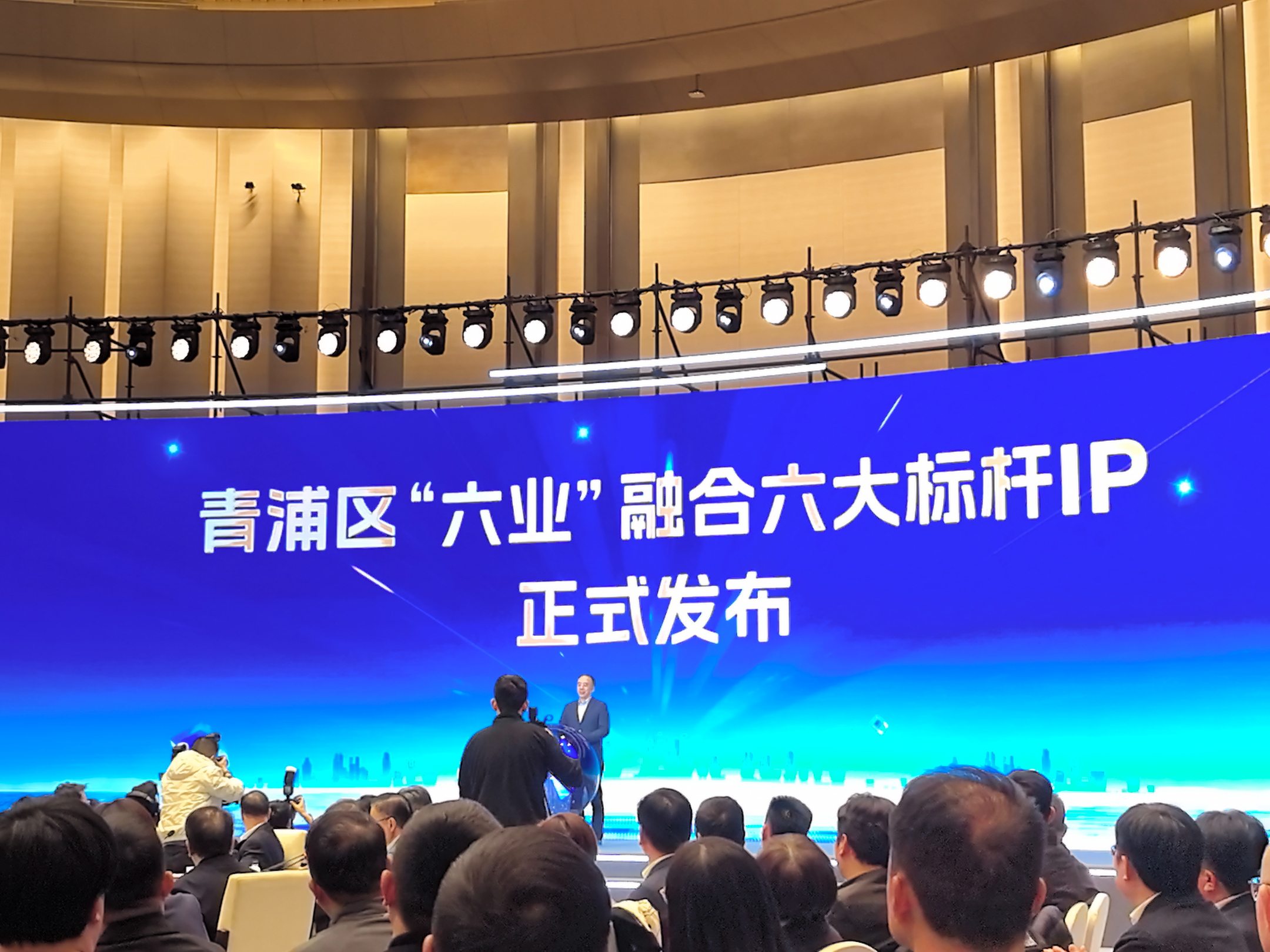
Core Viewpoint - The Qingpu District is actively promoting the integration of six industries (agriculture, culture, tourism, commerce, sports, and health) to achieve a revenue target of 100 billion yuan by 2030, marking a significant step towards high-quality development in the Yangtze River Delta region [1][9]. Group 1: Economic Performance - From January to November 2025, Qingpu received 45.51 million tourists, a year-on-year increase of 19.96% [2] - The total retail sales of consumer goods exceeded 60.88 billion yuan, growing by 11.2% year-on-year [2] - The district launched over 260 cultural tourism activities and 160 promotional events, directly driving consumption by over 300 million yuan [2] Group 2: Investment and Development - Qingpu attracted eight high-quality agricultural projects and five cultural tourism projects, along with 47 new film enterprises and 96 upstream and downstream gaming companies [2] - The "Technology-Driven Agriculture" promotional event resulted in the signing of 26 key projects with an intended investment of 2.033 billion yuan [2] Group 3: Brand and Cultural Initiatives - Six major benchmark IPs were announced, including the World-Class Lakeside Resort and the First Stop for Inbound Tourism in China, indicating a new phase of brand-led and culturally empowered development [6] - Notable events such as the "Most Jiangnan" Cultural Tourism Festival and the World Rowing Championships have stimulated travel and consumption [2] Group 4: Strategic Goals and Policies - The Qingpu District aims to achieve a total revenue of 100 billion yuan from the integration of six industries by 2030, with a focus on optimizing spatial integration and enhancing talent attraction [9] - The establishment of the "Qingpu Agricultural, Cultural, Tourism, Commerce, and Sports Integration Development Alliance" aims to foster collaboration between government and enterprises [10]
资讯早班车-2026-01-05-20260105
Bao Cheng Qi Huo· 2026-01-05 01:21
投资咨询业务资格:证监许可【2011】1778 号 期货研究报告 资讯早班车-2026-01-05 期货研究报告 二、商品投资参考 | 发布日期 | 指标日期 | 指标名称 | 单位 | 当期值 | 上期值 | 去年同期值 | | --- | --- | --- | --- | --- | --- | --- | | 20251020 | 2025/09 | GDP:不变价:当季同比 | % | 4.80 | 5.20 | 4.60 | | 20251231 | 2025/12 | 制造业 PMI | % | 50.10 | 49.20 | 50.10 | | 20251231 | 2025/12 | 非制造业 PMI:商务活 动 | % | 50.20 | 49.50 | 52.20 | | 20251215 | 2025/11 | 社会融资规模增量:当 | 亿元 | | 24888.00 8178.00 | 23288.00 | | | | 月值 | | | | | | 20251212 | 2025/11 | M0(流通中的现金):同 比 | % | 10.60 | 10.60 | 12.70 | | ...
京基智农(000048) - 000048京基智农投资者关系管理信息20260104
2026-01-05 00:52
Group 1: Investment Strategy - The company plans to acquire control of Huibo Robotics through a combination of capital increase, share transfer, and board representation [3] - This acquisition aligns with the company's core development strategy of "stable main business + technology empowerment" [4] - The transaction is expected to position the company in the "robotics + artificial intelligence" sector, marking a new development pattern of "agriculture + technology" [4] Group 2: Huibo Robotics Overview - As of September 2025, Huibo Robotics has total assets of CNY 1.004 billion and net assets of CNY 317 million [3] - The company has a strong core team with extensive experience in robotics and intelligent manufacturing, achieving significant innovations and national honors [5] - Huibo Robotics has established a comprehensive core technology system, including a production capacity of 30,000 integrated joints annually [5] Group 3: Market Applications and Growth Potential - Huibo Robotics' products are primarily used in four sectors: education, energy inspection, intelligent manufacturing, and commercial interaction [8] - The company commits to an annual revenue growth rate of no less than 30% from 2026 to 2028, supported by solid business layouts and growth potential [9] - In the education sector, Huibo has partnered with nearly 2,000 schools, creating a beneficial cycle between industry and education [9] Group 4: Future Business Development - The company is focusing on the renewable energy sector, developing modular photovoltaic cleaning robots and intelligent operation systems, with a recent contract worth nearly CNY 100 million [10] - Plans to explore new application scenarios in pig farming, hospitality, and property management, leveraging core technology features [10] - The collaboration with Huibo Robotics aims to accelerate the establishment of a robotics research institute, enhancing technology development and commercialization [10]

资本活水精准浇灌科创花
Shan Xi Ri Bao· 2026-01-05 00:37
Group 1: Investment and Funding - The Shaanxi Provincial Government Investment Guidance Fund has invested a total of 20 million yuan in Shaanxi Dingyi Technology Co., Ltd. to support its potential in high-end materials, which has been crucial for the company's technological research and development [1] - The fund has injected 100 million yuan into the Photonic Strong Chain Fund to support the production of photonic chips at the Shaanxi Photonic Pilot Institute [2] - Over 90% of the funds from the provincial government investment guidance fund have been directed towards innovative enterprises, with 144 specialized and innovative enterprises receiving support [3] Group 2: Industry Development and Ecosystem - The investment strategy of the provincial government investment guidance fund focuses on "extending, supplementing, and strengthening" the industrial chain in the fields of equipment manufacturing and new materials [2] - The fund has created a complete ecological chain from research and development to market sales, attracting nearly 100 photonic enterprises [2] - The fund's exploration of the "fund + production area + technology" model has led to a multi-point layout in agriculture, with a total scale exceeding 3 billion yuan, injecting financial resources into rural revitalization [4] Group 3: Agricultural Innovation - The seed fund established by the provincial government investment guidance fund aims to support the revitalization of the seed industry, focusing on cutting-edge areas such as biological breeding [4] - The investment in the supply platform "Cai Shi Xian" under Yonghui is intended to enhance the processing, sorting, and circulation efficiency of high-quality agricultural products from Shaanxi [4]