
服务业

Search documents
除了12315,这些维权渠道同样给力
Xin Lang Cai Jing· 2025-09-23 06:50
Group 1 - The article emphasizes that there are multiple effective channels for consumer rights protection beyond just 12315, including Black Cat Complaints and local consumer associations [2][9] - Black Cat Complaints focuses on consumer rights protection across various sectors such as e-commerce, education, finance, and services, providing a transparent process for users to submit complaints and track responses [2][9] - Local consumer associations play a role in mediation, helping consumers resolve disputes with merchants by facilitating communication, although they lack enforcement power [2][9] Group 2 - The 12345 government service hotline addresses a wide range of public issues, including consumer disputes, labor issues, and urban construction problems, with a feedback timeline of 7-15 working days [3][9] - Industry-specific regulatory bodies provide specialized complaint channels, such as the China Banking and Insurance Regulatory Commission for financial issues, local labor departments for labor disputes, and the Ministry of Industry and Information Technology for telecommunications problems [4][5][6][7] - Arbitration and litigation serve as the final legal recourse for consumers when other methods fail, with arbitration being more flexible and litigation providing the strongest authority for enforcing rights [8][9]
AI对未来经济可能产生的影响
Sou Hu Cai Jing· 2025-09-23 03:17
以下是基于最新研究成果的AI对未来经济影响的综合分析,涵盖增长动能、产业结构变革、就业重塑 及潜在风险四个维度:经济增长新引擎;生产力跃升:制造业通过AI优化供应链与能耗管理,生产效 率提升40%以上,能耗降低10%-30%。服务业人力成本下降30%-50%(如金融风险评估、医疗诊断), 推动全要素生产率年均增长2%-3%。 资本开支拉动:2025年美国四大云厂商AI相关资本开支增量达861亿美元(占GDP 0.3%),中国头部企 业增量约1498亿元(占GDP 0.11%)。技术扩散效应推动传统行业智能化改造,类比新能源投资规模。 创新驱动循环:AI提效→劳动者收入与企业利润双增→消费扩张→反哺企业业绩,形成经济正循环。 生成式AI催生个性化服务新业态,成为万亿级市场增长点。 五、国际竞争格局 四、风险与挑战,经济失衡加剧:区域发展差距扩大:欠发达地区恐失成本优势,加剧收入分配不平 等。行业垄断风险:头部企业通过数据壁垒强化市场支配地位。增长预期争议;乐观预测:生成式AI 十年内助推全球GDP增长7%(约7万亿美元)。谨慎观点:AI对美国GDP的贡献率可能仅0.8%-1.3%。 伦理治理缺口;算法偏见导致招 ...


从“提振消费”到“扩大服务消费”,政策扩围筑牢经济增长根基
Yang Guang Wang· 2025-09-21 05:09
Core Insights - The article discusses the recent issuance of 19 specific measures by the Ministry of Commerce and nine other departments to expand service consumption, aligning with previous consumption stimulus plans to enhance economic growth and improve living standards [1][5]. Group 1: Policy Measures - The new measures focus on five main areas: cultivating service consumption promotion platforms, enriching high-quality service supply, and addressing both incremental and stock policies to strengthen economic foundations [1]. - The policies aim to transition China's consumption market from material consumption to service consumption, which is seen as a dual link between economic development and public welfare [1]. Group 2: Market Trends - Data indicates that service consumption expenditure by residents has reached 46.1% of per capita consumption expenditure, with expectations to exceed 50% by 2030, marking a shift towards a service-oriented consumption society [1]. - The service consumption sector encompasses traditional labor-intensive industries like dining and tourism, as well as new economic forms such as digital and green economies, indicating a broad market potential [1][4]. Group 3: Economic Impact - The growth in service consumption is expected to directly boost the recovery and upgrading of traditional service industries while fostering new business models like smart elderly care and immersive tourism [1][4]. - The article highlights the significant market space revealed by recent trends in cultural and tourism consumption, with various service categories experiencing double-digit growth from January to August this year [4]. Group 4: Implementation and Collaboration - Successful implementation of the policies requires multi-departmental collaboration to break down data barriers and enhance consumer service experiences [4]. - The article emphasizes the need for policy alignment and support to stimulate market vitality, encouraging enterprises to innovate and provide high-quality service products that meet consumer demands [4].

央广时评|从“提振消费”到“扩大服务消费”,政策扩围筑牢经济增长根基
Sou Hu Cai Jing· 2025-09-21 02:26
Core Viewpoint - The recent issuance of 19 specific measures by the Ministry of Commerce and nine other departments aims to expand service consumption, aligning with previous consumption stimulus plans and highlighting a shift from material to service-oriented consumption in China [1][3][4] Group 1: Policy Measures - The new measures focus on five main areas: cultivating service consumption promotion platforms, enriching high-quality service supply, and addressing both incremental and existing policies to strengthen economic growth [1][4] - The policies are designed to directly address consumer needs, such as improving elderly and childcare services, standardizing domestic services, and easing market access in high-end medical and leisure sectors [3][4] Group 2: Market Trends - China's service consumption is projected to exceed 50% of per capita consumption expenditure by 2030, indicating a significant transition to a service-oriented consumption society [1] - The service consumption sector encompasses traditional industries like dining and tourism, as well as emerging sectors linked to the digital and green economies, creating new growth opportunities [1] Group 3: Economic Impact - The growth in service consumption is seen as a crucial driver for overall domestic demand, with notable increases in retail sales across various service categories in the first eight months of the year [3] - The implementation of these policies is expected to enhance the quality of life for consumers and solidify the economic foundation for high-quality development in China [4]

热点思考 | 财政“下半场”,可能的“后手”?(申万宏观·赵伟团队)
赵伟宏观探索· 2025-09-20 07:13
Group 1 - The core viewpoint of the article emphasizes the significant role of fiscal policy in supporting economic resilience in the first half of 2025, with a broad fiscal expenditure growth rate of 8.9%, surpassing the nominal GDP growth rate of 4.3% [3][10] - Fiscal expenditures in the first half of 2025 showed a front-loaded rhythm and differentiated allocation, with a focus on debt resolution and rapid implementation of special refinancing bonds, amounting to nearly 1.8 trillion yuan [3][22] - Key areas of fiscal support included social security and employment, with expenditures increasing by 9.2% year-on-year, and scientific and technological spending rising by 9.1% compared to the same period in 2024 [3][22] Group 2 - The necessity and possibility of increasing fiscal measures in the second half of 2025 are highlighted, especially if economic pressures become evident, with potential adjustments to fiscal policies to meet annual GDP targets [5][40] - The article discusses two categories of fiscal tools for potential increases: one involving incremental policies that do not require budget adjustments, and another involving new government debt limits that require approval from the National People's Congress [6][68] - Historical context is provided regarding past adjustments to fiscal budgets, indicating that significant changes have occurred infrequently, with the last major adjustment in October 2023 involving an additional 1 trillion yuan in government bonds [6][68] Group 3 - Current fiscal priorities are identified as risk prevention, transformation promotion, livelihood protection, and consumption stimulation, with a focus on addressing hidden debt issues at the local government level [7][74] - The article notes that new emerging industries and service sector development are key areas of support, as indicated by recent political meetings emphasizing new pillar industries and increased openness in the service sector [7][81] - Specific fiscal measures include the establishment of a childcare subsidy fund with an initial budget of approximately 90 billion yuan, aimed at supporting families with children [7][89]

股指黄金周度报告-20250919
Xin Ji Yuan Qi Huo· 2025-09-19 11:19
1. Report Industry Investment Rating - Not provided 2. Core Viewpoints of the Report - In the short - term, due to repeated digestion of domestic policy benefits and unimproved corporate profits, the stock index may face callback risks; after the Fed's September rate cut, the expectation of three rate cuts this year has been digested, and gold may enter a phase - based adjustment after a rapid rise. In the medium - to long - term, the stock index's valuation is dragged down by the decline in corporate profit growth, and it will maintain a wide - range oscillation; gold may face a deep adjustment due to the fading of uncertainties and fully digested rate - cut expectations [39] 3. Summary by Relevant Catalogs 3.1 Domestic and Foreign Macroeconomic Data - From January to August this year, the growth rate of fixed - asset investment continued to decline, industrial production decreased but remained at a high level, and the consumption growth rate slowed down marginally, indicating a weak foundation for China's economic recovery, with prominent characteristics of strong production but weak demand and strong service industry but weak manufacturing [4][39] 3.2 Stock Index Fundamental Data - The year - on - year growth rate of M1 continued to rise, and the gap with M2 further narrowed, reflecting increased fiscal spending and a transfer of government deposits to enterprises and residents. The A - share market was active with abundant liquidity [15] - The margin trading balance in the Shanghai and Shenzhen stock markets approached 2.4 trillion yuan, hitting a new high. The central bank conducted 1.8268 trillion yuan of 7 - day reverse repurchase operations this week, achieving a net injection of 562.3 billion yuan [18] 3.3 Gold Fundamental Data - The University of Michigan's consumer confidence index in the US dropped from 58.2 to 55.4 in September, hitting a new low since June. The one - year inflation expectation was 4.8%, down 0.1 percentage point from last month, indicating negative impacts of US tariff policies, a slowdown in labor demand, and suppressed consumer confidence and spending [26] - The warehouse receipts and inventory of Shanghai gold futures continued to soar, reflecting increased demand for physical gold delivery and high market bullish sentiment [37] 3.4 Strategy Recommendation - Short - term: Be cautious of the callback risk of the stock index; gold may enter a phase - based adjustment. Medium - to long - term: The stock index will maintain a wide - range oscillation; gold may face a deep adjustment [39]
【环球财经】东京股市小幅回落 日经225指数跌0.57%
Xin Hua Cai Jing· 2025-09-19 08:02
Core Viewpoint - The Tokyo stock market experienced a slight decline on September 19, with the Nikkei 225 index falling by 0.57% and the Tokyo Stock Exchange Price Index decreasing by 0.35% due to the impact of the Bank of Japan's decision to sell its holdings of exchange-traded funds (ETFs) [1]. Market Performance - The Nikkei 225 index closed down by 257.62 points at 45045.81 points [1]. - The Tokyo Stock Exchange Price Index fell by 11.19 points, ending at 3147.68 points [1]. Sector Performance - Most of the 33 industry sectors on the Tokyo Stock Exchange saw declines, with notable drops in the other products, services, and precision machinery sectors [1]. - Conversely, the banking, wholesale, securities, and commodity futures trading sectors experienced gains [1].
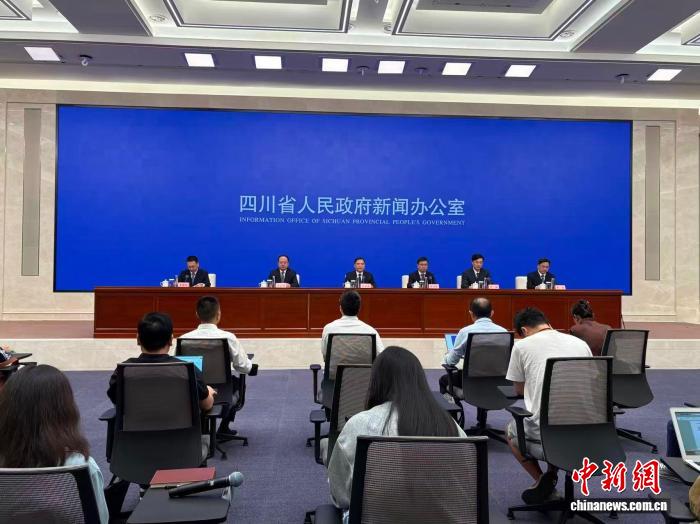
四川经济总量连续跨过两个万亿元大关 实现历史性晋位
Zhong Guo Xin Wen Wang· 2025-09-19 06:51
Core Insights - Sichuan's economic total has crossed two trillion yuan thresholds, exceeding 6 trillion yuan, ranking it 5th nationally, marking a historic advancement [1][2] - The per capita GDP of Sichuan has surpassed 10,000 USD, indicating a significant improvement in comprehensive economic strength [2] Economic Structure and Growth - Over the past five years, Sichuan's industrial structure has been optimized, with the added value of strategic emerging industries accounting for 30% of the above-scale industrial output [2] - The service sector contributed over 60% to economic growth, showcasing a shift towards a more service-oriented economy [2] - Sichuan has developed three trillion-yuan industrial clusters and five national advanced manufacturing clusters, enhancing new economic momentum [2] Infrastructure and Connectivity - Sichuan has improved its comprehensive transportation network, adding 13 new major access routes, totaling 51 [2] - Chengdu International Airport has seen annual passenger throughput exceed 87 million, establishing Chengdu as the "third aviation city" in China [2] - The province's openness has significantly increased, with total import and export volume surpassing 1 trillion yuan, ranking first in the central and western regions [2] Investment and Consumption - Key projects in Sichuan have seen cumulative investments exceeding 4 trillion yuan [2] - Chengdu has become the second provincial capital in China to surpass 1 trillion yuan in consumption [2] - The core value added of the digital economy has exceeded 500 billion yuan, indicating robust growth in emerging industries [2]
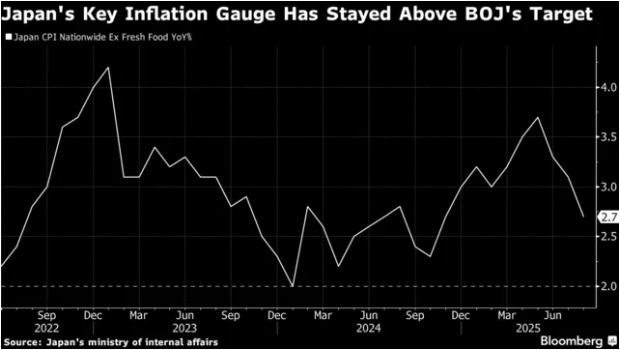
通胀“降温”难掩内核火热 日本央行加息时机成焦点
Zhi Tong Cai Jing· 2025-09-19 01:06
Core Insights - Japan's consumer inflation rate has unexpectedly slowed down due to government utility subsidy policies, but it remains significantly above the central bank's target ahead of an upcoming policy decision [1][3] - The core Consumer Price Index (CPI), excluding fresh food, rose by 2.7% year-on-year in August, down from 3.1% in July, marking the lowest level since November of the previous year [1][3] - The overall CPI also decreased from 3.1% to 2.7% year-on-year during the same period [1] Inflation Dynamics - The core-core CPI, which excludes energy prices, increased by 3.3% year-on-year, slightly lower than July's level, aligning with analyst expectations [3] - Despite the anticipated unchanged policy from the Bank of Japan, the CPI data is not expected to influence the monetary policy decision [3] - The energy prices saw a year-on-year decline of 3.3%, the largest drop since January 2024, while government subsidies for gas and electricity lowered the overall CPI by 0.26 percentage points [3][4] Food Prices and Their Impact - Food prices have also contributed to the slowdown in inflation, with processed food prices rising by 8% year-on-year, down from 8.3% in July, and rice prices significantly dropping from 90.7% to 69.7% [4] - Gasoline prices increased by 0.6% year-on-year in August, reversing a 1.3% decline in July, indicating persistent inflationary pressures [4] - The ongoing high food inflation is likely to become a focal point in discussions regarding the Bank of Japan's policy [4]
巴西财政部将今年GDP增长预期下调至2.3%
Shang Wu Bu Wang Zhan· 2025-09-17 17:31
Economic Outlook - Brazil's Ministry of Finance has revised the GDP growth forecast for this year from 2.5% to 2.3% [1] - Inflation expectations have also been adjusted downwards from 4.9% to 4.8% [1] Impact of Tariffs - The potential imposition of tariffs by the U.S. from August 2025 to December 2026 could lead to a 0.2 percentage point decrease in Brazil's GDP growth [1] - However, the "Brazil Sovereignty Plan" is expected to mitigate this negative impact, reducing the GDP growth decline to 0.1 percentage points [1] Employment Effects - Without considering the effects of the "Brazil Sovereignty Plan," Brazil could lose approximately 138,000 jobs [1] - The services sector may see a loss of 51,800 jobs, representing about 0.1% of total employment in that sector [1] - The industrial sector is projected to lose 71,500 jobs, accounting for roughly 0.4% of its total employment [1] Additional Economic Indicators - The share of exports in GDP is expected to decline by 0.1 percentage points [1] - The unemployment rate may increase by 0.1 percentage points [1] - Inflation rate is anticipated to rise by 0.1 percentage points [1]