债券

Search documents
2026年信用债年度策略:分化格局,更宜求稳
Ping An Securities· 2025-12-14 07:09
证券研究报告 分化格局,更宜求稳 ——2026年信用债年度策略 证券分析师 刘 璐 投资咨询资格编号:S1060519060001 张君瑞 投资咨询资格编号:S1060519080001 2025年12月14日 请务必阅读正文后免责条款 摘要 2025年信用利差压缩,低等级利差大幅压缩,说明2025年信用债市场以"合"为大势。国开债收益率上升,信用债收益率上行相对较少;信用利差 多压缩,其中低等级和1Y压缩最多。趋势上看,中高等级信用利差上半年压缩下半年有所分化,低等级信用利差以下行趋势为主。2025年信用债供 给弱于利率债,需求相对平稳,信用风险进一步降低,支撑了信用利差、尤其是低等级信用利差的压缩。 2026年信用债不具备走熊的基础,但信用利差或有一定的走阔风险,分化或有所增大。(1)从绝对收益角度看,目前信用债收益率和信用利差偏 低,但3年期投资级信用债的套息空间接近50BP,考虑到26年或有1-2次降息,信用债不具备走熊的基础,因此信用债仍具有票息价值。(2)从相 对收益角度看,26年信用债供需格局或不如利率债。2026年信用债供给或边际提升,利率债或持平,信用债相对于利率债供给或增加。需求方面, 理 ...
中资离岸债风控双周报(12月1日至12日):一级市场发行趋缓 二级市场小幅上涨
Sou Hu Cai Jing· 2025-12-13 03:55
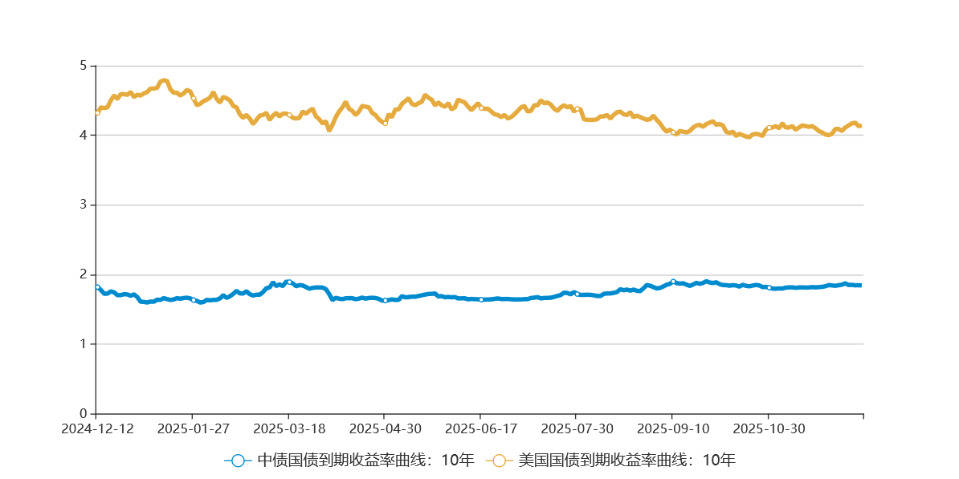
Primary Market - In the past two weeks (December 1-12, 2025), a total of 25 offshore bonds were issued by Chinese entities, including 6 RMB bonds, 15 USD bonds, and 4 HKD bonds, with issuance scales of 2.745 billion RMB, 2.835 billion USD, and 2.58 billion HKD respectively [1] - The largest single issuance in the offshore RMB bond market was 740 million RMB by Kaifeng Cultural Tourism Investment Group [1] - The highest coupon rate for RMB bonds was 5.9%, issued by Chengdu Dongjin Huai Prefecture New City Investment Group [1] - In the USD bond market, the largest single issuance was 600 million USD by China Minmetals Corporation, with the highest coupon rate of 5.19% issued by the International Bank for Reconstruction and Development [1] Secondary Market - As of December 12, 2025, the Markit iBoxx Chinese USD bond composite index increased by 0.09% to 250.91, while the investment-grade USD bond index rose by 0.01% to 243.96, and the high-yield USD bond index increased by 0.77% to 241.4 [2] - The real estate USD bond index rose by 1.37% to 178.04, the city investment USD bond index increased by 0.16% to 153.69, and the financial USD bond index rose by 0.23% to 290.35 [2] Benchmark Spread - As of December 12, 2025, the spread between the 10-year benchmark government bonds of China and the US widened to 232.79 basis points, an increase of 1.74 basis points from the previous week [3] Rating Changes - Several credit rating adjustments occurred in the past two weeks, including the withdrawal of ratings for various companies such as Taixing Jiangqiao Investment Development Co., Ltd. and Vanke Real Estate (Hong Kong) Co., Ltd. [6] Domestic News - The first offshore bond issuance by a non-bank financial institution in the Shanghai Free Trade Zone was completed, with an issuance amount of 500 million RMB and a coupon rate of 1.8% [7] - The Ministry of Finance successfully issued 7 billion RMB of government bonds in Hong Kong, with a subscription multiple of 5.22 times [8] - Shenzhen's first batch of green foreign debt pilot projects has been launched, with total signed amounts exceeding 170 million RMB [8] - The first QFI commodity futures transaction using government bonds as collateral was successfully completed [9] Overseas News - The Federal Reserve announced a 25 basis point reduction in the federal funds rate target range to 3.5%-3.75% [10] - The Federal Reserve reappointed 11 regional Federal Reserve Bank presidents, alleviating personnel uncertainty concerns [11] Default and Extension - New City Holdings completed the issuance of 1.75 billion RMB of medium-term notes [12][13] - Agile Group faced a winding-up petition from creditors, with a hearing scheduled for February 2026 [14] - CIFI Group announced plans to repurchase bonds totaling up to 220 million RMB [15] - Fantasia Group announced a suspension of all outstanding bonds starting December 15, 2025, for debt repayment arrangements [15]

【立方债市通】资产证券化专场会议启动报名/河南力争明年民企债券融资超200亿/万科首个展期债券债权人大会召开
Sou Hu Cai Jing· 2025-12-12 20:42
Group 1 - The 2025 Bond Market High-Quality Development Conference will be held in Zhengzhou from December 17 to 19, featuring a dedicated session on asset securitization for the first time [1] - The asset securitization session aims to respond to national policies for revitalizing existing assets and will focus on tools like REITs, CMBS, and ABS to help companies convert assets into capital [1] - The Henan Provincial Financial Office aims for private enterprise bond financing to exceed 20 billion yuan by 2026, enhancing the cultivation of bond issuance entities and project reserves [3] Group 2 - The Ministry of Finance plans to issue two special government bonds with a total scale of 750 billion yuan, including a 4 billion yuan 10-year bond and a 3.5 billion yuan 15-year bond [5] - The newly released Sci-Tech CDS Index consists of 25 prominent tech bond issuers, focusing on high-tech manufacturing, services, and strategic emerging industries [6] - The People's Bank of China conducted a 1,898 billion yuan 7-day reverse repurchase operation, resulting in a net injection of 1,105 billion yuan [7] Group 3 - Henan Province issued 11.4756 billion yuan in government bonds, with funds allocated for debt repayment and key infrastructure projects [8] - The first specific asset income rights investment business in Henan has been established, marking an innovative financial tool in the region [14] - Contemporary Amperex Technology Co., Ltd. plans to register bonds not exceeding 10 billion yuan for project construction and debt repayment [15] Group 4 - CIFI Group reported overdue debts totaling 1.898 billion yuan, with restructuring plans approved for its existing bonds [19] - The market outlook suggests that low interest rates may not provide a stable environment for the bond market, with potential for increased volatility in 2026 [20][21]



长端英债收益率周五涨约6个基点,本周30年期英债收益率涨超7个基点
Sou Hu Cai Jing· 2025-12-12 17:46
Group 1 - The core viewpoint of the article highlights the fluctuations in UK government bond yields, with the 10-year yield rising by 3.3 basis points to 4.517% and a total increase of 4.0 basis points for the week [1] - The 2-year UK bond yield decreased by 2.4 basis points to 3.747%, with a weekly decline of 3.4 basis points, influenced by the Federal Reserve's announcement of interest rate cuts and treasury purchase plans [1] - The 30-year UK bond yield increased by 6.1 basis points to 5.268%, showing a total weekly rise of 7.4 basis points, while the 50-year yield rose by 5.9 basis points to 4.737%, with a weekly increase of 6.1 basis points [1] Group 2 - The yield spread between the 2-year and 10-year UK bonds increased by 5.535 basis points to +76.685 basis points, with a total weekly rise of 7.264 basis points [1]
美联储降息刺激乐观情绪,美股基金三周来首现回流,但AI板块冷遇
Hua Er Jie Jian Wen· 2025-12-12 14:36
Group 1: U.S. Stock Funds - U.S. stock funds experienced a turnaround with a net inflow of $3.3 billion for the week ending December 10, recovering nearly the $3.52 billion net outflow from the previous week [1] - Sector-wise, U.S. equity sector funds saw a net inflow of $2.81 billion, marking the largest single-week inflow since late October [1] - The metals and mining, industrials, and healthcare sectors performed notably well, attracting net inflows of $672 million, $548 million, and $527 million respectively [1] Group 2: Artificial Intelligence Sector - Despite the overall positive sentiment driven by interest rate cut expectations, investment interest in the artificial intelligence sector has cooled [1] - Oracle's latest earnings guidance fell short of expectations, heightening concerns about the slowing profit growth of AI companies [1] - This indicates that investors are becoming more cautious in evaluating high-valuation tech stocks amidst the easing expectations, shifting focus towards traditional sectors that benefit from the economic cycle and lower interest rates [1] Group 3: Bond Funds - The bond market also saw significant uplift due to interest rate cut expectations, with U.S. bond funds recording a net inflow of $3.49 billion, a substantial increase from the previous week's $291 million [2] - There was a structural shift in fund allocation, with intermediate and short-term investment-grade bond funds receiving a net inflow of $2.61 billion, reaching a seven-week high [2] - Conversely, general domestic taxable fixed income funds experienced a net outflow of $902 million [2] Group 4: Money Market Funds - The money market showed a clear sign of fund redirection, with a net outflow of $4.58 billion after a strong inflow of $105.03 billion the previous week [2] - This shift reflects a typical asset allocation adjustment logic during a monetary policy easing cycle, as investors move funds from low-yield cash assets to riskier assets like stocks and bonds [2]
经济大省发债图谱:GDP前五拿了全国三分之一发债额度
第一财经· 2025-12-12 07:58
Core Viewpoint - The article discusses the significant issuance of local government bonds in China, highlighting the allocation favoring economically strong provinces to support investment and project construction [3][4]. Group 1: Bond Issuance Overview - In the first ten months of 2025, 36 provinces and municipalities in China issued approximately 4.7 trillion yuan in new bonds, with Guangdong, Shandong, Zhejiang, Jiangsu, and Sichuan leading in issuance [3][4]. - The total planned issuance for the year was set at 5.2 trillion yuan, with an additional 200 billion yuan allocated in October, bringing the total to about 5.4 trillion yuan [3][4]. - By December 11, the total issuance of new bonds reached approximately 5.3 trillion yuan, accounting for about 98% of the annual target [3][4]. Group 2: Purpose and Allocation of Bonds - The primary use of newly issued bonds is for project construction, serving as a crucial funding source for local governments amid fiscal challenges [4][5]. - Economically strong provinces received about one-third of the total new bond issuance, reflecting their fiscal strength and lower debt risks [5]. Group 3: Refinancing Bonds - In addition to new bonds, refinancing bonds are also significant, primarily used to repay old debts and replace hidden debts [5][10]. - By December 11, the total issuance of local government bonds, including refinancing bonds, reached approximately 10.2 trillion yuan [10]. Group 4: Bond Issuance Trends - The average issuance term for local government bonds increased to 15.56 years, up by 2.19 years year-on-year, with 75.14% of bonds issued having a term of 10 years or more [10]. - The total local government debt balance was approximately 54.01 trillion yuan as of the end of October, remaining within the approved limit of about 57.99 trillion yuan [11]. Group 5: Investor Composition - The primary investors in local government bonds are financial institutions, with banks holding about 51 trillion yuan, representing 95.35% of the total [11]. - There is a trend of decreasing proportion of bonds held by commercial banks, with an increase in investments from asset management products and other non-legal entities [11].
固收周报:超长债仍需规避短期波动,静待政策信号-20251212
Yong Xing Zheng Quan· 2025-12-12 05:47
Report Industry Investment Rating No relevant content provided. Core Viewpoints - Interest rate bonds: From November 28 to December 5, 2025, the central bank conducted a total of 96.51 billion yuan in reverse repurchase operations, with 188.68 billion yuan in reverse repurchases maturing, resulting in a net withdrawal of 92.17 billion yuan. Bank - to - bank funds prices showed mixed trends. During December 1 - 7, 2025, 43.0717 billion yuan of interest - rate bonds were issued, with total repayments of 51.0485 billion yuan and a net financing of - 7.9767 billion yuan. Long - term treasury bond yields increased, and the 10Y - 1Y term spread widened from 43.95BP to 44.64BP [1]. - Credit bonds: From December 1 to 7, 2025, 802 credit bonds (including inter - bank certificates of deposit) were issued in the primary market, totaling 93.1004 billion yuan, a decrease of 23.6083 billion yuan from the previous period, with a net financing of 21.1647 billion yuan. Credit bond yields to maturity increased. For example, among urban investment bonds, the 10 - year yields of AA +, AA, and AA - ratings increased the most, by 7.79BP [2]. - Observation of major asset classes: From November 28 to December 5, 2025, the three major US stock indexes rose, European three major stock indexes showed divergence, US bond yields mostly increased, the US dollar index weakened, non - US currencies strengthened, crude oil prices rebounded during the week, and gold futures and spot prices showed divergence [3]. Summary by Directory 1. Interest Rate Bonds: Long - term Treasury Bond Yields Increase, Term Spread Widens 1.1 Liquidity Observation: Net Liquidity Decline, Mixed Fund Movements - From November 28 to December 5, 2025, the central bank's full - scale net withdrawal was 92.17 billion yuan. Bank - to - bank and exchange funds prices showed mixed trends. For example, DR001 decreased by 0.30BP to 1.3003%, and DR007 decreased by 2.88BP to 1.4380% [16]. 1.2 Primary Market Issuance: Decrease in Net Financing, Decline in Local Bond Issuance - From December 1 to 7, 2025, the net financing of interest - rate bonds was - 7.9767 billion yuan. Treasury bonds raised 22.3 billion yuan, policy - based financial bonds raised 9.9 billion yuan, and local government bond issuance decreased, raising 10.8717 billion yuan [25]. 1.3 Secondary Market Trading: Long - term Treasury Bond Yields Increase, Term Spread Widens - From November 28 to December 5, 2025, long - term treasury bond yields increased. The 10Y - 1Y term spread of treasury bonds widened from 43.95BP to 44.64BP, and that of policy - bank bonds widened from 34.94BP to 37.66BP [32]. 2. Credit Bonds: Credit Bond Yields to Maturity Increase 2.1 Primary Market Issuance: Decrease in Issuance Volume Compared with the Previous Period - From December 1 to 7, 2025, 802 credit bonds were issued in the primary market, a decrease of 23.6083 billion yuan from the previous period, with a net financing of 21.1647 billion yuan. Asset - backed securities had the largest proportion in terms of issuance number, and financial bonds accounted for the highest proportion in terms of issuance amount. The issuance was mainly in the 3 - 5 - year range, and the construction industry had the largest number of bond issuances [44]. 2.2 Secondary Market Trading: Credit Bond Yields to Maturity Increase - From November 28 to December 5, 2025, urban investment bond yields to maturity increased, with the 10 - year yields of AA +, AA, and AA - ratings increasing the most, by 7.79BP. Among medium - and short - term notes, the 5 - year yield of AA + rating increased the most, by 4.74BP [54]. 2.3 One - Week Review of Credit Default Events - From December 1 to 7, 2025, 1 enterprise's credit bonds defaulted [56]. 3. Observation of Major Asset Classes 3.1 Most European and American Stock Indexes Rise - From November 28 to December 5, 2025, the three major US stock indexes rose, European three major stock indexes showed divergence, and Asia - Pacific stock indexes generally rose [57]. 3.2 Most US Bond Yields Increase - From November 28 to December 5, 2025, most US bond yields increased. The 10Y - 1Y term spread changed by 12.00BP to 53.00BP [60]. 3.3 The US Dollar Index Weakens, Non - US Currencies Strengthen - From November 28 to December 5, 2025, the US dollar index decreased by 0.46%, and non - US currencies strengthened. For example, the British pound against the US dollar increased by 0.77%, and the euro against the US dollar increased by 0.37% [64]. 3.4 Crude Oil Rebounds During the Week, Gold Futures and Spot Prices Diverge - From November 28 to December 5, 2025, COMEX gold futures prices decreased by 0.62%, London spot gold prices increased by 1.24%, Brent crude oil prices increased by 0.87%, and WTI crude oil prices increased by 2.61% [66]. 4. Investment Recommendations - In the short term, ultra - long - term bonds are experiencing increased volatility. The reasons may include the transmission of market sentiment caused by the credit risks of bonds like those of Vanke, trading congestion, and changes in policy expectations. The bond market in the next week may focus on policy games and changes in the capital market. Investors are recommended to pay attention to the policy signals from the Politburo meeting, the Central Economic Work Conference, and the results of the Federal Reserve's interest - rate meeting. They should focus on the support level of around 1.85% for 10 - year treasury bonds. If policies exceed expectations, they can appropriately shorten the duration. Ultra - long - term bonds need to avoid short - term fluctuations and wait for central bank policy signals. For credit bonds, focus on the allocation value of Tier 2 capital bonds and long - duration credit bonds [70].
固收-2026,信用低静态、高动态
2025-12-12 02:19
Summary of Conference Call Notes Industry Overview - The focus is on the credit bond market, particularly the dynamics of corporate bonds and the impact of regulatory changes on investment strategies in 2025 and 2026 [1][4][9]. Key Points and Arguments Credit Market Performance in 2025 - The credit market is expected to show a stair-step resistance to declines, with short-term credit bonds outperforming interest rate bonds [2]. - The yield curve for both interest rates and credit has undergone a reshaping process, with secondary perpetual bonds steepening significantly, approximately 10 basis points higher than medium-term notes [2]. - The market can be segmented into phases, with notable trends including a tightening of funds at the beginning of the year, stabilization in late March to early April, and a significant demand for technology innovation ETFs from May to July [2]. Supply and Demand Dynamics - Net financing for credit bonds in 2025 is projected to exceed 3 trillion yuan, primarily driven by state-owned enterprise (SOE) bonds, while local government bonds are expected to continue a trend of reduced issuance, estimated at around 200 billion yuan [1][4]. - SOEs are showing clear signals of increasing leverage, with private enterprises experiencing a shift from negative to positive financing for the first time since 2021 [1][4][6]. - The demand side is dominated by wealth management products and funds, although the proportion of credit assets held by wealth management has decreased, leading to a slight decline in absolute holdings [1][4]. Outlook for 2026 - The credit bond market in 2026 is anticipated to face challenges, with both supply and demand expected to weaken, but the degree of supply weakening is not expected to match that of demand [5]. - The incremental issuance of local government bonds is expected to be minimal, around 200 to 300 billion yuan, which can be considered negligible [5]. - SOEs are expected to continue increasing leverage, indicating ongoing demand for financing [6]. Financial Bonds and Regulatory Impact - The supply of financial bonds, including Tier 2 capital bonds, is expected to be weaker in 2026 compared to 2025, primarily due to the regulatory timeline for TLAC compliance, which has a two-year buffer [7]. - The issuance of secondary perpetual bonds is projected to be low, with no significant hard issuance demand anticipated [8]. Impact of Redemption Regulations - New redemption regulations may lead to significant redemptions of short-term bond funds held by institutions, particularly affecting wealth management products that hold approximately 6 to 7 trillion yuan in pure bond funds [3][9]. - The net asset value management will shift wealth management products towards lower volatility assets, reducing the demand for long-duration credit bonds [10]. Investment Recommendations - It is advised to focus on medium to long-term credit assets with maturities of 3 to 5 years, while waiting for market adjustments before engaging in long-end bond trading opportunities [11]. Additional Important Insights - The overall market environment for 2026 is expected to be more challenging, with potential structural reshaping in the credit market [5]. - The performance of long-duration bonds, particularly secondary perpetual bonds, may be adversely affected due to reduced demand from institutional investors like insurance companies [11].
债市回归“上有顶、下有底”震荡格局,关注十年国债ETF(511260)
Sou Hu Cai Jing· 2025-12-12 01:45
此前我们发出了对债市的做多信号,刚好遇上央行宣布重启国债买卖的利好消息。一个月下来之后,我们发现债市重新走回了"上有顶、下有底"的窄幅震荡 状态,这也是我们到年末的主要观点。 为什么要重提"上有顶、下有底"?首先,目前宏观"水温"比较冷,我们仍处于新旧动能转换时期,社会名义增长率相对不足,这对债市形成了支撑。但今年 货币政策非常温和,央行在避免引导债市形成单边预期,因此向更低利率突破的难度较大。有投资人会问,在这种震荡市该如何操作?我们的建议是:首 先,仓位不宜过重,因为震荡市确实难以择时;其次,建议大家参考我们第二部分将要介绍的量化择时模型,进行更精细化的操作。我们的模型也将陪伴各 位投资者,在市场中持续跟踪、不断迭代。 在介绍具体量化模型之前,我们先分析债市的潜在空间。量化模型跟踪的是趋势,仅能告知我们趋势延续的方向,但对远期空间的判断才是决定仓位的关 键。首先需要说明的是,历史上债市的大级别回撤,往往是基本面与政策面共同作用的结果。因此,目前大家暂时无需担心债券出现进一步大幅涨跌。当 然,近期有观点认为债市与基本面"脱钩",或认为基本面分析、宏观分析已失效。但我们认为这种说法并不准确,基本面仍是核心分析 ...

Hope for More Rate Cuts Is Tempting Buyers Back to Bonds
WSJ· 2025-12-12 00:00
Treasury yields have fallen since the Fed's decision, and the Dow Jones Industrial Average hit a record Thursday. ...