证券业

Search documents
针对潘行长讲话的四个思考——2025年金融街论坛潘行长主题演讲的学习心得:【宏观快评】
Huachuang Securities· 2025-10-28 06:52
Group 1: Market Observations - The resumption of government bond trading is linked to a reasonable short-term yield level, with the current 10-year bond yield at approximately 1.8423%, up from a low of 1.5958% earlier this year[11] - The central bank's actions in the bond market may indicate a shift in liquidity management, particularly if the scale of re-lending decreases during bond purchases[12] - A significant increase in bank holdings of government bonds during the central bank's bond purchases could positively impact total liquidity, including M1 and non-bank deposits[13] Group 2: Monetary Policy Insights - The necessity for a reserve requirement ratio (RRR) cut is low, as current policies are aimed at managing production credit rather than increasing bank lending capacity[23] - The probability of lowering policy interest rates in the short term is also low, as this could accelerate the outflow of household deposits into financial markets, potentially increasing systemic risk[26] - There is a possibility of a reduction in the 5-year Loan Prime Rate (LPR), which could help lower household debt costs and stabilize housing prices[26] Group 3: Capital Market Implications - The strength of the equity market this year is attributed to reduced volatility and drawdown, with liquidity support from the central bank creating a floor for equity prices[27] - The resumption of government bond trading sets a framework for short-term interest rates, but the bond market may still face pressure if economic conditions improve[27] - Historical trends suggest that a dual bull market in stocks and bonds requires sustained liquidity support from the central bank, with current deposit shifts likely to influence asset prices rapidly[28]
中美在马来西亚吉隆坡举行经贸磋商,资金面整体均衡平稳,债市走弱
Dong Fang Jin Cheng· 2025-10-28 06:38
Economic Developments - China and the U.S. held economic consultations in Kuala Lumpur, focusing on key trade issues including maritime logistics and agricultural trade[3] - The People's Bank of China (PBOC) conducted a 900 billion CNY Medium-term Lending Facility (MLF) operation, marking the eighth consecutive month of increased MLF operations[4] Financial Market Trends - The overall liquidity in the financial market remained balanced, but the bond market weakened due to strong stock market performance[1] - As of October 24, the yield on the 10-year government bond rose by 1.20 basis points to 1.8450%[15] Credit Market Insights - By the end of Q3, the total outstanding loans in RMB reached 270.39 trillion CNY, with a year-on-year growth of 6.6%, down from 7.1% at the end of Q2[7] - The growth rate of loans to small and micro enterprises increased by 12.2%, while loans to technology-based SMEs surged by 22.3%[7] Inflation and Interest Rates - In the U.S., the September Core Consumer Price Index (CPI) rose by 3% year-on-year, with a month-on-month increase of 0.3%, indicating a slower inflation rate than expected[8] - The PBOC's net liquidity injection for October is projected to reach 600 billion CNY, maintaining a high level of monetary policy support[4] Bond Market Activity - On October 24, the bond market saw a general decline, with the 10-year government bond yield increasing by 1.20 basis points[15] - The issuance of government bonds included a 20 billion CNY bond with a bid yield of 1.8049% and a coverage ratio of 3.36[17] Commodity Prices - As of October 24, WTI crude oil futures fell by 0.47% to $61.50 per barrel, while Brent crude oil futures decreased by 0.08% to $65.94 per barrel[10]
两大利好,来袭!这些公司业绩大增
Zheng Quan Shi Bao Wang· 2025-10-28 03:34
Core Insights - A significant number of A-share listed companies reported impressive third-quarter earnings, with several companies showing net profit growth exceeding 10 times year-on-year, including companies like Gaode Hongwei, Shenxinfeng, and Jiangshan Co. [1] - The China Securities Regulatory Commission (CSRC) announced new policies aimed at enhancing investor protection and optimizing the Qualified Foreign Institutional Investor (QFII) system, which is expected to create a more transparent and efficient environment for foreign investors [1][7][8] Company Performance - Gaode Hongwei reported a third-quarter revenue of 1.134 billion yuan, a year-on-year increase of 71.07%, and a net profit of 401 million yuan, up 1143.72% [2] - Shenghong Technology's third-quarter revenue reached 5.086 billion yuan, growing 78.95%, with a net profit of 1.102 billion yuan, an increase of 260.52% [2] - Tongfu Microelectronics achieved a third-quarter revenue of 7.078 billion yuan, up 17.94%, and a net profit of 448 million yuan, increasing by 95.08% [3] - Northern Rare Earth reported third-quarter revenue of 11.425 billion yuan, a 33.32% increase, with a net profit of 610 million yuan, up 69.48% [3] - Shenxinfeng's third-quarter revenue was 2.116 billion yuan, a 9.86% increase, with a net profit of 147 million yuan, up 1097.40% [3] - Jiangshan Co. reported third-quarter revenue of 1.157 billion yuan, a 2.75% increase, and a net profit of 86.73 million yuan, up 11890% [4] - Delinhai's third-quarter revenue was 185 million yuan, a 94.96% increase, with a net profit of 48.73 million yuan, up 1322.74% [4] - Yongmaotai reported third-quarter revenue of 1.655 billion yuan, a 59.65% increase, and a net profit of 30.41 million yuan, up 6319.92% [5] - Nanjing Public Utilities achieved third-quarter revenue of 3.102 billion yuan, a 165.53% increase, with a net profit of 84.62 million yuan, up 2492.12% [5] - Huisheng Biological reported third-quarter revenue of 437 million yuan, a 22.76% increase, and a net profit of 70.72 million yuan, up 1575.79% [5] - Daheng Technology's third-quarter revenue was 453 million yuan, a 26.86% increase, with a net profit of 71.48 million yuan, up 1960.72% [6] Policy Developments - The CSRC released guidelines to strengthen the protection of small and medium investors, which will serve as an action plan for investor protection in the current and future periods [1][8] - The CSRC's chairman announced the launch of reforms for the ChiNext board, aiming to establish listing standards that better align with the characteristics of emerging industries and innovative enterprises [1][7] - The CSRC emphasized the importance of enhancing corporate governance and increasing shareholder returns through dividends and buybacks [7][8]



中美经贸磋商成果提振国际市场
Huan Qiu Shi Bao· 2025-10-28 02:49
Group 1 - The easing of China-US trade tensions has led to a surge in market optimism, with global stock markets, oil prices, and copper prices rising in response to the positive developments from trade talks in Kuala Lumpur [1][2] - Asian stock markets experienced significant gains, with the KOSPI index surpassing 4000 points and the Nikkei index reaching a historic high of 50,000 points, reflecting investor confidence in improved trade relations [2] - The progress in China-US trade negotiations has alleviated concerns about economic weakness, contributing to a rise in US stock futures and commodity prices, particularly for agricultural products [3][4] Group 2 - Investors are looking for sustained signals of trade conflict resolution and effective economic stimulus measures from China, which could translate into tangible growth [4][5] - China's industrial profits showed a year-on-year increase of 3.2% for the first nine months of the year, with a notable 21.6% growth in September, exceeding Bloomberg's expectations [4] - The stability and cooperation between China and the US are crucial for global market confidence, as their trade relationship accounts for nearly one-fifth of global trade [5]
贸易便利化、国债买卖、投资者保护“安全网”……这个金融界盛会“干货满满”
Yang Shi Wang· 2025-10-28 02:38
Group 1: Financial Forum Highlights - The 2025 Financial Street Forum is held in Beijing from the 27th to the 30th, focusing on "Innovation, Transformation, and Reshaping Global Financial Development" with over 400 key guests from more than 30 countries and regions attending [1] - The People's Bank of China (PBOC) will resume public market operations for government bonds, indicating a positive outlook for the bond market [5][9] Group 2: Foreign Exchange Management Policies - The State Administration of Foreign Exchange (SAFE) will introduce nine new policy measures aimed at facilitating trade, including expanding the pilot scope for high-level cross-border trade and optimizing foreign exchange fund settlements for new trade entities [1][3] - SAFE plans to implement policies for multinational companies' integrated currency pools and management of domestic enterprises' overseas listing funds, enhancing foreign exchange management reforms in free trade zones [3] Group 3: Monetary Policy and Market Operations - The PBOC will maintain a supportive monetary policy stance, utilizing various tools to ensure liquidity arrangements across short, medium, and long terms, while keeping social financing conditions relatively loose [7] - The PBOC emphasizes the importance of macro-prudential and micro-regulatory management of the foreign exchange market, leveraging AI and big data for enhanced monitoring and risk prevention [5] Group 4: Investor Protection Measures - The China Securities Regulatory Commission (CSRC) has released new guidelines to strengthen the protection of small and medium investors, addressing concerns over high pricing in new stock issuances [10][12] - The new policy encourages companies to adopt share buybacks and increase dividend distributions, aiming to enhance the stability of returns for investors [14] Group 5: Optimizing Foreign Investor Access - The CSRC has issued a plan to optimize the Qualified Foreign Institutional Investor (QFII) system, aiming to attract more long-term foreign capital over the next two years [15] - The plan includes streamlined processes for sovereign funds and international organizations, facilitating easier access for foreign investors [17]


被美元理财“背刺”了!汇率风险是如何“吃掉”高收益的?
2 1 Shi Ji Jing Ji Bao Dao· 2025-10-28 02:17
Core Insights - The article discusses the impact of the depreciation of the US dollar against the Chinese yuan on investors who have engaged in dollar-denominated financial products, highlighting significant losses due to currency fluctuations [1][2]. Currency Exchange Impact - The exchange rate of USD to CNY has dropped from 7.3 at the beginning of the year to 7.1219 by October 24, resulting in a 2.44% loss purely from currency fluctuations [2]. - An example investor who exchanged 730,000 CNY for 100,000 USD in January and invested in a fixed-income product faced a loss of over 5,000 USD by October 22, considering the exchange rate at that time [2][5]. Investment Product Performance - As of the end of September, 22 dollar-denominated financial products had yields below 2.5%, indicating that many investors are struggling with losses or are on the verge of losing money [5]. - In contrast, another investor who purchased US Treasury bonds with a 3.5% coupon rate saw a total return exceeding 5.1%, benefiting from both interest income and capital appreciation [6][7]. Risk of Currency Fluctuations - The article emphasizes the importance of considering currency exchange risks when investing in foreign-denominated assets, as potential high returns can be eroded by unfavorable currency movements [9]. - For investors looking to mitigate currency risk, options such as QDII funds that are denominated in CNY are available, although they may offer lower yields due to hedging costs [9].
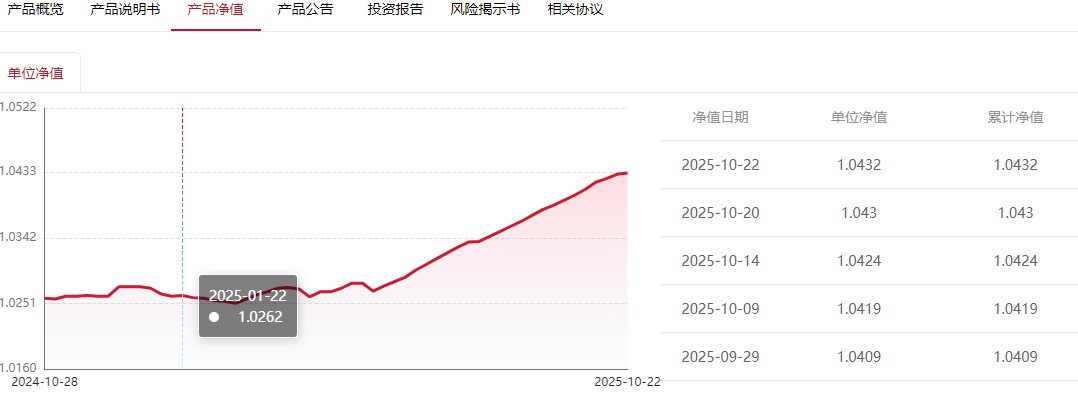
机构风向标 | 彩蝶实业(603073)2025年三季度已披露持仓机构仅5家
Xin Lang Cai Jing· 2025-10-28 01:52
Core Viewpoint - Caidie Industrial (603073.SH) reported its Q3 2025 results, indicating a decline in institutional investor holdings compared to the previous quarter [1] Institutional Holdings - As of October 27, 2025, five institutional investors disclosed holdings in Caidie Industrial, totaling 3.2955 million shares, which represents 2.84% of the company's total share capital [1] - The institutional holding percentage decreased by 0.28 percentage points compared to the previous quarter [1] Public Fund Disclosures - One new public fund was disclosed this quarter, namely the CITIC Prudential Multi-Strategy Mixed (LOF) A [1] - A total of 47 public funds were not disclosed this quarter, including notable funds such as Nuon Multi-Strategy Mixed A, Huaxia CSI 500 Index Enhanced A, and others [1]

新华财经早报:10月28日
Xin Hua Cai Jing· 2025-10-28 00:44
Group 1 - The Financial Street Forum annual meeting opened, with major financial department leaders announcing reforms including the China Securities Regulatory Commission (CSRC) starting the implementation of the deepening reform of the Growth Enterprise Market [2] - The People's Bank of China (PBOC) will resume open market operations for government bonds and explore liquidity mechanisms for non-bank institutions [2] - The CSRC announced 23 practical measures to strengthen the protection of small and medium investors in the capital market [2] Group 2 - The CSRC issued a work plan to optimize the Qualified Foreign Institutional Investor (QFII) system, clarifying policies to facilitate foreign public funds in short-term trading [2] - The National Foreign Exchange Administration will introduce nine policy measures to promote trade innovation and development [2] - The Ministry of Civil Affairs released guidelines to educate the public on the opportunities and challenges of an aging population [2] Group 3 - Guizhou Moutai announced the resignation of Chairman Zhang Deqin due to work adjustments, with a recommendation for Chen Hua as the new chairman [3] - Hailianxun will conduct a share swap to absorb Hangqilun, with the stock price at a 50.37% premium to the acquisition price [3] Group 4 - In the first nine months, China's industrial enterprises achieved a total profit of 53,732 billion yuan, a year-on-year increase of 3.2% [2] - The National Development and Reform Commission announced a reduction in domestic gasoline and diesel prices by 265 yuan and 255 yuan per ton, respectively [2] - The logistics total cost for the first three quarters was 14.2 trillion yuan, maintaining the lowest ratio to GDP at 14.0% [2]

美债两月涨一万亿,中国继续狂抛不止,特朗普开始“胡言乱语”了
Sou Hu Cai Jing· 2025-10-28 00:26
Group 1: U.S. National Debt - The U.S. national debt has surpassed $38 trillion, increasing by $1 trillion in just two months, driven by significant government spending on defense, social security, and infrastructure [2] - The high interest rates set by the Federal Reserve at 5.25% result in monthly interest payments nearing $1 trillion, which constitutes 3.2% of GDP [2] - The rapid increase in debt raises concerns among economists about market confidence and the sustainability of fiscal policies, as foreign investment in U.S. debt has decreased to 28% [2] Group 2: China's Investment Strategy - China has reduced its holdings of U.S. Treasury bonds by $2.57 billion, bringing its total to $73.07 billion, the lowest level since the 2008 financial crisis [4] - The proportion of U.S. debt in China's foreign reserves has dropped from a peak of 25% to 22%, with funds being redirected towards European bonds, gold, and local projects [4] - This strategy reflects a cautious approach to mitigate risks associated with U.S. sanctions and geopolitical tensions, while also promoting the internationalization of the renminbi [4][10] Group 3: U.S.-China Trade Relations - Former President Trump has expressed a desire for a "fair agreement" in U.S.-China trade discussions, while downplaying risks related to Taiwan [6] - The ongoing trade tensions have led to a 15% decrease in trade volume over the first eight months of the year, impacting U.S. farmers and manufacturers [6][8] - Trump's administration faces challenges balancing protectionist policies with economic stability, as rising costs and stagnant wages affect American households [6] Group 4: Global Financial Implications - The U.S. debt situation is causing ripple effects in global markets, with rising interest rates impacting European bond yields and prompting adjustments in Japan's monetary policy [9] - The budget committee has raised alarms about the unsustainable nature of the current debt levels, with projections indicating a deficit exceeding $2 trillion by 2026 [9] - The interconnectedness of global finance is highlighted by the shift in emerging markets away from U.S. dollar assets, reflecting a broader trend of risk diversification [10]
潘功胜、吴清等重磅发声;油价年内第九次下调|南财早新闻
2 1 Shi Ji Jing Ji Bao Dao· 2025-10-27 23:25
Macro Economy - In the first nine months of 2025, the total profit of large-scale industrial enterprises in China reached 53,732 billion yuan, a year-on-year increase of 3.2%. In September alone, profits grew by 21.6% year-on-year [4] - The People's Bank of China plans to introduce nine new policy measures to expand the high-level opening of cross-border trade and optimize foreign exchange fund settlement for new trade formats [4] - The Financial Regulatory Bureau emphasizes the need to strengthen funding supply for major projects to boost consumption and ensure the stability of the financial system [4] - As of October 27, domestic gasoline and diesel prices were reduced by 265 yuan and 255 yuan per ton, respectively [4] - The average interest rate for three-year fixed deposits in September 2025 was 1.688%, while the five-year average was 1.519%, indicating a continued inversion [4] Investment News - The China Securities Regulatory Commission (CSRC) issued new guidelines to enhance the protection of small investors, addressing concerns over high pricing in new stock issuances [6] - The CSRC officially released a plan to optimize the Qualified Foreign Institutional Investor (QFII) system, allowing foreign public funds to have the same short-term trading rules as domestic funds [6] - On October 27, the Shanghai Stock Exchange announced the appointment of new members to its third Technology Innovation Advisory Committee [6] - The A-share market experienced a significant rise, with the Shanghai Composite Index increasing by over 1%, reaching a ten-year high [6] Company Movements - Guizhou Moutai announced the resignation of its chairman Zhang Deqin due to work adjustments, with Chen Hua being recommended as the new chairman [7] - Tongfu Microelectronics reported third-quarter revenue of 7.078 billion yuan, a year-on-year increase of 17.94%, and a net profit of 448 million yuan, up 95.08% [7] - Northern Rare Earth's revenue for the first three quarters was 30.292 billion yuan, a 40.50% increase year-on-year, with net profit rising by 280.27% [7] - He Yuan Bio, Xi'an Yicai, and Bibete will be listed on the Sci-Tech Innovation Board on October 28, marking the first batch of new stocks in the Sci-Tech growth sector [8]