
服务业

Search documents
向“新”蝶变,激活产业发展新动能
Xin Hua Ri Bao· 2025-09-15 03:31
Core Insights - The recent招商推介会 in Xuzhou's Gonglu District aims to enhance economic development through collaboration with local business associations and the establishment of a regular cooperation mechanism for project attraction and talent introduction [1] Group 1: Economic Development Strategies - The 铜沛街道 focuses on improving economic quality and efficiency through a three-pronged approach: "筑巢引凤" (building nests to attract phoenixes), "招新引优" (attracting new and quality enterprises), and "有中生新" (creating new from existing) [1] - The street has implemented the "党建领航产业向新蝶变" project to transform organizational advantages into development momentum, addressing issues like underutilization of building resources and fragmented investment attraction [1] Group 2: Infrastructure and Commercial Development - The 凯旋门商业综合体, a new commercial complex, has been completed and includes various well-known brands, aiming to enhance the modern service industry in the area [2] - The 九里峰景商业综合体 and 市政建设科研大厦 are undergoing transformations to optimize office space and attract quality enterprises, with 九里峰景 generating an annual tax revenue of approximately 910 million and 市政建设科研大厦 achieving an annual output value of 1.45 billion [2][3] Group 3: Investment Attraction and Industry Growth - The street has established a "全员全域招商" (full participation in investment attraction) strategy, forming a team of over 50党员 to target over 30 potential enterprises, enhancing the quality of investment [4] - New projects like 江苏海康博瑞电子有限公司 are thriving, with a goal of producing 200 million RFID electronic tags this year, indicating a shift towards high-end and quality investment [4] Group 4: Service Optimization and Enterprise Support - The 铜沛街道 has improved its enterprise service mechanism, ensuring timely support for over a thousand local businesses, which has led to the establishment of new projects and the transformation of existing enterprises [7] - The street has added five scale enterprises and seven "准规模" enterprises this year, with plans to apply for high-tech enterprise status for four companies, indicating a growing industrial base [8]
暑期经济+政策红包发力 8月企业贷款、消费贷环比均回暖
Xin Jing Bao· 2025-09-12 20:41
Group 1: Financial Data Overview - In the first eight months of the year, the total social financing increased by 26.56 trillion yuan, which is 4.66 trillion yuan more than the same period last year [1] - The increase in RMB loans for the same period was 13.46 trillion yuan, with 590 billion yuan added in August alone [1] - The financial sector continues to support the real economy effectively, aided by proactive fiscal policies and moderately loose monetary policies [1] Group 2: Personal Loan Growth - Household loans increased by 711 billion yuan in the first eight months, with 303 billion yuan added in August, showing a year-on-year decrease of 1.597 trillion yuan but a month-on-month increase of 5.196 trillion yuan [2] - The growth in personal loans is attributed to the traditional summer consumption peak and policies promoting consumption [2] - The service industry activity index rose to 50.5%, indicating strong performance in sectors like travel and entertainment [2] Group 3: Real Estate Policy Impact - Long-term loans for households increased by 200 billion yuan in August, with a year-on-year decrease of 1 trillion yuan but a month-on-month increase of 1.3 trillion yuan [3] - New real estate policies in major cities have positively influenced housing demand and mortgage loan inquiries [3] - The average interest rate for new personal housing loans in August was 3.1%, down approximately 25 basis points from the previous year [3] Group 4: Corporate Loan Trends - Corporate loans increased by 590 billion yuan in August, with a year-on-year decrease of 2.5 trillion yuan but a month-on-month increase of 5.3 trillion yuan [5] - Short-term loans for enterprises saw a significant increase, while medium to long-term loans remained stable [6] - The manufacturing sector's PMI rose, indicating improved production and financing demand [6] Group 5: Structural Adjustments in Monetary Policy - The total balance of RMB loans reached 269.10 trillion yuan by the end of August, with a year-on-year growth of 6.8% [8] - The balance of inclusive small and micro loans grew by 11.8%, and medium to long-term loans for manufacturing increased by 8.6% [8] - Structural monetary policy tools are being utilized to enhance financial support for key sectors [9] Group 6: Economic Outlook - The macroeconomic environment is stable, with manufacturing and non-manufacturing sectors showing signs of expansion [11] - The overall economic growth is expected to meet the target of around 5% for the year, supported by continuous and stable macro policies [11] - Experts emphasize the need for reforms in key areas to address deeper issues and promote consumption [11]
广日股份:聘任巴根为公司董事会秘书
Mei Ri Jing Ji Xin Wen· 2025-09-12 11:29
Group 1 - The company Guangri Co., Ltd. announced the appointment of Mr. Ba Gen as the Secretary of the Board and Mr. Liu Weibin as the Securities Affairs Representative [1] - For the fiscal year 2024, the revenue composition of Guangri Co., Ltd. is as follows: Manufacturing accounts for 82.2%, Services for 12.31%, Engineering Installation for 4.93%, and Other Businesses for 0.55% [1] - As of the report date, the market capitalization of Guangri Co., Ltd. is 8.6 billion yuan [1]

北京发布近1400亿元招商项目,涉及AI、医药健康等领域
2 1 Shi Ji Jing Ji Bao Dao· 2025-09-12 04:22
Group 1 - Beijing will comprehensively deepen the construction of the "Two Zones" and implement the service industry expansion plan 3.0, aiming to attract more foreign investment [1] - A total of 140 investment cooperation projects were announced with an investment amount of 139.75 billion yuan, showcasing cooperation opportunities and policy benefits [1] - The event is part of the 2025 China International Service Trade Fair and aims to release global cooperation opportunities and pragmatic measures [1] Group 2 - Beijing possesses top-tier innovation resources, leading in the number of universities, research institutes, and researchers, with R&D intensity ranking among the top in the country for eight consecutive years [2] - The city is home to over 2,400 artificial intelligence companies, with a core industry scale of nearly 350 billion yuan, accounting for about half of the national total [2] - Beijing is accelerating the establishment of an internationally influential robotics innovation hub and aims to become a global benchmark city for the robotics industry [2]
2025全球服务贸易企业家峰会在京举行
人民网-国际频道 原创稿· 2025-09-12 01:42
Core Insights - The 2025 Global Service Trade Entrepreneurs Summit focuses on the impact of artificial intelligence on service trade and the demand for inclusive development in global service trade [1] - The summit aims to address uncertainties and imbalances in global service trade caused by digital divides, trade protectionism, and supply chain restructuring [1] Group 1: Summit Overview - The summit is hosted by the Global Service Trade Alliance and has become an important thematic forum since its establishment in 2022, with over 500 high-level representatives attending [1] - The theme "Digital Intelligence Drives Inclusive Development" emphasizes the role of digital technology in promoting service trade growth [1] Group 2: Policy Announcements - The Ministry of Commerce released a work plan to support Beijing in piloting the WTO's E-commerce Agreement, aiming for implementation by the end of 2024 [2] - The E-commerce Agreement's implementation in Beijing is expected to set a precedent for nationwide adoption and demonstrate China's commitment to high-level openness [2] Group 3: Reports and Committees - The Global Service Trade Alliance published the "Global Service Trade Inclusive Development Trend Report 2025," which elaborates on the concept of inclusive development from a global perspective [2] - The establishment of the Digital Economy Committee and the Aviation Industry Committee marks a new level of professional service capability and institutional development for the alliance [2] Group 4: Keynote Speeches - The International Trade Centre's Deputy Executive Director highlighted that service trade is a vital component of the global economy, reshaping trade operations and creating opportunities for various market players, including SMEs [3] - The application of digital technology, particularly AI, is crucial for the development of SMEs and service trade, emphasizing the need for cohesive strategies rather than fragmented approaches [3] Group 5: Policy Dialogue - A panel discussion featured representatives from various countries and organizations discussing the impact of inclusive service trade policies on businesses and compliance requirements [4] - The dialogue provided new insights and valuable references for government departments, industry organizations, and enterprises to achieve inclusive development [4]
助力内地企业“出海” 香港上市或成第一站
Bei Jing Shang Bao· 2025-09-11 13:37
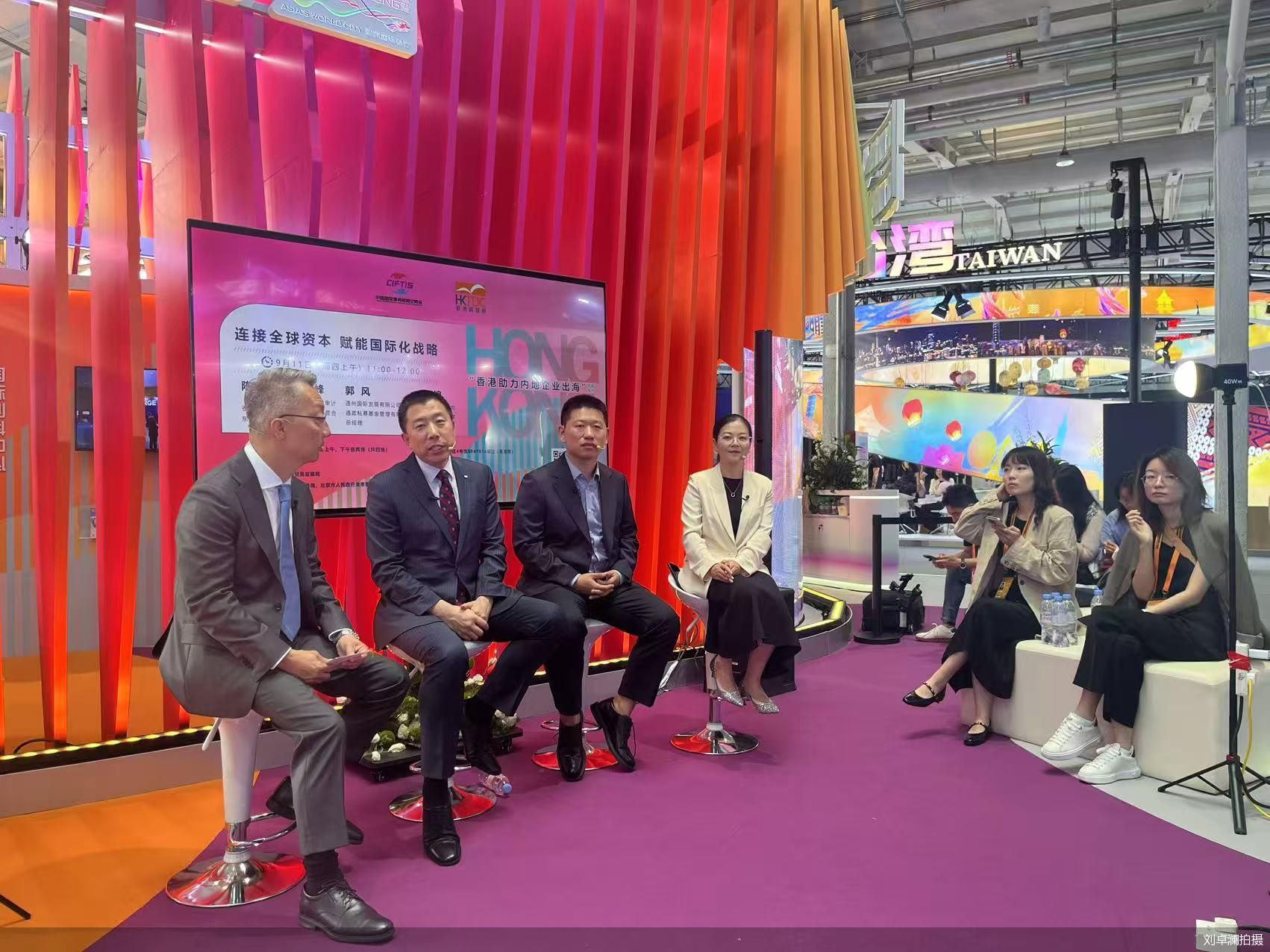
作为国际金融中心,凭借在银行、资本市场和资产管理等多方面的优势,香港已经成为很多企业海外融资的首选平台。9月11日,"香港助力内地企业出 海"系列访谈在2025年服贸会举办。香港贸易发展局华北、东北首席代表陈嘉贤表示,今年上半年全球金融格局中,香港资本市场多项指标全球领先,新股 募资规模重回全球第一,港股持续向好进一步为香港和内地资本市场及经济带来积极影响。面对越来越多的内地企业想要"出海",香港作为第一步或是扩大 市场的关键。 陈嘉贤介绍,为了持续深化京港合作,今年服贸会期间举办的"京港企业服务合作对接座谈会",筛选有意赴港上市的生物医药、科创企业代表,与香港专业 服务机构、投融资平台精准对接,协助北京企业对接全球资本、拓展海外市场、发掘全球商机,实现更高水平的国际合作与共赢发展。 香港如何把握内地服务贸易发展机遇?陈嘉贤表示,香港是全球服务业主导程度最高的经济体之一,香港服务业占本地生产总值超过90%。香港与内地可以 在金融与专业服务、科技创新合作、医疗与教育服务、文化创意等领域加强合作。 在金融与专业服务领域,以绿色金融为例,香港已先行先试多项新型ESG金融产品和服务模式,可以帮助内地企业进行绿色投融资 ...

宏观经济的真正解药:消费和投资
Sou Hu Cai Jing· 2025-09-11 09:29
Group 1 - The core argument emphasizes the need for increased consumption and investment to achieve first-world living standards in China, as highlighted by economist Gu Zhaoming [1][4] - The article discusses two main drivers of economic growth: consumption-driven growth and borrowing for investment, both of which remain crucial today [2][4] - It points out the stark contrast between China's production growth and low consumption levels, with consumer spending as a percentage of GDP remaining below 40% compared to the U.S. at 67.9% [5][6] Group 2 - The article notes that high savings rates in China, exceeding 20%, hinder consumer spending and consequently reduce corporate willingness to invest [5][6] - It argues that the development of the service sector is essential for balancing the economy, as service consumption in China is significantly lower than in the U.S. [8][9] - The need for a shift in labor market policies to support service industry growth and reduce working hours is emphasized as a prerequisite for economic balance [9][10] Group 3 - The article suggests that increased consumption will lead to a positive feedback loop, encouraging businesses to invest and borrow more, ultimately benefiting the economy [11][13] - It draws parallels with Germany's economic model, where a strong service sector supports income distribution and reduces social inequality [10][14] - The potential for China's economy to evolve into a model where consumption matches that of Germany and investment mirrors that of the U.S. is highlighted, contingent on effective use of technology and consumer stimulation [14][15]
“双贴息”促消费 政策“走心”消费者“动心”
Xiao Fei Ri Bao Wang· 2025-09-11 04:15
Core Viewpoint - The "dual interest subsidy" policy for personal consumption loans and service industry loans has been implemented to invigorate the consumption market, addressing consumer hesitation and financial pressure [1][2]. Group 1: Policy Implementation and Impact - The "dual interest subsidy" policy covers a wide range of consumer needs, from daily dining to large appliances, and includes essential services like childcare, elderly care, and health, as well as developmental and leisure consumption [1]. - The policy aims to reduce the cost of personal consumption loans and service industry loans, alleviating financial pressure on consumers and businesses, thereby stimulating consumption [1][2]. - Data from the People's Bank of China indicates that by the end of 2024, the balance of personal consumption loans (excluding housing loans) is expected to reach 21.01 trillion yuan, a year-on-year increase of 6.2% [2]. Group 2: Consumer Behavior and Market Dynamics - The introduction of consumer financial products has led to an increase in borrowing amounts by 16% to 30%, with merchant sales rising approximately 40% [2]. - There is a growing gap between household consumption credit demand and actual participation, expanding from 2.5 percentage points in 2019 to 5.3 percentage points in 2021 [2]. - The "dual interest subsidy" policy effectively addresses the supply-demand imbalance in consumer credit services, releasing the consumption potential of the middle-income group [2]. Group 3: Strategic Importance of the Policy - The timing and scope of the "dual interest subsidy" policy are well-aligned with current economic conditions, focusing on personal consumption and service industry sectors to tackle market pain points [2][3]. - The policy exemplifies the need for precise and heartfelt measures to sustain consumer confidence and spending, which is crucial for high-quality economic development [3].
不断释放内需潜力、整治无需竞争,发改委透露下半年工作重点
Xin Lang Cai Jing· 2025-09-11 02:34
Group 1 - The report emphasizes the importance of expanding domestic demand in the context of increasing external uncertainties [2] - It highlights the implementation of consumption-boosting actions and the removal of restrictive measures to stimulate market vitality [2] - The report identifies service consumption as a key area for growth, noting its significance in stabilizing growth, employment, and livelihoods [2] Group 2 - The report calls for optimizing mechanisms to expand investment, focusing on high-quality implementation of major national strategies and key projects [3] - It mentions the establishment of new policy financial tools to encourage private sector participation in major projects, particularly in the nuclear power sector [3] - The report outlines the introduction of a universal childcare subsidy policy, providing 3,600 yuan per year for families with children under three years old, benefiting over 28 million families [4] Group 3 - Recent central government actions target "involution" in key industries, aiming to regulate low-price competition and promote product quality [5] - The report stresses the need for a unified national market and the regulation of chaotic competition in various sectors, including emerging industries like new energy vehicles and lithium batteries [6] - It suggests differentiated strategies for traditional and emerging industries to manage capacity and support innovation, while avoiding heavy-handed administrative interventions [6]
贝莱德智库:美联储降息在即 驱动新兴市场股票上涨20%的三大引擎
Zhi Tong Cai Jing· 2025-09-11 01:30
Group 1 - Emerging markets have shown strong performance this year, with global emerging market bond returns near 9% compared to 4.5% for US Treasury bonds, and the MSCI Emerging Markets Index rising 20% versus 14% for the MSCI World Index [1] - The weakening of the US dollar, economic resilience, and disruptive trends are driving the performance of emerging markets, necessitating selective investment strategies [1] - The overall view on emerging market equities is neutral, while there is optimism for local currency bonds in emerging markets [1] Group 2 - The macroeconomic environment has improved, with the IMF predicting a narrowing of the economic growth gap between emerging and developed markets by 2025, despite structural changes in some countries that create favorable conditions for sustained growth [2] - Countries like India and Vietnam are excelling in services and manufacturing, while Mexico and Brazil demonstrate disciplined monetary policies, and Chile's strong financial system adds stability [2] - Some emerging markets have seen inflation rates return to pre-pandemic levels, with interest rate cuts already initiated in countries like Mexico, Indonesia, and Poland [2] Group 3 - The restructuring of supply chains benefits countries like Mexico, Brazil, and Vietnam, while Taiwan and South Korea are deeply involved in the semiconductor sector for AI development, and China is advancing its AI technology [3] - South American countries like Chile and Peru benefit from the demand for key materials under the low-carbon transition trend [3] - India is expected to develop into a leading digital economy due to its young population and accelerated digitalization, which supports a positive long-term outlook for emerging markets [3]