纺织

Search documents
2025年前7个月蒙古外贸总额达142亿美元
Shang Wu Bu Wang Zhan· 2025-08-13 10:21
Core Insights - Mongolia's total foreign trade volume reached $14.2 billion in the first seven months of 2025, representing a year-on-year decline of 9.0% [1] Trade Performance - Export trade amounted to $7.8 billion, down 16.1% year-on-year [1] - Import trade reached $6.5 billion, showing a growth of 10.7% year-on-year [1] - The trade surplus was $1.3 billion, which is a decrease of 55.2% compared to the previous year [1] Commodity Exports - Coal exports fell by $2.4 billion year-on-year [1] - Cashmere exports decreased by $200 million year-on-year [1] - Crude oil exports declined by $40 million year-on-year [1] - Iron ore exports dropped by $20 million year-on-year [1] - Copper concentrate exports increased by $1.1 billion year-on-year [1] - Zinc ore exports rose by $30 million year-on-year [1] Trade Partners - The top five export destinations for Mongolia were China (91.9%), Switzerland (5.0%), the United States (1.2%), Russia (0.4%), and Italy (0.2%) [1] - The top five sources of imports were China (38.7%), Russia (23.6%), Japan (12.3%), South Korea (4.4%), and the United States (4.0%) [1]
东兴证券晨报-20250813
Dongxing Securities· 2025-08-13 09:55
Core Insights - The report highlights a significant shift in China's consumption structure from goods to services, with per capita service consumption expected to reach 46.1% of total consumption by 2024, contributing 63% to the growth of consumer spending [2] - The establishment of the Xinjiang-Tibet Railway Company marks the beginning of a major infrastructure project that is expected to enhance regional economic collaboration and reduce logistics costs, with an estimated investment of around 500 billion yuan [7][8] - The report emphasizes the positive impact of major infrastructure projects on China's economic stability and growth, particularly in the context of external uncertainties [9][10] Economic News - The Ministry of Commerce indicates a rapid transition in China's consumption structure, with service consumption growing at an annual rate of 9.6% from 2020 to 2024 [2] - The Ministry of Finance has introduced a one-year "dual interest subsidy" policy aimed at boosting consumer loans for various sectors, including automotive and healthcare [2] - The People's Bank of China is encouraging increased credit support for the service consumption sector to ensure effective policy implementation [4] Company Insights - Alibaba Health has signed a strategic cooperation agreement with Innovent Biologics to enhance supply chain solutions for cold-chain delivery of specific medications [5] - Didi has recently invested in a driverless commercial vehicle company, indicating a strategic move towards autonomous transportation [5] - Jiangfeng Electronics is planning to integrate its flat panel display target material business with Japan's Aifuka Corporation, showcasing international collaboration [5] Infrastructure Projects - The Xinjiang-Tibet Railway is expected to significantly lower logistics costs and enhance economic cooperation between regions, with a construction period projected to exceed 20 years [8][9] - The report outlines that the construction of the Xinjiang-Tibet Railway will provide a safety net for China's economy against external uncertainties, contributing approximately 0.18% to GDP growth annually [8][9] - Other major infrastructure projects are also set to commence, which will serve as important engines for domestic demand and economic stability [10] Investment Recommendations - The report suggests that leading companies in the construction and materials sector will benefit significantly from the Xinjiang-Tibet Railway project, including major state-owned enterprises [9] - It emphasizes that the implementation of major projects will not only yield long-term benefits but also stabilize the economy amid external challenges [11]






2025年新疆首场产业援疆集中推介活动签约735亿元
Zhong Guo Xin Wen Wang· 2025-08-12 16:10
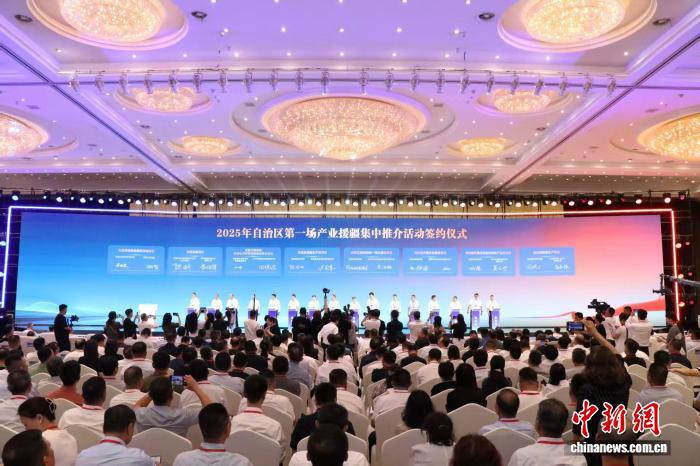
Group 1 - The first industrial promotion event for Xinjiang's aid projects in 2025 was held in Urumqi, resulting in 126 signed investment projects with a total value of 73.5 billion yuan [1][3] - The signed projects span 14 industrial sectors, including new materials, new energy, textiles and apparel, and cultural tourism, with an expected job creation of over 20,000 for local communities [3] - Xinjiang's government aims to strengthen strategic cooperation with aid provinces and cities, enhance industrial connections, and improve investment conditions to attract more enterprises to invest in the region [3]

110亿元!26个京疆合作项目签约
Xin Jing Bao· 2025-08-12 14:42
Group 1 - The event in Xinjiang aimed to enhance economic cooperation between Beijing and Xinjiang, featuring 26 signed projects worth 11 billion yuan [1][2] - The focus was on promoting regional coordinated development and achieving win-win cooperation, breaking traditional support models [2] - The event showcased various products from Beijing, including technology, finance, digital culture, and education, emphasizing the importance of regional collaboration [3] Group 2 - The Beijing Aid to Xinjiang initiative is evolving from a one-way support model to a more collaborative approach, enhancing cooperation dimensions and creating a more diverse partnership [2] - The initiative aims to increase employment, promote ethnic unity, and enhance social stability through industrial support [3] - The event highlighted the positive impact of industrial aid on local livelihoods, with testimonials from beneficiaries illustrating the benefits of the initiative [3]
中新自贸协定升级红利持续释放,为两国经贸往来注入不竭动能
Di Yi Cai Jing· 2025-08-12 13:01
Core Viewpoint - The article emphasizes the need for China and New Zealand to accelerate bilateral economic and trade cooperation, particularly in advanced fields such as food science, low-carbon technology, agricultural economy, digital trade, and biopharmaceuticals [1][7]. Bilateral Trade Overview - In 2024, the bilateral trade volume between China and New Zealand reached $20.15 billion, with China exporting $7.74 billion and importing $12.42 billion [2]. - From January to June 2025, the cumulative trade volume was $10.85 billion, showing a year-on-year growth of 6.3%, with exports from China decreasing by 1.6% and imports increasing by 10.8% [2]. Economic Cooperation Landscape - The economic relationship has evolved beyond traditional goods trade to include diversified cooperation in areas such as deep processing of agricultural products, technological innovation, green finance, and the digital economy [3]. - The implementation of the China-New Zealand Free Trade Agreement (FTA) has led to a significant increase in bilateral trade, with nearly NZD 30 billion growth since its inception [3]. Trade Surplus and Policy Environment - New Zealand has maintained a trade surplus with China for eight consecutive years from 2017 to 2024, aided by the favorable policy environment created by the FTA [4]. - New Zealand's unique resources and technological advantages in food science, environmental protection, and agricultural economy have driven trade growth, particularly in dairy, meat, timber, fruits, and organic products [4]. Strategic Initiatives and Future Prospects - New Zealand has established a strategic advantage in bilateral cooperation with China through various pioneering initiatives, including being the first developed country to sign a comprehensive FTA with China [5]. - The upgraded FTA has significant implications for China's new development pattern and high-quality opening-up, facilitating cooperation in key areas like dairy and forestry [6]. Continued Cooperation and Future Directions - The ongoing benefits from the upgraded FTA are expected to inject continuous momentum into bilateral trade, with a focus on expanding market access and reducing institutional transaction costs [7]. - Future cooperation should prioritize advanced fields such as food science, low-carbon technology, agricultural economy, digital trade, and biopharmaceuticals, establishing a new model for South-South cooperation [7].
新赛道密集涌现 解码山东民营经济“制造”力量
Sou Hu Cai Jing· 2025-08-12 12:31
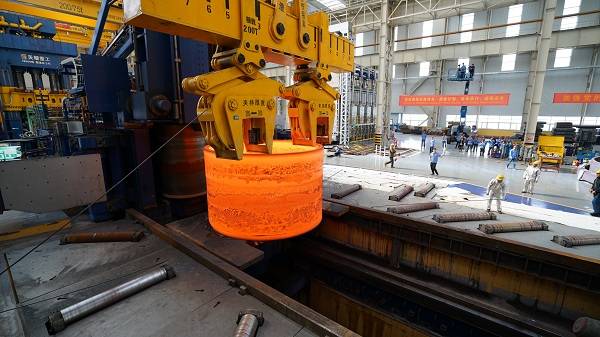
7月14日,山东魏桥创业集团的纺织车间内,一名女工正在巡查纺纱生产线。 芯片、机器人、遥感卫星……作为制造大省,山东民营企业持续上新、率先破局,变"看不准的预 期"为"算得清的产值",头雁领航、雁阵齐飞的企业矩阵构成了"世界工厂"攀高向强的底气,成为经济 调整过后信心回归的关键所在。 8月7日,山东省委、省政府召开民营企业座谈会,为打好服务民营企业的"必答题"展现出真抓实干的决 心与魄力。 全球首台超级轧环机在山东伊莱特投产 梯度培育体系强企 经略万亿级新蓝海赛道 作为全国唯一覆盖全部41个工业大类的省份,工业基础雄厚、产业链条完整的山东也是民营企业扎根于 此、茁壮成长的沃土。在规模上,"大块头"魏桥集团、南山集团、东明石化等营收超千亿;在转型升级 上,利华益集团、山东京博控股集团等石化企业多瞄向高端产品。 依托链主引领、聚链成群效应,泰山钢铁以"链长制",构建全产业链健康稳固的供需体系;齐鲁制药带 动山东医药产业链上下游企业做大做强……不少民营企业"链主",在固链延链强链补链中发挥引领作 用。 顶层"指挥棒"挥动,万亿级蓝海的想象空间随之打开,成为民企长足发展的信心所在。 "好措施+好服务"助企 制造业民企 ...
东兴轻纺:关税继续暂缓,三丽鸥业绩超预期
Dongxing Securities· 2025-08-12 11:33
Investment Rating - The industry investment rating is "Positive" [2][52]. Core Views - The textile and apparel industry is seeing a recovery in export performance due to the recent suspension of tariffs, which is expected to stabilize orders for companies with overseas production capacity [4][13]. - Sanrio's performance has exceeded market expectations, with significant growth in its IP toy business globally, particularly in China and North America [5][14]. - The home furnishing sector is experiencing a gradual recovery in domestic sales due to relaxed real estate policies, while exports are also showing signs of improvement [6][15]. Summary by Sections Textile and Apparel - Key textile companies have reported mixed mid-year results, with Jian Sheng Group achieving total revenue of 1.171 billion yuan, a year-on-year increase of 0.19%, but a net profit decline of 14.46% [3][12]. - Huali Group reported a total revenue of 12.661 billion yuan, a year-on-year increase of 10.36%, but a net profit decline of 11.42% due to new factory ramp-up affecting gross margins [3][12]. Light Industry Manufacturing - Sanrio's FY26Q1 revenue reached 43.1 billion yen, a year-on-year increase of 49.1%, with operating profit up 88.0% and net profit up 37.8% [5][14]. - Sanrio has revised its FY2026 guidance upwards, projecting revenue of 168.8 billion yen, operating profit of 67.3 billion yen, and net profit of 47.5 billion yen [5][14]. Home Furnishing - Domestic sales are expected to improve as real estate policies are relaxed, with increased housing loan support [6][15]. - July home furnishing exports showed a recovery, reaching 4.88 billion USD, a year-on-year increase of 3.0% [6][15].
我国对原产于加拿大的进口豌豆淀粉发起反倾销调查
Xin Hua Wang· 2025-08-12 09:53
Core Viewpoint - The Ministry of Commerce of China announced an anti-dumping investigation into imported pea starch from Canada, set to begin on August 12, 2025, due to significant increases in imports and pricing below domestic sales prices, causing operational difficulties for the domestic industry [1][1][1] Group 1: Investigation Details - The investigation was initiated in response to a domestic industry's application, which provided preliminary evidence of a notable increase in the quantity of imported pea starch from Canada in recent years [1] - The application indicated that the import prices of Canadian pea starch have consistently been lower than those of domestic products, leading to losses for the domestic industry [1][1] - The investigation will be conducted in accordance with Chinese laws and WTO rules, ensuring an objective and fair judgment based on the findings [1][1][1] Group 2: Product Information - The product under investigation is unmodified starch made from peas, primarily used in the production of noodles and jelly, and can also serve as a thickening agent, stabilizer, emulsifier, and adhesive [1] - Applications of pea starch span various industries, including food, pharmaceuticals, papermaking, textiles, coatings, and animal feed [1][1] Group 3: Context and Implications - The spokesperson emphasized that this anti-dumping investigation aligns with WTO rules and is a legitimate trade measure to protect domestic industries [1] - The investigation is positioned as fundamentally different from recent discriminatory measures taken by Canada against China, highlighting the complexities of international trade relations [1][1]
在岸人民币对美元汇率再创新高 人民币资产受国际投资者青睐
Xin Hua Wang· 2025-08-12 06:30
Group 1 - The core viewpoint of the articles indicates that the recent appreciation of the RMB against the USD is primarily driven by risk aversion in the international financial market, with the RMB reaching its highest level since April 2018 [1][2] - The onshore RMB appreciated to a maximum of 6.3052 against the USD, while the offshore RMB reached a high of 6.3089, reflecting year-to-date increases of 1.03% and 0.86% respectively [1] - Analysts suggest that the RMB's rise is supported by improving foreign trade fundamentals, with expectations for continued improvement in China's foreign trade situation [1][2] Group 2 - The short-term rapid appreciation of the RMB has both positive and negative impacts; it can attract cross-border capital inflows and lower import costs, but may negatively affect export industries such as textiles and electronics [2] - Despite potential negative impacts on exports, analysts believe that the RMB's appreciation reflects the strength of China's economic fundamentals, with a relatively small price elasticity for exports [2] - Looking ahead, factors such as geopolitical uncertainties and global economic conditions may influence the RMB's exchange rate, but the long-term outlook remains positive due to China's economic fundamentals [2]
中国-加蓬商品展览会促进经贸合作
Xin Hua Wang· 2025-08-12 06:22
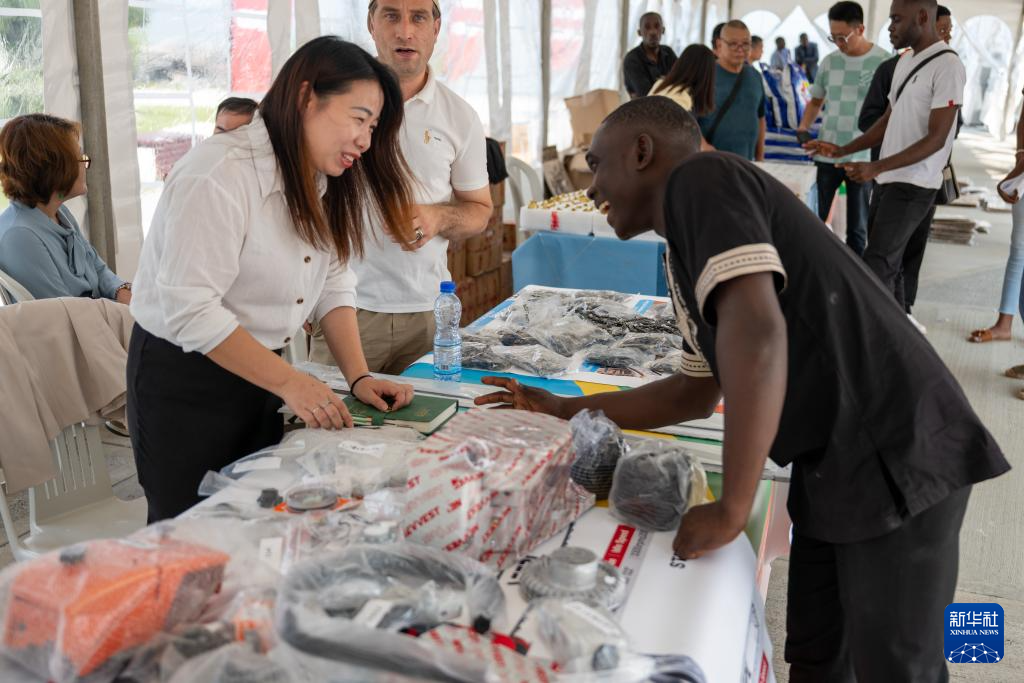
Group 1 - The China-Gabon Commodity Exhibition opened in Libreville, Gabon, featuring over 50 companies from both countries [1][3] - Gabon's Minister of Entrepreneurship, Trade, and SMEs emphasized the exhibition as a new impetus for trade cooperation and praised China's zero-tariff policy [3] - The exhibition, lasting four days, focuses on themes of trade opportunities and development, showcasing products such as agricultural food, photovoltaic, vehicles and parts, building materials, textiles, and cosmetics [3][5] Group 2 - The Chinese Ambassador to Gabon highlighted the deep traditional friendship and fruitful practical cooperation between China and Gabon, viewing the exhibition as a vivid practice of implementing the outcomes of the China-Africa Cooperation Forum [3]