AI芯片

Search documents
西部证券晨会纪要-20251229
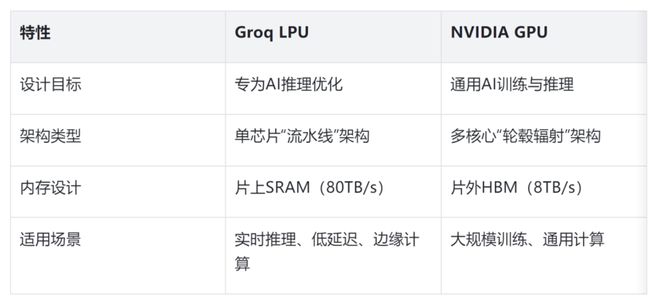
Western Securities· 2025-12-29 02:24
Group 1: Yancoal Energy (兖矿能源) - The company is expected to achieve net profits of 9.448 billion, 12.019 billion, and 14.171 billion yuan for the years 2025-2027, with corresponding EPS of 0.94, 1.20, and 1.41 yuan, reflecting a year-on-year growth of -39.61%, 27.21%, and 17.91% respectively [1][5][6] - The target price for the company is set at 16.27 yuan per share, with a "Buy" rating assigned based on the DDM valuation method [1][5] - The coal market is anticipated to maintain a stable price range of 700-800 yuan per ton from 2025 to 2027, despite concerns of oversupply [5][6] Group 2: Aiko Co., Ltd. (爱旭股份) - The company is projected to incur losses in 2025, with net profits expected to be -5.82 billion, 1.153 billion, and 2.266 billion yuan for 2025-2027, showing a significant recovery in 2026 and 2027 with growth rates of 89.1%, 298.1%, and 96.6% respectively [2][8][9] - The company is focusing on its ABC technology, which is expected to lead to a turnaround in performance, with a projected EPS of -0.27, 0.54, and 1.07 yuan for the same period [2][9] - Aiko's order backlog has increased by over 30% in Q3, indicating strong downstream demand [9] Group 3: Stable Medical (稳健医疗) - The company is focusing on dual business segments: medical and consumer, targeting high-value products such as advanced dressings and surgical consumables [11][12] - Revenue for the first three quarters of 2025 reached 7.897 billion yuan, with a year-on-year growth of 30.10%, and net profit of 732 million yuan, up 32.36% [12][13] - The company aims to maintain high-quality growth through global expansion and strategic planning, with projected EPS of 1.78, 2.13, and 2.44 yuan for 2025-2027 [12][13] Group 4: Home Appliances Industry - The white goods sector is experiencing stable production, with a focus on enhancing value through configuration [15][16] - The production of air conditioners, refrigerators, and washing machines is expected to show varying growth rates, with air conditioners up by 11.0% and refrigerators by 3.6% year-on-year [16] - Companies like Haier, Midea, and Gree are highlighted as key players benefiting from market dynamics and overseas expansion [15][20]


A股算力2025:资本叙事重构下的产业进阶
2 1 Shi Ji Jing Ji Bao Dao· 2025-12-26 09:20
Core Insights - The A-share computing power sector experienced significant value reshaping in 2025, transitioning from policy-driven expectations to performance verification, with the National Computing Infrastructure Index showing an 80.74% increase year-to-date by December 25, 2025 [1] - The market's perception of the computing power industry shifted from "concept speculation" to "value anchoring," reflecting intensified global competition and domestic industrial upgrade demands [1] - The domestic substitution process in the computing power sector evolved from policy support to market selection, driven by real demand and the establishment of a comprehensive domestic computing ecosystem [5][6] Group 1: Performance Highlights - AI chip and semiconductor equipment sectors were the main focus of capital investment, with companies like Haiguang Information reporting a 54.65% year-on-year revenue increase to 9.49 billion yuan and a 28.56% rise in net profit [2] - Cambricon Technologies reported a staggering 2386.38% year-on-year revenue growth to 4.607 billion yuan, indicating the rapid market adoption of domestic AI chips [3] - Industrial Fulian, a global leader in AI servers, achieved a 38.4% revenue increase to 603.931 billion yuan, with net profit rising by 48.52% [3] Group 2: Technological Advancements - Liquid cooling technology emerged as a critical growth point, with companies like Yingwei achieving a revenue increase of 40.19% to 4.026 billion yuan, meeting stringent energy efficiency standards [4] - The integration of hardware upgrades and software ecosystem improvements is driving the performance of domestic AI chips, with frameworks like MindSpore facilitating easier application development [9] - The shift towards liquid cooling technology is not only a response to energy efficiency requirements but also a foundational element for future high-density computing infrastructure [8] Group 3: Market Dynamics - The market is increasingly favoring companies with clear technological pathways and real profit growth, leading to a structural differentiation in the computing power sector [2] - The demand for self-controlled and secure computing solutions is accelerating domestic substitution, with companies like Haiguang Information and Cambricon creating valuable market space [7] - The competition is evolving from product-based to ecosystem-based, with companies that can provide comprehensive solutions across hardware, software, and services gaining a competitive edge [10] Group 4: Future Outlook - The value reshaping in the A-share computing power sector is expected to continue into 2026, with a focus on high-performance AI chips and broader applications of liquid cooling technology [10] - The growth structure of AI computing demand will further differentiate, favoring solutions that demonstrate high energy efficiency and specific application capabilities [10] - Companies that can prove their technology's commercial viability and integrate deeply into the domestic computing ecosystem will continue to attract capital investment [10] Group 5: Industry Transition - The Chinese computing power industry is transitioning from scale expansion to high-quality development, marking a critical period of proactive leadership in the digital economy [11]
连英伟达都开始抄作业了
Tai Mei Ti A P P· 2025-12-26 01:38
Core Insights - Nvidia announced a $20 billion cash technology licensing agreement with AI chip startup Groq, which is seen as a strategic move to mitigate competition and enhance its position in the AI market [1][9][19] - The deal allows Groq to operate independently while transferring most of its core technology assets to Nvidia, effectively turning a potential competitor into an ally [1][9] - The AI industry is undergoing a significant shift from centralized model training to large-scale inference, with the inference market expected to grow at a compound annual growth rate (CAGR) of 65%, reaching $40 billion by 2025 and $150 billion by 2028 [1][19] Group 1: Nvidia's Strategic Move - The $20 billion payment is 2.9 times Groq's valuation of $6.9 billion just three months prior, indicating a rare "valuation inversion" in the tech industry [1][10] - Analysts suggest that this transaction is a way for Nvidia to buy time and eliminate a significant threat while avoiding antitrust scrutiny [1][9] - Nvidia's cash and short-term investments totaled $60.6 billion as of October 2025, making the $20 billion investment manageable [10] Group 2: Groq's Technology and Market Position - Groq was founded by Jonathan Ross, a key developer of Google's TPU, aiming to create a chip optimized for AI inference, known as the Language Processing Unit (LPU) [2][3] - The LPU architecture offers significant advantages over Nvidia's GPUs, including ultra-low latency, high energy efficiency, and deterministic computing [3][12] - Groq's rapid rise in valuation and market presence includes partnerships with major clients like Meta and Saudi Aramco, and it has served over 2 million developers [4][5] Group 3: Competitive Landscape - Nvidia faces increasing competition in the inference market from Google TPU, AMD MI300X, and Huawei Ascend, which are gaining market share and offering cost advantages [6][7][8] - The dominance of Nvidia's CUDA ecosystem poses a significant barrier for competitors like Groq, as switching costs for enterprises are prohibitively high [5][15] - The AI chip market is expected to solidify, with Nvidia projected to maintain a market share of 75-80% by 2027, while other players like AMD and Google will hold smaller shares [14][19] Group 4: Future Trends and Opportunities - The integration of Groq's technology into Nvidia's ecosystem could lead to a dual-compute solution combining GPUs for training and LPUs for inference, enhancing overall efficiency [11][17] - The shift towards heterogeneous computing is anticipated, with over 80% of AI data centers expected to adopt this architecture by 2028 [17] - Despite the consolidation of power among major players, niche opportunities remain for startups in edge computing and specialized applications [18][19]


资金押注“跨年行情”?光模块龙头迭创新高,创业板人工智能ETF(159363)单日获净申购1亿份
Xin Lang Cai Jing· 2025-12-24 11:38
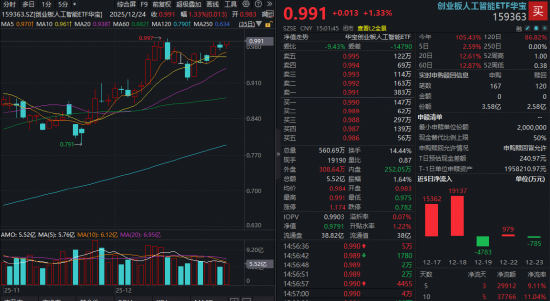
Group 1 - The core sentiment in the market is a growing anticipation for a year-end rally centered around AI, with expectations for a spring surge following the year-end [3][8] - Significant activity was noted in the computing hardware sector, with leading companies like Zhongji Xuchuang and Beijing Junzheng seeing stock increases of over 2% and 8% respectively [1][6] - The largest and most liquid AI-focused ETF, the ChiNext AI ETF (159363), experienced a closing price increase of 1.33%, marking its second-highest closing price, with a substantial net inflow of 1 billion shares on that day [1][6] Group 2 - Institutions are optimistic about the market's performance, citing stable inflows from domestic investors and potential increases in overseas investments due to the appreciation of the RMB [3][8] - Nvidia plans to deliver its second-ranked AI chip, the H200, to Chinese customers by mid-February 2024, which is expected to positively impact sales and benefit the traditional overseas computing supply chain [9][10] - The computing infrastructure investment is projected to maintain its growth momentum, with light module orders and GPU orders from Nvidia indicating a robust demand outlook [4][10] Group 3 - The ChiNext AI ETF (159363) has a current scale exceeding 3.8 billion yuan, with an average daily trading volume of over 600 million yuan in the past month, ranking first among seven ETFs tracking the ChiNext AI index [4][10] - The ETF's portfolio is heavily weighted towards computing hardware, with over 70% allocated to this sector and more than 20% to AI applications, allowing for effective capture of AI market trends [10]

谁能成为中国的英伟达?寒武纪领涨超3%,重仓国产AI产业链的——科创人工智能ETF(589520)盘中摸高0.88%
Xin Lang Ji Jin· 2025-12-23 02:49
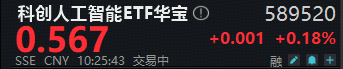
Core Insights - The Chinese AI industry has made significant progress this year, particularly following the rise of DeepSeek during the Spring Festival, leading to a new era of "deep thinking" among domestic AI models [2] - The market capitalization of China's top three AI chip companies—Cambricon, Moore Threads, and Muxi—has exceeded 1 trillion yuan, but they still lag behind Nvidia's market cap of approximately 4.4 trillion USD (around 30 trillion yuan) [2] - The domestic AI supply chain is becoming increasingly important due to comprehensive restrictions on semiconductors from overseas, highlighting the urgency for domestic supply chain localization [2][3] Industry Analysis - The Sci-Tech Innovation Artificial Intelligence ETF (589520) is focused on the domestic AI industry chain, with over 70% of its top ten holdings concentrated in the semiconductor sector, indicating a high concentration and aggressive investment strategy [3] - The ETF serves as an efficient tool for investors looking to gain exposure to domestic computing power, being a financing and margin trading target [3] - Analysts suggest that the competition among Cambricon, Moore Threads, and Muxi is intensifying, and the ongoing market and policy benefits may lead to the emergence of a leading player in China's AI chip sector [2]

谁能成为中国的英伟达?寒武纪领涨超3%
Xin Lang Cai Jing· 2025-12-23 02:48
Group 1 - The core viewpoint of the news highlights the rapid growth of China's AI industry, particularly following the rise of DeepSeek during the Spring Festival, leading to a new era of domestic AI models [2] - The A-share AI chip industry is dominated by three major players: Cambricon, Moore Threads, and Muxi, with a combined market capitalization exceeding 1 trillion yuan, yet still significantly trailing behind Nvidia's market cap of approximately 4.4 trillion USD (around 30 trillion yuan) [2] - Domestic companies are accelerating their breakthroughs in the AI chip sector amidst a reshaping global landscape, with increasing competition among Cambricon, Moore Threads, and Muxi, potentially leading to the emergence of a leading player in China's AI chip market [2] Group 2 - The Sci-Tech Innovation Artificial Intelligence ETF (589520) is focused on the domestic AI industry chain, with a strong emphasis on domestic substitution characteristics, where the top ten holdings account for over 70% of the portfolio [3] - The semiconductor sector constitutes over half of the ETF's holdings, indicating a high concentration and aggressive investment strategy [3] - The ETF serves as an efficient tool for investors looking to gain exposure to domestic computing power, being a financing and margin trading target [3] Group 3 - East China Securities recommends focusing on the domestic supply chain due to the urgent need for domestic production in the semiconductor sector, particularly in advanced logic and storage industries [2] - There is significant potential for domestic companies in various fields such as equipment, components, materials, and EDA, as their global supply share remains relatively low [2] - Some domestic enterprises have achieved breakthroughs in niche markets, benefiting from accelerated localization and long-term growth in the industry [2]

壁仞科技启动招股最高募48.6亿港元 基石投资认购六成将开发下一代芯片
Chang Jiang Shang Bao· 2025-12-23 00:19
Core Viewpoint - Wall Street's interest in domestic GPU companies is growing, as evidenced by the IPO of Birran Technology, which aims to raise up to HKD 48.6 billion through the issuance of 248 million shares, with significant backing from cornerstone investors [1][2][3] Group 1: IPO Details - Birran Technology plans to globally issue 248 million shares, with a maximum offer price of HKD 19.60 per share, from December 22 to December 29 [2] - The company expects to raise approximately HKD 48.6 billion, with cornerstone investors subscribing to about 148 million shares, amounting to around HKD 29 billion, which constitutes about 60% of the total fundraising [1][2] Group 2: Financial Performance and R&D Investment - Birran Technology has not yet turned a profit, primarily due to substantial R&D expenditures, which totaled approximately HKD 3.303 billion over three and a half years [1][6] - The company reported revenues of HKD 62.03 million in 2023, with projections of HKD 337 million for 2024 and HKD 58.903 million for the first half of 2025, mainly from GPGPU hardware and software [4][6] Group 3: Market Position and Competition - The Chinese AI chip market is projected to reach USD 50.4 billion by 2025, with Birran Technology aiming for a market share of about 0.2% [4] - The competitive landscape is intensifying, with other domestic GPU companies like Moole and Muxi also going public recently, indicating a trend of increasing market presence for local AI chip manufacturers [3][4] Group 4: Customer Concentration - Birran Technology has a high customer concentration, with the top five customers accounting for 98.1% and 90.3% of revenue in 2023 and 2024, respectively [5] - The largest customer contributed 85.7% and 54.5% of revenue in the same years, although this concentration improved slightly in the first half of 2025 [5]
Wedbush 2026年十大科技投资预测:美股科技股整体涨幅有望超20%,特斯拉股价上看800美元,苹果谷歌冲刺5万亿美元市值
Ge Long Hui· 2025-12-22 06:58
Group 1 - The AI industry is expected to transition from early-stage layout to a critical construction phase by 2026, with technology stocks projected to rise over 20% overall [3] - Tesla aims to commercialize autonomous ride-hailing in over 30 cities by 2026, with a base target price of $600 and an optimistic scenario reaching $800 [3] - Apple and Google are set to establish an AI partnership around Gemini technology, which may integrate into Apple's ecosystem via subscription services, potentially driving its market value to $5 trillion [3] Group 2 - Nebius is identified as a highly attractive acquisition target in AI infrastructure, with potential buyers including Microsoft, Alphabet, and Amazon [3] - Cybersecurity is highlighted as a standout sub-industry within technology, with Crowdstrike and Palo Alto Networks being favored companies [3] - Oracle has completed its data center expansion and is effectively managing its substantial remaining performance obligations and AI-related orders, with a potential stock price challenge of $250 by 2026 [3] Group 3 - The Trump administration has begun equity investments in quantum-related companies, with IonQ and Rigetti Computing seen as key beneficiaries [4] - Microsoft is expected to enter a critical harvest period in 2026 as more companies accelerate AI adoption through Azure and Redmond [4] Group 4 - Nvidia maintains its leading position in the global AI chip industry, with an optimistic stock price target of $275 by 2026 [5] - Wedbush is optimistic about Palantir's long-term potential, projecting a valuation of $1 trillion within the next two to three years [5]






谷歌TPU需求大增,自动驾驶产业迎来催化,关注液冷及智驾产业链公司
Orient Securities· 2025-12-21 14:10
Investment Rating - The report maintains a neutral investment rating for the automotive and parts industry [5] Core Insights - The demand for Google's TPU is surging, which is expected to provide incremental opportunities for domestic liquid cooling industry companies. The next-generation TPU v7e chip orders have reportedly doubled compared to initial plans, indicating strong market recognition and potential for reshaping the AI chip competitive landscape [8][12] - Tesla's launch of the fully autonomous Robotaxi testing and the Ministry of Industry and Information Technology's approval of the first batch of L3 autonomous driving models are expected to enhance the hardware and software supply for intelligent driving [13][52] - The recent financing round of over $300 million for Galaxy General reflects market confidence in the commercialization prospects of domestic humanoid robots, with significant orders from major clients [14] Summary by Sections Investment Suggestions and Targets - The report suggests focusing on companies within the humanoid robot chain, liquid cooling industry, T chain, Huawei industry chain, and intelligent driving industry. Key liquid cooling stocks include Invec (未评级), Yinlun (买入), Top Group (买入), Sanhua Intelligent Control (买入), and Feilong (未评级) [3][15] - Other relevant stocks include SAIC Motor (买入), JAC Motors (未评级), BYD (未评级), and several others across various segments of the automotive industry [15][16] Sales Tracking - From December 1-14, 2025, the wholesale sales of passenger cars in China were 734,000 units, a year-on-year decrease of 31%. Cumulatively, wholesale sales for the year reached 27.499 million units, a 9% increase [17] - Retail sales during the same period were 764,000 units, down 24% year-on-year, with cumulative retail sales of 22.247 million units, up 5% [17] Market Trends and Industry Dynamics - The automotive sector showed stability, with the automotive index slightly outperforming the broader market. The automotive sales and service sector performed particularly well, with a 4.29% increase [30][31] - The report highlights the growth in the automotive manufacturing sector, with an 11.8% increase in value added from January to November 2025, indicating a robust recovery in the industry [51]


“寒武纪已成老登”
首席商业评论· 2025-12-21 04:33
以下文章来源于投资界 ,作者冯雨晨 投资界 . 清科控股旗下创业与投资资讯平台 没有永远的小甜甜。 短短十来天,两家市值超3000亿的巨头诞生——摩尔线程和沐曦集成排队科创板敲钟,首日涨幅均超 500%,令人惊叹。若是打新中上一签,当日即可实现数十万浮盈。 一时间,几乎所有的目光都聚集在这两家芯片新贵身上。而作为AI芯片带头大哥的寒武纪,也在这个热闹 非凡的时刻被"端"了出来。正如股民们调侃:摩尔线程和沐曦集成就像18岁热情洋溢的少女,寒武纪则像沉 默寡言的老登。 其实,此时距离市场尊称其为"寒王",才仅仅过去不到四个月。 小登排队敲钟暴涨 寒王有点落寞 不曾想,A股总市值一下子就增了6000多亿。 12月5日,摩尔线程在万众期待中摘下"GPU第一股",首日表现较发行价最高涨超5倍,市值突破3000亿元。 随后几个交易日又续写新高,股价一度开挂冲至941元成为A股"第三贵",市值逼近4500亿元。 恰恰是这种FOMO情绪,一定程度上为今天新贵们的估值抬了下轿。 然而这似乎只是一个开始。 昨日(12月17日),沐曦集成登陆科创板,一度暴涨超750%,迅速夺走A股"第三贵"头衔,市值最高冲上 3500亿元。那些参 ...