券商

Search documents
陈果:继续金融打底,耐心逐步布局
Sou Hu Cai Jing· 2025-12-08 09:23
Group 1 - The market is currently experiencing a period of low trading volume and volatility as investors await guidance from the Central Economic Work Conference, with a focus on domestic demand policies [1][13] - The adjustment of risk factors for insurance companies is expected to enhance their capital allocation capabilities, allowing for increased investment in core assets, dividend stocks, and technology innovation sectors [2][3][18] - The financial regulatory authority has proposed to moderately expand the capital space and leverage limits for high-quality brokerage firms, which is seen as a positive signal for the capital market and non-bank sectors [1][2] Group 2 - The upcoming Federal Reserve meeting is anticipated to provide insights into monetary policy, with market expectations leaning towards a potential interest rate cut in December, despite inflationary pressures suggesting a hawkish stance [5][11] - The divergence in monetary policies between the US and Japan may raise liquidity concerns, as Japan's government has announced a significant economic stimulus plan [11][12] - The overall economic environment in China remains weak, with manufacturing PMI and real estate sales showing continued decline, prompting a cautious approach to investment strategies [13][16] Group 3 - The insurance sector's risk factor adjustments are designed to optimize solvency regulation and enhance long-term investment capabilities, supporting the technology and foreign trade industries [2][3][18] - Financial institutions, particularly those with stable earnings and high dividend yields, are recommended as safe investment options during periods of defensive demand [15][18] - The market is advised to focus on sectors with clear growth trends, such as AI-related industries, renewable energy, and international pharmaceuticals, as liquidity conditions improve [15][18]

老乡,别走!| 谈股论金
水皮More· 2025-12-08 09:15
Market Overview - A-shares saw a collective rise today, with the Shanghai Composite Index up 0.54% closing at 3924.08 points, the Shenzhen Component Index up 1.39% at 13329.99 points, and the ChiNext Index up 2.60% at 3190.27 points [3] - The trading volume in the Shanghai and Shenzhen markets reached 20.366 trillion, a significant increase of 310.9 billion compared to the previous trading day [3] Policy Impacts - Two major favorable policies can be summarized as "increasing leverage." The first comes from the Financial Regulatory Bureau, which lowered the risk factor for insurance funds investing in CSI 300 constituent stocks and related ETFs from 0.3 to 0.27, potentially releasing around 100 billion in investable funds [5] - The second policy from the CSRC aims to broaden capital space for quality brokerages and relax leverage restrictions, indicating a direction for brokers to "increase leverage" [5] - Both policies target the issue of market funding, reflecting a clear understanding from management regarding the utilization of market funding tools [5] Sector Performance - Financial stocks served as a platform for the market, with the brokerage sector leading the charge, particularly with CITIC Securities driving gains in insurance and banking stocks [5] - However, financial stocks experienced a pullback, with the brokerage sector's gains narrowing to 1.26% and the insurance sector up 1.17% by the end of trading [5] - In contrast, technology stocks emerged as the main focus, with significant performances from companies like Tianfu Communication and Zhongji Xuchuang, leading to substantial gains in the tech sector [6][7] Market Dynamics - The market displayed a mixed performance, with technology stocks being the core focus of capital, while other sectors like consumer stocks showed signs of adjustment [8] - Notably, heavyweight stocks such as China Mobile, China National Offshore Oil, and Kweichow Moutai were among those experiencing declines [8] - The market's overall trading volume surged to 2 trillion, primarily concentrated in the morning session, with a total of approximately 3220 stocks rising and 1838 falling by the end of the day [7] Hong Kong Market Observations - The Hong Kong market exhibited unusual behavior, with the Hang Seng Index experiencing a maximum intraday drop of over 1% and closing near that level [9] - The southbound capital flow remains low, with a net outflow observed during the midday session, indicating a continued lack of investment interest in the Hong Kong market [9]

证监会重磅致辞!机构看好券商板块行情
Sou Hu Cai Jing· 2025-12-08 08:58
Core Insights - The chairman of the China Securities Regulatory Commission (CSRC) highlighted the broad development space for the securities industry during the 8th Member Conference of the China Securities Association, indicating a shift towards a more positive regulatory attitude, which may act as a catalyst for the sector's market performance [1] Group 1: Regulatory Changes and Opportunities - Regulatory easing is expected to directly benefit core operations of securities firms by allowing for "appropriate opening of capital space and leverage limits," which is seen as a significant advantage for the brokerage sector [1][2] - The three main business areas of securities firms are likely to benefit from this regulatory shift: - Margin financing and securities lending (two-way financing) may see expanded space to meet investor financing needs and enhance brokerage income [1] - Proprietary trading could increase through optimized operations related to Other Comprehensive Income (OCI), improving returns on equity assets [1] - International business, which typically has higher leverage, may see large brokerages increase capital in this area to enhance overall leverage [1] Group 2: Industry Transformation - The regulatory body emphasized the need for the industry to shift from "price competition" to "value competition," encouraging leading firms to enhance resource integration and develop into internationally influential benchmark institutions [2] - Smaller firms are advised to focus on niche markets and specialized services to create "small but beautiful" boutique service providers, which aligns with the evolving demands for wealth management services [2] Group 3: Industry Consolidation and Classification - The regulatory framework will implement differentiated supervision, promoting "stronger support for the strong and limitations for the weak," optimizing evaluation metrics for high-quality institutions while exploring tailored policies for smaller and foreign firms [2] - The CSRC aims to leverage mergers and acquisitions to achieve complementary advantages and efficient resource allocation, aspiring to form several internationally influential leading institutions during the 14th Five-Year Plan period [2] Group 4: Valuation and Profitability - As of December 5, 2025, the CSI All Share Securities Index (399975.SZ) had a price-to-book ratio of approximately 1.47, indicating it is at the 38.04th percentile over the past decade, while the price-to-earnings ratio stood at about 17.09, at the 13.53rd percentile, suggesting attractive valuations [4] - The regulatory guidance is expected to enhance capital efficiency and leverage, potentially driving the industry's return on equity (ROE) higher, which may lead to a healthier and more efficient industry ecosystem [4]
批量新高!CPO大爆发!
Zheng Quan Shi Bao· 2025-12-08 08:57
全A超3400股飘红,券商板块盘中拉升,兴业证券一度涨停;福建本地股掀涨停潮,福建金森、厦门空港、厦门港务 等涨停;存储芯片概念活跃,香农芯创、江波龙等大涨;CPO概念爆发,东田微、致尚科技20%涨停,天孚通信盘中 涨停,源杰科技涨超11%,中际旭创涨超6%,均创历史新高。 A股放量大涨。 12月8日,A股全线走高,全A成交额重返2万亿元上方;港股走势疲弱,恒生指数跌超1%。 具体来看,A股市场主要股指盘中强势上扬,创业板指一度大涨超3%。截至收盘,沪指涨0.54%报3924.08点,深证成 指涨1.39%,创业板指涨2.6%,科创50指数涨1.86%,沪深北三市合计成交20517亿元,较此前一日增加逾3100亿元。 行业方面,近期,AI产业链催化不断,包括谷歌新模型性能大幅提升及TPU展示出的较强能力、DeepSeek-V3.2正式版 发布、亚马逊发布Trainium3,以及摩尔线程上市市场展现出的高参与热情等,同时更多公司包括英伟达、阿里、 AMD等否认AI泡沫的观点,均展现了AI的良好发展前景。中信建投证券认为,目前,世界正处于AI产业革命中,类 比工业革命,影响深远,不能简单对比近几年的云计算、新能源 ...
港股收盘 | 恒指收跌1.23% 券商、芯片股等逆市上涨 百度集团-SW领升蓝筹
Zhi Tong Cai Jing· 2025-12-08 08:51
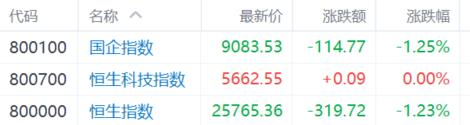
Market Overview - The Hong Kong stock market faced pressure, with the Hang Seng Index dropping over 1%, closing at 25,965.36 points, down 1.23% or 319.72 points, with a total turnover of HKD 2,062.3 million [1] - The Hang Seng China Enterprises Index fell by 1.25% to 9,083.53 points, while the Hang Seng Tech Index remained flat at 5,662.55 points [1] Blue Chip Performance - Baidu Group-SW (09888) led blue-chip stocks, rising 3.45% to HKD 125.8, contributing 8.38 points to the Hang Seng Index [2] - Other notable performers included SMIC (00981) up 2.94%, China Ping An (02318) up 2.15%, while China Construction Bank (00939) fell 4.01%, dragging the index down by 54.39 points [2] Sector Highlights - Large tech stocks generally declined, with Alibaba down over 1% and Tencent down 0.82% [3] - Chinese brokerage stocks rose against the trend, with Huatai Securities (06886) up 5.17% and GF Securities (01776) up 3.1% [3] - The light communication sector saw significant gains, with Huiju Technology rising over 7% [4] - Lithium stocks mostly increased, with Ganfeng Lithium (01772) up 6.95% and CATL (03750) up 3.28% [5] Regulatory Developments - The Chairman of the China Securities Regulatory Commission (CSRC) emphasized the need to accelerate the development of top-tier investment banks and institutions, indicating a potential easing of regulations for quality institutions [4] - The CSRC plans to optimize risk control indicators and moderately open up capital space and leverage limits, which could benefit leading brokerages [4] New Listings and Stock Movements - Two new stocks were listed, with Zhuoyue Ruixin (02687) surging 87.26% and Naxinwei (02676) declining 4.31% [7] - Restructured Energy (02570) faced a significant drop of 27.33% on its first trading day after the lock-up period ended [8] - Silver Pharma-B (02591) saw a decline of 14.32% following its inclusion in the Hong Kong Stock Connect [9] - Sutech (02498) performed well, rising 5.23% after securing a major order from FAW Toyota [10] Pharmaceutical Sector Updates - The National Healthcare Security Administration announced the addition of 114 new drugs to the 2025 National Medical Insurance Drug List, with a success rate of 88%, up from 76% in 2024 [6]



港股速报 | 大市低迷新股疯狂 卓越睿新上市首日猛涨
Mei Ri Jing Ji Xin Wen· 2025-12-08 08:45
Market Overview - The Hong Kong stock market experienced a weak adjustment, with the Hang Seng Index closing at 25,765.36 points, down 319.72 points, a decline of 1.23% [2] - The Hang Seng Tech Index closed at 5,662.55 points, with a slight increase of 0.09 points [4] Company Performance - Excellence Education (HK02687) showed moderate performance in the morning, with gains kept within 30%, but surged after 3 PM, reaching a maximum increase of over 111%, ultimately closing up over 87% [5] - In contrast, the newly listed stock Naxin Micro (HK02676) opened flat but remained in a state of decline throughout the day, closing down 4.31% [7][8] Sector Insights - According to Frost & Sullivan, the top five companies in the Chinese higher education digitalization market hold a total market share of 12.9% as of 2024. Excellence Education ranks second in revenue with a market share of 4.0% in the overall digitalization market and first with a 7.3% market share in digital content production [7] - In the broader market, Baidu Group rose over 3%, Huahong Semiconductor increased over 4%, and SMIC gained over 2%. Conversely, Pop Mart fell over 8%, while Lao Pu Gold and Innovent Biologics dropped over 6%. Bank stocks collectively declined, with China Construction Bank down over 4% [10] Investment Outlook - Multiple institutions believe that the Hong Kong stock market is currently at a low valuation or in a positioning phase, with a positive outlook for 2026. Technology innovation, particularly in AI, and high-dividend assets are seen as promising investment themes [12] - There are differing opinions among institutions regarding market trends, with Huatai Securities suggesting an early "spring rally" for Hong Kong stocks, while Huaan Fund indicates a potential shift towards defensive dividend sectors as the year ends [13]

港股收盘(12.08) | 恒指收跌1.23% 券商、芯片股等逆市上涨 百度集团-SW(09888)领升蓝筹
智通财经网· 2025-12-08 08:40
Market Overview - The Hong Kong stock market faced pressure, with the Hang Seng Index dropping over 1%, closing at 25,965.36 points, down 1.23% or 319.72 points, with a total turnover of HKD 206.23 billion [1] - The Hang Seng China Enterprises Index fell by 1.25% to 9,083.53 points, while the Hang Seng Tech Index remained flat at 5,662.55 points [1] Blue Chip Performance - Baidu Group-SW (09888) led blue-chip stocks, rising 3.45% to HKD 125.8, contributing 8.38 points to the Hang Seng Index [2] - Other notable performers included SMIC (00981) up 2.94% and China Ping An (02318) up 2.15%, while China Construction Bank (00939) fell 4.01%, dragging the index down by 54.39 points [2] Sector Highlights - Major technology stocks generally declined, with Alibaba down over 1% and Tencent down 0.82% [3] - Chinese brokerage stocks rose against the trend, with Huatai Securities (06886) up 5.17% and GF Securities (01776) up 3.1% [3][4] - The light communication sector saw significant gains, with Huiju Technology (01729) rising 7.65% [4] - Lithium stocks mostly increased, with Ganfeng Lithium (01772) up 6.95% and CATL (03750) up 3.28% [5] Regulatory Developments - The Chairman of the China Securities Regulatory Commission (CSRC) emphasized the need to accelerate the development of top-tier investment banks and institutions, indicating a potential easing of regulations for quality institutions [4] - The CSRC plans to optimize risk control indicators and open up capital space and leverage limits [4] New Drug Listings - The National Healthcare Security Administration announced the addition of 114 new drugs to the 2025 National Medical Insurance Drug List, with a success rate of 88%, significantly higher than the previous year's 76% [6] New Listings and Stock Movements - New listings included Zhuoyue Ruixin (02687), which surged 87.26% to HKD 126.4, while Naxin Micro (02676) fell 4.31% [7] - Restructured Energy (02570) saw a significant drop of 27.33% on its first trading day after the lock-up period ended [8] - Silver Pharma-B (02591) experienced a decline of 14.32% as it was adjusted into the Hong Kong Stock Connect [9] - Sutech (02498) performed well, rising 5.23% after securing a major contract with FAW Toyota [10]
港股收评:恒指收跌1.23%,再失26000点,中资券商股逆势走高
Ge Long Hui· 2025-12-08 08:37
具体来看: 大型科技股多数呈现下跌行情但总体跌幅较小,腾讯、京东、网易、小米、京东跌幅在1%以内,阿里巴巴、快手、携程控股跌超 1%,百度逆市大涨3.45%。 | 代码 | 名称 | 最新价 | 涨跌额 | 涨跌幅 √ | | --- | --- | --- | --- | --- | | 09888 | 百度集团-SW.) | 125.800 | +4.200 | 3.45% | | 03690 | 美团-W | 99.500 | +0.450 | 0.45% | | 09626 | 時陣時陣-W | 203.600 | -0.200 | -0.10% | | 02015 | 理想汽车-W | 69.650 | -0.250 | -0.36% | | 01810 | 小米集团-W | 42.580 | -0.200 | -0.47% | | 099999 | 网易-5 | 216.800 | -1.200 | -0.55% | | 09618 | 京东集团-SW | 116.200 | -0.800 | -0.68% | | 00700 | 腾讯控股 | 605.000 | -5.000 | -0.82% ...




港股收评:恒指跌1.23%,科指微涨0.09点,锂电池、券商及芯片股集体走高,消费股低迷
Jin Rong Jie· 2025-12-08 08:21
12月8日,港股早盘震荡分化,盘中科指回吐涨幅跟随恒指走低,午后股指窄幅震荡,截止收盘,恒生 指数下跌319.72点,跌幅1.23%报25765.36点;恒生科技指数上涨0.09点,涨幅0.0%报5662.55点;国企 指数下跌114.77点,跌幅1.25%报9083.53点;红筹指数下跌41.95点,跌幅0.98%报4218.28点。 盘面上,科网股跌多涨少,快手、阿里巴巴跌超1%,百度涨超3%;锂电池板块涨幅居前,赣锋锂业涨 超6%;中资券商股普涨,华泰证券涨超4%;芯片股走强,华虹半导体涨超4%,上海复旦涨超3%,中 芯国际涨近3%;煤炭股走弱,中国秦发跌超11%;消费股低迷,泡泡玛特跌8.5%,老铺黄金跌6.7%; 内银股集体下跌,其中,建设银行跌4%,招商银行、工商银行跌3.5%,今日两只新股上市,卓越睿新 涨超87%,纳芯微跌超4%。 企业新闻 广汽集团(02238.HK):11月汽车销量为17.97万辆,同比下降9.72%,本年累计销量为153.4万辆,同期比 较下降10.80%。 国际商业结算(00147.HK):与南极光附属公司订立计算机芯片销售协议。 中微智码(08041.HK):于上海临 ...
多重利好刺激!两大关键词引爆今日A股
天天基金网· 2025-12-08 08:21
Market Performance - The A-share market experienced a strong performance on December 8, with the Shenzhen Component Index rising over 1% and the ChiNext Index increasing over 2% [2] - The total market turnover reached 2.04 trillion yuan, an increase of 310.9 billion yuan compared to the previous trading day [2][3] Key Drivers - The market's upward momentum is attributed to multiple favorable stimuli over the weekend, leading to a significant increase in trading volume [3] - Enhanced liquidity has limited market pullbacks and allowed for greater elasticity in growth styles [4] Key Themes Brokerage Sector - The brokerage sector showed notable activity, which is seen as a positive indicator for market confidence [9] - Recent regulatory support from the China Securities Regulatory Commission (CSRC) aims to optimize evaluation metrics for quality institutions and expand capital space and leverage limits [11] - The number of new margin trading accounts opened in November increased by 8% month-on-month, indicating growing investor confidence [11] Technology Sector - The technology sector, particularly in areas like computing power and commercial aerospace, has been a significant driver of market gains [14] - The ChiNext Index and the Sci-Tech 50 Index have led the major indices in performance, with year-to-date increases of 48.97% and 36.59%, respectively [15] - The commercial aerospace sector has seen increased activity, with successful launches of reusable rockets and satellite deployments, indicating a growing industry [18][19] Future Outlook - The artificial intelligence sector is expected to continue driving innovation within the technology industry, with significant growth projected in the data center interconnect (DCI) market [21] - The domestic AI chip industry is rapidly developing, with companies making strides in domestic substitution, which is anticipated to accelerate the formation of a domestic computing power ecosystem [21]