家电

Search documents
兴业基金:分享周期行情投资机会 关注兴业中证全指自由现金流ETF
Zhong Zheng Wang· 2026-01-30 02:04
Group 1 - The China Securities Index Free Cash Flow Index rose by 2.15% on January 28, with a year-to-date increase of 8.71%, and several constituent stocks such as Silver Nonferrous, China Aluminum, and others reached their daily limit [1] - The index has a significant representation from the non-ferrous metals, basic chemicals, and oil and petrochemicals sectors, each accounting for over 8% [1] - Since December 2024, the index has undergone five adjustments, maintaining a strong focus on the oil and petrochemical and non-ferrous metal sectors, with the basic chemicals sector seeing a notable increase in weight during the last three adjustments [1] Group 2 - China National Offshore Oil Corporation (CNOOC) has been a core constituent in all five adjustments, representing about 10% of the index, with net cash flow from operating activities exceeding 200 billion yuan annually from 2022 to 2024 [1] - China Aluminum has also consistently been a significant constituent, with a weight exceeding 3% in the index [1] - The index shows a preference for the consumer manufacturing sector, with the home appliance sector consistently above 8%, and automotive becoming a major weight in the December 2025 adjustment, while the food and beverage sector's weight has decreased [1][2]


公募基金重仓股格局生变 AI科技成长股受青睐
Jin Rong Shi Bao· 2026-01-30 02:03
Group 1 - The core focus of the article is the significant shift in public fund holdings towards technology growth stocks, particularly in the AI sector, with companies like Zhongji Xuchuang becoming the top holdings [1][3] - Zhongji Xuchuang has surpassed Ningde Times to become the largest holding in public funds, driven by the strong demand for AI-related infrastructure [1][5] - The overall allocation of public funds to technology companies has increased from 25% in Q1 2024 to 40% in Q4 2025, indicating a growing interest in the AI industry [3] Group 2 - Other companies like Xinyi Sheng and Cambrian-U have also emerged as significant holdings, benefiting from the AI boom [2] - Xinyi Sheng, a high-performance optical module provider, has seen its ranking rise to the 3rd position among fund holdings by Q4 2025 due to increased AI computing demand [2] - Cambrian-U, a leading AI chip company, has fluctuated in rankings but reached the 5th position in Q4 2025, reflecting the rapid development of AI applications [2] Group 3 - UBS analyst Xiong Wei suggests that the AI industry will continue to thrive in 2026, with a focus on AI models, applications, and computing infrastructure [3][4] - Concerns about an "AI bubble" are low, as major domestic model manufacturers are supported by healthy cash flows, and there is a cautious approach to capital expenditures [4] - Despite the rise of AI, other sectors like renewable energy and consumer goods remain resilient, with companies like Ningde Times and Kweichow Moutai still holding significant positions in public fund portfolios [4][5]




政策红利加速释放 多地启动2026年财政补贴申报
Zhong Guo Jing Ying Bao· 2026-01-30 00:57
Group 1 - The core viewpoint of the article highlights the implementation of a new subsidy policy in Beijing for replacing old household appliances, which offers a 15% subsidy on the purchase price for six categories of energy-efficient appliances, with a maximum subsidy of 1500 yuan for televisions [1] - The subsidy program aims to enhance consumer experience by providing both online and offline purchasing options, allowing consumers to redeem subsidies directly during payment on various e-commerce platforms and at over 1500 registered stores in Beijing [1] - The policy is part of a broader initiative by the National Development and Reform Commission and the Ministry of Finance to stimulate consumption and support economic growth through financial subsidies for equipment updates and green industry initiatives [2] Group 2 - The new fiscal subsidy policy covers multiple core areas, including equipment updates, green industry, and support for small and micro enterprises, with lowered application thresholds and increased subsidy amounts to effectively boost domestic demand and stabilize growth [2] - In the equipment update sector, subsidies range from 15% to 20% of fixed asset investments, with specific projects in technology innovation and green transformation eligible for up to 20% support, and loan interest subsidies available for up to 5 million yuan per enterprise [2] - The green industry is a key focus of the policy, with 35% of special long-term bonds allocated for green transformation, and the program has already shown significant impact in various regions, driving substantial consumer spending [3] Group 3 - The subsidy application process is designed to be accessible through both online and offline channels, with various government service platforms and partner merchants facilitating submissions, and deadlines for most applications set until December 31, 2026 [4] - The policy emphasizes strict management of subsidy funds, prohibiting misuse for investment or financial purposes, and establishing mechanisms to ensure efficient fund allocation directly to applicants [3]
扩大消费,还是要回到微观生活求解
Sou Hu Cai Jing· 2026-01-29 14:14
Group 1 - The core concept of "life economy" emphasizes the importance of individual and specific life scenarios in driving economic behavior and value flow [4][5] - The macroeconomic data indicates a positive trend, with China's total retail sales of consumer goods expected to exceed 50 trillion yuan in 2025, growing by 3.7% year-on-year, contributing 52% to economic growth [3] - The report highlights that traditional consumption platforms often reduce individuals to mere "purchase units," while life economy focuses on people as "life participants," revealing the value of life community platforms [7] Group 2 - The report suggests that expanding consumption requires a focus on micro-level needs, as many consumers are hesitant to spend due to a lack of awareness of available quality products [6][9] - Companies that engage with life community platforms can gain insights into niche demand data and communicate directly with consumers to provide customized services, leading to sustainable consumption growth [8] - The shift towards AI-driven supply capabilities will enhance the ability to meet highly personalized and customized micro-level demands, which are often overlooked by traditional centralized algorithms [9]

康盛股份(002418.SZ):预计2025年度净利润1860万元—2540万元 同比扭亏为盈
Ge Long Hui A P P· 2026-01-29 13:55
Core Viewpoint - The company, Kangsheng Co., Ltd. (002418.SZ), forecasts a significant turnaround in its financial performance for the year 2025, projecting a net profit attributable to shareholders of between 18.6 million and 25.4 million yuan, compared to a loss of 98.3 million yuan in the previous year [1] Financial Performance Summary - The expected net profit for 2025 represents a substantial recovery from the previous year's loss, indicating a positive shift in the company's financial health [1] - The projected net profit after deducting non-recurring gains and losses is estimated to be between 7.7 million and 11.55 million yuan, also an improvement from a loss of 111.55 million yuan in the prior year [1] Reasons for Profit Turnaround - A significant reduction in asset impairment losses and credit impairment losses compared to the previous year, with the prior year seeing a total impairment provision of approximately 130 million yuan, while no large impairment losses were recorded in the current reporting period [1] - The company's traditional business has shown steady growth, with stable performance in the home appliance sector and increased revenue in the new energy vehicle sector following the introduction of strategic partners [1] - New business segments, including liquid cooling and copper alloy, are rapidly advancing, with steady revenue growth despite not yet achieving profitability, and a reduction in year-on-year losses [1]

品牌投B站,为什么冰火两重天?
3 6 Ke· 2026-01-29 12:44
Core Insights - Brands are increasingly diversifying their product offerings and expanding their channels to drive short-term growth, but this strategy may pose long-term risks [1] - Bilibili (B站) has seen a significant increase in the number of advertising clients, particularly high-ticket brands, with a notable rise in GMV for products priced over 1,000 yuan [2] - The advertising revenue for Bilibili has consistently grown over 20% for 11 consecutive quarters, indicating that many brands are benefiting from advertising on the platform [3] Group 1: Brand Strategies and Market Dynamics - Brands are exploring new channels for growth, with many entering Bilibili to capitalize on its advertising potential, leading to a doubling of clients compared to the previous year [2] - The Z100 and 哔哩指数 annual rankings reveal a stable group of brands on Bilibili, with 149 out of 220 brands repeating their presence, indicating a strong brand ecosystem [3] - The average index difference between the top and lower-ranked brands in various categories suggests significant opportunities for new entrants, despite existing competition [4] Group 2: Advertising Effectiveness and Trends - The proportion of new products in the Z100 list has increased to 75%, indicating that brands with a long-term presence on Bilibili can achieve sustainable growth [5] - The beauty and personal care sectors are experiencing polarization, with stable growth from affordable domestic brands and a decline in high-end foreign brands [6] - The number of top-performing UP主 (content creators) in live commerce has decreased significantly, reflecting a shift in the platform's dynamics and the need for higher content quality [8] Group 3: Future Directions and AI Integration - Bilibili is focusing on enhancing its marketing services by simplifying its goals into four areas: brand awareness, transaction management, lead collection, and application promotion [11] - The platform is investing in AI to lower marketing barriers, automate processes, and improve the precision of ad targeting, which is expected to transform the advertising landscape [12][13] - The upcoming "generative recommendation" system will allow brands to reach users more effectively without adhering to traditional marketing funnels, enhancing user engagement [14]

理响中国·聚焦2026中国经济|“主动力”+“稳定锚”!一图解读开局之年消费新趋势
Yang Guang Wang· 2026-01-29 12:38
Core Insights - By 2025, consumer spending in China is projected to contribute over 50% to economic growth, reaching 52%, with consumption becoming the main driver of economic growth and stability [1] Group 1: Consumer Policy and Trends - The implementation of the old-for-new consumption policy will be optimized this year, promoting the expansion and upgrading of goods consumption, including nationwide unified subsidy standards for automobile scrapping and replacement, as well as six categories of key home appliance upgrades [3] - New generation smart devices, such as smart glasses and smart home products, will be included in the subsidy range [4] - The focus of appliance subsidies will shift towards first-level energy efficiency products, while automotive subsidies will favor new energy vehicles [5] Group 2: Consumer Sales Data - In 2025, the retail sales of goods from key enterprises are expected to grow by 3.4% compared to the previous year, with an acceleration of 0.7 percentage points, largely benefiting from the implementation of the old-for-new consumption policy [6] - Since the implementation of the old-for-new policy in 2024, consumer goods sales have reached 3.92 trillion yuan, benefiting 494 million consumers, with 18.3 million vehicles replaced under the program, nearly 60% of which are new energy vehicles [8] Group 3: Service Consumption Growth - In 2026, there will be an acceleration in cultivating new growth points in service consumption, aiming to release the potential of service consumption [10] - The "Buy in China" series of activities will continue to be organized to build the "Buy in China" brand, focusing on creating distinctive service consumption brands in areas such as sports, performing arts, tourism, and winter sports [11] - The retail sales of services are expected to grow by 5.5% in 2025, with per capita spending on service consumption increasing by 4.5% [15] Group 4: Expert Insights - The shift in consumer behavior from primarily goods consumption to a combination of goods and services consumption indicates a new phase in China's consumption structure, which is expected to inject sustained and strong momentum into high-quality economic development [17] - The upgrade in service consumption signifies a transition from meeting basic needs to pursuing high-quality living and personalized experiences, driving innovation in consumption scenarios [18]

关于印发《内蒙古自治区家电以旧换新、数码和智能产品购新补贴实施细则》的通知
Xin Lang Cai Jing· 2026-01-29 12:12
Core Viewpoint - The Inner Mongolia Autonomous Region has issued implementation details for a subsidy program aimed at promoting the replacement of old household appliances and the purchase of new digital and smart products, effective from January 1, 2026, to enhance consumer spending and support the local economy [3][4][5]. Group 1: Implementation Details - The subsidy program is based on national policies aimed at large-scale equipment updates and consumer goods replacement [4][26]. - The program will be in effect from January 1, 2026, until the end of the year, with total funding subject to control and limits [5][27]. - Eligible consumers must purchase subsidized products and obtain valid sales invoices to qualify for the subsidies [6][28]. Group 2: Subsidy Categories - Subsidized categories include household appliances such as refrigerators, washing machines, televisions, air conditioners, computers, and water heaters [7][28]. - Digital and smart products eligible for subsidies include smartphones, tablets, smartwatches, and smart glasses [8][28]. Group 3: Subsidy Standards - For household appliances, the subsidy is set at 15% of the product's sales price, with a maximum subsidy of 1,500 yuan per item for energy-efficient products [9][28]. - For digital and smart products, the subsidy is also 15% of the sales price, with a maximum subsidy of 500 yuan per item, applicable to products priced up to 6,000 yuan [10][28]. Group 4: Subsidy Process - The subsidy will be processed through a "subsidy voucher" model, where consumers can directly deduct the subsidy amount at the point of sale [11][30]. - Consumers must register on the Cloud Flash Payment App to obtain subsidy vouchers, which are valid for one day [31][32]. - A detailed verification process is required for subsidy claims, including submission of personal and product information [32][33]. Group 5: Organizational Responsibilities - Local governments are tasked with coordinating efforts to implement the subsidy program effectively, ensuring compliance with regulations and enhancing consumer protection [16][34]. - The program aims to support both online and offline retail channels, particularly focusing on rural areas to ensure broad access to subsidies [19][37]. Group 6: Monitoring and Compliance - There will be strict monitoring of subsidy distribution and compliance with regulations to prevent fraud and ensure proper use of funds [21][39]. - Regular audits and checks will be conducted to maintain the integrity of the subsidy program and protect consumer rights [39][40].
破解供需错配,北大国发院首提“生活经济”
Sou Hu Cai Jing· 2026-01-29 10:34
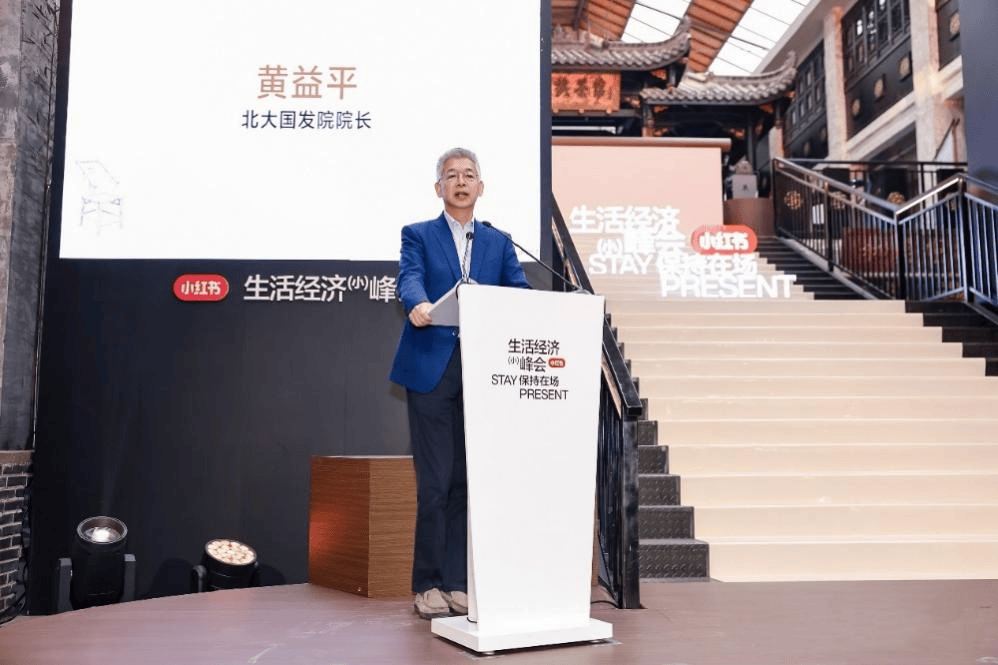
Core Insights - The concept of "life economy" is introduced as a potential driver for boosting domestic demand in China [1][3] - The report indicates that China's economy has entered a phase of "dual circulation and high-quality development," shifting consumer demand from mere availability to quality and personalization [3][4] Group 1: Economic Transition - The traditional manufacturing model focusing on scale and standardization struggles to meet real consumer needs, leading to supply-demand mismatches and low-price competition [3] - The life economy allows consumers to become "product managers," addressing the supply-demand mismatch effectively [3] Group 2: Consumer Engagement - Platforms like Xiaohongshu generate significant consumer data, with over 9 million daily posts and 70 million comments, reflecting real consumer demand [3] - Decentralized algorithms on these platforms enhance the visibility of niche products, benefiting small businesses and individual entrepreneurs [3] Group 3: Brand Collaboration - Brands are increasingly engaging in "co-creation" with consumers to enhance innovation accuracy and reduce market trial costs [4] - Examples include Haier's washing machine developed from user wishes on social media and Lissome's dishwashing machine that underwent 103 iterations based on user feedback [4] Group 4: Policy Support - The rise of the life economy is supported by policy direction and technological innovation, with the 2024 Central Economic Work Conference prioritizing consumption and domestic demand expansion [4] - The emphasis on domestic demand as a leading role in 2025 further provides policy backing for the development of the life economy [4]
整个社会都在喊没钱了,为什么这些公司反而年赚百亿?
创业家· 2026-01-29 10:34
Core Viewpoint - The article emphasizes that despite the prevailing narrative of economic hardship, certain industries are thriving and generating significant profits, particularly in the context of Japan's "lost 30 years" and the evolving consumer behavior in China [3][4]. Group 1: Economic Shifts and Opportunities - The concept of a "low-desire society" does not equate to a lack of opportunities, as consumer demand is shifting towards different sectors [4]. - The article identifies eight key industries that are capitalizing on changing consumer preferences, highlighting that demand migration presents substantial business opportunities [5]. Group 2: Key Industries and Trends - **Second-Hand Economy**: The second-hand luxury market in Japan, exemplified by companies like Daikokuya, has seen a significant revenue increase. In China, platforms like Hongbulin and Panghu are experiencing similar growth [6][7]. - **Pet Economy**: With declining birth rates, spending on pets is rising, as seen with brands like Inaba in Japan and Guobao in China, indicating a robust market for pet products and services [12][13][14]. - **Adult Care**: The adult diaper market in Japan has surpassed $10 billion, showcasing the potential of the aging population as a lucrative economic segment [17][18]. - **Health Food and Beverages**: The rise in health consciousness has led to increased demand for products like sugar-free tea and functional beverages in both Japan and China [21]. - **Beauty and Aesthetics**: The beauty industry continues to thrive, with products like collagen supplements and home beauty devices gaining popularity, indicating a strong consumer focus on personal care [23][24][26]. - **Outdoor Recreation**: Companies in the outdoor equipment sector, such as Snow Peak in Japan, are profiting from the growing interest in outdoor activities, reflecting a shift in consumer spending priorities [29][31]. - **Convenience Economy**: The demand for convenience products, such as frozen foods and smart home appliances, is increasing as younger generations seek to save time in their daily routines [39][40]. - **Leisure and Experience Economy**: Consumers are willing to spend on experiences and small pleasures, indicating a dual trend of frugality and indulgence in spending [36][44].