
军工

Search documents
国防军工行业周报(2025年第50周):商业航天保持高关注度,重视军工技术外延投资机会-20251208
Shenwan Hongyuan Securities· 2025-12-08 08:11
Investment Rating - The report maintains an "Overweight" rating for the defense and military industry, indicating a positive outlook compared to the overall market performance [26]. Core Insights - The defense and military sector has shown strong performance, with the Shenwan Defense and Military Index rising by 2.82%, outperforming major indices such as the Shanghai Composite and CSI 300 [3][6]. - The report highlights the acceleration of task deliveries in Q4, with expectations for improved performance as orders from the 14th Five-Year Plan are anticipated to be issued by the end of the year [5]. - Geopolitical uncertainties are driving increased demand for military equipment, particularly in the Middle East and Asia, suggesting significant investment opportunities in military trade and technology [5]. - The report emphasizes the importance of commercial aerospace development, particularly in the context of military technology advancements, and suggests focusing on high-value segments of commercial rockets and satellite manufacturing [5]. - The military trade landscape is evolving, with a strong resonance between supply and demand, indicating a robust future for China's military trade [5]. Market Review - The Shenwan Defense and Military Index outperformed other indices, ranking third among 31 sectors with a 2.82% increase [6]. - The average increase for the civil-military integration index was 4.7%, indicating strong performance in this segment [6]. - Top-performing stocks in the defense sector included Aerospace Development (up 52.26%), Aerospace Electromechanical (up 46.77%), and Shanghai Hanxun (up 24.98%) [14]. Valuation Changes - The current PE-TTM for the Shenwan Defense and Military sector is 79.95, indicating it is in a historically high valuation range [15][19]. - The report notes a divergence in valuations among sub-sectors, with aerospace and aviation equipment showing relatively high PE valuations since 2020 [15][19]. Key Investment Targets - The report suggests focusing on high-end combat capabilities and new-generation equipment, as well as unmanned and anti-unmanned weaponry, which are expected to see rapid growth starting in 2025 [5]. - Recommended stocks include high-end combat combinations such as AVIC Shenyang Aircraft (600316.SH) and AVIC Xi'an Aircraft (600768.SH), among others [5].





每日市场观-20251208
Caida Securities· 2025-12-08 08:04
Market Overview - Major indices closed higher on December 5, with the Shanghai Composite Index rising by 0.7%, the Shenzhen Component Index by 1.08%, and the ChiNext Index by 1.36%[2] - Trading volume reached 1.74 trillion CNY, an increase of approximately 180 billion CNY compared to the previous trading day[1] Sector Performance - Non-bank financials, metals, machinery, and military industries showed significant gains, while the banking sector experienced a slight decline[1] - The communication computing sector surged due to strong performance from newly listed domestic chip companies, although high valuations may pose future risks[1] Capital Flow - On December 5, net inflows into the Shanghai Stock Exchange totaled 36.67 billion CNY, while the Shenzhen Stock Exchange saw net inflows of 19.48 billion CNY[3] - The top three sectors for capital inflow were general equipment, communication equipment, and industrial metals[3] Policy and Economic Measures - The National Development and Reform Commission allocated a total of 35.5 billion CNY for employment support projects, aiming to create over 1.1 million jobs for low-income individuals[4] - The focus is on promoting employment and income growth through targeted investment projects[4] Industry Insights - The second-hand car market in October saw a transaction volume of 1.76 million units, a year-on-year increase of 2.7%[8] - The cumulative transaction volume for second-hand cars from January to October reached 16.49 million units, reflecting a year-on-year growth of 3.5%[8] Technology and Market Trends - The global smart vacuum cleaner market experienced a shipment increase of 18.7% year-on-year in the first three quarters of 2025, with a total of 17.42 million units shipped[9] - The commercial aerospace sector is poised for significant growth, with a potential trillion-level market emerging due to advancements in technology and policy support[10]
军工ETF(512660)涨超2.4%,新域新质装备建设或支撑行业估值
Mei Ri Jing Ji Xin Wen· 2025-12-08 04:37
国新证券指出,"十五五"规划提出高质量推进国防和军队现代化,新域新质作战力量建设将加快先 进武器装备的更新换代,军工装备迎来新的发展时期。近年来,我国在船舶、航空航天、卫星导航等领 域的全球竞争力持续提升,国防军工行业是新质生产力发展突破的重要方向,行业前景广阔。在全球冲 突多发和地缘局势并不平静的背景下,国防安全重要性提升,行业估值有望获得支撑。我国将开展太空 探源科学卫星计划,探寻宇宙生命起源,进一步推动航天装备领域发展。 军工ETF(512660)跟踪的是中证军工指数(399967),该指数从沪深市场中选取涉及航空航天、 兵器、电子等国防领域的上市公司证券作为指数样本,全面反映军工行业相关上市公司证券的整体表 现。指数成分股涵盖航空、航天、船舶、兵器、军事电子和卫星等细分领域,不仅包括大型军工集团控 股企业,也包含其他业务范围涉及军工领域的上市公司。 注:如提及个股仅供参考,不代表投资建议。指数/基金短期涨跌幅及历史表现仅供分析参考,不 预示未来表现。市场观点随市场环境变化而变动,不构成任何投资建议或承诺。文中提及指数仅供参 考,不构成任何投资建议,也不构成对基金业绩的预测和保证。如需购买相关基金产品, ...
金鹰基金:春节躁动增量资金加持相对明确 关注科技+制造主线双轮动
Xin Lang Cai Jing· 2025-12-08 04:05
Group 1 - The A-share market saw a general increase in major indices last week, but trading volume was insufficient, with the average daily turnover dropping to 1.70 trillion yuan [1][5] - The cyclical sector performed well due to supply tightening and rising expectations of interest rate cuts by the Federal Reserve, with precious metals leading the gains [1][5] - The market style was characterized by cyclical > financial > growth > consumption [1][5] Group 2 - Domestic news indicates that the capital space and leverage limits for quality brokerages are expected to open up, which will facilitate the entry of significant incremental capital into the market [1][5] - The upcoming Central Economic Work Conference in December is anticipated to set a relatively positive fiscal policy for next year, particularly in new areas of fiscal support that will directly impact the recovery of certain sectors [1][5] Group 3 - The spring market focus is on technology and manufacturing, with an emphasis on domestic policy direction [2][6] - The technology sector is believed to be in the later stages of adjustment, with historical data suggesting limited further downside potential after a 40-day correction and a 25% drop in the industry index [2][6] - Concerns regarding AI investment returns need to be alleviated for the technology sector to regain strength, with advancements in large model capabilities and AI commercialization being key catalysts [2][6] Group 4 - The global manufacturing sector is expected to experience a synchronized recovery, benefiting from both fiscal and monetary easing [2][6] - There is a focus on manufacturing within the export chain (non-ferrous metals, power grid equipment, engineering machinery) and related sectors in emerging markets (home appliances, automotive) [2][6] - Non-bank sectors (insurance, brokerages, financial IT) and high-dividend stocks (banks, coal, white goods) are also expected to benefit from liquidity-driven opportunities [2][6]
华泰证券:春季躁动提前的能见度上升
Xin Lang Cai Jing· 2025-12-08 01:01
Core Viewpoint - The A-share market continues to rebound with reduced trading volume, supported by improved liquidity conditions and expectations of policy easing ahead of the Central Economic Work Conference [1][16]. Group 1: Funding Observation - Recent improvements in the funding environment include a slight recovery in margin trading balances and a decrease in the scale of net outflows from foreign capital [2][17]. - New equity funds have seen a slight decrease in shares, but the estimated positions of ordinary stock and mixed equity funds have increased [2][19]. - The number of newly issued ETFs has significantly increased, with 22 currently being issued, 10 awaiting issuance, and 11 pending approval [2][19]. Group 2: Economic Tracking - The overall industry prosperity index continued to decline in November, influenced by holiday effects on October production data [3][19]. - Key sectors showing improvement include TMT, upstream resources, and public industries, with notable recovery in AI applications, commodity prices, and consumer goods [3][19]. - Specific areas of focus include the AI chain, price increase chain, capital goods, consumer goods, and infrastructure chains [3][19]. Group 3: Policy Outlook - Expectations for policy changes are rising ahead of the December Political Bureau meeting and the Central Economic Work Conference, with anticipated focuses on proactive macro policies and expanding domestic demand [4][19]. - Historical data suggests a higher probability of market increases in the week leading up to the Central Economic Work Conference, particularly in sectors like consumer services and home appliances [4][19]. Group 4: Investment Strategy - The market is currently in a phase of recovery, with potential for a "spring surge" starting in mid-December [5][20]. - A balanced allocation between growth and cyclical sectors is recommended, with a focus on high-value consumption and financial sectors as long-term investment choices [5][20]. - Key sectors to watch include aviation equipment, AI chains, and power equipment for growth, while non-ferrous metals and certain chemicals are highlighted for cyclical investments [5][20].


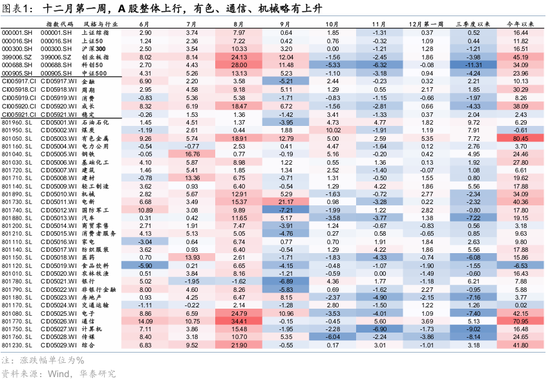
春季躁动的10问10答
2025-12-08 00:41
Summary of Conference Call Notes Industry Overview - The notes discuss the investment market dynamics leading up to the end of the year, highlighting cautious investor behavior due to assessment and demand return drift, resulting in low market trading volume [1][2] - The potential for a spring market rally is analyzed, with historical data indicating that a trend upward typically begins about two weeks before the Spring Festival, with gains often exceeding 10% [1][3] Key Insights and Arguments - The spring market rally is expected to be a continuation pattern this year, suggesting that the overall index has more than 10% upside potential [1][3] - The timing of the spring rally is influenced by market sentiment and catalysts; if strong catalysts such as resolution of overseas interest rate cuts or positive domestic policy announcements occur in December, the rally may start earlier [1][4][5] - Small-cap stocks and technology sectors are expected to perform well during the spring rally, with the TMT (Technology, Media, Telecommunications) sector showing high win rates and elasticity [1][6] - Defensive strategies are favored before the holiday, while a clearer upward trend is anticipated post-holiday, emphasizing the importance of focusing on technology and high-end manufacturing sectors during the spring rally [1][6] Long-term Investment Recommendations - Long-term investors are advised to focus on "Galloping Assets," which are traditional industry leaders with global competitive advantages, benefiting from rising external demand and supportive domestic manufacturing policies, currently at relatively low valuations [1][7] - During the year-end window, attention should be given to low crowding stocks and quality dividends from insurance capital influx, as well as cyclical stocks, with a positive outlook for assets benefiting from external demand and the key tasks of the 14th Five-Year Plan [1][7]
12月该关注什么?大金融、资源、出海、航天、AI应用百舸争流!
Sou Hu Cai Jing· 2025-12-08 00:40
Group 1 - The core viewpoint of the article emphasizes that while short-term sentiment may not have much room for speculation, long-term investment value remains certain, providing confidence for a slow bull market [1][22] - The article highlights that the financial sector, particularly non-bank financials, resources, and cash flow, presents opportunities for low-cost positioning, with a focus on overseas markets being favored by institutions [1][12] - Recent market movements were influenced by significant regulatory announcements and unexpected positive news, such as Baidu's AI chip business planning an IPO in Hong Kong and several companies obtaining general export licenses [5][22] Group 2 - The article notes that the market is currently in a state of balance between bulls and bears, requiring new positive stimuli to drive momentum [9] - It mentions that the overall financing enthusiasm remains weak, with a lack of clear direction in capital flows [10] - The article discusses the impact of regulatory benefits on the securities industry, which is expected to lead to a strong opening for related ETFs, although there may be short-term profit-taking opportunities [13][22] Group 3 - The article outlines expectations for monetary easing in response to economic indicators, with potential implications for resource and traditional manufacturing sectors [15] - It highlights the strong performance of the semiconductor market, with a significant year-on-year increase in sales, and anticipates rising copper prices due to demand [17] - The article also mentions the inclusion of innovative drugs in the medical insurance directory, which could benefit domestic pharmaceutical companies [18]
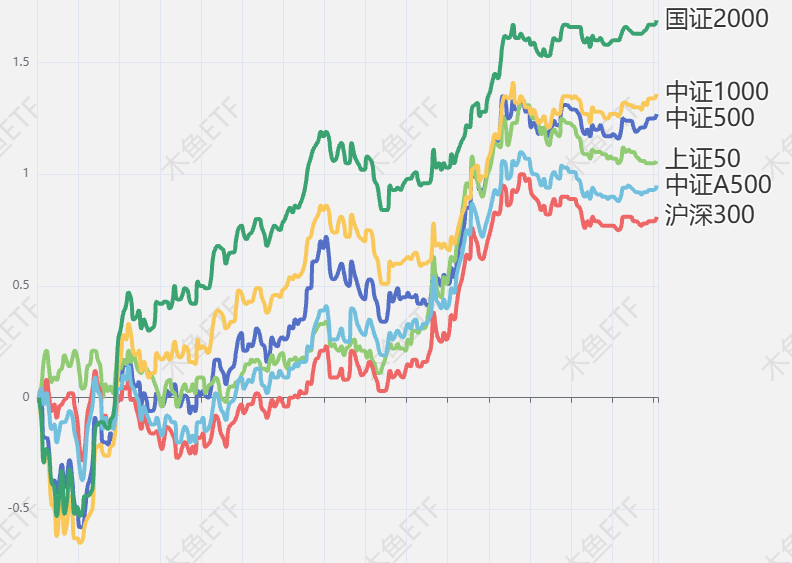
兴业证券2026年度市场策略:万物竞发 全面牛市启航
智通财经网· 2025-12-07 14:03
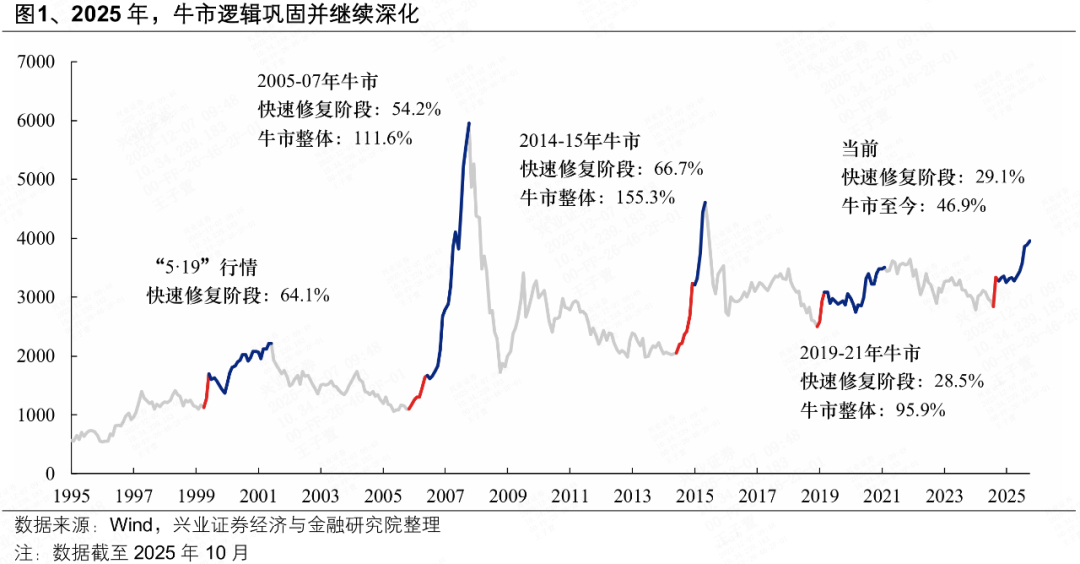
兴业证券此前强调,"本轮资本市场反转肩负重任,未来经济转型发展过程中,资本市场将成为引导资源配置的核心平台",并提出提振股市的新逻辑:助 力新质生产力发展、承载居民财富配置渠道、盘活优质资产。今年以来,三大逻辑持续巩固,资本市场与实体经济良性循环,夯实了本轮牛市的底层逻 辑。 与此同时,今年以DeepSeek、半导体、机器人、6代机、创新药等为代表的各领域"多点开花"突破引发的产业价值重估、大国博弈中的战略自信、"十五 五"对于未来转型思路进一步明确,带来的市场中长期宏观"叙事"和认知的转变,进一步强化本轮牛市的逻辑并拔高行情天花板。 行至当前,在2025年市场大幅上涨、上证综指一度突破4000点后,2026年市场将如何演绎? 报告全文如下: 一、海外展望:流动性宽松和弱美元有望提振 今年以来中美股市关联度提升。一方面,宽松的流动性环境中,外溢的美元流动性催化全球风险资产迎来普涨,新兴市场尤为受益。另一方面,A股今年 表现靠前的海外算力链业绩预期和美股龙头高度挂钩、受美股映射较强。 因此,我们看到中美两国股市的相关性显著提升,标普500和万得全A滚动60日相关系数2025年的均值为0.4,远高于2021-20 ...

高仓位!私募“迎战”年末行情
Zhong Guo Ji Jin Bao· 2025-12-07 12:19
Group 1 - The core viewpoint of the article highlights that private equity firms are maintaining high positions as the A-share market enters the final trading month of the year, with a stock position of 82.97%, marking a new high for the year and the highest in nearly 185 weeks [1][2] - The strategy among private equity firms is shifting towards balanced layouts and "high-low cuts," focusing on both high-growth industries and sectors with improved supply-demand relationships [4][7] - Private equity firms express optimism for the A-share market in 2026, with expectations of marginal improvements in corporate earnings driving market performance, indicating a potential "slow bull" trend [6][7] Group 2 - The distribution of positions among private equity firms shows an aggressive stance, with 68.99% of firms fully invested, while medium, low, and empty positions have decreased significantly [2] - Companies like Rongyang Investment and Xingshi Investment maintain high positions due to optimistic expectations for investment opportunities, driven by improving corporate earnings and fundamental factors [2][5] - The investment strategy of companies like Xiangju Capital reflects a balanced approach, focusing on assets at the bottom of the cycle with growth potential, while also tracking high-heat trend assets like AI and new energy [5] Group 3 - Private equity firms are cautious about the crowded nature of technology stocks, particularly in the AI sector, and are seeking opportunities in less crowded areas [8] - Concerns regarding potential market risks include changes in global liquidity expectations, high valuation bubbles, and inflation issues, with oil price fluctuations and U.S. monetary policy being key factors to monitor [8]
金融制造行业 12 月投资观点及金股推荐-20251207
Changjiang Securities· 2025-12-07 10:43
Investment Rating - The report maintains a "Buy" rating for several key stocks in the financial and manufacturing sectors, including Green City China, Jianfa International Group, New China Life Insurance, and Bank of Communications [12][42][44]. Core Views - The report highlights the increasing pressure on corporate earnings in the short term, with a focus on the potential for export recovery in the coming year [9][10]. - The real estate sector is facing downward pressure, but there are expectations for policy support to alleviate burdens on homebuyers [11]. - The non-bank financial sector is experiencing an optimized market structure, with high growth potential in the securities industry [15]. - The banking sector is expected to see accelerated valuation reassessment driven by strong allocation forces [17]. - The new energy sector is at a bottoming phase, with attention on marginal changes in new technologies [20]. - The machinery sector is approaching mass production of humanoid robots, focusing on core supply chain targets [25]. - The military industry is expected to improve, with a focus on military trade, internal installations, and military-to-civilian transitions [27]. - The light industry is emphasizing opportunities in overseas manufacturing and high-quality domestic consumption [30]. Summary by Sections Real Estate - The real estate sector is under increasing downward pressure, particularly in core cities, with expectations for policy measures to lower home purchase thresholds [11]. - Key companies like Green City China and Jianfa International Group are highlighted for their strong land acquisition and sales performance, with projected net profits for 2025-2027 [12][14]. Non-Bank Financial - The securities industry is expected to maintain high growth, with significant improvements in insurance companies' performance [15][16]. - New China Life Insurance is noted for its leading elasticity and potential for growth in the equity market [16]. Banking - The report emphasizes the ongoing valuation repair in the banking sector, particularly for large state-owned banks and city commercial banks [17][19]. - Bank of Communications is highlighted for its low PB valuation compared to peers, indicating potential for significant upside [19]. New Energy - The new energy sector is identified as having established a bottom, with a focus on solar, storage, and lithium battery technologies [20][21]. - Companies like Sunshine Power and Siling Co. are recommended for their growth potential in the energy storage market [22][23]. Machinery - The humanoid robot sector is approaching mass production, with companies like Hengli Hydraulic expected to benefit from this trend [25][26]. Military - The military sector is projected to see upward trends in military trade and civilian applications of military technology [27][28]. Light Industry - The report emphasizes the importance of overseas manufacturing and high-quality domestic consumption opportunities, with companies like Simor International and Aorijin highlighted for their growth potential [30][32][34]. Environmental - The environmental sector is expected to benefit from carbon reduction policies and overseas expansion opportunities, with companies like Huanlan Environment and Ice Wheel Environment noted for their growth prospects [35][40][41].




