石油

Search documents
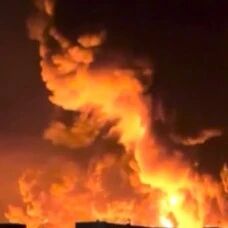
伊朗首都等地临时就汽车加油设限
中国能源报· 2026-03-08 13:41
Group 1 - The Iranian capital Tehran and Alborz Province have imposed temporary restrictions on car refueling due to attacks on oil storage facilities [1] - The refueling limit for personal fuel cards has been reduced from 30 liters to 20 liters in affected areas to ensure fuel supply [1] - Despite the damage to oil supply, Iran is relying on strategic reserves and alternative routes to maintain fuel supply without concerns [1] Group 2 - All natural gas stations in Tehran and Alborz Province remain open 24 hours, indicating a stable natural gas supply [1] - The attacks on oil facilities resulted in the death of four fuel truck drivers, highlighting the impact of the assaults on the workforce [1]


下周波动可能会更大,聊五块比较重要的点
表舅是养基大户· 2026-03-08 13:34
Group 1 - The article discusses the recent volatility in global markets, particularly focusing on the significant rise in oil prices and its implications for various asset classes [1][4][9] - Oil prices have surged nearly 30% this week, marking the largest weekly increase in history, surpassing previous spikes during geopolitical conflicts [9][15] - The performance of major stock indices has been affected by the volatility, with European and Asian markets experiencing larger declines compared to the US markets due to their higher dependence on energy imports [6][16] Group 2 - The article highlights the correlation between rising oil prices and inflation expectations, which have led to increased bond yields in the overseas bond market [7][21] - Gold prices have decreased by 2% this week, influenced by liquidity disturbances and a strong US dollar [8][18] - The article emphasizes the importance of maintaining a "anti-fragile" investment portfolio that can withstand the uncertainty surrounding oil price movements [8][25] Group 3 - The US stock market faced significant declines on Friday, with the Nasdaq and S&P 500 dropping 1.5% and 1.3% respectively, primarily due to rising oil prices and disappointing employment data [16][18] - The VIX volatility index surged by approximately 24%, indicating increased market fear and potential for continued volatility [17][25] - Long-term investment opportunities are emerging as US stock valuations approach relative lows, suggesting potential for recovery despite short-term risks [23][25] Group 4 - The Hong Kong stock market's performance has been mixed, with the technology sector lagging behind while other sectors show structural opportunities [30][32] - The article notes that the recent IPO-related news did not significantly impact market performance, indicating that market sentiment may need to adjust [26][32] - The overall performance of the Hong Kong market has been driven by factors beyond the internet sector, suggesting resilience in other areas [30][32] Group 5 - The article outlines key upcoming events in the A-share market, including the closing of the Two Sessions and the release of important economic data such as CPI and PPI [33][37] - The recent increase in the US dollar index and its impact on the offshore RMB exchange rate is highlighted, indicating a strong currency performance [33][37] - The potential for structural opportunities in the chemical sector is noted, particularly in light of supply disruptions from Qatar's LNG production [37]

油价上涨如何影响我国通胀走势?
Western Securities· 2026-03-08 12:47
1. Report Industry Investment Rating No information about the report industry investment rating is provided in the content. 2. Core Views of the Report - Due to the continuous geopolitical conflicts in the Middle East, international crude oil prices have soared again. The Strait of Hormuz, the world's most crucial oil chokepoint, has almost come to a standstill due to the US - Iran conflict, leading to a continuous rise in international oil prices. WTI and Brent crude oil have recorded their largest weekly increases since 1983 and 1991 respectively [1][11]. - A 10% increase in oil prices may push up the PPI by about 0.4 percentage points. Crude oil, as a basic production material, is widely used in the upstream, mid - stream, and downstream industrial chains. The relevant industries account for about 12.4% of the PPI [1][12]. - The actual impact of oil prices on China's inflation depends on how the conflict develops. Bloomberg Economics has made three scenario analyses: cease - fire (medium - high probability), continuous war (medium - high probability), and regime change in Iran (low probability). Different scenarios will have different impacts on China's PPI [2][18]. - The bond market may remain volatile. It is recommended to moderately extend the duration when there are adjustments. The bond supply shock trading may come to an end. The probability of interest rate decline is higher from the Two Sessions to the Politburo meeting in April. However, after the 10 - year Treasury bond rate breaks below 1.80%, the market is cautious, waiting for the increase in interest rate cut expectations [2][21]. 3. Summary According to Relevant Catalogs 3.1 Review Summary and Bond Market Outlook - This week, the bond market successively traded risk appetite and expectations of the Two Sessions. Yields remained volatile overall, with short - end performance stronger than long - end. The yields of 10Y and 30Y Treasury bonds both rose by 1bp [10]. - International oil prices soared due to the Middle East geopolitical conflicts. As of Friday's close, WTI crude oil futures rose by more than 36% this week, and Brent crude oil futures rose by about 29% [11]. 3.2 Bond Market Review 3.2.1 Funding Situation - The central bank had a net withdrawal of funds, and funding rates declined. From March 2nd to March 6th, the central bank's open - market net withdrawal was 136.34 billion yuan. R007 and DR007 decreased by 2bp and 9bp respectively compared with February 28th [22][24]. 3.2.2 Secondary Market Trends - Yields remained volatile this week, with short - end performance being strong. Except for 10Y and 30Y, the yields of other key - term Treasury bonds declined. Except for the 50Y - 30Y spread, other key - term Treasury bond spreads widened [31]. 3.2.3 Bond Market Sentiment - As of March 6th, the weekly turnover rate of 30Y Treasury bonds rebounded to 31%, the 50Y - 30Y Treasury bond spread narrowed by 2bp compared with February 28th, and the 30Y - 10Y Treasury bond spread widened by 0.3bp to 50bp. The inter - bank leverage ratio rose to 107.7%, and the median duration of medium - and long - term pure bond funds increased by 0.03 years to 2.56 years. The implied tax rate of 10 - year CDB bonds narrowed [35][39]. 3.2.4 Bond Supply - This week, the net financing of interest - rate bonds decreased. The net financing of Treasury bonds changed from net financing to net repayment, the net financing of local government bonds increased, and the net repayment of policy - financial bonds decreased. Next week, the issuance scale of Treasury bonds will increase, while the issuance scale of local government bonds will decrease. This week, inter - bank certificates of deposit changed from net repayment to net financing, and the average issuance rate continued to decline [49][53]. 3.3 Economic Data - In February, the manufacturing PMI declined seasonally, and the export sector was under pressure. Since March, travel has been stronger than the Spring Festival seasonality, and industrial production has improved marginally. Real - estate transactions, consumption, export, and industrial production indicators have shown different trends [57]. 3.4 Overseas Bond Market - The US non - farm payrolls data in February was disappointing. The 2Y and 10Y US Treasury bond rates both rose by 18bp. The 10Y - 2Y US Treasury bond spread remained flat at 59bp. European bond markets declined, the Chinese bond market rose, and the South Korean bond market declined. Emerging - market bond markets also declined [65][66]. 3.5 Major Asset Classes - The CSI 300 index adjusted this week. The Nanhua Crude Oil Index rose significantly by 31%, the US dollar index rose, while the Nanhua Live Pig Index and Shanghai Copper declined. The performance of major asset classes this week was: crude oil > US dollar > rebar > Chinese bonds > Shanghai gold > Chinese - funded US dollar bonds > CSI 300 > convertible bonds > Shanghai copper > live pigs > CSI 1000 [70]. 3.6 Bond Market Calendar - The calendar from March 9th to March 13th, 2026, includes information on liquidity投放 and maturity, government bond supply, fundamental data, and important domestic and international events [76].
全球资产配置每周聚焦(20260227-20260306):复盘两次石油危机与俄乌冲突下全球资产表现-20260308
Shenwan Hongyuan Securities· 2026-03-08 12:44
Group 1: Global Market Overview - The geopolitical conflict in the Middle East has led to a significant oil supply shock, causing oil prices to surge by 28% and raising inflation risks in the U.S.[3] - The 10-year U.S. Treasury yield increased by 18 basis points to 4.15%, while the U.S. dollar index rose by 1.34%[3] - The Korean stock market experienced a notable decline, and the A-share market also saw a comprehensive drop[3] Group 2: Historical Context of Oil Crises - During the first oil crisis (1973-1974), oil prices surged due to the Middle East war and OPEC's embargo, leading to a significant rise in U.S. CPI and a bear market in U.S. bonds[22] - The second oil crisis (1979-1981) saw oil prices rise again, but the S&P 500 was at a relatively low valuation, limiting its downside risk, while the Fed's aggressive rate hikes helped restore market confidence[22] Group 3: Asset Performance Analysis - Post the 2022 Russia-Ukraine conflict, the market's focus shifted from war risk premiums to the inflationary pressures caused by high oil prices[3] - In the three months following the oil crises, U.S. inflation showed signs of marginal decline, but the economy faced persistent downward pressure[23] Group 4: Capital Flows and Investment Trends - In the past week, foreign capital inflows into the Chinese stock market amounted to $30.7 billion, while domestic capital inflows reached $5.2 billion[3] - Emerging market funds have seen significant inflows, while developed markets have experienced outflows, indicating a shift in investor sentiment towards higher-risk assets[3] Group 5: Valuation Metrics - As of March 6, 2026, the valuation of the Shanghai Composite Index is at 93.1% of its historical average, indicating it is undervalued compared to the S&P 500[3] - The equity risk premium (ERP) for the Shanghai Composite and the CSI 300 remains relatively high, suggesting better allocation value in the Chinese market compared to global counterparts[3]
贵金属周报:强势美元及美债收益率,拖累贵金属估值承压-20260308
Nan Hua Qi Huo· 2026-03-08 11:35
Report Industry Investment Rating No information provided in the document. Core Viewpoints of the Report - **Market Performance**: Precious metal prices adjusted this week, with silver's decline significantly greater than gold's, despite a slight rebound on Friday. COMEX and SHFE gold and silver positions further declined, and silver inventories continued to fall. The holdings of the world's largest gold ETF - SPDR decreased by 28 tons to 1,073.32 tons, and the holdings of the world's largest silver ETF - iShares decreased by 231 tons to 15,762 tons [2]. - **Impact Factors**: The recent precious metal market transactions are concentrated on expectations of the Fed's monetary policy, hedging and inflation under geopolitical situations, uncertainties in trade policies, as well as economic stagflation and financial market risks. The weakness of precious metals this week was due to the Middle East geopolitical situation pushing up oil prices, further weakening the expectations of interest rate cuts by the Fed and European and American countries, leading to higher US dollar and US Treasury yields, thus suppressing precious metal prices. Additionally, the liquidity problem under the general decline of risk - assets also dragged down precious metal prices. However, precious metals showed a rebound trend on Friday due to concerns about economic recession rising after oil prices reached $90, increased financial market risks, a redemption wave in private credit of giants such as BlackRock, prominent shadow banking risks, a further decline in global stock markets, a rebound in the Fed's interest - rate cut expectations on Friday, a decline in the US dollar index, and the return of safe - haven buying demand for precious metals. Data shows that the US February non - farm payrolls report released on Friday evening showed that the unemployment rate unexpectedly rose, the non - farm payrolls increase turned negative, and the final values of non - farm payrolls increases in December and January were both revised down, increasing the risk of stagflation in the US and the global economy [3]. - **Long - term Logic**: In the medium term, gold and silver prices will mainly benefit from the game between the Fed's policies and the political environment during the mid - term election time window. The current low approval rating of Trump indicates that he is likely to continuously pursue two goals in the first half of the year: to promote the Fed to implement loose monetary policies and to improve his approval rating before the mid - term elections at the end of the year by strengthening the US hegemonic position and obtaining external interests. The expectations of the Fed's loose monetary policies, the weakening of the central bank's independence, or the fermentation of various uncertainties such as external geopolitics, international trade, and global financial markets will continuously support the increase in investment demand for gold and silver from the perspectives of monetary policy easing and safe - haven demand, thus being beneficial to the continued rise of gold and silver prices in the first half of the year. In the longer term, the credibility of the global US - dollar - dominated credit currency system continues to decline, and core issues such as the unsustainability of the US fiscal situation and the loosening of the US dollar hegemony are becoming increasingly prominent, accelerating the global de - dollarization process. This trend promotes central banks around the world to continuously increase their gold reserves, triggers the competition for gold pricing power and the reconstruction of the global gold market system, and lays a solid foundation for the long - term rise of gold and silver [5]. - **Trading Strategy**: Strategically, the report still maintains a long - term bullish view on precious metals and regards corrections as opportunities for long - term position building. The support level for London gold is at 5,000, and the strong support is around the 60 - day moving average of 4,800. The support level for London silver is at 80, and the strong support is in the 70 - 72 area [6]. Summary by Relevant Catalogs Chapter 1: Core Contradictions and Strategy Recommendations - **Core Contradictions** - **Market Review**: Precious metal prices adjusted this week, with silver's decline significantly greater than gold's. COMEX and SHFE gold and silver positions further declined, and silver inventories continued to fall. The holdings of major gold and silver ETFs decreased [2]. - **Impact Factors Analysis**: The precious metal market was affected by multiple factors, including the Fed's monetary policy expectations, geopolitical situations, trade policies, economic stagflation, and financial market risks. The rise of the US dollar and US Treasury yields due to geopolitical factors suppressed precious metal prices, but concerns about economic recession and financial risks on Friday led to a rebound in precious metal prices [3]. - **Long - term Trading Logic**: In the medium term, gold and silver prices are affected by the Fed's policies and the political environment during the mid - term election time. In the long term, the de - dollarization process and central bank gold - buying behavior support the rise of gold and silver prices [5]. - **Trading - type Strategy Recommendations** - **Trend Judgment**: Maintain a long - term bullish view on precious metals and regard corrections as opportunities for long - term position building. Provide support levels for London gold and silver [6]. Chapter 2: Market Information - **This Week's Event Concerns**: Enter the quiet period of Fed officials before the March 19 FOMC meeting. Continue to focus on the progress of the Middle East situation, the recovery of the Strait of Hormuz, the Iranian supreme leader election, the spread of the US private equity redemption wave, and the pressure on the credit market caused by discount selling risks [15]. - **Last Week and This Week's Data Concerns**: Provide a large amount of US and Chinese economic data, including PMI, non - farm payrolls, unemployment rate, CPI, etc. [14][16] Chapter 3: Futures and Price Data - **International Precious Metal Market**: Present the latest prices, weekly changes, and weekly change rates of international precious metals such as London gold and silver, COMEX gold and silver, and the positions and inventories of related ETFs and CFTC [17]. - **Domestic Precious Metal Market**: Show the latest prices, weekly changes, and weekly change rates of domestic precious metals such as SHFE gold and silver, and the inventories of related exchanges [17]. - **US Financial Asset Performance**: Provide the latest prices, weekly changes, and weekly change rates of US financial assets such as the US dollar index, US Treasury yields, stock indices, etc. [18]. - **Domestic Financial Market**: Present the latest prices, weekly changes, and weekly change rates of domestic financial assets such as the US dollar - RMB exchange rate, stock indices, and Treasury yields [19]. Chapter 4: Macroeconomic Information - **FOMC Post - meeting Statement**: Compare and analyze the FOMC post - meeting statements in 2026/1/29 and 2025/12/11, including the assessment of the economic situation, policy goals, policy decisions, and voting situations [34]. - **Economic Forecast Table (December FOMC)**: Provide economic forecast data such as real GDP growth rate, unemployment rate, PCE inflation rate, and federal funds rate from 2025 to 2028 and in the long - run [36]. - **US CPI and Other Data**: Analyze the composition and changes of the US CPI, and present data on the US CPI and core CPI, PCE price index, non - farm payrolls, etc. [42][44] Chapter 5: Sensitive Demand and Valuation - **Sensitive Demand - ETF Investment Demand**: Show the long - term positions of gold and silver ETFs, including SPDR, SLV, and Chinese top 3 gold ETFs and Hua'an Gold ETF [54][56]. - **Valuation Anchoring - Related Assets**: Analyze the price relationships between precious metals and related assets such as the COMEX gold - silver ratio, gold and silver lease rates, gold and the US dollar index, gold and US Treasury real yields, etc. [58][60][62] - **Global Major Exchange Inventories**: Present the inventory data of precious metals in major global exchanges such as LBMA, COMEX, SHFE, and SGX [77][79][80]
伊朗有关人士:新的最高领袖已确定
21世纪经济报道· 2026-03-08 10:58
据央视新闻报道,当地时间3月8日,伊朗方面有关人士表示, 新的最高领袖已经确定,专家 会议秘书处负责人侯赛尼·布谢里将负责对外宣布。 已故伊朗最高领袖哈梅内伊在礼萨呼罗珊省的代表阿拉姆·霍达表示,关于最高领袖的选举已 经完成,新领导人已经确定。他称,关于专家会议尚未作出决定的各种说法和消息都是"彻头 彻尾的谎言"。 阿拉姆·霍达表示, 根据伊朗宪法,任何人甚至专家会议成员也无权改变这一决定。 据伊朗方面8日消息称,伊朗专家会议已就新的最高领袖人选作出最终决定,但没有透露新的 最高领袖姓名。 来源丨央视新闻 编辑丨金珊 以军:将视哈梅内伊继任者为目标 又一石油巨头宣布减产,沙特阿美大涨近5%,沙特股市高开高走 SFC 21君荐读 ...

周观点:短期泛能源防守,长期中国资产进攻-20260308
Huafu Securities· 2026-03-08 10:47
Group 1 - The report indicates that the U.S. is currently experiencing a phase of loose monetary policy but tight credit conditions, with a strong dollar being a method for short-term resolution [2][3] - Geopolitical conflicts are expected to drive up oil prices in the medium term, benefiting the U.S. with strong dollar and capital inflows, although the weakening military strength of the U.S. may harm dollar credibility [3][10] - In the short to medium term, the report suggests allocating investments towards broad energy dividends and U.S. capital goods inflation, while recommending an increase in insurance and leading Chinese heavy asset stocks once the dollar begins to depreciate [3][10] Group 2 - The report highlights a significant downturn in the U.S. employment market, with February's non-farm payrolls showing a decrease of 92,000 jobs, contrasting sharply with market expectations of an increase of approximately 55,000 jobs [8][12] - The report notes that job losses are widespread across various sectors, including education, healthcare, and construction, indicating a broader economic slowdown [9][12] - The report emphasizes that the weakening non-farm employment data has raised expectations for interest rate cuts, while the U.S. maintains a loose monetary policy despite a contraction in commercial credit [10]
油价要失控?战争溢价还能持续多久
凤凰网财经· 2026-03-08 10:09
Core Viewpoint - The recent surge in oil prices, driven by geopolitical tensions in the Middle East, particularly the closure of the Strait of Hormuz, poses significant implications for global inflation expectations and monetary policy, especially for the Federal Reserve [2][5]. Group 1: Oil Price Dynamics - Oil prices are influenced by geopolitical events; without such disruptions, sustained price increases are challenging [6]. - The global economic cycle significantly impacts oil demand, which is currently weakening due to slowing economic growth and inflationary pressures in the U.S. [6][7]. - The oil supply is relatively elastic, allowing producers to quickly adjust output in response to price changes, which can suppress price increases [7][8]. Group 2: OPEC and Global Supply - OPEC and OPEC+ play crucial roles in regulating global oil supply, controlling approximately 45%-50% of the world's oil production [11]. - OPEC members rely heavily on oil revenues, with specific countries having breakeven oil prices ranging from $73.5 to $137.7 per barrel [13][14]. - Russia's oil revenue is critical for its budget, contributing 30%-40% of its income, and it collaborates with OPEC to stabilize oil prices [17][18]. Group 3: Market Reactions and Predictions - The current rise in oil prices is largely due to supply disruption expectations, but this may not lead to a long-term trend without actual supply shortages [21][23]. - The situation in the Strait of Hormuz is pivotal; if it remains blocked, significant production cuts could occur, with estimates suggesting a potential reduction of up to 470,000 barrels per day [25][26]. - If the conflict persists, oil prices could exceed $100 per barrel, leading to broader impacts on capital markets [26][27].
受“友谊”输油管道供应中断影响,匈牙利再度面临来自乌克兰的能源威胁,匈牙利总理强硬表态:“我们将在这件事上击败他们”
中国能源报· 2026-03-08 09:39
Core Viewpoint - Hungary's Prime Minister Viktor Orbán emphasizes the need to break the oil blockade imposed by Ukraine, asserting that Hungary will not compromise under pressure and will resist any form of extortion [3]. Group 1: Energy Supply Dispute - Hungary and Ukraine are in a dispute over the interruption of oil supply through the "Friendship" pipeline, which has led to escalating tensions between Hungary, Slovakia, and Ukraine since January 27 of this year [5]. - Orbán highlights that energy expenditures are a significant part of ordinary households' living costs in Hungary, and the interruption of the "Friendship" pipeline poses a new energy threat to Hungary [3]. Group 2: Government Response and Monitoring - The Hungarian government is actively monitoring oil inventory and price trends, with plans to intervene immediately if prices exceed manageable levels [3]. - Orbán expresses that he does not expect an apology from Ukraine but demands the resumption of the oil pipeline [3]. Group 3: EU Membership Concerns - Orbán opposes Ukraine's accession to the European Union, arguing that accepting a country in a state of war would bring conflict into the EU and divert Hungarian funds to Ukraine [3].

伊朗5处石油设施遭袭,致4人身亡
中国能源报· 2026-03-08 09:39
Core Viewpoint - The article discusses a recent attack on five oil facilities in Iran, resulting in the death of four oil tanker drivers and potential environmental hazards due to pollution and toxic acid rain [1][3]. Group 1 - On the night of the 7th, four oil storage facilities and one oil product transfer center in Tehran and Alborz Province were attacked [3]. - The Iranian National Oil Products Distribution Company reported that the attack was influenced by recent U.S. and Israeli actions, leading to pollutants entering the Tehran urban area [3]. - The Iranian Red Crescent Society warned that explosions at oil storage facilities could result in toxic acid rain, urging the public to take precautions [3].