农产品

Search documents
跟着美国混,三天饿九顿!特朗普施压无效,阿根廷总统已宣布访华
Sou Hu Cai Jing· 2026-01-13 05:53
Core Viewpoint - Argentine President Milei plans to visit China, emphasizing China's role as an excellent trade partner, which counters the U.S. pressure on Latin American countries [2][4] Group 1: Economic Motivations - Argentina's agricultural exports, particularly soybeans, corn, and shrimp, heavily depend on the Chinese market, making China its most important trade partner [5] - The urgency of Argentina's economic recovery drives Milei's decision to strengthen ties with China, as losing China as a stable buyer would severely impact agricultural exports [7] - Milei's visit to China is a strategic move for economic self-rescue and a subtle resistance against U.S. hegemony, aiming to balance relations between the U.S. and China [7][9] Group 2: Political Context - The U.S. government's aggressive tactics, including the detention of Venezuelan President Maduro, aim to curb China's influence in Latin America, but have not achieved the desired effect [2][4] - Milei's declaration to visit China disrupts U.S. plans to reassert dominance in the region, highlighting the ineffectiveness of U.S. coercive diplomacy [10] - The growing dissatisfaction among Latin American countries towards U.S. pressure indicates a shift towards favoring cooperation with China for development opportunities [9][10] Group 3: Implications for Latin America - If Milei's visit is successful, it could deepen agricultural trade and infrastructure cooperation between Argentina and China, injecting new momentum into Argentina's economy [9] - Milei's decision may serve as a model for other Latin American countries, encouraging them to strengthen ties with China, as evidenced by the success of Chilean cherries and Brazilian coffee in the Chinese market [9] - The essence of China-Latin America cooperation is mutual benefit, contrasting with the U.S. approach of coercion and dependency [10]


光大期货软商品日报-20260113
Guang Da Qi Huo· 2026-01-13 02:59
光大期货软商品日报(2026 年 1 月 13 日) 一、研究观点 | 品种 | 点评 | 观点 | | --- | --- | --- | | | 周一,ICE 美棉上涨 0.82%,报收 64.94 美分/磅,郑棉主力合约环比下降 0.75%, | 震荡 | | | 报收 14625 元/吨,主力合约持仓环比下降 31040 手至 81.79 万手,棉花 3128B 现 | | | | 货价格指数 15365 元/吨,较前一日下降 145 元/吨。国际市场方面,近期海外地缘 | | | | 扰动较多,美联储 1 月降息概率仍有摇摆,美元指数在 98-99 区间震荡,基本面 | | | | 变化有限,美棉震荡为主。国内市场方面,郑棉持续减仓下行,市场分歧加剧, | | | 棉花 | 基本面有了一些改变。受原料成本增加影响,纺织企业生产利润压缩,数据显示 | | | | 纺织企业开机率已经有一定程度下降。库存方面,本年度纺企补库动作提前,TTEB | | | | 数据显示,纺企原料库存可用天数约 31.5 天,原料库存相对充裕,棉花价格处于 | | | | 相对高位情况下,纺企采购观望情绪渐浓。综合来看,短期 ...
农产品期权:农产品期权策略早报-20260113
Wu Kuang Qi Huo· 2026-01-13 02:20
1. Report Industry Investment Rating No relevant information provided. 2. Core Viewpoints of the Report - The agricultural product options market shows different trends: oilseeds and oils are weakly volatile, oils and by - products maintain a volatile market, soft commodity sugar fluctuates slightly, cotton consolidates strongly, and grains such as corn and starch are narrowly bullish [2]. - Strategies suggest constructing option portfolio strategies mainly as sellers, as well as spot hedging or covered strategies to enhance returns [2]. 3. Summary by Related Catalogs 3.1 Futures Market Overview - Different agricultural product options have different price changes, trading volumes, and open interest changes. For example, the latest price of soybean No.1 (A2603) is 4,336, up 29 with a 0.67% increase, trading volume is 2.35 million lots (up 0.50 million lots), and open interest is 5.67 million lots (down 0.16 million lots) [3]. 3.2 Option Factors - Volume and Open Interest PCR - PCR indicators are used to describe the strength of the option underlying market and turning points. For instance, the trading volume PCR of soybean No.1 is 0.65 (up 0.30), and the open interest PCR is 0.91 (down 0.05) [4]. 3.3 Option Factors - Pressure and Support Levels - From the perspective of the strike prices with the largest open interest of call and put options, the pressure and support levels of option underlyings are analyzed. For example, the pressure level of soybean No.1 is 4,500 and the support level is 4,000 [5]. 3.4 Option Factors - Implied Volatility - Implied volatility reflects market expectations. For example, the at - the - money implied volatility of soybean No.1 is 13.035%, and the weighted implied volatility is 15.01% (down 0.97%) [6]. 3.5 Strategies and Recommendations 3.5.1 Oilseeds and Oils Options - **Soybean No.1**: The fundamental situation shows that the US sold about 666,000 tons of soybeans to China in the week from January 5th to January 9th. The market has shown a short - term bullish rebound. Option strategies include constructing a neutral call + put option selling strategy and a long collar strategy for spot hedging [7]. - **Soybean Meal**: The average daily提货量 of major oil mills decreased slightly week - on - week, and the basis decreased slightly. The market has shown an oversold rebound. Option strategies include constructing a neutral call + put option selling strategy and a long collar strategy for spot hedging [9]. - **Palm Oil**: The inventory in Malaysia in December is expected to exceed 3 million tons, suppressing the rebound of the oil sector. The market has shown a rebound with upper pressure. Option strategies include constructing a neutral call + put option selling strategy and a long collar strategy for spot hedging [9]. - **Peanut**: The market price is stable, but the peak - season demand is lower than expected. The market has shown a short - term bullish rise followed by a rapid decline. The strategy is a long collar strategy for spot hedging [10]. 3.5.2 By - product Options - **Live Pig**: The average slaughter weight increased slightly, and the supply is expected to increase in March 2026. The market has shown a weak bearish oversold rebound. Option strategies include constructing a neutral call + put option selling strategy and a covered call strategy for spot [10]. - **Egg**: The inventory of laying hens decreased slightly month - on - month in December 2025. The market has shown a rebound with upper pressure. Option strategies include constructing a bearish call + put option selling strategy [11]. - **Apple**: The total sales volume decreased significantly compared with last year. The market has shown a continuous upward and high - level volatile trend with upper pressure. Option strategies include constructing a bullish call + put option selling strategy and a long collar strategy for spot hedging [11]. - **Jujube**: The raw material acquisition in Xinjiang is completed, and the market is priced according to quality. The market has shown a weak bearish trend. Option strategies include constructing a wide - straddle option selling strategy and a covered call strategy for spot hedging [12]. 3.5.3 Soft Commodity Options - **Sugar**: The domestic processing cost is high, and the external market shows signs of bottoming. The market has shown a weak bearish oversold rebound. Option strategies include constructing a bearish call + put option selling strategy and a long collar strategy for spot hedging [12]. - **Cotton**: The national new - season cotton inspection volume increased year - on - year, and the inventory further rebounded. The market has shown a short - term bullish rise. The strategy is a long collar strategy for spot hedging [13]. 3.5.4 Grain Options - **Corn**: The inventory in northern ports has not yet accumulated, and the inventory in Guangdong ports is at a certain level. The market has shown a rebound with lower support. Option strategies include constructing a neutral call + put option selling strategy [13].
农产品早报-20260113
Yong An Qi Huo· 2026-01-13 01:09
Group 1: Report Overview - The report is an agricultural product morning report released by the research center's agricultural product team on January 13, 2026 [1] Group 2: Corn/Starch Price Data - From January 6 - 12, 2026, the price in Changchun remained at 2160, while in Jinzhou it increased by 20 to 2280. The prices in Weifang and Shekou remained stable at 2230 and 2430 respectively. Corn's basis decreased by 7 to -10, trade profit decreased by 20 to 0, and import profit increased to 292. For starch, the basis decreased by 31 to 89, and processing profit remained at -71 [2] Market Analysis - Short - term: Corn prices are expected to be moderately strong due to farmers' price - holding, limited supply increase, low inventory, and downstream stocking expectations. Starch prices are expected to be stable with a slight upward trend, depending on pre - festival downstream stocking enthusiasm [3] - Medium - to long - term: For corn, focus on import and domestic auction policies. For starch, focus on downstream consumption rhythm and post - season inventory reduction [3] Group 3: Sugar Price Data - From January 6 - 12, 2026, the prices in Liuzhou and Nanning were stable at 5390, while Nanning increased by 10 to 5360. The price in Kunming remained at 5230. The basis increased by 3 to 105, Thai import profit increased by 18 to 201, Brazilian import profit increased by 18 to 378, and the number of warehouse receipts increased by 1000 to 11568 [6] Market Analysis - International: In the 2025/2026 sugar - crushing season, the northern hemisphere's main producing countries are expected to increase production. Pay attention to the actual realization of the production increase [6] - Domestic: Short - term, the supply pressure of raw sugar decreases, and the pricing can refer to domestic sugar cost and spot price. Medium - to long - term, if the global sugar market surplus intensifies, the price will move towards the out - of - quota import cost [6] Group 4: Cotton/Cotton Yarn Price Data - From January 6 - 12, 2026, the price of 3128 cotton decreased by 145 to 15365. The number of warehouse receipts + forecasts increased by 275 to 9962. The price of Vietnamese yarn remained at 2.56, the import price decreased by 5 to 21600, the import profit increased by 19 to 1072, and the 32S spinning profit increased by 147 to -533 [19] Market Analysis - The initial inventory of cotton is relatively low year - on - year, offsetting most of the production increase. With the expansion of domestic textile production, good recent profits, and favorable tariff policies after the China - US meeting in Busan, cotton demand is expected to improve this year, suitable for long - term long positions [9] Group 5: Eggs Price Data - From January 6 - 12, 2026, egg prices in Hebei, Liaoning, Shandong, Henan, and Hubei increased by 0.11, 0.11, 0.10, 0.15, and 0.02 respectively. The basis decreased by 12 to 320. The prices of white - feather broilers, yellow - feather broilers, and pigs remained stable at 3.80, 3.65, and decreased by 0.14 to 17.83 respectively [14] Market Analysis - The inflection point of egg inventory has appeared, but the base is still high. The key to future inventory decline lies in the culling rhythm. If farmers cull chickens before Laba Festival due to low prices, it will be beneficial to the egg price in the second quarter [15] Group 6: Apples Price Data - From January 6 - 12, 2026, the prices of Shandong 80 first - and second - grade apples remained at 8900, and Shaanxi 70 general apples remained at 4. The national inventory increased by 21 to 673.37 (as of January 8), Shandong inventory increased by 59 to 257.98 (as of January 8), and Shaanxi inventory decreased by 9. The 1 - month basis increased by 22 to -1078, the 5 - month basis increased by 59 to -730, and the 10 - month basis decreased by 10 to 419 [17][18] Market Analysis - The trading atmosphere in the late - Fuji apple market is still light. High - quality apples maintain stable prices, while the prices of general and lower - quality apples have declined. The inventory removal rate has slightly increased, but it is still lower than the same period last year. The short - term futures market may maintain high - level fluctuations, and the medium - term pattern is strong in the near term and weak in the long term, depending on inventory removal [18] Group 7: Pigs Price Data - From January 6 - 12, 2026, the prices in Henan Kaifeng, Anhui Hefei, and Jiangsu Nantong decreased by 0.05 to 12.88, 13.35, and 13.50 respectively, while the prices in Hubei Xiangyang and Shandong Linyi increased by 0.05 to 12.95 and 13.12 respectively. The basis decreased by 15 to 1145 [18] Market Analysis - The weekend spot price of pigs first rose and then fell. Before the Spring Festival, both supply and demand are expected to increase, and there may be short - term supply - demand mismatches. Price increases depend on further production and inventory reduction in the near term. Pay attention to factors such as slaughter rhythm, diseases, and policies [18]
综合晨报:A股成交额3.64万亿元创历史新高-20260113
Dong Zheng Qi Huo· 2026-01-13 00:16
1. Report Industry Investment Ratings There is no information provided regarding the report industry investment ratings in the given content. 2. Core Views of the Report - The A - share trading volume reached a record high of 3.64 trillion yuan, but there are potential regulatory risks and market self - adjustment risks [2][22]. - The investigation of the Fed Chairman by the US Department of Justice has increased market concerns about the Fed's independence, affecting the prices of precious metals, the US dollar index, US stock index futures, and US Treasury bond futures [3][11][16]. - The supply and demand situation of various commodities is different. For example, the inventory of soybean meal in oil mills decreased, and the price trends of different metals and energy chemicals are affected by factors such as policies, production, and geopolitical situations [4][37][69]. 3. Summary According to Relevant Catalogs 3.1 Financial News and Comments 3.1.1 Macro Strategy (Gold) - The investigation of Fed Chairman Powell by the US Department of Justice is considered an excuse by Trump to pressure the Fed to cut interest rates, which has increased market concerns about the Fed's independence [10]. - CME will change the margin setting method for precious metals, which may increase market volatility. It is recommended to wait for a pull - back before making long - term allocations [11][12]. 3.1.2 Macro Strategy (Foreign Exchange Futures (US Dollar Index)) - The investigation of Powell has led to criticism from key Republican members, and the market's concern about the Fed's independence has increased, causing the US dollar to weaken. It is expected that the US dollar index will decline in the short term [13][16][17]. 3.1.3 Macro Strategy (US Stock Index Futures) - The US Department of Justice is conducting a criminal investigation into Fed Chairman Powell, and Trump's tariff policy on Iran has affected the market. Although the market is worried about the Fed's independence, the risk appetite of the US stock market has moderately recovered. It is expected that the US stock market will continue to fluctuate strongly [18][20][21]. 3.1.4 Macro Strategy (Stock Index Futures) - The A - share trading volume reached a record high, but some listed companies' statements cooled the market. It is believed that the probability of regulatory intervention is high, and the market self - adjustment is a risk point. It is recommended to continue holding long - term strategies for stock index futures [22][23]. 3.1.5 Macro Strategy (Treasury Bond Futures) - The central bank conducted 86.1 billion yuan of 7 - day reverse repurchase operations, with a net investment of 36.1 billion yuan. Although the bond market has signs of a rebound, the long - term suppression factors still exist. It is recommended to be cautious when chasing up and betting on rebounds and pay attention to short - selling opportunities [24][25]. 3.2 Commodity News and Comments 3.2.1 Black Metal (Steam Coal) - The price of Indonesian low - calorie steam coal remained stable, and the coal price is expected to remain in a low - level oscillation in January, with limited room for continuous rebound [26][27]. 3.2.2 Black Metal (Iron Ore) - Tata Steel plans to acquire 50.01% of the equity of Thriveni Pellets. The iron ore market is in an oscillation, and the price is expected to continue to oscillate without a clear trend [29]. 3.2.3 Black Metal (Rebar/HRC) - The steel price is oscillating strongly, but the contradiction in the steel market is gradually accumulating. It is recommended to treat the steel price with an oscillating mindset in the short term [32][33]. 3.2.4 Black Metal (Coking Coal/Coke) - The price of coking coal in the Linfen market remained stable. There is a certain demand for replenishment before the Spring Festival, but the increase in iron water production needs to be monitored [35][36]. 3.2.5 Agricultural Products (Soybean Meal) - The inventory of soybean meal in oil mills decreased, and the USDA reports were bearish. It is expected that the price of soybean meal futures will continue to be weak [37][39][40]. 3.2.6 Agricultural Products (Soybean Oil/Rapeseed Oil/Palm Oil) - The export volume of Malaysian palm oil increased in early January, and the production decreased. The inventory in December exceeded expectations, but the market has already priced it in. It is expected that the palm oil price will start a rebound [41][44][45]. 3.2.7 Non - ferrous Metal (Lithium Carbonate) - The cooperation between Codelco and SQM is expected to achieve a production of 250,000 tons in 2026. The adjustment of the battery export tax - rebate policy is beneficial to the demand for lithium carbonate. It is recommended to hold existing long positions and be cautious for new long positions [47][48][49]. 3.2.8 Non - ferrous Metal (Copper) - The copper premium in Japan reached a record high, and some companies have investment and cooperation plans. The short - term copper price fluctuation is expected to intensify. It is recommended to buy on dips and wait and see for arbitrage [50][53][54]. 3.2.9 Non - ferrous Metal (Nickel) - The domestic trade benchmark price of nickel ore in Indonesia increased slightly. The market is expected to be bullish, and it is recommended to pay attention to long - buying opportunities on dips [55][56][57]. 3.2.10 Non - ferrous Metal (Lead) - The LME lead price was in a narrow - range oscillation, and the domestic social inventory increased. It is recommended to pay attention to short - selling opportunities on rallies [59][60]. 3.2.11 Non - ferrous Metal (Zinc) - Heavy pollution emergency responses were launched in some northern regions. The zinc price is expected to remain in a high - level oscillation. It is recommended to buy on dips and wait and see for arbitrage [61][63][64]. 3.2.12 Non - ferrous Metal (Tin) - The supply of tin ore is uncertain, and the demand is weak. It is expected that the tin price will continue to oscillate strongly [66][67]. 3.2.13 Energy Chemical (Crude Oil) - Trump's tariff policy on Iran has increased the risk premium of oil prices. Short - term geopolitical conflicts may support oil prices [68][69][70]. 3.2.14 Energy Chemical (Asphalt) - The inventory of asphalt refineries and social inventories increased. The asphalt price is expected to oscillate in the short term, and attention should be paid to geopolitical risks [70][71]. 3.2.15 Energy Chemical (Urea) - The price of urea is oscillating strongly. The supply is recovering, and the demand is in a wait - and - see state. It is recommended to wait for a reasonable valuation before going long on the 05 contract [73][74]. 3.2.16 Energy Chemical (Styrene) - The inventory of styrene in East China ports decreased. The price of styrene is strong, but the profit margin is high. Attention should be paid to factors such as tax policies and oil price fluctuations [75][76][77].
趴地菠菜走红,豫味潜力股还有很多
He Nan Ri Bao· 2026-01-12 23:22
Group 1 - The core viewpoint of the articles highlights the rising popularity of Henan's agricultural products, particularly the "Padi Spinach," which has gained recognition for its unique taste and quality, reflecting a broader appreciation for Henan's agricultural offerings [1][2] - Henan is not only a major agricultural hub, referred to as the "Central Plains Granary," but also a significant player in the food industry, producing substantial portions of various food products, including half of the country's ham sausages and a third of instant noodles [2] - The success of products like Padi Spinach is attributed to a long-standing commitment to quality in agriculture, showcasing how local products can achieve national and international acclaim [2] Group 2 - The article mentions several other notable agricultural products from Henan, such as the beautiful yellow heart cabbage, three-color cabbage, and the "king of mushrooms," which are gaining traction in the market and expanding beyond local consumption [1] - The food industry in Henan has developed into a trillion-yuan level industry cluster, with well-known brands like Weidong Spicy Strips and Mixue Ice City emerging from the region [2] - The narrative emphasizes the transformation of local agricultural products into sought-after items across the country and on the global stage, indicating a shift from being merely a supplier to becoming a recognized culinary destination [1][2]
天鹅湾的“编年史”
Xin Lang Cai Jing· 2026-01-12 19:03
Core Insights - The transformation of the tourism industry in the 21st Regiment of the Second Division has evolved from a few swans to hundreds, turning the area into a national key rural tourism village [5][6] - The development is attributed to the efforts of three key individuals who have contributed to the growth of the cultural and tourism industry, showcasing a clear development trajectory [5] Group 1: Ecological and Community Engagement - The presence of swans has significantly increased, with numbers reaching nearly 500 at one point, leading to a rise in biodiversity in the area [7][8] - A volunteer service team was established to protect wildlife, which has enhanced community involvement and awareness of ecological conservation [6][7] - The local community has benefited from increased tourism, with over 100,000 visitors in the past three years and direct tourism consumption exceeding 700,000 yuan [10] Group 2: Infrastructure and Cultural Development - Infrastructure improvements have been made, including the upgrade of roads and public facilities, which have enhanced the overall environment and attractiveness of the area [9][10] - The integration of ecological resources with red culture has led to the development of diverse tourism activities, including ice festivals and cultural competitions [10][11] - A significant investment of over 100 million yuan has been made in infrastructure projects, including the construction of scenic roads and safety measures [11][12] Group 3: Transportation and Market Expansion - The completion of the Uwei Expressway has drastically reduced travel time to the area, expanding the potential tourist market [11][12] - The improved transportation network has facilitated the distribution of local agricultural products, enhancing market reach and brand visibility [12] - The establishment of a themed hotel is underway to accommodate the expected increase in tourist numbers, addressing potential capacity challenges [12]

南华浩淞棕榈油期货气象分析报告:东南亚降雨下降,马来半岛有偏干风险
Nan Hua Qi Huo· 2026-01-12 15:13
Report Industry Investment Rating - Not provided in the given content Core Viewpoints - A La Niña phenomenon has formed, but its intensity has been weak as of early 2026, with limited impact on palm oil-producing areas currently, and it may be nearing its end as the Southern Oscillation Index approaches the 0-axis [1] - This week, rainfall in the Malay Archipelago has decreased, with sporadic rain in eastern Malaysia and Kalimantan, Indonesia. The southern part of the Malay Peninsula has poor soil moisture, and drought may spread in February. Most areas in Indonesia have sufficient rainfall, but attention should be paid to parts of Central and West Kalimantan. There is a risk of dry soil in other regions of Malaysia, and attention should be paid to local drought issues in the Malay Peninsula and Kalimantan, Indonesia [1] - There is limited short - term rainfall and no severe weather disasters currently. Continuous attention should be paid to areas with poor soil moisture. If the situation does not improve, it may affect palm oil production in the second half of the year [2] Regional Summaries Indonesia - **Jambi**: Rainfall is on a downward trend, but soil moisture is good with no drought disturbances [23] - **Kalimantan Barat**: Rainfall is decreasing at the end of the month, and attention should be paid to changes in soil moisture [28] - **Kalimantan Tengah**: Rainfall is decreasing, and soil moisture may decline [36] - **Kalimantan Timur**: Precipitation is abundant, and the soil is moist [43] - **Riau**: Rainfall has slightly improved, but soil moisture is still slightly lower than the 20 - year average [51] - **Sumatera Selatan**: Rainfall is increasing, and soil moisture is expected to exceed the average level of the past 20 years [58] - **Sumatera Utara**: Rainfall has returned at the beginning of the year, and soil moisture has been restored [64] Malaysia - **Johor**: There is almost no precipitation, and soil moisture may decline [70] - **Pahang**: Rainfall has returned to a relatively low level, and soil moisture has not increased sufficiently [77] - **Perak**: Rainfall has decreased at the beginning of the year, and soil moisture has declined [84] - **Sabah**: Cumulative rainfall is abundant, and the soil is relatively moist [90] - **Sarawak**: Rainfall is acceptable, and soil moisture remains at a relatively high level in recent years [97]
谷物价格走高,市场预计世界农产品供需预期报告将下调预测
Xin Lang Cai Jing· 2026-01-12 14:04
Group 1 - The core focus of the market is the USDA's upcoming report on World Agricultural Supply and Demand Estimates, which is expected to influence grain futures [1] - Traders surveyed by The Wall Street Journal predict a decline in corn and soybean yields, although these figures are still expected to reach historical highs [1] - ING's economic report suggests that the upcoming USDA report may indicate an increase in demand, leading to a decrease in ending stocks [1] Group 2 - Active corn futures rose by 0.3%, soybean futures increased by 0.5%, and wheat futures climbed by 1.4% [1]

济宁市兖州区2025年肉蛋菜价格同比下降
Zhong Guo Fa Zhan Wang· 2026-01-12 13:12
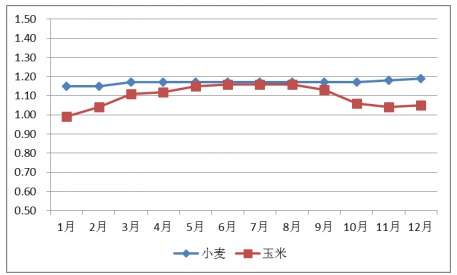
Core Insights - The price trends of consumer goods in Jining, Shandong Province for 2025 show a mixed performance, with grain prices declining, stable edible oil prices, and a significant drop in egg prices, while vegetable prices also decreased and aquatic and fruit prices fluctuated [1] Grain Prices - Wheat prices remained stable, with an average purchase price of 1.17 yuan/kg, a year-on-year decrease of 0.06 yuan/kg, or 5.20% [3] - Corn prices showed slight fluctuations, with an average purchase price of 1.10 yuan/kg, a year-on-year increase of 0.01 yuan/kg, or 0.46% [3] - Rice and flour prices remained stable at 2.80 yuan/kg and 2.00 yuan/kg respectively, with no year-on-year change [3] Pork Prices - Pork prices experienced a downward trend, with average prices for fatty pork and lean pork at 11.57 yuan/kg and 17.35 yuan/kg respectively, reflecting year-on-year declines of 10.27% and 12.81% [5] - The supply of pork is expected to remain ample due to high breeding stock and increased slaughter rates, while demand is weak [5] Chicken and Egg Prices - Chicken prices remained stable at 6.00 yuan/kg, with a year-on-year decrease of 0.47 yuan/kg, or 7.19% [7] - Egg prices showed a downward trend, with an average price of 3.38 yuan/kg, a year-on-year decrease of 1.32 yuan/kg, or 28.02% [7] Aquatic Product Prices - Live carp prices fluctuated, with an average price of 7.00 yuan/kg, a year-on-year decrease of 0.26 yuan/kg, or 3.52% [9] - Hairtail prices also fluctuated, with an average price of 10.67 yuan/kg, a year-on-year increase of 0.48 yuan/kg, or 4.75% [9] Vegetable Prices - Vegetable prices followed seasonal patterns, with an average price of 2.86 yuan/kg, a year-on-year decrease of 11.46% [11] - Significant price drops were noted for garlic shoots, green onions, and ginger, with declines of 25.21%, 22.72%, and 24.20% respectively [11] Fruit Prices - Fruit prices showed minor fluctuations, with apples averaging 8.84 yuan/kg, a year-on-year decrease of 0.83 yuan/kg, or 8.59% [13] - Banana prices averaged 3.55 yuan/kg, reflecting a year-on-year increase of 0.22 yuan/kg, or 6.61% [13]