
医美

Search documents
医美近况交流
2026-02-24 14:16
Summary of the Aesthetic Medicine Industry Conference Call Industry Overview - The aesthetic medicine industry is projected to see a revenue growth of 7% year-on-year in early 2024, with a customer traffic increase of approximately 10%, although the average transaction price is expected to decline by 3%-4% [2][3][21]. - Non-surgical light aesthetic projects account for 70% of the market, with photonic skin treatments making up 45% and non-invasive injection types 25% [2][5]. Key Insights and Arguments - **Product Performance**: - Recombinant collagen products, such as the Jingbo Weimei series, showed significant growth, with a 109% increase in January and an expected 60% in February [2][6]. - New products in the "童颜水光" (youthful water light) category and composite kinetic products also demonstrated strong growth [2][6]. - **Pricing Trends**: - Sales of the Weimei series are increasing, but prices are declining, particularly for the 4 mg model, which has seen a price drop of 30% [2][6]. - The average price decline is attributed to bundled sales strategies, leading to a 20%-30% decrease in average transaction prices [6][7]. - **OEM Collaboration**: - The rise of OEM collaboration is noted, with the group partnering with Jingbo to customize 8 mg products, reducing procurement costs and allowing flexible pricing strategies [2][8]. - The procurement cost for customized products is approximately 700 to 800 yuan, with a retail price set between 8,800 and 8,900 yuan [7][8]. - **Market Dynamics**: - The market is seeing a shift with pharmaceutical companies entering the aesthetic medicine field, leveraging their R&D and branding advantages, but facing challenges in adapting to the fast-changing market and consumer needs [4][15][16]. Additional Important Insights - **Consumer Behavior**: - Customer traffic during the Spring Festival showed a significant increase, particularly in first-tier cities, with some hospitals reporting appointment rates reaching 100% post-holiday [3][4]. - **Product Innovations**: - New products in the youthful water light category are being introduced with lower concentrations to make them more affordable, thus expanding the consumer base [9][10]. - **Future Trends**: - The aesthetic medicine industry is expected to maintain a growth rate of 8%-10% in 2026, driven by the introduction of new technologies and products, despite ongoing regulatory scrutiny [21]. - **Sales Team Effectiveness**: - Companies like Jinbo have developed strong sales teams that maintain good relationships with institutions and media, enhancing their competitive edge [17]. - **Emerging Products**: - The introduction of PDRN materials is anticipated to create a market potential of around 5 billion yuan, with several companies, including Lepu, working towards obtaining necessary certifications [20][21]. This summary encapsulates the key points discussed in the conference call regarding the aesthetic medicine industry, highlighting growth trends, pricing strategies, and market dynamics.
春节消费观察总结
2026-02-24 14:16
摘要 春节期间高端酒店和旅游需求超预期,出行相关消费显著受益,酒店 RevPAR 大幅提升,如华住、锦江、首旅等头部酒店集团均实现显著增 长,价格贡献是主要驱动力。 餐饮行业持续升温,全国重点零售和餐饮企业日均销售额同比增长 8.6%,火锅龙头企业翻台率和接待量均有所增加,预定量显著提升,表 明外出就餐比例增加带动餐饮业增长。 免税板块总体符合预期,但海南地区三亚增速优于海口,表明区域市场 存在差异。政府消费券有效拉动海南离岛免税增长,预计全年海南离岛 免税销售增速将维持在 20%左右。 珠宝零售市场分化,高端奢侈品珠宝消费较好,但金价高位对投资金需 求未直接拉动,首饰消费需求集中释放。部分品牌如潮宏基、周大福等 在高金价背景下表现强劲。 医美领域客流双位数增长,但单价有所下降。重组胶原蛋白类产品增速 亮眼,童颜水光类产品通过走量模式销售。预计 2026 年医美行业将比 2025 年更乐观,新技术与新成分加快获批。 春节消费观察总结 20260223 Q&A 今年春节期间消费市场的整体表现如何?有哪些主要趋势? 今年春节期间,消费市场表现出三大主要趋势。首先,高端消费复苏明显,且 呈现 K 型分化。例如,大众 ...
2025年医美平台消费榜单解码:玻尿酸成功守擂,超声炮“失速”
Mei Ri Jing Ji Xin Wen· 2026-02-24 12:14
Core Insights - The Chinese medical beauty market is experiencing a significant transformation in 2025, marked by a notable divergence in the performance of various brands within the regenerative filling materials sector, with "Zhenai Su Fei" leading with a 463% growth while "Yiyan Shi" saw a 56% decline [1][2] - The market is witnessing a "Matthew Effect," where leading brands are consolidating their positions, while smaller brands struggle to survive [1][10] Regenerative Filling Materials - Regenerative filling materials have become the "MVP" of the year, with a 93.40% increase in sales in 2025, continuing a three-year growth trend [2] - "Zhenai Su Fei" from Aimeike achieved the highest growth rate at 463%, while "Yiyan Shi" faced a significant decline of 56% [2][3] - The performance of "Yiyan Shi" is attributed to its early market entry, but its novelty has worn off, leading to decreased consumer interest [3] Market Dynamics - The market is increasingly competitive, with new brands and materials entering, but consumers tend to prefer established brands for their reliability [4] - The sales of the once-popular ultrasonic device have dropped significantly, with a 55.2% decline in 2025, as consumers are opting for newer products and are more budget-conscious [4][5] Equipment and Technology - The "Meila Meisu" ultrasonic knife has emerged as a leading anti-aging device, with a 147.22% increase in sales, appealing to users over 35 seeking non-invasive treatments [4][5] - The ultrasonic device is transitioning from a "market dividend period" to a "technical barrier period," indicating a shift in competitive dynamics [5][7] Hyaluronic Acid - Hyaluronic acid remains a top-selling product, with a 19.70% increase in sales in 2025, maintaining its status as a staple in the market [8] - Despite its growth, hyaluronic acid faces challenges such as market oversupply and price wars, which could weaken its position in the long term [8][9] Future Growth Areas - The market is shifting towards specialized treatments, with a focus on individual needs and the emergence of new segments like collagen reorganization and hair loss treatment, which are expected to see significant growth [10][11] - The collagen reorganization market is projected to grow at a compound annual growth rate of 41.4% from 2023 to 2027, indicating strong potential [10]
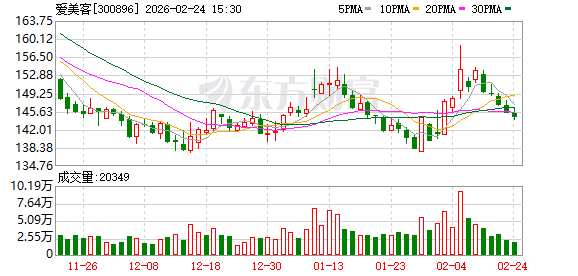
爱美客:截至2026年2月10日公司股东人数为61417户
Zheng Quan Ri Bao· 2026-02-24 10:14
Group 1 - The core point of the article is that the company Aimeike reported that as of February 10, 2026, the number of its shareholders reached 61,417 [2]


未知机构:医美终端春节跟踪要点小结要点总结医美终端景气度稳健上升符合-20260224
未知机构· 2026-02-24 02:50
医美终端春节跟踪要点小结 # 要点总结:医美终端景气度稳健上升符合预期,当前复苏趋势已初步显现,后续3月大促有望成为进一步验证β 观测周期,重点跟踪终端复苏延续性、高端老客消费改善持续性及核心新品放量表现。 1-2月整体景气度 ✔1月营收同比+11%,客流同比+15%; ✔2月营收预计同比-3%~-4%,客流预计-8%~-9%。 ✔# 1–2月合计营收 医美终端春节跟踪要点小结 # 要点总结:医美终端景气度稳健上升符合预期,当前复苏趋势已初步显现,后续3月大促有望成为进一步验证β 观测周期,重点跟踪终端复苏延续性、高端老客消费改善持续性及核心新品放量表现。 1-2月整体景气度 ✔1月营收同比+11%,客流同比+15%; ✔2月营收预计同比-3%~-4%,客流预计-8%~-9%。 区域&客群&业态分化 ✔区域分化:# 一线及新一线城市节后预约回升更快,假期缩短至3–5天(较往年少2–3天);二三线城市放假6–7 天,部分三线城市至2月24–25日才恢复营业。 ✔客群结构:# 春节以中高端老客为主,年消费5–10万客群占比最高。 1–2月客流结构:年消费2–5万约10%、5–8万约40%、8–10万约30%、10 ...
商贸零售行业周报:马年春节消费稳健恢复,老铺黄金宣布2月底调价
KAIYUAN SECURITIES· 2026-02-24 01:25
Investment Rating - The industry investment rating is "Positive" (maintained) [1] Core Viewpoints - The report highlights a steady recovery in consumer spending during the Spring Festival, with significant increases in payment transactions and retail sales compared to the previous year [4][26] - The report emphasizes the importance of high-quality companies in high-growth sectors driven by emotional consumption themes [7][35] Summary by Sections Industry Dynamics - The Spring Festival saw a robust recovery in social consumption, with payment transactions on New Year's Eve reaching 4.931 billion, a 21.64% increase from the previous year [4][26] - Key regions like Hainan and cities such as Tianjin and Zhenjiang showed strong performance in retail and dining, with Hainan's duty-free shopping amounting to 1.03 billion yuan, up 20.9% year-on-year [4][27] - Domestic travel orders surged by 60%, and outbound travel orders increased by over 180% during the holiday period [4][26] Investment Recommendations - Investment Theme 1: Focus on high-end gold and fashion jewelry brands, recommending companies like Laopai Gold and Chaohongji for their differentiated product offerings [7][35] - Investment Theme 2: Emphasize retail companies adapting to trends and AI-enabled cross-border e-commerce leaders, with recommendations for Yonghui Supermarket and Aiyingshi [7][35] - Investment Theme 3: Highlight domestic beauty brands that cater to emotional value and innovative safe ingredients, recommending brands like Maogeping and Proya [7][35] - Investment Theme 4: Focus on differentiated medical beauty product manufacturers and leading medical beauty institutions, recommending companies like Meilitiantian Medical Health and Aimeike [7][35] Market Performance - The retail and social service indices reported declines of 1.59% and 0.78% respectively during the week from February 9 to February 13, 2026 [6][15] - The report notes that the education sector saw the highest growth among sub-sectors, while the watch and jewelry sector led the year-to-date performance with an 11.29% increase [6][18] Company Highlights - Laopai Gold reported a significant revenue increase of 250.9% in the first half of FY2025, driven by strong consumer demand and brand expansion [37] - Chaohongji is expected to achieve a net profit growth of 125% to 175% in FY2025, supported by its differentiated product strategy [37] - Maogeping and Proya are highlighted for their strong performance in the beauty sector, with Maogeping achieving a revenue increase of 31.3% in FY2025 [37]




2025年度商业警示录:当创始人成为最大的“黑天鹅”
Xi Niu Cai Jing· 2026-02-23 03:21
Group 1 - The year 2025 saw significant commercial events that reflect changing consumer expectations and corporate accountability [2] - Companies faced backlash for safety and quality issues, highlighting the need for improved internal processes and transparency [3][4][8][10][11][12][19] - The shift in consumer power emphasizes the importance of brands respecting public sentiment and adapting to a more transparent market environment [21][22] Group 2 - 吉祥航空 faced criticism for distributing expired snacks, revealing serious lapses in food safety protocols and poor crisis management [3][4] - 千禾's "zero-additive" soy sauce controversy raised questions about product labeling and consumer trust, leading to a re-evaluation of marketing strategies [5][6][7] - The charging battery industry experienced a safety crisis with 罗马仕 recalling over 490,000 units due to fire risks, contrasting with 安克创新's swift response [8][9] - 白象's "half bag" noodle marketing was criticized for misleading consumers about product quantity, resulting in a rebranding effort [9][10] - 华熙生物 and 巨子生物 engaged in a public dispute over product claims, damaging both brands' reputations in the competitive beauty market [10][11] - 爱康国宾 faced a public relations disaster after a client revealed a serious misdiagnosis, leading to widespread criticism of the commercial health screening industry [11][12] - 理想汽车's marketing stunt involving a crash test video backfired, leading to public skepticism and a necessary apology [12][13][14] - 桃李面包's controversial advertising campaign resulted in a public backlash, but the company's transparent response turned the situation into a positive PR opportunity [15][16] - 西贝's struggle with public perception regarding the use of pre-prepared ingredients led to significant operational changes and store closures [17][18] - 始祖鸟's environmentally insensitive marketing stunt sparked outrage among its core audience, prompting a public apology and highlighting the importance of brand values [19][20]
国金证券:中国高端消费筑底效应展现 重点推荐免税、黄金珠宝行业
智通财经网· 2026-02-23 02:19
Core Viewpoint - The recovery of high-end consumption in China is accelerating, driven primarily by the wealth effect of high-net-worth individuals and policy stimuli targeting the middle class [1] Group 1: Duty-Free Industry - The duty-free sector is expected to benefit significantly from the recovery of high-end consumption, with a low base and strong policy incentives driving growth [2] - The launch of the Hainan Free Trade Port is anticipated to have a substantial impact on local and national duty-free businesses, with a continued trend of high-end consumption recovery [2] - China Duty Free Group is expected to see sustained performance growth, driven by both domestic demand recovery and the untapped potential of inbound tourist spending [2] Group 2: Gold and Jewelry - Rising gold prices are favorable for high-end self-consumption and brand transformation, with consumers increasingly valuing emotional connections over mere functionality [3] - The trend of store adjustments is expected to continue, with companies that expand their channels by 2026 likely to see greater performance elasticity [3] - Companies like Lao Pu Gold and Chao Hong Ji are expected to perform well due to strategic store optimization and product offerings [3] Group 3: Baijiu Industry - The baijiu industry is showing signs of recovery, with strong demand for premium products like Moutai, which has seen prices rise above 1,700 yuan per box [4] - The overall performance of the baijiu industry is expected to stabilize, with a gradual easing of price pressures and improved market conditions post-Spring Festival [4][5] Group 4: Medical Aesthetics - The medical aesthetics market is entering a new phase, driven by innovative ingredients like recombinant collagen and PDRN, which meet the growing consumer demand for regenerative and anti-aging solutions [6] - Companies with early advantages in regulatory compliance are establishing significant barriers to entry, particularly in the emerging biocompatible materials market [6] - The market dominance of these new ingredients is expected to follow a clear hierarchy, with recombinant collagen leading the way [6]

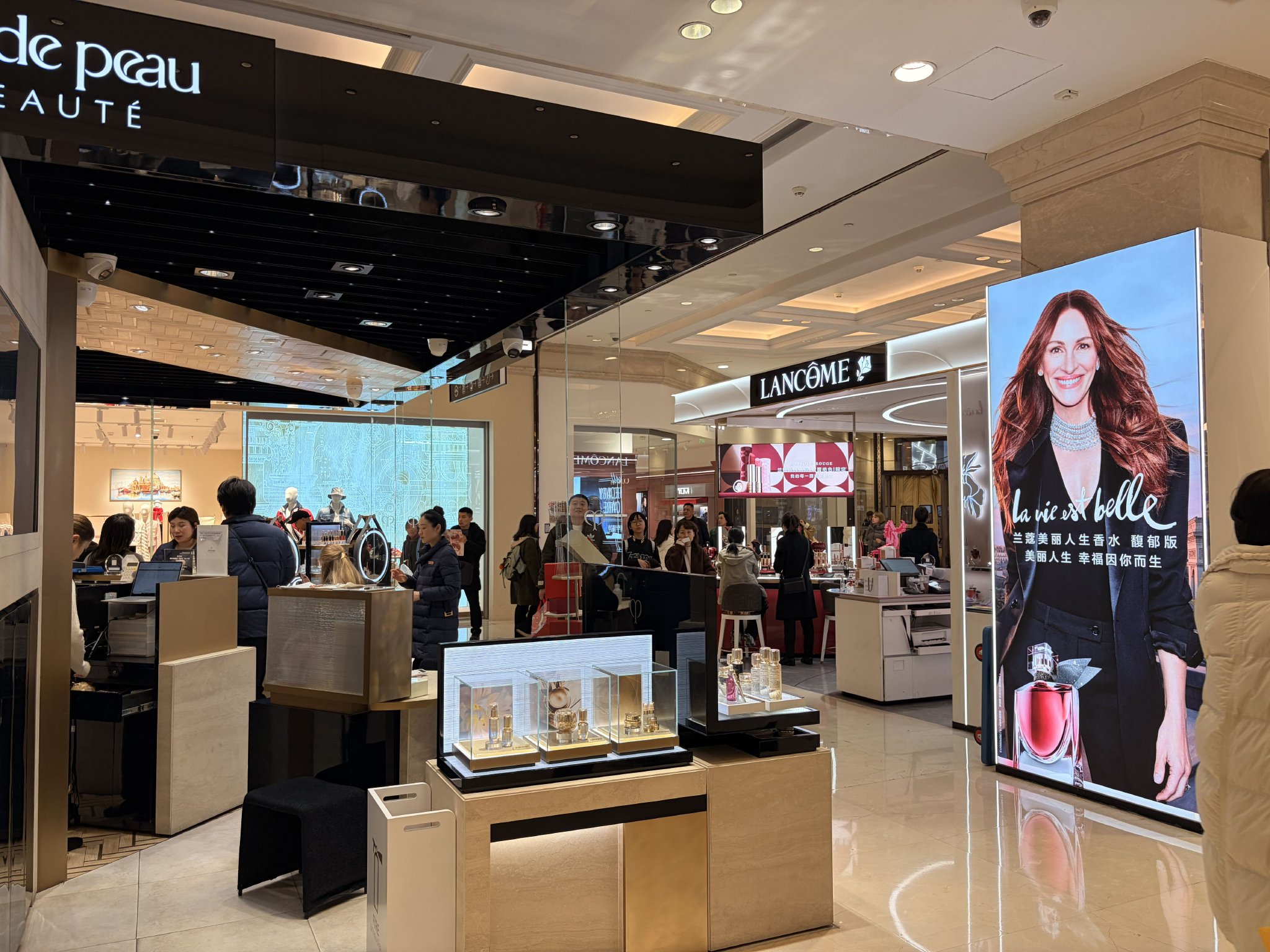
高端美妆又行了,上海柜姐:每天“一车车”发货|新春走基层
Xin Lang Cai Jing· 2026-02-15 02:08
Core Viewpoint - The financial reports from major beauty groups indicate a recovery trend in China's high-end beauty market in the second half of 2025 [1] Group 1: Financial Performance and Market Trends - L'Oréal's sales growth in mainland China is projected to be 1% in the first half and 5% in the second half of 2025, contributing to growth in the North Asia region [2] - Estée Lauder and Shiseido have adjusted their financial reporting, with Estée Lauder separating mainland China from the Asia-Pacific market starting in Q2 2025, and Shiseido merging its China and travel retail businesses [2] - Estée Lauder's revenue growth in mainland China for Q2 to Q4 of 2025 is expected to be -2%, 9%, and 13% respectively, while Shiseido's comparable sales growth is projected at -14%, -7%, 8%, and 2% for the same quarters [2] - Bain & Company's report indicates that the beauty and personal care category will be the first to recover positive growth in 2025, while other luxury categories are still in a phase of decline [2] Group 2: Consumer Behavior and Market Dynamics - Increased consumer traffic in beauty sections of malls, particularly during the pre-Spring Festival period, indicates a rise in purchasing activity [3][4] - The beauty market is expected to rebound in 2025 after a slight decline in 2024, with a projected growth rate of 5.1% [7] - High-end brands are adjusting prices and inventory to facilitate recovery, with a notable shift of consumers from high-end to mass brands due to improved offerings and competitive pricing [11][17] Group 3: Product Innovation and Market Strategy - Major beauty brands are focusing on localized research and innovation in China, with L'Oréal, Estée Lauder, and Shiseido establishing R&D centers in Shanghai [19] - New product launches and collaborations, such as L'Oréal's partnership with Huashan Hospital and Shiseido's introduction of a new medical beauty brand, reflect a trend towards localized product development [20] - The market is shifting towards more specialized segments, such as scalp care and lip care, indicating a move from basic skincare to more refined personal care [12][13] Group 4: Long-term Market Outlook - The sustainability of current growth drivers, such as price reductions and niche market expansions, remains uncertain [14] - The beauty market is entering a phase of stock competition, with brands needing to enhance core competitiveness and adapt to changing consumer preferences [18] - The demand for high-end beauty products persists, but consumers are increasingly discerning, leading to a need for brands to align pricing with product value [17]

2025年医美平台消费榜单解码:玻尿酸守擂,超声炮“失速”
Mei Ri Jing Ji Xin Wen· 2026-02-14 12:49
Core Insights - The Chinese medical beauty market is experiencing a significant shift in 2025, marked by a 93.40% growth in the regenerative filling materials sector, but with notable disparities among brands [1][2] - The "Matthew Effect" is becoming evident, where leading brands are gaining market share at the expense of smaller competitors, particularly in the context of regulatory barriers and technological advancements [1][10] Regenerative Filling Materials - Regenerative filling materials have emerged as the "MVP" of the year, with a 93.40% increase in sales in 2025, continuing a trend of rapid growth over the past three years [2] - The brand "Zhenai Su Fei" under Aimeike leads with a remarkable 463% growth, while "Yiyan Shi" from Huadong Pharmaceutical, once a market leader, has seen a 56% decline [2][3] - Despite the growth of "Zhenai Su Fei," its contribution to Aimeike's overall performance remains uncertain, as the company reported over a 20% decline in revenue and net profit in the first three quarters of 2025 [2] Market Dynamics - The decline of "Yiyan Shi" is attributed to its earlier market entry leading to reduced novelty among consumers, and some users seeking alternative products after initial experiences [3] - The market for ultrasonic devices, once a star in anti-aging treatments, has seen a 55.2% drop in sales, indicating a shift in consumer preferences and budget constraints [4][8] - In contrast, the "Meila Meisheng" ultrasonic knife has gained popularity, with a 147.22% increase in sales, appealing to users aged 35 and above [4][5] Competitive Landscape - The competitive landscape is tightening, with head brands further squeezing the market space for smaller brands, as consumers tend to prefer established, reliable products [4] - The decline in ultrasonic device sales is not solely due to the emergence of new technologies but also reflects market misuse and consumer fatigue [7][10] Hyaluronic Acid Market - Hyaluronic acid remains a top-selling product, with a 19.70% increase in sales in 2025, despite facing challenges such as oversupply and intense price competition [8][9] - The product's versatility and ability to cater to a wide range of consumer needs contribute to its sustained popularity, positioning it as a mainstay in the anti-aging market [9] Future Growth Areas - The market is transitioning towards specialized segments, with a focus on individual needs and the emergence of new growth areas such as recombinant collagen products, hair loss treatments, and weight management [10][11] - The recombinant collagen market is projected to grow at a compound annual growth rate of 41.4% from 2023 to 2027, indicating strong potential for expansion [10]
