轻工

Search documents
消费领域的“超额捕手”!富国基金周文波:也能欣赏“老登股”,但投资心态不“老登”
聪明投资者· 2026-01-12 12:14
Core Viewpoint - The article emphasizes the importance of understanding consumer behavior and market trends, particularly focusing on the potential of the Z generation in the consumption market, as demonstrated by the performance of the fund managed by Zhou Wenbo, which has outperformed its peers in recent years [2][3]. Group 1: Investment Strategy - Zhou Wenbo adopts an investment philosophy of "bottom-up, maintaining integrity while being innovative," focusing on companies with strong performance and long-term growth potential, while also seeking opportunities that can yield significant changes and excess returns [4][9]. - A four-layer investment framework is established, which includes "good business, good company, growth stage, and reasonable valuation," allowing for the identification of investment opportunities in both traditional and new consumption trends [4][5]. Group 2: Market Insights - Zhou Wenbo identifies three categories of store-based businesses based on their sales per square meter (坪效): those below 20,000 yuan are generally mediocre; those between 20,000 and 30,000 yuan may have growth potential depending on their expansion stage; and those above 30,000 yuan are likely to be excellent businesses worth significant attention [5][21][22]. - The current consumption sector, despite experiencing adjustments, still presents opportunities, particularly in traditional consumption sectors with low valuations and new consumption areas like trendy toys, beauty products, and jewelry retail, which continue to show growth potential [5][24]. Group 3: Future Opportunities - The investment opportunities in 2025 are expected to be primarily driven by new consumption, while traditional consumption leaders may remain relatively flat due to market conditions [27]. - There is a belief that as the market stabilizes, traditional consumption companies, which currently have dividend yields of 4%-7%, could see positive returns if the overall environment improves [28]. Group 4: Consumer Behavior and Research - Zhou Wenbo emphasizes the importance of grassroots research and staying curious about new trends, which helps in identifying investment opportunities and validating existing judgments [29][30]. - The article highlights the significance of understanding the logic behind consumer behavior, particularly in the context of the Z generation, and the need to avoid a stagnant mindset when approaching investment in consumer stocks [31][32].


上海:推动石化企业“去油增化”,布局新型功能材料
Zheng Quan Shi Bao Wang· 2026-01-09 10:18
Core Viewpoint - The Shanghai Municipal Government has issued a three-year action plan (2026-2028) to support the transformation and upgrading of advanced manufacturing industries, focusing on optimizing traditional advantageous industries [1] Group 1: Industry Transformation - The plan emphasizes the need for petrochemical companies to shift from oil-based products to new functional materials [1] - Steel and non-ferrous metal companies are encouraged to strengthen their production of specialty steel and expand the production of lightweight alloys [1] - Light industry companies, such as cosmetics and food manufacturers, are urged to lead new consumption trends through ecological design and to produce more domestic products [1] Group 2: Financial Support - Companies that meet the criteria for first sets of major technical equipment and first batches of new materials will receive financial support [1] - The support can be up to 30% of the product sales contract amount, with a maximum limit of 20 million yuan [1]
联合研究:组合推荐:金融制造行业 1月投资观点及金股推荐-20260107
Changjiang Securities· 2026-01-07 08:54
Investment Rating - The report provides a "Buy" rating for several key stocks in the financial and manufacturing sectors, including China Resources Land and Nanjing Bank, among others [12][19][53]. Core Insights - The report highlights the financial and manufacturing industries' investment outlook for January 2026, emphasizing the need to focus on companies with strong fundamentals and growth potential amid economic pressures [6][8][10]. - It identifies specific sectors such as real estate, non-bank financials, banking, new energy, machinery, military industry, light industry, and environmental protection as areas of interest for investment [8][10][21][32][36][43]. Summary by Sector Real Estate - The real estate sector faces increasing downward pressure, necessitating policy easing. Key companies like China Resources Land are highlighted for their strong operational capabilities and cash flow stability [11][12][53]. Non-Bank Financials - The non-bank financial sector is expected to benefit from policy support and high market trading volumes, with companies like New China Life Insurance showing strong growth potential [16][17][53]. Banking - The banking sector is viewed positively, with a focus on large banks and city commercial banks, particularly Jiangsu Bank, which is noted for its attractive valuation and growth prospects [18][19][53]. New Energy - The new energy sector is at a turning point, with companies like Sungrow Power Supply and Slin Smart Drive recommended for their growth potential in solar and energy storage technologies [21][23][53]. Machinery - The machinery sector is encouraged to focus on AI and robotics, with companies like Hengli Hydraulic and Ding Tai High-Tech identified for their growth opportunities in traditional and emerging markets [25][30][31][53]. Military Industry - The military sector is expected to see growth from military-to-civilian transitions and military trade, with AVIC Xi'an Aircraft Industry Company highlighted for its potential in the domestic and international markets [32][34][53]. Light Industry - The light industry is advised to focus on overseas manufacturing and new consumer opportunities, with companies like Yingke Medical and Meiyin Sen noted for their growth in international markets [36][40][53]. Environmental Protection - The environmental sector is poised for growth through overseas expansion and rising metal prices, with companies like Weiming Environmental and Ice Wheel Environment recommended for their strong market positions [43][48][51][53].





工信部:实施工业互联网与重点产业链“链网协同”工程
Di Yi Cai Jing· 2026-01-07 07:51
Core Insights - The Ministry of Industry and Information Technology (MIIT) has issued an action plan to promote the integration of industrial internet and artificial intelligence across key industries [1] Group 1: Key Industry Promotion - The plan emphasizes accelerating the promotion of industrial internet in key sectors such as steel, aviation, shipbuilding, engineering machinery, agricultural machinery, electronic information manufacturing, electric power, petrochemicals, non-ferrous metals, textiles and apparel, pharmaceuticals, and light industry [1] - It aims to implement a "chain-network collaboration" project that strengthens the connection and coordination of digitalization and intelligence-related policies across various industries [1] Group 2: Digital Transformation and Intelligent Upgrading - The action plan focuses on addressing the digital transformation and intelligent upgrading needs and challenges of key industries by compiling and publishing reference guidelines for integrated applications [1] - It includes the identification of typical scenarios for the integration of industrial internet and artificial intelligence, along with a list of technical products, supplier directories, and standard indexes [1] Group 3: Resource Sharing and Solution Pool - The initiative aims to establish a resource pool for solutions, enhance precise matching of supply and demand, and promote the sharing of resources and interconnectivity among upstream and downstream elements of the industrial chain [1] - It will also collect and select exemplary cases of artificial intelligence and industrial internet "chain-network collaboration" projects that demonstrate high levels of system integration, broad connectivity, and significant transformation benefits [1]
长株潭消费品联展,助力区域好物出圈
Xin Lang Cai Jing· 2026-01-04 13:52
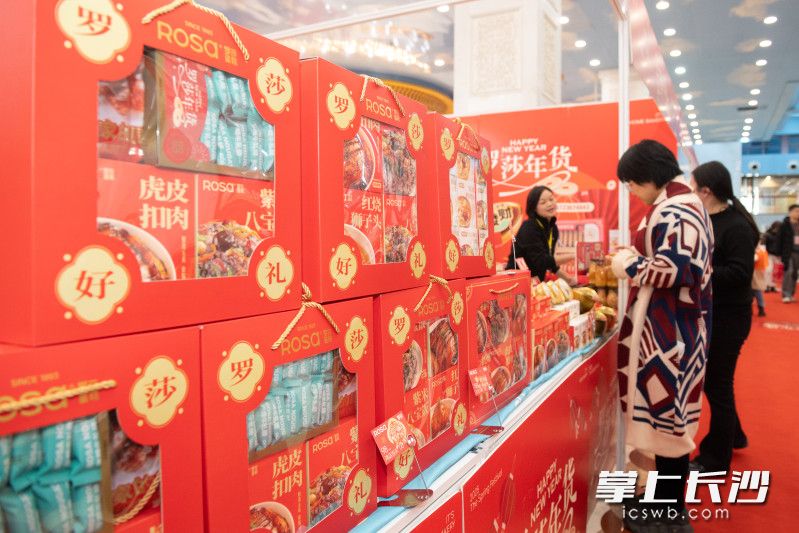
Core Viewpoint - The "Shared Plan" Changsha-Zhuzhou-Xiangtan Good Goods Shopping Fair aims to showcase high-quality industrial consumer goods from the Changsha-Zhuzhou-Xiangtan region, providing a one-stop shopping platform and promoting local industrial collaboration [1][3]. Group 1: Event Overview - The event will take place from January 16 to 18 at the Red Star International Exhibition Center in Changsha, featuring a theme of "'Crafting Quality Products for All" [1]. - The fair is organized by multiple local government bodies, including the Changsha Municipal Bureau of Industry and Information Technology, and will cover an exhibition area of approximately 10,000 square meters [3]. - At least 180 enterprises from Changsha will participate, alongside quality consumer goods companies from Zhuzhou and Xiangtan, showcasing a diverse range of products including food, light industry, textiles, home goods, and biomedicine [3]. Group 2: Marketing and Promotion - The event will include a series of promotional activities titled "Tracing Changsha-Zhuzhou-Xiangtan Good Goods," featuring online and offline interactions such as "I Support Changsha-Zhuzhou-Xiangtan Good Goods," "Factory Tours," and "Live Shopping Events" [3]. - The goal is to highlight local industrial excellence and create a unique experience for each area while promoting collaboration among the three cities [3]. Group 3: Business Opportunities - The fair will invite various stakeholders, including trade unions, supermarkets, and e-commerce platforms, to participate in supply-demand matching meetings and on-site signing events, providing practical platforms for market expansion [5]. - Local citizens will have the opportunity to experience and purchase products on-site or participate online through live streaming, ensuring a comprehensive and immersive shopping experience [5]. - The event is positioned as a key initiative to implement the integrated development strategy of the Changsha-Zhuzhou-Xiangtan area, aiming to enhance regional industrial collaboration and boost consumer confidence [5].
苏州工业园区出台工业企业停工停产复工复产安全生产工作指南
Su Zhou Ri Bao· 2026-01-04 01:57
Core Viewpoint - The Suzhou Industrial Park Emergency Management Bureau has developed a comprehensive safety production guideline for general industrial enterprises, focusing on systematic and standardized procedures for work stoppages and resumption, particularly during major holidays and production adjustments [1][2]. Group 1: General Requirements - The guideline specifies four basic safety production requirements: holding safety production meetings, conducting hazard inspections led by key personnel, enhancing employee safety education, and strictly controlling special operations [2]. - It emphasizes the establishment of an emergency duty system, implementation of a safety officer AB corner mechanism, and improvement of emergency communication, material storage, and accident response processes [2]. Group 2: Key Industry Areas - The guideline addresses seven high-risk areas including metal melting, dust explosion hazards, hazardous chemical usage, lithium battery production, ammonia refrigeration, confined space operations, and "in-plant" management, providing specific hazard inspection standards for each [2]. Group 3: Climate and Holiday Considerations - The guideline outlines differentiated preventive measures based on seasonal and holiday climate characteristics, including strategies for cold weather, thunderstorms, flooding, and fire/explosion risks [2].
以高质量发展全面推进中国式现代化
Xin Lang Cai Jing· 2026-01-01 05:24
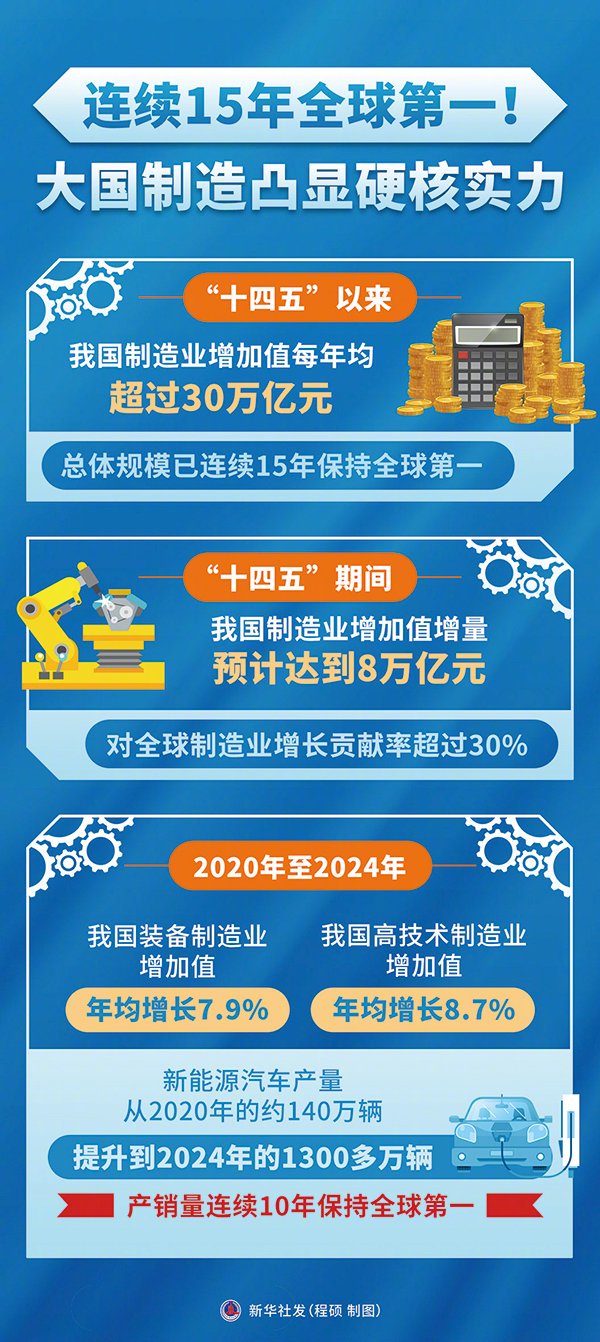
Core Viewpoint - High-quality development is essential for advancing Chinese-style modernization and is a key requirement for the overall construction of socialism in China [1][8]. Group 1: Economic Growth and Development Strategy - The "14th Five-Year Plan" has laid a solid foundation for achieving socialist modernization by 2035, which requires a strategic arrangement over three five-year plans [2]. - The "15th Five-Year Plan" is crucial for solidifying the foundation and fully exerting efforts towards achieving modernization, focusing on resolving deep-seated contradictions that hinder high-quality development [2][3]. - Economic growth must maintain an appropriate speed, with a target of an average annual GDP growth of 4.17% during the "15th" and "16th Five-Year Plans" to achieve a per capita GDP of over $20,000 by 2035 [3][6]. Group 2: Manufacturing and Industrial Development - Manufacturing is a vital foundation for modernization, with China's manufacturing value added exceeding 30 trillion yuan annually, maintaining the world's largest scale for 15 consecutive years [6][9]. - The "15th Five-Year Plan" emphasizes building a modern industrial system, optimizing traditional industries, and fostering emerging industries, particularly in advanced manufacturing and strategic emerging sectors [9][10]. Group 3: Technological Innovation - Accelerating high-level technological self-reliance is crucial for high-quality development, with significant increases in R&D funding and achievements in key technologies [10][12]. - The focus is on original innovation and breakthroughs in critical core technologies, with an emphasis on integrating technology and industry to enhance innovation capabilities [10][12]. Group 4: Domestic Market and Consumption - Expanding domestic demand is a strategic move for economic stability and security, with initiatives to boost consumption and effective investment [12][13]. - The plan includes removing unreasonable restrictions on consumption, optimizing income distribution, and enhancing consumer capacity to stimulate economic growth [12][14]. Group 5: Reform and Opening Up - Comprehensive deepening of reform and opening up is essential for high-quality development, focusing on overcoming institutional barriers and enhancing market vitality [13][14]. - The strategy includes promoting the complementary advantages of various ownership economies and optimizing the layout of state-owned enterprises [13]. Group 6: Improving People's Quality of Life - Enhancing the quality of life is a fundamental aspect of high-quality development, with policies aimed at improving employment, income distribution, and social security systems [14][15]. - The goal is to achieve common prosperity through sustainable economic growth, ensuring that public services in education, healthcare, and housing meet the needs of the population [15].
把握未来五年中国经济蕴藏的新机遇
Jing Ji Ri Bao· 2025-12-30 23:58
Core Viewpoint - The "14th Five-Year Plan" outlines strategic opportunities and challenges for China's economic and social development, emphasizing high-quality growth and a focus on various key sectors [2][3]. Economic Opportunities - The plan identifies numerous new opportunities, including the development of a modern industrial system and the strengthening of the real economy, with specific mentions of sectors such as mining, metallurgy, chemicals, and advanced technologies [3]. - The goal is to achieve significant results in high-quality development, with economic growth maintained within a reasonable range and an increase in domestic consumption driving economic growth [2][3]. Economic Challenges - Challenges include unbalanced development, insufficient effective demand, and pressures on employment and income growth, which need to be addressed to convert challenges into opportunities [4]. - The plan sets a target for per capita GDP to reach the level of moderately developed countries by 2035, requiring an average annual GDP growth of approximately 4.17% from 2025 to 2035 [4]. Consumer Income and Spending - The plan aims to increase residents' income through various channels, including wage, operational, property, and transfer income, with a focus on enhancing the share of labor remuneration in national income distribution [7][11]. - There is an emphasis on improving the structure of income distribution to promote a more reasonable allocation of income among residents [7]. Investment and Consumption - The plan suggests that increasing government spending on social welfare and implementing direct consumer support policies will enhance residents' consumption capacity [8][11]. - The importance of stabilizing the stock market to increase residents' property income and subsequently boost consumption is highlighted [14]. Capital Market Development - The stability of the capital market is crucial for enhancing investor confidence and ensuring sustainable income growth, which in turn affects consumer behavior [14][15]. - Encouraging long-term funding sources for technological innovation is essential for fostering a robust capital market and supporting economic growth [15][18]. Technological Innovation and Global Competitiveness - The plan emphasizes the need for China to cultivate high-quality listed companies with international competitiveness, particularly in the technology sector, to participate in global competition [18]. - The focus is on creating a favorable investment environment for companies to grow and attract long-term capital into the market [18].
来年工作有何新部署?——政策周观察第61期
一瑜中的· 2025-12-30 13:55
Core Viewpoint - The article outlines key policy directions and developments in China's economic and financial landscape as the year comes to a close, focusing on fiscal, monetary, and industrial strategies for 2026. Fiscal Policy - The National Fiscal Work Conference emphasized expanding fiscal spending to ensure necessary expenditure levels, optimizing government bond tools, and enhancing fiscal-financial collaboration to amplify policy effectiveness [3][27]. - The report on the 2025 fiscal budget indicated a focus on directing new special bond quotas towards regions with well-prepared projects and high investment efficiency, while also addressing local government hidden debt issues [3][11]. - The Ministry of Finance and other regulatory bodies are committed to strict measures against the creation of new hidden debts, reinforcing accountability for local governments [3][15]. Monetary and Capital Markets - The People's Bank of China (PBOC) highlighted the importance of integrating incremental and stock policies to support key sectors such as domestic demand, technological innovation, and small and medium enterprises [4][15]. - The PBOC's Financial Stability Report for 2025 aims to create a favorable environment for long-term investments in the A-share market, enhancing the scale and proportion of various long-term funds [4][29]. Industrial Development - The National Development and Reform Commission (NDRC) called for optimizing traditional industries, particularly in steel and petrochemicals, by balancing supply and demand and promoting structural reforms [5][26]. - The NDRC's recent initiatives include fostering innovation in emerging sectors like new energy vehicles and lithium batteries, while addressing issues of "involution" in competition to maintain a fair market environment [5][26]. - The Industrial and Information Technology Conference outlined strategies to stabilize manufacturing investments, enhance industrial chain resilience, and promote technological innovation [5][22]. Encouragement of Foreign Investment - The updated Encouragement Directory for Foreign Investment aims to attract more foreign capital into advanced manufacturing, modern services, and high-tech sectors, particularly in central and western regions of China [17][19]. - The 2025 version of the directory includes 1,679 entries, with a net increase of 205 entries compared to the previous version, reflecting a strategic focus on sectors like smart manufacturing and modern service industries [18][19]. Infrastructure Development - The NDRC's article on modern infrastructure emphasizes the need for high-quality construction of strategic transport corridors and energy networks, as well as enhancing safety measures for critical infrastructure [21][26]. - The focus on developing a comprehensive infrastructure system includes promoting low-altitude and hub economies, as well as ensuring robust safety protocols for major energy projects [21][26].

中国资产2026年具备全球配置吸引力!招商基金朱红裕最新发声
券商中国· 2025-12-30 09:35
Core Viewpoint - The A-share market has undergone a cyclical rise, with certain sectors and styles remaining undervalued, making Chinese assets attractive for global allocation in 2026. Key investment opportunities are identified in four main areas: globally competitive manufacturing leaders, industries with improving supply-demand dynamics, sectors with low valuations and potential for significant fundamental changes, and long-term high-return industries with mismatched valuations [2][4]. Group 1: Market Overview - The current A-share market is experiencing active trading volumes and turnover rates, but there is a notable differentiation among stocks, presenting both opportunities and risks. Some stocks are becoming expensive, while others, particularly in real estate and domestic demand, remain undervalued [3]. - The investment strategy for equities should focus on safety margins and certainty, avoiding blind speculation on volatility. The U.S. economy is not performing well, and potential monetary easing could occur in response to the upcoming mid-term elections, which may influence domestic fiscal policies [3]. Group 2: Investment Opportunities - Four key investment opportunities for 2026 are highlighted: 1. Long-term focus on globally competitive manufacturing leaders, including sectors like power equipment, batteries, electric vehicles, home appliances, chemicals, and machinery. Observations from Southeast Asia indicate a significant gap in infrastructure and supply chains compared to China, reinforcing confidence in China's manufacturing competitiveness [5]. 2. Industries with improving supply-demand dynamics, such as real estate, aquaculture, chemicals, and light industry, are expected to enhance their global market positions and profitability [5]. 3. Sectors with low valuations and potential for substantial fundamental changes, such as chemicals, are noted for their past performance shifts, similar to coal, steel, and non-ferrous metals in previous years [6]. 4. Long-term high-return industries with severe valuation mismatches, including airport and airline services, insurance, and non-liquor food sectors, are highlighted for their high return on equity (ROE) despite low stock attention [6]. Group 3: Risks and Considerations - Potential risks include persistent inflation and sector-specific risks. The undervaluation of the RMB may pressure export industries, and inflation could pose significant risks to the stock market in the latter half of the year. Additionally, long-term risks associated with AI, including its impact on labor and technological competition, warrant attention [6].