家电

Search documents
穿越周期的力量:2025中国企业家年度榜单
Sou Hu Cai Jing· 2026-01-26 15:59
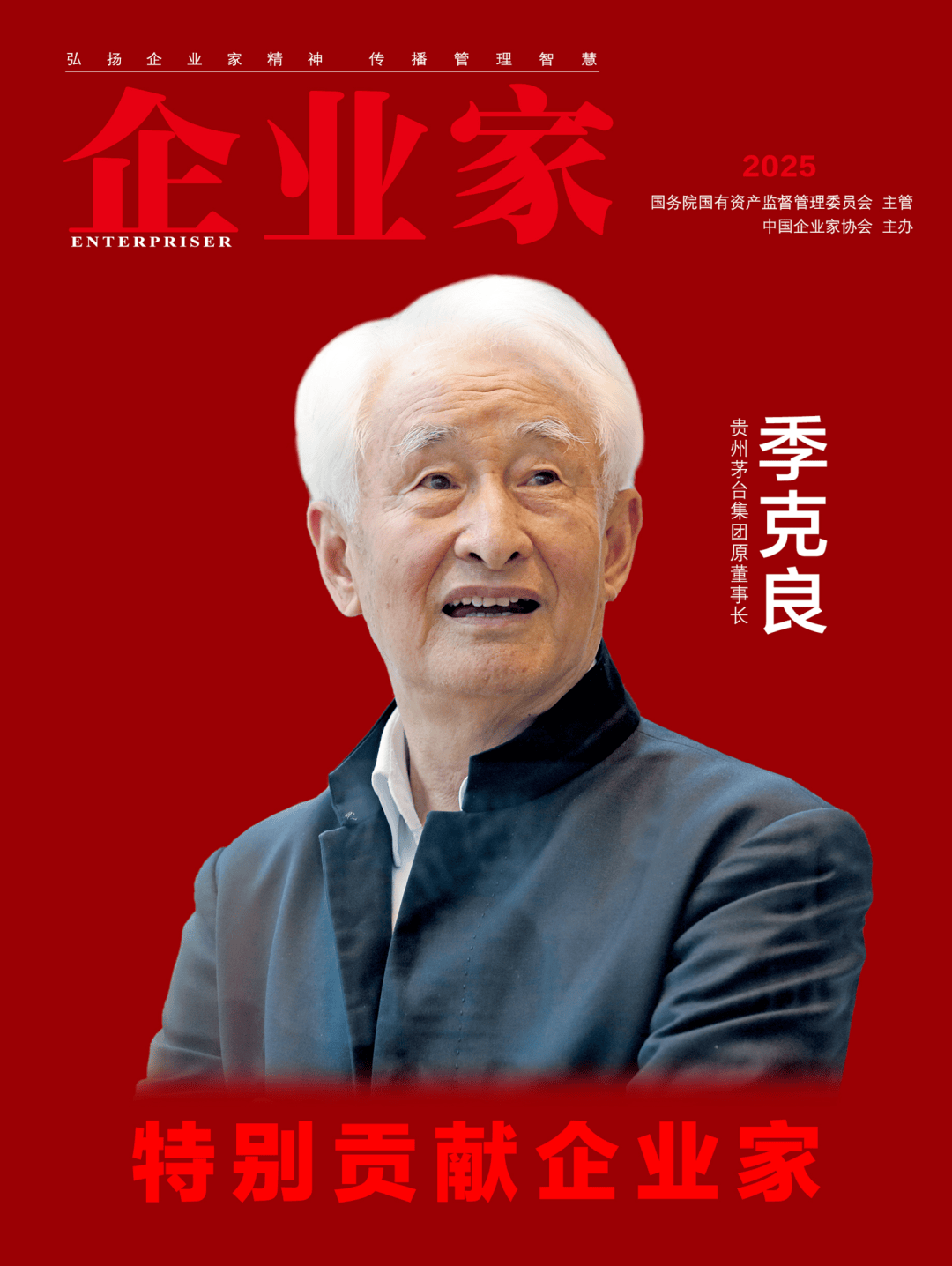
Core Insights - The article highlights the recognition of 3 "Special Contribution Entrepreneurs" and 20 "2025 Entrepreneurs" who exemplify long-termism and innovation across various industries in China, including liquor, manufacturing, energy, agriculture, internet, AI, and new consumption [1][2]. Group 1: Special Contribution Entrepreneurs - Ji Keliang, former chairman of Kweichow Moutai Group, transformed traditional brewing techniques into scientific data over 60 years, emphasizing quality over speed, which laid the foundation for Moutai's billion-dollar brand value [4][10][12]. - Zhang Ruimin, founder of Haier Group, is known for his continuous self-disruption and innovation, leading Haier from a struggling factory to a global leader in home appliances with over 400 billion yuan in revenue [18][20][21]. - Jiang Baoquan, founder of Nanjing Gold Foil Holdings, turned a failing workshop into the world's largest gold foil producer, emphasizing resilience and innovative management theories [25][27][29]. Group 2: 2025 Entrepreneurs - Ma Huateng, chairman of Tencent, focuses on "technology for good," committing to social responsibility and innovation in digital technology to drive high-quality economic development [31][34][41]. - Wang Ning, founder of Pop Mart, capitalizes on emotional value and consumer psychology, creating a successful business model around collectible toys that resonate with young consumers [43][45][46]. - Wang Xingxing, founder of Yushutech, leads advancements in humanoid robotics, achieving significant market presence and profitability while promoting technological innovation [48][49][51]. - Fang Hongbo, chairman of Midea Group, has successfully transformed Midea into a global technology group through strategic restructuring and a focus on efficiency and innovation [54][56]. - Liu Yonghao, chairman of New Hope Group, maintains a long-term vision in agriculture, achieving growth even during economic downturns by embracing new technologies [67][69][70]. - Liu Qiangdong, founder of JD.com, integrates the concept of "common prosperity" into business practices, ensuring fair profit distribution among stakeholders while enhancing supply chain efficiency [73][75][78]. - Li Dongsheng, founder of TCL, exemplifies global leadership in semiconductor display and photovoltaic sectors, driving innovation and sustainable growth through strategic partnerships [110][111].




美的集团20260126
2026-01-26 15:54
Summary of Midea Group's Conference Call Industry Overview - **Smart Building Technology Market**: Midea's smart building technology business is experiencing rapid growth, with a projected compound annual growth rate (CAGR) of 13.1% from 2021 to 2024, maintaining a gross margin of 28%-30% [2][5] - **Central Air Conditioning Market**: The Chinese central air conditioning market is valued at over 100 billion RMB, with a CAGR of approximately 10% from 2020 to 2024. The domestic market has slightly declined due to real estate impacts, while the export market is strong, expected to grow by 23.4% in 2024 [2][7] - **Domestic Brand Market Share**: Domestic brands are increasing their market share in the central air conditioning sector from 48% in 2020 to 53% in 2024, driven by technological advancements and local marketing strategies [2][10] Key Business Insights - **To B Business Growth**: Midea's To B business now accounts for over 25% of total revenue, with a target to increase this to 50%. The building technology segment is expected to generate approximately 35 billion RMB in revenue by 2025, with a net profit exceeding 10% [3] - **Maglev Chiller Market**: The maglev chiller market is projected to reach 2.57 billion RMB in 2024, growing by 14.7%. Midea's market share in this segment has increased to 19.7% due to its self-developed maglev compressor technology [2][11][13] Market Dynamics - **Data Center Cooling Demand**: The global liquid cooling management system market is expected to grow at a CAGR of 21.6%, reaching 17.8 billion USD by 2030. Midea is collaborating with Alibaba to provide cooling solutions for data centers [2][17][18] - **Old Equipment Replacement**: The market for replacing outdated central air conditioning systems is over 400 billion RMB, with significant energy savings potential. Midea's maglev chillers have shown to double energy efficiency in replacements [2][19] Competitive Advantages - **Technological Leadership**: Midea has broken foreign monopolies in the maglev compressor market, becoming the only manufacturer capable of self-supplying this technology. This positions Midea as a leader in the maglev chiller market [13][14] - **Comprehensive Solutions**: Midea offers complete liquid cooling system solutions, including CDU and outdoor cooling sources, enhancing its competitive edge [14] Regional Insights - **Middle East Market**: Midea has launched products tailored to the Middle East, such as the V8 multi-split unit, designed to operate in extreme temperatures [21] - **North American Market Entry**: Midea is entering the North American data center market through OEM partnerships with major HVAC companies, allowing access to this lucrative segment despite geopolitical challenges [22] Future Outlook - **Industrial Heat Pump Market**: The industrial heat pump market is expected to grow significantly, with a projected size of 1.23 billion RMB in 2024, increasing by 18%. Midea is actively developing high-temperature steam compressors for industrial applications [27][30] - **Policy Support**: National policies are promoting the adoption of industrial heat pumps, emphasizing their economic benefits and energy savings [29] This summary encapsulates the key points from Midea Group's conference call, highlighting the company's strategic positioning, market dynamics, and future growth prospects in the smart building and HVAC sectors.
证券市场周刊-第3期2026
2026-01-26 15:54
Summary of Key Points from the Conference Call Industry Overview - The conference call primarily discusses the **Chinese consumption market** and its dynamics as it approaches the 2026 Spring Festival, highlighting the potential for growth driven by economic recovery and policy incentives [3][10][12]. Core Insights and Arguments 1. **Economic Recovery and Consumer Confidence**: The Chinese economy is gradually recovering, with consumer data showing steady improvement. This is expected to create a favorable environment for the consumption sector, particularly during the upcoming Spring Festival [3][10][12]. 2. **Policy Incentives**: The implementation of consumption-boosting policies, such as the 2026 national subsidy for replacing old products, is anticipated to inject strong momentum into the consumption market [3][10][12]. 3. **K-shaped Consumption Recovery**: The consumption market is exhibiting a K-shaped recovery, characterized by robust demand for high-end products and a thriving low-cost segment. This reflects a significant shift in consumer preferences and spending behavior [3][10][12][67]. 4. **Diverse Consumption Scenarios**: The rise of new consumption scenarios, such as AI-driven retail and the silver economy, is expanding growth opportunities within the market. Traditional sectors like food and beverage, jewelry, and home appliances are also expected to benefit from this trend [3][10][12][64][67]. 5. **Emerging Brands and Market Dynamics**: Brands like **MIXUE Ice Cream** are gaining popularity due to their competitive pricing strategies, while high-end brands continue to see strong sales growth, indicating a bifurcation in consumer spending [3][10][12][64][67]. 6. **Luxury Market Resilience**: Luxury retail spaces, such as Beijing SKP, are experiencing growth despite overall market slowdowns, suggesting a sustained interest in high-end products [3][10][12][65][67]. 7. **Investment Opportunities**: Analysts emphasize the importance of identifying investment opportunities within the consumption sector, particularly in companies that demonstrate strong fundamentals and adaptability to changing consumer preferences [3][10][12][67][73][75]. Additional Important Content - **Consumer Behavior Changes**: There is a notable shift in consumer behavior, with a growing preference for high-quality, high-value products alongside budget-friendly options. This dual demand is reshaping the market landscape [3][10][12][67]. - **Market Performance Metrics**: The report highlights that the sales growth of luxury goods and budget-friendly products is outpacing traditional retail, indicating a significant transformation in consumer purchasing patterns [3][10][12][67]. - **Long-term Trends**: The discussion also touches on the long-term trends in the consumption market, suggesting that companies must innovate and adapt to remain competitive in a rapidly evolving landscape [3][10][12][75]. This summary encapsulates the key insights and arguments presented in the conference call, focusing on the dynamics of the Chinese consumption market and the implications for investment strategies.
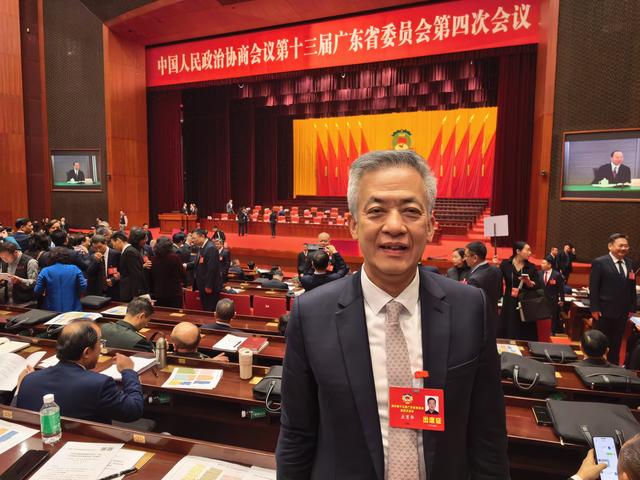
地方两会|广东政协委员丘育华建言AI多维发力 赋能经济高质量发展
Xin Lang Cai Jing· 2026-01-26 15:53
Core Viewpoint - The "14th Five-Year Plan" emphasizes technological self-reliance, modern industrial system construction, and high-level opening-up, aligning closely with Guangdong's economic development needs [1][3]. Group 1: Proposals for Economic Development - During the Guangdong Two Sessions in 2026, proposals were made to leverage the "14th Five-Year Plan" to address development bottlenecks and cultivate new productive forces [1][3]. - Key proposals include enhancing open cooperation, promoting industrial upgrades, and utilizing low-carbon computing and AI systems to empower economic development [1][4]. Group 2: Directions for Industrial Upgrade - Three main directions for activating new industrial upgrade momentum were proposed: deepening open cooperation, transforming traditional industries, and cultivating emerging future industries [3][4]. - In open cooperation, suggestions include leveraging the "Belt and Road" initiative to enhance international collaboration and optimize export-import channels for high-value products [4][5]. - For traditional industry upgrades, the focus is on integrating AI and green technologies to improve efficiency and sustainability in sectors like home appliances and textiles [4][5]. - Emerging industries such as low-altitude economy and biomanufacturing are highlighted, with specific targets for growth and development by 2027 [5][6]. Group 3: Empowering Development through AI and Computing - The proposal emphasizes the importance of low-carbon computing as a core production factor, suggesting three practical paths for its integration into industrial upgrades [5][6]. - The first path involves establishing a collaborative ecosystem for low-carbon distributed intelligent computing nodes, leveraging local resources and technologies [5][6]. - The second path focuses on creating a trusted data space to drive AI applications in healthcare, enhancing data management and operational efficiency [6]. - The third path explores integrating AI into urban renewal processes, improving planning, construction, and operational efficiency through intelligent systems [6]. Group 4: Policy Environment and Future Outlook - Guangdong's strong manufacturing base, innovative ecosystem, and large market size position it well to capitalize on the "14th Five-Year Plan" policies [6]. - Ongoing initiatives like the construction of a national computing hub in the Guangdong-Hong Kong-Macao Greater Bay Area are expected to provide a favorable policy environment for these proposals [6].
地方两会 广东政协委员丘育华建言AI多维发力 赋能经济高质量发展
Zhong Guo Jing Ying Bao· 2026-01-26 15:09
Core Viewpoint - The "14th Five-Year Plan" focuses on technological self-reliance, modern industrial system construction, and high-level opening-up, aligning closely with Guangdong's economic development needs [1][3]. Group 1: Proposals for Economic Development - During the Guangdong Two Sessions in 2026, proposals were made to leverage the "14th Five-Year Plan" to address development bottlenecks and cultivate new productive forces [1][3]. - Key proposals include deepening open cooperation, promoting industrial upgrades, and utilizing low-carbon computing power and AI systems to empower economic development [1][4]. Group 2: Industrial Upgrade Strategies - Three main directions for activating new momentum in industrial upgrades were proposed: open cooperation, traditional industry transformation, and nurturing emerging future industries [3][4]. - In open cooperation, suggestions include enhancing international collaboration through the "Belt and Road" initiative and optimizing logistics routes for high-value product exports [4][5]. - For traditional industry upgrades, the focus is on integrating AI into production processes to improve efficiency and quality, alongside promoting sustainable practices in sectors like textiles and construction [4][5]. Group 3: Future Industry Focus - The emphasis on emerging industries includes low-altitude economy and biomanufacturing, with a target of achieving a total output value of 500 billion yuan by 2027 in biomanufacturing [5][6]. - The low-altitude economy is expected to leverage the Greater Bay Area's advantages to create a multi-scenario application ecosystem [5][6]. Group 4: AI and Computing Power Integration - The proposal highlights three practical paths for integrating low-carbon computing power and AI into industrial upgrades [5][6]. - The first path involves establishing a distributed intelligent computing node ecosystem, leveraging local energy resources and AI for efficient energy consumption [5][6]. - The second path focuses on creating a trusted data space for AI applications in healthcare, enhancing data resource management and operational systems [6]. - The third path suggests incorporating AI throughout the urban renewal lifecycle to improve planning, construction, and operational efficiency [6]. Group 5: Policy Environment and Implementation - Guangdong is accelerating the construction of a national computing power hub and low-altitude economy innovation pilot projects, providing a favorable policy environment for the proposals [6].
今年起家电厂商将告别单线竞争
Sou Hu Cai Jing· 2026-01-26 15:08
二是,用户对于家电厂商的信任度快速下跌,透过空调"铝代铜"事件可以看到,一些空调企业的铝应用技术研究,会迅速被编 造为铝空调上市的假新闻,这种不信任感背后,正是很多家电企业的"偷工减料和降配降质"引发的用户体验感下滑, 以及信任 崩塌。 由此,单线竞争让众多家电厂商陷入了一轮持久、低迷且无序的商业泥潭之中,再度叠加外部的经济与市场环境动荡,主流消 费疲软和年轻消费需求的灵活多变,成就了最近2年来家电市场最大的经营困难和难点。出货量下跌、经营利润微薄,市场竞争 却更加白热化,厂商较量更加混乱无序。 面对这一困局,怎么办?家电圈认为,主要家电厂商必须要果断、主动告别"单线竞争"时代,快速开启一轮全新的"组合拳"竞 争周期。一是,要摆脱过去那种"一窝蜂、一阵风"和"单打独斗"思维,凡事不能太极端,特别是在一线市场的经营,彻底摆脱 单边押宝的经营策略。二是,建立综合竞争的新周期。必须要聚焦用户的需求、利益和价值,整合手中的品牌、产品、服务、 营销等多种资源,制定新的经营策略和手段,实现"供需精准"对接。 随着越来越多的家电巨头,纷纷回归主业,深耕发家的家电业务,谋求从过去的单一规模化出货增长,向如今的规模、质量、 利 ...

商务发展总体平稳稳中有进
Zhong Yang Ji Wei Guo Jia Jian Wei Wang Zhan· 2026-01-26 13:27
Core Insights - In 2025, China's total retail sales of consumer goods exceeded 50 trillion yuan for the first time, reaching 50.1 trillion yuan, with a growth rate of 3.7%. The contribution of consumption to economic growth increased to 52%, up by 5 percentage points [2] Group 1: Consumer Market Performance - The implementation of policies and activities to boost consumption has shown significant results, including the expansion of the "old for new" program for consumer goods, which generated sales of 2.61 trillion yuan and benefited 366 million people [2] - Service retail sales grew by 5.5%, with sectors such as cultural, sports, leisure, and travel showing double-digit growth [2] - The sales of goods eligible for tax refunds for departing travelers nearly doubled due to optimized policies [2] Group 2: Foreign Trade and Investment - China's foreign trade reached a record high, with total imports and exports amounting to 45.47 trillion yuan, marking a growth of 3.8% [3] - The number of businesses engaged in foreign trade exceeded 780,000, with private enterprises accounting for 57.3% of total foreign trade [3] - The Ministry of Commerce plans to enhance foreign trade through a combination of policies and activities, including major trade exhibitions and support for cross-border e-commerce [5] Group 3: Future Strategies - The Ministry of Commerce aims to strengthen domestic demand and improve consumption through targeted actions and the promotion of the "Buy in China" brand [3][4] - Plans include organizing over 20 "Buy in China" themed events and supporting local activities to create a vibrant consumption atmosphere [4] - The focus will also be on developing international consumption centers and new consumption scenarios to enhance consumer experiences [4]
炸锅了!原来是这家基金公司!
Xin Lang Cai Jing· 2026-01-26 13:25
来源 :挖掘机007 你有没有想过,自己辛辛苦苦投进去的钱在亏,而那个管你钱的基金经理,却可能正用自家账户赚得盆 满钵满?这不是小说桥段,而是正在泰康基金上演的现实。 最近,业界诸多报道把这事彻底捅开了。事情主角是泰康基金一位名叫桂跃强的基金经理——他管着超 过20亿的基民资金,五年如一日死守白酒、家电这些所谓"老登股",结果基金亏了快30%;可与此同 时,他自己(或者说他太太名下)的账户却早早重仓科技股,浮盈一度超过5000万。基民血亏,他躺 赢,评论区直接炸锅。 先说说他的两只主力基金:泰康优势企业混合和泰康蓝筹优势一年持有股票。这两只都是偏股型基金, 按理说可以买全市场股票,包括港股通里的腾讯、阿里都没问题。但桂跃强偏偏不走寻常路,硬是把它 们变成了"白酒家电主题基金"。 翻开持仓记录,简直离谱。比如泸州老窖,连续21个季度雷打不动出现在前十大重仓股里,一次都没落 下过;山西汾酒、五粮液也出现了20次;美的集团18次,福耀玻璃、恒生电子各14次……这哪是做投 资,分明是打卡上班。更夸张的是,2025年四季报显示,好几只重仓股一个季度下来一股没动,仿佛账 户被冻住了。 问题是,这几年AI、半导体、新能源轮 ...
格力电器(000651.SZ):公司暂未有涉足饮品行业的计划
Ge Long Hui· 2026-01-26 12:40
格隆汇1月26日丨格力电器(000651.SZ)在投资者互动平台表示,公司暂未有涉足饮品行业的计划。 ...

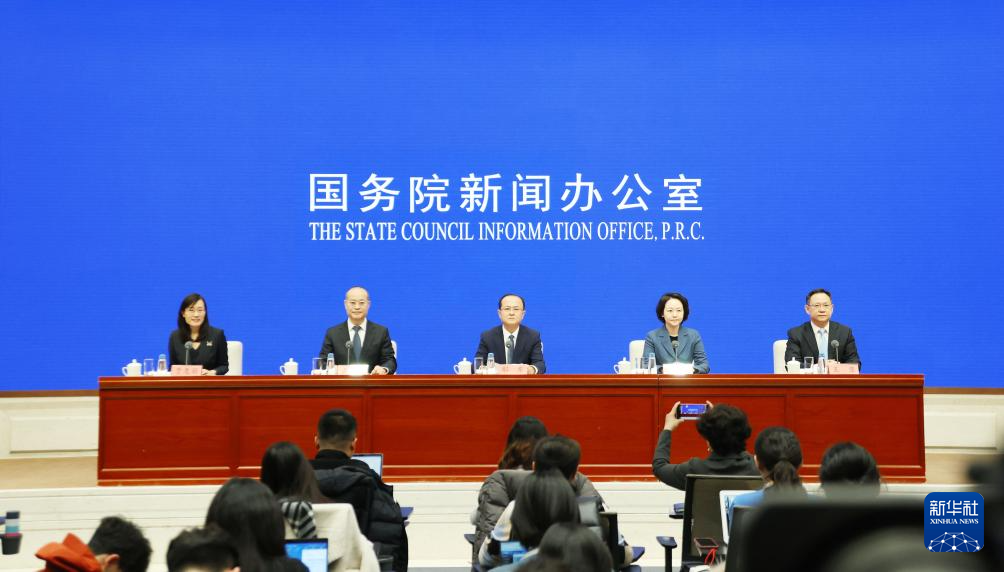
2026年如何提振消费、稳定外贸、拓展双向投资?国新办这场发布会回应关切
Xin Hua Wang· 2026-01-26 12:38
Group 1: Consumer Promotion - In 2026, the implementation of a consumption upgrade program will be optimized, focusing on the replacement of old consumer goods, particularly in the automotive, home appliance, and digital product sectors [3][4] - The service consumption sector will be enhanced through actions aimed at improving the supply levels in cultural entertainment, tourism, dining, and healthcare [3][4] - New growth points in service consumption will be cultivated, including transportation services, housekeeping, and inbound consumption, supported by relevant policies [3][4] Group 2: Foreign Trade Stability - The Ministry of Commerce will implement a series of policies to stabilize foreign trade, including promoting cross-border e-commerce and enhancing the "Export China" brand [5][6] - Service trade and digital trade will be key areas for innovation, with plans to establish national service trade innovation development demonstration zones [5][6] - Efforts will be made to expand the export of productive services and enhance the international capabilities of professional service institutions [5][6] Group 3: Foreign Investment Expansion - In 2026, there will be a focus on creating new advantages for attracting foreign investment, with plans to open up sectors such as telecommunications, healthcare, and education [7][8] - A national-level overseas comprehensive service platform will be established to provide a one-stop service for companies looking to invest abroad [8] - The Ministry of Commerce will accelerate the process of regional and bilateral trade investment agreements, enhancing market access and investment protection [7][8]