
调味品

Search documents
民生证券:大众品板块分化依旧 把握结构性景气
Zhi Tong Cai Jing· 2025-09-19 03:21
Group 1: Beer Sector - The beer sector shows ongoing industry differentiation, with a recommendation for Yanjing Beer and Zhujiang Beer due to their relatively strong fundamentals and performance potential [1][2] - Yanjing Beer benefits from steady reforms and improved operational efficiency, leading to a more pronounced profit alpha [2] - China Resources Beer is highlighted as a national leader with a favorable operating cycle, expected to continue outperforming the industry despite external pressures [2] Group 2: Seasoning and Food Supply - The seasoning and food supply sector is under pressure due to weakened downstream restaurant demand, with some companies performing better due to new products and channel expansions [4] - Cost reductions in key raw materials like soybeans and sugar have positively impacted profit margins for companies like Haitian and Angel Yeast [4] - The industry is expected to see growth if restaurant demand recovers, allowing leading companies to capture more market share [4] Group 3: Snack Foods - The snack food sector is experiencing increased internal differentiation, with companies that create hit products and leverage quality channels showing strong revenue performance [1][5] - Companies like Yanjing and Youyi Foods are capitalizing on structural category benefits and new channel opportunities, particularly in membership-based and bulk sales channels [5] - The sector is advised to focus on new product development and market share growth, with recommendations for companies like Angel Yeast and Baba Foods [4][5]
大众品板块2025年中报业绩综述:分化依旧,把握结构性景气
Minsheng Securities· 2025-09-18 13:45
Investment Rating - The report provides a positive investment rating for the low-alcohol and beverage sectors, recommending specific companies based on their performance and market positioning [2]. Core Insights - The report emphasizes the structural recovery in the consumer goods sector, highlighting the importance of channel dynamics and product innovation in driving growth [2][25]. - It identifies key players in the beer segment, such as Yanjing Beer and Zhujiang Beer, which are expected to outperform due to their strong regional presence and operational efficiency [2][11]. - The report also notes the challenges faced by the seasoning and food supply sectors, particularly due to weak downstream demand, but suggests potential for recovery as the restaurant industry stabilizes [2][26]. Summary by Sections Beer Sector - The beer sector experienced a revenue of 41.73 billion yuan in the first half of 2025, with a year-on-year growth of 2.8% [7]. - Major companies like Qingdao Beer and China Resources Beer showed mixed performance, with Qingdao Beer achieving a revenue increase of 1.9% [11][12]. - The report highlights the impact of channel structure on revenue performance, with companies like Yanjing and Zhujiang benefiting from a higher proportion of non-immediate sales channels [11][12]. Yellow Wine Sector - The yellow wine sector reported a revenue of 1.93 billion yuan in the first half of 2025, reflecting a year-on-year growth of 3.4% [26]. - Kuaijishan, a leading player, achieved a double-digit growth rate of 11% in the same period, driven by its high-end and youth-oriented strategies [26][27]. - The report indicates a trend of market share concentration among leading companies, with Kuaijishan and Guyue Longshan capturing a larger portion of the market [31]. Seasoning and Food Supply Sector - The seasoning and food supply sector faced revenue pressure due to weak restaurant demand, but companies that successfully launched new products or expanded channels showed resilience [2][26]. - The report suggests that a recovery in restaurant demand could lead to increased supply chain needs, benefiting leading companies in the sector [2][26]. Beverage Sector - The beverage sector is highlighted for its high growth potential, particularly for companies like Dongpeng Beverage, which is expanding its national presence [2]. - The report recommends focusing on companies that are effectively navigating the competitive landscape and capitalizing on emerging consumer trends [2][26].





“酱”心再焕古城春——访安徽老字号天顺酱园董事长陈传银
Zhong Guo Shi Pin Wang· 2025-09-18 10:26
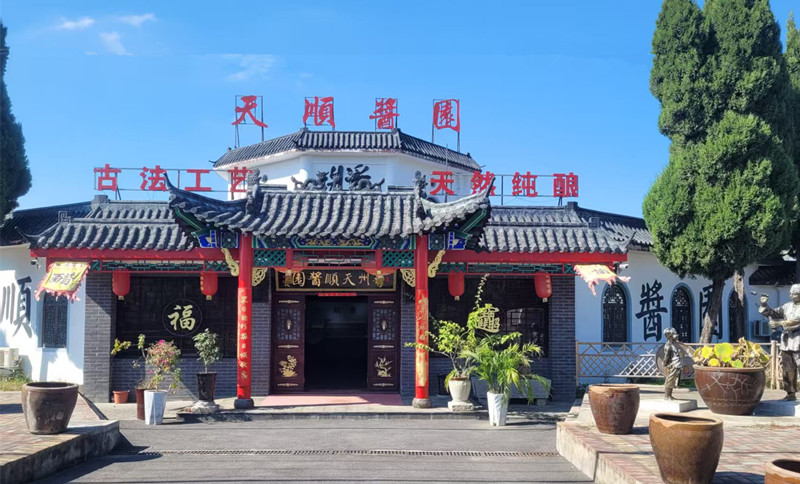
Company Overview - Tian Shun Soy Sauce Garden, established during the Ming and Qing Dynasties, has a history of over 400 years and is recognized as a time-honored brand in Anhui [8][10] - The company has evolved from a small workshop to a significant producer of soy sauce, gaining the title of "official salt garden" in 1689, which indicates its high-quality products [8][10] Traditional Craftsmanship - The company emphasizes traditional brewing techniques, utilizing ancient fermentation methods that have been passed down through generations [15][16] - The production process adheres to seasonal cycles, with specific techniques for each season, ensuring the quality and flavor of the soy sauce [16] Recent Developments - Under the leadership of Chairman Chen Chuan Yin, the company has revitalized its operations, focusing on traditional methods while also incorporating modern practices [15][20] - The company has received multiple awards, including recognition as an excellent tourism product in Huainan City and being named a time-honored brand in Anhui [18][20] Cultural Significance - Tian Shun Soy Sauce Garden serves as a cultural experience center, attracting around 100,000 visitors annually, allowing them to engage with the traditional brewing process [18][20] - The company aims to blend historical significance with modern commercial strategies, enhancing its brand presence in the region [20]

万联晨会-20250918
Wanlian Securities· 2025-09-18 01:14
Core Viewpoints - The A-share market saw collective gains on Wednesday, with the Shanghai Composite Index rising by 0.37%, the Shenzhen Component Index by 1.16%, and the ChiNext Index by 1.95%. The total trading volume in the Shanghai and Shenzhen markets reached 23,764.76 billion yuan. The leading sectors included power equipment, automobiles, and home appliances, while agriculture, retail, and social services lagged behind [2][8] - The U.S. Federal Reserve announced a 25 basis point cut in the federal funds rate, bringing it to a target range of 4.00% to 4.25%. This marks the first rate cut of 2025 and follows three cuts in 2024. The Fed noted a slowdown in economic activity and rising inflation, with high uncertainty in the economic outlook [3][9] - The Hong Kong government introduced measures to enhance the stock market, including support for tech companies to raise funds in Hong Kong and optimizing listing regulations. These initiatives aim to boost the market's vitality and competitiveness [4][10] Industry Insights Banking Sector - In August, the social financing stock growth rate was 8.8%, a decrease of 0.2% from July. New social financing totaled 2.57 trillion yuan, down by 0.47 trillion yuan year-on-year. The decline was attributed to a slowdown in government bond issuance and credit growth [11][12] - The M1 growth rate was 6%, with M2 growing by 8.8%. The anticipated smooth deployment of fiscal funds may continue to support economic growth, although the increase in monetary growth is expected to narrow [12][14] - The banking sector is expected to see gradual recovery in revenue and profit growth, supported by attractive dividend yields and regulatory encouragement for insurance funds to increase market participation [14] Media Sector - The media industry reported a revenue increase of 3.86% in H1 2025, totaling 254.86 billion yuan, with net profit rising by 28.85% to 21.78 billion yuan. The gross margin remained stable at 32.90% [15][16] - The gaming sector showed significant growth, with revenue reaching 54.45 billion yuan in H1 2025, a 22.17% increase, and net profit soaring by 74.95% to 8.05 billion yuan [15][16] - The film and television sector experienced a revenue increase of 15.24% in H1 2025, driven by successful releases, although Q2 saw a decline in revenue and an increase in losses [16][19] Food and Beverage Sector - The food and beverage industry saw a revenue increase of 2.41% in H1 2025, totaling 5,806.35 billion yuan, but net profit decreased by 0.56% to 1,275.08 billion yuan. The sector's growth rates ranked 14th and 20th among 31 sub-industries [22][23] - The beverage segment, particularly soft drinks and condiments, showed strong revenue growth, while the beer segment maintained positive growth in both revenue and profit [23][24] - The liquor industry faced challenges, with a slight decline in revenue and profit, particularly in the mid-range segment, while high-end brands remained resilient [25][26] Electronics Sector - The SW electronics industry reported a revenue increase of 19.10% in H1 2025, totaling 1,846.095 billion yuan, with net profit rising by 29.29% to 84.04 billion yuan [30][31] - The semiconductor sector performed well, driven by AI demand and domestic substitution, while consumer electronics benefited from government subsidies [31][32] - The optical and electronic sectors saw significant profit growth, particularly in the panel segment, which experienced a 193.31% increase in net profit [32]
制度创新激活港股新生态 “A+H”扩容,中概股回归趋势强化
2 1 Shi Ji Jing Ji Bao Dao· 2025-09-17 23:21
Group 1: Hong Kong Capital Market Developments - Hong Kong Chief Executive John Lee announced measures to support technology companies from mainland China in raising funds in Hong Kong, enhancing financial support for national technological development [1] - The Hong Kong IPO market has seen a resurgence, with 62 new listings raising a total of HKD 144.16 billion this year, surpassing the total fundraising of the past two years [1][2] - The "A+H" listing trend is accelerating, with 11 A-share companies achieving dual listings, covering sectors like hard technology, new consumption, and biomedicine [1][2] Group 2: A+H Listing Expansion - A-share companies accounted for the top five fundraising amounts in the Hong Kong IPO market this year, with a total of HKD 916.89 million raised [2] - CATL's IPO raised HKD 410.06 million, marking the largest IPO in Hong Kong in nearly four years, with significant oversubscription [2] - As of September 17, 2025, there are 161 A+H listed companies, with over 51 A-share companies in the pipeline for Hong Kong listings [2][3] Group 3: Innovative Listing Methods - New listing methods such as share swap mergers and privatization followed by introduction listings are becoming popular, simplifying the process and reducing costs [3][4] - Zhejiang Huhangzhou announced a share swap merger with Zhenyang Development, aiming for A+H dual listing [3] - New Hope Group plans to privatize New Hope Energy and list on the Hong Kong Stock Exchange through an introduction method [3] Group 4: Support for Technology Companies - The Hong Kong Stock Exchange launched the "Tech Company Fast Track" to facilitate the listing process for technology and biotech companies [6] - The recent listing of Hesai Technology marked the largest IPO in the global lidar industry and the largest return of a Chinese concept stock to Hong Kong in four years [6] - The Chief Executive's commitment to optimizing the "dual-class share" listing regulations is expected to further facilitate the return of Chinese concept stocks [6][7] Group 5: Regulatory Considerations - Current regulations for companies with different voting rights structures are seen as stringent, with calls for further relaxation to attract high-growth tech companies [7][8] - Recommendations include easing requirements for companies with a market cap over HKD 100 billion and allowing for more flexible voting rights structures [8][9] - Experts suggest that relaxing dual-class share restrictions could enhance Hong Kong's international competitiveness and alleviate delisting pressures on Chinese concept stocks [8][9]




佛山市海天调味食品股份有限公司2025年半年度A股权益分派实施公告
Shang Hai Zheng Quan Bao· 2025-09-17 20:39
Core Points - The company announced a cash dividend of RMB 0.26 per share (before tax) for A-share holders [2][4] - The total cash dividend distribution amounts to approximately RMB 1.52 billion (before tax), with RMB 1.44 billion allocated to A-share holders [4] - The dividend distribution plan was approved by the board on August 28, 2025, following the authorization from the annual general meeting held on May 9, 2025 [2][3] Distribution Plan - The dividend is applicable to all A-share holders registered with the China Securities Depository and Clearing Corporation Limited Shanghai Branch as of the close of trading on the record date [3] - The total share capital of the company is 5,851,824,944 shares, with 5,560,600,544 shares being A-shares and 291,224,400 shares being H-shares [4] - The cash dividend will not be distributed to shares held in the company's repurchase account [3] Taxation Details - For individual A-share holders, dividends are subject to different tax treatments based on the holding period, with a maximum tax rate of 20% for shares held for less than one month [8][9] - For shares held over one year, dividends are exempt from individual income tax [8] - The net cash dividend for limited A-share holders and QFII investors will be RMB 0.234 per share after a 10% withholding tax [9][10] Implementation Method - The cash dividends will be distributed through the China Securities Depository and Clearing Corporation's clearing system to registered shareholders [6] - Shareholders who have not completed designated trading will have their dividends held until the completion of the necessary procedures [6] - The company will handle the distribution of dividends for specific shareholders, including major stakeholders [7]
涪陵榨菜:已成立餐饮事业部,拓展餐饮、航空、学校等多种特殊渠道
Bei Jing Shang Bao· 2025-09-17 13:53
Core Viewpoint - Fuling Zhacai has established a catering division to expand into various special channels such as catering, aviation, and schools, collaborating with multiple hotels and well-known chain restaurants [1] Group 1 - The company has formed a dedicated team within the catering division [1] - The focus is on diversifying product categories, specifications, and price ranges for the catering sector [1] - The company aims to continuously enrich its product offerings in the catering segment [1]

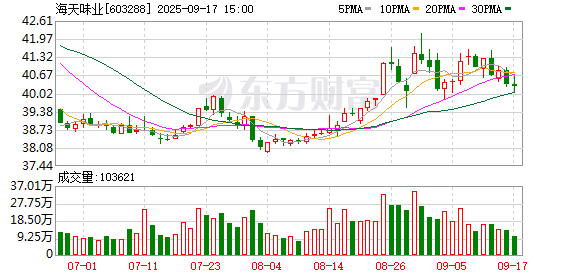
海天味业:2025年半年度A股权益分派实施公告
Zheng Quan Ri Bao· 2025-09-17 13:06
(文章来源:证券日报) 证券日报网讯 9月17日晚间,海天味业发布2025年半年度A股权益分派实施公告称,公司2025年半年度 利润分配方案为A股每股现金红利人民币0.26元(含税),股权登记日为2025年9月23日,除权(息)日 为2025年9月24日。 ...
ST加加变更为无实际控制人状态 上半年实现扭亏
Zheng Quan Shi Bao Wang· 2025-09-16 14:33
Core Viewpoint - ST加加 has transitioned to a state of "no actual controller," with significant changes in its shareholder structure and management control, which may present both opportunities and challenges for the company moving forward [1][2][3] Shareholder Structure - The largest shareholder, China Orient, holds 23.42% of ST加加, while the second largest,卓越投资, holds 18.79%, resulting in no single shareholder being able to control the company [1] -卓越投资 is undergoing bankruptcy proceedings, which will further dilute the influence of the Yang family over the company [2] Financial Performance - In the first half of 2025, ST加加 reported revenues of 733 million yuan, a year-on-year decrease of 7.1%, but managed to turn a loss of 29.16 million yuan from the previous year into a profit of 8.35 million yuan [2] - The main revenue sources remain "加加" soy sauce and "盘中餐" cooking oil, accounting for approximately 75% of total revenue [3] Business Strategy - The company is focusing on high-margin products and enhancing sales of mid-to-high-end series, while also improving operational capabilities through refined management [2] - ST加加 has expanded its online sales channels, achieving 25.97 million yuan in online revenue, a year-on-year increase of 37.32% [3] Governance and Future Outlook - The transition to a "no actual controller" status is not inherently positive or negative; its impact will depend on the company's ability to establish effective governance mechanisms [3] - If the company can quickly improve its board structure and management responsibilities, this change could be an opportunity to mitigate historical risks and attract external resources [3]

ST加加:9月16日召开董事会会议
Mei Ri Jing Ji Xin Wen· 2025-09-16 12:36
Group 1 - The company ST加加 (SZ 002650) held its fifth board meeting on September 16, 2025, in Changsha, where it reviewed the proposal to adjust the members of its specialized committees [1] - For the first half of 2025, ST加加's revenue composition was as follows: 77.42% from condiments, 19.69% from grain and oil products, and 2.89% from other categories [1] - As of the report date, ST加加's market capitalization was 7.9 billion yuan [2]