
医美

Search documents
四月策略及美元策略:美元的幻境
SINOLINK SECURITIES· 2026-03-28 12:10
Group 1: Core Insights - The report emphasizes that the recent global asset downturn is primarily driven by the rebound of the US dollar rather than a recession, influenced by the escalation of the US-Iran conflict [2][10][11] - The US economy, with its service-oriented structure and energy resource advantages, is less impacted by global tensions compared to other economies that rely heavily on traditional energy consumption [11][12] - The report suggests that the unique advantages of Chinese assets are becoming more apparent, particularly in the context of global energy security concerns [13][14] Group 2: Industry and Company Summaries - **Nonferrous Metals**: The report indicates that the pressures on the nonferrous metals sector are easing, with extreme market expectations regarding the Federal Reserve's monetary policy tightening creating potential for recovery [3][12] - **Oil and Gas**: China National Offshore Oil Corporation (CNOOC) is highlighted for its significant cost advantages and ongoing capital expenditures, which are expected to drive strong growth in oil and gas production [18] - **Electric Power**: Si Yuan Electric is noted for its strong management and comprehensive product matrix, benefiting from global power grid upgrades and AI data center construction [19] - **General Equipment**: Ying Liu Co. is expected to see increased demand for gas turbine components, driven by a global surge in gas turbine needs [20] - **Public Utilities**: China Huadian International is recognized for its strong cash flow and dividend potential, with a projected net cash flow of 27.2 billion yuan in 2025 [21] - **Non-Banking Financials**: China Ship Leasing is noted for its leading operational capabilities and a diversified fleet, with a focus on green transformation [22] - **Light Industry**: Yutong Technology is highlighted for its defensive value and potential for revenue growth driven by overseas expansion and new business segments [23] - **Retail**: Jin Jiang Hotels is positioned to benefit from service consumption policies and an improving supply-demand balance in the hotel industry [25] - **Aerospace**: Hongdu Aviation is recognized for its unique position in the domestic trainer aircraft market and the expected increase in global demand for training aircraft [26] - **Biopharmaceuticals**: CanSino Biologics is noted for its differentiated approach in chronic disease and oncology, with several promising products in the pipeline [27]






主题形态学输出0313:光伏逆变器等主题走出右侧趋势
Huafu Securities· 2026-03-16 09:23
Core Insights - The report highlights the emergence of new investment themes, particularly in the photovoltaic inverter sector, which is showing a right-side breakthrough trend [4][11]. - The report categorizes themes into four main patterns: right-side breakthrough, right-side trend, bottom stabilization, and bottom reversal, providing a structured approach for identifying investment opportunities [8][4]. Group 1: Right-Side Breakthrough - New themes identified include glyphosate, salt, and photovoltaic inverters, indicating strong upward momentum in these sectors [4][11]. - The photovoltaic inverter index has shown a 24% increase over the past 20 days, with a year-to-date (YTD) increase of 33% [11]. Group 2: Right-Side Trend - The photovoltaic inverter and hydropower indices are noted for their right-side trend, suggesting ongoing positive performance in these sectors [4][13]. - The photovoltaic inverter index has a 5-day increase of 9% and a YTD increase of 33% [13]. Group 3: Bottom Stabilization - New themes include liquor, trust, peptide drugs, medical beauty, small base stations, new energy vehicles, and brokerages, indicating potential recovery in these sectors [4][18]. - The liquor index has shown a 5-day increase of 0% and a YTD decrease of 13%, suggesting stabilization despite recent challenges [18]. Group 4: Bottom Reversal - Ongoing themes include animal vaccines, pig industry, innovative drugs, lithium hexafluorophosphate, lithium battery electrolytes, and mobile batteries, indicating potential for recovery [4][20]. - The mobile battery index has shown a 20-day increase of 13%, indicating a strong reversal trend [20].
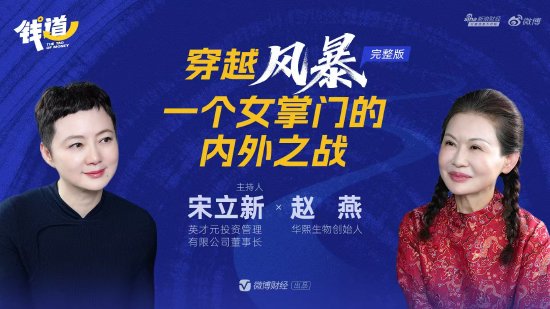
华熙生物赵燕:医美让人重拾自信,优雅变老
Xin Lang Cai Jing· 2026-02-26 09:13
Core Viewpoint - The conversation highlights the perspective of Zhao Yan, Chairman of Huaxi Biological, on aging, emphasizing that aging can be actively intervened and controlled in the field of life sciences, rather than being merely a natural process [1][4]. Group 1: Aging and Life Sciences - Zhao Yan expresses that while aging is a common concern, it should be viewed as a process that can be managed through advancements in life sciences [1][4]. - The focus should shift from superficial signs of aging to the quality of life and longevity [1][4]. Group 2: Women's Concerns - Zhao identifies three major fears among women: aging, losing beauty, and death, stating that advancements in life sciences can effectively address these concerns [1][4]. - The mission of Huaxi Biological is to enhance the quality of life, allowing individuals to live longer and healthier [1][4]. Group 3: Aesthetic Medicine - Zhao emphasizes that aesthetic medicine is fundamentally about restoring confidence, particularly for women, and enabling them to age gracefully [1][4]. - The psychological comfort provided by aesthetic treatments is highlighted as a significant benefit [1][4]. Group 4: Dialogue Format - The dialogue is part of a series produced by Sina Finance and Weibo, featuring insights on organizational aging, cognitive alignment, and execution logic [1][4].


国际医学:公司正在积极调整业务结构,围绕康养、医美、康复等板块加快布局
Zheng Quan Ri Bao Wang· 2026-02-06 06:47
Group 1 - The core viewpoint of the article is that the company is actively adjusting its business structure to enhance growth and meet market demands [1] - The company is focusing on sectors such as health care, medical beauty, rehabilitation, maternal and child services, assisted reproduction, and special needs services [1] - The company plans to establish specialized departments such as elderly care facilities, Huibin departments, and proton therapy to cater to market needs [1]

国信证券:社会结构演进及政策加码支持 银发悦己需求快速扩容
智通财经网· 2026-02-03 02:50
Core Viewpoint - The silver economy in China is experiencing significant growth, with projections indicating that the market size will exceed 16 trillion yuan by 2030, driven by the evolving consumption habits of the new generation of elderly consumers [1][2]. Group 1: Market Overview - In 2019, the market size of China's silver economy reached 4.3 trillion yuan, growing to 7.1 trillion yuan in 2023, and is expected to further increase to 8.3 trillion yuan in 2024. By 2030, the overall market size is anticipated to surpass 16.2 trillion yuan, indicating substantial potential for the silver economy [2]. - The new generation of elderly consumers exhibits significant differences in wealth levels, family structures, and consumption habits compared to previous generations, prompting companies to adapt their business strategies to meet these new consumer demands [2]. Group 2: Retail Sector - Leading retail companies such as Bailian Group and Chongqing Department Store are developing business models tailored to the purchasing habits and preferences of elderly consumers, addressing both social and purchasing needs [2]. - Supermarket chains like Hema and Yonghui are enhancing their product offerings and introducing "silver community canteens" to increase foot traffic and conversion rates among elderly shoppers [2]. Group 3: Gold and Jewelry Sector - Middle-aged and elderly consumers have historically been the primary market for gold products, driven by a focus on value preservation and brand loyalty. Companies like Caibai and Lao Fengxiang are leveraging their strong brand foundations to cater to this demographic [3]. - These companies are enhancing their product offerings through collaborations and improving customer loyalty via robust after-sales services, positioning themselves to benefit from the expanding customer base [3]. Group 4: Beauty and Personal Care Sector - The proportion of elderly consumers in the beauty and medical aesthetics markets is steadily increasing, with significant growth potential in both volume and pricing, similar to trends observed in mature overseas markets [4]. - Leading companies with strong upstream raw material capabilities and comprehensive solutions, such as Huaxi Biological and Aimeike, are expected to benefit from the rising sales among elderly consumers [4]. - Companies focused on elderly care, like Kelaibao, are also poised to gain from the expanding target audience in the personal care sector [4].
中国银河证券:看好医药业绩确定性增长、创新、出海板块 行业有望在2026年重启升势
Zhi Tong Cai Jing· 2026-01-29 07:37
Core Viewpoint - China Galaxy Securities is optimistic about the pharmaceutical industry's investment opportunities in 2026, focusing on hard technology in medicine, innovation, and overseas expansion, while seeking alpha in niche segments [1] Group 1: Investment Trends - In Q4 2025, public fund holdings in pharmaceuticals decreased, indicating an overall low allocation level [1] - The market value of pharmaceutical theme funds decreased by 9.73% to 205.9 billion yuan, which is 66.54% higher than the average since 2019 [1] - The market value of the pharmaceutical biotechnology sector fell by 18.81% to 312.5 billion yuan, with a holding ratio of 8.12%, below the historical average by 3.89 percentage points [1] Group 2: Stock Performance - The top five pharmaceutical stocks held by public funds in Q4 2025 saw significant reductions in both the number of funds and total market value, with notable declines in stocks like Heng Rui Medicine and WuXi AppTec [2] - The concentration of holdings has shifted from innovative drugs to medical devices and services, indicating a change in market investment focus [2] Group 3: Industry Data Overview - The pharmaceutical manufacturing industry's revenue has shown a slight decline, with a year-on-year decrease of 1.2% in Q4 2025 [3] - Medical service volumes remained stable, with a total of 1.86 billion outpatient visits in early 2025, reflecting a 0.1% year-on-year decrease [3] - The overall operation of the medical insurance fund has been stable, with total income of 2.632 trillion yuan and total expenditure of 2.110 trillion yuan from January to November 2025 [3] Group 4: Market Comparison - The pharmaceutical industry has underperformed compared to the CSI 300 index, with a rolling P/E ratio of 38.19 compared to 14.14 for the CSI 300, indicating a premium of 170.14% over the index [3] - The SW pharmaceutical biotechnology index increased by 1.44% from early 2024 to January 28, 2026, while the CSI 300 rose by 37.15%, showing a relative underperformance of 35.71% for the pharmaceutical sector [3]




从“星星之火”到“半壁江山”:崇州家具产业集群的跃迁密码
Si Chuan Ri Bao· 2025-11-04 22:43
Core Insights - The furniture industry cluster in Chongzhou has been recognized as a "high-value" industrial cluster by the Ministry of Industry and Information Technology, highlighting its robust vitality and growth potential [3][4] - Chongzhou has become a significant hub for furniture manufacturing in China, accounting for 69% of Chengdu's and 48% of Sichuan's output in the sector [3][4] Industry Development - The Chongzhou furniture industry has its roots in the wood culture of the Sichuan region, with its development beginning in the 1970s and 1980s through small family workshops [4] - Over the years, Chongzhou has nurtured well-known brands such as Quanyou and Mingzhu, as well as leading companies like Sofia and Xilinmen, establishing itself as one of the six major furniture industry clusters in China [4][5] - The core business of Chongzhou's furniture manufacturing has shifted towards "whole-house customization," particularly after 2015 when customized furniture began to surpass finished products in market metrics [5] Transformation Strategies - The Chongzhou furniture industry is undergoing a transformation towards smart, green, and high-end manufacturing [5][6] - Smart manufacturing initiatives include the implementation of Industry 4.0 production lines by major companies, with several recognized as smart factories and digital workshops [5][6] - Green initiatives have led to the closure of 93 outdated enterprises and the upgrade of 207, with a significant shift towards water-based environmentally friendly materials [6] - High-end market focus has attracted companies specializing in premium products, such as AI smart mattresses and medical furniture [6] Government Support - The government plays a crucial role in the development of the furniture industry through strategic planning and support policies, including the establishment of industrial parks and public service platforms [7][8] - Recent efforts have included the creation of a cross-border e-commerce sector to facilitate international market access for local furniture manufacturers [8] Future Outlook - The establishment of the "Tianfu Beautiful Home" public brand aims to support small and medium-sized enterprises in the furniture sector, enhancing their market presence and brand recognition [9][10] - Future plans include building a high-level industrial cluster with a target of establishing a 100 billion-level leading enterprise and three 20 billion-level enterprises by 2029 [10]
上市公司持续活跃:TCL做LP,医疗企业出资布局加速
FOFWEEKLY· 2025-09-17 10:07
Core Insights - In August, 50 listed companies (including subsidiaries) contributed to private equity funds, investing in 46 funds with a total disclosed amount of 5.684 billion yuan, averaging 111 million yuan per investment [6][9]. Group 1: Investment Activity - The healthcare sector saw the highest investment activity among listed companies, followed by industrial, information technology, and consumer discretionary sectors. The majority of healthcare investments focused on biomedicine and health technology [6][17]. - The average size of funds participated in by listed companies in August slightly increased compared to the previous month, with each fund averaging over 500 million yuan [11]. Group 2: Capital Source Distribution - In August, state-owned enterprises made 7 investments totaling 421 million yuan, while non-state-owned enterprises made 44 investments with a total of 5.263 billion yuan [13]. Group 3: Regional Distribution - Zhejiang province had the highest number of listed companies participating in investments, followed by Guangdong. Both provinces exceeded 1 billion yuan in total investment, indicating strong regional capital activity [22]. Group 4: Investment Size Distribution - The investment size distribution showed that the 500 million to 1 billion yuan range accounted for 45% of the total investment, while the 100 million to 500 million yuan range accounted for 36%. However, the number of investments under 100 million yuan was the most frequent, making up 72% of the total number of investments [24]. Group 5: Active Companies and Notable Investments - Notable investments included East China Pharmaceutical's 980 million yuan contribution to a fund focused on healthcare, which was the largest single investment in August. The fund aims to invest in innovative drugs, medical aesthetics, and health-related sectors [30]. - Other significant contributions included a 2.11 billion yuan fund by Kangxi Communication, which focuses on key industries such as integrated circuits and high-end manufacturing [30].

“药合作、采众方、促发展”—“第三届中韩企业对接活动”共襄第二十五届投洽会
Shang Wu Bu Wang Zhan· 2025-09-11 13:30
Core Insights - The "Third China-Korea Enterprise Matching Event" successfully took place, focusing on collaboration in the biopharmaceutical industry between China and South Korea [1] - The event gathered nearly a hundred representatives from major biopharmaceutical companies, specialized enterprises, national economic development zones, and financial institutions [1] Group 1: Event Overview - The event was co-hosted by the Investment Promotion Bureau of the Ministry of Commerce and the Korean Biopharmaceutical Association [1] - Key figures in attendance included Yu Zirong, Deputy Director of the Investment Promotion Bureau, and Lee Seung-gwi, Vice President of the Korean Biopharmaceutical Association [1][2] Group 2: Economic Context - China is showcasing strong economic resilience and potential, emphasizing high-level openness to foreign investment [2] - The "Invest in China" brand has become a crucial platform for multinational companies to understand and engage with the Chinese market [2] Group 3: Collaborative Efforts - The partnership between the Korean Biopharmaceutical Association and the Investment Promotion Bureau has led to the establishment of the "Korean Biopharmaceutical Association China Office" in Beijing [3] - The event highlighted the importance of expanding cooperation channels and platforms for mutual benefits between Chinese and Korean enterprises [3] Group 4: Industry Insights - Discussions included topics on industry upgrades, clinical data, and investment cooperation among leading Korean companies and Chinese institutions [4] - Specific projects in areas such as vaccine microneedles, breast cancer repair treatment, and artificial intelligence technologies attracted significant interest and led to preliminary cooperation intentions [4]
中关村水木医疗完成数亿元B轮融资,弘毅投资、国聚创投联合领投
Sou Hu Cai Jing· 2025-09-05 06:42
Group 1 - Beijing Zhongguancun Waterwood Medical Technology Co., Ltd. announced the completion of a B-round financing of several hundred million yuan, led by Hongyi Investment and Guoju Venture Capital, with participation from Guosheng Capital and Guangzhou Industrial Investment [1] - The funds raised will be used to expand the integrated service platform for medical devices and strengthen the national service network [1] - Waterwood Medical, established in 2017, aims to accelerate the registration and market launch of innovative medical device products, addressing the "last mile" challenge for innovative medical device companies [1] Group 2 - Hongyi Investment's Managing Director, Lang Xiaofeng, expressed confidence in Waterwood Medical's integrated service business model and experienced team, viewing this investment as a strategic move in the medical device industry chain ecosystem [2] - Guoju Venture Capital's Chairman, Yang Xi, highlighted the importance of Waterwood Medical's one-stop service model for the entire lifecycle of medical devices, which will significantly promote innovation and development in the medical device industry in Guangzhou and the Greater Bay Area [2] - Guosheng Capital noted that Waterwood Medical has a professional talent team and a mature quality management system, creating a high competitive barrier, and its establishment in Chengdu High-tech Zone will fill the gap in professional service platforms for the entire process of medical devices [2] Group 3 - Guangzhou Industrial Investment emphasized that the biomedicine and health industry is one of the five key industries in Guangzhou, and Waterwood Medical is a leading platform enterprise in this sector [3] - The company focuses on various fields including active medical devices, large radiation therapy equipment, medical robots, AI medical devices, biomaterials, IVD, medical aesthetics, and digital therapy [3] - Waterwood Medical's establishment in Guangzhou will enhance the inspection and testing support and professional services, further strengthening the critical links in medical device research and development, and contribute to the formation of a high-end medical device industry cluster in the Greater Bay Area [3]
