基围虾

Search documents
【新春走基层】绥阳:春节消费市场“热辣滚烫” 悦己经济成新宠
Sou Hu Cai Jing· 2026-02-26 16:54
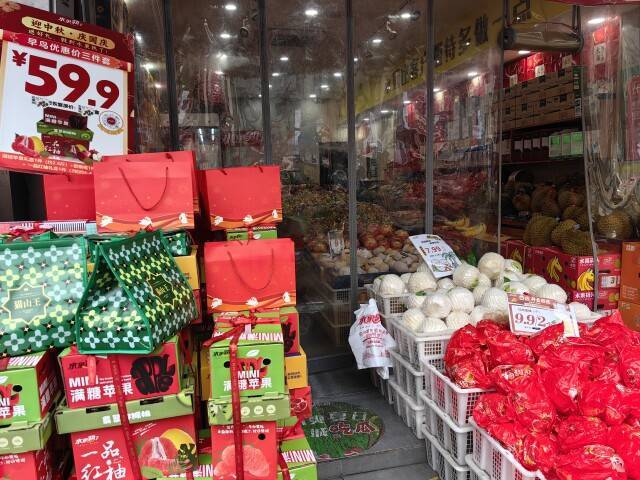
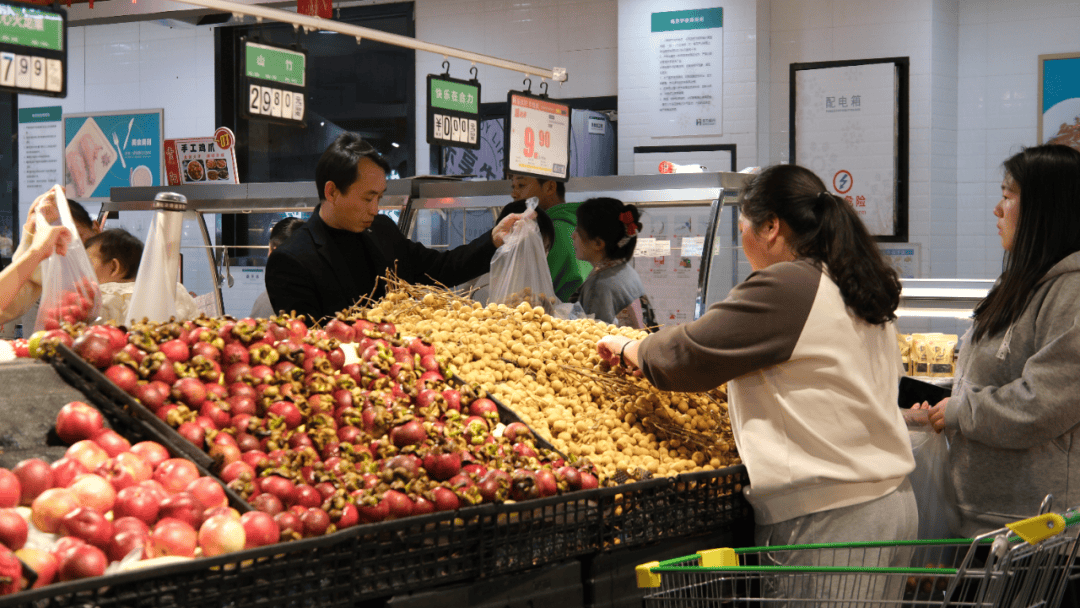
Group 1 - The core viewpoint of the article highlights the vibrant consumer atmosphere in Suining County during the Spring Festival, driven by family gatherings, shopping, and festive activities [1][4]. - The "self-indulgence economy" trend is emerging, with consumers increasingly willing to spend on high-quality products such as premium fruits and gourmet gift boxes, reflecting a shift in consumption patterns [3][6]. - The overall sales in supermarkets have seen a year-on-year increase of approximately 10%, with fresh produce and high-priced imported fruits being particularly popular among consumers [6]. Group 2 - The restaurant sector is thriving during the Spring Festival, with many dining establishments experiencing full capacity as families gather to enjoy meals together [8][11]. - Government initiatives, including the distribution of consumer vouchers through the "Cloud Flash Payment" platform, have significantly boosted overall consumption during the holiday period [15]. - Statistics show that participating supermarkets and restaurants in promotional activities achieved substantial transaction volumes, with a total of 32,380 transactions amounting to 6.5173 million yuan in one campaign [18][20].

“菜篮子”撑起“团圆鲜滋味”
Xin Lang Cai Jing· 2026-02-16 19:19
Core Viewpoint - The article highlights the vibrant atmosphere of the Bai Jia Seafood Market in Chengdu during the Lunar New Year, emphasizing the importance of seafood in traditional celebrations and the increased demand for fresh products among consumers [1] Group 1: Market Activity - The Bai Jia International Agricultural Wholesale Market is the largest agricultural distribution center in Southwest China, with a daily seafood distribution volume of approximately 1,600 tons [1] - The market offers a wide variety of seafood, including cost-effective household options and high-end products to meet diverse consumer needs [1] Group 2: Consumer Behavior - Local residents are actively participating in the New Year preparations, with increased foot traffic in the market, leading to a doubling of customer volume for popular seafood items like shrimp [1] - Consumers express a strong cultural connection to seafood, with traditional dishes such as fish being essential for the New Year's Eve dinner, reflecting the significance of these customs in fostering family unity [1]
骑手化身“流动探头”,京深海鲜市场“你点我检”护年味
Xin Jing Bao· 2026-02-04 02:57
Group 1 - The core idea of the news is the implementation of a joint action by Beijing's market supervision department to ensure food safety during the upcoming Spring Festival, utilizing "you order, we inspect" and "mobile supervisors" among delivery riders [1][2] - The market supervision department has set up quick inspection points in the Jing Shen Seafood Market, where popular seafood items are tested on-site, providing immediate results to consumers [1] - The initiative includes a dual-channel approach with online questionnaires and physical feedback areas to gather consumer concerns, allowing the regulatory body to adjust inspection priorities based on public interest [1] Group 2 - Delivery riders act as "mobile supervisors," leveraging their extensive reach to monitor seafood quality and report any irregularities to market or regulatory authorities [2] - Consumers are advised to follow a selection guide for seafood, which includes visual checks, tactile assessments, and olfactory evaluations to ensure freshness and quality [3][4][5]
菜场里的“B级哲学”
Xin Lang Cai Jing· 2026-01-30 18:43
Core Insights - The article highlights the success of a vendor named A-Zhen in a local market, emphasizing her unique approach to selling seafood, particularly crayfish, which has made her stall a popular destination for customers [1][2][3] Group 1: Business Strategy - A-Zhen initially focused on high-quality "A-grade" shrimp but shifted to "B-grade" products due to lower transportation losses and cost savings, allowing her to offer more value to customers [2] - The "B-grade philosophy" is based on market understanding, where A-Zhen calculated that medium-sized shrimp are more resilient and cost-effective, leading to better profit margins [2] - A-Zhen employs innovative techniques such as "waste transformation," using shrimp shells as natural fertilizer and repurposing leftover seafood for other culinary uses, showcasing her resourcefulness [2] Group 2: Customer Engagement - A-Zhen's stall has become a social hub, attracting various customer groups, including retired teachers and office workers, who come not only for the products but also for the experience and knowledge shared [3] - The interaction with customers is enhanced by A-Zhen's engaging personality and her ability to educate them about seafood selection, which has contributed to her stall's popularity [3] - The article suggests that A-Zhen's approach to business reflects a broader life philosophy, where embracing imperfections can lead to a fulfilling and vibrant existence [3]
京东七鲜上海浦东首店开业,以供应链硬实力重塑生鲜零售
Guan Cha Zhe Wang· 2026-01-30 07:31
Core Insights - JD's Seven Fresh supermarket opened its first store in Shanghai's Pudong Century Link on January 30, 2026, marking a strategic expansion alongside the opening of a store in Beijing, enhancing its presence in key urban markets [1][3] - The store leverages a supply chain model that combines direct sourcing and warehouse-store integration, aiming to transition from regional focus to national competition [1][3] Group 1: Store Operations and Strategy - Seven Fresh has developed a dual business model of "fresh large stores + NB discount stores," integrating operations with JD's grocery delivery service to enhance delivery efficiency [3] - The Pudong store is strategically located near the Lujiazui financial district, targeting high-end consumers and families, and complements existing stores to cover key commercial areas in Shanghai [3][5] - With over 70 stores nationwide, the opening of the Pudong and Beijing locations accelerates Seven Fresh's national expansion [3][5] Group 2: Product Offerings and Innovations - The store features a "24-hour vegetable" shelf, ensuring produce is delivered from farm to shelf within 24 hours, alongside a "7-day fresh egg" quality control system, creating a competitive edge [5] - Seven Fresh's global supply chain capabilities are highlighted by direct sourcing of premium fruits and seafood, ensuring freshness and competitive pricing [5] - The introduction of localized products, such as Shanghai-style dishes and seasonal vegetables from Chongming, caters to local consumer preferences [7][9] Group 3: Consumer Engagement and Market Positioning - The combination of localized demand and proprietary brand innovation enhances consumer loyalty and provides a new approach to differentiate in the fresh retail market [9] - The successful opening of the Pudong store reflects Seven Fresh's understanding of consumer needs and contributes to the recovery of the retail market ahead of the Spring Festival [9] - Seven Fresh's operational model, which includes a central store supported by satellite locations and a focus on both product and experience, is seen as a replicable success in the industry [9]

对虾的故事
Xin Lang Cai Jing· 2026-01-13 07:26
Group 1 - The wild shrimp in the Bohai Bay, known as "Ming shrimp," is a unique seafood treasure in China, characterized by its translucent body and visible internal organs [1] - In the late 1970s to early 1980s, the Chinese fishing fleet heavily targeted Bohai Bay, leading to a significant increase in shrimp capture, with processing ships handling large volumes for export [1] - By the late 1980s to early 1990s, overfishing led to a near depletion of wild shrimp resources, prompting the establishment of shrimp farming operations along the coast, with significant increases in yield reported [2] Group 2 - The average yield of farmed shrimp increased from over 80 kg per mu to over 240 kg per mu between 1988 and 1992, marking a twofold growth [2] - In 1993, the "white spot syndrome" virus devastated the shrimp farming industry, primarily due to inbreeding and high farming density, leading to a shift towards farming imported species like the Pacific white shrimp [2] - Modern ecological farming techniques have been adopted in coastal areas of Shanghai for both Pacific white shrimp and traditional Chinese shrimp, resulting in stable production [2] Group 3 - Pacific white shrimp and traditional Chinese shrimp are similar but can be distinguished by size, color, and physical characteristics, with the former being larger and lighter in color [3] - The culinary qualities of the two shrimp types differ, with Pacific white shrimp being tender and suitable for frying, while traditional Chinese shrimp are firmer and better for steaming [3]
自助餐老板哭了!揭秘3个你吃垮不了的暴利真相,第2个扎心了
Sou Hu Cai Jing· 2025-12-22 15:45
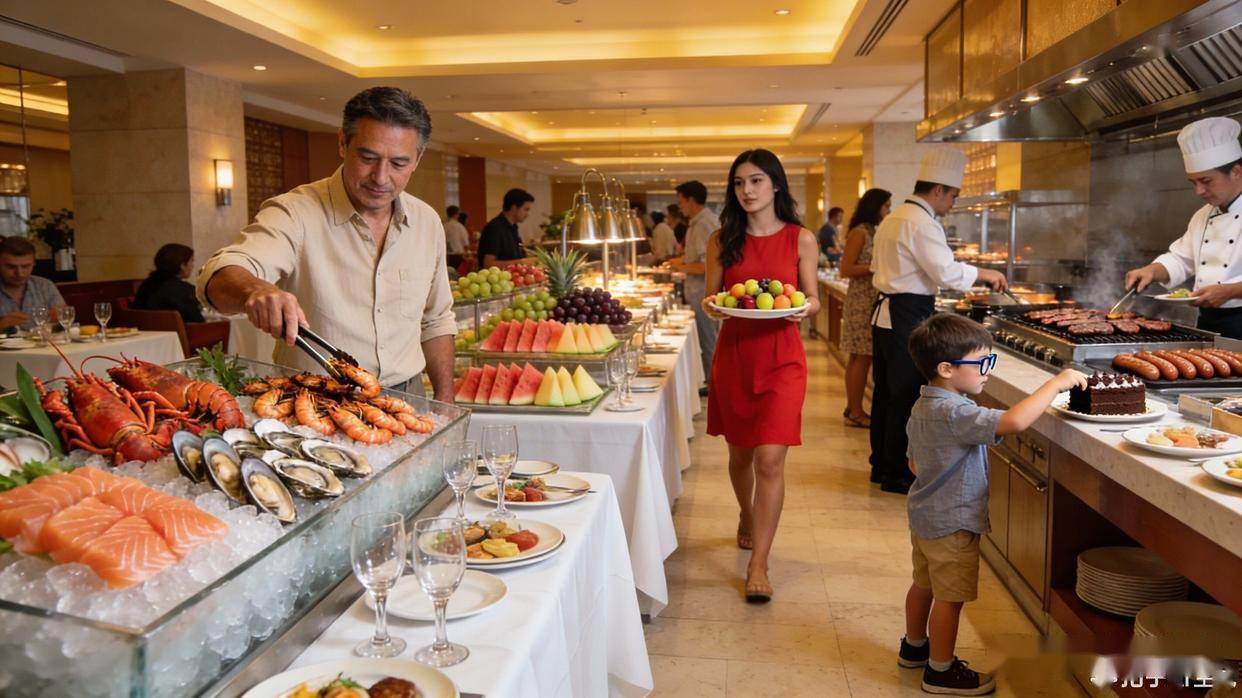
Core Insights - The article reveals the hidden profit mechanisms of buffet restaurants, highlighting how they exploit consumer behavior to maximize earnings while minimizing costs. Group 1: Buffet Pricing and Cost Structure - Buffet pricing appears high, but food costs only account for 35%-40% of the total price, meaning customers often consume less value than they perceive [3] - Customers tend to overestimate their consumption capacity, leading to waste, as they fill up on appetizers before reaching more expensive items [3][6] Group 2: Food Quality and Safety - The quality of food served in buffets is often lower than expected; for example, salmon may be made from trimmings, and shrimp is typically frozen [4] - While the food meets safety standards, it may lack in taste and nutritional value, leading to discomfort after meals [4][6] Group 3: Business Strategies and Profit Maximization - Buffet restaurants leverage social media for marketing, using low introductory prices to attract large crowds and achieve high table turnover rates, which can exceed 300 customers per day [6] - Additional revenue is generated through strategies like time limits and upselling, which encourage customers to spend more [7] Group 4: Consumer Tips for Buffets - To maximize value, consumers are advised to arrive hungry, prioritize high-cost items like seafood, and take smaller portions to avoid waste [7][8] - Choosing reputable restaurants can ensure better food quality and safety, despite potentially higher costs [8]
海南省市场监督管理局关于20批次不合格食品情况的通告(2025年第26期)
Zhong Guo Zhi Liang Xin Wen Wang· 2025-11-11 06:50
Core Points - The Hainan Provincial Market Supervision Administration reported that out of 1456 food samples tested, 20 batches were found to be non-compliant with food safety standards [1] Microbial Contamination Issues - A restaurant in Haikou was found to use reusable dining utensils that contained coliform bacteria exceeding national food safety standards [1] Pesticide Residue Exceedances - Multiple vendors were cited for selling fruits and vegetables with pesticide residues above the permissible limits, including: - A fruit store in Qionghai selling Wokan with residues of benzimidazole and bifenthrin [1] - A vegetable stall in Wenchang selling carrots with imidacloprid residues [1] - A vendor in Sanya selling ordinary cabbage with flonicamid residues [1] - A stall in Ding'an selling yellow bean sprouts with 6-benzyladenine residues [1] - A fruit shop in Wanning selling Wokan with similar pesticide issues [1] - A vegetable stall in Danzhou selling carrots with imidacloprid residues [1] - A vendor in Wenchang selling bok choy with flonicamid residues [1] - A pharmacy chain in Haikou selling yellow bean sprouts with 6-benzyladenine residues [1] Veterinary Drug Residue Exceedances - Several seafood vendors were found to have shrimp and other products with veterinary drug residues exceeding safety standards, including: - A vendor in Dongfang selling shrimp with furazolidone residues [1] - A honey product from Hainan Agricultural Reclamation with chloramphenicol residues [1] - A vendor in Haikou selling loach with enrofloxacin residues [1] - A seafood market vendor selling grass shrimp with multiple antibiotic residues [1] - Another vendor in Dongfang with shrimp also exceeding furazolidone limits [1] Fungal Toxin Issues - A vendor in Wanning was found to sell peanuts with aflatoxin B1 levels exceeding safety standards [1] Food Additive Overuse - A shop in Haikou was cited for selling white angelica with sulfur dioxide residues above the permissible limit [1] Quality Standards Non-compliance - A store in Haikou was found to sell sunflower seeds with peroxide values exceeding safety standards [1] - Another store in Haikou selling dried snacks also had similar peroxide value issues [1] Heavy Metal Exceedances - A seafood vendor in Tunchang was found to sell black pomfret with cadmium levels exceeding safety standards [1] Other Issues - A restaurant in Haikou was found to use reusable dining utensils with residual anionic synthetic detergents exceeding safety standards [1]
昆明市场价格大降!即将迎来最佳品尝期
Sou Hu Cai Jing· 2025-10-16 05:56
Core Viewpoint - The seafood market in Kunming is experiencing a price drop following the National Day and Mid-Autumn Festival, with significant reductions in the prices of various seafood, particularly hairy crabs, due to abundant supply and expected further declines by the end of the month [1][5][13]. Price Trends - Various seafood prices have decreased, with hairy crabs being the most notable, currently priced at 28 yuan, 38 yuan, and 48 yuan for different sizes, down by 2-3 yuan compared to the National Day period [5][6]. - The price of hairy crabs is expected to drop further by the end of October, with predictions of 4.5 taels crabs potentially falling from 48 yuan to around 40 yuan each [5][6]. - Other seafood prices have also decreased, such as large prawns at 70 yuan per kilogram (down from 75-80 yuan) and sea bass from 48-50 yuan to 45 yuan per kilogram [5][6]. Market Supply and Demand - The market is currently well-supplied with seafood, particularly hairy crabs, which are expected to have better quality and taste as the month progresses [1][13]. - The supply of hairy crabs is primarily from Jiangsu, with prices ranging from 18 to 58 yuan each, and the market is anticipating the arrival of crabs from Hubei [13]. Consumer Behavior - The introduction of live cooking services at stores like Hema Fresh has enhanced consumer experience and boosted sales, making it convenient for busy customers [11]. - Special promotions, such as crab bundles at discounted prices, have attracted younger consumers, indicating a shift in purchasing behavior towards value-oriented options [9]. Availability of Yangcheng Lake Crabs - The renowned Yangcheng Lake hairy crabs are notably scarce in the Kunming market, primarily due to limited supply directed towards major cities like Beijing and Shanghai [14][15]. - Factors affecting the availability include a slower growth rate this year and potential logistical issues with middlemen delaying shipments [15][16]. - The total expected production of Yangcheng Lake hairy crabs for the year is approximately 10,350 tons, with specific harvest timelines outlined [16].
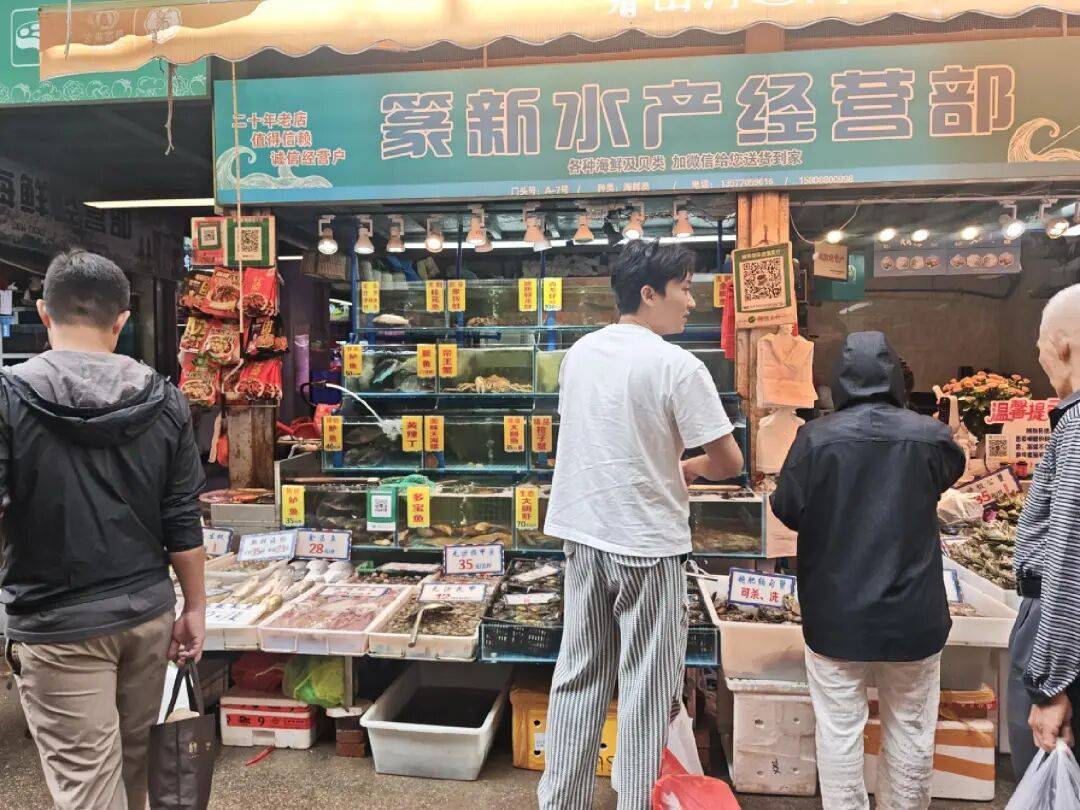
长沙农贸市场假日供货充足 蔬菜、水果等价格整体平稳
Sou Hu Cai Jing· 2025-10-05 13:58
Core Insights - The agricultural market in Changsha is experiencing strong supply and demand during the National Day and Mid-Autumn Festival, with effective supply management through information technology [1][3]. Group 1: Vegetable Market - Prices for certain vegetable varieties such as green peppers, bitter melons, and silk gourds have seen a slight increase, but overall wholesale prices remain within a reasonable range [1]. - The average daily trading volume at the Changsha Haijixing wholesale market has reached over 13 million kilograms since the holiday period began [1]. Group 2: Seafood Market - The supply of various seafood products is abundant, with crabs, Pacific white shrimp, and other seafood being particularly popular among consumers [3]. - Due to higher temperatures this year, crabs have been released later than usual, maintaining high prices; for instance, a 125-gram crab is priced at 25 yuan each [3]. Group 3: Fruit Market - Some fruit stores are offering promotional gift boxes for the holidays, with discounts on products like pomelos, coconuts, and durians [3]. - Specific prices include 9.9 yuan for two red heart pomelos from Fujian and 19.9 yuan for 500 grams of imported durian from Vietnam [3].