
机器人主题ETF

Search documents
基金双周报:ETF市场跟踪报告-20260323
Ping An Securities· 2026-03-23 07:26
1. Report Industry Investment Rating No information about the industry investment rating is provided in the content. 2. Core Viewpoints of the Report - The performance of ETF products in the past two weeks was poor. Among domestic major broad - based ETFs, CSI A50 had the smallest decline, and among industry and theme products, new energy theme ETFs had the largest increase [2][9]. - In the past two weeks, among domestic major broad - based ETFs, the net inflow of funds into Science and Technology Innovation 50, SSE 50, CSI 500, and SSE - SZSE 300 ETFs ranked among the top [2][9]. - The net outflow of funds from major broad - based ETFs in the past two weeks slowed down. The funds of SSE - SZSE 300, SSE 50, and CSI 500 ETFs turned into net inflow, the net outflow of funds from CSI 1000/CSI 2000 and Science and Technology Innovation/ChiNext ETFs slowed down, and the net outflow of funds from A - series ETFs accelerated [10]. - In 2025, the technology theme ETF had a large cumulative net inflow of funds. Since this year, the technology and cyclical theme ETFs have had a large net inflow of funds. In the past two weeks, the inflow of funds into pharmaceutical, military, and new energy ETFs slowed down, the funds of dividend, consumption, and other large - manufacturing ETFs turned into net inflow, and the funds of cyclical, financial real - estate, and technology ETFs turned into net outflow [15]. - Since 2025, the credit bond ETF has had a large net inflow of funds, followed by the treasury bond ETF. In the past two weeks, the short - term financing ETF's funds turned into net inflow, the local government bond ETF's funds accelerated net inflow, the convertible bond ETF's funds turned into net outflow, the credit bond and treasury bond ETF's funds accelerated outflow, and the net outflow of funds from the policy - financial bond ETF slowed down [15]. - The daily average trading volume of pharmaceutical and new energy ETFs increased significantly in the past two weeks, the daily average trading volume of consumption and financial real - estate ETFs increased, and the daily average trading volume of other large - manufacturing, military, technology, and cyclical ETFs decreased [18]. - As of March 20, 20 new ETFs were newly established in the market in the past two weeks, with a total issuance share of 6715 million, all of which were stock ETFs. Compared with the end of 2025, the scale of commodity ETFs, industry + dividend ETFs, and QDII - ETFs increased by 32.78%, 13.10%, and 2.11% respectively, while the scale of bond ETFs and broad - based ETFs decreased by 12.51% and 43.21% respectively [22]. - As of March 20, Huaxia Fund had the largest on - exchange ETF scale, reaching 70.3557 billion yuan; the ETF management scale of Guotai Fund has expanded by more than 2.7 billion yuan since the beginning of this year [23]. 3. Summary According to the Directory 3.1 ETF Market Review - **Performance and Fund Flow**: As of March 20, the performance of ETF products in the past two weeks was poor. Among domestic major broad - based ETFs, CSI A50 had the smallest decline, and among industry and theme products, new energy theme ETFs had the largest increase. In the past two weeks, among domestic major broad - based ETFs, the net inflow of funds into Science and Technology Innovation 50, SSE 50, CSI 500, and SSE - SZSE 300 ETFs ranked among the top. The inflow of funds into pharmaceutical, military, and new energy ETFs slowed down, the funds of dividend, consumption, and other large - manufacturing ETFs turned into net inflow, the funds of cyclical, financial real - estate, and technology ETFs turned into net outflow. For bond ETFs, the short - term financing ETF's funds turned into net inflow, the local government bond ETF's funds accelerated net inflow, the convertible bond ETF's funds turned into net outflow, the credit bond and treasury bond ETF's funds accelerated outflow, and the net outflow of funds from the policy - financial bond ETF slowed down [2][9][15]. - **Product Structure Distribution**: As of March 20, 20 new ETFs were newly established in the market in the past two weeks, with a total issuance share of 6715 million, all of which were stock ETFs. Compared with the end of 2025, the scale of commodity ETFs, industry + dividend ETFs, and QDII - ETFs increased by 32.78%, 13.10%, and 2.11% respectively, while the scale of bond ETFs and broad - based ETFs decreased by 12.51% and 43.21% respectively [22]. - **Fund Manager Scale Distribution**: As of March 20, Huaxia Fund had the largest on - exchange ETF scale, reaching 70.3557 billion yuan; the ETF management scale of Guotai Fund has expanded by more than 2.7 billion yuan since the beginning of this year [23]. 3.2 Classification - based ETF Tracking - **Technology Theme ETF**: Products tracking the Hang Seng Technology Index had the highest net inflow of funds in the past two weeks, while products tracking the Hong Kong Stock Connect Internet Index had a net outflow of funds [29]. - **Dividend Theme ETF**: Products tracking the Dividend Low - Volatility Index had the highest net inflow of funds in the past two weeks, while products tracking the Guoxin Hong Kong Stock Connect Central Enterprise Dividend Index had a net outflow of funds [31]. - **Consumption Theme ETF**: Products tracking the S&P 500 Consumer Select Index had a relatively high premium rate; ETFs tracking the CSI Agriculture Index had the highest net inflow of funds in the past two weeks, while products tracking the CSI 800 Consumption Index had a net outflow of funds [34]. - **Pharmaceutical Theme ETF**: ETFs tracking the CSI Medical Index had the highest net inflow of funds in the past two weeks, while products tracking the medical device index had a net outflow of funds [36]. - **Large - Manufacturing Theme ETF**: Products tracking the power index had the highest net inflow of funds in the past two weeks, while products tracking the CS Battery Index had a net outflow of funds [39]. - **QDII ETF**: Products tracking the Hang Seng Technology Index had the highest net inflow of funds in the past two weeks, while ETF products tracking the Hang Seng China Enterprises Index had a net outflow of funds [42]. 3.3 Popular Theme ETF Tracking - **AI Theme ETF**: The average return of AI theme products in the past two weeks was - 2.89%, and the funds had a net outflow of 4.218 billion yuan. The products with a relatively high proportion of AI - themed stocks were those tracking the Hong Kong Stock Connect Internet, Hang Seng Internet Technology, CS Artificial Intelligence, etc. [48][53]. - **Robot Theme ETF**: The average return of robot theme products in the past two weeks was - 6.81%, and the funds had a net outflow of 488 million yuan. The products with a relatively high proportion of robot - themed stocks were those tracking the robot and robot industry [55][56]. - **New Energy Theme ETF**: The average return of new energy theme products in the past two weeks was 3.27%, and the funds had a net inflow of 1.126 billion yuan. The products with a relatively high proportion of new - energy - themed stocks were those tracking new energy batteries, CS batteries, etc. [58][59]. - **Satellite and Commercial Space Theme ETF**: The average return of satellite and commercial space theme products in the past two weeks was - 9.35%, and the funds had a net outflow of 661 million yuan. The products tracking satellite communication, satellite industry, and Guozheng Aerospace had such characteristics [60][64]. - **Commodity ETF**: The average return of commodity ETFs in the past two weeks was - 0.89%, and the funds had a net inflow of 6.011 billion yuan. Products tracking gold, non - ferrous metal futures, etc. were included. Since the beginning of this year, gold ETFs have had a large net inflow of funds, with a large net outflow on February 3 [65][70]. - **Central Huijin, Guoxin, and Chengtong Holdings ETF**: As of the middle of 2025, the scale of ETFs held by Central Huijin, Guoxin, and Chengtong was 39.1336 billion shares in total; in the past two weeks, the funds had a net outflow of 2.3474 billion yuan [73].
“马年科技春晚” 让买机器人的股民都松了一口气?
2 1 Shi Ji Jing Ji Bao Dao· 2026-02-19 14:04
Core Viewpoint - The 2023 CCTV Spring Festival Gala has been referred to as the "Technology Spring Festival Gala," showcasing a significant presence of robots throughout the event [1] Group 1: Robot Industry and Market Trends - The event featured various robots, including humanoid robots performing martial arts, participating in skits, and dancing in musical performances [1] - According to Wind data, there are approximately 13 ETFs directly related to the robotics theme in the market, which collectively saw a net inflow of about 2.577 billion yuan during the week leading up to the Spring Festival (February 9 to February 13) [1] - Specifically, the Huaxia CSI Robotics ETF experienced a net inflow of 1.433 billion yuan, while the E Fund National Robotics Industry ETF saw a net inflow of approximately 0.662 billion yuan [1] - Other ETFs, such as Tianhong CSI Robotics ETF and Invesco Great Wall National Robotics Industry ETF, also received over 0.1 billion yuan in net inflows [1]

盘前资讯|影视主题ETF大涨 吸引超13亿元资金布局
Sou Hu Cai Jing· 2026-02-11 01:31
Group 1 - The AI application-related sectors experienced a significant surge on February 10, with the film ETFs (159855) hitting the daily limit and another film ETF (516620) rising over 9%, collectively attracting more than 1.3 billion yuan in net inflows [1] - In addition to film-themed ETFs, various other thematic ETFs, including those focused on gold, robotics, media, satellites, chemicals, and rare earths, also saw substantial capital allocation, while leading broad-based ETFs like the HuShen 300 ETF (510300) and the CSI 500 ETF (510500) experienced net outflows exceeding 1.4 billion yuan each [1] - The People's Bank of China released its monetary policy execution report for the fourth quarter of 2025, emphasizing the continuation of a moderately accommodative monetary policy aimed at stabilizing economic growth and ensuring reasonable price recovery, while carefully managing the implementation of policies based on domestic and international economic conditions [1]
6万亿里程碑!2025成ETF市场史上最强大年,深市跑出三大创新赛道
Sou Hu Cai Jing· 2026-02-09 13:25
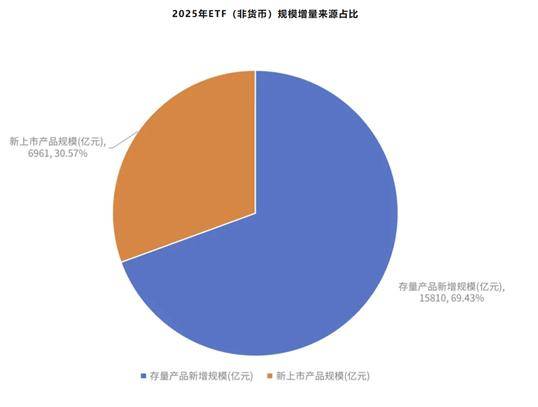
Core Insights - The Shenzhen Stock Exchange has released the "ETF Market Development White Paper (2025)", outlining the innovative trajectory of new ETF products driven by policy guidance and market demand [1] - By the end of 2025, the total scale of domestic ETFs is expected to exceed 6 trillion yuan, with an annual growth rate of 62% [2] Group 1: ETF Product Development - The white paper highlights a clear strategy for the development of ETFs in Shenzhen, focusing on the economic transformation and reform of the ChiNext market, with the introduction of multiple ChiNext 50 and ChiNext Composite Index ETFs [1] - The launch of thematic ETFs in artificial intelligence and robotics allows investors to easily share in the benefits of industrial transformation [1] - The bond ETF sector has seen significant innovation, with the introduction of 4 benchmark credit bond ETFs and 10 sci-tech bond ETFs, totaling a scale of 203.1 billion yuan, which is a 4.35 times increase compared to before listing [1] Group 2: Market Growth and Structure - The growth of the ETF market is primarily driven by the increase in existing product scales and the issuance of high-quality new products, contributing nearly 70% to the market increment [2] - The structure of new product issuance shows a solid multi-dimensional development pattern, with broad-based ETFs expanding steadily, while industry-themed ETFs have experienced explosive growth, particularly in the technology sector [4] - Strategy ETFs, such as those focused on dividends and free cash flow, have seen a nearly doubling in number, while bond ETFs contributed 489 billion yuan in new issuance [4] Group 3: Institutional Participation - The year 2025 is marked as a significant year for the issuance of new ETF products, with E Fund leading the industry by launching 32 new ETFs [4] - Other major institutions like China Universal Asset Management and Penghua Fund have also contributed significantly, with over 20 new ETFs each [4] - A total of 16 fund companies launched more than 10 new ETFs in the year, indicating a competitive landscape that injects continuous innovation into the ETF market [4]

单日大涨超3%!这类ETF年内合计净流入近475亿元
Guo Ji Jin Rong Bao· 2025-12-05 00:13
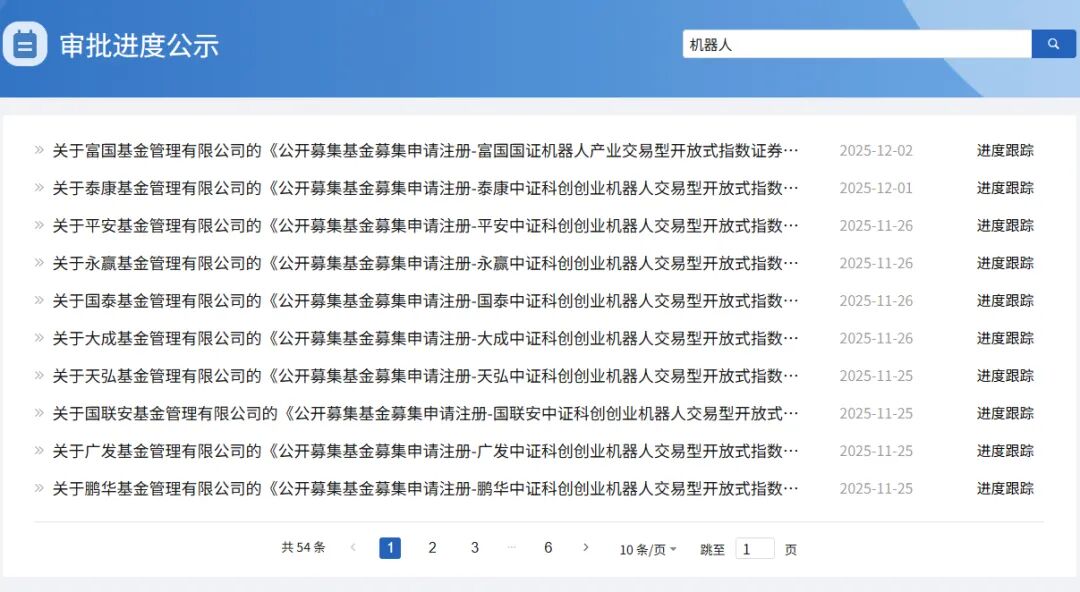
Core Viewpoint - The robot-themed ETFs have experienced a significant surge, driven by increased market attention and investment inflows, indicating a growing interest in the robotics sector as commercialization accelerates [1][4]. Group 1: ETF Performance - As of December 4, two robot-themed ETFs rose over 3%, leading the stock ETF rankings, while nine others increased by more than 2% [2][3]. - Year-to-date, the 13 robot-themed ETFs have seen a total net inflow of nearly 47.5 billion yuan, with the top two ETFs, 华夏机器人 ETF and 易方达机器人 ETF, attracting 19.09 billion yuan and 12.35 billion yuan respectively [3]. Group 2: Market Dynamics - The performance disparity among robot-themed ETFs is attributed to differences in the underlying indices they track, with 国证机器人产业指数 showing higher gains compared to 中证机器人指数 [3]. - The market currently has 13 robot-themed ETFs, with the largest being 华夏机器人 ETF at 22.8 billion yuan and the second being 易方达机器人 ETF at 13.3 billion yuan [3]. Group 3: Institutional Interest - There has been a notable increase in the number of robot-themed ETFs submitted for regulatory approval, with 17 new products reported in the fourth quarter alone, reflecting strong institutional interest in the sector [4][5]. - The growing focus on robotics is seen as a response to policy support for hard technology innovation and the integration of AI and robotics, highlighting the sector's significant growth potential [5]. Group 4: Investment Strategy - Investors are advised to consider the tracking indices when selecting ETFs, with a preference for those tracking the 国证机器人产业指数 for humanoid robots and 中证机器人指数 for industrial automation [6]. - Key factors for ETF selection include the management capability of the fund company, product scale, liquidity, and cost efficiency, which are crucial for long-term investment success [6].
热门科技类ETF四季度表现承压,调整何时结束?
Guo Ji Jin Rong Bao· 2025-11-19 07:47
Core Viewpoint - The technology sector is experiencing a significant adjustment, with a shift towards value stocks, leading to a debate on whether the market style has switched [1][4]. Market Performance - As of November 18, multiple robotics-themed ETFs have dropped over 14% in the fourth quarter, while previously strong sectors like AI are also seeing declines [2][4]. - The three major indices of the Sci-Tech Innovation Board have experienced varying degrees of decline, with the Sci-Tech 50 Index down 9.19%, the Sci-Tech 100 Index down 8.16%, and the Sci-Tech 200 Index down 6.5% [2][3]. - Despite the recent downturn, the Sci-Tech 50 Index has risen over 37% year-to-date, with the Sci-Tech 100 and 200 indices showing gains exceeding 45% [2]. Factors Influencing Adjustments - The recent adjustments in the technology sector are attributed to three main factors: significant gains in tech stocks since Q2 leading to profit-taking, capital flowing into defensive sectors, and the impact of declining US tech stocks [3][4]. - The current market environment has seen a shift towards traditional value stocks, with sectors like coal, energy, and rare metals leading the market, with the largest ETF in this category rising over 11% [4]. Investment Strategies - Investment professionals suggest a cautious approach to technology ETFs, recommending a gradual accumulation strategy during this adjustment phase [1][6]. - The technology sector is still viewed as a long-term investment focus, supported by policy and industry fundamentals, despite short-term volatility [6]. Future Outlook - Analysts believe that the technology sector may stabilize around Q2 of the following year, contingent on significant policy stimuli or breakthroughs in technology [6]. - The current valuation of the Sci-Tech 50 Index is around 152 times PE (TTM), while the Sci-Tech 100 and 200 indices are above 200 times, indicating a potential caution among investors due to high valuations [4][5].
基金双周报:ETF市场跟踪报告-20251110
Ping An Securities· 2025-11-10 07:42
ETF Market Overview - As of November 7, the performance of ETF products varied, with the CSI 2000 showing the highest increase among major broad-based ETFs, while the new energy theme ETF had the largest increase among industry and thematic products [2][9] - In the past two weeks, major broad-based ETFs such as CSI A500, CSI 2000, and Sci-Tech 50 ETF saw net inflows, while the ChiNext ETF experienced the largest net outflow [2][9] - The recent trend indicates a shift from net inflows to net outflows in cyclical and military industry ETFs, while pharmaceutical ETFs saw accelerated inflows [2][16] ETF Fund Flow Analysis - The cumulative fund flow for broad-based ETFs has shown a trend of outflows turning into inflows and then back to outflows since the beginning of 2025, with A-series ETFs consistently experiencing outflows [10] - Recent net outflows for broad-based ETFs have slowed down, with CSI 1000 and CSI 2000 transitioning from net outflows to net inflows [10][16] - As of November 7, the total number of newly established ETFs in the past two weeks was 16, with a total issuance of 6.53 billion units, of which 13 were stock ETFs and 3 were QDII ETFs [24] Thematic ETF Tracking - In the technology theme ETFs, products tracking the Hang Seng Technology index saw the highest net inflows, while those tracking consumer electronics experienced net outflows [30] - For dividend theme ETFs, products tracking the S&P Hong Kong Stock Connect Low Volatility Dividend Index had the highest net inflows, while those tracking the dividend index saw net outflows [32] Popular Thematic ETFs - AI-themed ETFs, which have a high proportion of AI stocks, experienced an average return of -2.99% with a net inflow of 1.56 billion [2] - New energy-themed ETFs had an average return of 7.67% but saw a net outflow of 5.72 billion [2] - The total holdings of ETFs by Central Huijin, Guoxin, and Chengtong reached 391.34 billion units, with a net outflow of 2.11 billion in the past two weeks [2]
基金双周报:ETF市场跟踪报告-20251027
Ping An Securities· 2025-10-27 10:04
ETF Market Overview - As of October 24, the performance of ETF products varied, with the Shanghai 50 index showing the highest increase among major broad-based ETFs, while the dividend-themed ETFs had the largest gains among industry and thematic products [2][9] - In the past two weeks, major broad-based ETFs such as the CSI A50, CSI 2000, and Shanghai 50 saw net inflows, while the CSI A500 ETF experienced the largest net outflow [2][9] - The recent trend indicates a shift in fund flows, with the New Energy ETF moving from net inflow to net outflow, while the Pharmaceutical ETF transitioned from net outflow to net inflow [16] ETF Fund Flow Analysis - The cumulative fund flow for major broad-based ETFs has shown a trend of outflows turning into inflows and then back to outflows since the beginning of 2025, with significant inflows into the CSI 300 ETF in April, followed by continued outflows in subsequent months [10][12] - Recent data indicates that, apart from the Shanghai 50 ETF, which shifted from net outflow to net inflow, other major broad-based ETFs have transitioned from net inflows to net outflows in the past two weeks [10][12] Thematic ETF Tracking - For technology-themed ETFs, those tracking the Hang Seng Technology index saw significant net inflows, while products tracking the CS Artificial Intelligence index experienced net outflows [32] - Dividend-themed ETFs tracking the low-volatility dividend index had the highest net inflows, whereas those tracking the dividend index saw net outflows [35] New ETF Products and Market Growth - In the past two weeks, a total of 8 new ETFs were launched, with a combined issuance of 2.997 billion shares, all of which were stock ETFs [26] - Compared to the end of 2024, the scale of various ETFs has increased significantly, with bond ETFs, commodity ETFs, industry + dividend ETFs, QDII ETFs, and broad-based ETFs growing by 293.33%, 197.82%, 112.34%, 52.18%, and 13.97% respectively [26] Fund Management Scale Distribution - As of October 24, Huaxia Fund has the largest ETF scale at 912.812 billion, with E Fund's ETF management scale expanding by over 250 billion compared to the previous year [27][28]
三季度末ETF总规模创历史新高
Zheng Quan Ri Bao· 2025-10-09 16:16
Core Viewpoint - The rapid growth of ETF (Exchange-Traded Fund) investments in China is driven by policy support and increasing investor demand, with the total market size reaching a historic high of 5.63 trillion yuan by the end of Q3 2023 [1][2]. Group 1: Growth Metrics - As of September 30, 2023, the total ETF market size reached 5.63 trillion yuan, an increase of 1.9 trillion yuan since the beginning of the year, representing a growth rate of over 50% [2]. - The total number of ETF shares reached 3.01 trillion, with an increase of 353 billion shares since the start of the year, marking a growth rate of over 13% [2]. - The ETF market has shown a trend of accelerated growth, with the time taken to add each trillion yuan to the market size decreasing over the years [2]. Group 2: Factors Driving Growth - The development of ETFs is supported by policy incentives, such as the establishment of a fast-track approval process for ETFs and initiatives from the China Securities Regulatory Commission to promote high-quality development of index investments [2]. - The increasing variety of ETF products, including industry-specific and thematic ETFs, has catered to diverse investor needs, enhancing the appeal of ETFs [2][3]. - Institutional investors, referred to as the "national team," are also contributing to the growth of ETFs by increasing their holdings, which helps stabilize the capital market [2]. Group 3: Product Characteristics - ETFs are characterized by low fees and risk diversification, making them accessible for ordinary investors to capture sector rotation opportunities [3]. - Compared to actively managed funds, stock ETFs offer significant long-term cost advantages, and they cover multiple stocks, effectively spreading investment risk [3]. Group 4: Market Composition - As of September 30, 2023, stock ETFs accounted for approximately 66% of the total ETF market size, reaching 3.71 trillion yuan, while bond ETFs surpassed 690 billion yuan, making up about 12% of the total [4]. - The number of "giant" ETFs, defined as those with over 100 billion yuan in assets, has increased, with seven such products currently available in the market [4][5]. - These giant ETFs are primarily broad-based, allowing investors to capture overall market gains, and they are seen as advantageous compared to actively managed funds [4].
基金双周报:ETF市场跟踪报告-20250922
Ping An Securities· 2025-09-22 07:12
ETF Market Overview - As of September 19, the overall performance of ETF products in the past two weeks has been good, with the Sci-Tech 50 showing the highest increase among major broad-based ETFs, while technology sector ETFs had the largest gains among industry and thematic products [3][10] - In the past two weeks, major broad-based ETFs, except for the ChiNext Index, experienced net outflows, with the Sci-Tech 50 ETF having the largest net outflow [3][10] Fund Flow Analysis - In the past two weeks, the military industry ETF shifted from net inflow to net outflow, while funds accelerated into dividend, pharmaceutical, large manufacturing, financial real estate, and new energy ETFs, with inflow speeds for cyclical, consumer, and technology ETFs slowing down [16] - For bond ETFs, there was a significant inflow into credit bond ETFs, while convertible bonds, short-term financing, and government bond ETFs shifted from net inflow to net outflow, with policy financial bonds experiencing accelerated net outflows and local government bonds seeing slowed net inflows [16] ETF Product Structure - As of September 19, a total of 27 new ETFs were established in the past two weeks, with a total issuance of 48.362 billion units, consisting of 14 pure bond ETFs and 13 stock ETFs [19] - Compared to the end of 2024, the scale of various ETFs has increased, with bond ETFs, commodity ETFs, industry + dividend ETFs, QDII ETFs, and broad-based ETFs increasing by 237.50%, 111.89%, 94.45%, 46.09%, and 11.03% respectively [19] Thematic ETF Tracking - In the past two weeks, products tracking semiconductor-related indices, such as the China-Korea Semiconductor, performed well, while funds tracking the National Chip Index experienced net outflows [25][28] - The AI-themed ETFs, which have a high proportion of AI stocks, had an average return of 6.67% in the past two weeks, with a net outflow of 1.557 billion yuan [3] - The robotics-themed ETFs showed an average return of 8.30% in the past two weeks, with a net inflow of 8.473 billion yuan [3] Fund Manager Scale Distribution - As of September 19, Huaxia Fund had the largest ETF on-market scale at 863.966 billion yuan, while E Fund's ETF management scale expanded by over 370 billion yuan compared to one year ago [20]