
科创创新药ETF

Search documents
1月13日盘后播报
Mei Ri Jing Ji Xin Wen· 2026-01-13 09:51
Market Overview - A-shares opened high but closed lower, with the Shanghai Composite Index down 0.64%, Shenzhen Component Index down 1.37%, and ChiNext Index down 1.96%. The total trading volume in the Shanghai and Shenzhen markets was approximately 3.70 trillion yuan, showing a slight increase compared to the previous trading day. More than 3,700 stocks declined [1] Industry Insights - The commercial aerospace sector saw significant activity, leading to a market pullback. However, this correction is considered normal after continuous gains, and the spring market trend is expected to continue. Investors are advised to focus on technology growth and related sectors such as commercial aerospace, AI applications, and new energy, while also considering cash flow/dividend assets to mitigate market volatility [1] - The medical services, precious metals, and GEO concept stocks were among the top gainers today, while commercial aerospace, semiconductors, and chemical fiber industries experienced the largest declines [1] Pharmaceutical Sector Highlights - The pharmaceutical sector led the market gains due to several key developments: 1. Rongchang Bio signed an exclusive licensing agreement with AbbVie for RC148, with a total transaction value of 5.6 billion USD, highlighting the significant market potential of the PD-1/VEGF dual antibody track [2] 2. WuXi AppTec, a leading CXO, announced its 2025 performance forecast, expecting annual revenue of 45.456 billion yuan, a year-on-year increase of 15.84%, exceeding expectations [2] 3. Tempus AI reported better-than-expected earnings, with diagnostic business revenue of 955 million USD, a year-on-year growth of 111%, indicating ongoing global advancements in AI medical technology [2] - The pharmaceutical sector's global competitiveness continues to strengthen, with ongoing international expansion and commercial profitability [2] Power Grid Sector Developments - The domestic power grid performed relatively well in the afternoon, driven by the demand for renewable energy consumption from large-scale wind and solar projects. The vast territory of China necessitates long-distance transportation, which is expected to further stimulate demand for UHV (Ultra High Voltage) construction. During the 14th Five-Year Plan period, UHV DC is expected to maintain an annual approval pace of 3 to 4 lines, while UHV AC is anticipated to approve an average of 2 large projects annually [2] - In North America, explosive growth in AIDC (Artificial Intelligence Data Center) is creating new electricity demand, and China's complete power grid industry chain, efficient delivery, and rich overseas experience position it as a key supplier to fill this gap [2]


年度涨幅46.3% 构筑中国科创势力“标杆性指数” 科创综指成“硬科技”价值发现与配置核心渠道
Shang Hai Zheng Quan Bao· 2026-01-05 18:28
Core Insights - The Sci-Tech Innovation Board (STAR Market) has seen significant growth, with the total scale of related ETFs reaching approximately 300 billion yuan by December 31, 2025, and the number of products increasing to 106, three times that of the end of 2024 [1][6] - The STAR Market Composite Index (Sci-Tech Composite Index) achieved a remarkable annual increase of 46.3% in 2025, outperforming major broad-based indices, reflecting a revaluation of "hard technology" assets [1][3] - The index has become a benchmark for capturing the pulse of technological growth and sharing the dividends of innovation, representing a diverse range of companies from leading hard tech firms to specialized small giants [2][7] Industry Overview - The STAR Market currently includes 600 listed companies with a total market capitalization exceeding 10 trillion yuan, with the Sci-Tech Composite Index covering 96% of these companies [3][6] - The index system has expanded to include various types of indices, effectively guiding social capital towards new productive forces and enhancing the investment landscape for technology innovation [6][7] - The introduction of multiple indices, such as the Sci-Tech 50, 100, and 200, allows for comprehensive representation of the STAR Market, covering approximately 60% of its securities [3][6] Investment Trends - As of December 30, 2025, 46 fund managers have launched 78 Sci-Tech Composite Index funds, with a total scale of 27.4 billion yuan, indicating strong institutional interest in these products [4][6] - The average return of these products since their launch has reached 43.7%, enhancing investor confidence and interest in the STAR Market [4][6] - Institutional investors, including insurance funds and banks, have steadily increased their holdings in Sci-Tech Composite Index ETFs, recognizing their convenience and long-term investment value [4][7]
ETF日报:市场有望在政策、流动性、基本面三重共振下迎来跨年行情
Xin Lang Cai Jing· 2025-12-19 10:53
Market Overview - The A-share market showed a high-level fluctuation with the Shanghai Composite Index rising by 0.36%, the Shenzhen Component Index increasing by 0.66%, and the ChiNext Index up by 0.49% [1][13] - The total trading volume in the Shanghai and Shenzhen markets reached 1.73 trillion yuan, an increase of 704 billion yuan compared to the previous trading day, with over 4,400 stocks rising [1][13] - The Hong Kong market also saw gains, with the Hang Seng Index up by 0.75% and the Hang Seng Technology Index rising by 1.12% [1][13] Sector Performance - Main capital inflows were observed in sectors such as general equipment, automotive, and retail, while there were outflows from semiconductor, aerospace, and electronics sectors [2][14] - The consumer sector experienced a surge, particularly in retail and duty-free shops, while sectors like Hainan Free Trade Zone, nuclear fusion, rare earth permanent magnets, cross-strait integration, and intelligent driving concepts were active [2][14] Economic Data and Policy Impact - The U.S. inflation data for November showed a significant drop, with the overall CPI year-on-year falling to 2.74%, below the expected 3.06%, which has raised questions about data accuracy due to the government shutdown affecting previous data [3][15] - The Bank of Japan raised its target interest rate by 25 basis points to 0.75%, marking a 30-year high, which aligns with market expectations for ongoing monetary policy normalization [3][15] Innovation Drug Sector - The innovation drug sector is rebounding due to several catalysts, including a recovery in valuation after months of correction and upcoming key clinical data disclosures at the ASCO annual meeting in May 2026 [4][17] - The sector is entering a commercialization phase, with policy support extending from process optimization to full-chain empowerment, enhancing competitiveness [4][17] Hong Kong Technology Sector - The Hong Kong technology market has faced short-term pressure but is expected to rebound, with potential for capital inflows post-Christmas [6][18] - The market anticipates a recovery in January, although the extent of the rebound may be limited [6][18] Commodity Sector - The commodity sector, particularly non-ferrous metals, is performing well due to multiple factors, including a slowdown in U.S. CPI data, which has raised expectations for liquidity easing and supported metal prices [8][20] - The easing of rare earth export controls and a balanced supply-demand situation in industrial metals are also contributing to the sector's strength [8][20] Investment Opportunities - Investors are encouraged to consider ETFs focused on innovation drugs, Hong Kong technology, and commodities, as these sectors show potential for growth and recovery [4][21][22]


天赐良基日报|跨境ETF密集发布溢价提示;又有基金经理自购旗下新基金
Mei Ri Jing Ji Xin Wen· 2025-11-17 09:26
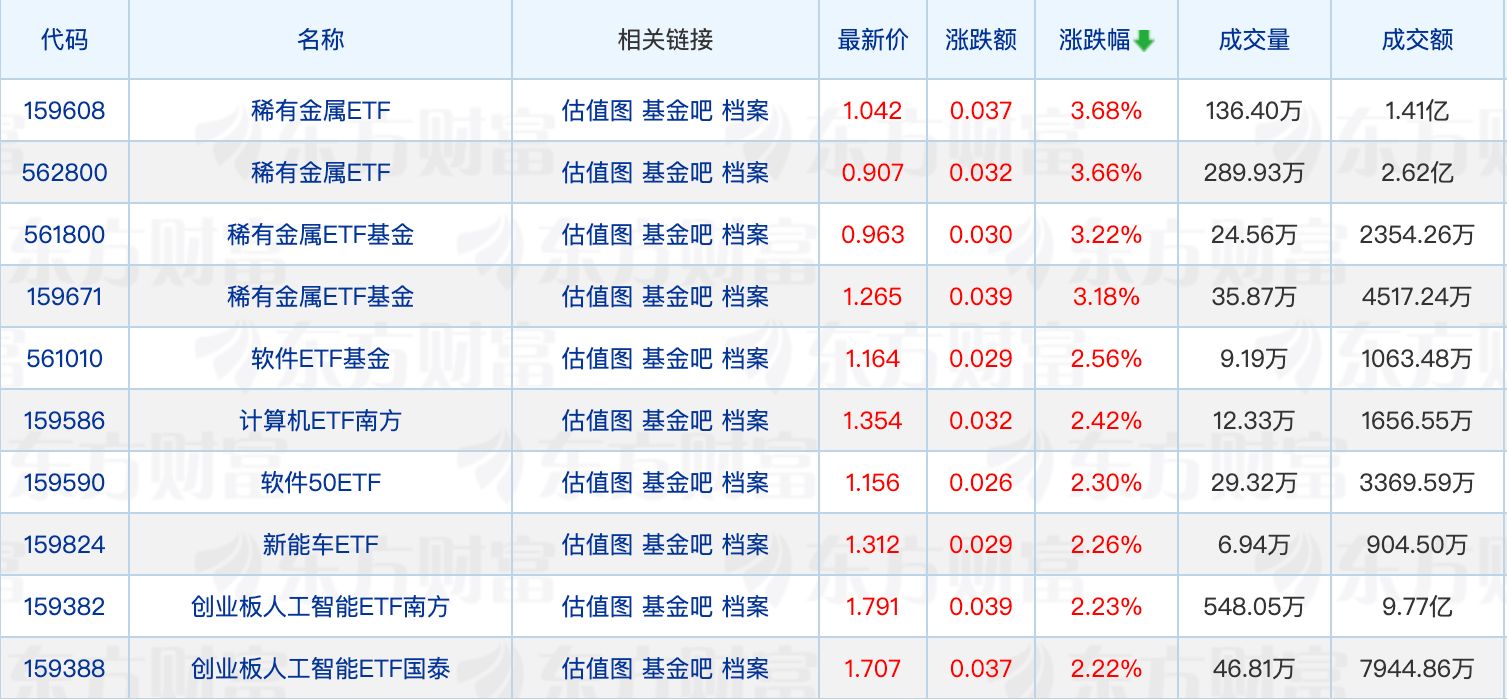
Group 1 - Recent cross-border ETFs have shown varying degrees of premium in the secondary market, with several products announcing premium notices last week, covering themes such as US and Japanese stocks [1] - The number and scale of newly issued ETFs have reached record highs in 2025, with 320 new ETFs launched and a total issuance scale of 249.68 billion yuan, significantly surpassing previous years [2] - As of November 14, 276 new actively managed equity funds have been established this year, with a total issuance scale of 141.068 billion yuan, representing a year-on-year increase of 132.25% [3] Group 2 - Notable fund manager Li Dehui plans to invest 1 million yuan in his newly launched fund, Morgan Huiqi Growth Mixed Fund, which opened for subscription on November 17 [4] - The market experienced a weak fluctuation, with the Shanghai Composite Index down 0.46% and the Shenzhen Component Index down 0.11%, while the total trading volume in both markets was 1.91 trillion yuan, a decrease of 47.3 billion yuan from the previous trading day [5] - Rare metal ETFs collectively strengthened, with the highest increase reaching 3.68% [6] Group 3 - The tungsten price has reached a historical high due to supply contraction and an increase in long-term contract prices, with a recent adjustment of 52,000 yuan/ton, boosting market bullish sentiment [9] - A new mixed securities investment fund, China Europe Medical Biology Mixed Fund, has been launched, managed by Zhao Lei, with a performance benchmark based on the CSI Biomedicine Index and other indices [9]
ETF午评 | 稀有金属板块领涨,稀有金属ETF涨3%
Ge Long Hui· 2025-11-17 04:09
Market Overview - The three major A-share indices collectively declined, with the Shanghai Composite Index down 0.43%, the Shenzhen Component Index down 0.35%, and the ChiNext Index down 0.80% [1] - The North China 50 Index increased by 0.57% [1] - The total trading volume in the Shanghai, Shenzhen, and Beijing markets reached 12,782 billion yuan, an increase of 314 billion yuan compared to the previous day [1] - Over 2,300 stocks in the market experienced gains [1] Sector Performance - The military, energy metals, and Hainan sectors showed gains, while precious metals and photovoltaic sectors underwent adjustments [1] - In the ETF market, the rare metals sector rose, with both the Harvest Fund Rare Metals ETF and the GF Fund Rare Metals ETF increasing by 3% [1] - Military stocks continued their upward trend from last Friday, with the Huaan Fund Aerospace ETF and the Huaxia Fund Aerospace ETF rising by 2.2% and 1.97%, respectively [1] - The software sector strengthened, with the Huaan Fund Software ETF and the E Fund Software ETF both increasing by 2% [1] ETF Performance - The Nikkei 225 ETF, which had the highest premium rate, fell by 3%, with the latest premium/discount rate at 6.24% [1] - Gold stocks experienced a broad decline, with the Gold Stock ETF and Gold Stocks ETF dropping by 2.8% and 2.53%, respectively [1] - The pharmaceutical sector weakened, with the Kexin Innovative Drug ETF from Guotai and the Kexin Innovative Drug ETF from Huitianfu decreasing by 2.7% and 2.46%, respectively [1]
ETF今日收评 | 科创创新药ETF涨超7%,通信相关ETF跌超5%
Mei Ri Jing Ji Xin Wen· 2025-10-31 07:24
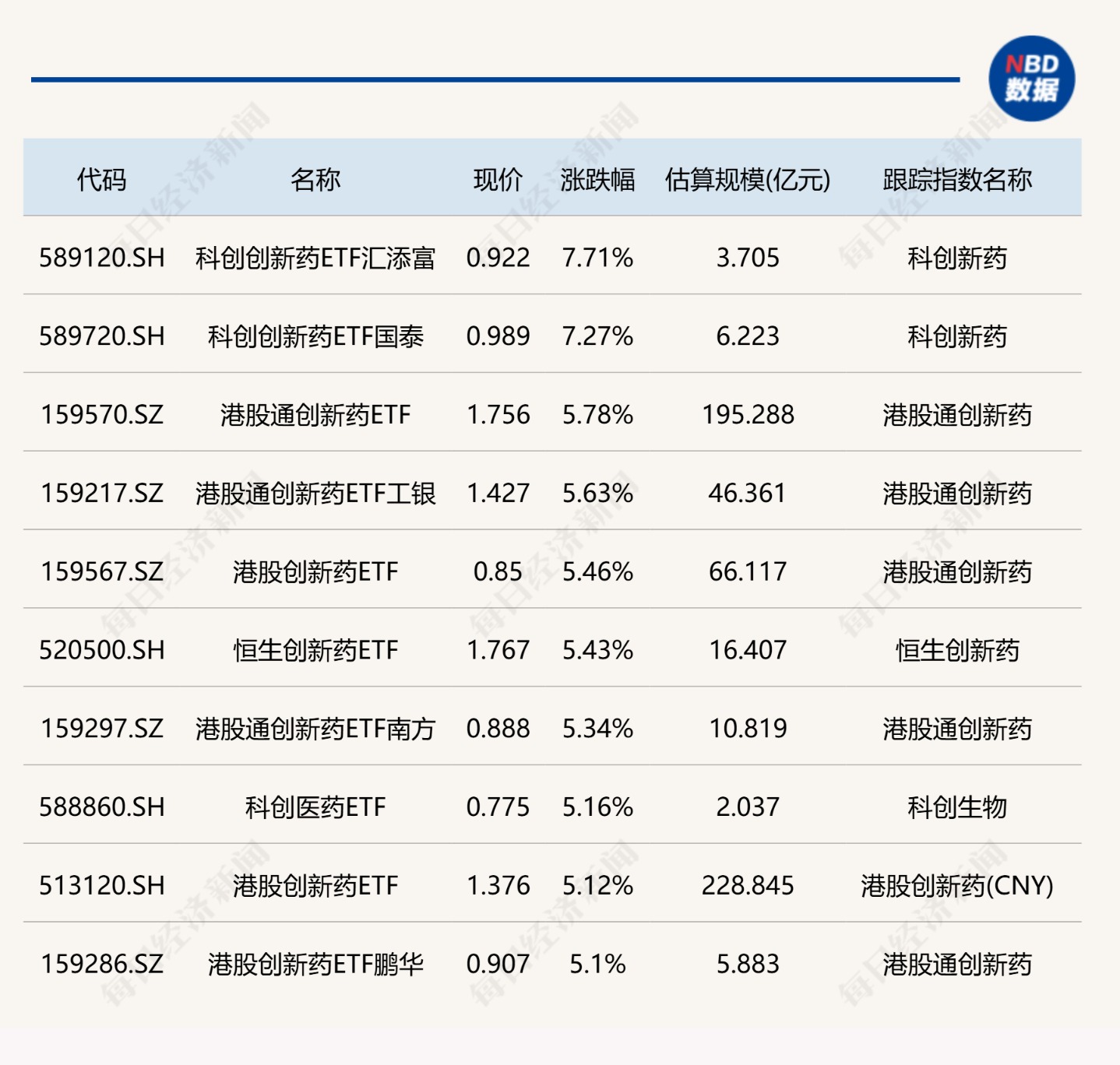
Market Overview - The market experienced a downward trend throughout the day, with all three major indices declining. The pharmaceutical sector showed resilience with an increase, while the software sector was active. Conversely, computing hardware and chip-related stocks faced collective declines [1]. ETF Performance - The Sci-Tech Innovation Drug ETF surged over 7%, indicating strong investor interest in the pharmaceutical innovation sector [1]. - Specific ETFs and their performance include: - Huatai-PineBridge Sci-Tech Innovation Drug ETF: 0.922, up 7.71% [2] - Guotai Junan Sci-Tech Innovation Drug ETF: 0.989, up 7.27% [2] - Hong Kong Stock Connect Innovation Drug ETF: 1.756, up 5.78% [2] - Other ETFs in the innovation drug category also showed positive performance, with increases ranging from 5.1% to 5.78% [2]. Industry Insights - Analysts suggest that China's innovative drug industry is integrating robustly into the global pharmaceutical innovation system. Over the past decade, the industry has shifted from a focus on generic drugs to a significant increase in business development (BD) transactions in global innovative drugs. This transition reflects a move from "following" and "keeping pace" to "leading" in certain areas, supported by policy, clinical breakthroughs, and capital [2].
ETF午评 | 红利板块领涨,煤炭ETF涨2.88%
Sou Hu Cai Jing· 2025-10-23 04:21
Market Overview - The three major A-share indices experienced a collective decline in the morning session, with the Shanghai Composite Index down by 0.66%, the Shenzhen Component Index down by 0.87%, and the ChiNext Index down by 1.1% [1] - The North Stock 50 Index fell by 1.75% [1] - The total trading volume in the Shanghai and Shenzhen markets reached 10,580 billion yuan, a decrease of 290 billion yuan compared to the previous day [1] - Over 3,800 stocks in the market saw declines [1] Sector Performance - Sectors that performed well included Shenzhen state-owned enterprise reform, coal mining and processing, film and television, port shipping, energy metals, and tourism and hotels [1] - Sectors that faced significant declines included engineering machinery, cultivated diamonds, CPO, precious metals, and semiconductors [1] ETF Performance - The dividend sector led the gains, with the Guotai Fund Coal ETF and Guotai Fund Dividend State-Owned Enterprise ETF rising by 2.88% and 1.1%, respectively [1] - Soybean futures strengthened, leading to a 1.4% increase in the Huaxia Fund Soybean Meal ETF [1] - Oil prices rebounded, with the Huatai Fund Energy ETF and Huaxia Fund Petrochemical ETF both increasing by 1% [1] - The electricity sector saw gains, with the Huaxia Fund Green Electricity ETF and the E Fund Green Electricity ETF rising by 1.24% and 1.06%, respectively [1] Hong Kong Market - The innovative drug sector in the Hong Kong market experienced a widespread decline, with the Hang Seng Innovative Drug ETF and the Kexin Innovative Drug ETF falling by 3.65% and 3.54%, respectively [1] - The AI computing power sector also declined, with the communication equipment ETF and communication ETF both dropping by over 3% [1]
投资10亿还会打水漂,中国创新药出现回调,自主研发为啥这么难?
Sou Hu Cai Jing· 2025-10-09 11:46
Core Insights - The innovation drug sector presents significant opportunities but is fraught with substantial risks, often described as "dancing with golden handcuffs" [2] - The A-share and Hong Kong innovation drug sectors have shown volatility, initially rising against a backdrop of market downturns but later lagging behind technology sectors [2] Group 1: Risks in Innovation Drug Development - The development of innovative drugs is characterized by high investment, typically requiring "ten years and ten billion dollars," with a high likelihood of failure at various stages [4] - R&D risks are paramount, as drugs must navigate multiple phases from target discovery to clinical trials, with potential failures at any stage leading to significant financial losses [6] - Financial and time risks are critical, as the lengthy development cycle necessitates continuous funding, which can be particularly challenging for small to mid-sized companies in a tightening financing environment [8] - Commercialization risks arise even after successful drug development, as market access and pricing negotiations with healthcare systems can significantly impact profitability [10] Group 2: Strategies for Risk Mitigation - Companies are diversifying their pipelines across various therapeutic areas and molecular targets to mitigate risks associated with individual drug failures [10] - Chinese pharmaceutical companies are increasingly engaging in overseas collaborations and licensing agreements to secure upfront payments and share development costs, creating a sustainable cycle of funding and innovation [12] Group 3: Investment Strategies for Ordinary Investors - Ordinary investors are advised to consider ETFs over individual stocks due to the high volatility associated with single drug candidates, which can lead to significant losses [14] - Two types of ETFs are recommended: broad-based medical ETFs that include various healthcare sectors and innovation drug-themed ETFs focusing on high-growth companies in niche markets [16][17] Group 4: Market Outlook - The recent short-term pullback in the innovation drug sector is viewed as a normal valuation adjustment, with long-term growth prospects remaining strong as long as R&D quality and commercialization pathways are maintained [19] - Investors are encouraged to adopt a long-term perspective, utilizing market corrections to gradually build positions in innovation drug ETFs to benefit from the industry's growth potential [21]
湘财证券晨会纪要-20250918
Xiangcai Securities· 2025-09-18 01:56
Group 1: ETF Market Overview - As of September 12, 2025, there are 1,292 ETFs in the Shanghai and Shenzhen markets, with a total asset management scale of 52,387.73 billion [2] - The breakdown of ETFs includes 1,029 stock ETFs (35,315.17 billion), 39 bond ETFs (5,718.88 billion), 27 money market ETFs (1,564.76 billion), 17 commodity ETFs (1,611.53 billion), 173 cross-border ETFs (8,120.58 billion), and 6 unlisted ETFs (52.32 billion) [2] - In the week from September 8 to September 12, 2025, four new stock ETFs were launched, including two fintech-themed ETFs, with a total issuance scale of 5.682 billion [3][4] Group 2: ETF Performance Analysis - The median weekly return for stock ETFs was 1.97%, with the best-performing ETF being the China United Asset Management's Sci-Tech Chip Design ETF, which rose by 10.14% [3][4] - Conversely, the worst performer was the Guotai Junan Sci-Tech Innovation Drug ETF, which fell by 3.12% [4] - The average share change for stock ETFs was an increase of 6.6576 million shares, with the chemical ETF seeing the largest increase of 2.968 billion shares [4] Group 3: PB-ROE Framework and ETF Rotation Strategy - The PB-ROE framework categorizes industries into six quadrants, focusing on high PB and high ROE industries in the third quadrant and low PB and medium ROE industries in the fifth quadrant [5] - Backtesting from 2017 to February 2024 shows that only the third and fifth quadrants achieved excess returns, with annualized excess returns of 4.27% and 1.55%, respectively [5] - The combined PB-ROE rotation strategy yielded an annualized return of 11.93% and an annualized excess return of 13.22% [6] Group 4: Investment Recommendations - The report recommends focusing on the automotive, transportation, and public utilities sectors, corresponding to their respective industry ETFs [8]
上交所:加快推进新一轮资本市场改革 不断增强市场吸引力和包容性
Zheng Quan Ri Bao· 2025-09-18 00:12
Group 1 - The Shanghai Stock Exchange (SSE) is actively promoting the implementation of policies such as the "1+6" reform framework for the Sci-Tech Innovation Board, aimed at enhancing the high-quality development of listed companies [1] - Since the introduction of the fifth set of listing standards, the SSE has received 15 IPO applications, including 4 from unprofitable companies, indicating a growing acceptance of diverse business models [1][2] - The SSE has organized outreach activities covering over 1,000 enterprises and market institutions, with more than 2,000 participants, to promote the policies supporting technological innovation [1] Group 2 - The SSE has initiated pre-communication with various commercial aerospace, artificial intelligence, and low-altitude economy companies to expand the fifth set of standards to relevant industries [2] - As of September 11, the SSE has launched 13 ETFs related to Sci-Tech innovation, with a total scale of approximately 280 billion, making it the highest proportion of index investment in A-shares [2] - The SSE is enhancing investor services, with 4.75 million investors having opened trading permissions for the Sci-Tech growth tier, indicating a significant influx of market liquidity [2] Group 3 - The SSE is fostering a new industrial system characterized by "hard technology," with significant growth in strategic emerging industries such as artificial intelligence and quantum information [3] - In the first half of the year, R&D investment by entities in the Shanghai market reached 432.6 billion, with Sci-Tech Innovation Board companies investing 84.1 billion, which is 2.8 times their net profit [3] - Traditional industries are also transforming and upgrading, with notable profit growth in sectors like steel and machinery, driven by technological innovation [3]