谷歌TPU v7

Search documents
市场对AI越来越挑剔:英伟达仅靠今年财报超预期已不够,关键要看2027收入可见性
Hua Er Jie Jian Wen· 2026-02-06 03:30
Core Viewpoint - Nvidia's upcoming Q4 earnings report is expected to exceed expectations, but investor focus is shifting towards future revenue visibility for 2027, which will be crucial for stock price movement [1] Group 1: Q4 Earnings Expectations - Goldman Sachs analyst James Schneider predicts Nvidia's Q4 revenue will exceed market expectations by approximately $2 billion, with a forecast of $67.34 billion compared to the market's $65.64 billion [1] - Adjusted earnings per share (EPS) for Q4 is expected to be $1.59, above the consensus of $1.52, while Q1 revenue is projected at $76.84 billion, surpassing the consensus of $71.15 billion [1] - The data center business remains a core growth driver, with expected revenues of $61.3 billion in Q4 and $71.1 billion in Q1 [1] Group 2: Long-term Revenue Projections - Nvidia's long-term target for data center revenue is $500 billion, but investors seek clarity on the timeline and customer composition [2] - Goldman Sachs estimates that data center revenue for FY2027 will reach $357.3 billion, 16% higher than market expectations, and further increase to $483.9 billion in FY2028, exceeding market expectations by 22% [2] - The product transition pace, particularly with the Rubin GPU expected to start shipping in Q3, is a key variable for revenue growth [2] Group 3: Demand from Non-Traditional Customers - OpenAI plans to begin large-scale deployment in the second half of 2026, aiming for approximately 26GW of computing power over 4-5 years [3] - Non-hyperscaler demand, including from companies like Anthropic, is expected to offset traditional customer fluctuations, contributing to revenue uncertainty for 2027 [3] - Key information regarding capital expenditures from major cloud providers and demand specifics from non-hyperscaler customers will be released in the first half of the year, serving as potential stock price catalysts [3] Group 4: Competitive Landscape - Competition is intensifying with Google, AMD, and Microsoft developing products that may closely match Nvidia's performance [4] - Nvidia is expected to highlight the competitive advantages of its CUDA ecosystem, which has developed a strong network effect among developers [4] - The growth rate of the inference market may surpass that of the training market, indicating a shifting competitive landscape [4] Group 5: Potential Contributions from China - The Chinese market may open up revenue opportunities before 2027, but specific contribution details and timelines require further disclosure from management [5] Group 6: Valuation and Structural Demand - Goldman Sachs sets a target price of $250 based on a 30x price-to-earnings ratio applied to normalized EPS of $8.25, indicating high profitability even if AI infrastructure spending slows [6] - Current stock price corresponds to a FY2027 P/E ratio of about 20x and approximately 14x for FY2028, suggesting that if Goldman Sachs' growth forecasts are accepted, the valuation is not excessive [6] - The realization probability of Goldman Sachs' forecasts is critical, as a 29% EPS increase requires sustained demand and high gross margins around 75% [6]

微软甩出3nm自研AI芯片,算力超10PFLOPS,干翻AWS谷歌
3 6 Ke· 2026-01-27 05:29
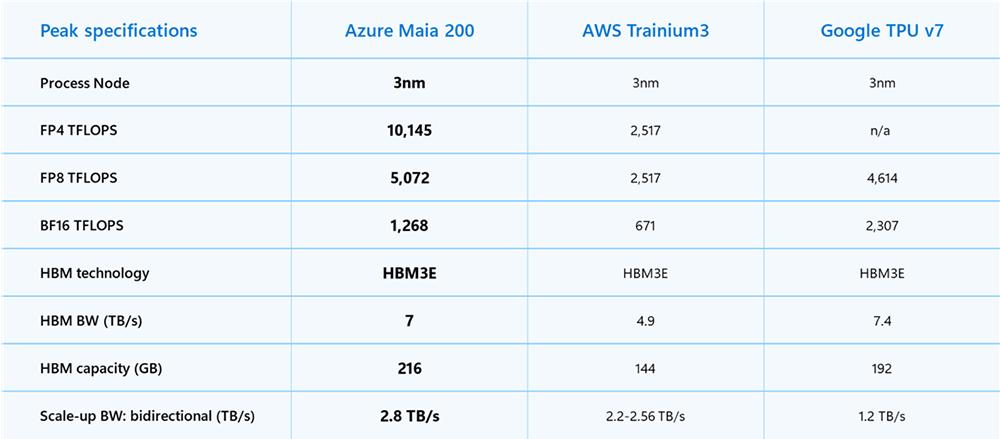
Core Insights - Microsoft has launched its self-developed AI inference chip, Maia 200, claiming it to be the highest-performing self-developed chip in all large-scale data centers, aimed at significantly enhancing the economic efficiency of AI token generation [1] Group 1: Chip Specifications - Maia 200 is manufactured using TSMC's 3nm process and features over 140 billion transistors, with a redesigned memory subsystem that includes 216GB HBM3e (with read/write speeds of up to 7TB/s) and 272MB on-chip SRAM [1][2] - The chip is designed for low-precision computing, providing over 10 PFLOPS performance at FP4 precision and over 5 PFLOPS at FP8 precision, all within a 750W SoC TDP [1] - Its FP4 performance exceeds that of Amazon's AWS Trainium3 by more than three times, while its FP8 performance surpasses Google's TPU v7 [1][2] Group 2: Memory and Interconnect - Maia 200's memory subsystem is optimized for narrow precision data types, featuring a dedicated DMA engine and a specialized on-chip network architecture to enhance token throughput [2] - The chip offers a bidirectional bandwidth of 2.8TB/s, outperforming AWS Trainium3's 2.56TB/s and Google TPU v7's 1.2TB/s [3] Group 3: Performance and Efficiency - Maia 200 is Microsoft's most efficient inference system to date, achieving a 30% improvement in performance per dollar compared to the latest generation of hardware currently deployed by Microsoft [3] - The chip can run the largest models available today and is designed to support future models, including OpenAI's latest GPT-5.2, enhancing the cost-effectiveness for Microsoft Foundry and Microsoft 365 Copilot [4] Group 4: Integration and Deployment - Maia 200 integrates seamlessly with Microsoft Azure, and a software development kit (SDK) is in preview, providing tools for building and optimizing models on Maia 200 [6] - The chip's deployment time is reduced by more than half compared to similar AI infrastructure projects, leading to higher resource utilization and faster production delivery [10] - The architecture allows for scalable performance while reducing power consumption and total cost of ownership for Azure's global clusters [9][12] Group 5: Future Outlook - Microsoft is positioning Maia 200 as a foundational element for future generations of AI systems, inviting developers and researchers to explore early model and workload optimization using the new SDK [13]


?AI推理狂潮席卷全球 “英伟达挑战者”Cerebras来势汹汹! 估值狂飙170%至220亿美元
Zhi Tong Cai Jing· 2026-01-14 03:27
Core Viewpoint - The AI chip supplier Cerebras Systems Inc. is in discussions for a new funding round of approximately $1 billion, aiming to enhance its competitiveness against Nvidia, which currently holds a 90% market share in the AI chip sector. The valuation of Cerebras is expected to rise to $22 billion, reflecting a significant increase of 170% from its previous valuation of $8.1 billion in September 2022 [1][3][7]. Group 1: Company Overview - Cerebras Systems is led by CEO Andrew Feldman and is actively seeking to challenge Nvidia's dominance in the AI chip market [2][3]. - The company provides remote AI computing services to major clients, including Meta Platforms Inc. and IBM, and aims to significantly improve the cost-effectiveness and energy efficiency of its AI computing clusters compared to Nvidia's offerings [3][5]. Group 2: Technology and Competitive Edge - Cerebras employs a unique "Wafer-Scale Engine" (WSE) architecture, allowing it to place entire AI models on a single large chip, which enhances inference performance and memory bandwidth [5][8]. - The latest CS-3 system, featuring the WSE-3 chip, reportedly outperforms Nvidia's Blackwell architecture by approximately 21 times in specific large language model inference tasks, while also being more cost-effective in terms of hardware and energy consumption [7][8]. Group 3: Market Dynamics and Competition - The AI inference market is experiencing rapid growth, with demand doubling every six months, prompting Cerebras to leverage this trend through funding and an IPO to increase its market presence [6][9]. - Nvidia's recent partnership with Groq, which includes a $20 billion non-exclusive licensing agreement, highlights the competitive pressure in the AI chip market, as Nvidia seeks to maintain its market share through diversification of hardware technology and strengthening its AI application ecosystem [4][10].
瑞银亚洲硬件2026年展望:掘金上游组件与代工厂,规避高成本品牌商
智通财经网· 2026-01-07 09:21
Group 1 - The core viewpoint of the report is that 2026 will witness strong growth in the AI supply chain, driven by the expansion of capital expenditures from hyperscale cloud service providers, rapid advancements in AI hardware technology, and a tight supply chain for components [1] Group 2 - Capital expenditures from top global cloud service providers are expected to increase by 34% year-on-year in 2026, reaching approximately $424 billion, primarily fueled by the ongoing expansion of cloud services and internet businesses, with cloud service revenue growth rebounding to over 28% [2] Group 3 - The report predicts a prosperous coexistence of AI GPUs and custom chips (ASICs) in 2026, with Nvidia's Blackwell platform expected to enter large-scale delivery, anticipating the delivery of around 60,000 racks throughout the year [3] - Google and Amazon are leading the deployment of custom chips, with Google's TPU v7 and Amazon's Trainium T3 expected to be widely deployed in 2026, while Meta plans to launch its ASIC solution in the second half of the same year [3] Group 4 - Traditional general-purpose servers are also showing a recovery growth in the high single to mid-single digits, alongside the AI boom [4] Group 5 - The report highlights an uneven distribution of growth benefits across the supply chain, with markets for rack power supplies, cooling, and PCB substrates expected to continue expanding, while tight supply of various raw materials, especially memory, creates a "seller's market" benefiting component suppliers [5] - Due to high prices of storage components, the report has downgraded the 2026 PC shipment forecast, expecting a 4% decline, while smartphone growth is also expected to slow to 2% due to rising commodity prices [5] Group 6 - The report suggests that the driving factors for stock prices in 2026 will be sales and profit growth rather than further valuation expansion, identifying the best opportunities among suppliers that can benefit from the increase in AI server deployments and enhance unit value or added value [6] - Recommended stocks include server ODM manufacturers (Quanta, Hon Hai, Wistron, Wistron NeWeb) and component suppliers (Delta, Jentech, AVC), as well as Largan Precision, which benefits from upgrades in foldable screens and variable aperture specifications [6] - The report takes a more cautious stance on brand companies (ASUS, Lenovo, Gigabyte, MSI) and ODM and component companies (Compal, Pegatron, Inventec, JMicron) that are less likely to benefit from AI server growth due to high input costs, especially in storage [6]
美银报告梳理存储超级周期五大核心支撑,大幅上调SK海力士、三星电子、南亚科技目标价
Zhi Tong Cai Jing· 2026-01-05 14:19
Core Viewpoint - The global memory industry is expected to enter a "super cycle" starting in 2026, driven by explosive AI demand, structural supply shortages, and technological advancements, with DRAM sales projected to surge from $130.3 billion in 2025 to $209.8 billion in 2026, a 61% year-on-year increase [1] Group 1: Super Cycle Support Factors - The memory industry is transitioning from a cycle of "expansion-overcapacity-price decline-reduction" to a high-quality growth phase due to the rigid demand from AI and supply constraints [2] Group 2: AI Demand Surge - AI accelerators like Nvidia's Rubin Ultra GPU and Google's TPU v7 are significantly increasing the demand for high-end memory, with HBM capacity per AI server rising from 340GB to 1.17TB, indicating a long-term shift in demand from traditional PC and smartphone markets to AI-driven applications [3] Group 3: Supply Constraints - Major chip manufacturers are focusing capital expenditures on high-end areas like HBM and eSSD, leading to a structural reduction in traditional DRAM capacity, with inventory levels at 3-4 weeks, well below the normal 1-2 months [4] Group 4: Price Increases and Profitability - Traditional DRAM contract prices rose over 30% in Q4 2025 and an additional 15% in Q1 2026, with 16Gb DDR5 spot prices exceeding $30, reflecting a more than 500% increase since early 2025, translating into significant profit growth for companies like SK Hynix and Samsung [5] Group 5: Capital Expenditure Optimization - SK Hynix's capital expenditure is expected to double to 35 trillion KRW in 2026, primarily for HBM capacity expansion, while maintaining a limited impact on overall supply due to a focus on high-end investments [6] Group 6: Technological Advancements - The introduction of new memory technologies like HBM4 and GDDR7 has raised industry barriers, with SK Hynix holding over 60% market share in HBM and leading production schedules, shifting competition from price to technology [7] Group 7: Key Companies and Their Strategies - SK Hynix is positioned as a leader in the HBM market, with a projected operating profit of 86.2 trillion KRW in 2026, benefiting from high demand and price increases [10] - Samsung Electronics, with the largest memory production capacity, is expected to leverage price elasticity and capture additional orders as competitors reach capacity limits, with target prices adjusted to 170,000 KRW for common stock [12] - Nanya Technology focuses on legacy DRAM products, anticipating a 6% increase in ASP due to supply shortages, with a target price raised to 235 NTD [14] Group 8: HBM Market Outlook - HBM is projected to be the fastest-growing segment in the memory industry, with global sales expected to reach $55 billion in 2026, driven by technological advancements and increased demand from AI accelerators [13] - SK Hynix is expected to maintain a 53% market share in HBM sales, while Samsung's share may rise to 25%, indicating a competitive landscape characterized by one dominant player and several strong competitors [15]

行业周报:国内L3级准入试点许可,百融云硅基员工+AnthropicSkill范式发布,关注Agent产业机会-20251221
KAIYUAN SECURITIES· 2025-12-21 11:53
Investment Rating - The industry investment rating is "Positive" (maintained) [1] Core Insights - The report highlights the sustained high demand in the storage sector, with expectations for H200 to be approved for export to China [3] - AI demand continues to validate and enhance computing power requirements, with significant growth in domestic AI chip production [5][8] - The approval of L3 level autonomous driving vehicles marks a critical step towards commercialization in China, with Robotaxi services expected to accelerate [6][30] Summary by Sections Internet - The daily usage of tokens for Doubao has surpassed 50 trillion, indicating deep penetration of large models [17] - The release of the "Internet Platform Pricing Behavior Rules" aims to regulate price competition and protect consumer rights, shifting focus from low prices to ensuring merchant profits and promoting consumption upgrades [20][21] - Recommended stocks include Alibaba-W, Pinduoduo, and Baidu Group-SW, with Tencent Holdings as a beneficiary [58] AI - Google TPU's commercial potential is further confirmed with Anthropic's significant orders, totaling $21 billion, indicating strong demand for AI products [21] - The launch of the Skill paradigm by Anthropic aims to enhance the capabilities of AI agents, facilitating easier development and deployment of complex AI applications [22][26] - The market for Agentic AI is projected to grow significantly, with a potential market size of 1.8 trillion yuan by 2030 [22] Intelligent Driving - The first L3 level autonomous driving models have received approval for trial operation, indicating a shift from testing to commercial application [30] - Robotaxi services are expected to accelerate due to technological advancements, cost reductions, and supportive policies [35] - Key players in the Robotaxi market include Baidu, Xiaopeng Motors, and WeRide, with ongoing trials and commercial operations in various cities [43][44]


谷歌TPU机架的互联方案,OCS市场空间测算
傅里叶的猫· 2025-12-02 13:34
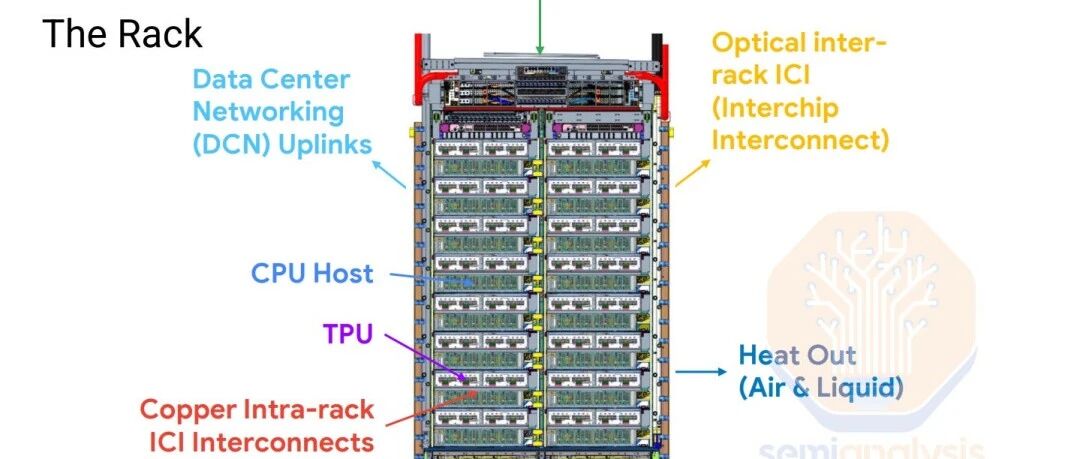
Core Insights - The article discusses Google's TPU v7 interconnect architecture, focusing on the ratio of TPU to copper cables and optical modules, highlighting the technical aspects of the TPU design and its cooling solutions [1][6][7]. TPU Rack Interconnect Architecture - One of the notable features of TPU is its ability to achieve large-scale world size expansion through the ICI protocol, with a TPU Pod capable of accommodating up to 9216 Ironwood TPUs [2]. - Each TPU rack consists of 16 TPU trays and a varying number of host CPU trays, along with a top-of-rack switch and power units [2]. - The TPU tray contains a TPU board with four TPU chips, each equipped with multiple interfaces for interconnectivity [2]. Cooling Solutions - Google has adopted liquid cooling for TPU racks since the TPU v3 era, with a 1:1 ratio of TPU trays to host CPU trays in liquid-cooled racks, compared to a 2:1 ratio in air-cooled racks [6]. - The market anticipates that 2024 will be the "year of liquid cooling," as more ASIC servers begin to adopt this technology, indicating significant market growth potential [6]. Market Projections - In 2026, Google is expected to ship 2.5 million TPU v7 units, leading to a liquid cooling market space of approximately $2.8 to $3.2 billion [7]. - By 2027, shipments are projected to exceed 5 million units, with the value of liquid cooling per rack potentially increasing to $90,000 to $100,000, resulting in a market space of $7 to $8 billion [7]. Interconnect Design - The TPU v7 utilizes a 3D torus topology for interconnectivity, where each TPU connects to six neighboring nodes across three dimensions [8]. - Internal connections within the TPU tray use copper cables, while external connections utilize optical modules and OCS for inter-unit communication [9][12]. Optical Connectivity and Market Demand - A TPU Pod with 9216 TPUs will require approximately 11,520 copper cables and 13,824 optical modules, indicating a significant demand for optical components in the market [16]. - Google is projected to need around 15,000 OCS switches by 2026, with a market space for OCS estimated at $2.2 billion based on a price of $150,000 per switch [17][18].

GPU与TPU的竞争新局,AI基建浪潮下的双轨增长
Xinda Securities· 2025-11-30 15:23
Investment Rating - The industry investment rating is "Positive" [2] Core Insights - The electronic sub-industry has significantly recovered, with the Shenwan Electronics secondary index showing year-to-date changes of: Semiconductors (+39.75%), Other Electronics II (+43.95%), Components (+89.82%), Optical Electronics (+5.55%), Consumer Electronics (+42.54%), and Electronic Chemicals II (+38.20%) [2][9] - North American key stocks mostly rose, with notable increases for companies like Micron Technology (+180.99%) and Intel (+102.29%) year-to-date [10] - Google's TPU v7 demonstrates cost advantages over GPU-based systems, challenging the GPU-dominated computing market. The total cost of ownership (TCO) for TPU is approximately 30%-40% lower than NVIDIA's GB200 system [2][24] - The demand for AI infrastructure is growing significantly, with NVIDIA reporting that cloud GPUs are sold out, indicating a supply-demand imbalance. TrendForce predicts over 20% year-on-year growth in global AI server shipments by 2026 [2][3] Summary by Sections Market Performance - The Shenwan Electronics secondary index has shown substantial recovery, with weekly changes for various segments: Semiconductors (+5.72%), Other Electronics II (+7.59%), Components (+8.10%), Optical Electronics (+5.23%), Consumer Electronics (+6.08%), and Electronic Chemicals II (+3.93%) [9] - Key North American stocks have shown positive performance, with significant increases for companies like Tesla (+9.99%) and Qualcomm (+2.93%) [10] Technology Competition - Google's TPU v7 has emerged as a strong competitor in the computing market, leveraging superior system-level engineering to achieve higher model performance utilization rates compared to NVIDIA GPUs [2][24] - The competition between GPU and TPU is seen as a redistribution of market share in a growing market, with both technologies expected to experience rapid growth [2] Investment Opportunities - Recommended companies to watch include: For overseas AI - Industrial Fulian, Huadian Co., Pengding Holdings, Shenghong Technology, and Shengyi Technology; For domestic AI - Cambricon, Chipone, Haiguang Information, SMIC, and Shenzhen South Circuit [3]
谷歌争霸,算力回归?——通信ETF点评
Sou Hu Cai Jing· 2025-11-26 14:55
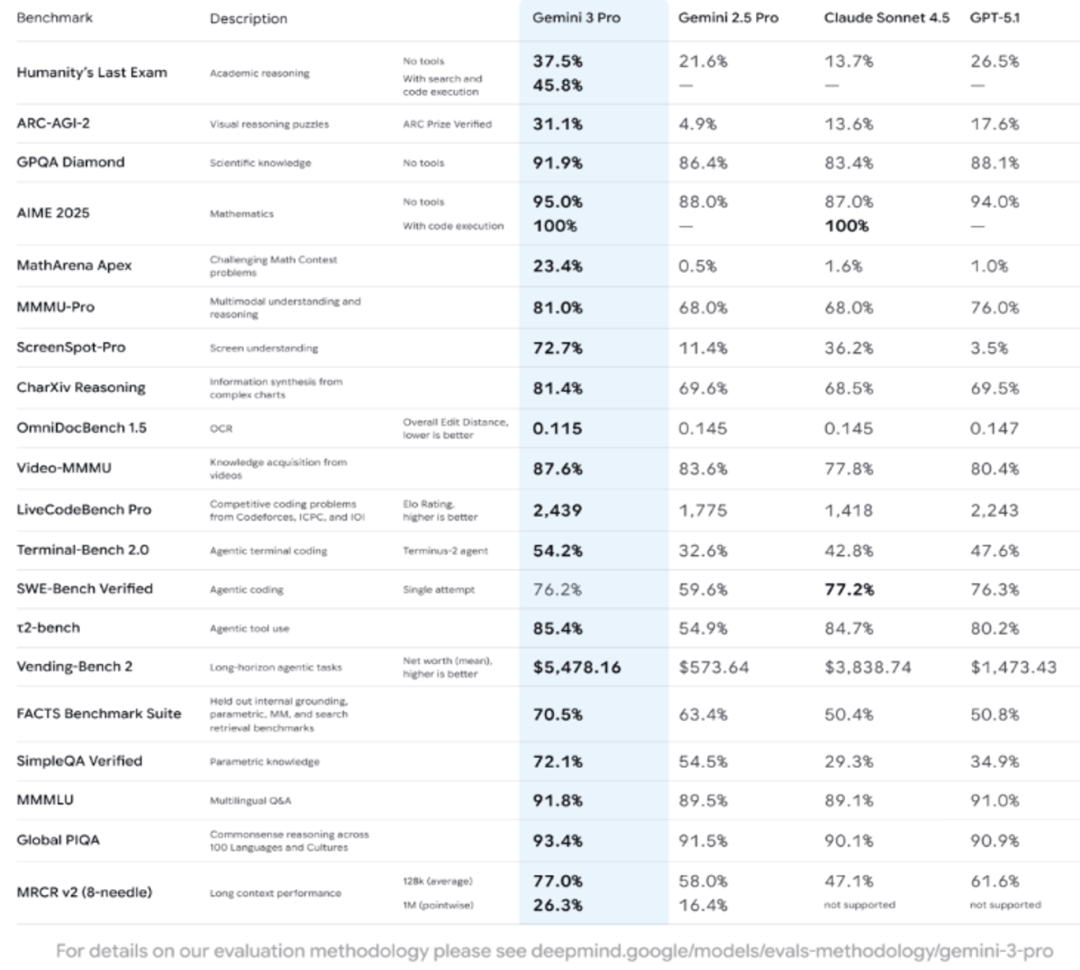
Market Overview - The market experienced a pullback after an initial rise, with the total trading volume in Shanghai and Shenzhen reaching 1.78 trillion, a decrease of 28.8 billion from the previous trading day [1] - The Shanghai Composite Index fell by 0.15%, while the Shenzhen Component Index rose by 1.02%, and the ChiNext Index increased by 2.14% [1] - The Communication ETF showed strong performance, peaking at nearly 8% during the day and closing up by 5.61%, while the AI ETF on ChiNext rose by 4.89% [1] Factors Driving Market Upward - Increased expectations for interest rate cuts, with the likelihood of a 25 basis point cut by the Federal Reserve in December rising from approximately 40% to 80% following comments from several Fed officials [2] - Google's recent launch of the Gemini 3 model, which has outperformed competitors in various benchmarks, contributing to positive sentiment in the AI sector [2][4] AI Model Performance - The Gemini 3 Pro model has shown superior performance across multiple benchmarks, achieving 95.0% in mathematics without tools and 100% with code execution, indicating its advanced capabilities compared to other models [3] - The model also excelled in scientific knowledge, achieving 91.9%, and demonstrated strong performance in visual reasoning and multimodal understanding [3] Hardware Developments - Google’s TPU v7 has exceeded expectations in terms of memory capacity and energy efficiency, potentially impacting the competitive landscape for AI hardware [5] - There are reports that Meta Platforms is considering a significant investment in Google’s TPU for its data center needs, indicating a shift in the competitive dynamics of the AI hardware market [5] Future Market Outlook - There is a gradual improvement in risk appetite as pessimistic expectations are being digested, with the potential for continued recovery in the U.S. stock market [7] - Despite potential changes in the chip landscape due to Google's growth, A-share related component manufacturers are expected to benefit regardless of which company leads in chip competition [7] - The AI industry is anticipated to continue its rapid growth, with increasing demand for computational power, which may positively impact hardware and software sectors [9]
谷歌争霸,算力回归?——通信ETF(515880)点评
Sou Hu Cai Jing· 2025-11-26 05:35
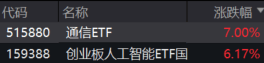
Market Overview - The computing sector experienced a significant rise, with the Communication ETF (515880) increasing by 7% and the ChiNext AI ETF (159388) rising over 6% [1][2]. Factors Driving the Market - Increased expectations for interest rate cuts have emerged, as several Federal Reserve officials, including allies of Powell, expressed support for a potential 25 basis point cut in December, raising the likelihood from approximately 40% to 80% [2]. - Google's recent release of the Gemini 3 model, which has outperformed its predecessors in various benchmarks, has contributed to positive market sentiment [2][4]. AI Model Performance - The Gemini 3 Pro model has shown superior performance across multiple benchmarks, including achieving 95% in mathematics and 91.9% in scientific knowledge assessments, indicating its advanced capabilities compared to competitors [3]. Hardware Developments - Google's TPU v7 (Ironwood) has exceeded expectations in terms of memory capacity and energy efficiency, posing a competitive challenge to NVIDIA's offerings. Google anticipates a doubling of computing power every six months to meet rising AI service demands [5]. Market Outlook - There is a gradual improvement in risk appetite as pessimistic expectations are being absorbed by the market, with strong support levels in the A-share market despite rapid style shifts [6]. - While the competitive landscape for computing chips may evolve, NVIDIA is expected to maintain revenue growth due to its existing market share and new demands from sovereign AI projects [6]. - The AI industry is progressing rapidly, with significant investments expected to sustain growth, although short-term volatility should be monitored [7].