Hua Er Jie Jian Wen

Search documents
又会是“极限施压、最后时刻妥协”剧本?市场“很懂”特朗普
Hua Er Jie Jian Wen· 2026-01-20 00:19
据华尔街日报,这些波动幅度远低于灾难性事件应有的市场反应——自1964年以来,标普500平均每年 出现21次类似跌幅,黄金期货自1979年以来平均每年有15次类似涨幅,也就是说市场并未出现恐慌情 绪。 分析认为,这一地缘政治僵局可能遵循特朗普常用的"先升级事态,再降级"(escalate to de-escalate) 的剧本。高盛Delta-One部门负责人Rich Privorotsky指出,其基准情形是特朗普将在最后一刻达成妥协。 他指出,这一立场在国内并不受欢迎,民调显示仅17%的美国人支持收购格陵兰的努力,且民主党和共 和党选民中绝大多数反对使用武力吞并该岛。 市场反应背后的四重逻辑 面对美国总统特朗普以关税为筹码强购格陵兰岛的威胁,全球市场虽然呈现避险情绪,但反应相对克 制。分析认为,这不过是特朗普惯用的"极限施压"谈判策略,最终双方将达成某种形式的妥协。 周末特朗普威胁对英国、法国、德国等多个欧洲国家加征关税,以迫使丹麦交出格陵兰。隔夜美股休 市,标普500指数期货下跌略超1%,欧洲股市跌幅相近,黄金上涨不到2%。 这一事件发生的时间点也耐人寻味,正值达沃斯论坛举行周。Privorotsky认为 ...
迈向“7*24小时”交易!纽交所报批“全天候区块链交易平台”
Hua Er Jie Jian Wen· 2026-01-20 00:19
Core Viewpoint - The New York Stock Exchange (NYSE) is developing a blockchain-based "tokenized securities" trading platform aimed at enabling 24/7 trading of stocks, which marks a significant shift from traditional trading hours [1]. Group 1: Trading Mechanism and Settlement - The new platform will provide 24/7 trading services, addressing the time zone barriers faced by investors [2]. - It will utilize blockchain technology for instant settlement, moving away from the traditional T+1 settlement system, which delays the completion of transactions until the next business day [2]. - Instant settlement is expected to reduce systemic risks and prevent market interruptions caused by liquidity crises, as seen in the GameStop incident [2]. Group 2: Competitive Landscape - NYSE's initiative reflects a broader trend among Wall Street giants to adopt blockchain technology, with competitors like Nasdaq already seeking approval for trading tokenized stocks [3]. - Major financial institutions such as JPMorgan, Goldman Sachs, and BNY Mellon have launched tokenized money market fund projects, indicating a growing interest in tokenization within traditional finance [4]. Group 3: Regulatory Considerations - While the technological prospects are promising, there are concerns regarding compliance and potential fraud risks associated with blockchain technology [5]. - If approved, NYSE's platform could provide a regulated channel for blue-chip companies to issue tokenized securities, addressing previous issues related to pricing discrepancies and security in offshore tokenized stocks [5]. - NYSE is in contact with the SEC regarding the approval process, which will be crucial for the project's success [5].
就在今天,美国最大地产开发商发布财报,市场关心的却不是当季业绩
Hua Er Jie Jian Wen· 2026-01-20 00:13
Core Viewpoint - The focus of investors has shifted from D.R. Horton's quarterly performance to forward-looking issues such as changes in demand following a decline in mortgage rates and the potential impact of housing policy adjustments under the Trump administration [1] Group 1: Financial Performance Expectations - Analysts expect D.R. Horton's Q1 earnings per share to be $1.93, with revenue around $6.6 billion, a significant decline from $2.61 per share and $7.6 billion in the same period last year [1] - The company's gross margin is projected to drop from 22.7% in the previous year to 20.1% this quarter, indicating pressure on profitability due to the housing affordability crisis [2] Group 2: Demand and Market Signals - Early signs of improvement in housing demand are emerging, with an increase in mortgage applications reported by the Mortgage Bankers Association [3] - The interest from homebuyers has reportedly increased earlier than in previous years, coinciding with Trump's announcement to direct Fannie Mae and Freddie Mac to purchase mortgage-backed securities to lower rates [3] Group 3: Policy Uncertainty and Industry Impact - The Trump administration's housing policy changes introduce complexity to the industry outlook, with discussions around a "carrot and stick" approach that may reward or penalize builders based on compliance with government housing goals [4] - Analysts note that while lower mortgage rates could benefit builders by reducing repurchase costs, there is pressure to prioritize entry-level housing sales over profitability, which could negatively impact gross margins [4] Group 4: Future Guidance and Orders - Analysts forecast D.R. Horton's second-quarter profit margin to be 20.2%, with new orders expected to reach 24,240 units [5] - The company's management's guidance on orders and profit margins, along with interpretations of policy changes, will be critical for assessing the industry's direction [5]

新全球秩序催生金银牛市!美银:黄金有望突破6000美元
Hua Er Jie Jian Wen· 2026-01-19 23:20
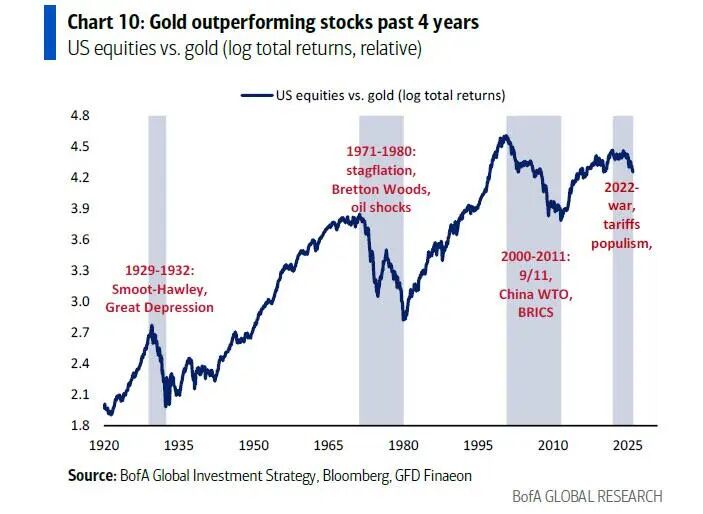
Group 1: New World Order and Global Bull Market - The chief investment strategist at Bank of America, Hartnett, believes that Trump is driving global fiscal expansion, leading to a "New World Order = New World Bull Market" scenario [1][2] - Hartnett suggests going long on international stocks as the market is shifting from U.S. exceptionalism to global rebalancing, with $1.6 trillion flowing into U.S. stock funds in the 2020s compared to only $0.4 trillion into global funds [2] - China is identified as the most promising market, with the end of deflation expected to catalyze bull markets in Japan and Europe [2] Group 2: Gold Bull Market - Hartnett emphasizes that the New World Order is not only fostering a stock bull market but also a gold bull market, despite short-term overbought conditions [3] - Gold was the best-performing asset in 2020, driven by factors such as war, populism, the end of globalization, excessive fiscal expansion, and debt devaluation [4] - The Federal Reserve and Trump’s administration are expected to increase quantitative easing liquidity by $600 billion through the purchase of government bonds and mortgage-backed securities by 2026 [5] - Gold has outperformed bonds and U.S. stocks over the past four years, and a higher allocation to gold remains reasonable, with historical bull markets averaging a 300% increase [6][7] Group 3: Economic Recovery Assets - In addition to gold, other assets are expected to benefit from the New World Bull Market, including mid-cap and small-cap stocks, homebuilders, retail, and transportation sectors [10] - Hartnett advises going long on "economic recovery" related assets while shorting large tech stocks until certain conditions are met, such as the U.S. unemployment rate rising to 5% [11] - Historical precedent shows that Nixon's price and wage freeze improved living costs and boosted his approval ratings, suggesting that if Trump fails to improve his ratings, risks for midterm elections will increase [15] Group 4: Risks from East Asian Currency Appreciation - The biggest risk identified is the rapid appreciation of the yen, won, and new Taiwan dollar, which could trigger global liquidity tightening [1][16] - The yen is currently trading near 160, at its weakest level against the yuan since 1992, and a rapid appreciation could reverse capital flows from Asia [16] - Hartnett warns that investors should closely monitor indicators like the "yen up, MOVE index up" risk aversion combination to determine when to exit the market [16]

鲍威尔罕见出席美国最高院听证,周三为美联储理事库克“站台”
Hua Er Jie Jian Wen· 2026-01-19 23:07
库克否认指控,且至今未被起诉。她随即提起诉讼以保住职位。最高法院在去年十月下达临时命令,允 许她留任直至案件审结。 华尔街见闻提及,上周鲍威尔对外披露,特朗普政府已向美联储发出传票,甚至威胁对他本人提出刑事 指控。 据多家媒体报道,1月21日周三,鲍威尔将出席美国最高法院关于美联储理事Lisa Cook案件的口头辩 论。 华尔街见闻提及,瑞银在16日的报告中直言,这场审判关乎美联储独立性的生死存亡。如果法院裁决允 许白宫"因故"绕过《联邦储备法》罢免理事Lisa Cook,那么鲍威尔被解职的法律大门将被彻底踢开。 此前司法部向美联储及鲍威尔发出了大陪审团传票,调查其在美联储办公楼装修项目管理及国会证词中 是否涉嫌误导。 鲍威尔的主席任期将于2026年5月15日结束,但其理事任期将持续至2028年1月31日。 特朗普与美联储公开的"白刃战" 一切源于去年八月。 特朗普公开宣称,要解雇由拜登任命的美联储理事丽莎·库克,理由是她涉嫌抵押贷款欺诈。 美联储主席鲍威尔将现身丽莎库克(Lisa Cook)案的口头辩论,这是一次罕见的公开站队。 鲍威尔坐在那里,意味着他说不。 瑞银分析认为,如果政府坚持对鲍威尔刑事起诉,且 ...
鲍威尔罕见出席美国最高院听证,周三将为美联储理事库克“站台”
Hua Er Jie Jian Wen· 2026-01-19 22:31
美联储主席鲍威尔将现身最高法院,旁听丽莎库克(Lisa Cook)案的口头辩论,这是一次罕见的公开 站队。 1月21日,美国最高法院将举行美联储理事Lisa Cook案件的口头辩论。据美联社援引消息人士透露,届 时鲍威尔将现身最高法院旁听。 华尔街见闻提及,瑞银在16日的报告中直言,这场审判关乎美联储独立性的生死存亡。如果法院裁决允 许白宫"因故"绕过《联邦储备法》罢免理事Lisa Cook,那么鲍威尔被解职的法律大门将被彻底踢开。 独立性的赌注 此前司法部向美联储及鲍威尔发出了大陪审团传票,调查其在美联储办公楼装修项目管理及国会证词中 是否涉嫌误导。 鲍威尔的主席任期将于2026年5月15日结束,但其理事任期将持续至2028年1月31日。 特朗普与美联储公开的"白刃战" 一切源于去年八月。 特朗普公开宣称,要解雇由拜登任命的美联储理事丽莎·库克,理由是她涉嫌抵押贷款欺诈。 库克否认指控,且至今未被起诉。她随即提起诉讼以保住职位。最高法院在去年十月下达临时命令,允 许她留任直至案件审结。 华尔街见闻提及,上周鲍威尔对外披露,特朗普政府已向美联储发出传票,甚至威胁对他本人提出刑事 指控。 瑞银分析认为,如果政府 ...
报道:挪威主权财富基金大举抛售英国中小盘股
Hua Er Jie Jian Wen· 2026-01-19 16:30
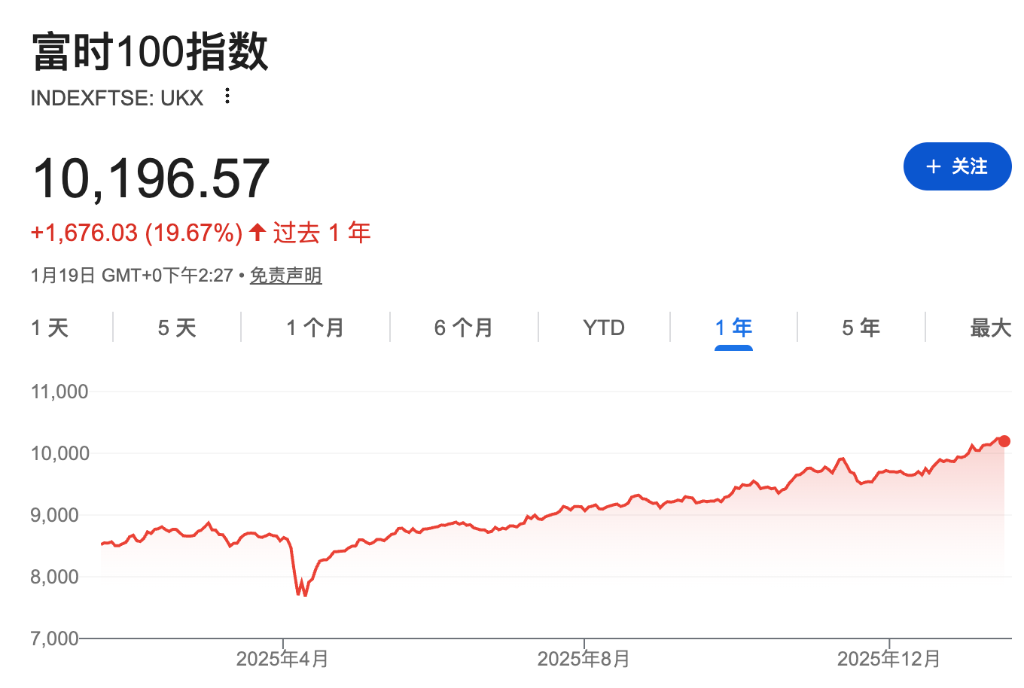
Group 1 - The Norwegian Central Bank Investment Management (NBIM), one of the largest sovereign wealth funds globally, has begun a significant sell-off of small and mid-cap stocks listed on the London Stock Exchange, contrasting sharply with UK Chancellor Rachel Reeves' claims of a "new golden era" for the City of London [1][4] - The sell-off involves "dozens" of companies, with multiple investment management firms receiving notifications of reduced holdings in specific asset portfolios managed by NBIM in recent weeks [1] - NBIM has approximately $2 trillion in assets under management, and this reduction in holdings comes at a time when the FTSE 100 index is reaching historical highs, despite ongoing geopolitical uncertainties [1] Group 2 - The timing of the sell-off is notable, occurring just after UK Chancellor Reeves announced reforms aimed at reducing the costs and difficulties of being listed in London, asserting that the best days for the City are not over [4] - Reeves claimed that with the FTSE 100 index hitting new highs, global companies are once again choosing London, indicating the initial signs of a new golden era for the financial hub [4]
美光警告:AI引发的存储芯片短缺“前所未有”,将持续到2026年以后
Hua Er Jie Jian Wen· 2026-01-19 15:29
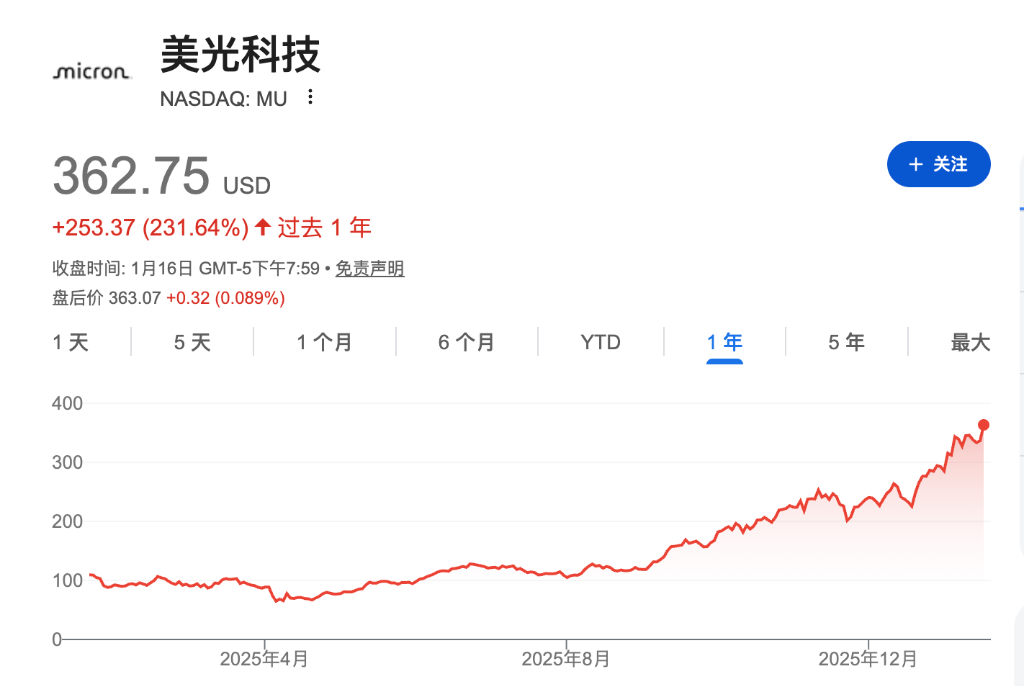
Group 1: Core Insights - Micron Technology highlights an unprecedented shortage of memory chips driven by surging demand for AI infrastructure, which is expected to persist beyond 2026 [1] - The high bandwidth memory (HBM) required for AI accelerators is consuming a significant portion of the industry's available capacity, leading to severe shortages in traditional sectors like smartphones and personal computers [1] - Major smartphone manufacturers, including Xiaomi and Oppo, have revised their 2026 shipment targets downward due to rising memory costs, with Oppo predicting a reduction of up to 20% [1] Group 2: Market Dynamics - The global memory chip giants, including Micron, SK Hynix, and Samsung Electronics, are experiencing substantial stock price increases due to the AI demand explosion, with Micron's stock rising over 231.6% in the past year [2] - SK Hynix has reported that its chip production capacity for 2026 is already sold out, while Micron's AI-focused high-end memory products have been fully booked for the year [2] Group 3: Strategic Moves - To prioritize supply for strategic clients like NVIDIA, Micron announced the termination of its popular consumer memory brand, Crucial, to focus on DRAM, which is essential for AI accelerator performance [4] - Micron is accelerating its capacity expansion in the U.S. and Asia, planning to invest $1.8 billion to acquire an existing factory site in Taiwan, which is crucial for its production capabilities [5] - The company is also advancing multiple large-scale factory projects, including a $100 billion investment in New York to build four DRAM wafer fabs, with the first wafers expected to be produced by 2030 [5]

OpenAI计划2026年发布第一款设备。(Axios)
Hua Er Jie Jian Wen· 2026-01-19 15:06
风险提示及免责条款 OpenAI计划2026年发布第一款设备。(Axios) 市场有风险,投资需谨慎。本文不构成个人投资建议,也未考虑到个别用户特殊的投资目标、财务状况或需要。用户应考虑本文中的任何 意见、观点或结论是否符合其特定状况。据此投资,责任自负。 ...
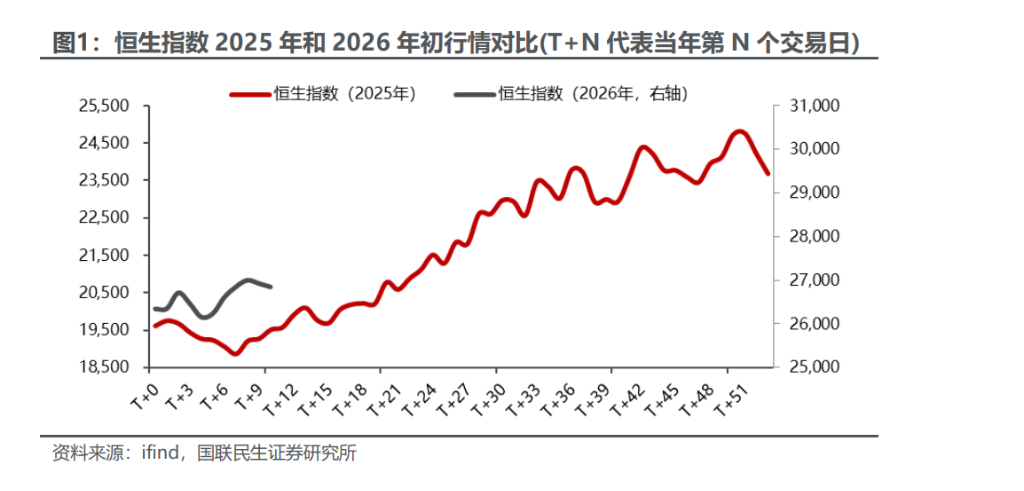
又至年初,港股 AI 是否还有期待?
Hua Er Jie Jian Wen· 2026-01-19 14:00
Core Viewpoint - The current environment of the Hong Kong stock market mirrors that of early 2025, with a potential for significant investment opportunities driven by AI applications despite weak overseas liquidity expectations [2][3]. Group 1: Market Environment - The Hong Kong stock market is at a critical juncture, similar to early 2025, where liquidity expectations are limited due to the Federal Reserve's policies, while AI applications are poised for explosive growth [2][3]. - Recent U.S. inflation data, although below expectations, has not reached a level that would prompt an immediate shift in Federal Reserve policy, indicating limited improvement in liquidity for the Hong Kong market [3]. Group 2: AI Value Reassessment - The report emphasizes a strong outlook for the reassessment of AI value in China for 2026, supported by a solid industrial catalyst timeline [6]. - The release of DeepSeek V4 during the Chinese New Year is expected to replicate last year's market surge, with increased capital expenditure from major domestic companies providing a robust foundation for model capabilities [6]. Group 3: Application Layer Developments - 2026 is projected to be a pivotal year for the application layer of AI, with significant advancements expected from platform-based internet companies in China [7]. - Alibaba's AI assistant "Qianwen app" has achieved over 100 million monthly active users within two months of launch, marking a shift from model-based to application-based AI strategies [7]. Group 4: Intelligent Driving - Intelligent driving is identified as the largest AI application expected to scale in 2026, driven by significant developments in both domestic and international markets [8]. - The combination of Tesla's FSD and Grok enhances driving experiences, while regulatory changes in the U.S. signal the imminent large-scale operation of Robotaxi services [8]. Group 5: Market Data and Fund Flows - Recent fund flows indicate strong investor preference for leading technology platforms, with Tencent, Kuaishou, and Xiaomi receiving substantial net inflows [9]. - As of January 16, 2026, the Hang Seng Index PE has risen to 11.7 times, reflecting a 1.66% increase from the previous week, while Alibaba and SMIC have shown significant stock price increases, validating the positive outlook for platform companies and hardware infrastructure [9].