
Hua Er Jie Jian Wen

Search documents
黄仁勋预告“前所未见”的芯片新品,下一代Feynman架构或成焦点
Hua Er Jie Jian Wen· 2026-02-19 07:34
Core Insights - NVIDIA's CEO Jensen Huang announced that the company will unveil "world's first" new chip products at the upcoming GTC conference, sparking significant market interest in NVIDIA's next-generation product roadmap [1] - The GTC keynote will take place on March 15 in San Jose, California, focusing on the next phase of the AI infrastructure race [1] Potential New Products - The new products are speculated to fall into two main categories: 1. Derivative chips from the Rubin series, such as the previously leaked Rubin CPX, following the recent launch of the Vera Rubin AI series, which includes six chips now in full production [2] 2. The potentially revolutionary Feynman architecture chip, which may utilize broader SRAM integration and possibly 3D stacking technology for Language Processing Units (LPU), although this has not been officially confirmed [2] Market Demand and Product Evolution - NVIDIA is responding to changing computational demands, with a shift from pre-training to inference capabilities becoming central, as indicated by the introduction of Grace Blackwell Ultra and Vera Rubin [3] - The Feynman architecture is expected to be deeply optimized for inference scenarios, addressing performance bottlenecks related to latency and memory bandwidth, which will significantly impact cloud service providers and enterprise customers reliant on AI inference capabilities [3] - Huang emphasized the importance of broader partnerships and investment strategies, indicating NVIDIA's transition from a chip supplier to an AI ecosystem builder, aiming to maintain a leading position in the AI infrastructure competition through acquisitions and collaborations [3]

三星、海力士“调整战略”:新存储工厂生产计划提前
Hua Er Jie Jian Wen· 2026-02-19 05:31
Core Viewpoint - The demand for memory chips driven by artificial intelligence is prompting South Korean giants Samsung Electronics and SK Hynix to accelerate the production timeline of new wafer fabs, shifting their strategy from cautious inventory control to aggressive capacity expansion to capture the "super cycle" benefits in the industry [1]. Group 1: Production Expansion Plans - SK Hynix plans to advance the trial operation of its Longjing Phase I wafer fab to February-March next year, ahead of its completion date [1][2]. - Samsung Electronics is moving the production timeline of its P4 factory from Q1 next year to Q4 this year, compressing the schedule by about three months [1][2]. - Both companies will focus on high-value products such as high-performance DRAM and HBM in their new production lines [1][2]. Group 2: Market Demand and Supply Dynamics - The surge in server chip demand due to the expansion of AI data centers has led to a significant increase in memory chip demand, with a fulfillment rate of only about 60% as of February this year [1][4]. - Samsung's memory shipments have seen approximately 70% absorbed by AI data center companies [4]. - Market expectations indicate that supply tightness will persist until 2027, with demand growth rates for DRAM and NAND flash projected at 20.1% and 21.4%, respectively, outpacing supply growth rates of 17.5% and 16.5% [4][5]. Group 3: Capital Expenditure and Strategic Intent - Both Samsung and SK Hynix have announced plans to increase capital expenditures this year to address memory shortages, with Samsung's memory division indicating a significant expansion in equipment investment by 2026 [6]. - The companies are attempting to signal stable supply to customers by rapidly entering trial operation phases, despite the inherent delays in achieving stable mass production [6].
“硬件防御”对冲AI焦虑,苹果与纳指相关性创20年新低
Hua Er Jie Jian Wen· 2026-02-19 05:13
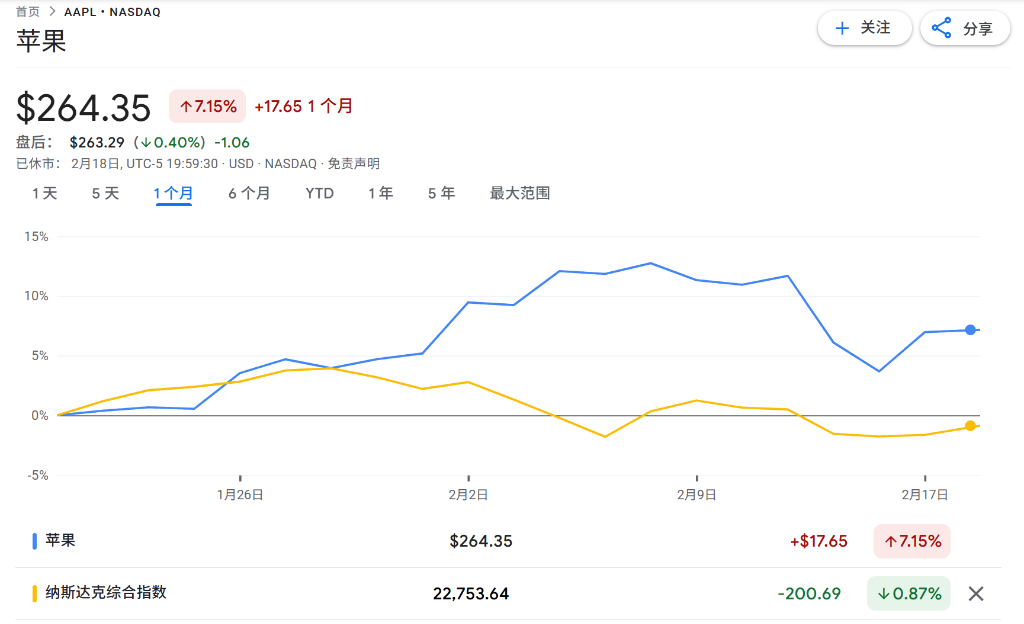
Core Viewpoint - Apple is emerging as a safe haven for investors amid market volatility driven by artificial intelligence (AI), with its correlation to the Nasdaq 100 index dropping to a near 20-year low, providing a rare alternative for funds seeking to avoid AI uncertainties [1][3]. Group 1: Market Positioning - Apple's 40-day correlation with the Nasdaq 100 fell to 0.21 last week, the lowest since 2006, down from a high of 0.92 in May 2022, primarily due to its decision not to engage in the AI arms race, making it an outlier among tech stocks [1]. - The decoupling of Apple from the broader market occurs as investors oscillate between fears of unrecouped AI investments and concerns over various industries being disrupted by the same technology [1][6]. - Apple's unique position has garnered market favor, with analysts noting that its lack of correlation is beneficial in the current environment of heightened investor anxiety regarding potential disruptions [3]. Group 2: Performance and Trends - Apple outperformed the Nasdaq 100 index, rising 3.2% on a recent Tuesday while the index fell by 0.1%, marking the third instance this month where Apple exceeded the index's performance by at least 3 percentage points [4]. - Despite the defensive attributes, Apple faced challenges, including an 8% drop last week, the largest since April, attributed to concerns over delays in the upgrade of its Siri virtual assistant and rising memory chip prices [5]. Group 3: Investment Logic - The market's preference for Apple reflects a broader inclination towards hardware businesses amid AI uncertainties, as the company is set to host a product launch event soon, with investors betting on its hardware ecosystem for stable returns [6]. - The "hardware defense" logic suggests that Apple's revenue, based on physical product sales, is less susceptible to direct replacement by AI tools, contrasting with software and service companies facing direct threats from generative AI [6].


“这很难,但我相信你们”!黄仁勋上周宴请SK海力士工程师,亲自敬酒,敦促“无延迟交付HBM4”
Hua Er Jie Jian Wen· 2026-02-19 04:04
Core Insights - Nvidia's CEO Jensen Huang hosted a rare dinner for engineers from SK Hynix, highlighting the strategic importance of the next-generation high-bandwidth memory HBM4 for Nvidia's AI chip business [1][4] - The dinner signals Nvidia's view of HBM4 as a key differentiator for its upcoming AI accelerator, Vera Rubin, which is set to launch in the second half of this year [3][5] Group 1: HBM4 Specifications and Market Dynamics - Nvidia has set stringent specifications for HBM4, requiring a running speed of over 11 Gbps and a bandwidth exceeding 3.0 TB/s, which is over 30% higher than AMD's requirements [3][6] - SK Hynix has secured over 55% of the HBM supply allocation for this year, while Samsung and Micron hold approximately 20% each [3][6] - Samsung has begun shipping HBM4 products with a running speed of 11.7 Gbps and a bandwidth of 3.3 TB/s, marking a competitive entry into the HBM4 market [6][7] Group 2: Strategic Partnerships and Execution - Huang's personal involvement in the dinner is seen as a significant gesture of recognition and encouragement for SK Hynix, emphasizing the importance of timely delivery and performance optimization [4][9] - The upcoming months will be critical for SK Hynix to maintain its leading position in the competitive landscape of HBM4 supply [9]

为AI交易“背书”!OpenAI正敲定新一轮融资:以8300亿美元估值募资高达1000亿美元
Hua Er Jie Jian Wen· 2026-02-19 03:54
Group 1 - OpenAI is finalizing a new funding round that could raise $100 billion, leading to a company valuation of $830 billion after completion [1] - SoftBank is expected to lead this round with an investment of $30 billion, distributed in three phases throughout the year [1] - Amazon, a provider of cloud services to OpenAI, may invest up to $50 billion, while Nvidia, a supplier of model chips, could contribute up to $30 billion [1] Group 2 - OpenAI is seeking support from financial investors after securing initial investment commitments, engaging with existing investors like Thrive Capital, Khosla Ventures, Founders Fund, and Sequoia Capital [2] - Investors in this funding round will receive preferred shares that convert to Class A common stock upon the company's exit, along with a 1x liquidation preference [2] Group 3 - This funding round marks OpenAI's first financing since its corporate restructuring last fall, which allows the issuance of standard equity and is a crucial step towards an IPO [3] - Prior to this round, OpenAI raised approximately $61 billion from investors including Microsoft, Thrive, and SoftBank, with a valuation of $500 billion during a share sale last fall [3] Group 4 - The substantial funding is driven by OpenAI's expectations of soaring operational and training costs for AI, projected to reach around $450 billion between 2025 and 2030 [4] - The valuation of $830 billion represents a significant increase from the $500 billion valuation last fall, reflecting continued investor enthusiasm despite the company's high expenditure pressures [4]
什么样的软件会被AI淘汰?
Hua Er Jie Jian Wen· 2026-02-19 03:34
Core Insights - The current software sector pullback is driven by a debate over long-term value and whether AI will erode existing profit pools and competitive advantages [1][2] - Goldman Sachs analysts have identified seven bearish arguments regarding software companies, assessing their risks and potential impacts on various segments [1][2] Group 1: Market Concerns - The focus has shifted from short-term growth to concerns about whether AI will diminish software companies' competitive moats [2] - The report categorizes bearish arguments into a structured analysis, assigning risk scores to each argument to evaluate what can sustain long-term value [2] Group 2: System of Record (SoR) Risks - The risk of SoR being replaced is considered low (risk score 1), as generative AI is more suited for analysis rather than transactional processes [3] - However, there is a potential risk of value migrating from SoR to an "agentic operating system/orchestration layer" (risk score 4), which could weaken traditional competitive advantages [5] Group 3: Data Boundaries and Value Migration - If companies keep their data advantages confined within existing applications, the stability of SoR will be maintained, but profit pools may be siphoned off by new layers [4] - The orchestration layer could become more valuable as it enables cross-system reasoning and workflow automation, potentially undermining the traditional user interface and process dependencies of SoR [5] Group 4: Vertical vs. Horizontal Software - Vertical software is currently more resilient but may face challenges from horizontal platforms that allow users to create industry workflows using AI tools (risk score 2) [6] - The report highlights that established vertical software companies have significant barriers to entry due to proprietary data and deep integration into workflows [6] Group 5: Development Costs and Competition - The decline in coding costs due to AI tools will lead to increased competition, but the risk is rated as moderate (risk score 2) since software engineering involves more than just coding [8] - Efficiency gains from AI tools may shift bottlenecks to new areas, particularly in enterprise-level delivery where security and integration remain critical [8] Group 6: Customization Trends - Companies may increasingly prefer to build custom solutions, particularly in scenarios where existing software does not meet their needs (risk score 3) [9] - Palantir is cited as an example of a company successfully leveraging customization to create quantifiable ROI for clients [9] Group 7: Profit Margin Pressures - The industry is expected to experience moderate margin pressures over the next 12-24 months as companies absorb costs related to AI adoption [12] - The shift towards consumption-based pricing models may alter traditional SaaS economics, with some AI-native companies reporting lower margins compared to established SaaS firms [12] Group 8: Technological Uncertainty - The rapid pace of technological advancement presents the highest risk, making it difficult to predict long-term outcomes (risk score 5) [13] - The report notes that the unpredictability of technology evolution can lead to lower valuation multiples due to increased uncertainty [14] Group 9: Stability Signals - Key signals to watch for stability include whether software companies can demonstrate that domain expertise leads to higher quality outcomes and whether financial fundamentals can stabilize or improve [15]

高盛:美国移民骤降80%重塑就业“盈亏平衡点”,AI成劳动力市场最大变数
Hua Er Jie Jian Wen· 2026-02-19 03:34
然而,劳动力需求端的表现依然"脆弱"。高盛指出,当前就业增长范围狭窄,且职位空缺持续下降,已 降至约700万个,低于疫情前水平。该行认为,劳动力市场面临的最大下行风险来自人工智能,AI可能 带来更快速、更具破坏性的结构性调整,既可能抑制企业招聘意愿,也可能导致失业人数超出当前预 期。 高盛最新分析指出,美国劳动力市场的基本面正在发生根本性转变。受特朗普政府移民限制政策影响, 净移民人数已骤降80%,这一变化正在重新定义维持失业率稳定所需的就业增长水平。该行预计,到今 年年底,美国每月仅需新增约5万个就业岗位即可维持失业率不变,远低于当前的7万个。 这一劳动力供给的急剧收缩源于移民政策的全面收紧。此前在拜登政府任内,共有超过1080万非法移民 进入美国。进入2025年后,净移民人数已从2010年代年均约100万人的水平降至约50万人。高盛预测, 2026年将进一步下滑至仅20万人。 数据显示,职位空缺目前已降至约700万个,低于疫情前水平且仍在下降。美国劳工统计局的官方数据 也印证了这一趋势,去年年底职位空缺正向600万区间中段滑落。高盛警告称,职位空缺的持续下降将 增加失业率更显著上行的风险,即使劳动力供给增 ...
OpenClaw引爆“廉价主机需求”,这家英国电脑制造商股价三天几乎翻倍
Hua Er Jie Jian Wen· 2026-02-19 02:36
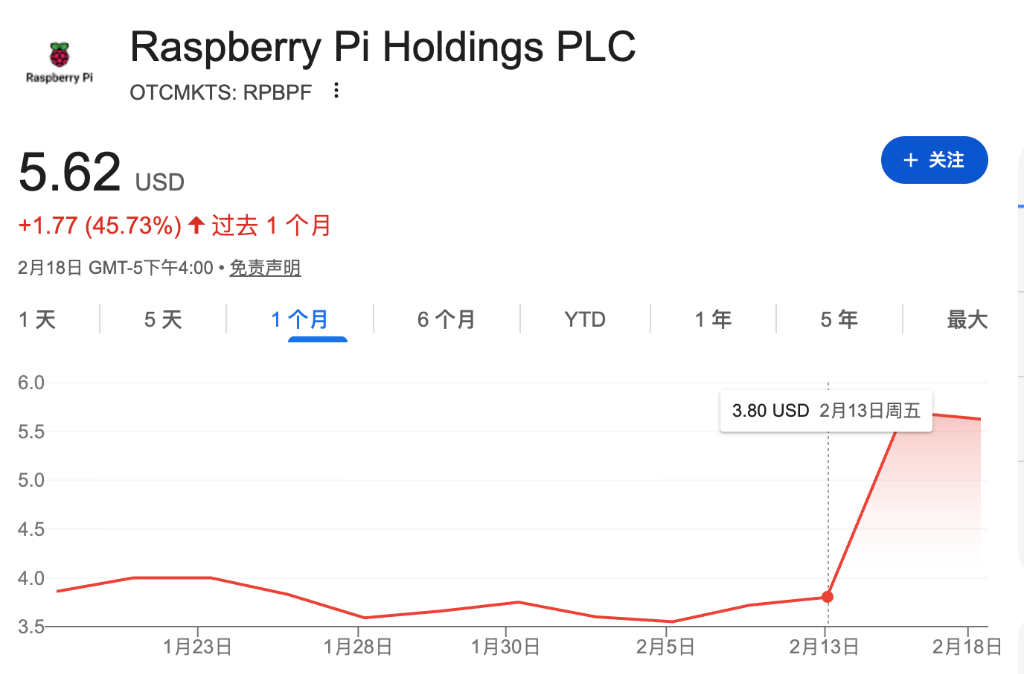
受益于AI工具OpenClaw在本地设备运行催生的"廉价主机"需求预期,英国低成本计算机制造商树莓派(Raspberry Pi)本周成为散户投资者的追捧 热点。截至周三,其股价在三个交易日内近乎翻倍,推动公司市值自去年5月IPO以来首次触及10亿英镑大关。 此番市场狂热主要源于市场对AI Agent 本地化部署的硬件需求预期。OpenClaw作为近期爆红的AI应用,被誉为首个成功的"AI Agent"案例,能够 在个人电脑本地运行,执行撰写电子邮件及回复即时通讯消息等任务。 其创始人Peter Steinberger于上周末被OpenAI纳入麾下,进一步点燃了市场情绪。社交媒体上的讨论显示,爱好者们正积极寻求利用树莓派这种成 本低廉的硬件,作为运行OpenClaw的物理载体。 然而,这轮受社交媒体驱动的"模因股"(Meme Stock)式涨势在周三午后出现急剧逆转。截至当日收盘,该公司股价回吐部分涨幅,市值回落至 略高于8亿英镑。 尽管如此,该股的大幅波动已引发市场对AI技术更深层次影响的关注。部分投资者开始担忧,随着AI Agent的成熟,其未来可能对商业软件、财 富管理乃至物流运输等行业的白领工作岗位产生 ...
这一次不一样?美军“最早本周末打击伊朗”,油价会如何?
Hua Er Jie Jian Wen· 2026-02-19 02:36
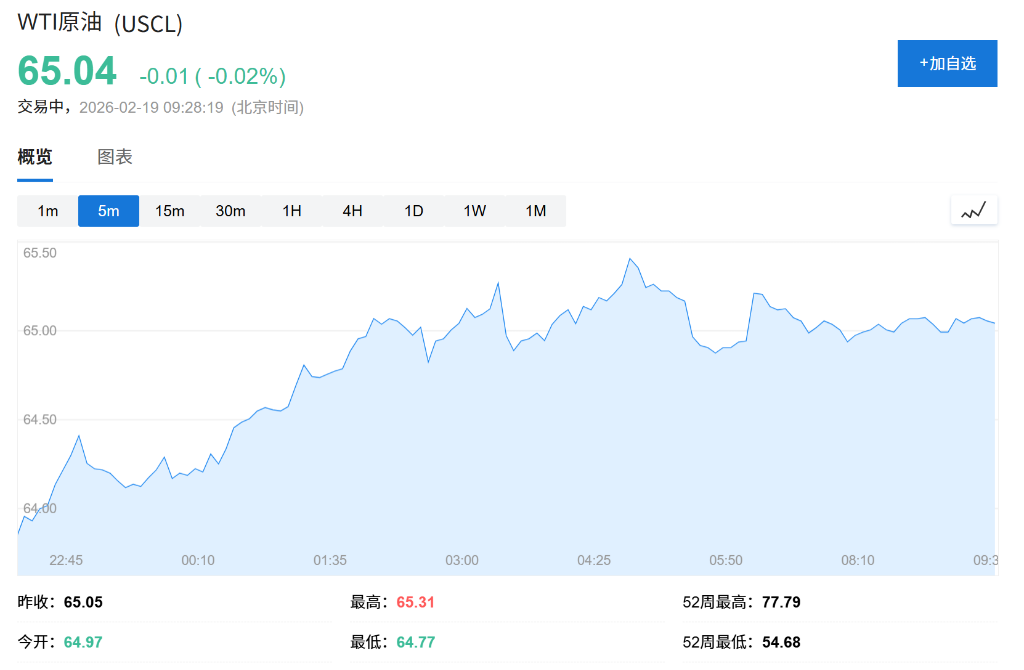
周三,美伊紧张局势骤然升温推动油价大涨。随着美军集结起自2003年伊拉克战争以来最大规模的空中力量,市场面对的不再是去年25分钟速战 速决的"午夜铁锤行动",而是一场可能持续数天乃至数周的军事行动。 据媒体报道,美国正向中东派遣大量战斗机和支援机群,集结自2003年伊拉克战争以来该地区最大规模的空中力量。过去几天美国持续向中东调 动先进的F-35和F-22战斗机,第二艘搭载攻击机和电子战飞机的航空母舰正在前往途中。对大规模空中作战至关重要的指挥控制机也在调动中, 关键防空系统近几周已部署到位。 据央视新闻,知情人士透露,美军已做好"最早于本周末对伊朗发动军事打击"的准备,但美国总统特朗普尚未最终决定。消息人士称,白宫已获 悉,在近几日美军向中东大幅增兵后,军方已做好周末发动攻击的准备。新华社2月18日报道称,目前没有任何迹象表明美国与伊朗的外交谈判会 取得突破,与此同时,越来越多的证据表明美对伊军事行动"迫在眉睫"。 WTI原油周三日内涨幅达5%,报65.04美元/桶。与此同时,市场正在评估多种油价冲击情景:从伊朗160万桶/日出口中断推动油价上涨10-12美 元,到波斯湾1800万桶/日出口受阻可能将油价推 ...
日元日债严阵以待!高市内阁即将揭晓央行委员人选,激进宽松派或上位?
Hua Er Jie Jian Wen· 2026-02-19 02:17
日本首相高市早苗即将提名的日本央行政策委员会新人选,正成为市场研判其货币政策意图的关键窗 口。这项人事决定将揭示高市早苗希望在多大程度上引导央行政策走向。 据彭博援引知情人士,高市早苗最早可能于2月25日的国会会议上,提议替换两名现任委员——野口旭 与中川顺子。其中,野口旭的五年任期将于3月底结束,中川顺子的任期则在6月29日届满。 高市早苗的选举胜利为其执政提供了更强底气。她领导的自民党在众议院获得超过三分之二席位,一举 巩固了此前仅以微弱多数运作的政府。这一显著胜利,叠加胜选后的谨慎言论,有效安抚了市场参与 者。 前日本央行政策委员会成员足立诚司本周受访时直言: "如果她真的想阻止日元走弱或长期债券收益率上升,最好不要选择再通胀主义者。" 高市早苗以支持刺激政策、偏好经济增长和对加息持谨慎态度而闻名。2024年是她成为首相的前一年, 她曾公开表示,当时日本央行加息将是"愚蠢的"。自去年10月上任以来,她已在经济顾问小组中任命多 位再通胀主义者,包括前副行长若田部昌澄和片冈刚士。这两人均曾是她的导师、前首相安倍晋三任命 的央行委员。 尽管这两项提名须经国会两院批准,而高市领导的自民党在参议院未占多数,为人事 ...