
Hua Er Jie Jian Wen

Search documents
幻方量化去年狂赚57%,跻身百亿级量化基金业绩榜第二!
Hua Er Jie Jian Wen· 2026-01-12 11:20
Group 1 - The core viewpoint of the articles highlights the strong performance of Huansheng Quantitative, which ranks second among China's quantitative funds with an average return rate of 56.6% in 2025, providing substantial financial support for its incubated AI company, DeepSeek [1][2] - Huansheng Quantitative's impressive performance is attributed to its strategic transformation, shifting focus from market-neutral strategies to a pure long-only product line aimed at outperforming stock benchmark indices, which has become the core driver of its growth [2] - The overall performance of the Chinese quantitative industry in 2025 is also noteworthy, with an average return rate of 30.5%, significantly higher than the global average, and a notable increase in the number of quantitative fund companies managing over 5 billion RMB [3] Group 2 - The company, under the leadership of its founder Liang Wenfeng, has ceased accepting external funds, maintaining majority ownership while leveraging its strong financial position to support DeepSeek's research and development [1][2] - The average return of products managed by co-founder Xu Jin reached 58.6%, while CEO Lu Zheng's products averaged a 56% increase, with Lu Zheng's stock strategy achieving a Sharpe ratio of 2.8, ranking first among leading quantitative institutions [2] - The rapid expansion of the quantitative fund industry is evidenced by the increase in the number of firms managing over 5 billion RMB, rising from 63 to 91 within a year, reflecting a trend towards concentration in management scale [3]
新“易中天”横空出世! GEO爆火,一文读懂
Hua Er Jie Jian Wen· 2026-01-12 11:01
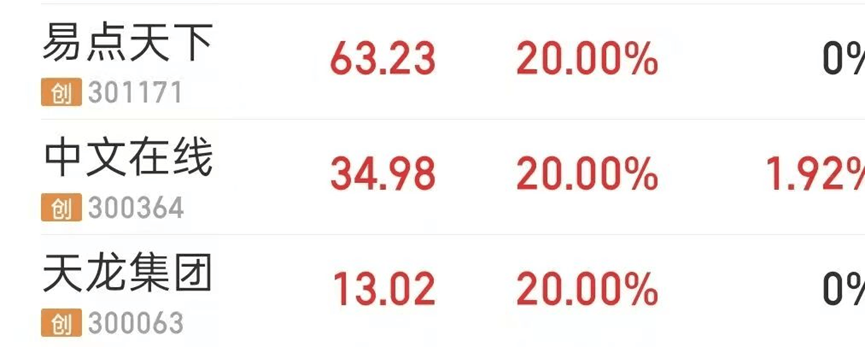
Group 1 - The A-share AI application sector has experienced a collective surge, with stocks like Worth Buying and Zhuoyi Information hitting the daily limit [2] - Notable stocks such as Yidian Tianxia, Zhongwen Online, and Tianlong Group formed a new "Yizhongtian" combination, all recording a 20% limit up in the morning session [2][3] - BlueFocus also saw a significant increase, with a trading volume reaching 19.32 billion yuan, ranking first in A-share trading volume for the day [3] Group 2 - The industry is undergoing a profound transformation as user decision-making shifts from "clicking links" to "reading AI-generated answers," fundamentally rewriting brand visibility logic [5][13] - A new competitive approach called GEO (Generative Engine Optimization) is emerging as a key strategy in the AI search era, becoming the entry point for traffic and marketing survival [5][13] - Traditional search processes are being replaced; users now receive direct answers from AI without needing to click through to web pages, altering the foundation of marketing [11][19] Group 3 - The shift from link-based entry points to AI-generated answers is changing how brands achieve visibility, raising questions about how brands can be seen and mentioned when answers are generated by AI [13][19] - The migration of entry points is not a future possibility but is currently happening, with significant user engagement on AI platforms like ChatGPT and Doubao, which have monthly active users of 780 million and 170 million, respectively [17] - Predictions indicate that by 2026, search engine traffic may decline by 25%, with search marketing share being taken over by AI chatbots and virtual agents [19] Group 4 - GEO is defined as an advertising marketing technology service aimed at ensuring brands are actively mentioned in AI searches, contrasting with traditional SEO which focuses on ranking [22][23] - GEO optimizes two core aspects: the recognition and credibility of brand content by large models, differing from traditional SEO's deterministic optimization to GEO's probabilistic optimization [23][24] - The transition from SEO to GEO reflects a shift in focus from being found to being cited by AI, emphasizing the need for brands to adapt their content strategies accordingly [22][24] Group 5 - The market for GEO is projected to reach significant levels, with estimates suggesting it could reach around 100 billion yuan, paralleling the SEO market's growth [49][50] - The business model for advertising agencies is evolving, with GEO offering opportunities for recurring revenue through subscription models, akin to SaaS companies [43][47] - The competitive landscape is expected to consolidate, as the complexities of ensuring AI models understand and cite content create higher barriers to entry [47][49] Group 6 - The execution path for brands to implement GEO includes analyzing user intent, structuring content, and ensuring authoritative backing for claims made in AI-generated answers [52][55] - The focus should be on creating high-quality, verifiable content that can be easily referenced by AI, moving away from merely increasing content volume [32][55] - The transition to GEO represents a systemic upgrade in brand strategy, emphasizing the importance of being mentioned in AI-generated conclusions as user behavior shifts towards seeking direct answers [59]



高盛展望2026大中华区科技趋势:ASIC成AI服务器增量核心,光模块迈向1.6T,果链领跑智能手机.......
Hua Er Jie Jian Wen· 2026-01-12 09:47
Core Insights - Goldman Sachs released a report on the outlook for the Greater China technology sector in 2026, highlighting three main themes: AI infrastructure upgrades, innovations in consumer electronics, and localization of semiconductors. The report identifies the increasing penetration of ASIC AI servers and changes in iPhone form factors as key drivers for industry growth. Group 1: AI Infrastructure and Server Trends - AI servers are transitioning from a GPU-dominated landscape to a parallel development of GPU and ASIC, with ASIC becoming the core increment due to its advantages in specific training and inference scenarios [2] - By 2026, the penetration rate of ASIC in AI servers is expected to rise significantly, leading to rapid growth in rack-level AI server shipments and a shift towards higher integration and power density in server architecture [2] - The demand for high-speed interconnects, cooling, and power systems will increase as the value of the entire machine rises [2] Group 2: Networking and Cooling Technologies - The evolution of high-speed optical interconnects is a key trend, with a transition from 400G to 800G and eventually to 1.6T driven by the expanding scale of computing power [3] - New technologies like silicon photonics and CPO are maturing, setting the stage for significant growth in high-speed optical modules by 2026 [3] - Liquid cooling solutions are expected to see increased adoption in ASIC AI servers, transitioning from localized applications to more systematic solutions, enhancing cooling efficiency and creating new technical barriers [4] Group 3: ODM and Competitive Landscape - The complexity of AI servers is increasing customer reliance on ODM manufacturers, with competitive advantages shifting towards multi-chip platform adaptability and rapid delivery capabilities [5] - Leading ODMs with advanced manufacturing capabilities and long-term service relationships with cloud vendors are expected to dominate AI server orders, while smaller players will face limited opportunities [5] Group 4: Consumer Electronics and iPhone Innovations - The global PC market is projected to face growth pressures, with the end of pandemic-driven demand and rising memory costs impacting terminal demand [7] - The iPhone is entering a continuous cycle of form factor innovation, with foldable models expected to significantly influence consumer upgrade behavior and drive demand for high-end components [8] - The smartphone market is experiencing a mild recovery, with growth driven by an increase in high-end models and AI functionalities enhancing user experience [9] Group 5: Semiconductor and PCB Market Dynamics - The high-end PCB and CCL markets are experiencing supply constraints due to rising demand from AI servers and high-end consumer electronics, leading to increased pricing power and profitability [10] - The domestic semiconductor industry is entering an accelerated phase, driven by growing demand for computing power and local acceptance of domestic chips and materials [11] - Emerging fields such as L4 autonomous driving and low-orbit satellites are expected to open up long-term growth opportunities, with increasing demand for chips and system integration [12]
AI眼镜迈入独立智能终端时代,开始接管手机核心功能
Hua Er Jie Jian Wen· 2026-01-12 09:19
Core Insights - Smart glasses are transitioning from smartphone accessories to independent smart terminals, integrating eSIM communication modules and multimodal AI technology to take over core functions like calls, connectivity, and complex computations [1][2] Group 1: Industry Trends - The introduction of AI glasses as a focal point at CES 2026, with 23 exhibitors, 16 of which are from China, indicates a significant shift towards independent communication capabilities, breaking the reliance on smartphones [1][2] - The concept of "Physical AI" proposed by NVIDIA's CEO signifies a shift in AI development focus from the digital realm to hardware integration that can interact with the physical world [1][2] Group 2: Product Developments - Rayneo's X3 Pro Project eSIM, the first smart glasses supporting eSIM, allows users to make calls and access AI services independently from smartphones or WiFi [2] - Rokid's new AI smart glasses, Rokid Style, emphasize an open ecosystem, featuring a dual-chip design for enhanced functionality and a 12-hour battery life [2][3] Group 3: Market Dynamics - Counterpoint's data shows a 110% year-on-year increase in global smart glasses shipments in the first half of 2025, with AI glasses accounting for 78% of the total [1][8] - Meta leads the market with a 73% share, while the proportion of AI-enabled glasses has surged from 46% in the first half of 2024 to 78% in the same period of 2025 [8] Group 4: Policy Support - China's new policy includes smart glasses in the "trade-in" subsidy program, offering a 15% subsidy for purchases under 6000 RMB, which is expected to boost consumer demand and accelerate market penetration [11]

美高院暂缓关税裁决,市场最关注七个关键问题
Hua Er Jie Jian Wen· 2026-01-12 08:53
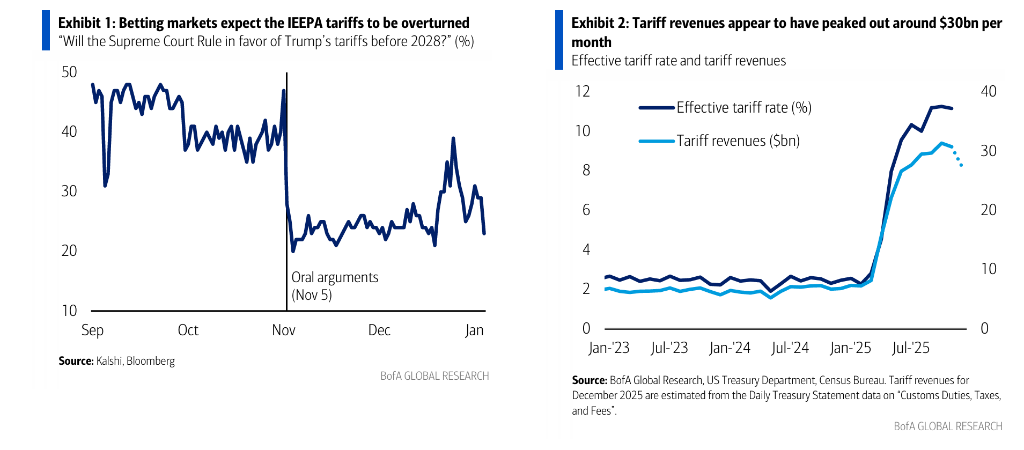
Core Viewpoint - The U.S. Supreme Court has delayed a decision on the global reciprocal tariffs imposed by the Trump administration under the International Emergency Economic Powers Act (IEEPA), leading to uncertainty in the market regarding future trade policies and their economic implications [1][2]. Group 1: Market Reactions and Expectations - The market anticipates that if the IEEPA tariffs are overturned, bond yields may rise due to concerns over fiscal deficits, while stock markets could benefit from eased profit pressures on retailers and a more relaxed fiscal stance [1][10]. - Conversely, if the tariffs are upheld, both bond yields and stock markets are expected to decline, with the market currently leaning towards the expectation of an overturn, which could lead to significant price impacts [10] Group 2: Revenue and Economic Impact - Current tariff revenues are estimated at approximately $30 billion per month, accounting for about 1.2% of GDP, with 55% to 65% of this revenue attributed to IEEPA-related tariffs [7]. - If the IEEPA tariffs are overturned, the government may resort to alternative legal provisions to recover some revenue, potentially leading to a net loss in overall tariff income of about 0.3% of GDP, equating to approximately $90 billion annually [8]. Group 3: Implications for Growth and Inflation - Regardless of the Supreme Court's ruling, trade policies are expected to support economic growth this year, with potential government actions aimed at reducing trade uncertainties and promoting more market-friendly outcomes [11]. - The short-term inflation impact may lean slightly downward, as retailers who have passed on tariff costs may hold prices steady or even reduce them, providing some room for the Federal Reserve to consider further rate cuts [11]. Group 4: Tariff Collection Discrepancies - The effective tariff rate has been lower than expected, currently at 11.2%, significantly below the theoretical rate of 14.5%, due to importers shifting towards lower-tariff products and exemptions [12]. - This discrepancy indicates that the Supreme Court's decision may have a muted impact on the market and macroeconomic conditions, as the actual revenue collected is less than anticipated [12].
鲍威尔被诉,共和党关键议员翻脸:我就投反对票,特朗普别想提名新联储主席!
Hua Er Jie Jian Wen· 2026-01-12 08:32
Core Viewpoint - The Federal Reserve Chairman Jerome Powell has accused the Justice Department of initiating a grand jury investigation to exert pressure on the central bank, leading to bipartisan backlash against Trump's nomination plans for a new Fed chair [1]. Group 1: Political Reactions - Republican Senator Thom Tillis has publicly stated he will oppose any Fed nominees from Trump until the Justice Department investigation is fully resolved, indicating a significant obstacle to Trump's plans for reshaping the Fed [2]. - Democratic Senator Elizabeth Warren condemned Trump for abusing the law and called for the Senate to reject any Fed nominations from him, emphasizing the threat to the Fed's independence [1][2]. Group 2: Investigation Context - Powell's statement links the investigation, which ostensibly concerns his testimony about Fed headquarters renovations, to broader governmental threats and pressures, questioning the Fed's ability to set interest rates based on economic conditions rather than political influence [1][3]. - The investigation has been characterized by Powell as a political pressure tactic rather than a standard legal procedure, highlighting the ongoing tensions between the Fed and the current administration [3]. Group 3: Internal Republican Divisions - Tillis's opposition could lead to a stalemate in the Senate Banking Committee, which currently has a partisan split of 13 to 11, making it difficult for any controversial nominations to advance without 60 votes [2]. - Trump's recent actions have resulted in a series of Republican defections in Congress, indicating a growing divide within the party as he faces challenges from both sides [3].
印度卫星发射任务失败!PSLV火箭连续第二次发射失利
Hua Er Jie Jian Wen· 2026-01-12 08:15
Core Insights - India's space ambitions face a significant setback as its primary launch vehicle experiences failure during a critical military and commercial mission, resulting in the loss of a strategically important military satellite and multiple commercial payloads [1][2] Group 1: Launch Failure Details - The PSLV rocket launched from the Satish Dhawan Space Centre but encountered issues during a critical phase, leading to a deviation from its intended flight path [2] - ISRO's chairman reported that the anomaly occurred during the third stage of the rocket's flight, similar to a previous failure in May 2025 [2] - If confirmed as a total failure, this incident would mark the fourth failure in the PSLV's 64-launch history [2] Group 2: Asset Losses - The primary asset lost in this failure is the EOS-N1 satellite, a high-spectral imaging satellite designed for military use, which was intended to provide valuable intelligence through continuous surface scanning [3] - In addition to the military payload, the mission included 15 commercial and research payloads from various international clients, which are now rendered inoperative due to the launch failure [3] - Notable payloads included a Thai-UK Earth observation satellite, a Brazilian satellite for assisting distressed fishing vessels, and a re-entry capsule from a Spanish startup [3]
埃克森美孚CEO直言委内瑞拉“不可投资”,特朗普怒怼:那就别来了
Hua Er Jie Jian Wen· 2026-01-12 07:50
Group 1 - The CEO of ExxonMobil, Darren Woods, stated that Venezuela's current business environment is "not investable" and emphasized the need for significant changes before making large capital commitments [1][2] - President Trump expressed dissatisfaction with Woods' response and indicated a willingness to exclude ExxonMobil from the Venezuelan market, suggesting that the company was being uncooperative [1][2] - The U.S. government is negotiating with Western oil companies to attract at least $100 billion in private sector investment to help rebuild Venezuela's oil sector, but major energy firms remain cautious without specific guarantees [2][4] Group 2 - Under pressure from Trump, Woods softened his stance, stating that ExxonMobil would send a technical team to Venezuela in the coming weeks to assess the situation and expressed confidence that necessary changes could be implemented [3] - Chevron, the only U.S. company currently operating in Venezuela, conveyed a more optimistic outlook, stating it could increase production by 50% within 18 to 24 months by expanding existing operations [4] - Trump reassured that companies would be safe and that security would not be an issue, addressing concerns about legal, financial, and safety guarantees for investments in Venezuela [4]


新“易中天”横空出世!改写“AI时代广告营销的底层逻辑”:GEO
Hua Er Jie Jian Wen· 2026-01-12 07:44
Core Viewpoint - The A-share AI application sector has experienced a collective surge, with stocks like ZhiDeMai and ZhuoYi Information hitting the daily limit, indicating a significant market interest in AI technologies and their applications [1][2]. Group 1: Market Dynamics - The advertising industry is undergoing a profound transformation as user decision-making shifts from "clicking links" to "reading AI-generated answers," fundamentally altering brand visibility [5][14]. - The emergence of Generative Engine Optimization (GEO) is becoming a new survival strategy in the AI search era, as traditional advertising methods are losing effectiveness [14][21]. Group 2: User Behavior Changes - Users are increasingly relying on AI search engines for direct answers, bypassing traditional web links, which has led to a decline in click-through rates for conventional search results [8][22]. - Data from Citic Securities indicates that monthly active users for ChatGPT and Doubao App have reached 780 million and 170 million, respectively, while traditional search engines like Baidu are seeing stagnant user growth [16]. Group 3: SEO vs. GEO - Traditional SEO focuses on ranking through keyword matching, while GEO emphasizes getting brands mentioned in AI-generated answers, shifting the optimization focus from clicks to AI recognition [26][27]. - GEO is defined as a marketing technology service aimed at ensuring brands are actively mentioned in AI searches, contrasting with the traditional SEO approach [26][27]. Group 4: Optimization Techniques - Effective GEO strategies include incorporating relevant quotes and statistics, which can significantly enhance visibility and citation rates in AI responses [37][40]. - The DDS principle emphasizes the importance of semantic depth, data support, and authoritative sources in creating content that AI models are likely to reference [41][43]. Group 5: Business Model Evolution - GEO represents a shift in advertising agencies from labor-intensive services to technology-driven solutions, with subscription-based models becoming more prevalent [50][57]. - The market for GEO is projected to reach approximately $11.2 billion globally by 2025, with significant growth potential as it replaces traditional SEO practices [66][61]. Group 6: Future Implications - The transition from traditional advertising to GEO signifies a broader shift in how brands engage with consumers, moving from driving traffic to being included in AI-generated answers [79][80]. - Companies must adapt to this new landscape by focusing on creating high-quality, verifiable content that AI models can reference, thereby enhancing their brand visibility [78][82].
“订单真的太满!”存储封测报价急涨30%,厂商酝酿第二轮提价
Hua Er Jie Jian Wen· 2026-01-12 07:35
Core Viewpoint - The global memory chip industry is entering a new price increase cycle, with significant price hikes observed in the downstream testing and packaging segment due to capacity utilization nearing its limits [1] Group 1: Price Increases and Demand - Major memory packaging companies have raised their prices by up to 30% in response to overwhelming orders and capacity constraints, with further price increases anticipated [1] - The surge in orders is attributed to major DRAM and NAND Flash manufacturers ramping up shipments, leading to a situation where existing capacity cannot meet demand [1][2] - The price increase trend is expected to reflect positively in financial reports starting from the first quarter [1] Group 2: Capacity Utilization and Production Challenges - The core reason for the tight testing capacity is the strategic shift of upstream chip manufacturers focusing on AI-specific HBM production, which has squeezed the supply of standard DRAM and NAND chips [2] - Major Taiwanese packaging companies are operating at near full capacity, with companies like Powertech and ASE benefiting from strong order visibility and recovery in industrial control customer orders [3] - Nanya Technology is facing significant order pressure and is actively seeking to procure testing and packaging equipment to address the high market demand [3] Group 3: Market Trends and Investment Insights - AI remains the primary investment theme in the technology sector, with a focus on the supply chain for Google TPU and high-end testing segments [4] - As chip complexity increases, testing costs are expected to rise, providing valuation re-evaluation opportunities for testing suppliers like WinWay and MPI [4] - Despite short-term volatility in the CoWoS equipment sector, advanced packaging is projected to maintain strong structural demand in the long term [4]