
Hua Er Jie Jian Wen

Search documents
市场对“量子计算”的最大误解:当前还“为时过早”
Hua Er Jie Jian Wen· 2026-02-09 01:45
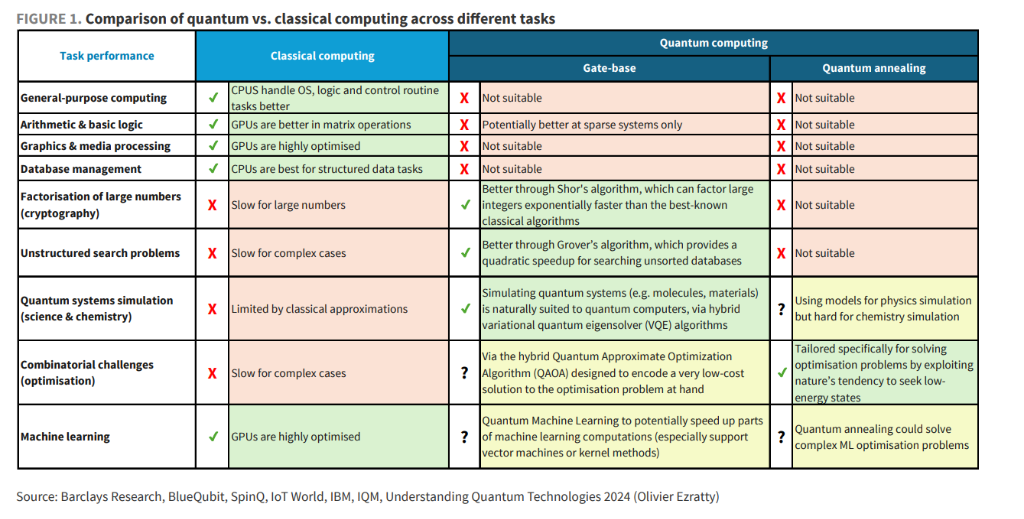
投资者普遍认为量子计算依然停留在科幻阶段,但巴克莱最新研报指出,这种"太早了"的错觉,可能让你错过未来12个月最关键的趋势。 据追风交易台消息,巴克莱分析师团队最新发布了一份研报《量子计算:纠正投资者的最大误解》。 报告的核心逻辑非常直白:华尔街低估了技术爆发的速度,同时完全搞错了量子与经典算力(如英伟达)的关系。巴克莱认为,我们正处于从"实 验室玩具"走向"商业利器"的前夜。 误解一:量子计算"为时过早" 巴克莱给出的第一条纠偏是:别把量子计算当成"十年后才有结果"的纯远期主题。 当前市场普遍认为,能完美运行的"容错量子计算"(FTQC)要到2030年以后。这没错,但巴克莱提醒投资者,千万别忽视了中间的"赛点"。 巴克莱指出,2026年至2027年将是行业的分水岭,届时将实现"量子优势"(Quantum Advantage)。 更重要的是"怎么定义优势"。巴克莱认为,"当系统瞄准100个逻辑量子比特时,优势才算被证明"。它同时提醒,任何"优势宣称"都需要"强技术 数据"背书,否则更像营销而非拐点。 "我们预计未来12个月内就会有重磅公告……当系统能稳定运行100个逻辑量子比特时,量子优势将被证明。" 这就像 ...

恒指高开1.6%,恒生科技指数涨1.9%
Hua Er Jie Jian Wen· 2026-02-09 01:23
风险提示及免责条款 市场有风险,投资需谨慎。本文不构成个人投资建议,也未考虑到个别用户特殊的投资目标、财务状况或需要。用户应考虑本文中的任何 意见、观点或结论是否符合其特定状况。据此投资,责任自负。 华虹半导体涨超4%,腾讯音乐、小鹏汽车、百度涨超3%,中芯国际涨近3%。 ...
沃什力挺,影响深远!时隔75年,美联储又要和美国财政部达成协议了?
Hua Er Jie Jian Wen· 2026-02-09 01:20
Core Viewpoint - The nomination of Waller as the next Federal Reserve Chair has sparked significant interest on Wall Street regarding his proposal for a new agreement between the Federal Reserve and the U.S. Treasury, aimed at reshaping their relationship, potentially impacting the $30 trillion U.S. Treasury market and fundamentally altering the Fed's balance sheet management [1][2]. Group 1: Proposed Agreement - Waller has called for a new version of the "1951 Agreement" to reform the relationship between the Federal Reserve and the Treasury, which historically limited the Fed's footprint in the bond market and established its autonomy in monetary policy [2]. - The proposed agreement would clearly define the size of the Fed's balance sheet and align it with the Treasury's debt issuance plans, addressing concerns raised during the financial crisis and the COVID-19 pandemic regarding the Fed's extensive asset purchases [2][3]. Group 2: Treasury's Position - Treasury Secretary Yellen shares Waller's skepticism towards prolonged quantitative easing (QE), advocating for its use only in genuine emergencies and with coordination among government departments [3]. - A streamlined new agreement may stipulate that the Fed can only conduct large-scale Treasury purchases with Treasury approval, aiming to halt QE as market conditions allow [3]. Group 3: Asset Composition Shift - There is an expectation that a more substantive agreement could lead to a significant shift in the Fed's asset holdings, moving from medium- and long-term securities to Treasury bills with maturities of 12 months or less [4]. - This shift would enable the Treasury to reduce the issuance of notes and bonds or at least avoid significant increases in issuance [4][5]. Group 4: Market Risks and Concerns - While enhanced coordination may aim to lower borrowing costs for U.S. borrowers, any fundamental changes carry risks, including concerns about the Fed's independence and its potential alignment with fiscal policy [6]. - Analysts warn that a public agreement linking the Fed's balance sheet to Treasury financing could undermine the Fed's inflation-fighting mandate, leading to increased volatility and diminished attractiveness of U.S. assets [6]. Group 5: Skepticism on Formal Agreement - Some experts express skepticism about the likelihood of a formal agreement, suggesting that while cooperation may increase, it could also reduce the chances of a formalized arrangement [7]. - There are proposals for the Fed to exchange its $2 trillion mortgage-backed securities portfolio for Treasury bills, aimed at lowering mortgage rates, but this faces significant obstacles [7].
触及十年通道下沿后,美股科技股大反弹,回调结束了?
Hua Er Jie Jian Wen· 2026-02-09 01:18
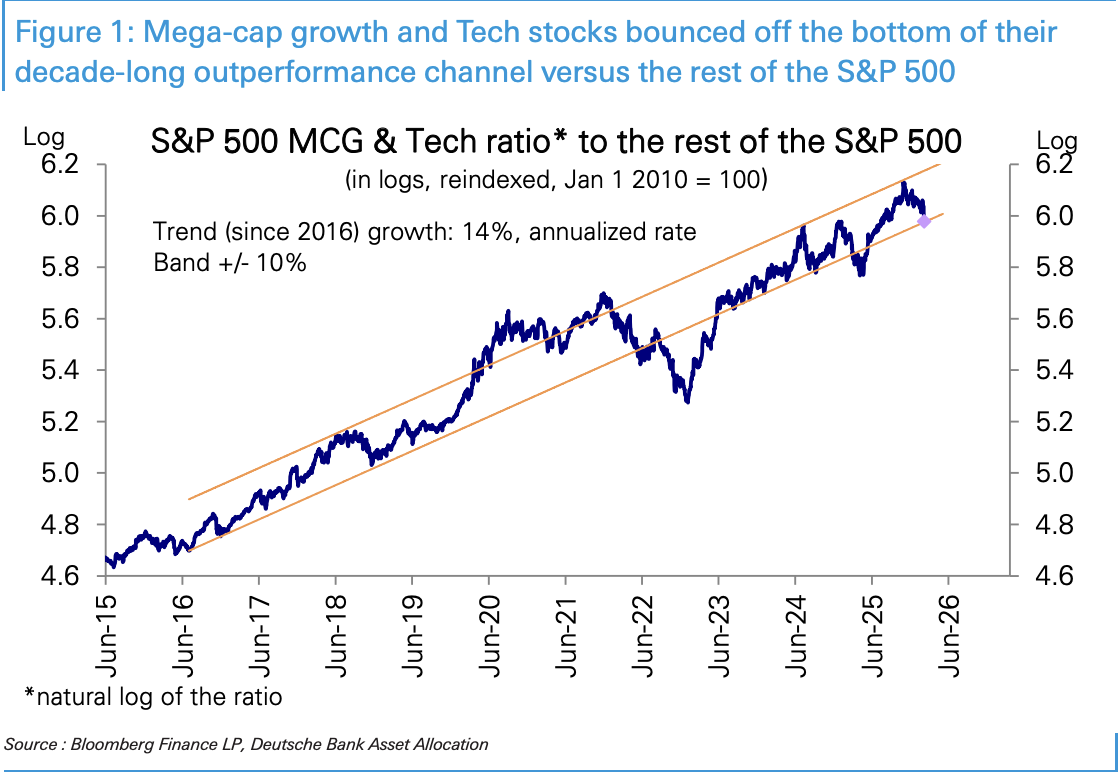
与此同时,资金流向数据显示,极其拥挤的非科技板块交易已显露疲态,科技板块的资金流入正在回暖。 十年通道底部的反击 科技股的这次"触底反弹"并非偶然。报告指出,过去三个月,资金从大型科技股疯狂出逃,涌入其他板块,其导火索是2025年第三季度财报季——那时市场 首次看到了科技巨头之外盈利增长扩散的迹象。 然而,周五的反弹或许标志着情绪的逆转。德银表示: 大型成长股与科技股相对于标普500指数其余部分的表现,从10月下旬位于其十年超额收益通道的顶部,一路跌至周四收盘时的底部,随后在周 五反弹。 上周五美股报复性反弹,道指首破5万点,标普涨近2%,创去年5月以来最佳单日涨幅,英伟达大涨7%,这仅仅是死猫跳,还是新一轮上涨的号角? 据追风交易台,德意志银行在最新的研报中表示,这轮抛售的关键特征是:盈利预期实际上仍在上调,市场下跌完全由估值收缩驱动,而非基本面恶化。周 五的反弹或许标志着情绪的逆转。 这种剧烈的波动并非史无前例。分析师将其比作去年"Deepseek公告"后的市场反应,或是2024年7月对盈利放缓的担忧,甚至是2018年的资本支出消化期。 杀估值,而非杀业绩 最值得警惕的是,这次抛售本质上是对盈利可持续性的 ...
高盛交易员:本周美股将面临持续抛压
Hua Er Jie Jian Wen· 2026-02-09 00:32
美股上周五强势反弹后,抛压并未解除。高盛交易团队指出,趋势跟随型资金仍可能在本周持续卖出, 叠加流动性走弱与期权市场负gamma格局,美股或延续震荡并放大波动。 据彭博,高盛交易台指出,标普500指数已触发趋势跟踪策略(CTA)减仓的短期阈值,这类不基于基 本面、而是顺势交易的系统策略,预计未来一周将保持净卖出状态,无论市场方向如何。 高盛测算显示,若市场再度走弱,本周可能触发约330亿美元的卖盘;若股市上涨,仍可能触发约87亿 美元的卖盘。对市场而言,这意味着即便指数出现反弹,也可能更容易遭遇资金流出带来的"上冲受 阻"。 高盛交易台同时强调,订单簿流动性显著变薄、以及期权交易商头寸从正gamma转向负gamma,可能 使盘中波动更剧烈。同时其他策略资金(如风险平价策略和波动率控制策略)仓位仍然偏高,叠加散户 流入变弱,市场下行风险增强。 CTA卖盘:本周"顺势减仓"或成主线 高盛表示,标普500已越过CTA的短期触发点,推动其卖出股票。该行预计,CTA在未来一周将继续净 卖出,并给出不同市场情形下的资金流量测算: 3、若重新下跌,可能触发卖出约330亿美元 更受关注的是"阈值效应"。高盛数据显示,若标普5 ...

日本执政联盟赢得众议院选举过半议席,日元日债面临压力
Hua Er Jie Jian Wen· 2026-02-09 00:16
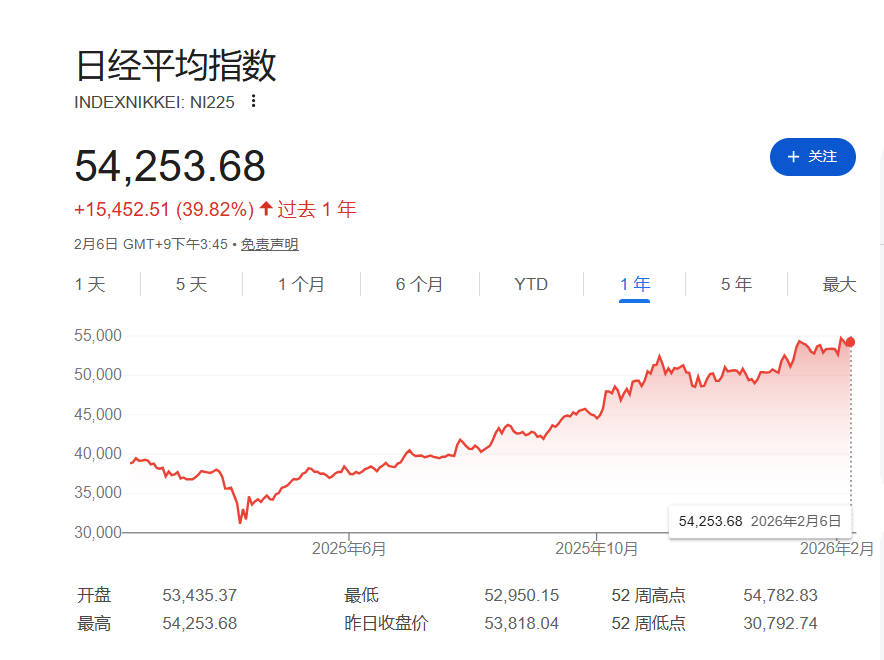
Core Insights - The ruling coalition in Japan, consisting of the Liberal Democratic Party and the Japan Innovation Party, has secured a majority in the recent House of Representatives election, leading to strong market expectations for fiscal stimulus and a bullish sentiment in the stock market [1][2] - The Nikkei 225 index futures rose approximately 3% in early trading, reflecting investor optimism regarding increased government spending, particularly in defense and technology sectors [1][2] - However, the yen and Japanese government bonds are under pressure, with the yen weakening to around 157.61 against the dollar, nearing the intervention threshold of 160 [1][4] Market Reactions - The election results have triggered a "risk-on" sentiment in financial markets, with the Nikkei index continuing its strong performance this year, up over 8%, significantly outperforming developed market indices [2] - Analysts suggest that "Takaichi trades" may dominate the market, focusing on sectors aligned with the government's investment agenda, such as defense and nuclear energy [2] Currency and Bond Market Dynamics - The yen's depreciation is expected to continue, with market participants anticipating potential official intervention due to concerns over fiscal sustainability [4] - Japanese government bonds face selling pressure, exacerbated by liquidity issues and concerns regarding the sustainability of government finances, leading global fund managers to reduce their exposure to Japanese bonds prior to the election [4] Central Bank Policy Outlook - Despite fiscal concerns, there has been a slight improvement in bond performance, easing upward pressure on yields [7] - Market focus is shifting towards the Bank of Japan's policy direction, with a 75% probability of a 25 basis point rate hike in April, indicating a potential shift in monetary policy [7]
日韩股市高开,韩国股市大涨逾4%,黄金、白银上涨,白银站上80美元
Hua Er Jie Jian Wen· 2026-02-09 00:06
Group 1 - The Nikkei 225 index opened up by 1.5% [1] - The Seoul Composite Index opened up by 4.1% [1] - Spot gold rose to approximately $5040, increasing by 1.6% during the day [1] - Spot silver surpassed the $80 mark, with a daily increase of over 3% [1] Group 2 - The yield on Japan's 30-year government bonds increased by 6.5 basis points, reaching 3.615% [1]
凌晨三点,彻底失眠:Seedance 2.0告诉我们,AI对现实世界工作流“压缩”正在加速
Hua Er Jie Jian Wen· 2026-02-09 00:01
Core Insights - The article discusses the transformative impact of AI on the video production industry, particularly through the introduction of Seedance 2.0, which automates various aspects of filmmaking, including camera movement, editing, and sound design [3][5][10]. Group 1: AI in Video Production - Seedance 2.0 represents a significant advancement in video technology, automating camera operations and editing processes that previously required expensive equipment and skilled personnel [5][10]. - The AI can now understand three-dimensional space and maintain consistency in visual elements, such as perspective and lighting, which enhances the realism of video content [6][7]. - The traditional workflow in video production, which involves multiple roles like directors, cinematographers, and editors, is being compressed into a single model, significantly increasing efficiency [10][11][12]. Group 2: Broader Implications of AI - The article suggests that the changes in video production are part of a larger trend where AI is reshaping workflows across various industries, including software development and app usage [15][18]. - The concept of "intent interface" is introduced, where users can express their needs in natural language, and AI generates the required applications or services instantly, eliminating the need for traditional app interfaces [22][25]. - This shift could lead to the decline of traditional app ecosystems, as AI-generated solutions may replace the need for downloading and maintaining multiple applications [27][29]. Group 3: Organizational Changes - The reduction of traditional workflows may result in the dissolution of large organizational structures, as individuals equipped with AI could accomplish tasks that previously required teams [31][32]. - The emergence of "one-person companies" is anticipated, as AI enables individuals to operate independently, challenging the conventional business model that relies on collective effort to reduce transaction costs [32].
华尔街见闻早餐FM-Radio | 2026年2月9日
Hua Er Jie Jian Wen· 2026-02-08 22:54
Market Overview - US consumer confidence reached a six-month high, leading to a rebound in US stocks, with the S&P 500 rising nearly 2%, marking its best single-day gain since May last year [2] - The Dow Jones Industrial Average surpassed 50,000 points for the first time, while the Russell 2000 index surged by 3.6% [2] - Nvidia's CEO highlighted a surge in AI demand, resulting in Nvidia's stock increasing by 7% and chip stocks rising by 5.7% [2] - Following a significant drop on Thursday, cryptocurrencies rebounded sharply, with Bitcoin soaring by 11% to reclaim the $70,000 mark [2] Key News - The People's Bank of China reported a continuous increase in gold reserves for the fifteenth consecutive month, adding 40,000 ounces in January [3][10] - China successfully launched a reusable experimental spacecraft, indicating a potential shift towards frequent commercial space launches [10] - The price of DDR4 memory in Huaqiangbei has reversed, with 8GB memory sticks dropping from a peak of 260-270 yuan to a range of 180-200 yuan [10] International Developments - The Dow Jones Industrial Average broke the 50,000 mark, with former President Trump claiming credit for achieving this target three years early [11] - The Japanese ruling coalition, consisting of the Liberal Democratic Party and the Japan Innovation Party, secured a majority in the recent elections [11] - Ukraine's President Zelensky indicated that the US hopes for a peace agreement with Russia and Ukraine by June [11] Company News - Goldman Sachs partnered with Anthropic to fully automate accounting and compliance operations, affecting 12,000 developers and thousands of operations staff [12] - Anthropic is reportedly raising over $20 billion in a new funding round, doubling its previous target due to strong investor demand, with a valuation expected to reach $350 billion [12] - Samsung is set to begin mass production of HBM4 memory, aiming to capture a significant share of the AI storage market [19] Industry Insights - The global semiconductor sales are projected to reach $1 trillion this year, with a 25.6% growth expected by 2025 [25] - The Chinese government is advancing the construction of a national computing power interconnection node system to enhance the efficiency of computing resources [21][22] - The pre-prepared food industry is moving towards standardized safety regulations, addressing public concerns about food safety [23]

爱泼斯坦曾帮罗斯柴尔德家族“搞定”美国司法部交易,获利2500万美元
Hua Er Jie Jian Wen· 2026-02-08 14:37
在日内瓦湖畔的私人银行家圈子里,声誉被视为比黄金更昂贵的资产。然而,最新解密的文件揭开了一 角令人咋舌的内幕:欧洲最显赫的金融王朝之一——埃德蒙·罗斯柴尔德集团,曾深度依赖杰弗里·爱泼 斯坦——这位后来身败名裂的"大亨"。 文件显示,爱泼斯坦曾作为幕后关键人物,协助该家族"摆平"了美国司法部(DoJ)的一项重磅调查, 并因此索取了高达2500万美元的酬劳。 这一数字,即便在华尔街顶尖投行的收费标准中,也堪称天价。 "搞定"美国司法部交易,获利2500万美元 我们把时间拉回到2015年末。 彼时,总部位于瑞士的埃德蒙·罗斯柴尔德银行正深陷合规风暴。因涉嫌协助美国富裕客户隐匿资产, 该行正面临美国司法部的严厉审查,巨额罚款与刑事指控的阴云笼罩在日内瓦总部上空。 在这一关头,集团掌门人阿丽亚娜·德·罗斯柴尔德(Ariane de Rothschild)转向了爱泼斯坦。 一封封曝光的电子邮件,记录了这场金钱交易的细节。2015年12月,阿丽亚娜在邮件中向爱泼斯坦确认 和解金额:"4500万?" 爱泼斯坦的回复透着精明的算计:"算上给律师的1000万美元费用,以及给我的2500万美元,我认为你 会发现……总额不到800 ...