Hua Xia Shi Bao

Search documents
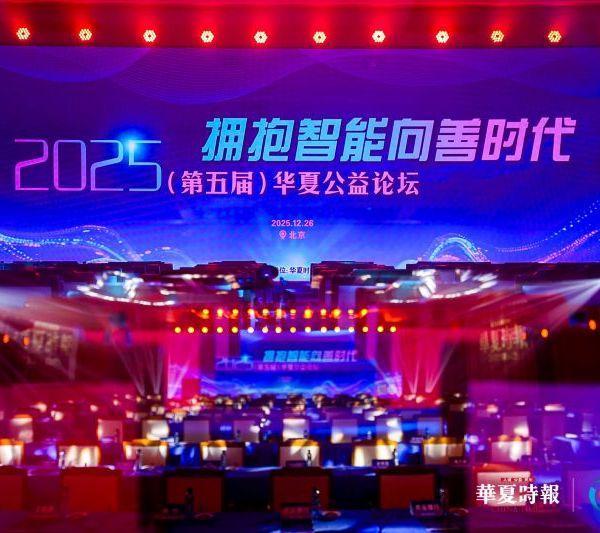
中国体育发展研究院院长、教授乔尚奎:AI时代残健融合的体育坐标与治理新局|聚焦2025(第五届)华夏公益论坛
Hua Xia Shi Bao· 2025-12-28 07:56
Core Viewpoint - The 2025 Huaxia Public Welfare Forum emphasizes the integration of artificial intelligence (AI) technology with public welfare, aiming to explore innovative paths for high-quality development in the sector [2]. Group 1: Policy Supply - The transition from "survival guarantee" to "common development" reflects a significant policy evolution for the disabled community, highlighting the importance of inclusive policies in the AI era [4][5]. - The Chinese government recognizes disabled individuals as a crucial force in modernizing society, emphasizing that no one should be left behind in the AI era [4]. - The development trajectory of disability rights in China has evolved from welfare-based support to a focus on creating new productive forces through AI integration [5]. Group 2: Scene Application - AI is reshaping the lives of disabled individuals through various applications, enhancing their independence and participation in society [7]. - AI technologies, such as the "Guide Rabbit" for visually impaired individuals and the "Star AI Companion" for blind children, are addressing significant barriers in education and daily life [7]. - In competitive sports, AI serves as a "super brain" for athletes, providing tailored training plans and injury risk assessments, while also enabling disabled athletes to navigate venues independently [8][9]. Group 3: Strategic Layout - The establishment of inclusive standards and interfaces for AI in sports facilities is essential to ensure accessibility for disabled individuals [10]. - Economic accessibility is crucial; strategies such as tax incentives for companies developing AI tools for the disabled can help bridge the digital divide [11]. - Ethical considerations must be prioritized, ensuring that algorithms serve human dignity and that disabled individuals retain control over their data [12][13].

对外贸易法全文公布,将于明年3月1日起实施|快讯
Hua Xia Shi Bao· 2025-12-28 07:53
Group 1 - The "Foreign Trade Law of the People's Republic of China" has been revised and will be implemented starting March 1, 2026, aiming to promote high-level opening-up and high-quality development of foreign trade [2] - The law emphasizes the importance of maintaining a fair and free foreign trade order while protecting the legitimate rights and interests of foreign trade operators [2][3] - The state will actively align with international high-standard economic and trade rules and participate in the formulation of international economic and trade rules [3] Group 2 - The law establishes a compliance mechanism for trade policies that align with international norms, requiring relevant government departments to conduct trade policy compliance assessments [3] - China will promote and develop trade relations with other countries and regions based on the principles of equality and mutual benefit, including entering into customs unions and free trade agreements [3] - In response to discriminatory trade measures from other countries or regions, China reserves the right to take corresponding measures based on actual conditions [4]

“海南东风”难抵套现冲动?凯撒旅业股价走强,股东却减持不止
Hua Xia Shi Bao· 2025-12-28 03:39
Core Viewpoint - The recent stock performance of Caesar Travel (stock code: 000796.SZ) has been influenced by favorable policies following the launch of the Hainan Free Trade Port, but the company faces pressure from shareholder reductions and ongoing financial losses [2][5]. Shareholder Actions - China Jingu International Trust Co., Ltd. (Jingu Trust), the third-largest shareholder, plans to reduce its holdings by up to 3% of the total share capital starting January 20, 2026, through a combination of centralized bidding and block trading [3]. - This marks the second public reduction by Jingu Trust within a year, following a previous reduction completed in September 2025, where it sold 0.71% of the total shares [4]. - The reduction is attributed to the shareholder's financial needs and will not significantly impact the company's governance or operational continuity [3][4]. Market Reaction - Following the announcement of the reduction plan, Caesar Travel's stock price fell by 6.25% on December 25, 2025, reflecting investor concerns over increased share supply and liquidity pressure [5]. - Despite the short-term decline, the stock has shown an overall increase of 86.67% for the year, indicating market optimism about the long-term recovery prospects of the industry [2]. Financial Performance - In the first three quarters of 2025, Caesar Travel reported a revenue increase of 6.52%, with a significant quarterly growth of 19.81%, but faced a net loss of 26.78 million yuan, highlighting a core issue of rising costs [5]. - The company's operating cash flow deteriorated to -123 million yuan, indicating financial strain despite revenue growth [5]. Industry Outlook - The Hainan government is actively promoting tourism and related sectors through targeted investment initiatives, which may provide long-term growth opportunities for companies like Caesar Travel [6]. - The tourism industry is expected to shift towards high-quality development, focusing on comprehensive consumption and spiritual contributions, which could benefit market participants [6]. Investment Considerations - The current situation presents a complex scenario for Caesar Travel, balancing short-term shareholder pressure against long-term industry recovery opportunities [7]. - Investors are advised to monitor the execution of the shareholder reduction plan and the company's ability to capitalize on the industry's recovery [7].


2025资本市场持续“新陈代谢”:110余家IPO融资超1200亿元,近200家公司遭“戴帽”
Hua Xia Shi Bao· 2025-12-27 12:11
Group 1 - The capital market in 2025 has shown strong self-renewal vitality amidst complex internal and external environments, with a significant increase in IPOs and a rigorous cleansing of existing risks by regulators [1] - A total of 111 companies successfully went public in the A-share market, raising 125.32 billion yuan, marking a substantial increase in both quantity and scale compared to 2024 [2] - The IPO landscape is characterized by a stable main board, active innovation boards, and the North Exchange filling gaps, with the Shanghai main board leading in fundraising [2] Group 2 - Structural differentiation in fundraising is evident, with 29 companies raising over 1 billion yuan and 14 companies over 2 billion yuan, highlighting the parallel development of large enterprises and "mini IPOs" [3] - Nearly 200 companies have been subjected to ST or *ST treatment, indicating a significant "hat-wearing tide" that reflects the regulatory commitment to purifying the existing market [4] - The reasons for companies being "hat-wearing" have diversified, with over 100 companies facing issues related to financial data not meeting standards, showcasing a comprehensive risk landscape [4][5] Group 3 - 28 companies have completed delisting in 2025, indicating a normalization of the delisting process, primarily due to financial non-compliance and major violations [6] - The increase in voluntary delisting cases reflects a more rational understanding of delisting among market participants, viewing it as a means to optimize resource allocation [6] - The capital market is transitioning towards a healthier ecosystem, moving away from a rigid "only in" model to one that embraces "entry and exit, survival of the fittest" [7]
钼价依赖叠加七成外协“悬顶”,盛龙股份IPO过会成色几何?
Hua Xia Shi Bao· 2025-12-27 10:33
Core Viewpoint - The IPO of Luoyang Shenglong Mining Group Co., Ltd. has been approved by the Shenzhen Stock Exchange, marking a significant step for the company backed by local state-owned assets in Henan province. The company, a leader in the molybdenum industry, reported revenues of over 2.863 billion yuan and a net profit of 754 million yuan for the fiscal year 2024, supported by its resource endowment of the largest single molybdenum mine in production in China. However, systemic risks are emerging beneath the surface of its impressive financial performance [2][3][4]. Group 1: Company Background and IPO Process - Shenglong Mining's IPO is characterized by a "rescue restructuring" initiated during a debt crisis in 2020, which led to the formation of the company from the assets of Yongmei Group [3][4]. - The restructuring involved the acquisition of high-quality molybdenum assets by the Henan Energy and Chemical Group, which was crucial for alleviating systemic risks and optimizing local state-owned asset allocation [4][5]. - The company was established in November 2020, with core assets injected as paid-in capital, positioning it as a leading player in the molybdenum industry [4][5]. Group 2: Financial Performance and Growth - Shenglong Mining's revenue grew from 1.911 billion yuan in 2022 to 2.864 billion yuan in 2024, with a compound annual growth rate (CAGR) of 22.5%, while net profit increased from 344 million yuan to 754 million yuan, achieving a CAGR of 48.3% [9]. - The company's gross margin fluctuated significantly, reflecting its dependence on molybdenum prices, with a gross margin of 49.67% in 2022, peaking at 59.94% in 2023, and then declining to 50.99% in 2024 [9][10]. Group 3: Risks and Challenges - The company faces potential risks related to goodwill impairment, as it has a goodwill of 121 million yuan, with concerns about asset quality and the impact of declining molybdenum prices on profitability [5][6]. - High levels of related-party transactions, with nearly 40% of procurement in the 2023 fiscal year being related-party transactions, raise questions about the company's operational independence and sustainability [6][10]. - The company's reliance on external contractors for core production processes has increased, with the outsourcing ratio for molybdenum concentrate rising from 29.98% in 2022 to 77.78% in the first half of 2025, which could amplify operational uncertainties [11][12]. Group 4: Future Outlook - The company plans to raise 1.53 billion yuan through its IPO to fund mining projects and enhance its operational capabilities, but the timing of these investments may not align with immediate profit growth, leading to potential declines in return on equity (ROE) [6][10]. - The ability to balance the expansion of self-owned production capacity with optimized outsourcing partnerships will be critical for mitigating supply chain risks and ensuring sustainable growth [12].
6天4板!华联控股拟12.35亿元跨界海外盐湖提锂,押注新能源谋第二增长曲线
Hua Xia Shi Bao· 2025-12-27 10:33
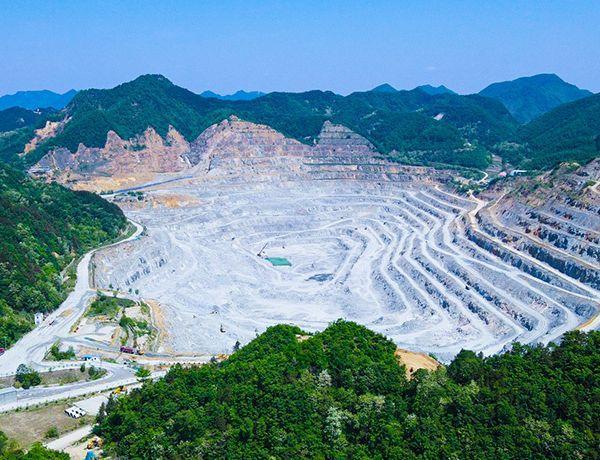
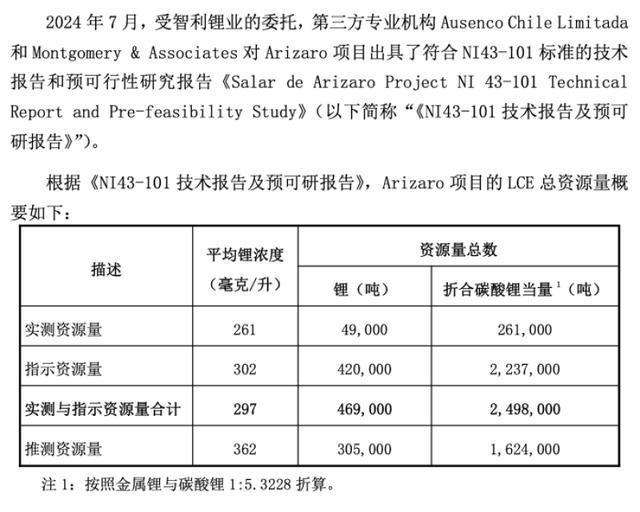
Core Viewpoint - Hualian Holdings plans to acquire overseas lithium mining assets for 1.235 billion yuan, aiming to diversify into lithium extraction from salt lakes, which has positively impacted its stock performance with multiple trading halts [1][3][4]. Group 1: Acquisition Details - The company intends to purchase 100% of Argentum Lithium S.A. to gain 80% interest in the Arizaro project, with a base price of $175 million, equivalent to 12.35 billion yuan [3][4]. - The Arizaro project is located in Argentina's Salta province and is part of the largest undeveloped salt lake in South America, covering approximately 1970 square kilometers [4][5]. - The project has a measured and indicated resource total of 469,000 tons of lithium, equivalent to 2,498,000 tons of lithium carbonate [1]. Group 2: Strategic Importance - This acquisition is part of Hualian Holdings' strategy to transition from real estate to new energy sectors, particularly lithium extraction, to enhance its market competitiveness and profitability [9][10]. - The company aims to create synergies with its existing businesses in lithium extraction and adsorbent production, thereby strengthening its position in the new energy supply chain [5][6]. Group 3: Financial Performance and Challenges - Hualian Holdings has faced declining revenues, with a 75.89% drop in revenue in 2023 compared to the previous year, prompting the need for diversification [8][9]. - The company reported a net profit of 0.82 billion yuan in 2023, down 81.27% year-on-year, indicating significant financial pressure [8]. - The acquisition will lead to substantial capital expenditures, potentially impacting cash flow during the project's construction phase [2][11]. Group 4: Market Risks and Future Outlook - The company acknowledges potential risks related to resource availability, capital expenditure pressures, and fluctuations in lithium carbonate prices, which could affect the investment's viability [11][12]. - Despite these risks, market analysts predict a favorable outlook for lithium demand driven by energy storage needs, suggesting a positive long-term market environment [12].

300391爆雷!连续三年财务造假,证监会拟罚4100万元,中介机构将被追责
Hua Xia Shi Bao· 2025-12-27 08:51
Core Viewpoint - Long Pharmaceutical Holdings (ST Changyao) is facing a severe crisis due to financial fraud, leading to a potential delisting from the stock market and significant losses for its investors [2][4]. Group 1: Financial Fraud Details - Long Pharmaceutical Holdings has been found to have inflated its revenue by over 700 million yuan from 2021 to 2023, with specific annual increases of 215.32 million yuan, 283.74 million yuan, and 233.63 million yuan, representing 9.12%, 17.57%, and 19.51% of the reported revenue for those years respectively [4][5]. - The company also inflated its total profit by approximately 56.4 million yuan, 63.4 million yuan, and 43.7 million yuan during the same period, accounting for 35.62%, 88.23%, and 6.42% of the reported total profit [4][5]. - The fraud was facilitated by subsidiaries of Long Pharmaceutical Holdings, which created false inventory and sales documents without actual sales occurring [4][5]. Group 2: Regulatory Actions - The China Securities Regulatory Commission (CSRC) has issued a preliminary administrative penalty notice, proposing a total fine of 41 million yuan against Long Pharmaceutical Holdings and 14 responsible individuals, with the company itself facing a fine of 10 million yuan [5][6]. - The CSRC has classified the case as a serious financial fraud incident, indicating that it may trigger mandatory delisting procedures [5][6]. - The CSRC is also investigating the performance of the auditing firms involved, and any violations found will lead to further penalties [5][6]. Group 3: Investor Impact - Investors are facing dual risks of delisting due to financial indicators and serious violations, with the stock price having dropped over 70% in 2025, closing at 1.47 yuan per share [7][10]. - There are potential legal avenues for investors to seek compensation for losses incurred due to the financial fraud, particularly for those who held shares during specified periods [10][11]. - The company has acknowledged the situation and stated it will cooperate with the CSRC, but the final outcome will depend on the formal penalty decision [6][10].


太平财险迎重大人事调整 彭云苹任公司党委书记、拟任总经理|快讯
Hua Xia Shi Bao· 2025-12-27 04:56
数据显示,今年前三季度,太平财险实现保险业务收入258.65亿元,净利润9.74亿元。截至三季度末, 该公司综合偿付能力充足率、核心偿付能力充足率分别为247.47%、177.88%,最近两期风险综合评级 分别为A类、BBB类。 编辑:冯樱子 彭云苹在财产保险行业从业20余年,在业务销售、机构管理、组织人事、公司治理和党建纪检等多个领 域具有丰富的管理经验。其于2022年8月出任太平财险副总经理,历经集团总部、财险总公司和分公司 多个管理岗位锻炼,曾任太平财险纪委书记、中国太平保险集团监事会办公室总经理、副总经理(主持 工作)、副总经理,综合开拓部副总经理等职务。 中国太平保险集团副总经理朱捷将不再兼任太平财险党委书记、总经理。朱捷2022年下半年兼任太平财 险一把手以来,带领太平财险成功转型升级,经营效益明显好转。 文/吴敏 《华夏时报》记者从太平财险处获悉,12月26日,太平财险召开干部大会,宣布彭云苹任公司党委书 记、临时负责人,待监管批复后将出任总经理。 ...
11月M1增速下滑主要是住户活期存款减少太多
Hua Xia Shi Bao· 2025-12-27 04:43
Group 1 - The core viewpoint of the article highlights the decline in M1 growth to 4.9% in November, down from 6.2% in the previous month, while M2 growth decreased to 8.0% from 8.2%, indicating a widening gap between M1 and M2 [2] - The increase in deposits for the first 11 months of this year was 5.4 trillion yuan more than last year, primarily driven by a significant rise in non-financial corporate deposits, which increased by 2.04 trillion yuan compared to a decrease of 2.1 trillion yuan last year [2] - The improvement in corporate deposits is attributed to better financial conditions for companies, facilitated by government bond issuance and local initiatives to clear overdue payments, leading to an increase in M1 [2] Group 2 - Non-bank financial institutions saw an increase in deposits of 6.74 trillion yuan this year, compared to 5.76 trillion yuan last year, with a significant portion likely flowing into bank wealth management products rather than the stock market [3] - By the end of November, the scale of bank wealth management reached a historical high of 34.0 trillion yuan, reflecting a year-on-year increase of 4.0 trillion yuan, indicating that most of the non-bank deposits were used for wealth management [4] - The trend of increasing household deposits continues, with a notable rise in demand for time deposits, as household demand for consumption remains weak, leading to a decline in the growth rate of demand deposits [4][5] Group 3 - The decline in the growth rate of household demand deposits in November is linked to a significant drop in both long-term and short-term loans, particularly a reduction of 2.158 trillion yuan in short-term loans, influenced by stricter regulations on internet consumer loans [5] - The decrease in loan growth has resulted in a reduction of demand deposits, contributing to the overall decline in M1 growth, which may persist despite some forecasts suggesting a recovery due to government bond issuance [5] - The relationship between M1 and M2 is emphasized, with M1 being a critical indicator for market conditions, and the recent decline in M1 growth could have significant implications for the capital market [6]

光伏“梦碎”!天洋新材叫停4个胶膜项目,4亿元募资或“打水漂”
Hua Xia Shi Bao· 2025-12-27 04:16
Core Viewpoint - Tianyang New Materials (Shanghai) Technology Co., Ltd. has announced the suspension of its photovoltaic encapsulation film project due to ongoing low-price competition and insufficient demand in the photovoltaic industry, which has led to significant losses in this business segment [2][4]. Company Summary - As of November 30, 2025, Tianyang New Materials has invested approximately 400 million yuan in three photovoltaic film projects, with specific investments of 56.84 million yuan, 249.25 million yuan, and 93.99 million yuan in respective projects [3]. - The company has terminated three fundraising projects and completely halted its existing photovoltaic film business, which may result in the loss of the previously invested 400 million yuan [3]. - Financial data indicates that in 2024, apart from one subsidiary that made a profit of 5.73 million yuan, the other three subsidiaries reported losses of 74.73 million yuan, 83.01 million yuan, and 81.62 million yuan respectively [5]. - The company has accumulated losses exceeding 360 million yuan from 2022 to 2024, with net losses of 56.59 million yuan, 94.21 million yuan, and 213 million yuan in those years [6]. - The photovoltaic film business accounted for 48% of the company's total revenue in 2024, but it was unprofitable, leading to a net loss of approximately 240 million yuan from this segment [7]. Industry Summary - The photovoltaic encapsulation film market is characterized by a significant oversupply, with prices dropping from over 10 yuan per square meter to as low as 6 yuan per square meter [8]. - The market is dominated by transparent EVA films, which account for 42.5% of the total market, followed by co-extruded EPE films at 27.8% [8]. - The profitability of the industry is declining, with first-tier companies maintaining profitability while second and third-tier companies are experiencing increasing losses [8][9]. - Foster, a leading company in the photovoltaic film sector, has maintained a market share of around 50% but reported a 26.97% decline in revenue year-on-year [8][10].