
Zhong Guo Neng Yuan Wang

Search documents
涨疯了!2025金银双双刷新纪录,白银137%涨幅领跑,市场担忧利多耗尽?
Zhong Guo Neng Yuan Wang· 2025-12-23 07:37
Core Viewpoint - In 2025, both international gold and silver prices reached historical highs, with gold hitting $4500 per ounce and silver soaring to $69.81 per ounce, marking significant annual increases of 71% and 137% respectively, indicating a strong bull market for precious metals [1][4]. Group 1: Gold Price Dynamics - Gold prices surged due to several factors, including U.S. tariffs increasing demand for gold as a safe haven, ongoing geopolitical tensions from the Russia-Ukraine conflict, and continuous purchases by global central banks [2][3]. - The price of gold experienced a significant increase of 30% from January to mid-April, followed by a period of fluctuation until mid-August, where it entered a second upward trend driven by the Federal Reserve's interest rate cuts and renewed tariff disputes [3][4]. - A notable drop of $236 per ounce occurred on October 21, attributed to crowded long positions in the market, despite fundamental factors suggesting a potential resolution to geopolitical tensions [3]. Group 2: Silver Price Dynamics - Silver prices outperformed gold, with a year-to-date increase of 137%, driven by a combination of liquidity support, a shift in investment focus towards silver, and a recovery in industrial demand, particularly in the solar sector [4][5]. - The silver price saw a dramatic rise of 87% from July 1 to December 22, influenced by the return of investment demand and a tightening supply situation [5][6]. - Despite potential declines in commodity demand due to rising prices, historical trends suggest that silver will continue to follow gold's upward trajectory, benefiting from cyclical buying and its inherent monetary properties [8]. Group 3: Future Outlook for Precious Metals - The market anticipates that the bull market for precious metals will persist into 2026, driven by ongoing global monetary system restructuring, rising debt cycles, and geopolitical tensions [6][7]. - The expectation of continued fiscal and monetary easing in the U.S. is seen as a foundational support for gold prices, with potential fiscal deficits projected to rise significantly [6][7]. - Silver is expected to maintain its upward trend, with a higher likelihood of outperforming gold due to its cyclical demand and elastic supply characteristics, particularly in a re-inflationary environment [8].
煤焦油市场年末降温
Zhong Guo Neng Yuan Wang· 2025-12-23 06:34
Core Viewpoint - The domestic coal tar market has experienced a one-month recovery since mid-November, peaking at a transaction price of 3460 yuan per ton in early December, but has since softened due to various factors, including a decline in downstream market prices and increased production capacity utilization [1] Group 1: Downstream Industry Weakness - The decline in the coal tar market is attributed to the weakening of the downstream deep processing industry, with prices for key products like carbon black and coal pitch showing a downward trend starting from early December [2] - As of December 18, prices for various downstream products have decreased, with notable weekly declines, indicating a broader market downturn [2] - The drop in coal pitch prices, a core product of coal tar processing, has further weakened market support, leading to price reductions in regions like Shanxi and Shandong [2] Group 2: Increased Production Capacity Utilization - The production capacity utilization rate of domestic coking enterprises has increased to over 73%, up by about 2% from November, contributing to stable coal tar output [3] - Despite recent price reductions in coke, the decrease in raw material costs has improved profits for coking enterprises, maintaining stable production levels [3] - The concentration of the coal tar industry has increased, with leading companies achieving significant economies of scale, which amplifies the impact of supply and demand changes in the market [3] Group 3: Trade Dynamics - The trading atmosphere has become increasingly cautious, with traders' actions significantly influencing market volatility [5] - Traders have reduced their participation in auctions due to a prevailing bearish sentiment, leading to lower final transaction prices in recent auctions [5][6] - Despite the potential for further downward price adjustments, the overall supply of coal tar is expected to remain stable, with downstream processing enterprises maintaining relatively high operating rates [6]
内蒙古鄂温克电厂多样化开展“宪法宣传周”活动
Zhong Guo Neng Yuan Wang· 2025-12-23 06:18
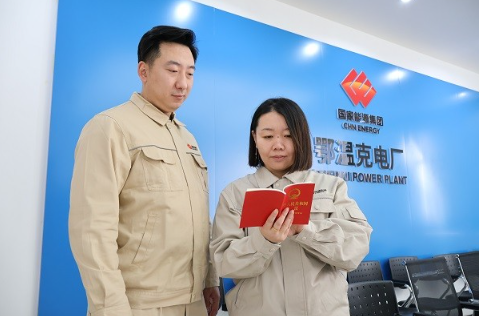
Core Viewpoint - The company is actively promoting the study and implementation of the Constitution and Xi Jinping's rule of law thought among its employees during the eighth National Constitution Publicity Week, aiming to foster a strong legal awareness and commitment to constitutional values [1][2]. Group 1 - The company organized activities themed "Learning and Promoting Xi Jinping's Rule of Law Thought" to deepen the understanding and implementation of the Constitution [1]. - The distribution of Constitution handbooks and online quiz activities transformed the learning process from passive to active, enhancing employees' awareness of rights and obligations [2]. - The use of LED screens and multimedia platforms for continuous display of constitutional slogans and videos helped integrate constitutional education into the workplace, improving legal literacy among employees [2]. Group 2 - The company measures learning effectiveness through quizzes, reinforcing the legal foundation necessary for high-quality development and ensuring compliance in operations [2]. - The initiatives provide strong support for the company's lawful operations and standardized development, establishing a solid legal barrier for future growth [2].

内蒙古鄂温克电厂举办AI专项培训促智能化建设
Zhong Guo Neng Yuan Wang· 2025-12-23 06:18
Core Viewpoint - The company is enhancing digital skills among employees by integrating artificial intelligence (AI) tools into their work processes through specialized training sessions [1][3]. Group 1: Training Overview - The training session titled "Using AI Tools in Work" was held on December 18 to improve overall digital skills [1]. - A senior trainer from the domestic AI field was invited to conduct the training, which utilized a three-part teaching model: theoretical explanation, practical exercises, and interactive communication [3]. - The course content was tailored to meet job-specific needs, focusing on mainstream AI office tools and data intelligence analysis [3]. Group 2: Training Methodology - The training emphasized hands-on experience, demonstrating the characteristics, advantages, and diverse application scenarios of current mainstream AI tools [3]. - Participants engaged in practical exercises, learning to create AI-generated presentation templates, optimize document logic, and automatically extract meeting highlights [3]. - The training environment was interactive, with participants actively asking questions and receiving detailed guidance from the instructor [3]. Group 3: Strategic Goals - The company aims to leverage this training as a catalyst for enhancing "AI capability development" and encourages employees to explore innovative applications of AI tools in their work [3]. - The initiative seeks to foster a culture of "everyone learning AI and actively using AI," transforming technological advantages into business efficiency [3]. - This approach is intended to provide intelligent support for the company's high-quality development [3].

内蒙古鄂温克电厂11月结算电价创历史最高水平
Zhong Guo Neng Yuan Wang· 2025-12-23 06:18
Group 1 - The core viewpoint of the article highlights that the Erwenke Power Plant achieved a record high settlement electricity price in November, increasing by 13.16% year-on-year, which positions it as the top performer in the Northeast region for direct adjustment thermal power [1] - The plant generated an additional revenue of 19.1 million yuan compared to the medium and long-term income, contributing to the success of the "50-day intensive work, decisive battle" initiative [1] Group 2 - In response to uncertainties in coal supply, the plant has proactively engaged with coal supply and transportation units to enhance coal procurement and unloading efficiency, thereby improving coal inventory security [2] - The plant's operational strategy includes precise coal blending based on load variations and optimizing unit operation methods to ensure stable energy supply while capturing high-price trading opportunities [2] - The marketing team conducts in-depth research on electricity market policies and closely monitors changes in settlement methods and market dynamics to maximize trading efficiency and enhance revenue [2] - A focus on cross-departmental communication and collaboration is emphasized, with daily market analysis meetings and transaction reviews to ensure efficient decision-making and execution [2]
藏在班组里的“降本智慧”——山东能源唐口煤业自主发力摆脱“价格依赖症”
Zhong Guo Neng Yuan Wang· 2025-12-23 06:08
Core Viewpoint - Shandong Energy Luxi Mining Tangkou Coal Industry aims to reduce reliance on coal market prices by focusing on cost reduction and efficiency improvement through employee engagement and innovative practices [1] Group 1: Cost Reduction Initiatives - The company has adopted a proactive approach to cost reduction, moving away from a passive "price-dependent" mindset [1] - Employees are encouraged to actively participate in cost-saving measures, leading to a culture of efficiency [1] - Notable team leaders have emerged, implementing practical strategies for resource optimization and waste reduction [1] Group 2: Exemplary Practices by Team Leaders - Team leader Song Fangjian emphasizes material management, leading his team to recover and reuse old materials, saving over 20,000 yuan in material costs [2] - Song's team consistently achieves production targets while maintaining low material costs, resulting in higher overall wage levels within the work area [2] - Zhang Fenghua, another team leader, has successfully repaired equipment independently, saving nearly 100,000 yuan in repair costs and achieving a total savings of over 400,000 yuan through resource recovery [3] Group 3: Innovation and Technical Advancements - Team leader Zhang Gang focuses on technical innovation to enhance production efficiency and reduce costs, introducing new support techniques that improve both quality and efficiency [4] - Zhang has completed over ten small reforms and innovations this year, earning his team multiple accolades for excellence in management and performance [4] - The culture of innovation has motivated employees to actively seek better and more cost-effective methods of working, leading to improved team morale and financial benefits [4]
山东能源唐口煤业:抓牢安全线 算好效益账
Zhong Guo Neng Yuan Wang· 2025-12-23 06:08
四季度以来,山东能源鲁西矿业唐口煤业以"严"字筑安全屏障、以"紧"字提质效动能、以"冲"字加速度收官,打出靶向精准、环环相扣的 攻坚"组合拳",助力企业高质量发展。 严字当头织密安全防控"立体网" "安全生产是企业发展的底线,容不得半点松懈。"该公司安全副总师、安全监察部部长朱礼建介绍,他们将严管厚爱贯穿安全管理全过 程,开展全员全时段安全督查,对排查发现的安全隐患实行"写实化"闭环管理,并对未按期整改问题全部追责,以"零容忍"态度守住安全 红线。 该公司深化安全风险预判管控机制,在安全风险日分析的基础上,新增班响应机制,将每日识别的风险精准分解至当班生产任务,由跟班 安监员现场动态盯防、专业技术人员专项督查,构建"分析—管控—督查—销号"全链条闭环体系,确保隐患问题排查整改到位、现场风险 防控到位。同时,常态开展安全大检查和解剖式检查,自10月份以来,查处各类问题200余条,从严安全管理氛围愈发浓厚。 该公司围绕降本增效核心目标,聚焦设备管理挖潜创效,10月份以来,成功修复防爆开关27台、移动变压器5台,有效降低外委维修成 本。 "为提升生产效率、减少浪费,我们积极推进各类改善行动,为企业精益运行瘦身提速。 ...
11月光伏组件出口额同比高增,海外需求持续旺盛 | 投研报告
Zhong Guo Neng Yuan Wang· 2025-12-23 03:05
Core Viewpoint - The report highlights a decline in the production and demand for photovoltaic components, with a notable decrease in both domestic and overseas markets, while also indicating a mixed performance in battery production and pricing trends across different segments [1][2]. Production - Photovoltaic component production in November 2025 decreased by 2.43% compared to October 2025, with domestic terminal installation progress falling short of expectations and rising component prices causing reluctance among downstream buyers [2] - In December 2025, the predicted production volume for power, storage, and consumer batteries in China is 220 GWh, reflecting a 5.3% month-on-month increase, with storage battery production accounting for approximately 35.3% [2] Pricing - As of December 17, 2025, the price of polysilicon remained stable at 52.00 CNY/kg, while the average price of 183N monocrystalline silicon wafers was 1.18 CNY/piece, and TOPCon double-glass components also held steady at 0.69 CNY/W [3] - In November 2025, the average price of lithium iron phosphate battery storage systems ranged from 0.4452 to 0.6828 CNY/Wh, with an average price of 0.5721 CNY/Wh, reflecting a 6.4% decrease month-on-month [3] Demand - In November 2025, the export value of photovoltaic components reached approximately 2.412 billion USD, marking a year-on-year increase of 34.08% and a month-on-month increase of 6.84% [4] - The cumulative export value from January to November 2025 was 25.885 billion USD, showing a year-on-year growth of 4.89% [4] - Domestic photovoltaic installations in October 2025 totaled 12.6 GW, representing a month-on-month increase of 30.4% but a year-on-year decrease of 38.3% [4] - The newly tendered capacity for EPC/PC (including DC-side equipment) and storage systems in November 2025 reached 21.8 GW/64 GWh, marking a monthly high for 2025 with a 65% increase month-on-month [4] Investment Recommendations - The report suggests focusing on companies related to the photovoltaic and storage sectors, recommending specific companies such as Sunshine Power, Nandu Power, Tongrun Equipment, Huashengchang, and Shouhang New Energy [5]



再论光纤光缆或涨价 | 投研报告
Zhong Guo Neng Yuan Wang· 2025-12-23 03:02
Core Viewpoint - The continuous iteration of AI large model training and the acceleration of AI application implementation are expected to drive global demand for optical fibers and cables, particularly in data centers [1][2]. Demand Side - The construction of AI data centers and DCI interconnections is likely to sustain the demand for optical fibers and cables, with high-end single-mode and multi-mode fibers, along with ultra-high-speed optical modules, facilitating efficient short-distance data transmission and flexible interconnections [2]. - G.654.E optical fibers significantly enhance transmission distance and system capacity, contributing to the development of more efficient and economical long-distance high-bandwidth networks [2]. - The demand for hollow-core fibers is anticipated to gradually increase due to their advantages such as low latency, wide spectrum, low loss, and low nonlinearity, with active promotion of new technologies in both domestic and international markets [2]. Supply Side - The production cycle for traditional optical preforms is long, and the manufacturing process has high technical requirements, leading to potential short-term supply tightness [2]. - The expansion of optical fiber production capacity is constrained by the lengthy production cycle of optical preforms and the need for high precision in the manufacturing process, which may result in a tight supply situation in the short term [2]. - According to predictions from the Asia-Pacific Optical Fiber and Cable Industry Association and the China Academy of Information and Communications Technology, global demand for optical fibers and cables is expected to reach hundreds of millions of core kilometers by 2025, maintaining a growth trend [2]. Investment Opportunities - The global development of AI is likely to continue driving demand for optical fibers and cables in data centers and DCI interconnections, creating a potential supply-demand imbalance in the short term [3]. - Recommended investment targets include Hengtong Optic-Electric and Zhongtian Technology, with beneficiaries including Yangtze Optical Fibre and Cable, Yongding Holdings, FiberHome Technologies, and TeFa Information [3].




印度叫停对华钛白粉反倾销税,西湖集团关停在美4家工厂 | 投研报告
Zhong Guo Neng Yuan Wang· 2025-12-23 03:02
Industry Overview - The chemical sector showed a weekly performance ranking of 5th with a change of 2.58% from December 15 to December 19, 2025, outperforming the Shanghai Composite Index by 2.55 percentage points and the ChiNext Index by 4.83 percentage points [1] Key Insights - The chemical industry is expected to continue its differentiated trend in 2025, with a focus on synthetic biology, pesticides, chromatography media, sugar substitutes, vitamins, light hydrocarbon chemicals, COC polymers, and MDI [1] Synthetic Biology - The arrival of a pivotal moment in synthetic biology is anticipated, driven by energy structure adjustments. Traditional chemical companies will face competition based on energy consumption and carbon tax costs, with a shift towards green energy solutions and integrated advantages to reduce costs [2] - Companies like Kasei Bio and Huaheng Bio are highlighted as leaders in the synthetic biology sector [1] Refrigerants - The third-generation refrigerants are expected to enter a high prosperity cycle starting in 2024, with supply entering a "quota + continuous reduction" phase. The demand for refrigerants is projected to grow due to the development of heat pumps and the cold chain market [2] - Companies such as Juhua Co., Sanmei Co., Haohua Technology, and Yonghe Co. are positioned to benefit from this trend [2] Electronic Specialty Gases - Electronic specialty gases are critical for the electronics industry, with high technical barriers and added value. The domestic market is facing a mismatch between rapid upgrades in wafer manufacturing and insufficient high-end electronic specialty gas capacity [2] - Companies like Jinhong Gas, Huate Gas, and China Shipbuilding Gas are expected to capitalize on the domestic substitution opportunities [2] Light Hydrocarbon Chemicals - The trend towards light raw materials in the olefin industry is becoming global, with a shift from heavy naphtha to lighter low-carbon alkanes like ethane and propane. This shift is characterized by lower carbon emissions and energy consumption [3] - Satellite Chemical is recommended for investment in the light hydrocarbon chemical sector [3] COC Polymers - The industrialization of COC/COP (cyclic olefin copolymer) is accelerating in China, driven by domestic companies achieving breakthroughs and the shift of downstream industries to domestic sources [4] - Akolai is identified as a key player in the COC polymer production segment [4] Potash Fertilizers - Potash fertilizer prices are expected to rebound as the industry enters a destocking cycle, with supply constraints due to Canpotex withdrawing new quotes and Nutrien announcing production cuts [5] - Companies like Yara International, Salt Lake Potash, and Cangge Mining are noted as leading firms in the potash sector [5] MDI Market - The MDI market is characterized by oligopoly, with demand steadily increasing due to the expansion of polyurethane applications. The supply structure is expected to improve as major producers like Wanhua Chemical and BASF maintain significant market shares [6] - Wanhua Chemical is highlighted as a key company to watch in the polyurethane sector [6] Price Tracking - The top five price increases this week included SBS (4.52%), PTA (3.04%), and others, while the largest decreases were seen in nitric acid (-14.29%) and sulfur (-5.06%) [6] Supply Side Tracking - A total of 168 chemical enterprises had their production capacities affected this week, with 6 new repairs and 3 restarts reported [7]
