
Zhong Guo Chan Ye Jing Ji Xin Xi Wang

Search documents
具身智能机器人应用于检验检测行业前景展望
Zhong Guo Chan Ye Jing Ji Xin Xi Wang· 2025-07-21 02:48
编者按:近年来,随着人工智能应用逐渐从虚拟环境拓展到物理世界,具身智能已成为备受瞩目的前沿 领域,并被2025年政府工作报告列为须重点培育的未来产业之一。具身智能不限于特定的形态,人形机 器人是其重要载体之一,当与检验检测、互联网、大数据技术深度融合并应用于特定场景,可显著提升 检测效率与准确性、保障人员和样品安全、优化资源配置,推动检验检测行业迈向全新的发展模式。 当前,具身智能机器人行业正经历从技术验证到规模量产的关键转折。主流具身智能机器人在动态平 衡、续航能力和环境适应性等方面已达到商业化应用门槛。而检验检测领域正有很多精细化、高频次、 重复性工作急需机器人予以替代。可见,具身智能机器人技术在检验检测行业的应用,既是技术发展的 必然趋势,也是行业升级的迫切需求。以下从可行性、必要性及实施挑战三个维度进行系统分析,并结 合产业实践提出发展路径建议: 技术可行性分析 1.多模态感知技术日渐成熟 (1)视觉检测:已实现对车标、车灯的毫米级质检,准确率超99%,其深度学习算法能识别微米级缺陷。 (2)力/触觉传感:工信部要求2025年触觉传感器力检测范围覆盖0.1-240N/cm?,精度±5%,满足精密装 配 ...

WEY新能源车型双星闪耀 长城汽车高端化战略步入收获期
Zhong Guo Chan Ye Jing Ji Xin Xi Wang· 2025-07-21 02:38
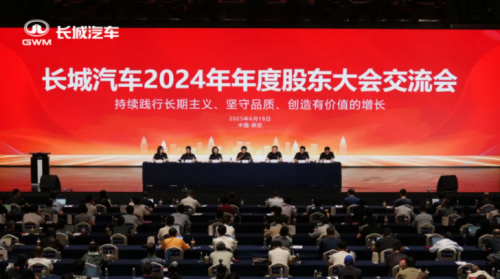
Core Viewpoint - Great Wall Motors is focusing on high-end new energy vehicles through its WEY brand, emphasizing a long-term development strategy and showcasing its commitment to the high-end market in the annual shareholder meeting [1][6]. Group 1: Strategic Development - The chairman emphasized a "full-scenario, full-power product matrix" strategy, which is reflected in WEY's product line, covering both MPV and SUV segments [3]. - The introduction of the new high-end models, "Gao Shan" and "Lan Shan," has shown initial success in the high-end new energy market, indicating the effectiveness of Great Wall's high-end strategy [3][6]. Group 2: Technological Advancements - WEY serves as a key platform for Great Wall's technological advancements, particularly in intelligent driving and smart cockpit systems, enhancing the user experience [5]. - The company has established a leading position in intelligent driving technology, with the new models featuring advanced systems like L2+ level autonomous driving [5]. Group 3: Global Expansion - Great Wall is pursuing a global strategy, with WEY collaborating with other brands like Haval and Tank to enhance international market presence, supported by an overseas sales network exceeding 1,400 locations [5]. - The upcoming production of the Brazilian factory in 2025 is expected to facilitate WEY's entry into emerging markets for high-end new energy vehicles [5]. Group 4: Supply Chain Optimization - The optimization of the supply chain is crucial for ensuring the quality of WEY products, with a focus on stable supply and excellence in core components [5]. - Collaborative relationships with supply chain partners are established to support the high-end positioning of WEY products, covering essential systems from battery to intelligent driving hardware [5].


AI+财务驱动价值创造,中国CFO大会在京召开
Zhong Guo Chan Ye Jing Ji Xin Xi Wang· 2025-07-21 02:29
Core Insights - The 19th China CFO Conference, guided by the Ministry of Finance, focuses on "AI + Finance Driving Value Creation" to enhance financial management and promote digital transformation in enterprises [1][2] - The conference highlights the role of CFOs in leading financial intelligence transformation and optimizing capital allocation through AI [2][5] - The development of a new type of production relationship is essential for the advancement of the digital economy, with a high-quality business environment being a key factor [2][3] Group 1: Conference Overview - The conference gathered over 500 experts and CFOs from the finance and accounting sectors to discuss the integration of AI in financial management [1] - The event serves as an annual platform for thought leadership and practical insights in the finance community [5] Group 2: AI and Financial Management - AI is recognized for its advantages in accounting, including comprehensive data collection, automation, and enhanced decision-making efficiency [3] - The integration of AI in finance is seen as a pathway to unlock data value and drive strategic decisions, ultimately leading to increased enterprise value [2][3] Group 3: Industry Perspectives - Various industry leaders shared their experiences and insights on the practical applications of AI in finance, emphasizing the transition from automation to intelligent decision-making [4] - Discussions included the importance of data governance and the necessity for companies to adapt their management models to leverage digital transformation effectively [3][4]
短期内钢市将以窄幅波动为主
Zhong Guo Chan Ye Jing Ji Xin Xi Wang· 2025-07-21 00:57
从成本端来看,海关总署数据显示,5月份,进口铁矿石均价为96.24美元/吨,环比下降1.86美元/吨, 降幅为1.90%;比2024年12月份均价下降1.49美元/吨,降幅为1.52%;比2024年同期下降9.56美元/吨, 降幅为9.04%。7月7日—11日当周,国内铁精粉价格为842元/吨,比上月末下降1元/吨,降幅为0.12%; 比去年底下降52元/吨,降幅为5.82%;同比下降116元/吨,降幅为12.11%。炼焦煤(十级)价格为1183元/ 吨,比上月末下降6元/吨,降幅为0.50%;比去年底下降383元/吨,降幅为24.46%;同比下降727元/吨, 降幅为38.06%。焦炭价格为1159元/吨,比上月末下降8元/吨,降幅为0.69%;比去年底下降511元/吨, 降幅为30.60%;同比下降824元/吨,降幅为41.55%。废钢价格为2338元/吨,比上月末上涨1元/吨,涨幅 为0.04%;比去年底下降208元/吨,降幅为8.17%;同比下降407元/吨,降幅为14.83%。 7月7日—11日当周,国内钢材价格指数略有上涨,长材价格指数、板材价格指数均有所上涨,且长材价 格指数涨幅大于板材价格指数 ...
合资车企销量回暖 以旧换新叠加价格策略效果显著
Zhong Guo Chan Ye Jing Ji Xin Xi Wang· 2025-07-21 00:54
Group 1 - The Chinese passenger car market showed strong performance in June, with multiple economic indicators achieving double-digit growth year-on-year [1] - Major joint venture automakers, except Honda and Nissan, reported year-on-year sales growth in the first half of the year, with SAIC Volkswagen selling 523,000 units (+2.3%), FAW Volkswagen 436,100 units (+3.5%), FAW Toyota 377,800 units (+16%), and SAIC GM 245,100 units (+8.64%) [1] - The "two new" subsidy policies, including trade-in and old car subsidies, significantly boosted retail consumption in the domestic automotive market [1][2] Group 2 - As of June 30, the cumulative application for the old-for-new car subsidy reached 4.12 million, with June applications at 1.23 million, a 13% increase from May [2] - Approximately 70% of private car buyers benefited from the trade-in policy, indicating a shift towards consumption upgrades [2] - The demand for traditional fuel vehicles remained strong due to pricing strategies, with significant discounts offered by joint venture brands [3] Group 3 - In June, traditional fuel vehicle sales reached 1.188 million units, a month-on-month increase of 14.2% and a year-on-year increase of 7.7% [3] - Classic fuel models like the Lavida, Sagitar, and Sylphy contributed significantly to sales, with SAIC Volkswagen's top models accounting for over 65% of its total sales in the first half of the year [4] - Despite the recovery in sales, experts warn that joint venture brands must invest more in electric vehicle development and improve charging infrastructure to meet consumer demands [4]

新能源二手车渗透率提升 自主品牌占比超八成
Zhong Guo Chan Ye Jing Ji Xin Xi Wang· 2025-07-21 00:54
Core Insights - The automotive consumption potential in China has been significantly released this year due to the implementation of consumption-boosting policies, particularly in the new energy vehicle (NEV) sector [1][2] - The retail sales of NEVs reached 5.468 million units in the first half of 2025, marking a year-on-year growth of 33.3%, with a retail penetration rate of 53.3% for NEVs in the overall passenger vehicle market [1] - The penetration rate of used NEVs has also increased, rising from 8% at the beginning of the year to 9.9% by May 2025, indicating a growing market for second-hand NEVs [1] Industry Trends - The report from Guazi indicates that domestic brands dominate the used car market, accounting for 83% of total transactions, followed by American brands at 11% and German brands at 4% [1] - The top three provinces for used NEV buyers are Guangdong, Jiangsu, and Zhejiang, highlighting the trend that more economically developed regions have a higher proportion of used car transactions [2] - The three main technology routes for NEVs currently are pure electric, plug-in hybrid, and range-extended vehicles, with pure electric vehicles making up nearly 75% of used NEV retail volume [2] Market Dynamics - Policies such as the cancellation of migration restrictions and optimization of transaction registration management are facilitating more efficient circulation of used cars, particularly NEVs [2] - The national transfer rate of used cars reached a historical high of 30% in the second quarter of 2025, with nearly 70% of used NEVs being traded across provinces [2]
年中论道:钢市“下半场”棋局何解
Zhong Guo Chan Ye Jing Ji Xin Xi Wang· 2025-07-21 00:52
Core Viewpoint - China's economy is showing resilience amid a complex global environment, but faces challenges in economic recovery, particularly in the steel market due to supply-demand imbalances and external pressures [1] Group 1: Economic Environment - China's macroeconomic policies have been effectively stimulating market activity through targeted fiscal and monetary measures [2] - The steel industry has maintained stable operations despite a challenging domestic and international macro environment [2] - The U.S. tariff disputes pose potential threats to China's steel exports, particularly through indirect impacts on production and consumption [2] Group 2: Industry Challenges - The steel industry is facing three main challenges: shrinking traditional demand alongside growing high-end steel demand, the impact of international trade conflicts, and the diminishing returns of ultra-low emission transformations [3] - There is skepticism regarding the improvement of structural contradictions within the steel industry, emphasizing the need for innovation and collaboration across the supply chain [3] Group 3: Demand Outlook - Short-term demand is expected to decline, particularly in the construction sector, while manufacturing remains a key growth area for steel consumption [5] - Long-term projections indicate that China's crude steel production will stabilize between 800 million to 900 million tons by 2035, maintaining its position as the largest steel market [5] Group 4: Industry Strategy - The steel industry is urged to adopt a self-disciplined approach to production, focusing on cost reduction and efficiency improvements [6] - There is a call for steel companies to embrace digitalization and innovation to enhance competitiveness and adapt to market changes [6] - Policies aimed at stabilizing housing prices and supporting the market are expected to provide some relief to the steel sector [6]


今年四川夏粮总产量476.2万吨 播面单产双增助推连续3年增产
Zhong Guo Chan Ye Jing Ji Xin Xi Wang· 2025-07-21 00:39
Core Insights - The total summer grain production in Sichuan for the first half of 2025 is 4.762 million tons, an increase of 112,000 tons or 2.4% compared to 2024 [1] - The summer grain planting area reached 17.032 million acres, up by 108,000 acres or 0.6% from 2024 [1] - The comprehensive yield per acre for summer grain is 279.6 kg, an increase of 4.8 kg or 1.8% from 2024, ranking second in yield growth among 13 major grain-producing provinces in the country [1] Production Breakdown - Winter wheat production is 2.863 million tons, an increase of 102,000 tons or 3.7% from 2024 [2] - Legume production is 336,000 tons, up by 7,000 tons or 2.2% [2] - Potato production is 1.504 million tons, an increase of 4,000 tons or 0.3% [2] Contributing Factors - The increase in both planting area and yield has contributed to a total summer grain increase of 220 million pounds, marking the third consecutive year of over 200 million pounds increase [2]
食用菌领域六项国家标准正式发布
Zhong Guo Chan Ye Jing Ji Xin Xi Wang· 2025-07-21 00:15
Core Viewpoint - The approval and implementation of six national standards for edible mushrooms in China will enhance the standardization and regulation of the edible mushroom industry, effective from January 1, 2026 [1][2]. Group 1: National Standards Overview - The six national standards include GB/T45885-2025 for "Pleurotus eryngii," GB/T45882-2025 for "Hericium erinaceus," GB/T23189-2025 for "Agaricus bisporus," GB/T23190-2025 for "Lentinula edodes," GB/T45883-2025 for "Morchella species," and GB/T23599-2025 for "Volvariella volvacea" [1][2]. - These standards outline quality requirements, inspection rules, labeling, packaging, transportation, and storage requirements for the respective mushroom varieties [2]. Group 2: Industry Impact - The implementation of these standards is expected to improve the quality control levels of related edible mushroom products and further regulate market order, providing clear guidance for healthy industry development [2]. - China is a major producer of edible mushrooms, which play a crucial role in rural revitalization, increasing farmers' income, and contributing to nutritional health within the agricultural sector [2].
从“追赶”到“超越” 中国奶业开启高质量发展新征程
Zhong Guo Chan Ye Jing Ji Xin Xi Wang· 2025-07-21 00:06
Core Insights - The Chinese dairy industry has made significant advancements, surpassing EU standards in key quality indicators such as protein, fat, somatic cell count, and total bacterial count, marking a historic leap in quality [1][2][4] - The average milk yield per cow in China has reached international advanced levels, with large-scale farms producing over 10 tons of fresh milk annually [2][5] - The report indicates that the quality of Chinese milk is at its best historical level, with protein and fat content comparable to developed countries, making it one of the safest and most nutritious food options for consumers [2][4] Industry Development - The Chinese dairy industry has transitioned from being a global laggard to a leader through continuous exploration and innovation, establishing a high-quality development path [5] - Inner Mongolia is a key region for milk production, contributing to one-fifth of the national supply, with major investments in dairy clusters enhancing competitiveness [6] - The average scale of dairy farms in China is now among the largest globally, with 78% of farms housing over 100 cows by 2024 [6][7] Quality Improvement - The average bacterial count in raw milk from leading companies like Yili has been maintained below 10,000 CFU/mL for two consecutive years, significantly lower than the EU standard of 100,000 CFU/mL [3][4] - High-quality raw milk is essential for the dairy processing industry, improving product competitiveness and consumer confidence in domestic dairy products [4][10] Technological Innovation - The integration of digital tools and mechanization in dairy farming has significantly improved labor efficiency and production quality [8] - Smart farming technologies, such as automated feeding systems and environmental control, have enhanced the living conditions for dairy cows, leading to increased milk production and quality [7][8] Future Outlook - The report emphasizes the need for the Chinese dairy industry to focus on innovation, collaboration, and sustainable practices to enhance competitiveness and profitability [9][10] - The industry is encouraged to adopt moderate-scale farming, improve feed efficiency, and develop local feed resources to reduce costs and increase revenue [9][10] - The transformation of agricultural waste into valuable resources, such as organic fertilizers and biogas, showcases the industry's commitment to sustainability and economic growth [11]
